A gentle introduction to the cosmological multiverse
Pith reviewed 2026-06-29 14:20 UTC · model grok-4.3
The pith
The multiverse could explain the tiny observed value of the cosmological constant through selection effects.
A machine-rendered reading of the paper's core claim, the machinery that carries it, and where it could break.
Core claim
The multiverse addresses the cosmological constant puzzle by anthropic selection across many universes, yet eternal inflation renders the multiverse unbounded in size and age, so that no unambiguous way yet exists to extract predictions for what observers should see.
What carries the argument
Anthropic selection across a landscape of universes with varying cosmological constants, combined with eternal inflation that generates an arbitrarily large multiverse.
If this is right
- Only universes with a small enough cosmological constant form structures and observers, so our measured value is selected rather than tuned by hand.
- Eternal inflation produces a multiverse that grows without limit in both space and time.
- Predictions for observations inside an eternally accelerating universe remain undefined until the measure problem is solved.
Where Pith is reading between the lines
- The approach relocates the fine-tuning problem from the value of the constant itself to the task of assigning probabilities over an infinite ensemble.
- It opens the possibility that string theory vacua supply the required variety of constants across the multiverse.
- Any concrete measure that yields unique predictions could be tested against future precision cosmology data on the expansion history.
Load-bearing premise
The observed small value of the cosmological constant is a major puzzle best addressed by invoking a multiverse rather than by any mechanism internal to our single universe.
What would settle it
A derivation or measurement establishing that the cosmological constant must equal its observed value from fundamental dynamics without any reference to observer selection or other universes.
Figures
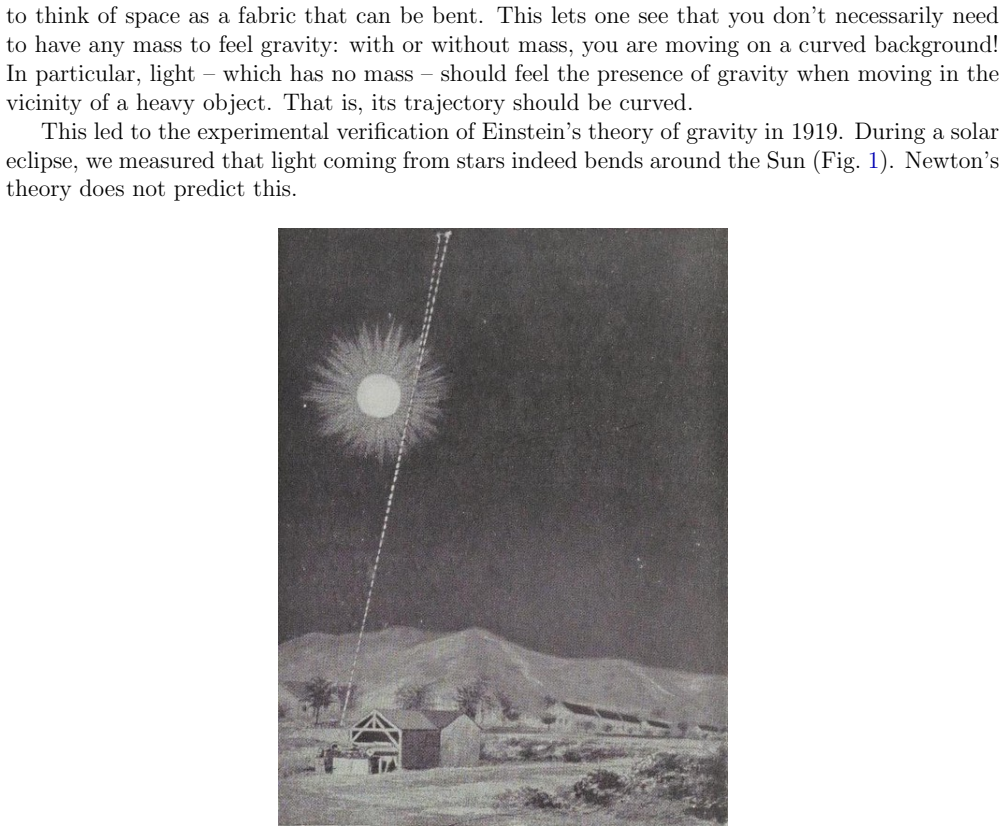
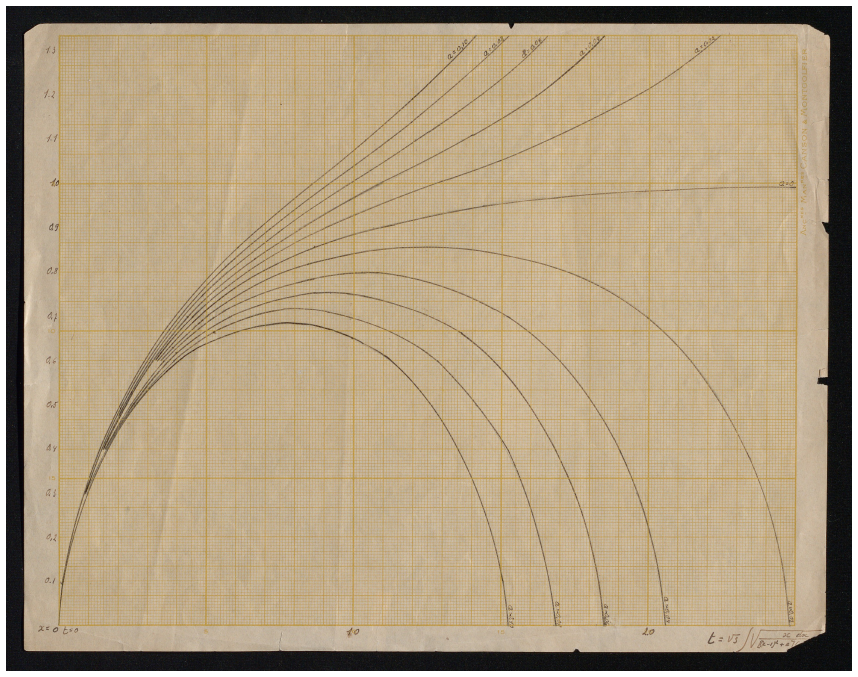
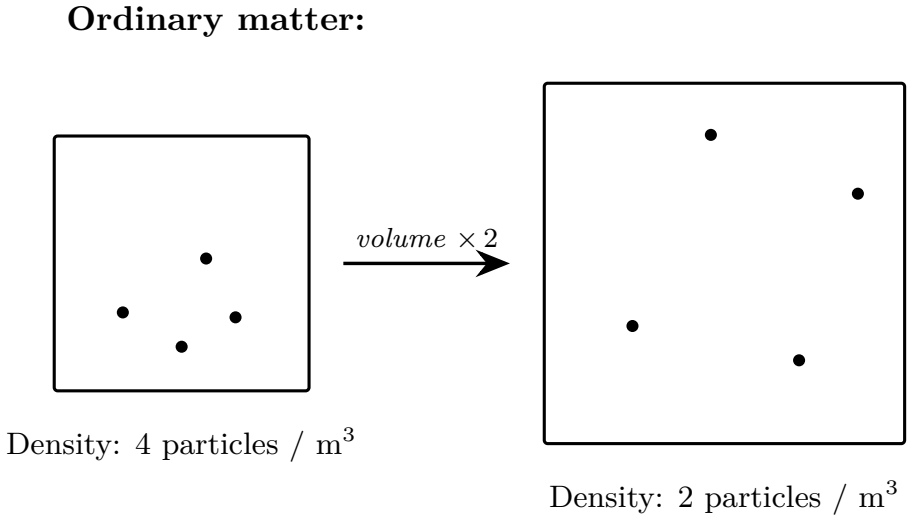
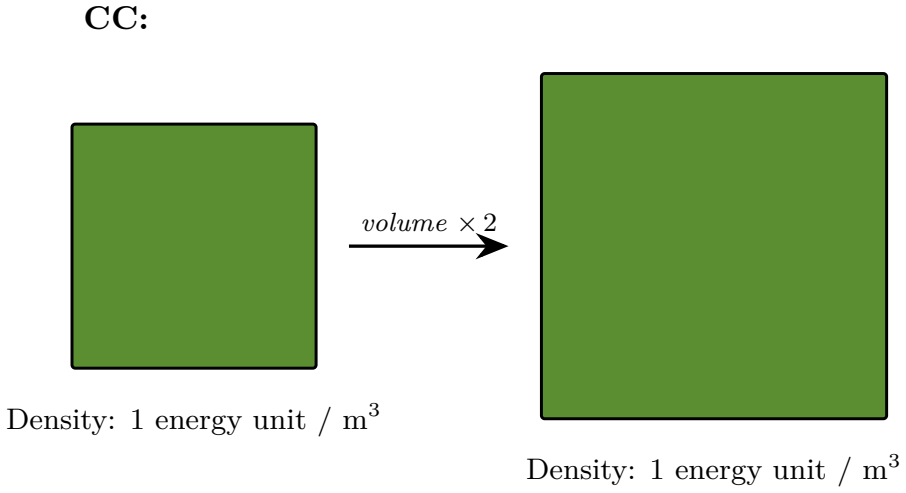
read the original abstract
We give an introduction to the cosmological multiverse, aimed at an audience of artists. We discuss general relativity -- our modern theory of gravity -- and the cosmological constant, which is widely believed to be responsible for the observed accelerated expansion of the universe. We then turn to a big puzzle that the cosmological constant poses, and, eventually, how the multiverse could solve this puzzle. There's no such thing as a free lunch, however: the multiverse can become arbitrarily large and old. The unsolved problem of making unambiguous predictions for observations in eternally accelerating universes is known as the measure problem of eternal inflation.
Editorial analysis
A structured set of objections, weighed in public.
Referee Report
Summary. The manuscript is a popular-level introduction to the cosmological multiverse aimed at an audience of artists. It reviews general relativity as the modern theory of gravity, presents the cosmological constant as the driver of observed accelerated expansion, outlines the fine-tuning puzzle posed by the constant's small observed value, and discusses the multiverse (via eternal inflation and anthropic selection) as one possible resolution, while explicitly noting that the measure problem of eternal inflation remains unsolved and prevents unambiguous predictions.
Significance. As an expository piece the manuscript accurately restates standard positions on GR and the cosmological constant and correctly flags the measure problem as open; this restraint is a strength. If the presentation holds, it offers a clear, non-technical entry point for non-experts (particularly artists) into these ideas without claiming new derivations or resolutions. No quantitative predictions, machine-checked proofs, or parameter-free results are present, so the significance is limited to outreach value rather than advancing the research literature.
Simulated Author's Rebuttal
We thank the referee for their positive assessment of the manuscript and for recommending acceptance. The report correctly captures the scope, audience, and limitations of the work.
Circularity Check
No significant circularity; expository popular-science piece with no derivations
full rationale
The paper is explicitly a gentle introduction aimed at artists, containing no equations, quantitative predictions, fitted parameters, or formal derivations. The central discussion—that the multiverse offers one route to addressing the cosmological constant puzzle—follows standard literature lines (eternal inflation plus anthropic selection) and explicitly flags the measure problem as unsolved. No load-bearing steps reduce to self-definition, self-citation chains, or renamed inputs. The reader's assessment of score 0.0 is confirmed by the absence of any mathematical content.
Axiom & Free-Parameter Ledger
axioms (2)
- domain assumption General relativity is our modern theory of gravity
- domain assumption The cosmological constant is responsible for the observed accelerated expansion
invented entities (1)
-
the multiverse
no independent evidence
Reference graph
Works this paper leans on
-
[1]
B. S. DeWitt and N. Graham , The Many-Worlds Interpretation of Quantum Mechanics . Princeton Series in Physics. Princeton University Press, Princeton, NJ, 1973
1973
-
[2]
S. Weinberg , `` The Cosmological Constant Problem ,'' http://dx.doi.org/10.1103/RevModPhys.61.1 Rev. Mod. Phys. 61 (1989) 1--23
-
[3]
`` Splendour of the Heavens ,'' vol. II, p. 682. Hutchinson & Co., London, 1923. Original credit ``E.N.A.''. Public domain
1923
-
[4]
C. M. Will , `` The 1919 measurement of the deflection of light ,'' http://dx.doi.org/10.1088/0264-9381/32/12/124001 Class. Quant. Grav. 32 no. 12, (2015) 124001 , http://arxiv.org/abs/1409.7812 arXiv:1409.7812 [physics.hist-ph]
work page internal anchor Pith review Pith/arXiv arXiv doi:10.1088/0264-9381/32/12/124001 1919
-
[5]
E. Hubble , ``A relation between distance and radial velocity among extra-galactic nebulae,'' http://dx.doi.org/10.1073/pnas.15.3.168 Proceedings of the National Academy of Sciences 15 no. 3, (1929) 168--173 . https://www.pnas.org/doi/abs/10.1073/pnas.15.3.168
-
[6]
G. Lemaitre , `` A Homogeneous Universe of Constant Mass and Growing Radius Accounting for the Radial Velocity of Extragalactic Nebulae ,'' http://dx.doi.org/10.1007/s10714-013-1548-3 Annales Soc. Sci. Bruxelles A 47 (1927) 49--59
-
[7]
S. Perlmutter et al., `` Measurements of and from 42 High-Redshift Supernovae ,'' http://dx.doi.org/10.1086/307221 The Astrophysical Journal 517 no. 2, (Jun, 1999) 565 . https://doi.org/10.1086/307221
work page internal anchor Pith review doi:10.1086/307221 1999
-
[8]
G. Lema\^itre , `` \'E volutions temporelles du rayon de l'univers en fonction de la constante cosmologique pour un espace de courbure positive.'' Archives de l'Universit\'e catholique de Louvain | Archives Georges Lema\^itre, BE A4006 FG LEM-836.1 , 1927
1927
-
[9]
S. Weinberg , `` Anthropic Bound on the Cosmological Constant ,'' http://dx.doi.org/10.1103/PhysRevLett.59.2607 Phys. Rev. Lett. 59 (1987) 2607
-
[10]
A. D. Linde , ``Eternally existing self-reproducing chaotic inflationary universe,'' http://dx.doi.org/10.1016/0370-2693(86)90611-8 Phys. Lett. B 175 (1986) 395--400
-
[11]
Quantization of Four-form Fluxes and Dynamical Neutralization of the Cosmological Constant
R. Bousso and J. Polchinski , ``Quantization of four-form fluxes and dynamical neutralization of the cosmological constant,'' http://dx.doi.org/10.1088/1126-6708/2000/06/006 JHEP 06 (2000) 006 , http://arxiv.org/abs/hep-th/0004134 hep-th/0004134
work page internal anchor Pith review Pith/arXiv arXiv doi:10.1088/1126-6708/2000/06/006 2000
-
[12]
A. R. Brown and A. Dahlen , `` Populating the Whole Landscape ,'' http://dx.doi.org/10.1103/PhysRevLett.107.171301 Phys. Rev. Lett. 107 (2011) 171301 , http://arxiv.org/abs/1108.0119 arXiv:1108.0119 [hep-th]
work page internal anchor Pith review Pith/arXiv arXiv doi:10.1103/physrevlett.107.171301 2011
-
[13]
Planck Collaboration , `` Planck 2018 results. VI. Cosmological parameters ,'' http://dx.doi.org/10.1051/0004-6361/201833910 Astron. Astrophys. 641 (2020) A6 , http://arxiv.org/abs/1807.06209 arXiv:1807.06209 [astro-ph.CO] . [Erratum: Astron.Astrophys. 652, C4 (2021)]
work page internal anchor Pith review Pith/arXiv arXiv doi:10.1051/0004-6361/201833910 2018
-
[14]
Dimensionless constants, cosmology and other dark matters
M. Tegmark , A. Aguirre , M. Rees , and F. Wilczek , `` Dimensionless constants, cosmology and other dark matters ,'' http://dx.doi.org/10.1103/PhysRevD.73.023505 Phys. Rev. D 73 (2006) 023505 , http://arxiv.org/abs/astro-ph/0511774 arXiv:astro-ph/0511774
work page internal anchor Pith review Pith/arXiv arXiv doi:10.1103/physrevd.73.023505 2006
-
[15]
Disturbing Implications of a Cosmological Constant
L. Dyson , M. Kleban , and L. Susskind , `` Disturbing implications of a cosmological constant ,'' http://dx.doi.org/10.1088/1126-6708/2002/10/011 JHEP 10 (2002) 011 , http://arxiv.org/abs/hep-th/0208013 arXiv:hep-th/0208013
work page internal anchor Pith review Pith/arXiv arXiv doi:10.1088/1126-6708/2002/10/011 2002
-
[16]
Making predictions in the multiverse
B. Freivogel , `` Making predictions in the multiverse ,'' http://dx.doi.org/10.1088/0264-9381/28/20/204007 Class. Quant. Grav. 28 (2011) 204007 , http://arxiv.org/abs/1105.0244 arXiv:1105.0244 [hep-th]
work page internal anchor Pith review Pith/arXiv arXiv doi:10.1088/0264-9381/28/20/204007 2011
-
[17]
Hertog , On the Origin of Time: Stephen Hawking's Final Theory
T. Hertog , On the Origin of Time: Stephen Hawking's Final Theory . Random House Publishing Group, 2023. https://books.google.ch/books?id=llBTEAAAQBAJ
2023
-
[18]
write newline
" write newline "" before.all 'output.state := FUNCTION blank.sep after.quote 'output.state := FUNCTION fin.entry output.state after.quoted.block = 'skip 'add.period if write newline FUNCTION new.block output.state before.all = 'skip output.state after.quote = after.quoted.block 'output.state := after.block 'output.state := if if FUNCTION new.sentence out...
discussion (0)
Sign in with ORCID, Apple, or X to comment. Anyone can read and Pith papers without signing in.