Statistical and Algorithmic Foundations of Probing Quantum Systems with Compressive Measurements: A Review
Pith reviewed 2026-06-29 16:36 UTC · model grok-4.3
The pith
Structured quantum states enable scalable tomography by reducing degrees of freedom through compressive measurements and algorithms.
A machine-rendered reading of the paper's core claim, the machinery that carries it, and where it could break.
Core claim
The survey provides a unified perspective on structured quantum state tomography through compact state representations, geometric preservation in measurement frameworks, and optimization algorithms, showing that these enable scalable recovery by drawing on principles from compressive sensing and structured inverse problems.
What carries the argument
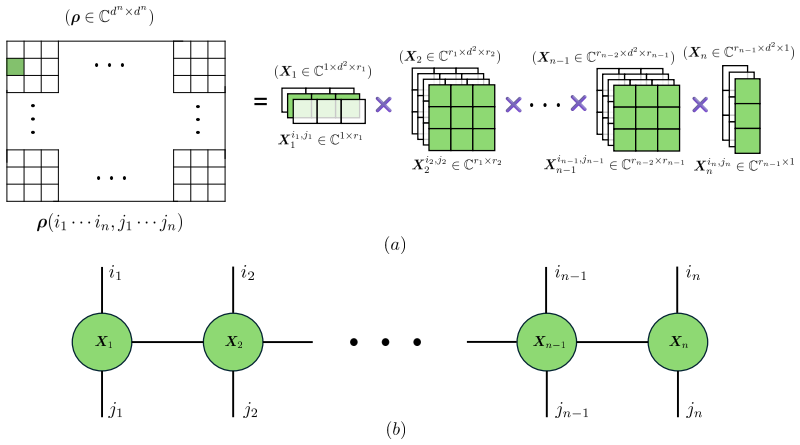
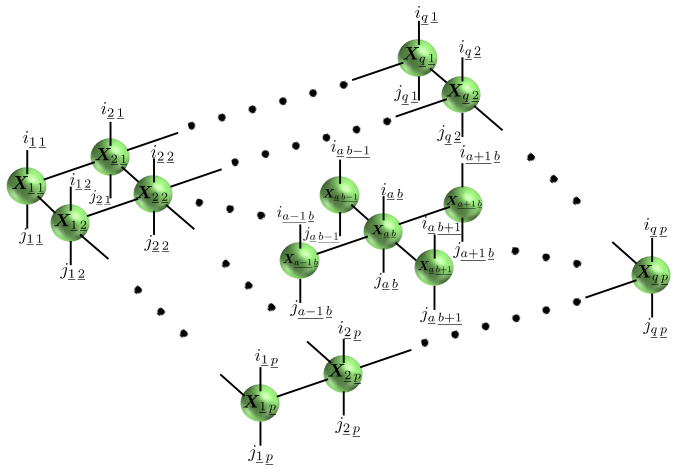
The three interconnected themes of compact state representations, measurement design ranging from informationally complete POVMs to randomized measurements, and computational algorithms for reconstruction from empirical data.
If this is right
- Sample complexity bounds depend on the specific structure of the quantum state.
- Geometric properties of measurements determine the efficiency of information extraction.
- Optimization methods allow practical reconstruction of structured states.
- Common theoretical foundations apply across compressive sensing and quantum tomography.
Where Pith is reading between the lines
- Experimental setups could prioritize measurements that exploit known structures in quantum systems.
- Similar approaches might apply to other high-dimensional inverse problems in physics.
- Future work could test these methods on larger systems to verify scalability claims.
Load-bearing premise
The models of structured quantum states and the geometric preservation properties of the measurements accurately reflect the conditions needed for scalable recovery.
What would settle it
An experiment or calculation showing that a structured quantum state requires as many measurements as a general state for accurate reconstruction despite the structure.
Figures
read the original abstract
Quantum state tomography (QST) is a fundamental task in quantum information science that aims to reconstruct unknown quantum states from measurement data. However, the exponential growth of Hilbert-space dimension with system size makes full tomography of general quantum states statistically and computationally prohibitive. This challenge has motivated extensive research on structured quantum state tomography, where prior structure, such as low-rankness, tensor-network representations, shallow quantum circuits, and neural quantum states, can substantially reduce the effective degrees of freedom and enable scalable recovery. In this review, we provide a unified perspective on QST for structured quantum states through three closely related themes: compact state representations, measurement design, and computational algorithms. After reviewing common models for structured quantum states, we survey existing work on geometric preservation properties of measurement frameworks, ranging from informationally complete POVMs to randomized measurements, and their implications for sample complexity. On the algorithmic side, we review optimization methods for reconstructing structured quantum states from empirical measurements. By connecting QST with broader principles from compressive sensing, matrix sensing, and structured inverse problems, this survey highlights common theoretical foundations underlying sample complexity, measurement efficiency, and scalable recovery.
Editorial analysis
A structured set of objections, weighed in public.
Referee Report
Summary. The manuscript is a review surveying quantum state tomography (QST) for structured quantum states. It organizes the literature around three themes—compact state representations (low-rank, tensor-network, shallow-circuit, and neural quantum states), measurement design frameworks ranging from informationally complete POVMs to randomized measurements and their geometric preservation properties, and optimization algorithms for reconstruction—while connecting these to principles from compressive sensing, matrix sensing, and structured inverse problems to highlight shared foundations for sample complexity, measurement efficiency, and scalable recovery.
Significance. If the synthesis holds, the review offers a useful consolidation of results on how prior structure reduces effective degrees of freedom in QST. By framing disparate QST results under compressive-sensing concepts, it could help readers identify cross-cutting theoretical tools for sample-complexity bounds and recovery guarantees, serving as a reference point for the quantum information community.
minor comments (1)
- [Abstract] Abstract: the phrase 'prior structure... can substantially reduce the effective degrees of freedom' is repeated in the abstract and introduction; a single consolidated statement would improve conciseness.
Simulated Author's Rebuttal
We thank the referee for their accurate summary of the manuscript, for recognizing its potential significance as a consolidation of results on structured quantum state tomography under compressive-sensing principles, and for the recommendation to accept.
Circularity Check
No significant circularity: survey with no internal derivations
full rationale
The paper is a review surveying prior literature on structured quantum state tomography, compressive sensing, and related inverse problems. It presents no original derivations, equations, or predictions that could reduce to fitted inputs or self-citations by construction. All content consists of summaries of external results, with the abstract and structure confirming its role as a unifying perspective rather than a self-contained proof chain. No load-bearing steps match any enumerated circularity pattern.
Axiom & Free-Parameter Ledger
Reference graph
Works this paper leans on
-
[1]
Cambridgeuniversity press, 2010
M.A.NielsenandI.L.Chuang,Quantumcomputationandquantuminformation. Cambridgeuniversity press, 2010. 29
2010
-
[2]
Quantum comput- ers,
T. D. Ladd, F. Jelezko, R. Laflamme, Y. Nakamura, C. Monroe, and J. L. O’Brien, “Quantum comput- ers,”nature, vol. 464, no. 7285, pp. 45–53, 2010
2010
-
[3]
Quantum communication,
N. Gisin and R. Thew, “Quantum communication,”Nature photonics, vol. 1, no. 3, pp. 165–171, 2007
2007
-
[4]
Quantum sensing,
C. L. Degen, F. Reinhard, and P. Cappellaro, “Quantum sensing,”Reviews of modern physics, vol. 89, no. 3, p. 035002, 2017
2017
-
[5]
Quantum computing in the nisq era and beyond,
J. Preskill, “Quantum computing in the nisq era and beyond,”Quantum, vol. 2, p. 79, 2018
2018
-
[6]
Ibmquantumbreaksthe100-qubitprocessorbarrier,
J.Chow,O.Dial,andJ.Gambetta,“Ibmquantumbreaksthe100-qubitprocessorbarrier,”IBMResearch Blog, 2021
2021
-
[7]
Quantum simulations with ultracold quantum gases,
I. Bloch, J. Dalibard, and S. Nascimbene, “Quantum simulations with ultracold quantum gases,”Na- ture Physics, vol. 8, no. 4, pp. 267–276, 2012
2012
-
[8]
Measurement of qubits,
D. F. James, P. G. Kwiat, W. J. Munro, and A. G. White, “Measurement of qubits,”Physical Review A, vol. 64, no. 5, p. 052312, 2001
2001
-
[9]
A tomographic approach to wigner’s function,
J. Bertrand and P. Bertrand, “A tomographic approach to wigner’s function,”Foundations of Physics, vol. 17, no. 4, pp. 397–405, 1987
1987
-
[10]
Determination of quasiprobability distributions interms of probability dis- tributions for the rotated quadrature phase,
K. Vogel andH. Risken, “Determination of quasiprobability distributions interms of probability dis- tributions for the rotated quadrature phase,”Physical Review A, vol. 40, no. 5, p. 2847, 1989
1989
-
[11]
Quantum-state tomography and discrete wigner function,
U. Leonhardt, “Quantum-state tomography and discrete wigner function,”Physical review letters, vol. 74, no. 21, p. 4101, 1995
1995
-
[12]
Quantum-state estimation,
Z. Hradil, “Quantum-state estimation,”Physical Review A, vol. 55, no. 3, p. R1561, 1997
1997
-
[13]
Quantumtomographyviacompressedsensing: error bounds, sample complexity and efficient estimators,
S.T.Flammia,D.Gross,Y.-K.Liu,andJ.Eisert,“Quantumtomographyviacompressedsensing: error bounds, sample complexity and efficient estimators,”New Journal of Physics, vol. 14, no. 9, p. 095022, 2012
2012
-
[14]
Matrix product state representations,
D. Perez-García, F. Verstraete, M. M. Wolf, and J. I. Cirac, “Matrix product state representations,” Quantum Information and Computation, vol. 7, no. 5-6, pp. 401–430, 2007
2007
-
[15]
Matrixproductoperatorrepresentations,
B.Pirvu,V.Murg,J.I.Cirac,andF.Verstraete,“Matrixproductoperatorrepresentations,”NewJournal of Physics, vol. 12, no. 2, p. 025012, 2010
2010
-
[16]
Matrix product states and projected entan- gledpairstates: Concepts,symmetries,theorems,
J. I. Cirac, D. Perez-Garcia, N. Schuch, and F. Verstraete, “Matrix product states and projected entan- gledpairstates: Concepts,symmetries,theorems,”ReviewsofModernPhysics,vol.93,no.4,p.045003, 2021
2021
-
[17]
Learningshallow quantumcircuits,
H.-Y.Huang,Y.Liu,M.Broughton,I.Kim,A.Anshu,Z.Landau,andJ.R.McClean,“Learningshallow quantumcircuits,”inProceedingsofthe56thAnnualACMSymposiumonTheoryofComputing,pp.1343– 1351, 2024
2024
-
[18]
From architectures to applications: A review of neural quantum states,
H. Lange, A. Van de Walle, A. Abedinnia, and A. Bohrdt, “From architectures to applications: A review of neural quantum states,”arXiv preprint arXiv:2402.09402, 2024
-
[19]
Distinguishability of quantum states under restricted fam- ilies of measurements with an application to quantum data hiding,
W. Matthews, S. Wehner, and A. Winter, “Distinguishability of quantum states under restricted fam- ilies of measurements with an application to quantum data hiding,”Communications in Mathematical Physics, vol. 291, pp. 813–843, 2009
2009
-
[20]
Low rank matrix recovery from rank one measurements,
R. Kueng, H. Rauhut, and U. Terstiege, “Low rank matrix recovery from rank one measurements,” Applied and Computational Harmonic Analysis, vol. 42, no. 1, pp. 88–116, 2017
2017
-
[21]
Fast state tomography with optimal error bounds,
M. Guţă, J. Kahn, R. Kueng, and J. A. Tropp, “Fast state tomography with optimal error bounds,” Journal of Physics A: Mathematical and Theoretical, vol. 53, no. 20, p. 204001, 2020. 30
2020
-
[22]
Evenly distributed unitaries: On the structure of unitary de- signs,
D. Gross, K. Audenaert, and J. Eisert, “Evenly distributed unitaries: On the structure of unitary de- signs,”Journal of mathematical physics, vol. 48, no. 5, 2007
2007
-
[23]
Exact and approximate unitary 2-designs and their application to fidelity estimation,
C. Dankert, R. Cleve, J. Emerson, and E. Livine, “Exact and approximate unitary 2-designs and their application to fidelity estimation,”Physical Review A—Atomic, Molecular, and Optical Physics, vol. 80, no. 1, p. 012304, 2009
2009
-
[24]
Unitarydesignsandcodes,
A.RoyandA.J.Scott,“Unitarydesignsandcodes,”Designs,codesandcryptography,vol.53,pp.13–31, 2009
2009
-
[25]
Quantum Tomography From Few Full-Rank Observables
V. Voroninski, “Quantum tomography from few full-rank observables,”arXiv preprint arXiv:1309.7669, 2013
work page internal anchor Pith review Pith/arXiv arXiv 2013
-
[26]
Distinguishing multi-partite states by local measurements,
C. Lancien and A. Winter, “Distinguishing multi-partite states by local measurements,”Communica- tions in Mathematical Physics, vol. 323, pp. 555–573, 2013
2013
-
[27]
Fastandrobustquantumstatetomographyfromfewbasis measurements,
F.G.Brandão,R.Kueng,andD.S.França,“Fastandrobustquantumstatetomographyfromfewbasis measurements,”arXiv preprint arXiv:2009.08216, 2020
-
[28]
Optimal quantum state tomogra- phy with local informationally complete measurements,
C. Jameson, Z. Qin, A. Goldar, M. B. Wakin, Z. Zhu, and Z. Gong, “Optimal quantum state tomogra- phy with local informationally complete measurements,”arXiv preprint arXiv:2408.07115, 2024
-
[29]
When does adaptivity help for quantum state learn- ing?,
S. Chen, B. Huang, J. Li, A. Liu, and M. Sellke, “When does adaptivity help for quantum state learn- ing?,” in2023 IEEE 64th Annual Symposium on Foundations of Computer Science (FOCS), pp. 391–404, IEEE, 2023
2023
-
[30]
Adaptivity can help exponentially for shadow tomography,
S. Chen, W. Gong, and Z. Zhang, “Adaptivity can help exponentially for shadow tomography,”arXiv preprint arXiv:2412.19022, 2024
-
[31]
Compressive sensing [lecture notes],
R. G. Baraniuk, “Compressive sensing [lecture notes],”IEEE signal processing magazine, vol. 24, no. 4, pp. 118–121, 2007
2007
-
[32]
Non-square matrix sensing without spurious localminimaviatheburer-monteiroapproach,
D. Park, A. Kyrillidis, C. Carmanis, and S. Sanghavi, “Non-square matrix sensing without spurious localminimaviatheburer-monteiroapproach,”inArtificialintelligenceandstatistics,pp.65–74,PMLR, 2017
2017
-
[33]
Nonconvex optimization meets low-rank matrix factorization: An overview,
Y. Chi, Y. M. Lu, and Y. Chen, “Nonconvex optimization meets low-rank matrix factorization: An overview,”IEEE Transactions on Signal Processing, vol. 67, no. 20, pp. 5239–5269, 2019
2019
-
[34]
Compressedsensing,
D.L.Donoho, “Compressedsensing,”IEEETransactionsoninformationtheory,vol.52, no.4, pp.1289– 1306, 2006
2006
-
[35]
Near-optimalsignalrecoveryfromrandomprojections: Universalencoding strategies?,
E.J.CandesandT.Tao, “Near-optimalsignalrecoveryfromrandomprojections: Universalencoding strategies?,”IEEE transactions on information theory, vol. 52, no. 12, pp. 5406–5425, 2006
2006
-
[36]
Tightoracleinequalitiesforlow-rankmatrixrecoveryfromaminimalnum- ber of noisy random measurements,
E.J.CandesandY.Plan,“Tightoracleinequalitiesforlow-rankmatrixrecoveryfromaminimalnum- ber of noisy random measurements,”IEEE Transactions on Information Theory, vol. 57, no. 4, pp. 2342– 2359, 2011
2011
-
[37]
Boumal,An introduction to optimization on smooth manifolds
N. Boumal,An introduction to optimization on smooth manifolds. Cambridge University Press, 2023
2023
-
[38]
Therestrictedisometrypropertyanditsimplicationsforcompressedsensing,
E.J.Candes,“Therestrictedisometrypropertyanditsimplicationsforcompressedsensing,”Comptes rendus mathematique, vol. 346, no. 9-10, pp. 589–592, 2008
2008
-
[39]
Convexrecoveryofastructuredsignalfromindependentrandomlinearmeasurements,
J.A.Tropp,“Convexrecoveryofastructuredsignalfromindependentrandomlinearmeasurements,” inSampling Theory, a Renaissance, pp. 67–101, Springer, 2015
2015
-
[40]
Newanalysisofmanifoldembeddingsandsignalrecoveryfromcom- pressivemeasurements,
A.EftekhariandM.B.Wakin,“Newanalysisofmanifoldembeddingsandsignalrecoveryfromcom- pressivemeasurements,”AppliedandComputationalHarmonicAnalysis,vol.39,no.1,pp.67–109,2015. 31
2015
-
[41]
Randomprojectionsofsmoothmanifolds,
R.G.BaraniukandM.B.Wakin, “Randomprojectionsofsmoothmanifolds,”Foundationsofcomputa- tional mathematics, vol. 9, no. 1, pp. 51–77, 2009
2009
-
[42]
Predicting many properties of a quantum system from very few measurements,
H.-Y. Huang, R. Kueng, and J. Preskill, “Predicting many properties of a quantum system from very few measurements,”Nature Physics, vol. 16, no. 10, pp. 1050–1057, 2020
2020
-
[43]
A simple proof of the restricted isometry property for random matrices,
R. Baraniuk, M. Davenport, R. DeVore, and M. Wakin, “A simple proof of the restricted isometry property for random matrices,”Constructive Approximation, vol. 28, no. 3, pp. 253–263, 2008
2008
-
[44]
Atomicdecompositionbybasispursuit,
S.S.Chen,D.L.Donoho,andM.A.Saunders,“Atomicdecompositionbybasispursuit,”SIAMreview, vol. 43, no. 1, pp. 129–159, 2001
2001
-
[45]
PhDthesis,PhDthesis,StanfordUniversity,2002
M.Fazel,Matrixrankminimizationwithapplications. PhDthesis,PhDthesis,StanfordUniversity,2002
2002
-
[46]
Robust uncertainty principles: Exact signal reconstruction fromhighlyincompletefrequencyinformation,
E. J. Candès, J. Romberg, and T. Tao, “Robust uncertainty principles: Exact signal reconstruction fromhighlyincompletefrequencyinformation,”IEEETransactionsoninformationtheory,vol.52,no.2, pp. 489–509, 2006
2006
-
[47]
Guaranteedminimum-ranksolutionsoflinearmatrixequations via nuclear norm minimization,
B.Recht,M.Fazel,andP.A.Parrilo,“Guaranteedminimum-ranksolutionsoflinearmatrixequations via nuclear norm minimization,”SIAM review, vol. 52, no. 3, pp. 471–501, 2010
2010
-
[48]
Block-iterative projection methods for parallel computation of solutions to convex feasibility problems,
R. Aharoni and Y. Censor, “Block-iterative projection methods for parallel computation of solutions to convex feasibility problems,”Linear Algebra and Its Applications, vol. 120, pp. 165–175, 1989
1989
-
[49]
Alternating projections on manifolds,
A. S. Lewis and J. Malick, “Alternating projections on manifolds,”Mathematics of Operations Research, vol. 33, no. 1, pp. 216–234, 2008
2008
-
[50]
Hard thresholding pursuit: an algorithm for compressive sensing,
S. Foucart, “Hard thresholding pursuit: an algorithm for compressive sensing,”SIAM Journal on nu- merical analysis, vol. 49, no. 6, pp. 2543–2563, 2011
2011
-
[51]
Iterative hard thresholding for compressed sensing,
T. Blumensath and M. E. Davies, “Iterative hard thresholding for compressed sensing,”Applied and computational harmonic analysis, vol. 27, no. 3, pp. 265–274, 2009
2009
-
[52]
A singular value thresholding algorithm for matrix completion,
J.-F. Cai, E. J. Candès, and Z. Shen, “A singular value thresholding algorithm for matrix completion,” SIAM Journal on optimization, vol. 20, no. 4, pp. 1956–1982, 2010
1956
-
[53]
Lowranktensorrecoveryviaiterativehardthresholding,
H.Rauhut,R.Schneider,andŽ.Stojanac,“Lowranktensorrecoveryviaiterativehardthresholding,” Linear Algebra and its Applications, vol. 523, pp. 220–262, 2017
2017
-
[54]
Findinglow-ranksolutionsvianonconvexma- trix factorization, efficiently and provably,
D.Park,A.Kyrillidis,C.Caramanis,andS.Sanghavi,“Findinglow-ranksolutionsvianonconvexma- trix factorization, efficiently and provably,”SIAM Journal on Imaging Sciences, vol. 11, no. 4, pp. 2165– 2204, 2018
2018
-
[55]
Structuredlow-rankmatrixfactorization: Globaloptimality,algorithms, andapplications,
B.D.HaeffeleandR.Vidal,“Structuredlow-rankmatrixfactorization: Globaloptimality,algorithms, andapplications,”IEEEtransactionsonpatternanalysisandmachineintelligence,vol.42,no.6,pp.1468– 1482, 2019
2019
-
[56]
An optimal statistical and computational framework for gener- alized tensor estimation,
R. Han, R. Willett, and A. R. Zhang, “An optimal statistical and computational framework for gener- alized tensor estimation,”The Annals of Statistics, vol. 50, no. 1, pp. 1–29, 2022
2022
-
[57]
A scalable factorization approach for high-order structured tensor recovery,
Z. Qin, M. B. Wakin, and Z. Zhu, “A scalable factorization approach for high-order structured tensor recovery,”arXiv preprint arXiv:2506.16032, 2025
-
[58]
Therandom- ized measurement toolbox,
A.Elben,S.T.Flammia,H.-Y.Huang,R.Kueng,J.Preskill,B.Vermersch,andP.Zoller,“Therandom- ized measurement toolbox,”Nature Reviews Physics, vol. 5, no. 1, pp. 9–24, 2023
2023
-
[59]
Quantumstatetomographyformatrixprod- uct density operators,
Z.Qin,C.Jameson,Z.Gong,M.B.Wakin,andZ.Zhu,“Quantumstatetomographyformatrixprod- uct density operators,”IEEE Transactions on Information Theory, vol. 70, no. 7, pp. 5030–5056, 2024
2024
-
[60]
Sample-efficient quantum state tomography for structured quantum states in one dimension,
Z. Qin, C. Jameson, A. Goldar, M. B. Wakin, Z. Gong, and Z. Zhu, “Sample-efficient quantum state tomography for structured quantum states in one dimension,”arXiv preprint arXiv:2410.02583, 2024. 32
-
[61]
Quantum state tomography for tensor networks in two dimensions,
Z. Qin and Z. Zhu, “Quantum state tomography for tensor networks in two dimensions,”Physical Review A, vol. 113, no. 2, p. 022414, 2026
2026
-
[63]
Precision-guaranteed quantum tomography,
T. Sugiyama, P. S. Turner, and M. Murao, “Precision-guaranteed quantum tomography,”Physical Re- view Letters, vol. 111, no. 16, p. 160406, 2013
2013
-
[64]
Efficient quantum state tomography,
M. Cramer, M. B. Plenio, S. T. Flammia, R. Somma, D. Gross, S. D. Bartlett, O. Landon-Cardinal, D. Poulin, and Y.-K. Liu, “Efficient quantum state tomography,”Nature communications, vol. 1, no. 1, pp. 1–7, 2010
2010
-
[65]
Enhancingquantumstatereconstructionwithstructured classical shadows,
Z.Qin,J.M.Lukens,B.T.Kirby,andZ.Zhu,“Enhancingquantumstatereconstructionwithstructured classical shadows,”npj Quantum Information, vol. 11, no. 1, p. 147, 2025
2025
-
[66]
Quan- tum certification and benchmarking,
J.Eisert,D.Hangleiter,N.Walk,I.Roth,D.Markham,R.Parekh,U.Chabaud,andE.Kashefi,“Quan- tum certification and benchmarking,”Nature Reviews Physics, vol. 2, no. 7, pp. 382–390, 2020
2020
-
[67]
A survey on the complexity of learning quantum states,
A. Anshu and S. Arunachalam, “A survey on the complexity of learning quantum states,”Nature Reviews Physics, vol. 6, no. 1, pp. 59–69, 2024
2024
-
[68]
Quantum computation and quantum information,
M. A. Nielsen and I. Chuang, “Quantum computation and quantum information,” 2002
2002
-
[69]
T. A. Severini,Elements of distribution theory, vol. 17. Cambridge University Press, 2005
2005
-
[70]
Compressed sensing using generative models,
A. Bora, A. Jalal, E. Price, and A. G. Dimakis, “Compressed sensing using generative models,” in International conference on machine learning, pp. 537–546, PMLR, 2017
2017
-
[71]
A simple proof of the restricted isometry property for random matrices,
R. G. Baraniuk, M. A. Davenport, R. A. DeVore, and M. B. Wakin, “A simple proof of the restricted isometry property for random matrices,”Constructive Approximation, 2007
2007
-
[72]
Shadow tomography based on informationally complete positive operator-valued measure,
A. Acharya, S. Saha, and A. M. Sengupta, “Shadow tomography based on informationally complete positive operator-valued measure,”Physical Review A, vol. 104, p. 052418, Nov 2021
2021
-
[73]
Tight informationally complete quantum measurements,
A. J. Scott, “Tight informationally complete quantum measurements,”Journal of Physics A: Mathemat- ical and General, vol. 39, no. 43, p. 13507, 2006
2006
-
[74]
Apartialderandomizationofphaseliftusingsphericaldesigns,
D.Gross,F.Krahmer,andR.Kueng,“Apartialderandomizationofphaseliftusingsphericaldesigns,” Journal of Fourier Analysis and Applications, vol. 21, no. 2, pp. 229–266, 2015
2015
-
[75]
Accessible information and informational power of quantum 2-designs,
M. Dall’Arno, “Accessible information and informational power of quantum 2-designs,”Physical Re- view A, vol. 90, no. 5, p. 052311, 2014
2014
-
[76]
Averaging sets: a generalization of mean values and spherical de- signs,
P. D. Seymour and T. Zaslavsky, “Averaging sets: a generalization of mean values and spherical de- signs,”Advances in Mathematics, vol. 52, no. 3, pp. 213–240, 1984
1984
-
[77]
Construction of spherical t-designs,
B. Bajnok, “Construction of spherical t-designs,”Geometriae Dedicata, vol. 43, pp. 167–179, 1992
1992
-
[78]
Reexamination of optimal quantum state estimation of pure states,
A. Hayashi, T. Hashimoto, and M. Horibe, “Reexamination of optimal quantum state estimation of pure states,”Physical Review A—Atomic, Molecular, and Optical Physics, vol. 72, no. 3, p. 032325, 2005
2005
-
[79]
Mutually unbiased bases are complex projective 2-designs,
A. Klappenecker and M. Rotteler, “Mutually unbiased bases are complex projective 2-designs,” in Proceedings.InternationalSymposiumonInformationTheory,2005.ISIT2005.,pp.1740–1744,IEEE,2005
2005
-
[80]
Qubit stabilizer states are complex projective 3-designs
R. Kueng and D. Gross, “Qubit stabilizer states are complex projective 3-designs,”arXiv preprint arXiv:1510.02767, 2015
work page internal anchor Pith review Pith/arXiv arXiv 2015
-
[81]
Approximation by Quantum Circuits
E. Knill, “Approximation by quantum circuits,”arXiv:quant-ph/9508006, 1995
work page internal anchor Pith review Pith/arXiv arXiv 1995
discussion (0)
Sign in with ORCID, Apple, or X to comment. Anyone can read and Pith papers without signing in.