REVIEW 3 major objections 4 minor 45 references
When all Kaluza-Klein excited fermion modes are included, total gauge anomalies in the GUT-inspired gauge-Higgs unification become independent of the fermion bulk masses and cancel in each generation, even when the Aharonov-Bohm phase is no
Reviewed by Pith at T0; open to challenge. T0 means a machine referee read the full paper against a public rubric. the ladder, T0–T4 →
T0 review · deepseek-v4-flash
2026-08-02 12:33 UTC pith:PWYLUYU6
load-bearing objection A careful and mostly persuasive extension of the anomaly-flow program to the GUT-inspired GHU model, but the exact species-independence of the F-factors—the linchpin of the cancellation—is assumed rather than proven for the coupled d/D and neutrino towers. the 3 major comments →
Anomaly flow and anomaly cancellation
The pith
A machine-rendered reading of the paper's core claim, the machinery that carries it, and where it could break.
Core claim
The central claim is that total chiral anomalies in the SO(5)×U(1)×SU(3) gauge-Higgs unification model in RS space are holographic: after summing over the entire tower of Kaluza-Klein fermion modes, the anomaly coefficients factor into group-theoretic sums (T^3 and Q) times F-factors that depend only on the W and Z wave functions evaluated at the ultraviolet and infrared branes. These F-factors are the same for all quark and lepton species, independent of the bulk mass parameters c, so each generation's anomaly vanishes by the same hypercharge/weak-isospin arithmetic as in the Standard Model. The paper demonstrates that the dangerous species-dependent couplings of the lowest modes are exactl
What carries the argument
The key tool is the completeness of fermion wave functions on the orbifold, exploited by summing over KK levels before doing the overlap integrals (Method 2). For a vanishing bulk mass parameter c=0 the wave functions become trigonometric and the KK sums collapse to delta functions at the two branes, Eqs. (5.8)–(5.10); the resulting F-factors are boundary values of the W/Z wave functions at y=0 and y=L. The paper then argues numerically (Tables 3–12) that these F-factors are the same for arbitrary c, so the c=0 analytic formulas are universal.
Load-bearing premise
The proof that the F-factors are exactly independent of the fermion bulk mass parameter c rests on numerical checks up to KK level n_max=24; if the infinite-mode limit were to differ between species, the per-generation cancellation would fail.
What would settle it
Compute the F-factor analytically for a non-zero bulk mass c at arbitrary KK level and show it differs from the c=0 formula in the infinite-sum limit; or evaluate a single triangle-diagram anomaly amplitude (such as γ-Z-Z) with exact mode sums and find a non-zero total, contradicting the holographic boundary-value formula.
If this is right
- Gauge anomalies cancel in each generation even at θ_H ≠ 0, once all KK fermion modes are included.
- Total anomaly coefficients depend only on the UV/IR brane values of the W and Z wave functions, not on the KK masses or fermion bulk parameters.
- The same F-factor universality applies to anomalies involving KK excited gauge bosons, with wave functions replaced by those of the KK modes.
- Dark fermion multiplets with their own boundary conditions cancel anomalies separately, so the full model is anomaly-free.
- The holographic method extends to other 5D orbifold theories, providing a general way to evaluate triangular-loop anomalies.
Where Pith is reading between the lines
- The same 'sum first, integrate later' technique should apply directly to global (e.g., baryon-number) anomalies; the paper notes this is of interest, and the expected large anomaly coefficients of KK gauge bosons could affect baryogenesis.
- The universality implies that any precise measurement of a low-mode fermion-gauge coupling that deviates from the SM must be accompanied by corresponding KK-tower contributions to preserve anomaly cancelation — a potential consistency check for future collider data.
- The analytic c=0 derivation suggests a possible exact proof of the c-independence via spectral flow: if the F-factors are topological in the bulk mass, the numerical evidence could be promoted to a theorem.
- An explicit one-loop computation of a specific anomaly amplitude (e.g., γ-Z-Z) summing all KK modes would provide an independent check of the holographic formulas.
Editorial analysis
A structured set of objections, weighed in public.
Referee Report
Summary. The paper addresses gauge-anomaly cancellation in the SO(5)×U(1)×SU(3) GUT-inspired gauge-Higgs unification model in a Randall-Sundrum warped space. Its central claim is that the total chiral anomalies, including contributions from all fermion Kaluza-Klein towers, become universal: the relevant F-factors are independent of the fermion bulk mass parameters and are expressed holographically through the values of the W and Z wave functions at the UV and IR branes. The derivation proceeds by switching the order of the KK sum and the fifth-dimensional integral (Method 2), using c=0 completeness relations to obtain analytic formulas (5.9), (5.10), (5.16), (5.21), (5.22), (5.26), and confirming them by numerical truncation in Tables 3–12. Section 6 then shows that every type of triangular anomaly (γγZ, ggZ, γWW, γZZ, ZWW, ZZZ) vanishes once the group-theoretic coefficients are evaluated, assuming the common F-factor factorization.
Significance. If the central claim is established, the paper resolves a long-standing consistency question for gauge-Higgs unification at θ_H≠0: the apparent species dependence of the low-lying fermion couplings to W and Z is compensated exactly by the KK tower contributions, and anomalies cancel per generation for any AB phase. The holographic F-formulas themselves are elegant and potentially useful beyond this specific model. The numerical tables are extensive and the paper gives reproducible parameter choices (θ_H=0.1, m_KK=13 TeV), which is a strength. The main weakness is that the universality of the F-factors is not proven; it rests on finite-truncation numerics and on a cited SU(2) theorem that is not reproduced for the coupled systems considered here.
major comments (3)
- [§5, Eq. (5.7)] The exact species independence of the F-factors is load-bearing for the entire cancellation argument. It is verified only numerically for nmax≤24 (nmax=40 for F^1_{Z(1)}), and the convergence is not uniform. For example, Table 4 shows F^{u1}_{Z(1)} at nmax=40 is 3.623 versus the claimed ∞ value 3.536, while F^{t1}_{Z(1)} is 3.564; the spread among species at finite truncation is comparable to the truncation effect itself. Similarly, Table 10 shows F^4_{ZZZ} entries at the 10^-5 level at nmax=24, although Eq. (5.22) requires an exact zero. Since Section 6 factors out a common F, a small species-dependent residual would spoil the cancellation. The citation of Ref. [38] mitigates the concern but does not replace a proof for the coupled d/D and neutrino systems with brane masses. Please either supply an analytic proof of (5.7) for the full system or provide rigorous convergence bounds showin
- [§5, Method 2 and Eqs. (5.8), (5.16)] The analytic F-formulas are derived by interchanging the infinite KK sum with the y-integration and then using the c=0 completeness relations (5.8). For the d/D and neutrino sectors, however, the actual theory contains brane mass parameters (μ_d, m_Be, M_e) and vector-like masses, and the analytic derivations of F_{γWW}, F_{ZWW}, and F_{ZZZ} are presented only in the limiting case c=0 with brane interactions absent. The numerical Tables 7–12 are the only evidence for these sectors. If the holographic formulas are claimed to hold for the physical theory, the derivation should extend to the coupled systems or the universality of (5.7) should be stated as an explicit assumption supported by a proof.
- [§6, last paragraph] The paper asserts that gauge anomalies are canceled in the dark fermion sector as well, but no explicit F-factors or group-theoretic calculation for the multiplets Ψ_{Fq}, Ψ_{Fℓ}, Ψ_V, with boundary conditions (2.7), is provided. The reasoning from the quark-lepton sector does not automatically apply because the boundary conditions and parity assignments differ. Since the model includes these fields, either the dark-sector cancellation should be demonstrated or a precise reference to the corresponding equations in Ref. [38] should be given.
minor comments (4)
- [Tables 4, 6, 8, 9, 12] Several table headers contain typos: Table 4 has "F d1 Z(1" missing the closing parenthesis; Table 6 includes an extra comma in "0.997805,0.997806"; Table 8 lists "F τ2 ZZZ" where the τ column should be F τ1 ZZZ; Tables 9 and 12 have "(α=u, d, , e,...)" with an extra comma.
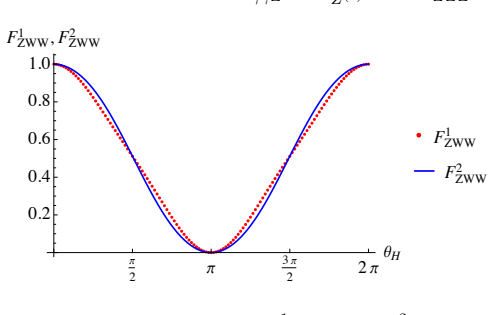
- [Figure captions] The in-text figure captions (Figures 3–8) contain repeated lines such as "Figure 1:" inside the caption text, likely a layout artifact. These should be cleaned up.
- [Eq. (5.7)] The notation in (5.7) mixes indices j and k without spelling out their ranges; it would be clearer to write F^α_{Z(ℓ)} = F_{Z(ℓ)} and F^α_{γZZ} = F_{γZZ} for all α, as is done in words.
- [Section 6, generalizations] The generalization to anomalies involving KK gauge bosons γ^{(n)}, W^{(n)}, Z^{(n)} is stated as 'straightforward' but not shown. A sentence explaining that the same F-factor derivation applies with the appropriate gauge-boson wave functions would be helpful.
Circularity Check
Universality of the F-factors (Eq. 5.7) is imported from the author's earlier SU(2) work [38] and checked only numerically, making it load-bearing rather than derived; the rest of the anomaly-cancellation argument stands or falls with that premise.
specific steps
-
self citation load bearing
[Section 5, opening paragraph and Eqs. (5.7)-(5.10)]
"It was shown in Ref. [38] that in an SU(2) GHU model in the RS space total anomaly is expressed in terms of the values of wave functions of gauge fields at the UV brane (at y=0) and IR brane (at y=L) and orbifold boundary conditions satisfied by fermion multiples. It does not depend on the fermion bulk mass parameter."
The central premise of the paper is Eq. (5.7): the F-factors are exactly independent of the fermion bulk mass parameter. This premise is not derived here; it is first said to be 'confirmed by numerical evaluation' (Tables 3-12, finite n_max) and then used to evaluate the KK sums at c=0 via the completeness relations (5.8), for which the paper refers to Ref. [38], a prior paper by the same author. The holographic formulas (5.9)-(5.26) and the anomaly cancellation in Section 6 all inherit this exact c-independence. Thus the load-bearing step reduces to a self-citation plus finite numerical evidence, rather than a proof reproduced in this paper. The GUT-inspired model application is new, but the universality theorem that makes it work is imported from the author's own earlier work.
full rationale
Most of the derivation is self-contained and not circular: gauge couplings are explicit overlap integrals, no anomaly coefficient is fitted to data, and the Section 6 cancellation is a standard group-theoretic statement once universal F-factors exist. The one load-bearing step that is not independently derived is Eq. (5.7), the exact species-independence of the F-factors. The paper explicitly delegates the completeness-based derivation to Ref. [38] (same author) and supports the exact statement only with finite-n_max numerical tables. This is a self-citation load-bearing issue, not definitional circularity: the holographic formulas are not equal to their inputs by construction, and the dark-fermion and GUT-specific extensions have independent content. Accordingly, the score is 4 rather than higher.
Axiom & Free-Parameter Ledger
free parameters (5)
- Bulk mass parameters c_u, c_c, c_t =
(-0.85912, -0.71913, -0.27455) at θ_H=0.1
- Bulk mass parameters c_e, c_μ, c_τ =
(-1.00684, -0.79302, -0.67539)
- Warp factor z_L (or kL) =
z_L ~ 10^11 for m_KK ~ 13 TeV
- AB phase θ_H =
0.1 for numerical examples; treated as variable elsewhere
- Brane mass parameters μ_d, M_e, m_Be, m̃_Dd =
Not given in this paper
axioms (5)
- standard math Completeness of KK mode sums on the orbifold, including the delta-function form Eq. (5.8)
- standard math ABJ chiral anomaly formula in the 4D effective theory
- domain assumption RS geometry and orbifold boundary conditions (2.3), (2.6), (2.7)
- ad hoc to paper Universality of F-factors (Eq. 5.7) treated as exact
- ad hoc to paper Interchange of infinite KK sum with integration (Method 2)
read the original abstract
In gauge theory on 5D orbifolds the magnitude of chiral anomalies of 4D gauge fields changes with the value of the Aharonov-Bohm (AB) phase $\theta_H$ in the fifth dimension. Anomaly flows with the AB phase. In particular in the Randall-Sundrum (RS) warped space gauge couplings of 4D fermions depend on bulk mass parameters of 5D fermion multiplets. We show that in the GUT-inspired $SO(5) \times U(1) \times SU(3)$ gauge-Higgs unification model in the RS warped space the total anomalies including contributions of all Kaluza-Klein excited modes of fermions become universal, being independent of the values of the bulk mass parameters of fermions and expressed in terms of the values of $W$ and $Z$ wave functions at the ultraviolet and infrared branes in the RS space. It is shown that cancellation of gauge anomalies is achieved in each generation even for $\theta_H \not= 0$.
Figures


Reference graph
Works this paper leans on
-
[1]
S.L.\ Adler, ``Axial vector vertex in spinor electrodynamics'' , 177 2426 1969
1969
-
[2]
J.S.\ Bell and R.\ Jackiw, ``A PCAC puzzle: ^0 in the model'' , 60 47 1969
1969
-
[3]
C.\ Bouchiat, J.\ Iliopoulos and Ph.\ Meyer, ``An anomaly-free version of Weinberg's model'' , 38 519 1972
1972
-
[4]
D.J.\ Gross and R.\ Jackiw, ``Effects of anomalies on quasi-renormalizable theories'' , 6 477 1972
1972
-
[5]
Y.\ Hosotani, ``Dynamical mass generation by compact extra dimensions'' , 126 309 1983
1983
-
[6]
A. T. Davies and A. McLachlan, ``Gauge group breaking by Wilson loops'' , 200 305 1988
1988
-
[7]
Y.\ Hosotani, ``Dynamics of nonintegrable phases and gauge symmetry breaking'' , 190 233 1989
1989
-
[8]
A. T. Davies and A. McLachlan, ``Congruency class effects in the Hosotani model'' , 317 237 1989
1989
-
[9]
Hetrick and C-L
J.E. Hetrick and C-L. Ho, ``Dynamical symmetry breaking from toroidal compactification'' , 40 4085 1989
1989
-
[10]
McLachlan, ``Flux-breaking in space-times with toroidal compactification'' , 338 188 1990
A. McLachlan, ``Flux-breaking in space-times with toroidal compactification'' , 338 188 1990
1990
-
[11]
H.\ Hatanaka, T.\ Inami, and C.S.\ Lim, ``The gauge hierarchy problem and higher dimensional gauge theories'' , 13 2601 1998
1998
-
[12]
H.\ Hatanaka, ``Matter representations and gauge symmetry breaking via compactified space'' , 102 407 1999
1999
-
[13]
Antoniadis, K
I. Antoniadis, K. Benakli and M. Quiros, ``Finite Higgs mass without supersymmetry'' , 3 20 2001
2001
-
[14]
Takenaga, ``Gauge symmetry breaking through the Hosotani mechanism in softly broken supersymmetric QCD'' , 66 085009 2002
K. Takenaga, ``Gauge symmetry breaking through the Hosotani mechanism in softly broken supersymmetric QCD'' , 66 085009 2002
2002
-
[15]
M.\ Kubo, C.S.\ Lim and H.\ Yamashita, ``The Hosotani mechanism in bulk gauge theories with an orbifold extra space S^1/Z_2 '' , 17 2249 2002
2002
-
[16]
Burdman and Y
G. Burdman and Y. Nomura, ``Unification of Higgs and gauge fields in five dimensions'' , 656 3 2003
2003
-
[17]
Csaki, C
C. Csaki, C. Grojean and H. Murayama, ``Standard model Higgs from higher dimensional gauge fields'' , 67 085012 2003
2003
-
[18]
Scrucca, M
C.A. Scrucca, M. Serone, and L. Silvestrini, ``Electroweak symmetry breaking and fermion masses from extra dimensions'' , 669 128 2003
2003
-
[19]
Cacciapaglia, C
G. Cacciapaglia, C. Csaki, and S.C. Park, ``Fully radiative electroweak symmetry breaking'' , 0603 099 2006
2006
-
[20]
A. D. Medina, N. R. Shah and C. E. M. Wagner, ``Gauge-Higgs unification and radiative electroweak symmetry breaking in warped extra dimensions'' , 76 095010 2007
2007
-
[21]
Hosotani, K
Y. Hosotani, K. Oda, T. Ohnuma and Y. Sakamura, ``Dynamical electroweak symmetry breaking in SO(5) U(1) gauge-Higgs unification with top and bottom quarks'' , 78 096002 2008 ; 79 079902(E) 2009
2008
-
[22]
Serone, ``Holographic methods and gauge-Higgs unification in flat extra dimensions'' , 12 075013 2010
M. Serone, ``Holographic methods and gauge-Higgs unification in flat extra dimensions'' , 12 075013 2010
2010
-
[23]
Funatsu, H
S. Funatsu, H. Hatanaka, Y. Hosotani, Y. Orikasa and T. Shimotani, ``Novel universality and Higgs decay H , gg in the SO(5) U(1) gauge-Higgs unification'' , 722 94 2013
2013
-
[24]
Yoon and M
J. Yoon and M. E. Peskin, ``Dissection of an SO(5) U(1) gauge-Higgs unification model'' , 100 015001 2019
2019
-
[25]
Funatsu, H
S. Funatsu, H. Hatanaka, Y. Hosotani, Y. Orikasa and N. Yamatsu, ``GUT inspired SO(5) U(1) SU(3) gauge-Higgs unification'' , 99 095010 2019
2019
-
[26]
Y. Hosotani and N. Yamatsu, ``Gauge-Higgs grand unification'' , 2015 111B01 2015 , (https://doi.org/10.1093/ptep/ptv153)
-
[27]
A. Furui, Y. Hosotani, and N. Yamatsu, ``Toward realistic gauge-Higgs grand unification'' , 2016 093B01 2016 , (https://doi.org/10.1093/ptep/ptw116)
-
[28]
Hosotani, S
Y. Hosotani, S. Funatsu, H. Hatanaka, Y. Orikasa and N. Yamatsu, ``Origin of CKM matrix and natural FCNC suppression in gauge-Higgs unification'' , 111 095023 2025
2025
-
[29]
Hosotani, ``Neutrino oscillations and PMNS matrix in gauge-Higgs unification'' , 113 035013 2026
Y. Hosotani, ``Neutrino oscillations and PMNS matrix in gauge-Higgs unification'' , 113 035013 2026
2026
-
[30]
Funatsu, H
S. Funatsu, H. Hatanaka, Y. Hosotani, and Y. Orikasa, ``Distinct signals of the gauge-Higgs unification in e^+e^- collider experiments'' , 775 297 2017
2017
-
[31]
J. Yoon and M. E. Peskin, ``Fermion pair production in SO(5) U(1) gauge-Higgs unification models'' , arXiv:1811.07877
-
[32]
Funatsu, ``Forward-backward asymmetry in the gauge-Higgs unification at the International Linear Collider'' , 79 854 2019
S. Funatsu, ``Forward-backward asymmetry in the gauge-Higgs unification at the International Linear Collider'' , 79 854 2019
2019
-
[33]
Funatsu, H
S. Funatsu, H. Hatanaka, Y. Hosotani, Y. Orikasa and N. Yamatsu, ``Fermion pair production at e^- e^+ linear collider experiments in GUT inspired gauge-Higgs unification'' , 102 015029 2020
2020
-
[34]
Irles, J.P
A. Irles, J.P. M\' a rquez, R. P\" o schl, F. Richard, A. Saibel, H. Yamamoto and N. Yamatsu, ``Probing gauge-Higgs unification models at the ILC with quark-antiquark forward-backward asymmetry at center-of-mass energies above the Z mass'' , 84 537 2024
2024
-
[35]
Hosotani, S
Y. Hosotani, S. Funatsu, H. Hatanaka,Y. Orikasa and N. Yamatsu, `` W boson mass in gauge-Higgs unification'' , 108 115036 2023
2023
-
[36]
Aaltonen et al.\ (CDF Collaboration), ``High-precision measurement of the W boson mass with the CDF II detector'' , 376 170 2022
T. Aaltonen et al.\ (CDF Collaboration), ``High-precision measurement of the W boson mass with the CDF II detector'' , 376 170 2022
2022
-
[37]
Funatsu, H
S. Funatsu, H. Hatanaka, Y. Hosotani, Y. Orikasa and N. Yamatsu, ``Effective potential and universality in GUT-inspired gauge-Higgs unification'' , 102 015005 2020
2020
-
[38]
Y. Hosotani, ``An Introduction to Gauge-Higgs Unification'' , (World Scientific Publishing Company, Singapore, 2025), https://doi.org/10.1142/14045, ISBN 978-981-98-0097-1
doi:10.1142/14045 2025
-
[39]
S. Funatsu, H. Hatanaka, Y. Hosotani, Y. Orikasa and N. Yamatsu, ``Anomaly flow by an Aharonov-Bohm phase'' , 2022 043B04 2022 , (https://doi.org/10.1093/ptep/ptac052)
-
[40]
Y. Hosotani, ``Universality in anomaly flow'' , 2022 073B01 2022 , (https://doi.org/10.1093/ptep/ptac084)
-
[41]
Y. Hosotani, ``Holography in anomaly flow in orbifold gauge theory'' , PoS CORFU 2022 120 2023 , (arXiv:2309.01132 [hep-ph])
Pith/arXiv arXiv 2022
-
[42]
C.G.\ Callan, Jr.\ and J.A.\ Harvey, ``Anomalies and fermion zero modes on strings and domail walls'' , 250 427 1985
1985
-
[43]
L.\ Randall and R.\ Sundrum, ``A large mass hierarchy from a small extra dimension'' , 83 3370 1999
1999
-
[44]
Falkowski, ``Holographic pseudo-Goldstone boson'' , 75 025017 2007
A. Falkowski, ``Holographic pseudo-Goldstone boson'' , 75 025017 2007
2007
-
[45]
Y.\ Hosotani and Y.\ Sakamura, ``Anomalous Higgs couplings in the SO(5) U(1)_ B-L gauge-Higgs unification in warped spacetime'' , 118 935 2007
2007
discussion (0)
Sign in with ORCID, Apple, or X to comment. Anyone can read and Pith papers without signing in.