Lepton interactions from GeV to EeV
Pith reviewed 2026-06-28 00:04 UTC · model grok-4.3
The pith
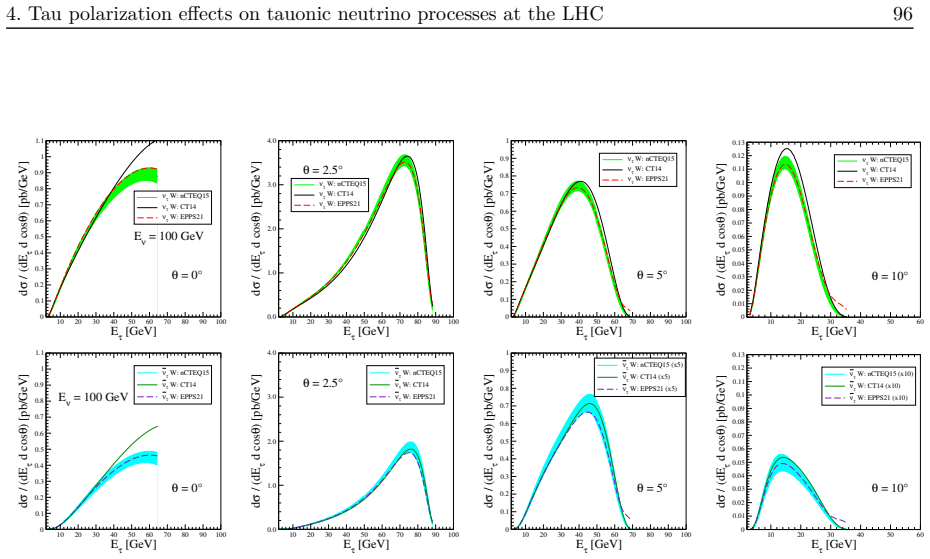
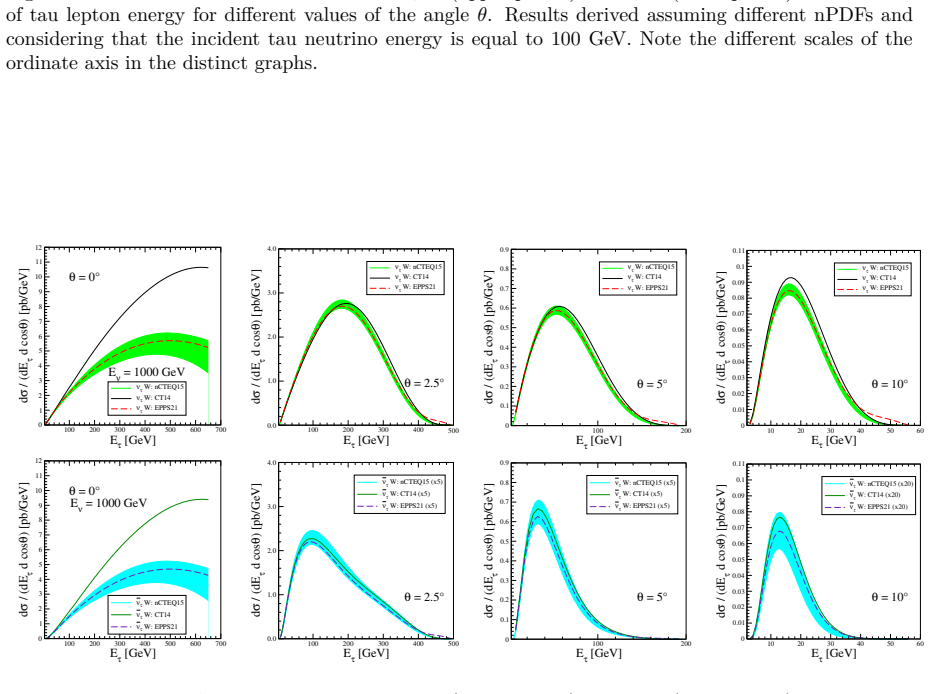
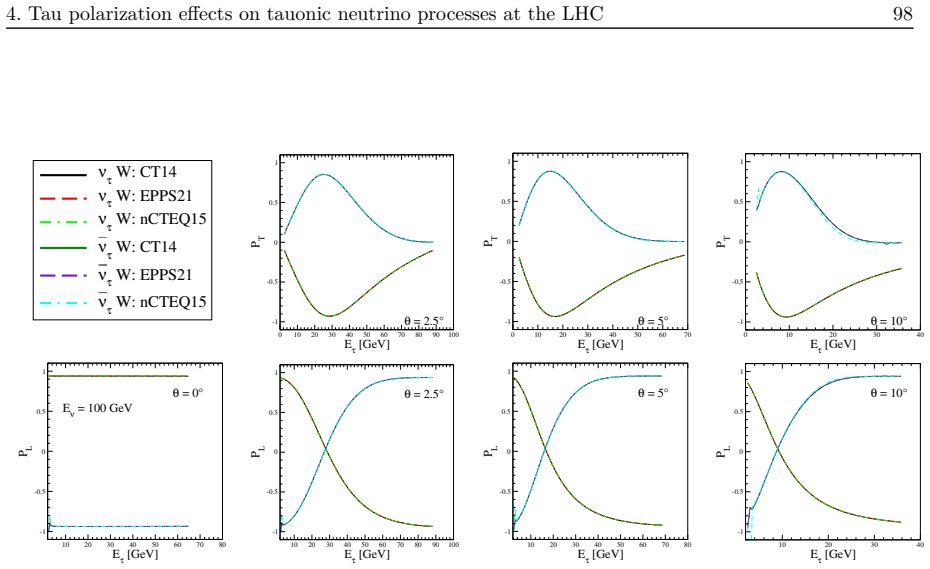
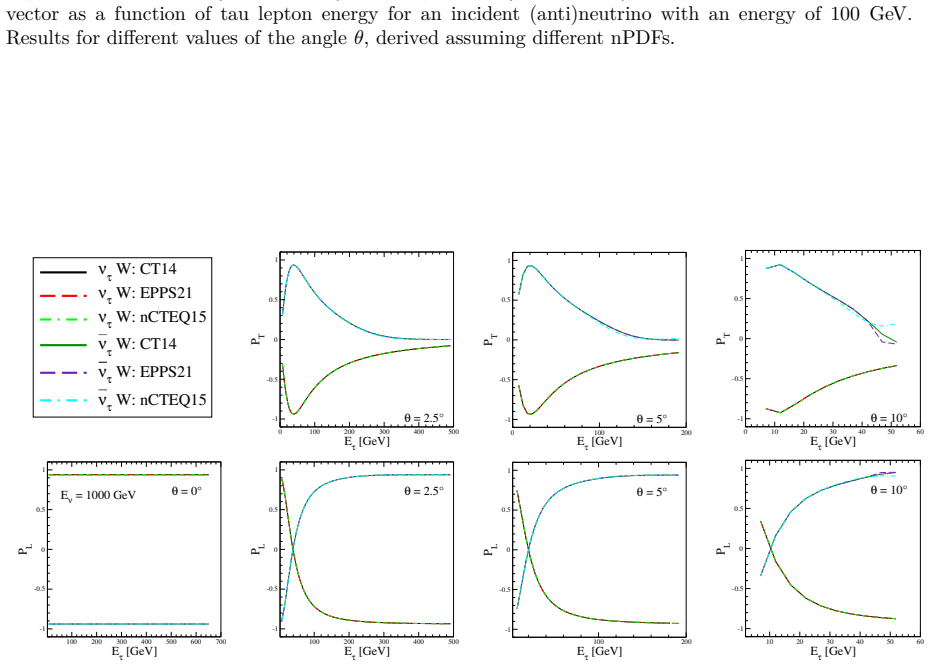
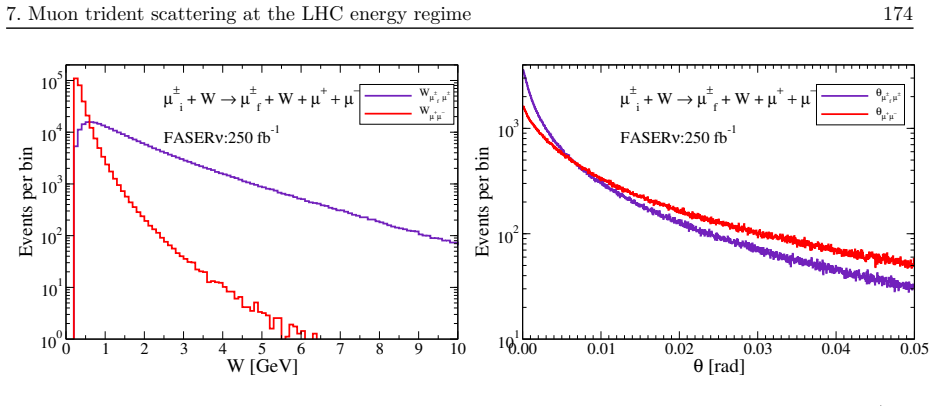
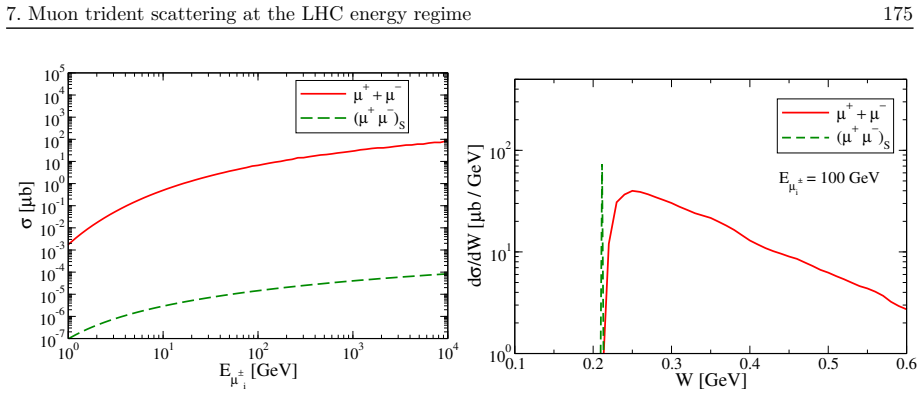
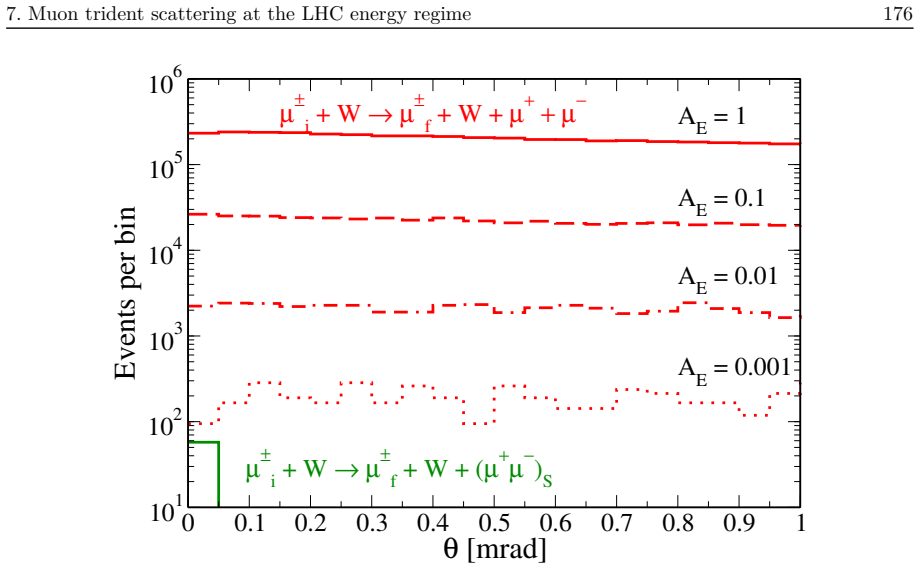
Taus produced by neutrinos at FASER2 will not be fully polarized, and trident processes become observable there and at the LHC.
A machine-rendered reading of the paper's core claim, the machinery that carries it, and where it could break.
Core claim
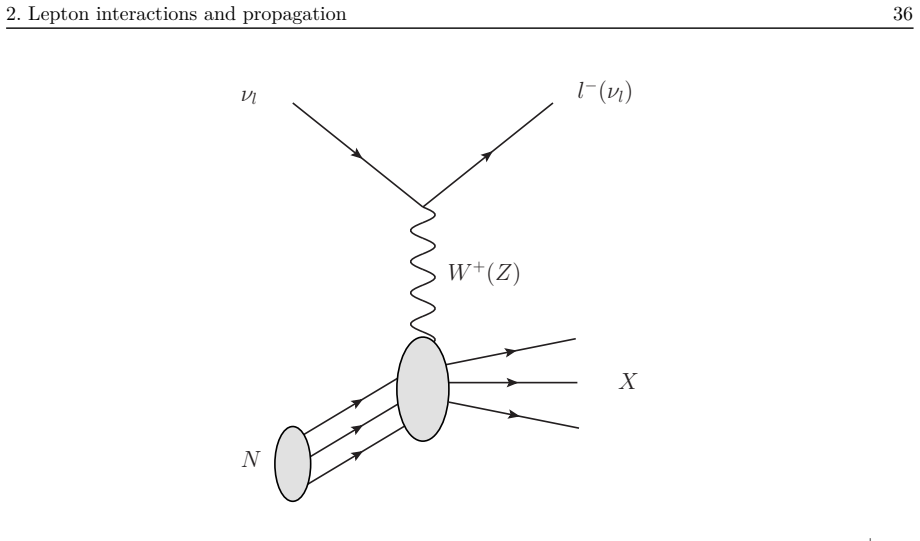
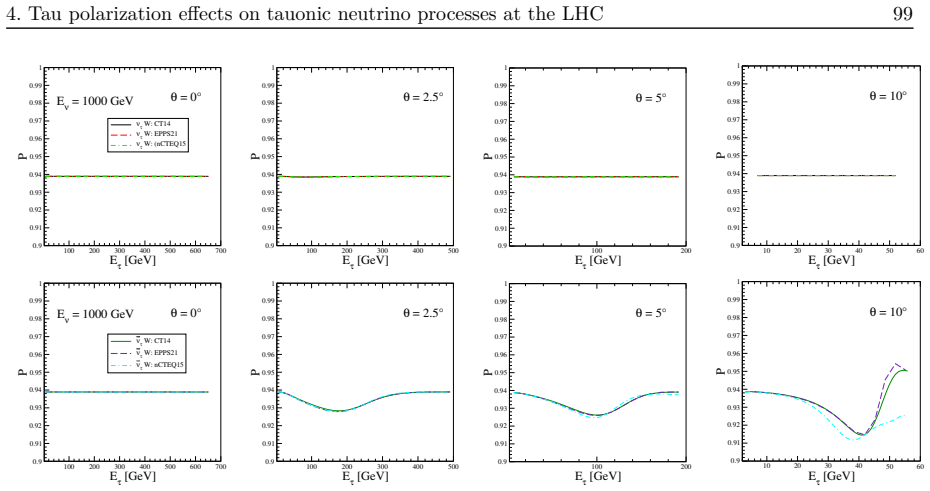
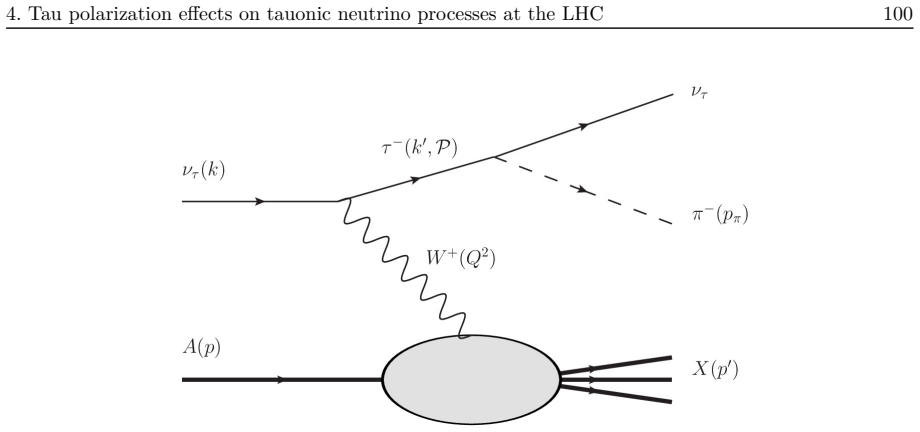
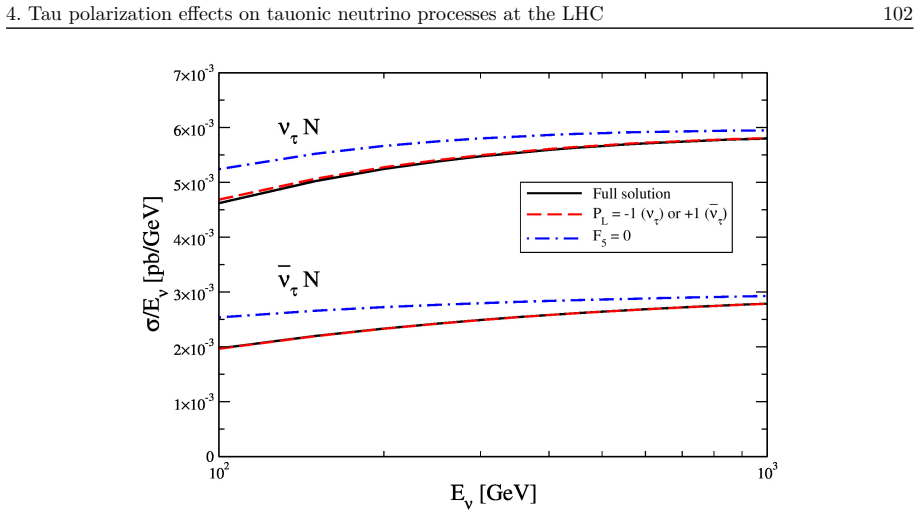
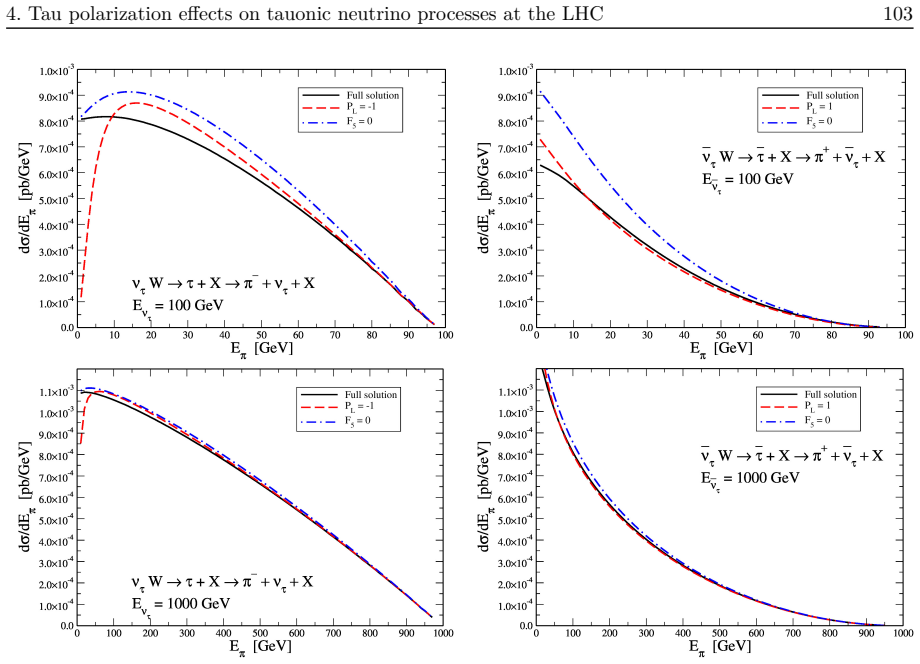
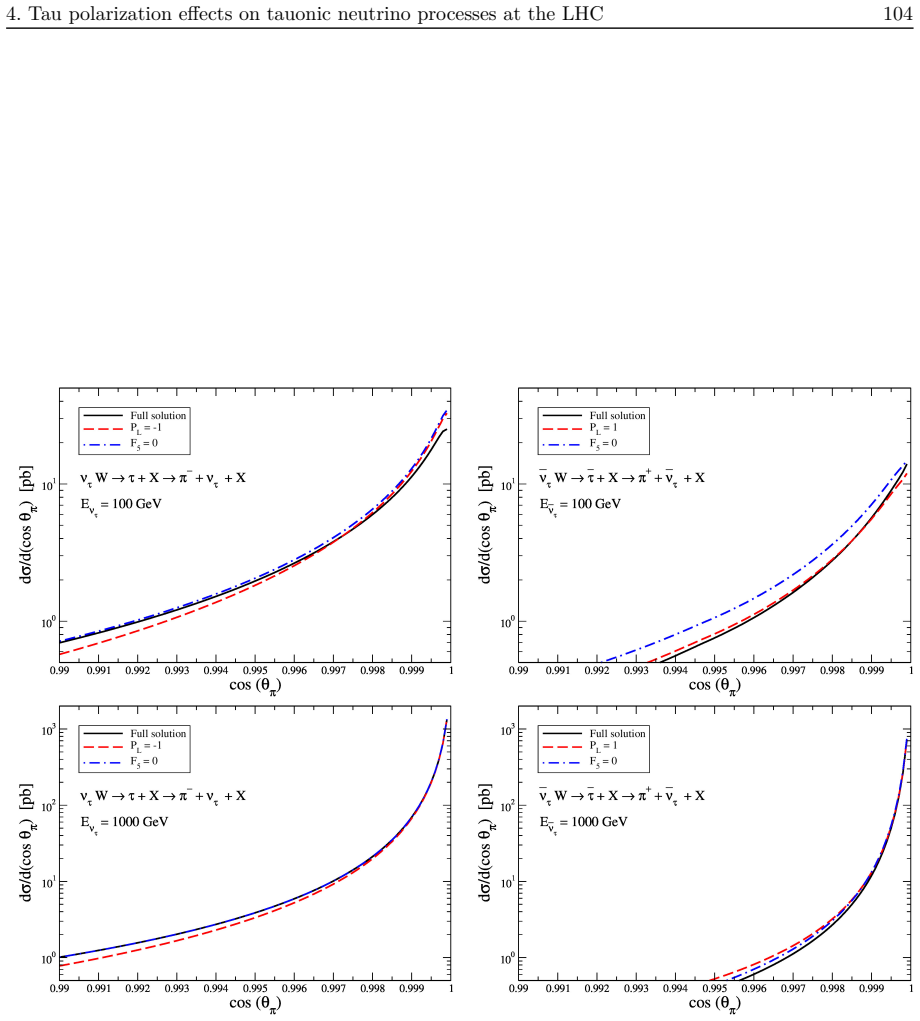
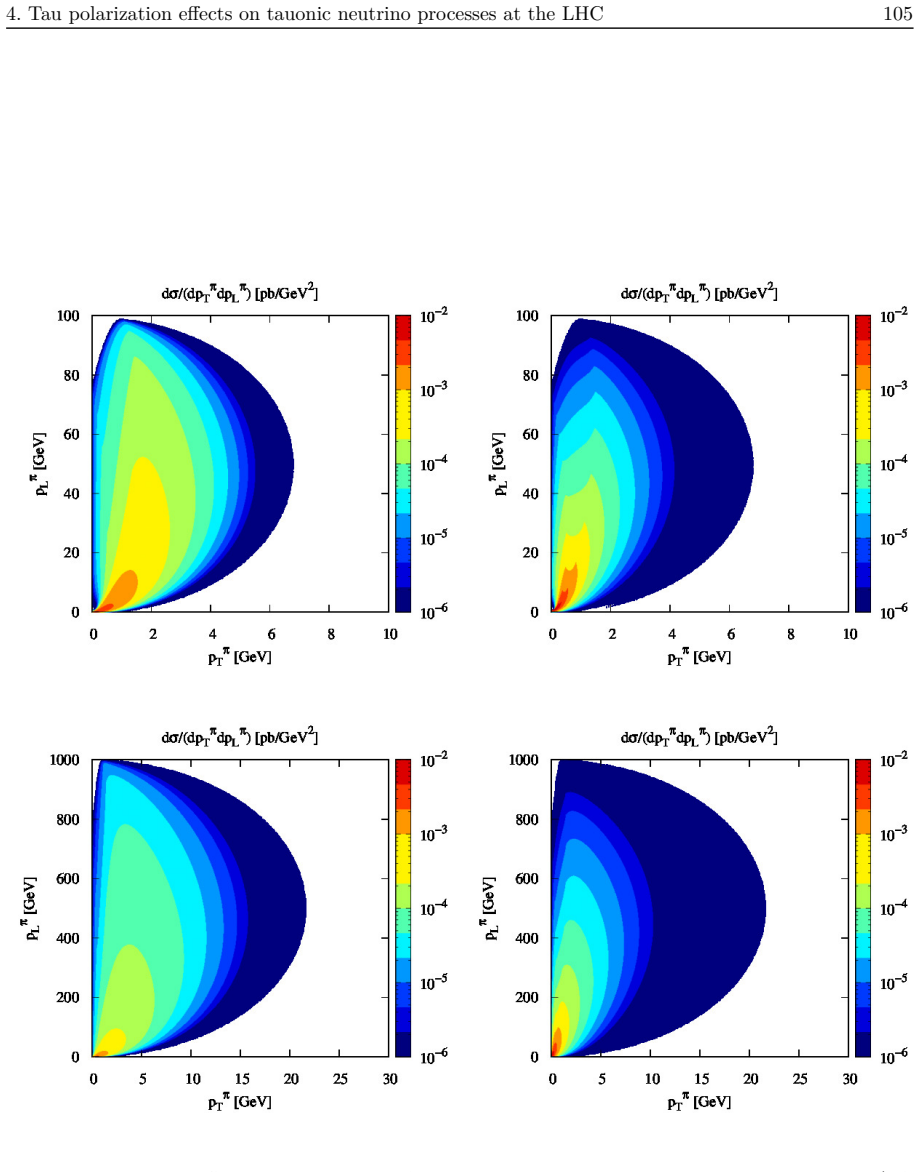
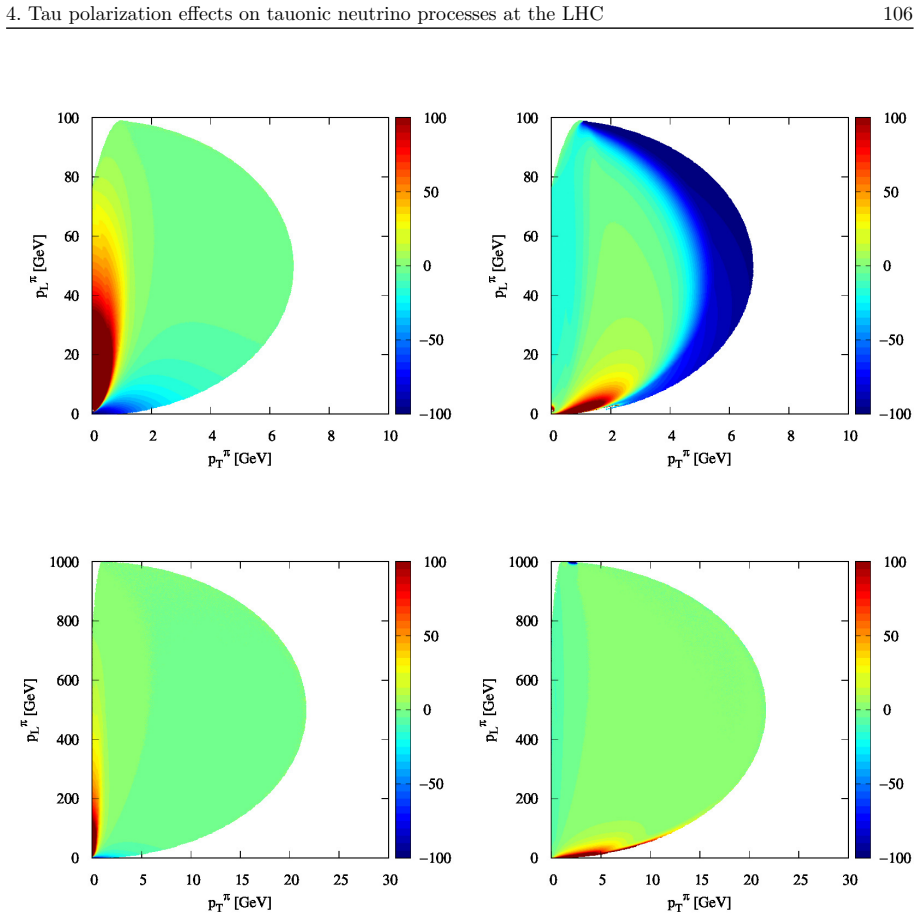
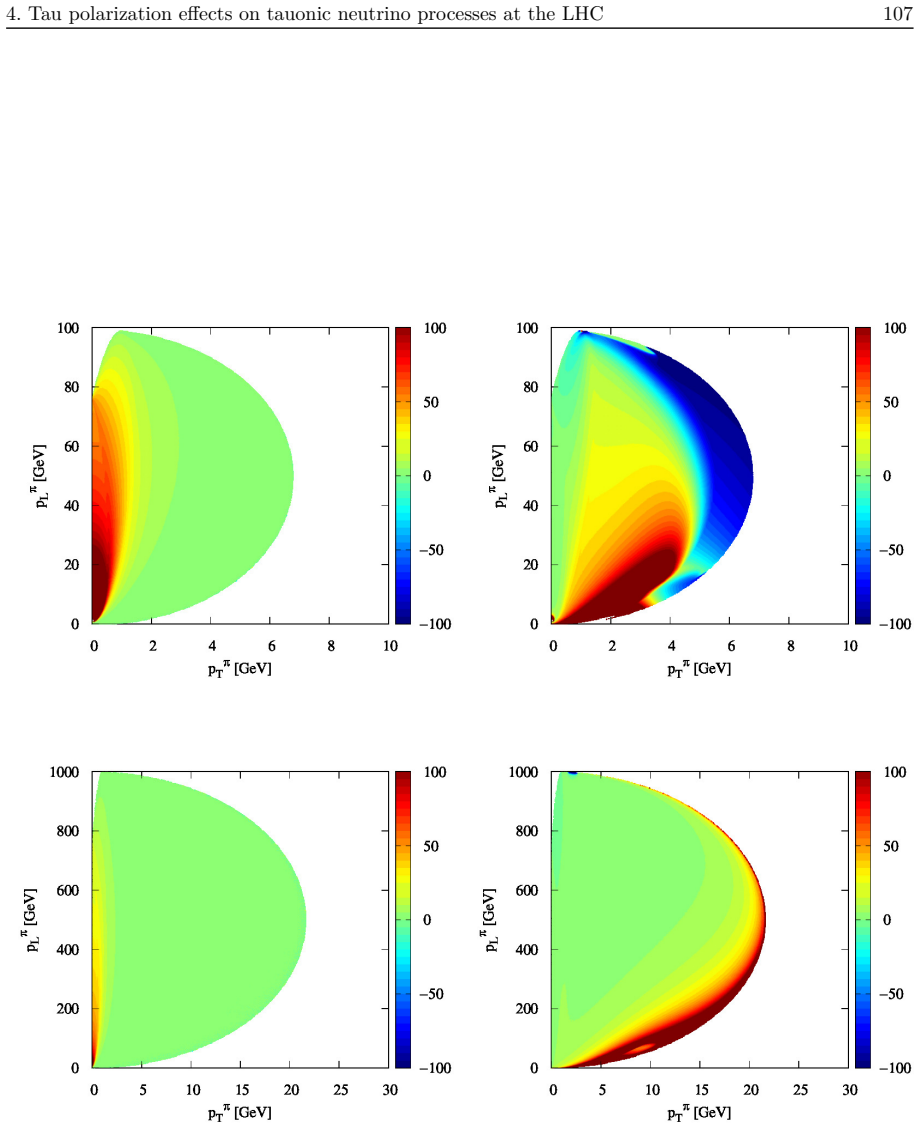
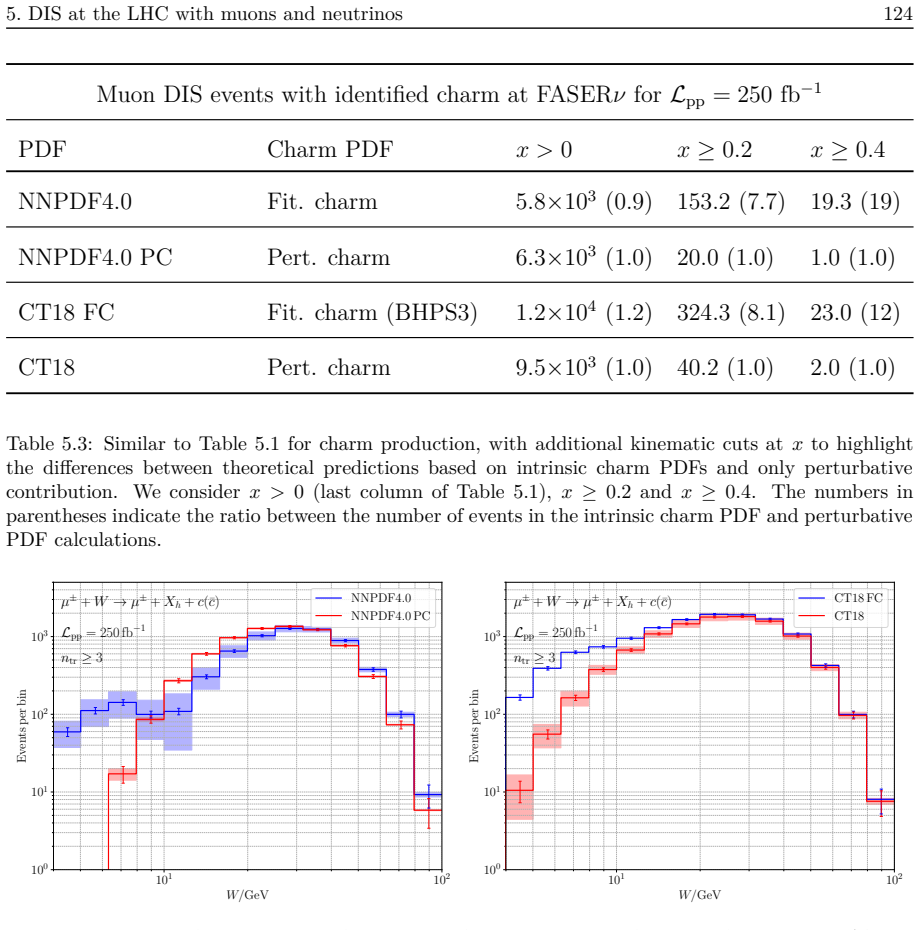
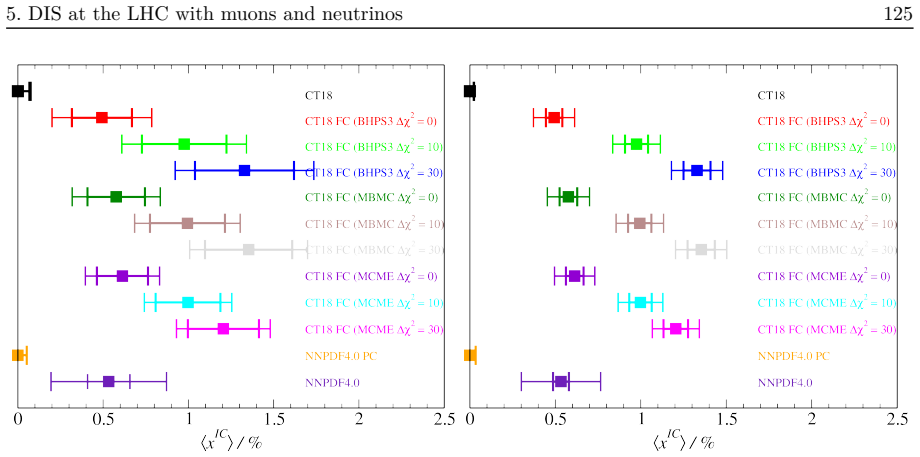
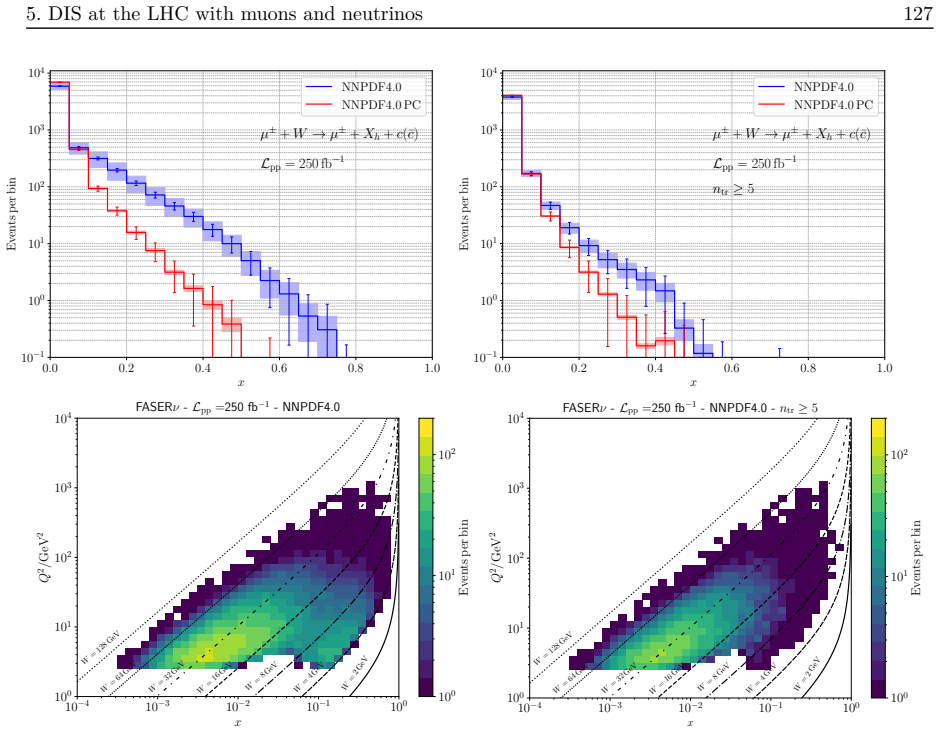
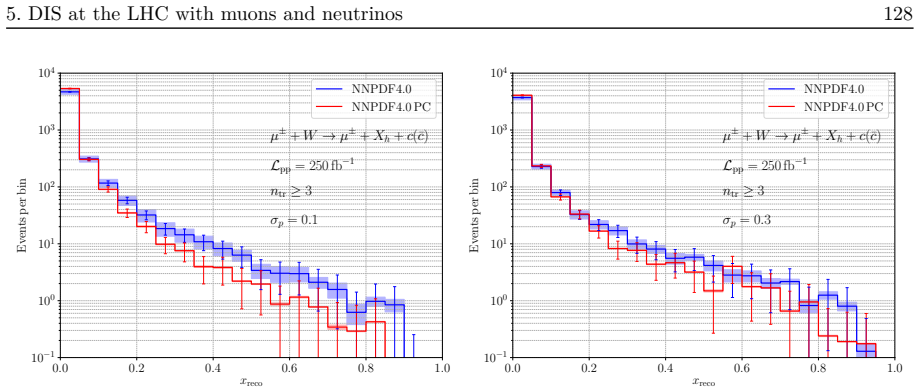
Calculations of lepton interactions show that taus produced in charged-current neutrino scattering at FASER2 will not be completely polarized. The neutrino trident process reaches observable rates at FASER2. Tau pair production can be observed for the first time in muon trident reactions at the LHC. Neutrino events recorded at IceCube across GeV to PeV energies contribute to understanding the structure of target hadrons and to searches for beyond-Standard-Model effects during propagation from astrophysical sources.
What carries the argument
Phenomenological calculations of charged-current neutrino interactions, muon-initiated scattering, and trident processes that predict polarization and event rates at forward LHC detectors and IceCube.
If this is right
- Taus from charged-current interactions at FASER2 exhibit incomplete polarization.
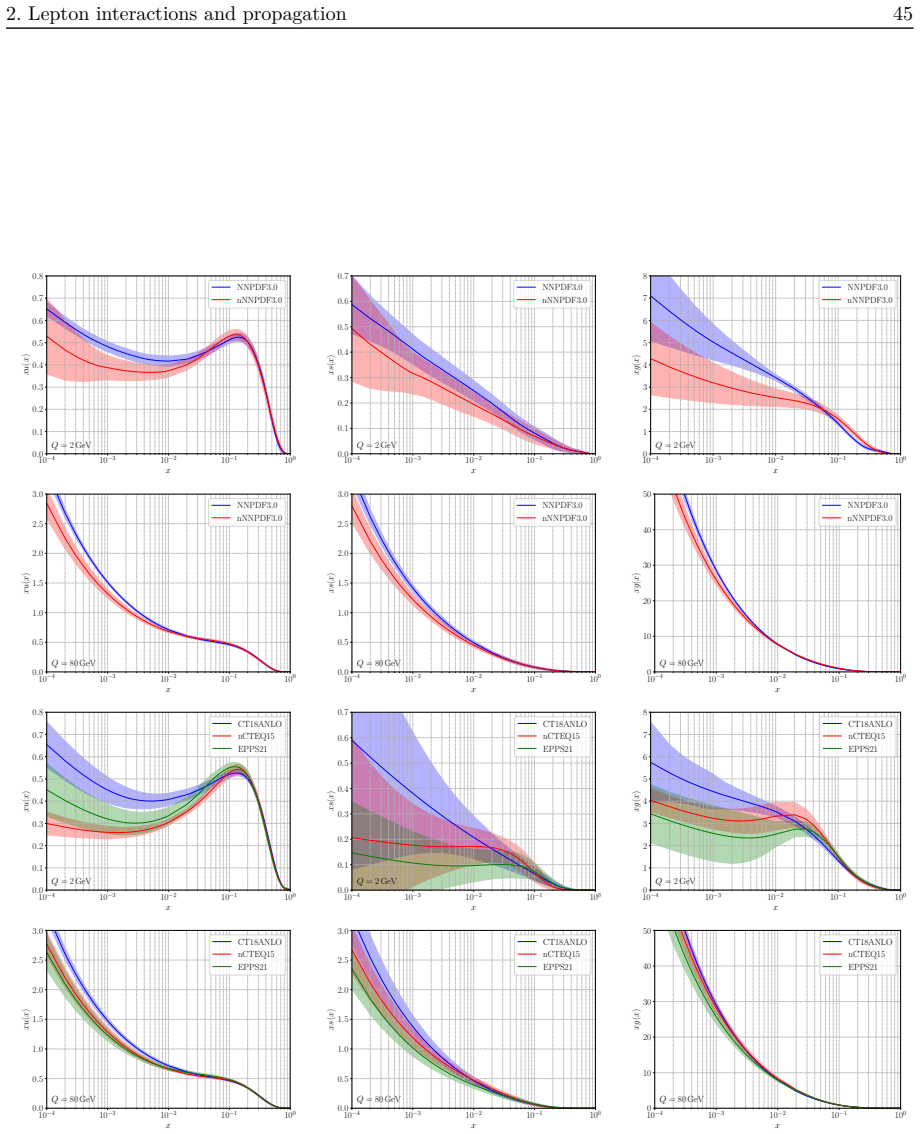
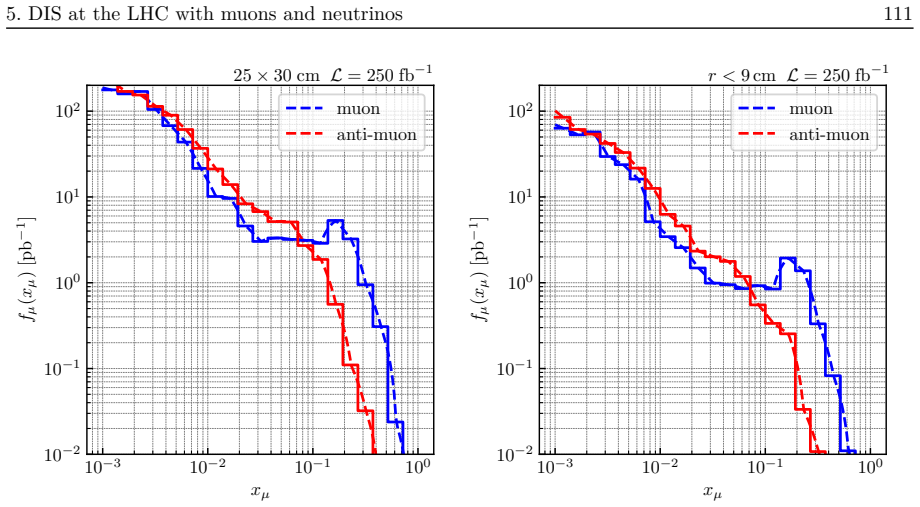
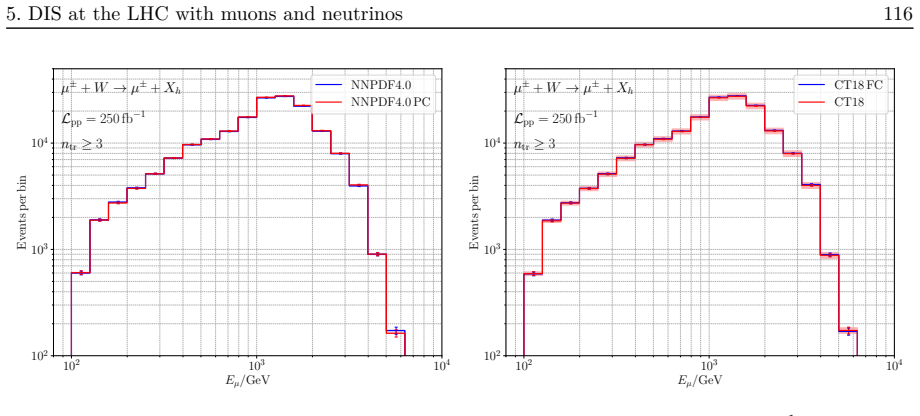
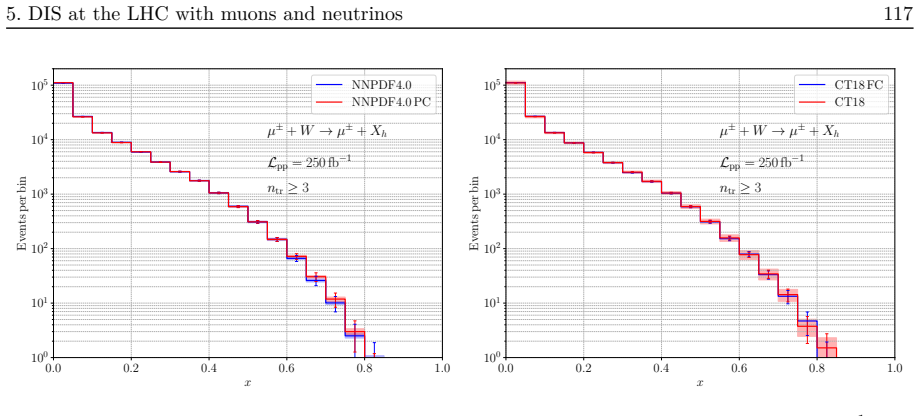
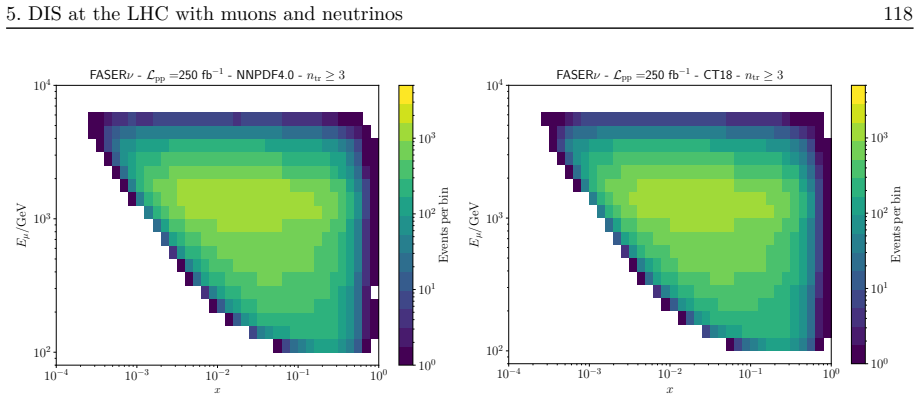
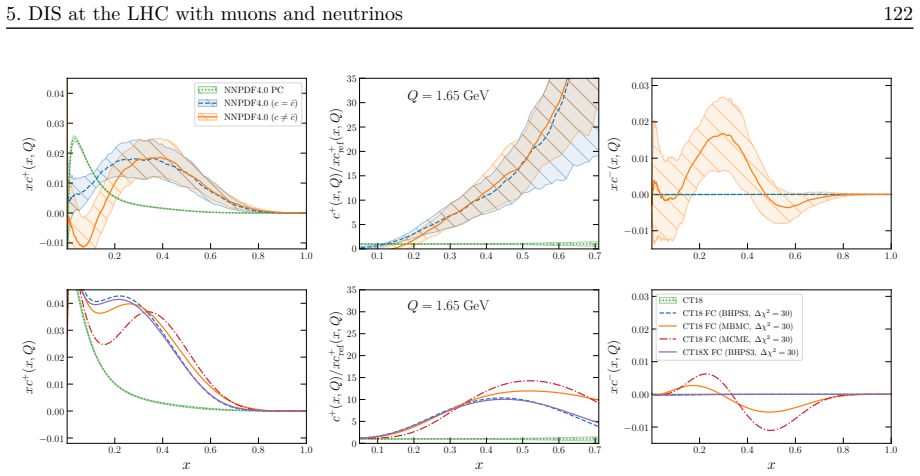
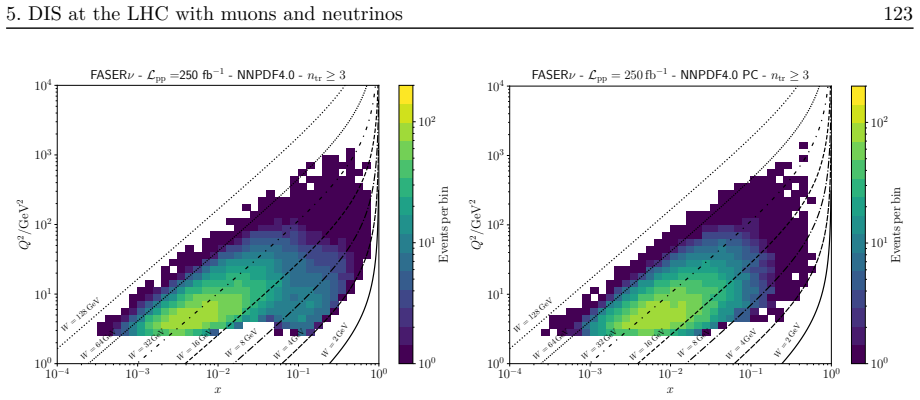
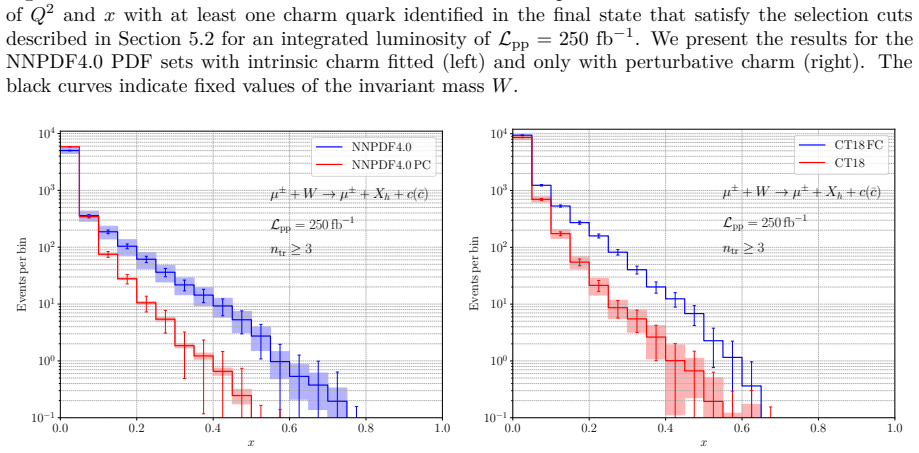
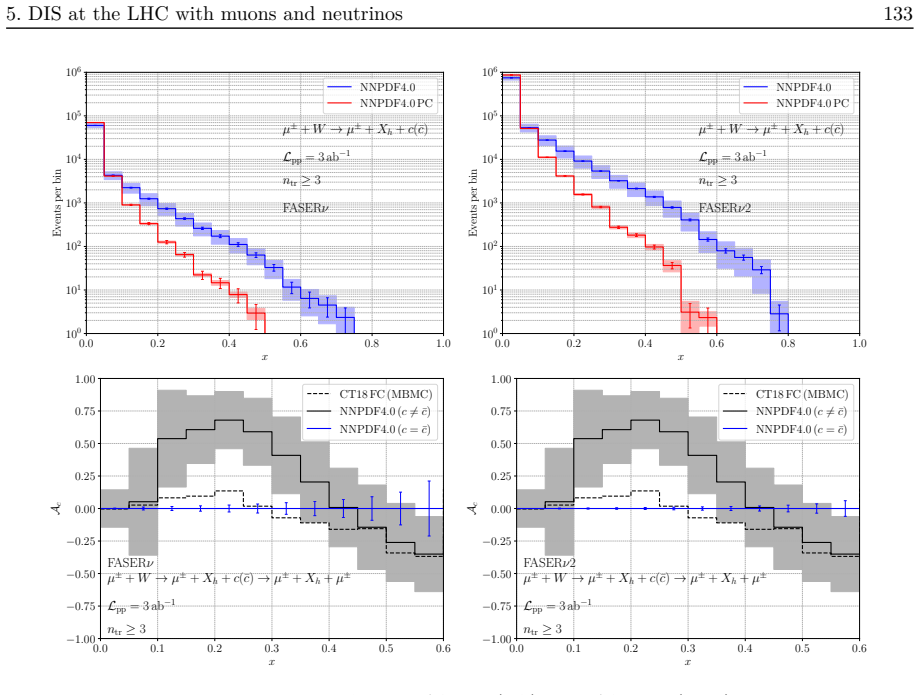
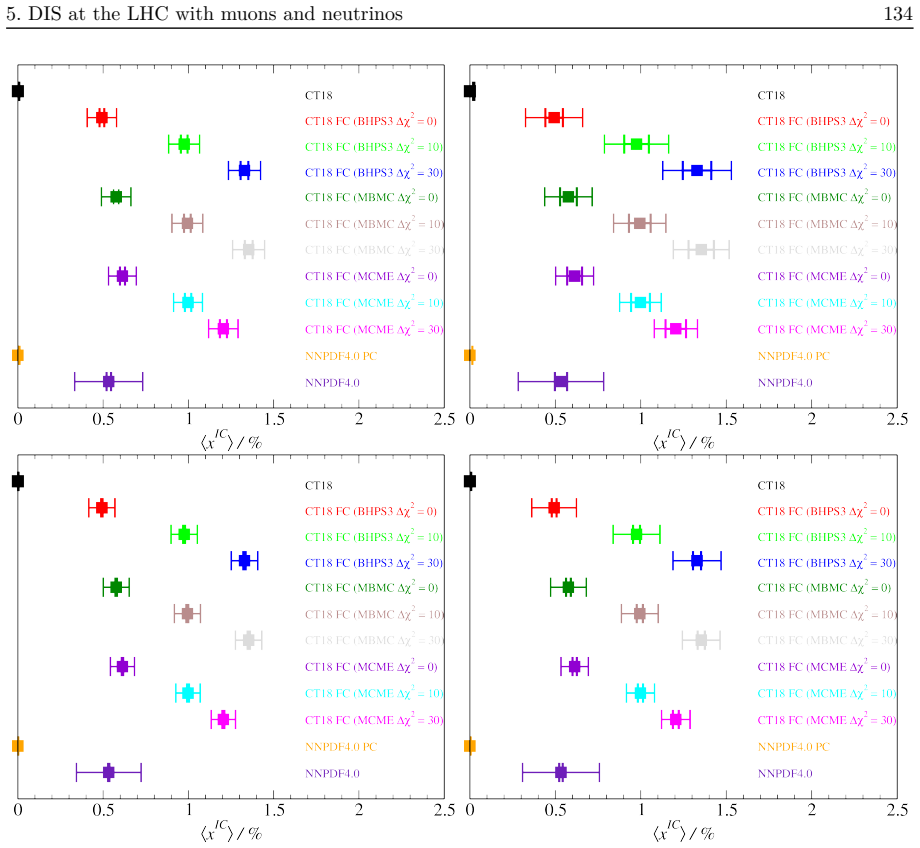
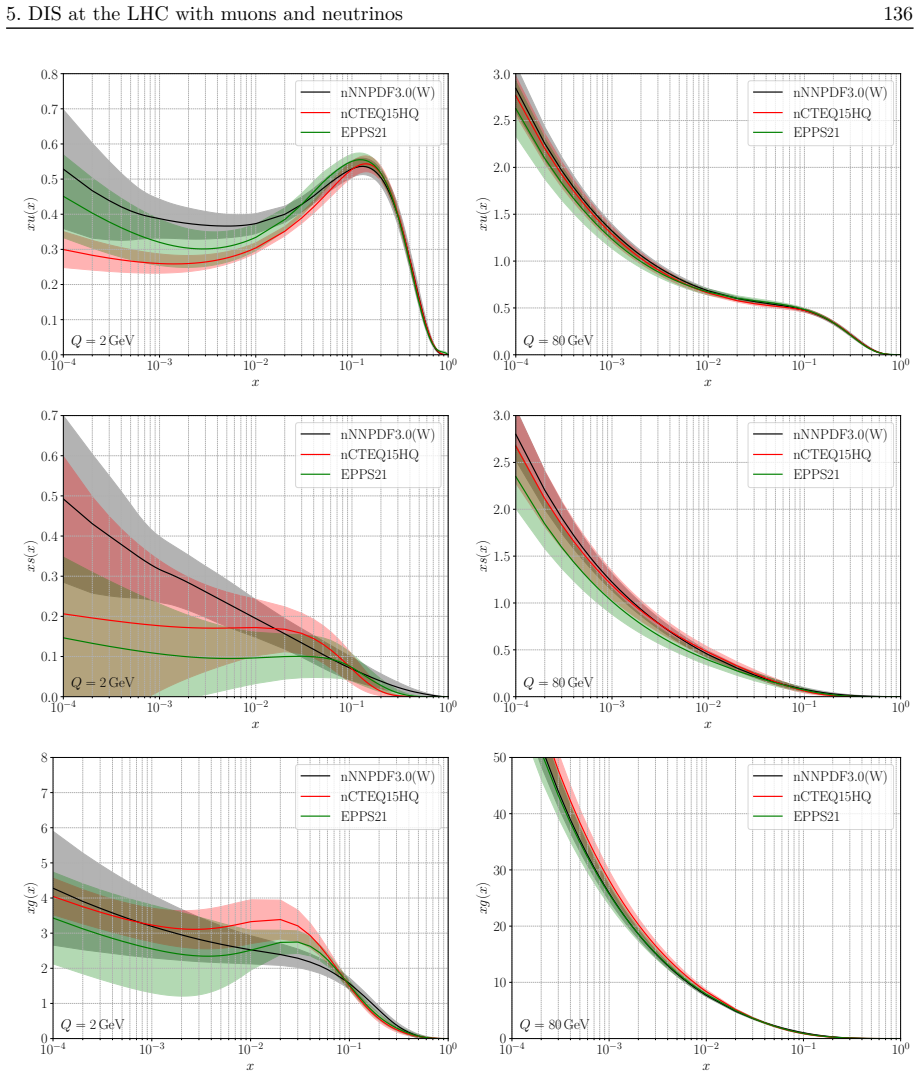
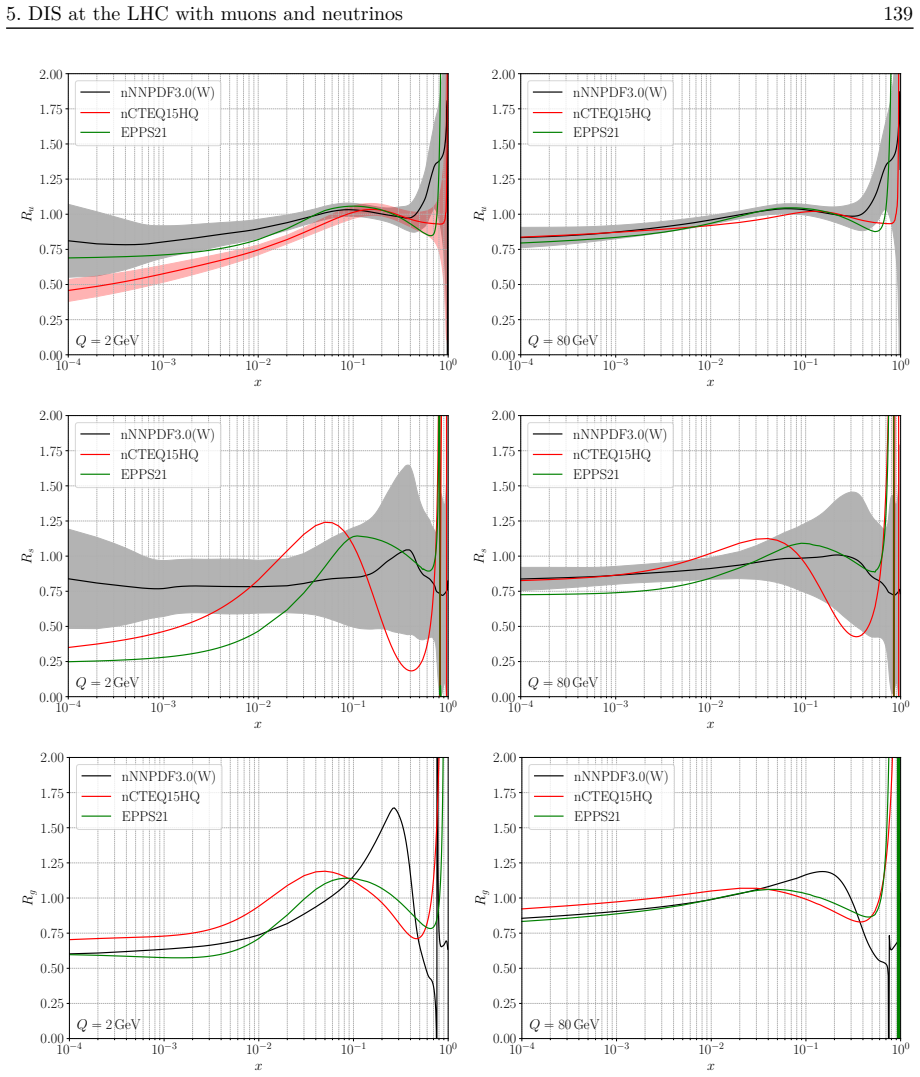
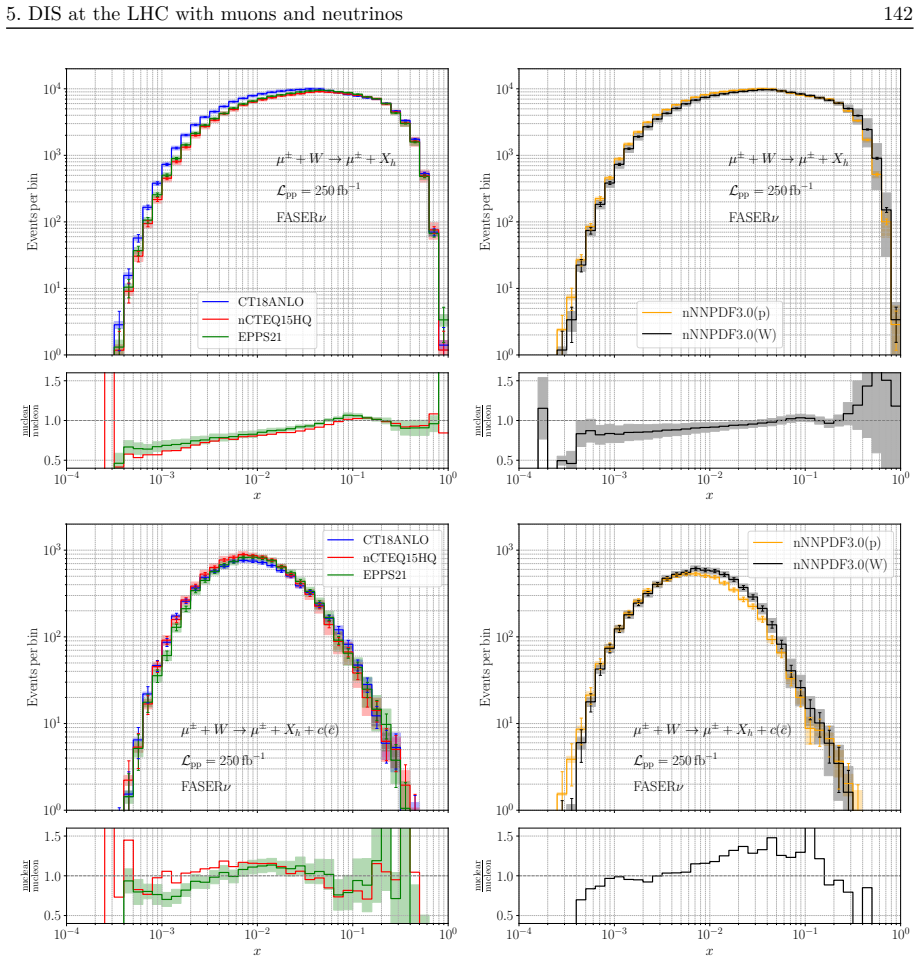
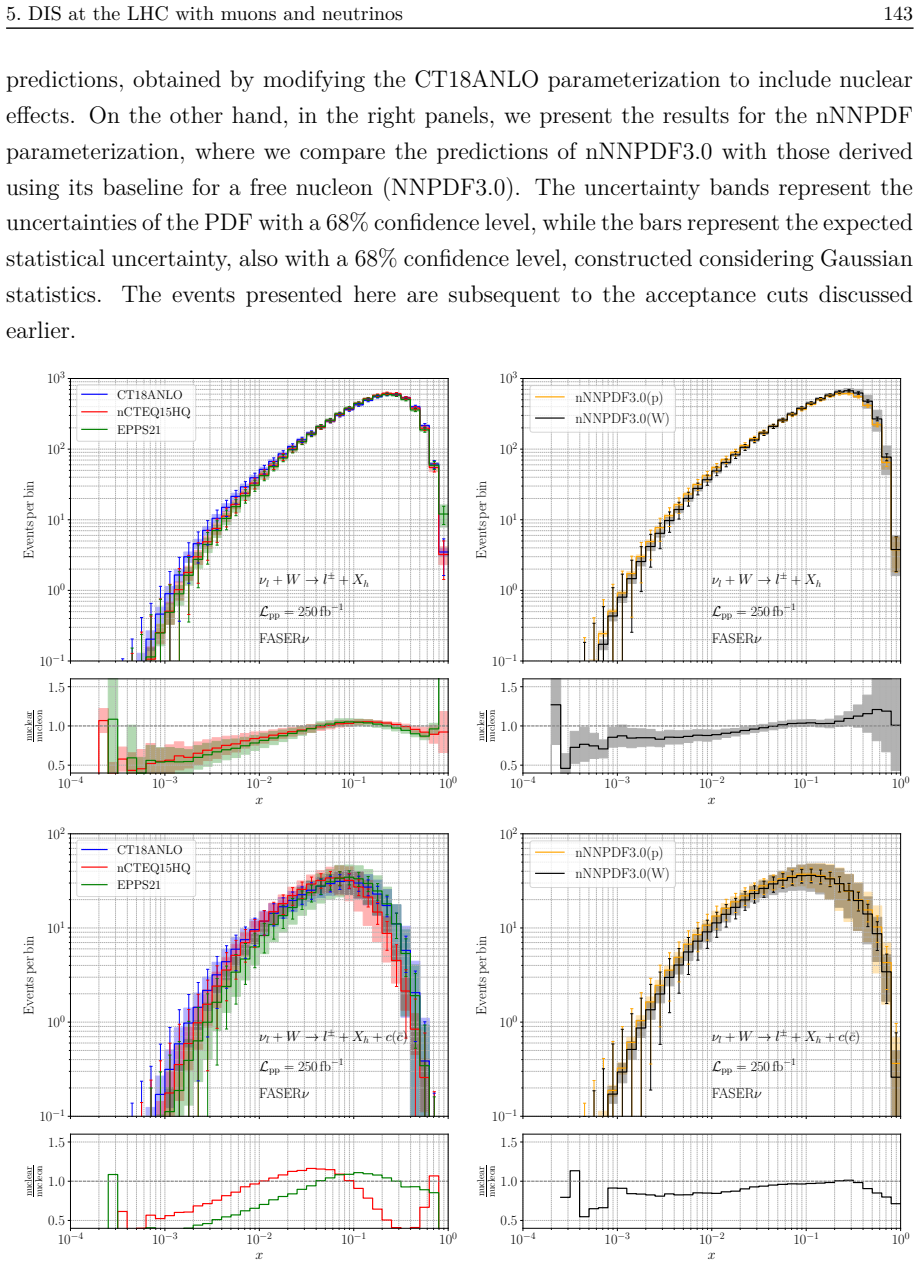
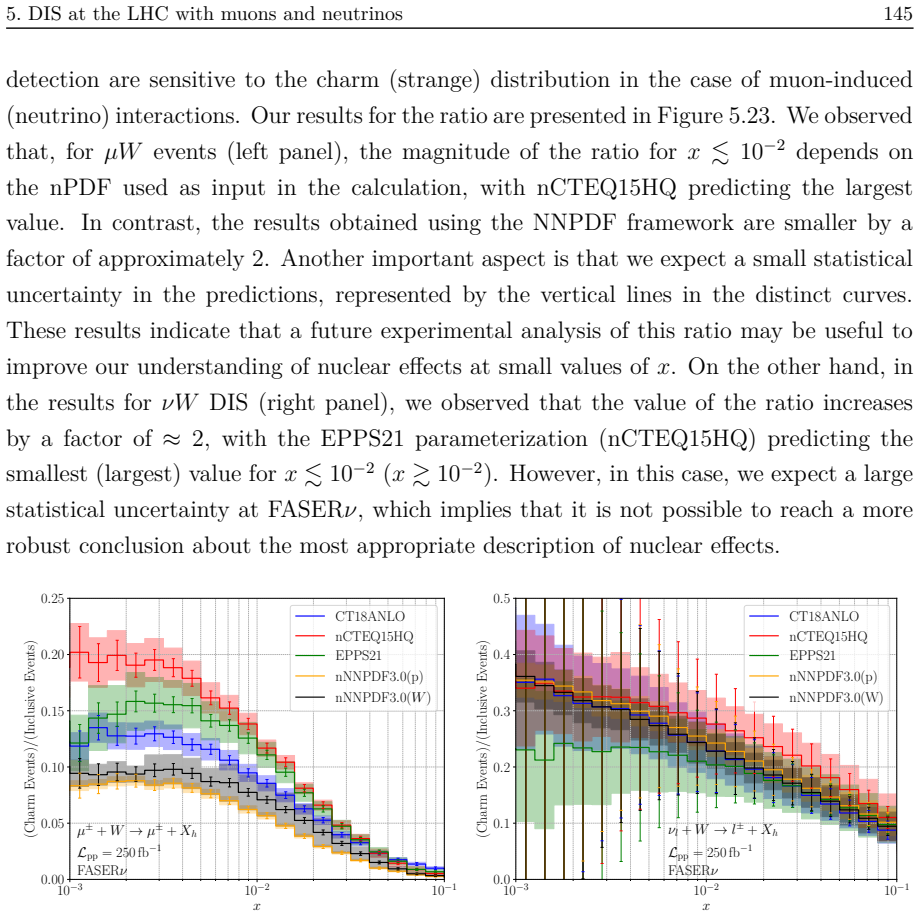
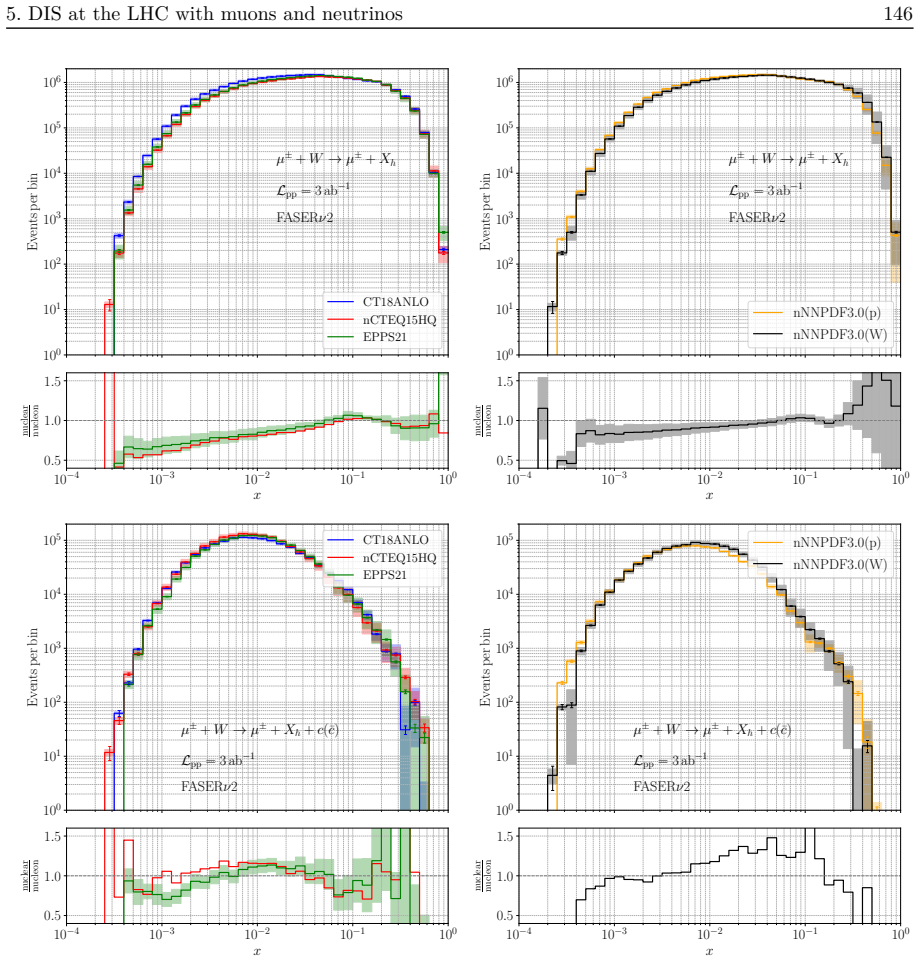
- Muon-initiated events at FASER reveal nuclear effects and intrinsic charm in nucleons.
- Neutrino trident events reach observable rates at FASER2.
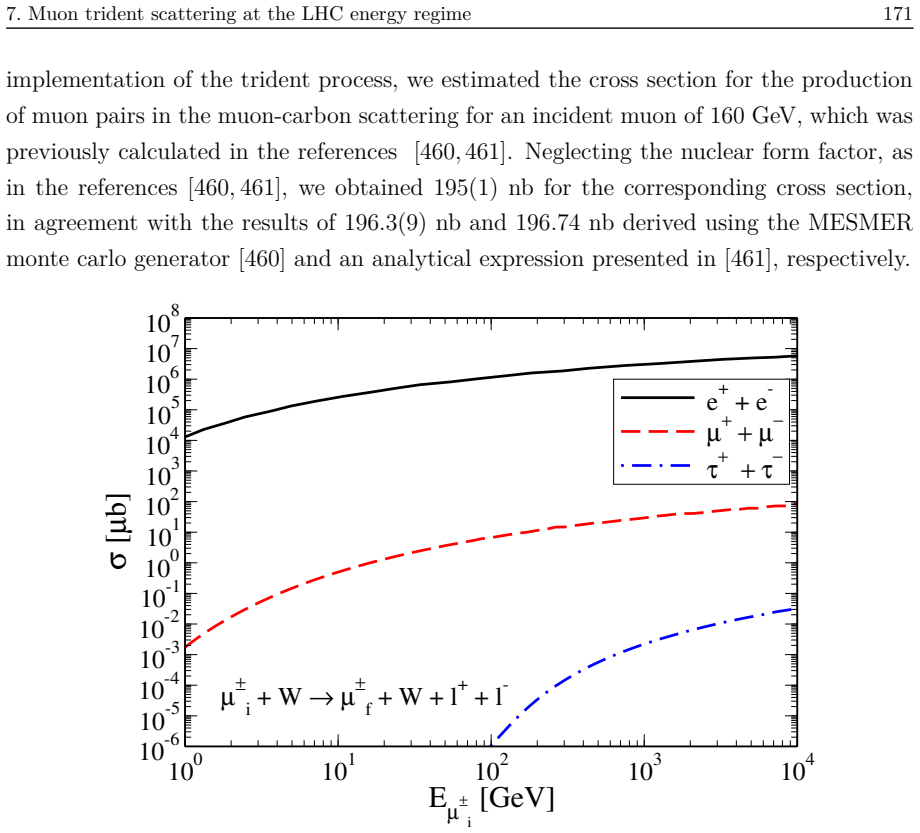
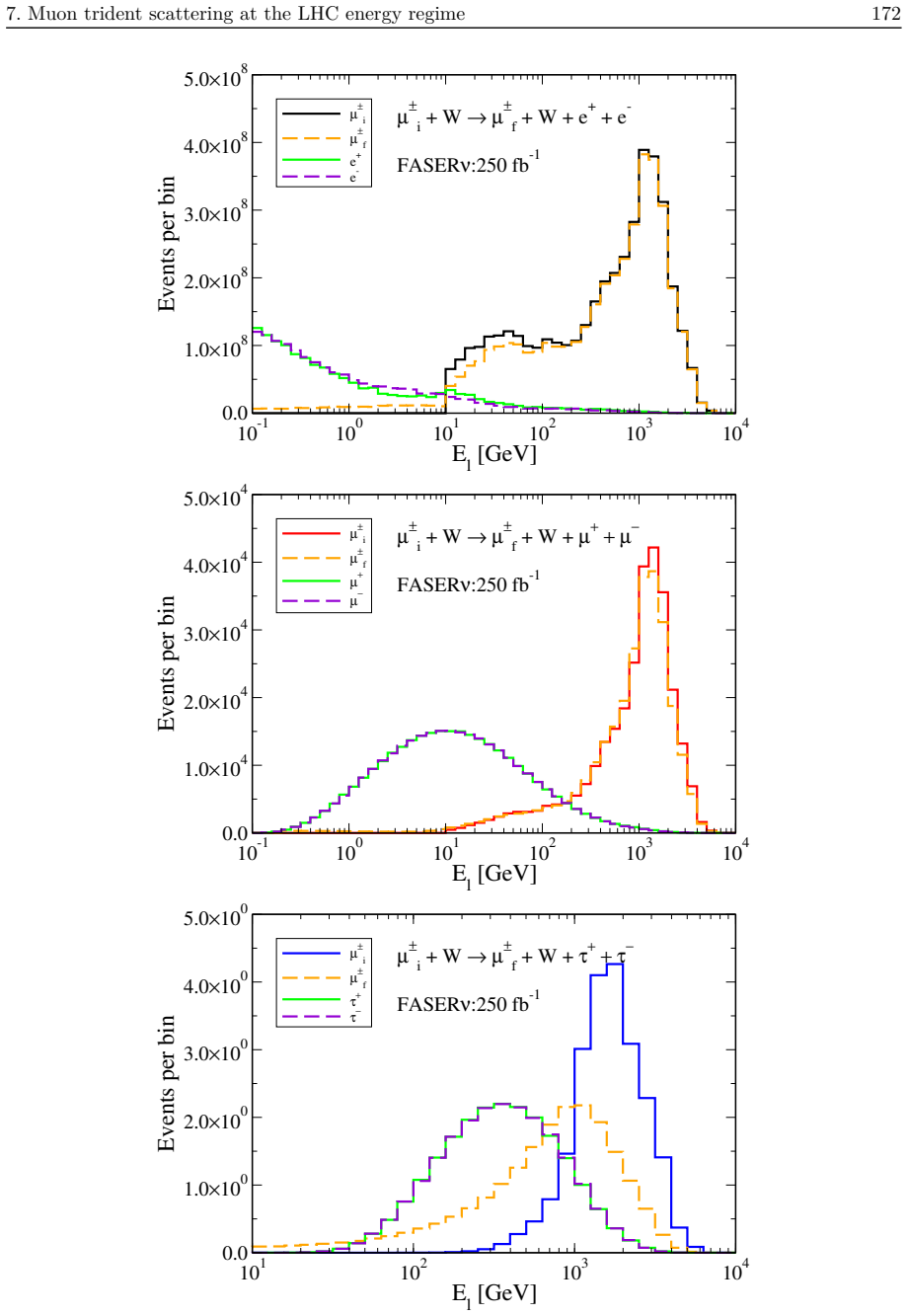
- Tau pair production appears for the first time in muon trident reactions at the LHC.
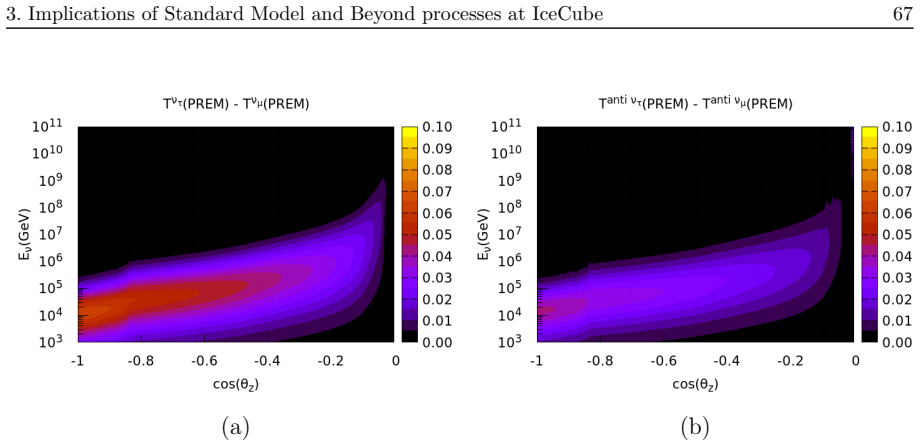
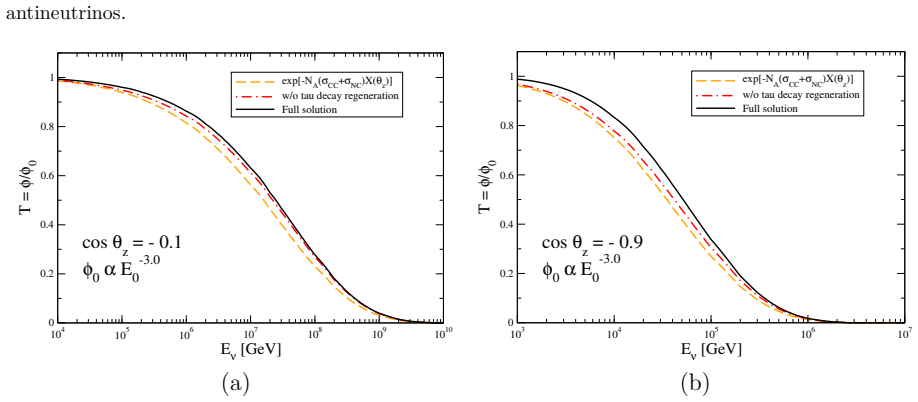
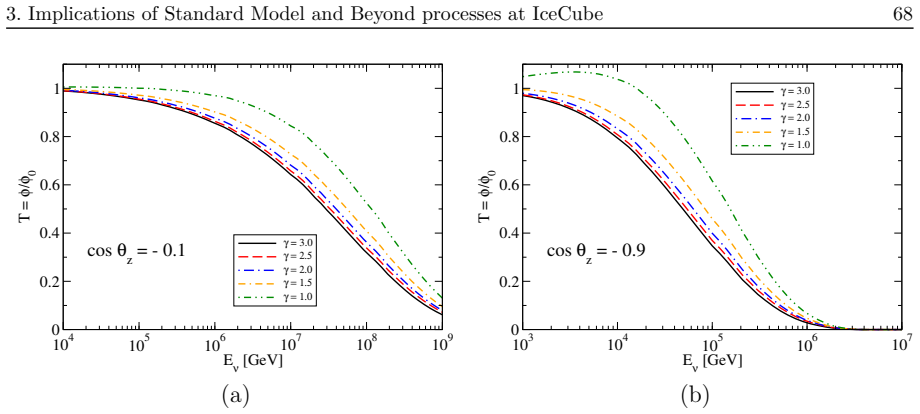
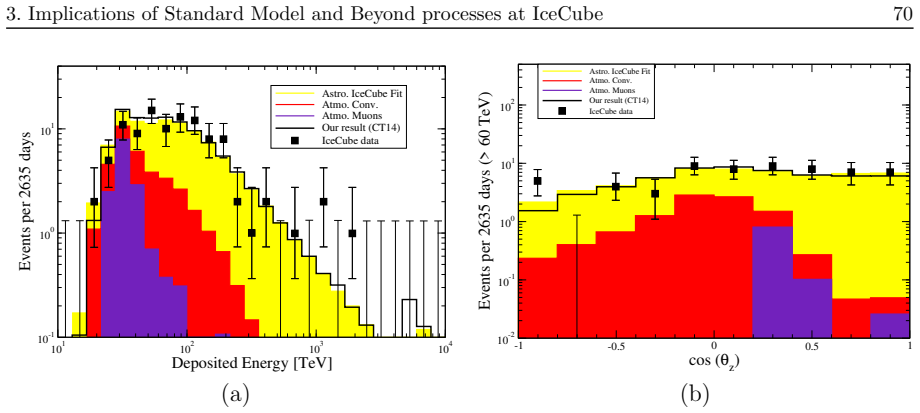
- IceCube neutrino events inform hadron structure and beyond-Standard-Model propagation effects.
Where Pith is reading between the lines
- If polarization measurements at FASER2 deviate from the calculated values, they would require adjustments to the assumed neutrino flux or interaction modeling.
- Detection of trident events could provide a new calibration point for rare-process backgrounds in forward detectors.
- IceCube data on high-energy neutrinos might connect atmospheric and astrophysical source modeling through shared interaction physics.
Load-bearing premise
The modeling of neutrino fluxes from proton-proton collisions at the LHC and the accuracy of standard model interaction cross sections at GeV to EeV energies are sufficient to yield reliable predictions for polarization and rare process rates at FASER2 and IceCube.
What would settle it
A measurement of fully polarized taus or zero trident events in the expected FASER2 data sample would contradict the predicted rates and polarization values.
Figures
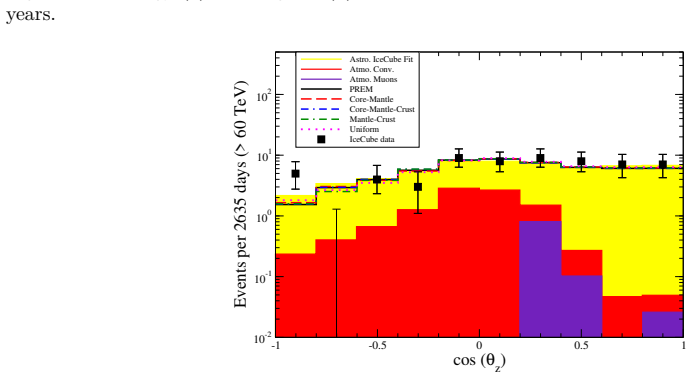
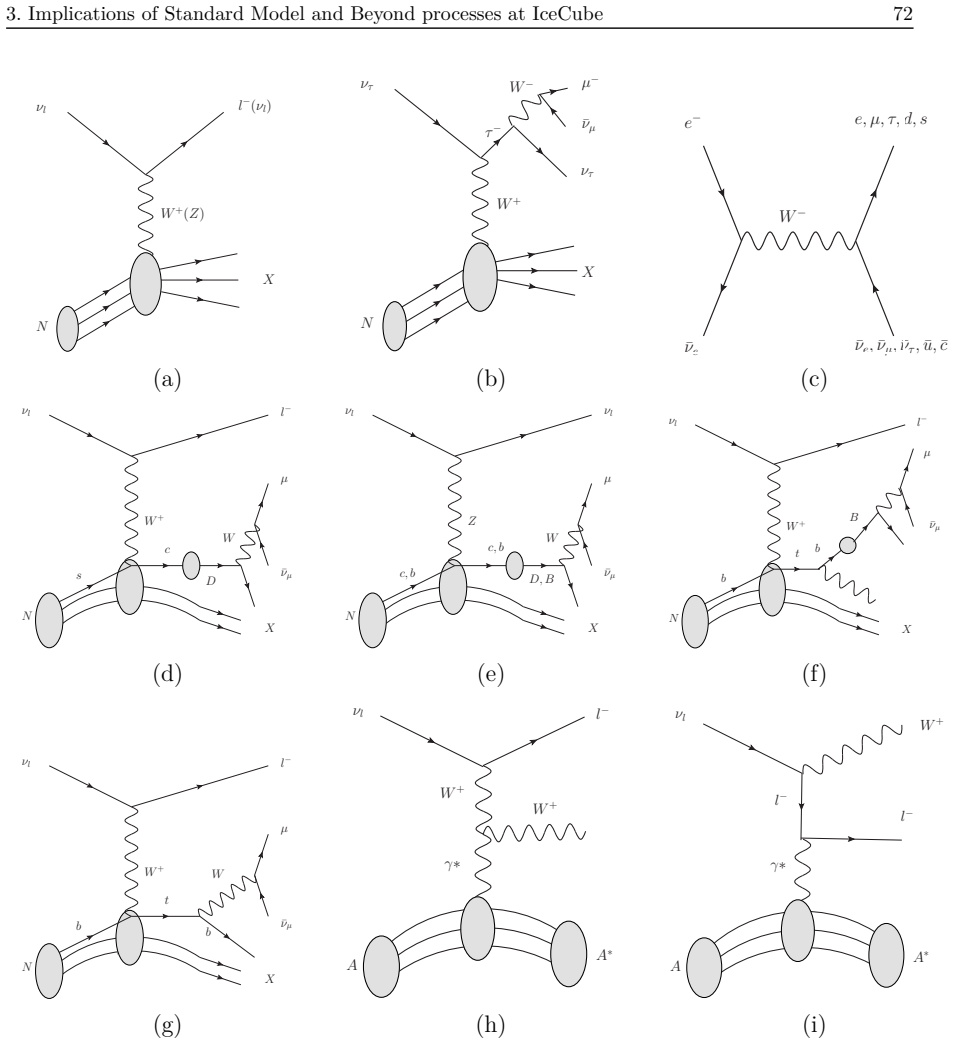
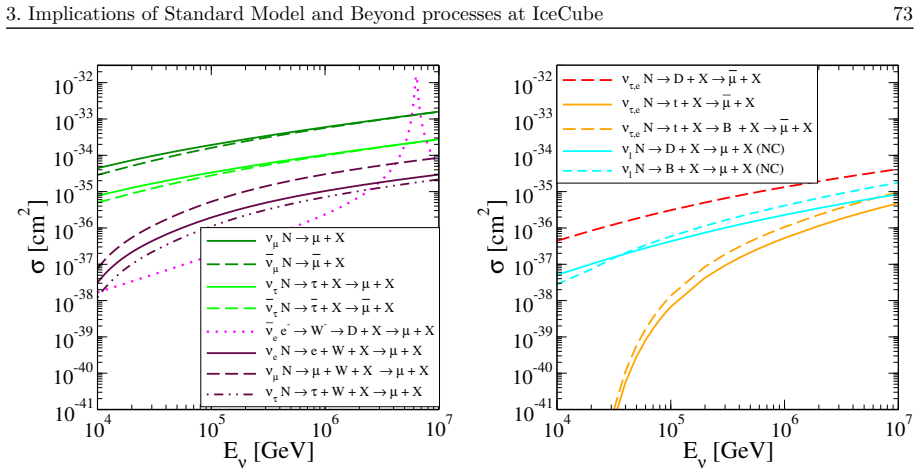
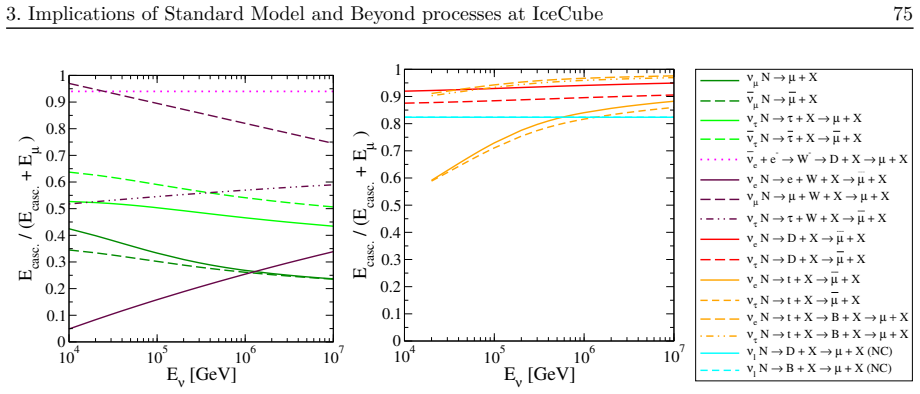
read the original abstract
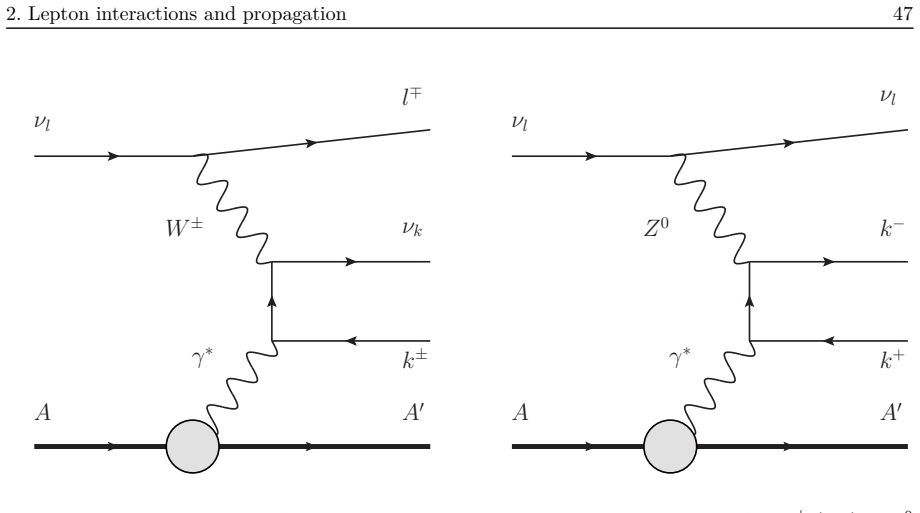
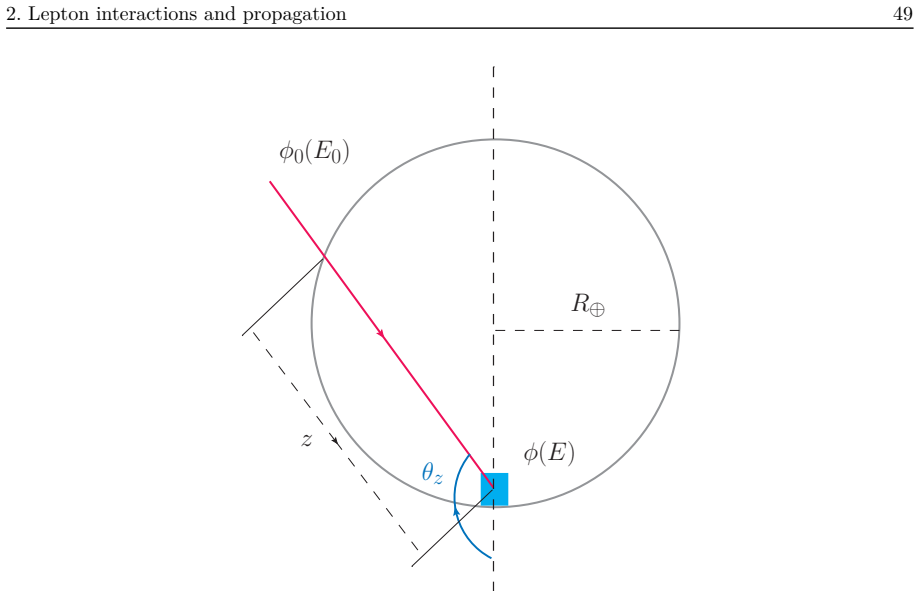
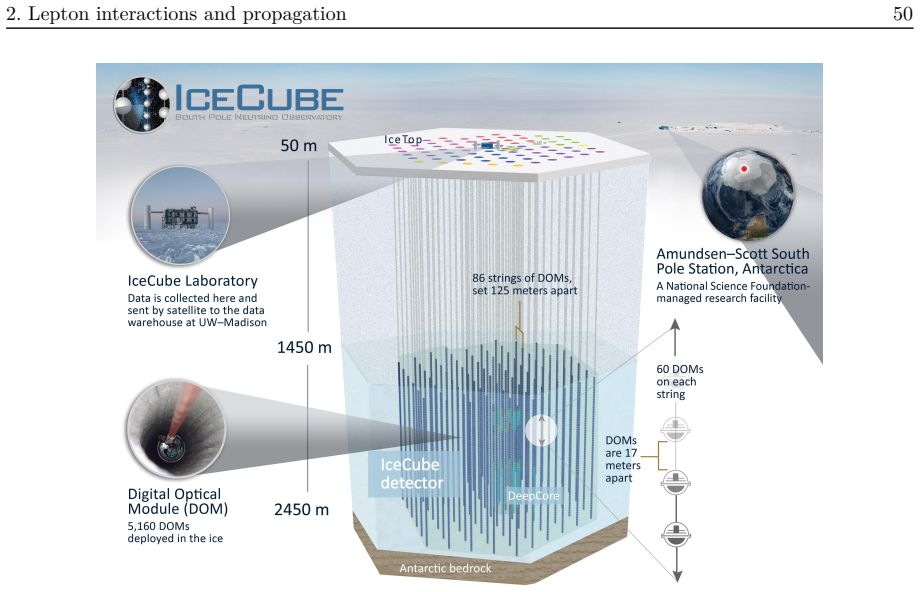
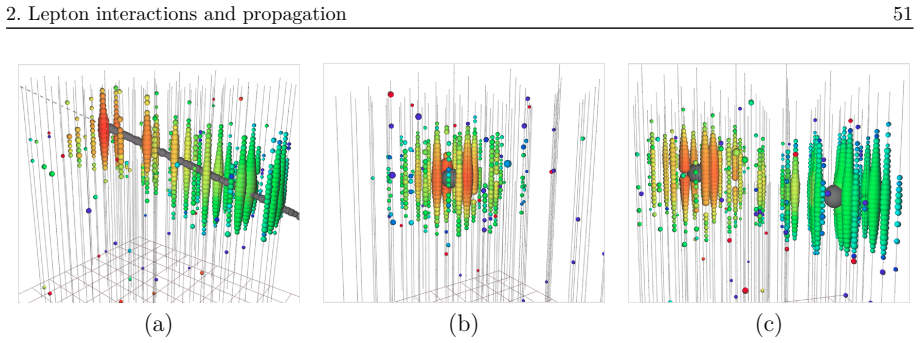
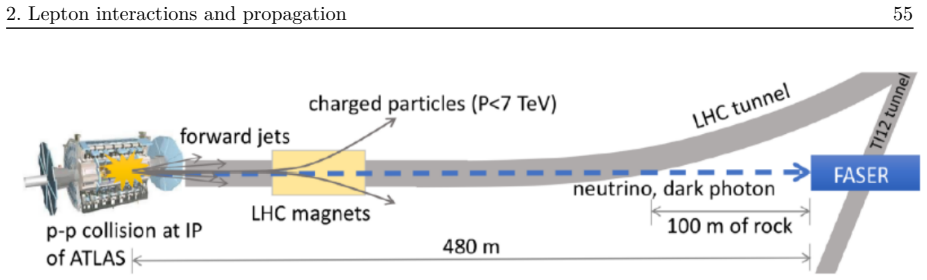
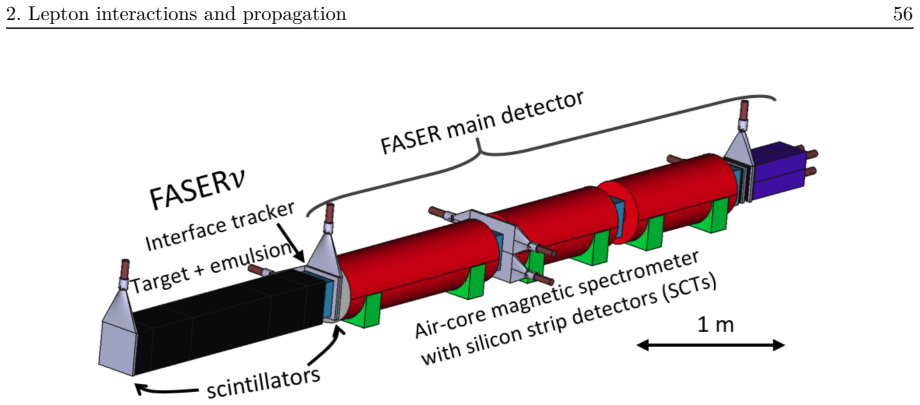
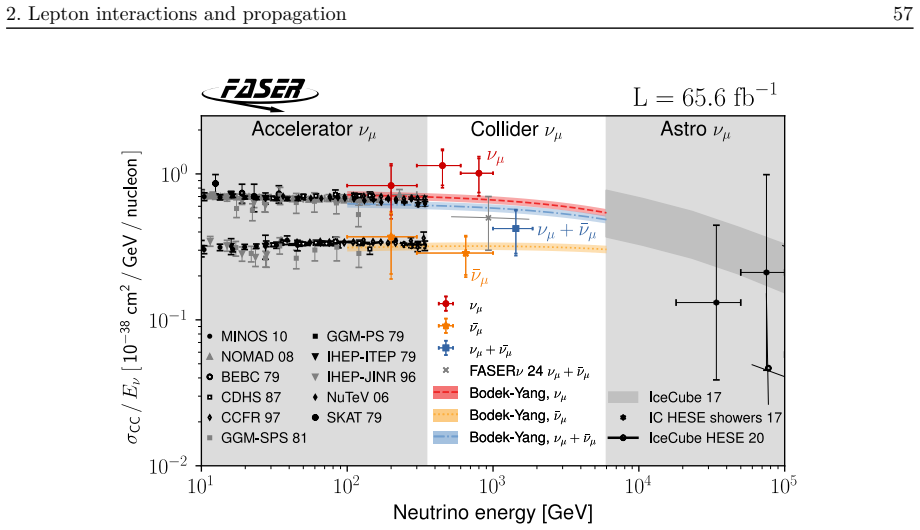
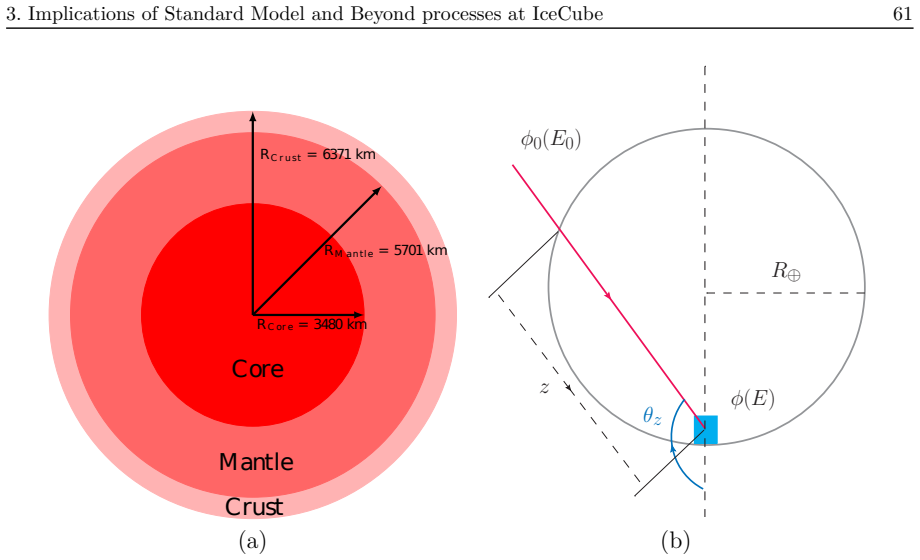
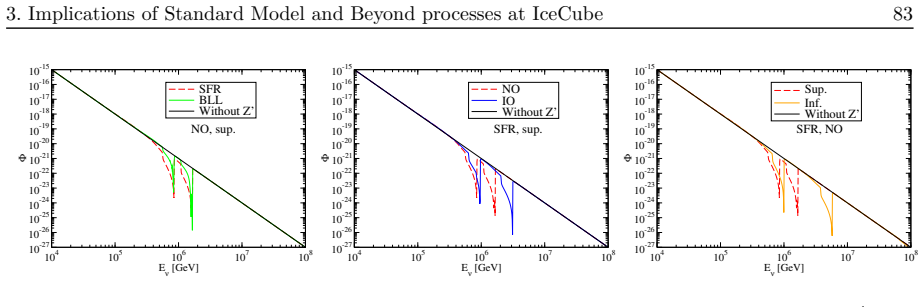
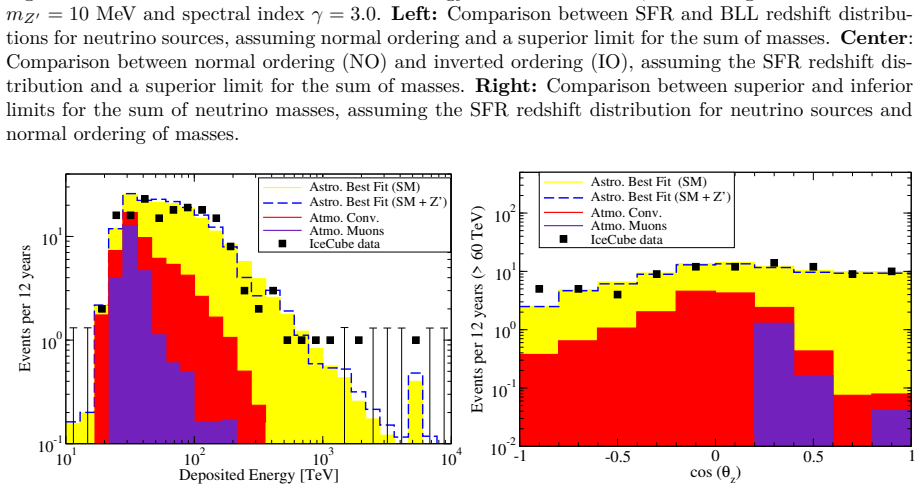
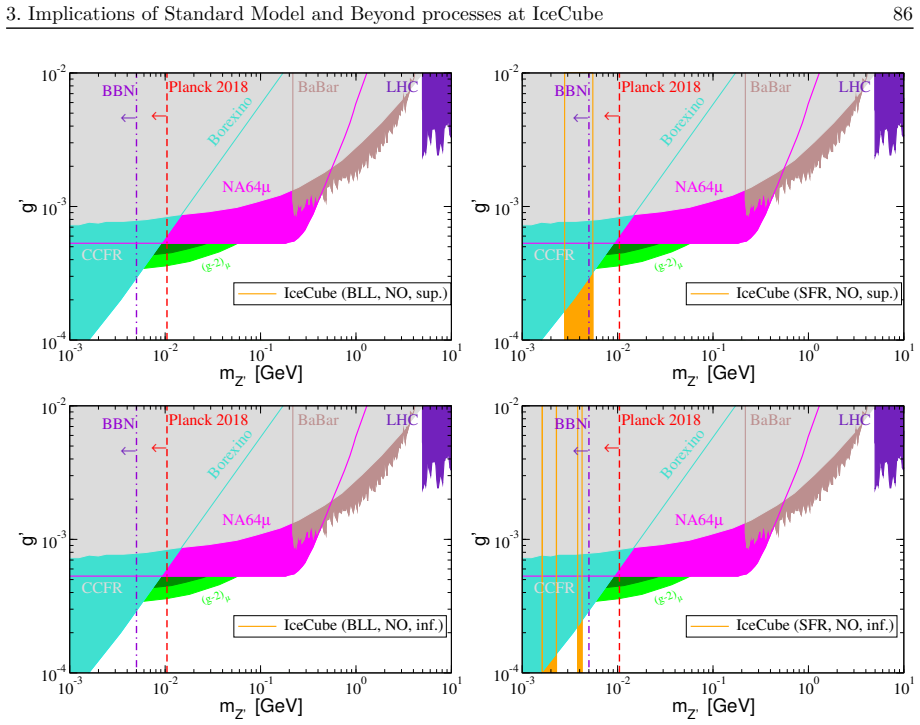
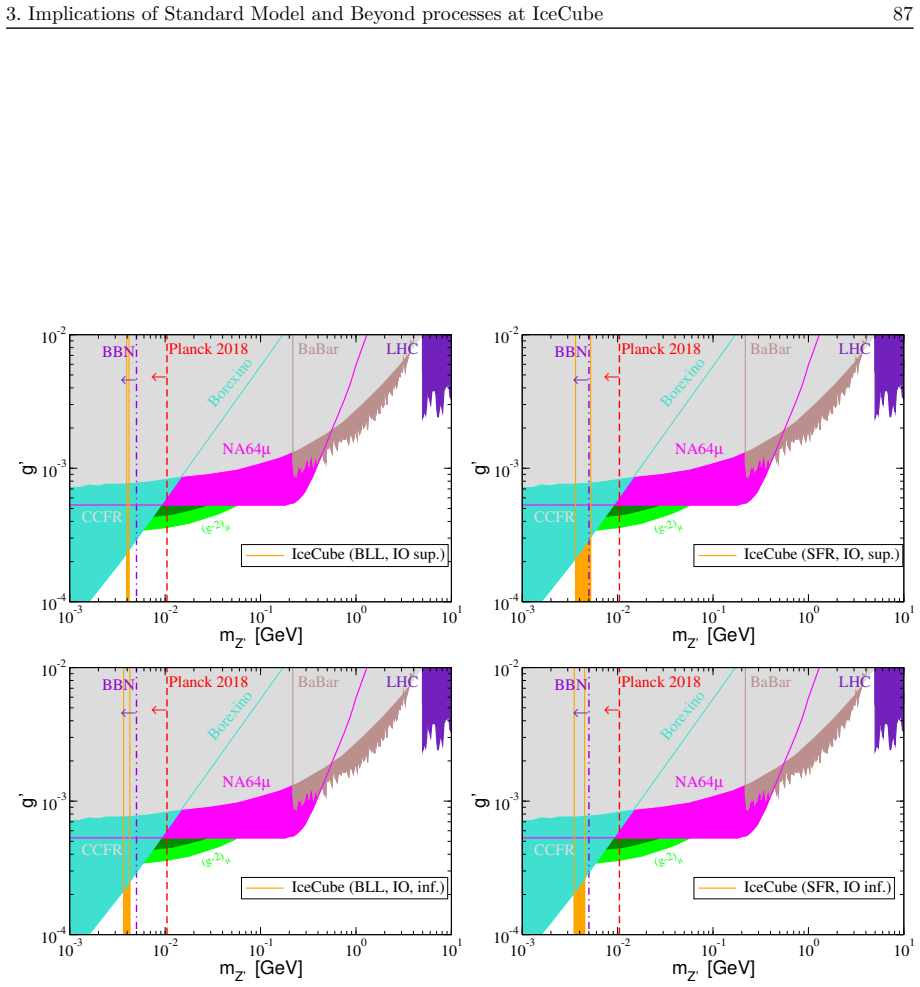
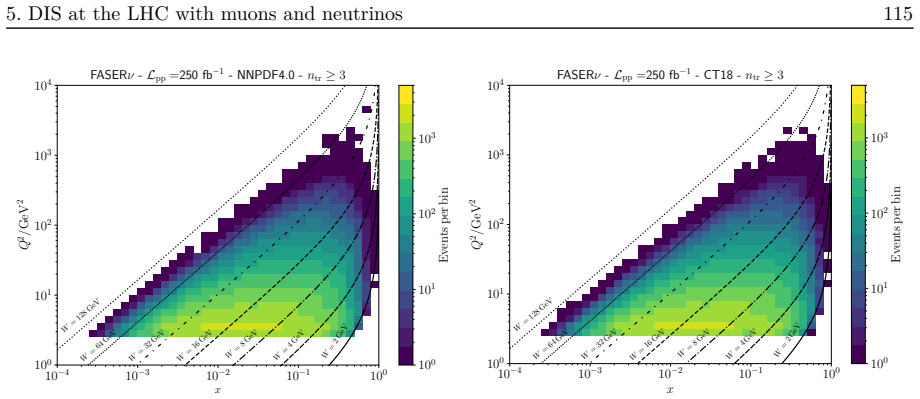
In this work, we investigate the phenomenological consequences of neutrino and muon interactions with matter. In our studies, we focused in phenomenological predictions for two experiments: FASER and IceCube. FASER is a detector located at the LHC that measures neutrinos produced in proton-proton collisions. A new version of FASER, FASER2, has been proposed to operate in the Forward Physics Facility during the high-luminosity regime of the LHC. The intense flux of tau neutrinos expected at FASER2 motivated us to study the polarization effects of the tau produced in charged current interactions. Our results show that the produced taus will not be completely polarized. Among the Standard Model particles, only neutrinos and muons produced in proton-proton collisions at the LHC can reach FASER. In our study, we show that muon-initiated events can reveal interesting nucleon properties, such as nuclear effects and the existence of an intrinsic charm. The high number of events induced by neutrinos at FASER motivated us to study rare processes in neutrino interaction, such as the neutrino trident. Our results indicate that the neutrino trident process can be observed at FASER2. We have also studied muon trident at the LHC, and we showed that tau pair production can be observed for the first time in this reaction. In contrast to neutrinos detected at the LHC, the neutrinos observed at IceCube come from natural sources, being mainly atmospheric and astrophysical neutrinos. IceCube is capable of observing neutrinos across a wide energy spectrum, ranging from a few GeV to beyond PeV. We show that the study of these events can contribute to our understanding of the structure of target hadrons, as well as the search for physics effects beyond the Standard Model in the propagation of these neutrinos in the universe until they reach the Earth.
Editorial analysis
A structured set of objections, weighed in public.
Referee Report
Summary. The manuscript investigates phenomenological consequences of neutrino and muon interactions with matter from GeV to EeV energies, with emphasis on predictions for the FASER/FASER2 detector at the LHC and the IceCube experiment. It claims that taus produced via charged-current interactions at FASER2 are not completely polarized, that neutrino trident processes can be observed at FASER2, that tau-pair production can be observed for the first time in muon trident reactions at the LHC, and that IceCube data on atmospheric and astrophysical neutrinos can inform hadron structure and BSM propagation effects.
Significance. If substantiated with quantitative detail, the results would illustrate the physics reach of forward neutrino fluxes at the LHC for polarization and rare-process studies, while connecting collider and astrophysical neutrino regimes. The paper correctly identifies that only neutrinos and muons reach FASER among SM particles from pp collisions. However, the significance is constrained by the absence of error propagation on flux and cross-section inputs, which directly affects the robustness of the polarization and observability statements.
major comments (3)
- [FASER2 polarization discussion] The sections presenting FASER2 tau polarization results: the claim that produced taus 'will not be completely polarized' is stated without the explicit polarization calculation, differential cross sections, or any propagation of forward neutrino flux uncertainties (which depend on poorly constrained hadron production); this is load-bearing for the central claim.
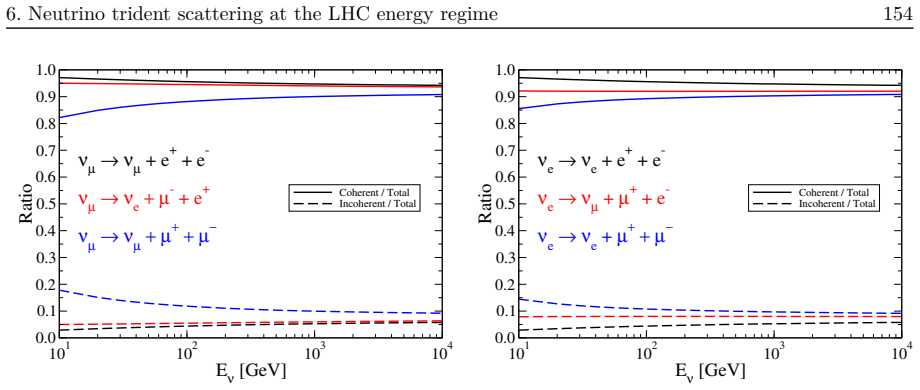
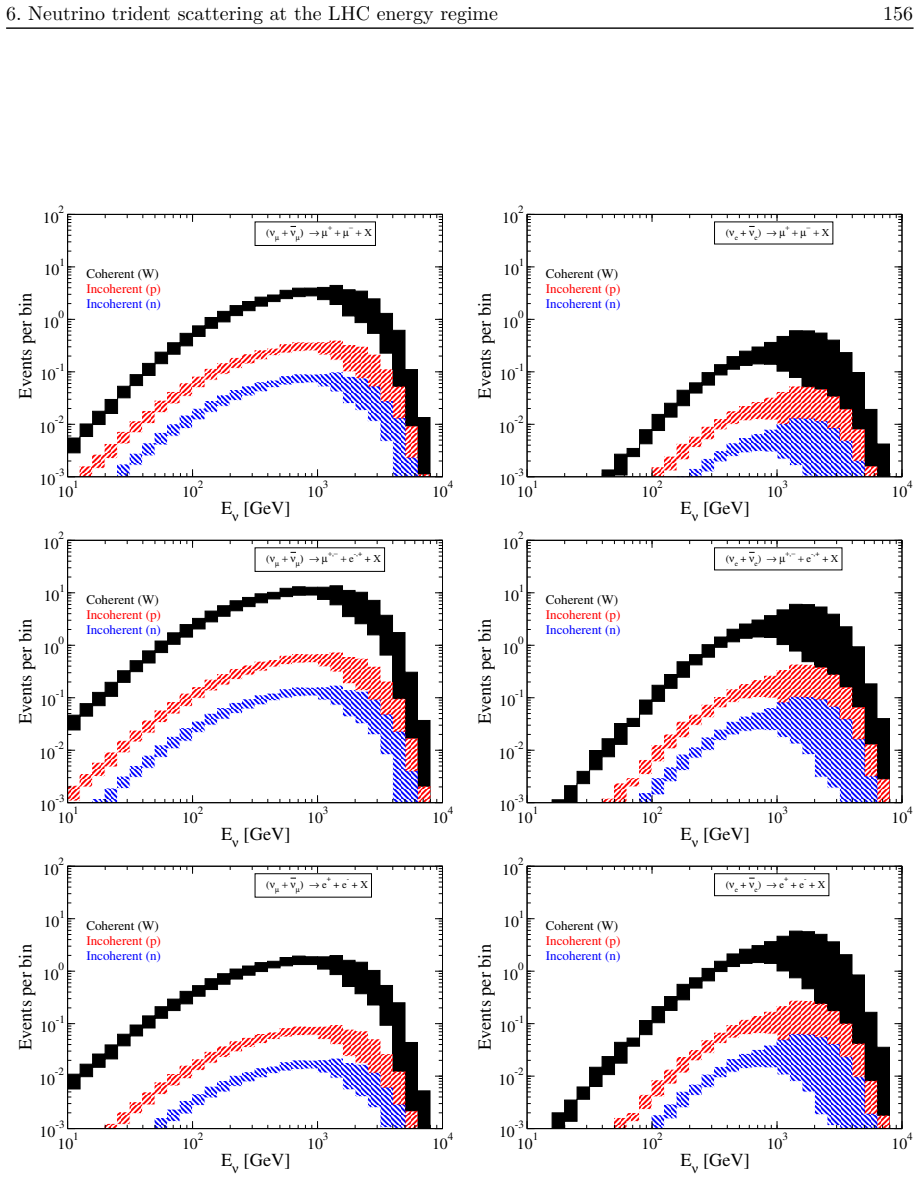
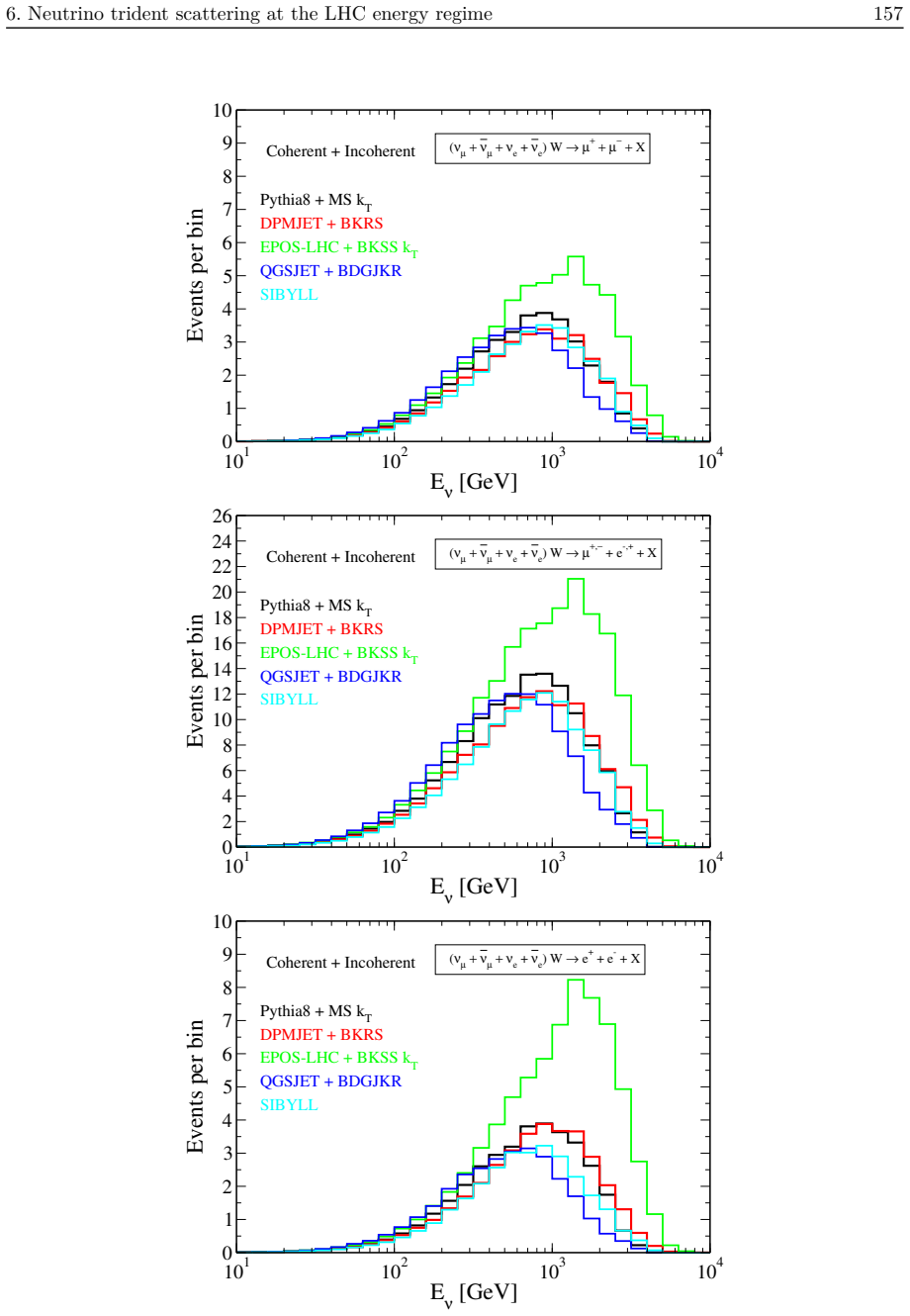
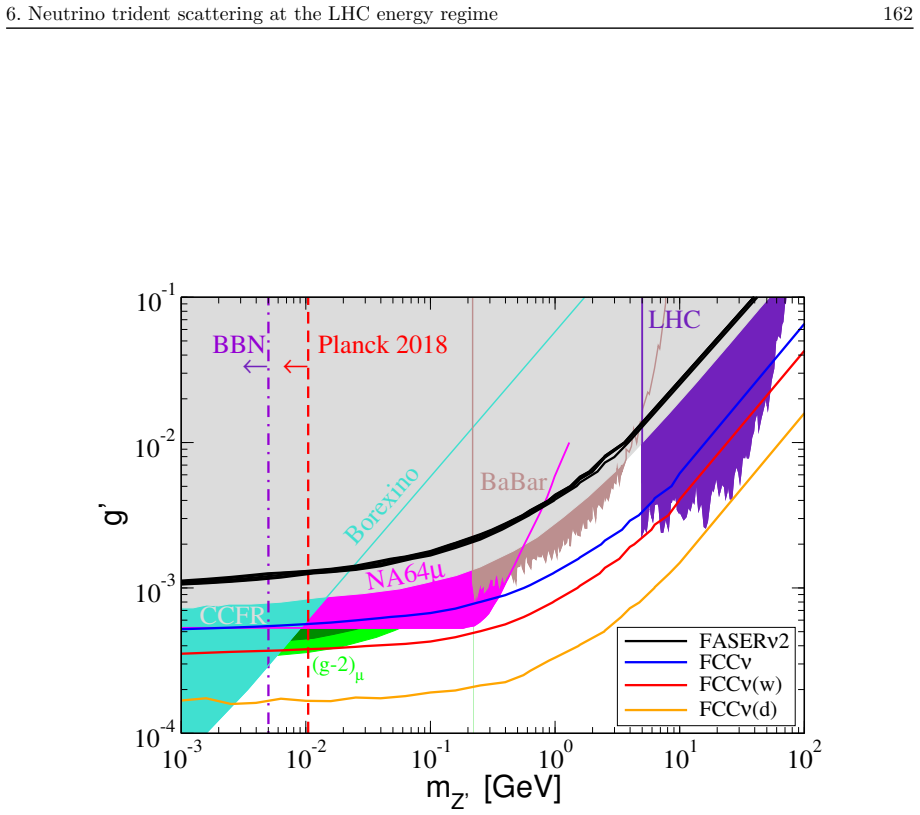
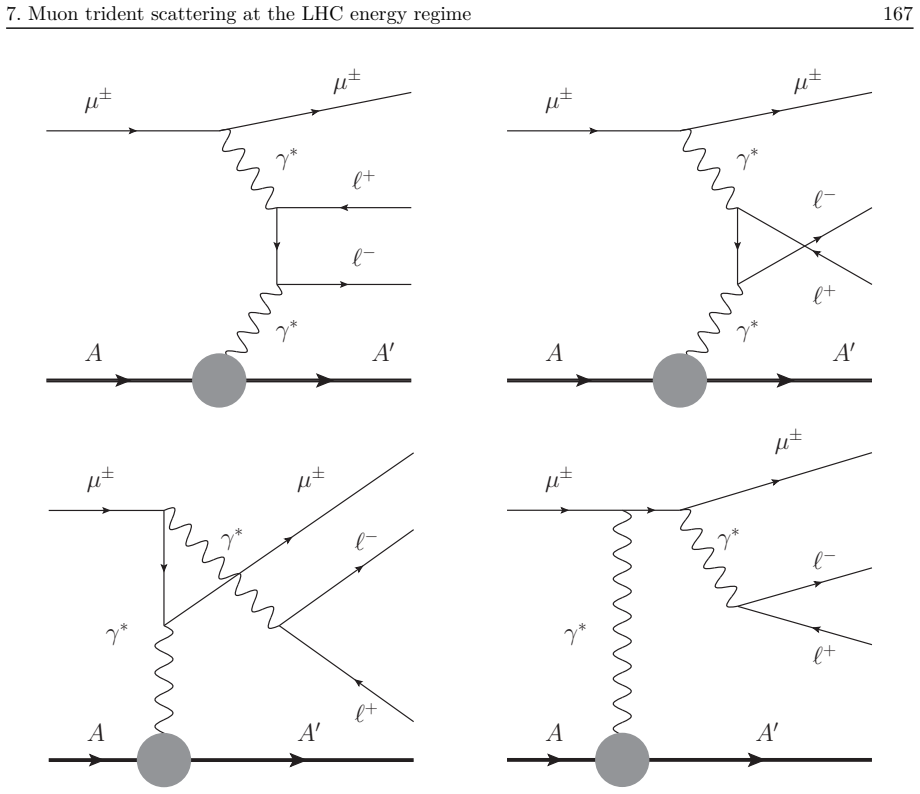
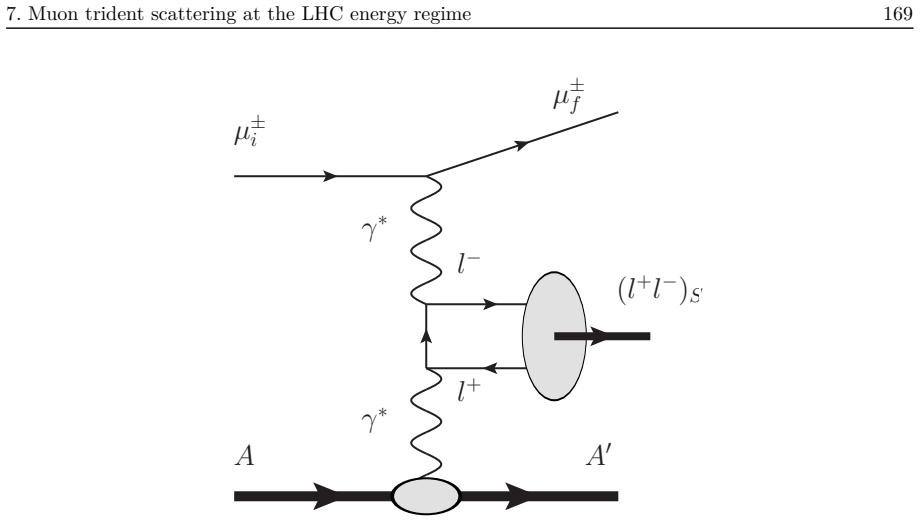
- [Trident process sections] The sections on neutrino trident at FASER2 and muon trident at the LHC: the statements that these processes 'can be observed' and that tau-pair production 'can be observed for the first time' lack event-rate estimates, background comparisons, or quantified sensitivity to nuclear effects, higher-order corrections, and flux modeling; no error bands are shown.
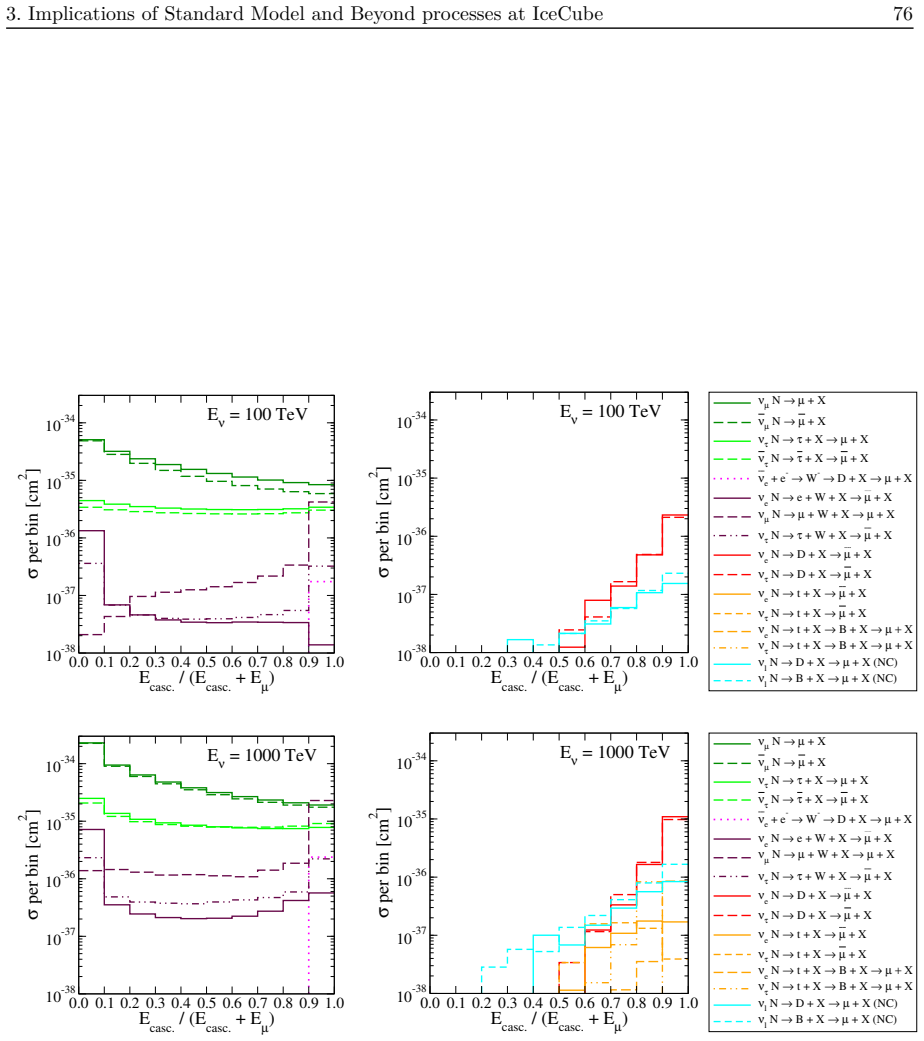
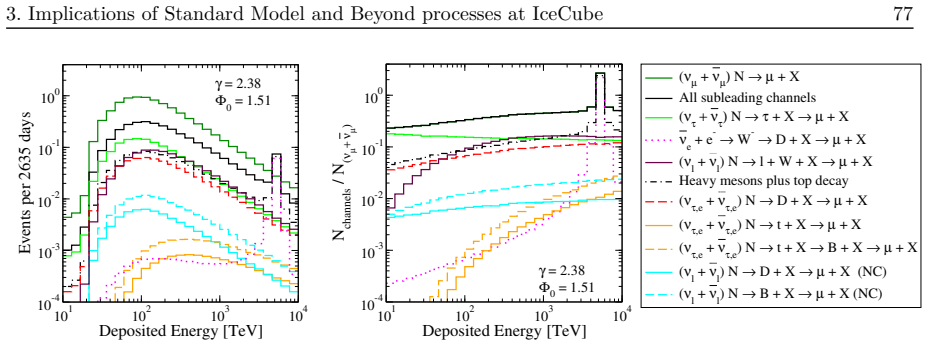
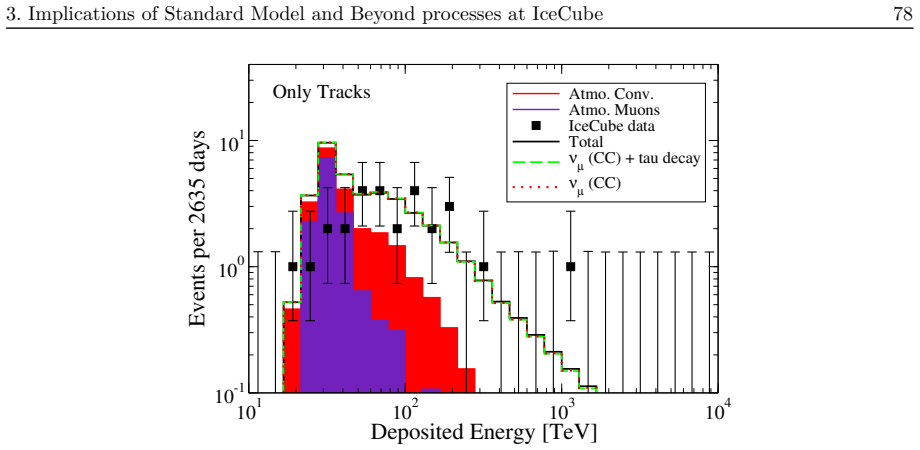
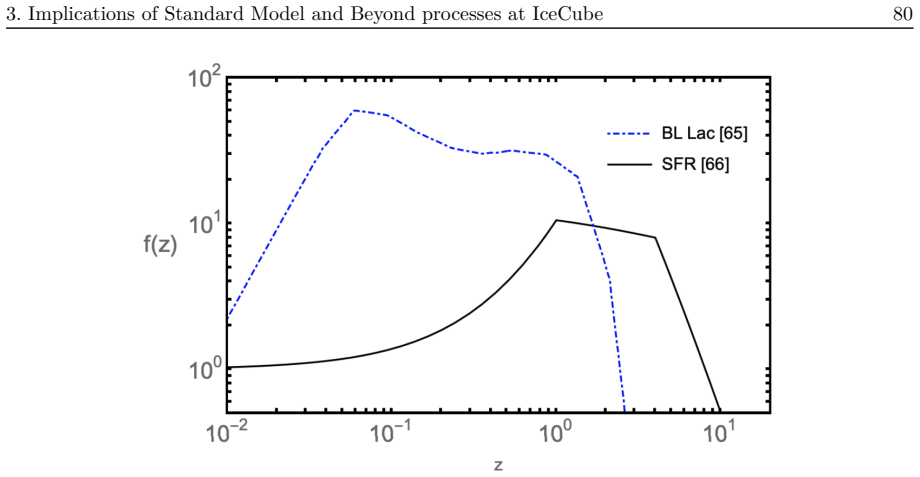
- [IceCube section] IceCube discussion: the claims regarding contributions to hadron structure and BSM searches inherit the same issue, with no assessment of how astrophysical flux assumptions or propagation uncertainties affect the conclusions.
minor comments (2)
- [Abstract] Notation for energies (GeV to EeV) and experiment names could be standardized for clarity.
- [Introduction and results sections] The manuscript would benefit from explicit references to standard forward flux models (e.g., those implemented in Pythia or dedicated FPF studies) and SM trident cross-section calculations.
Simulated Author's Rebuttal
We thank the referee for the careful review and constructive comments on our manuscript. We address each major comment below and have revised the manuscript to provide the requested quantitative details, calculations, and uncertainty assessments.
read point-by-point responses
-
Referee: [FASER2 polarization discussion] The sections presenting FASER2 tau polarization results: the claim that produced taus 'will not be completely polarized' is stated without the explicit polarization calculation, differential cross sections, or any propagation of forward neutrino flux uncertainties (which depend on poorly constrained hadron production); this is load-bearing for the central claim.
Authors: We agree that the original text stated the polarization result without sufficient supporting detail. The revised manuscript now includes the explicit polarization calculation derived from the differential charged-current cross sections, along with numerical results for the tau polarization vector at FASER2 energies. We have also propagated uncertainties from the forward neutrino flux by adopting variations in hadron production models and displaying the resulting error bands on the polarization observables. revision: yes
-
Referee: [Trident process sections] The sections on neutrino trident at FASER2 and muon trident at the LHC: the statements that these processes 'can be observed' and that tau-pair production 'can be observed for the first time' lack event-rate estimates, background comparisons, or quantified sensitivity to nuclear effects, higher-order corrections, and flux modeling; no error bands are shown.
Authors: The referee is correct that the observability claims were presented without the necessary quantitative support. In the revision we have added explicit event-rate estimates for both neutrino trident at FASER2 and muon trident (including tau-pair production) at the LHC, together with background estimates, comparisons to nuclear-effect variations, and assessments of higher-order corrections. Error bands reflecting flux and modeling uncertainties are now shown on all relevant plots and tables. revision: yes
-
Referee: [IceCube section] IceCube discussion: the claims regarding contributions to hadron structure and BSM searches inherit the same issue, with no assessment of how astrophysical flux assumptions or propagation uncertainties affect the conclusions.
Authors: We acknowledge the need for uncertainty quantification in the IceCube analysis. The revised section now includes a dedicated assessment of how variations in astrophysical flux normalizations and spectral assumptions, as well as propagation effects, propagate into the extracted hadron-structure parameters and BSM constraints, with the corresponding uncertainty ranges reported. revision: yes
Circularity Check
No significant circularity; predictions rely on external SM inputs.
full rationale
The paper presents phenomenological predictions for tau polarization in charged-current interactions, neutrino trident observability at FASER2, and tau-pair production in muon trident at the LHC, along with IceCube studies. These rest on standard model differential cross sections and modeled neutrino/muon fluxes from LHC pp collisions. No equations, self-citations, or ansatzes are shown that reduce any claimed prediction to a fitted input by construction, self-definition, or load-bearing self-citation chain. The derivation chain is self-contained against external benchmarks (SM interactions and flux modeling) and does not rename known results or import uniqueness theorems from the authors' prior work. This is a standard phenomenological study whose central claims remain independent of the paper's own outputs.
Axiom & Free-Parameter Ledger
Reference graph
Works this paper leans on
-
[1]
Asimov, I.A Short History of Chemistry(Anchor Books, 1965)
1965
-
[2]
A New System of Chemical Philosophy(R
Dalton, J. A New System of Chemical Philosophy(R. Bickerstaff, 1808)
-
[3]
Thomson, J. J. Cathode rays.Phil. Mag. Ser. 544, 293–316 (1897)
-
[4]
Thomson, J. J. On the structure of the atom: an investigation of the stability and periods of oscillation of a number of corpuscles arranged at equal intervals around the circumference of a circle; with application of the results to the theory of atomic structure. Phil. Mag. Ser. 67, 237–265 (1904)
1904
-
[5]
& Marsden, E
Geiger, H. & Marsden, E. On a diffuse reflection of theα-particles. Proceedings of the Royal Society A82, 495–500 (1909)
1909
-
[6]
The scattering of alpha and beta particles by matter and the struc- ture of the atom.Phil
Rutherford, E. The scattering of alpha and beta particles by matter and the struc- ture of the atom.Phil. Mag. Ser. 621, 669–688 (1911)
1911
-
[7]
Dear radioactive ladies and gentlemen.Phys
Pauli, W. Dear radioactive ladies and gentlemen.Phys. Today31N9, 27 (1978)
1978
-
[8]
An attempt of a theory of beta radiation
Fermi, E. An attempt of a theory of beta radiation. 1.Z. Phys.88, 161–177 (1934)
1934
-
[9]
L., Reines, F., Harrison, F
Cowan, C. L., Reines, F., Harrison, F. B., Kruse, H. W. & McGuire, A. D. Detection of the free neutrino: A Confirmation.Science 124, 103–104 (1956)
1956
-
[10]
Nature 638, 376–382 (2025)
Aiello, S.et al.Observation of an ultra-high-energy cosmic neutrino with KM3NeT. Nature 638, 376–382 (2025). [Erratum: Nature 640, E3 (2025)]
2025
-
[11]
Aartsen, M. G.et al. Evidence for High-Energy Extraterrestrial Neutrinos at the IceCube Detector. Science 342, 1242856 (2013). 1311.5238
Pith/arXiv arXiv 2013
-
[12]
Abbasi, R.et al. The IceCube high-energy starting event sample: Description and flux characterization with 7.5 years of data. Phys. Rev. D 104, 022002 (2021). 2011.03545
arXiv 2021
-
[13]
Allakhverdyan, V. A.et al. Measurement of the diffuse astrophysical neutrino flux over six seasons using cascade events from the Baikal-GVD expanding telescope (2025). 2507.01893
arXiv 2025
-
[14]
Allakhverdyan, V.A.et al.Constraintsonthediffusefluxofmulti-PeVastrophysical neutrinos obtained with the Baikal Gigaton Volume Detector.Phys. Rev. D112, 083025 (2025). 2507.05769. BIBLIOGRAPHY 183
arXiv 2025
-
[15]
Aartsen, M. G.et al.Multimessenger observations of a flaring blazar coincident with high-energy neutrino IceCube-170922A.Science361, eaat1378 (2018).1807.08816
arXiv 2018
-
[16]
Abbasi, R.et al.Evidence for neutrino emission from the nearby active galaxy NGC
-
[17]
Science 378, 538–543 (2022).2211.09972
arXiv 2022
-
[18]
Aab, A.et al.The Pierre Auger Cosmic Ray Observatory.Nucl. Instrum. Meth. A 798, 172–213 (2015).1502.01323
Pith/arXiv arXiv 2015
-
[19]
Aab, A.et al.Improved limit to the diffuse flux of ultrahigh energy neutrinos from the Pierre Auger Observatory.Phys. Rev. D91, 092008 (2015). 1504.05397
Pith/arXiv arXiv 2015
-
[20]
Albanese, R. et al. Observation of Collider Muon Neutrinos with the SND@LHC Experiment. Phys. Rev. Lett.131, 031802 (2023). 2305.09383
arXiv 2023
-
[21]
First Direct Observation of Collider Neutrinos with FASER at the LHC
Abreu, H.et al. First Direct Observation of Collider Neutrinos with FASER at the LHC. Phys. Rev. Lett.131, 031801 (2023). 2303.14185
arXiv 2023
-
[22]
First Measurement ofνe andνµInteraction Cross Sections at the LHCwith FASER’s Emulsion Detector.Phys
Mammen Abraham, R.et al. First Measurement ofνe andνµInteraction Cross Sections at the LHCwith FASER’s Emulsion Detector.Phys. Rev. Lett.133, 021802 (2024). 2403.12520
arXiv 2024
-
[23]
Mammen Abraham, R.et al.First Measurement of the Muon Neutrino Interaction Cross Section and Flux as a Function of Energy at the LHC with FASER.Phys. Rev. Lett.134, 211801 (2025). 2412.03186
Pith/arXiv arXiv 2025
-
[24]
NEUTRINO PHYSICS AT FUTURE COLLIDERS
De Rujula, A. NEUTRINO PHYSICS AT FUTURE COLLIDERS. Inin Prague 1984, Proceedings, Trends in Physics, Vol. 1, 236-245.(1984)
1984
-
[25]
SND@LHC: the scattering and neutrino detector at the LHC
Acampora, G.et al. SND@LHC: the scattering and neutrino detector at the LHC. JINST 19, P05067 (2024). 2210.02784
arXiv 2024
-
[26]
Feng, J. L., Galon, I., Kling, F. & Trojanowski, S. ForwArd Search ExpeRiment at the LHC. Phys. Rev. D97, 035001 (2018). 1708.09389
Pith/arXiv arXiv 2018
-
[27]
Ariga, A. et al. Letter of Intent for FASER: ForwArd Search ExpeRiment at the LHC (2018). 1811.10243
Pith/arXiv arXiv 2018
-
[28]
Ariga, A. et al. FASER’s physics reach for long-lived particles.Phys. Rev. D99, 095011 (2019). 1811.12522
Pith/arXiv arXiv 2019
-
[29]
Ariga, A.et al.Technical Proposal for FASER: ForwArd Search ExpeRiment at the LHC (2018). 1812.09139
Pith/arXiv arXiv 2018
-
[30]
FASER: ForwArd Search ExpeRiment at the LHC (2019).1901
Ariga, A.et al. FASER: ForwArd Search ExpeRiment at the LHC (2019).1901. 04468. BIBLIOGRAPHY 184
2019
-
[31]
Abreu, H. et al. Detecting and Studying High-Energy Collider Neutrinos with FASER at the LHC.Eur. Phys. J. C80, 61 (2020). 1908.02310
arXiv 2020
-
[32]
Technical Proposal: FASERnu (2020).2001.03073
Abreu, H.et al. Technical Proposal: FASERnu (2020).2001.03073
arXiv 2020
- [33]
-
[34]
Francener, R., Goncalves, V. P. & Gratieri, D. R. Sensitivity of the neutrino trans- mission coefficient at high energies to the Earth’s density profile.J. Phys. G52, 075201 (2025). 2403.16611
arXiv 2025
-
[35]
Francener, R., Goncalves, V. P. & Gratieri, D. R. Track signals at IceCube from subleading channels.Phys. Rev. D110, 053011 (2024). 2407.20963
arXiv 2024
-
[36]
Francener, R., Goncalves, V. P. & Gratieri, D. R. Probing a low-mass Z’ gauge boson at IceCube and prospects for IceCube-Gen2. Phys. Rev. D 111, 095005 (2025). 2502.19338
arXiv 2025
-
[37]
Dziewonski, A. M. & Anderson, D. L. Preliminary reference earth model.Phys. Earth Planet. Interiors25, 297–356 (1981)
1981
-
[38]
G., Joshi, G
He, X. G., Joshi, G. C., Lew, H. & Volkas, R. R. NEW Z-prime PHENOMENOL- OGY. Phys. Rev. D43, 22–24 (1991)
1991
-
[39]
C., Lew, H
He, X.-G., Joshi, G. C., Lew, H. & Volkas, R. R. Simplest Z-prime model.Phys. Rev. D44, 2118–2132 (1991)
1991
-
[40]
Francener, R., Goncalves, V. P. & Gratieri, D. R. Tau polarization in neutrino- nucleus interactions at the LHC energy range.Phys. Rev. D109, 113005 (2024). 2405.08508
arXiv 2024
-
[41]
Francener, R., Goncalves, V. P. & Gratieri, D. R. Tau polarization effects inντ/¯ντ- tungsten interactions at the LHC energies.Phys. Rev. D110, 073006 (2024).2408. 11736
2024
-
[42]
Francener, R., Goncalves, V. P., Kling, F., Krack, P. & Rojo, J. Deep-inelastic scattering at TeV energies with LHC muons. Eur. Phys. J. C 85, 1098 (2025). 2506.13889
arXiv 2025
-
[43]
J., Hoyer, P., Peterson, C
Brodsky, S. J., Hoyer, P., Peterson, C. & Sakai, N. The Intrinsic Charm of the Proton. Phys. Lett. B93, 451–455 (1980)
1980
-
[44]
Aubert, J. J.et al. Production of charmonium in 250-GeVµ+ - iron interactions. Nucl. Phys. B213, 1–30 (1983). BIBLIOGRAPHY 185
1983
-
[45]
Ball, R. D.et al. Evidence for intrinsic charm quarks in the proton.Nature 608, 483–487 (2022).2208.08372
arXiv 2022
-
[46]
Francener, R., Goncalves, V. P. & Gratieri, D. R. Investigating nuclear effects in lepton-ion DIS at the LHC.JHEP 01, 149 (2026). 2509.00144
arXiv 2026
-
[47]
Mishra, S. R.et al. Neutrino Tridents and W Z Interference.Phys. Rev. Lett.66, 3117–3120 (1991)
1991
-
[48]
First observation of neutrino trident production.Phys
Geiregat, D.et al. First observation of neutrino trident production.Phys. Lett. B 245, 271–275 (1990)
1990
-
[49]
Adams, T. et al. Evidence for diffractive charm production in muon-neutrino Fe and anti-muon-neutrino Fe scattering at the Tevatron.Phys. Rev. D61, 092001 (2000). hep-ex/9909041
Pith/arXiv arXiv 2000
-
[50]
Francener, R., Goncalves, V. P. & Gratieri, D. R. Neutrino trident scattering at the LHC energy regime.Eur. Phys. J. C84, 923 (2024). 2406.13593
arXiv 2024
-
[51]
Francener, R., Goncalves, V. P. & Gratieri, D. R. Probing aZ′gauge boson via neutrino trident scattering in the Forward Physics Facility at the LHC and FCC. Eur. Phys. J. C85, 601 (2025). 2411.04253
arXiv 2025
-
[52]
Francener, R., Goncalves, V. P. & Rabelo-Soares, G. Muon trident process at far- forward LHC detectors.Nucl. Phys. B1025, 117396 (2026). 2510.18943
arXiv 2026
-
[53]
DirectPairProductionbyMuons
Roe, B.P.&Ozaki, S. DirectPairProductionbyMuons. Phys. Rev.116, 1022–1027 (1959)
1959
-
[54]
J.et al.Observation of muon trident production in lead and the statistics of the muon.Phys
Russell, J. J.et al.Observation of muon trident production in lead and the statistics of the muon.Phys. Rev. Lett.26, 46–50 (1971)
1971
-
[55]
Maciuc, F. et al. Muon-pair production by atmospheric muons in cosmoALEPH. Phys. Rev. Lett.96, 021801 (2006)
2006
-
[56]
Results and Perspectives from the First Two Years of Neutrino Physics at the LHC by the SND@LHC Experiment.Symmetry 16, 702 (2024)
Abbaneo, D.et al. Results and Perspectives from the First Two Years of Neutrino Physics at the LHC by the SND@LHC Experiment.Symmetry 16, 702 (2024)
2024
-
[57]
Anchordoqui, L. A.et al. Letter of Intent: The Forward Physics Facility (2025). 2510.26260
Pith/arXiv arXiv 2025
-
[58]
Francener, R., Goncalves, V. P., Moreira, B. D. & Santos, K. A. Photoproduction of QED bound states in future electron-ion colliders.Phys. Lett. B854, 138753 (2024). 2404.11610. BIBLIOGRAPHY 186
arXiv 2024
-
[59]
A., Francener, R., Goncalves, V
Bertulani, C. A., Francener, R., Goncalves, V. P. & de Souza, J. T. Particle produc- tion byγ-γinteractions in future electron-ion colliders.Phys. Rev. C111, 025201 (2025). 2409.00814
arXiv 2025
-
[60]
Francener, R., Goncalves, V. P. & Martins, D. E. Investigating the exclusive toponium production at the LHC and FCC. Phys. Rev. D 112, 094050 (2025). 2502.03295
arXiv 2025
-
[61]
Rabelo-Soares, G., Francener, R., Ramos, G. S. & Torrieri, G. QCD Wehrl and entanglement entropies in a gluon spectator model at small-x (2025). 2512.24855
Pith/arXiv arXiv 2025
-
[62]
Glashow, S. L. Partial Symmetries of Weak Interactions.Nucl. Phys.22, 579–588 (1961)
1961
-
[63]
A Model of Leptons.Phys
Weinberg, S. A Model of Leptons.Phys. Rev. Lett.19, 1264–1266 (1967)
1967
-
[64]
Weak and Electromagnetic Interactions.Conf
Salam, A. Weak and Electromagnetic Interactions.Conf. Proc. C680519, 367–377 (1968)
1968
-
[65]
Higgs, P. W. Broken Symmetries and the Masses of Gauge Bosons.Phys. Rev. Lett. 13, 508–509 (1964)
1964
-
[66]
& Brout, R
Englert, F. & Brout, R. Broken Symmetry and the Mass of Gauge Vector Mesons. Phys. Rev. Lett.13, 321–323 (1964)
1964
-
[67]
S., Hagen, C
Guralnik, G. S., Hagen, C. R. & Kibble, T. W. B. Global Conservation Laws and Massless Particles.Phys. Rev. Lett.13, 585–587 (1964)
1964
-
[68]
Han, M. Y. & Nambu, Y. Three Triplet Model with Double SU(3) Symmetry.Phys. Rev.139, B1006–B1010 (1965)
1965
-
[69]
& Leutwyler, H
Fritzsch, H., Gell-Mann, M. & Leutwyler, H. Advantages of the Color Octet Gluon Picture. Phys. Lett. B47, 365–368 (1973)
1973
-
[70]
& Mills, R
Yang, C.-N. & Mills, R. L. Conservation of Isotopic Spin and Isotopic Gauge Invariance. Phys. Rev.96, 191–195 (1954)
1954
-
[71]
Observation ofX(3872) production inpp collisions at√s = 7 TeV
Aaij, R.et al. Observation ofX(3872) production inpp collisions at√s = 7 TeV. Eur. Phys. J. C72, 1972 (2012). 1112.5310
Pith/arXiv arXiv 1972
-
[72]
Observation ofJ/ψpResonances Consistent with Pentaquark States in Λ 0 b→J/ψK−p Decays
Aaij, R.et al. Observation ofJ/ψpResonances Consistent with Pentaquark States in Λ 0 b→J/ψK−p Decays. Phys. Rev. Lett.115, 072001 (2015). 1507.03414
Pith/arXiv arXiv 2015
-
[73]
Aad, G.et al. Observation of a new particle in the search for the Standard Model Higgs boson with the ATLAS detector at the LHC.Phys. Lett. B716, 1–29 (2012). 1207.7214. BIBLIOGRAPHY 187
Pith/arXiv arXiv 2012
-
[74]
Observation of a New Boson at a Mass of 125 GeV with the CMS Experiment at the LHC.Phys
Chatrchyan, S.et al. Observation of a New Boson at a Mass of 125 GeV with the CMS Experiment at the LHC.Phys. Lett. B716, 30–61 (2012).1207.7235
Pith/arXiv arXiv 2012
-
[75]
FOTOPRODUÇÃO DE ESTADOS LIGADOS DE LÉPTONS EM COLISORES HADRÔNICOS
Francener, R. FOTOPRODUÇÃO DE ESTADOS LIGADOS DE LÉPTONS EM COLISORES HADRÔNICOS. Master’s thesis, UDESC, CCT (2022). URLhttps: //repositorio.udesc.br/handle/UDESC/16036
2022
-
[76]
On the Interaction of Elementary Particles I.Proc
Yukawa, H. On the Interaction of Elementary Particles I.Proc. Phys. Math. Soc. Jap. 17, 48–57 (1935)
1935
-
[77]
Neutrino physics in present and future kamioka water- cherenkov detectors with neutron tagging
Fernández Menéndez, P. Neutrino physics in present and future kamioka water- cherenkov detectors with neutron tagging. Ph.D. thesis, U. Autonoma, Madrid (main) (2017). URL http://hdl.handle.net/10486/678315
2017
-
[78]
Glashow, S. L. Resonant Scattering of Antineutrinos. Phys. Rev. 118, 316–317 (1960)
1960
-
[79]
Hewett, J. L.et al. Planning the Future of U.S. Particle Physics (Snowmass 2013): Chapter 2: Intensity Frontier. In Snowmass 2013: Snowmass on the Mississippi (2014). 1401.6077
Pith/arXiv arXiv 2013
-
[80]
& Kim, C
Giunti, C. & Kim, C. W. Fundamentals of Neutrino Physics and Astrophysics (Oxford University Press, 2007)
2007
discussion (0)
Sign in with ORCID, Apple, or X to comment. Anyone can read and Pith papers without signing in.