Method to get Better Sky Maps in a GstLAL Low-Latency Analysis
Pith reviewed 2026-06-27 14:46 UTC · model grok-4.3
The pith
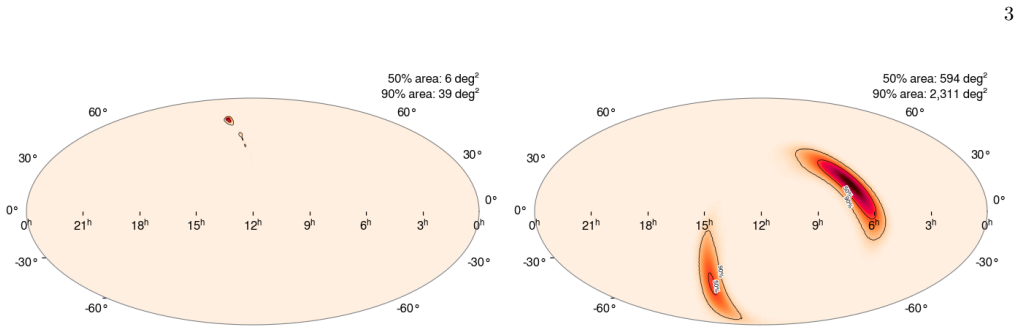
A targeted follow-up search on GstLAL low-latency candidates recovers more accurate parameters and improves sky localization by 16.75 percent on average.
A machine-rendered reading of the paper's core claim, the machinery that carries it, and where it could break.
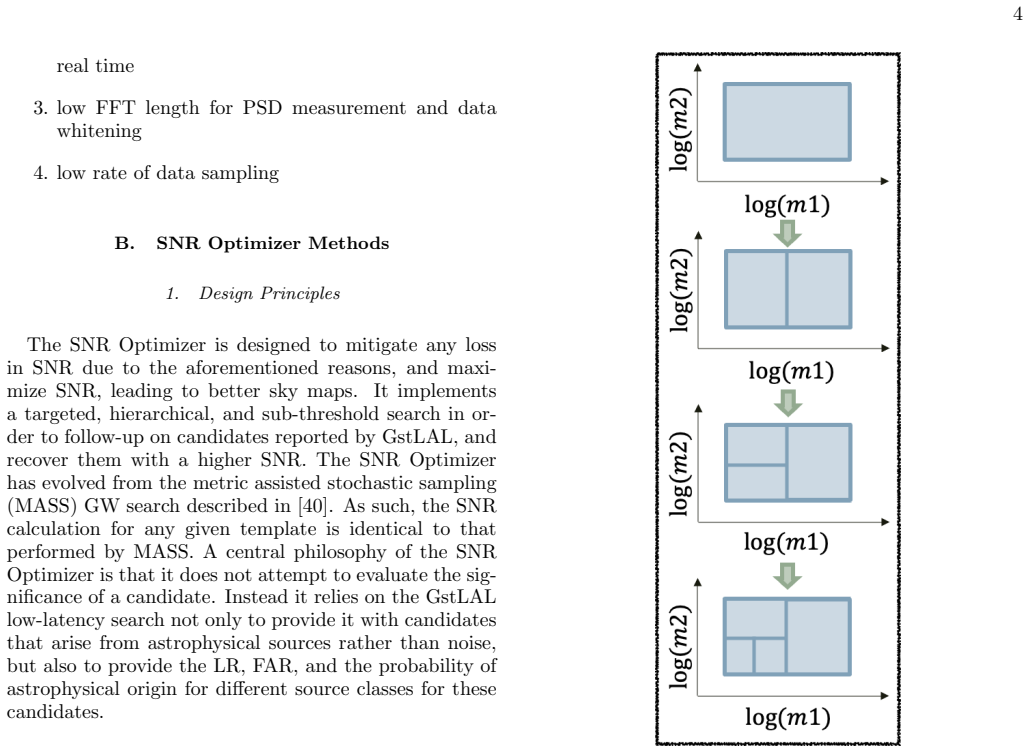
Core claim
The central claim is that ingesting GstLAL low-latency results into a small targeted hierarchical search recovers the same candidates with more accurate parameters on a medium-latency timescale, thereby improving both the detection statistics and the derived sky locations without the full computational cost of a complete re-analysis.
What carries the argument
The targeted hierarchical search, which re-processes selected GstLAL candidates with a focused template bank to refine intrinsic and extrinsic parameters.
If this is right
- Sky maps delivered to astronomers for electromagnetic follow-up become measurably tighter.
- The same candidates receive both higher ranking statistics and lower false-alarm rates.
- The pipeline can supply improved localizations while still meeting the low-latency requirement for alerts.
- The method slots into the existing GstLAL workflow and has been adopted for the fourth observing run.
Where Pith is reading between the lines
- The same hierarchical-refinement step could be applied to other modeled searches that already produce rapid but approximate triggers.
- Extending the test to the full O3 dataset or to simulated populations with known sky locations would quantify how often the accuracy gain holds.
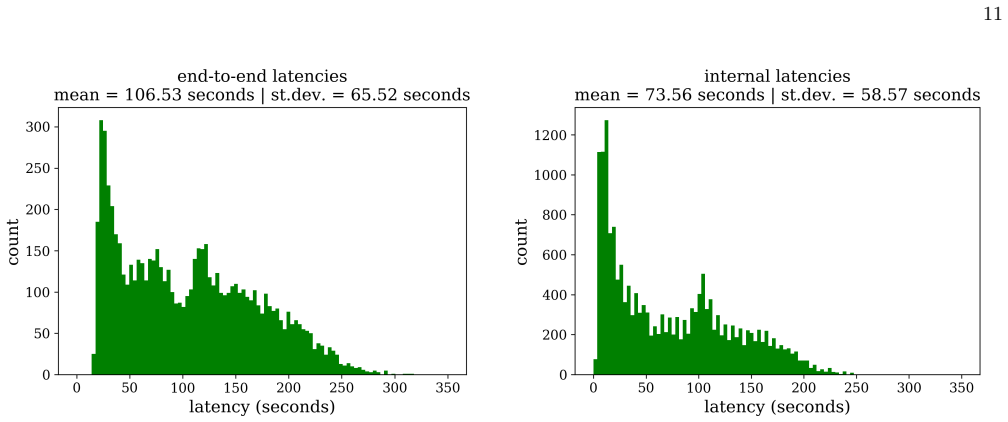
- If the refinement step can be made faster, the overall latency between detection and telescope pointing could shrink further.
Load-bearing premise
The targeted search improves parameter estimates without introducing new biases or missing genuine signals.
What would settle it
A side-by-side comparison on an independent set of injected signals or real events in which the refined parameters produce sky maps that are no more accurate than the original GstLAL maps.
Figures
read the original abstract
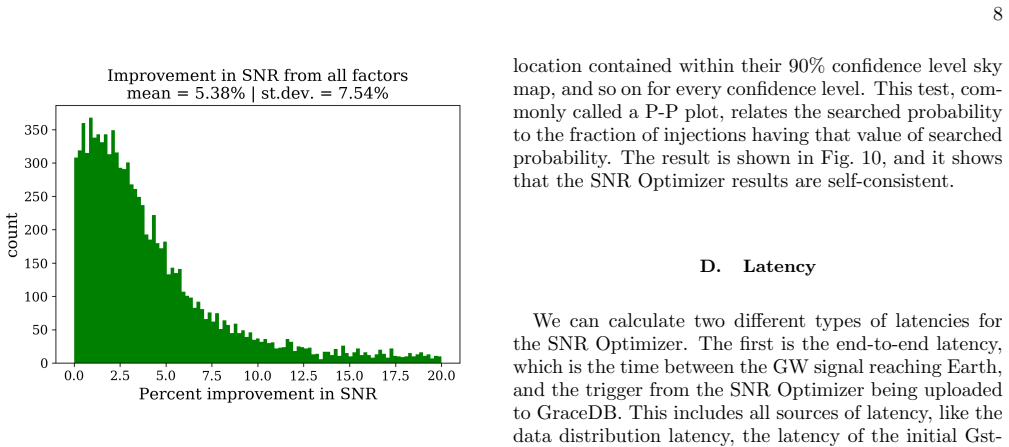
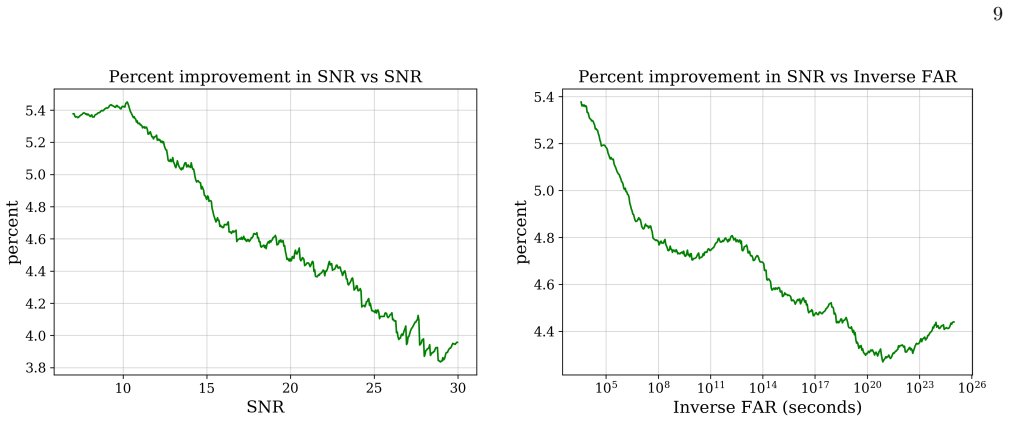
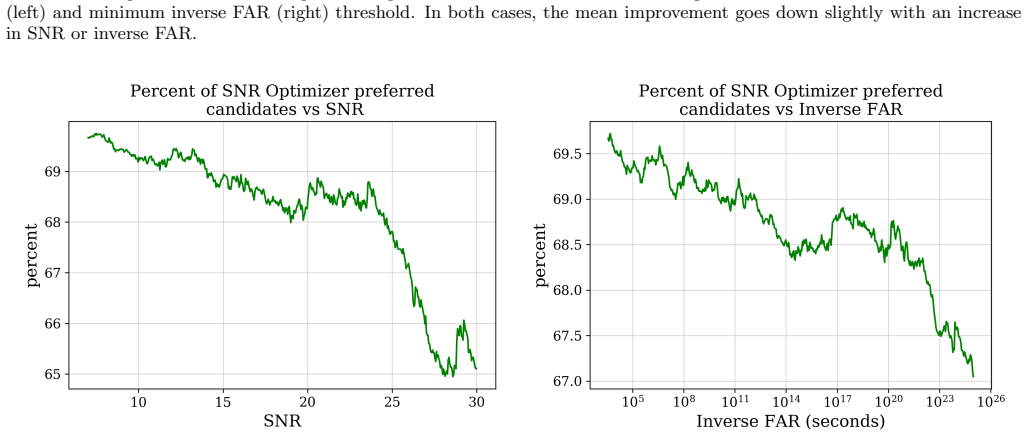
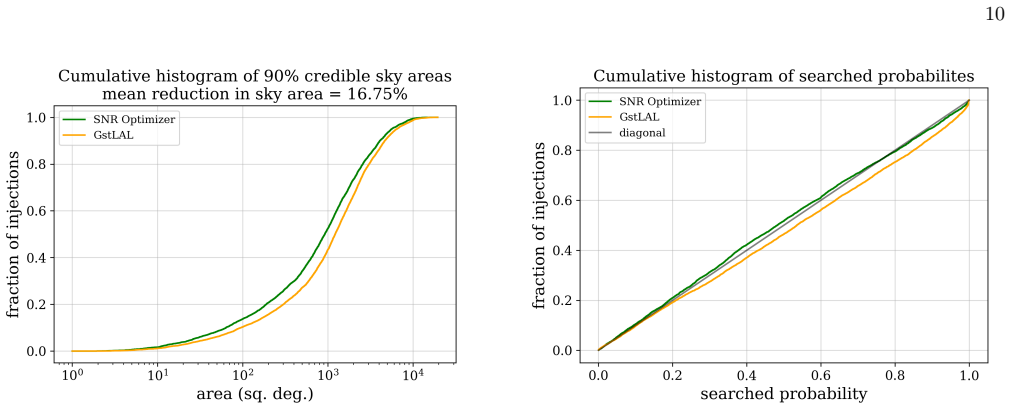
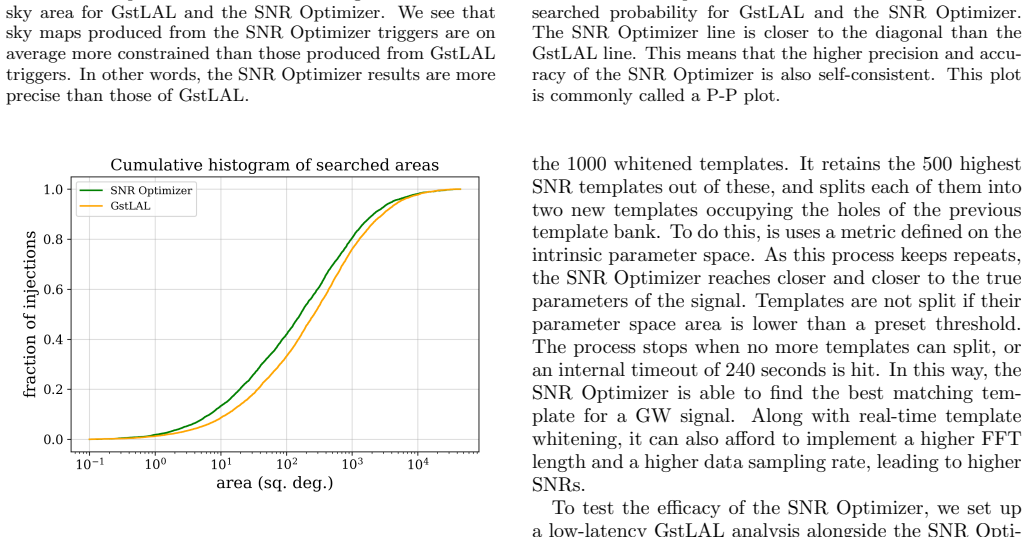
Modeled gravitational wave searches correlate the strain data with a bank of gravitational wave template waveforms to make detections of gravitational wave candidates, and these results are processed by downstream tools to calculate the likely sky location and distance of the source of the candidates. This is crucial for multi-messenger efforts, since it informs astronomers where to point their telescopes to facilitate electromagnetic follow-up of the gravitational wave candidates. We present a novel method to improve the low-latency results of the GstLAL gravitational wave search pipeline, and thus improving sky location estimates of low-latency candidates. This method involves ingesting the GstLAL low-latency results, and performing a small targeted hierarchical search to recover the candidates with more accurate parameters, in a medium-latency timescale (few seconds to five minutes). To test our method, we perform a GstLAL low-latency analysis on forty days of data from the third observing run of LIGO, Virgo, and KAGRA, and show that our method improves the GstLAL results by 5.38% and the subsequent sky location results by 16.75% on average. In addition to this increase in precision, we also show that these results are more accurate as compared to the GstLAL results. This method has been adopted by GstLAL for the fourth observing run.
Editorial analysis
A structured set of objections, weighed in public.
Referee Report
Summary. The manuscript presents a method to improve low-latency GstLAL gravitational-wave candidate parameters by ingesting those results and running a targeted hierarchical search on a medium-latency timescale (seconds to minutes). On forty days of O3 data the method is reported to yield average improvements of 5.38 % in the candidate parameters and 16.75 % in the derived sky locations, with an additional claim that the new parameters are more accurate; the method has been adopted by GstLAL for O4.
Significance. If the accuracy claim is substantiated, the approach would be a practical, low-overhead enhancement for low-latency multi-messenger follow-up. The reported adoption for O4 already indicates operational utility, but the strength of that utility rests on whether the hierarchical step demonstrably recovers parameters closer to truth rather than merely different ones.
major comments (1)
- [Abstract] Abstract (and corresponding results section): the claim that the recovered parameters are 'more accurate' is evaluated solely on real O3 data. Without injected signals whose true parameters are known, no independent metric exists to establish that the new values are closer to truth; any systematic offset introduced by the hierarchical search would remain undetectable in the reported comparison.
Simulated Author's Rebuttal
We thank the referee for their thoughtful review and for highlighting an important limitation in our accuracy claim. We address the major comment below and agree that revisions are needed to avoid overstating what the O3 data alone can demonstrate.
read point-by-point responses
-
Referee: [Abstract] Abstract (and corresponding results section): the claim that the recovered parameters are 'more accurate' is evaluated solely on real O3 data. Without injected signals whose true parameters are known, no independent metric exists to establish that the new values are closer to truth; any systematic offset introduced by the hierarchical search would remain undetectable in the reported comparison.
Authors: We agree with the referee that the current wording overstates the result. On real O3 data we can only demonstrate that the targeted hierarchical search produces different (and, by our metrics, improved) parameter estimates relative to the low-latency GstLAL output; we have no independent ground truth with which to verify that the new values are closer to the true source parameters. We will revise the abstract and the corresponding results section to remove the unqualified claim that the recovered parameters are “more accurate.” The revised text will instead emphasize the measured improvements in candidate parameters (5.38 %) and sky localization (16.75 %) while explicitly noting that accuracy relative to truth cannot be assessed without injections. We will also add a short limitations paragraph acknowledging this point. revision: yes
Circularity Check
No significant circularity; empirical validation on independent data
full rationale
The paper describes a targeted hierarchical search method applied to GstLAL low-latency outputs and validates it via direct numerical comparison of precision and accuracy metrics on 40 days of real O3 strain data. No equations, fitted parameters renamed as predictions, self-definitional steps, or load-bearing self-citations appear in the derivation or testing chain. The reported 5.38% and 16.75% improvements are measured against the baseline pipeline on the same external dataset, making the result falsifiable and independent of the method's own construction.
Axiom & Free-Parameter Ledger
Reference graph
Works this paper leans on
-
[1]
discrete nature of the fixed template bank
-
[2]
templates not whitened with a PSD measured in 4 real time
-
[3]
low FFT length for PSD measurement and data whitening
-
[4]
SNR Optimizer Methods
low rate of data sampling B. SNR Optimizer Methods
-
[5]
It implements a targeted, hierarchical, and sub-threshold search in or- der to follow-up on candidates reported by GstLAL, and recover them with a higher SNR
Design Principles The SNR Optimizer is designed to mitigate any loss in SNR due to the aforementioned reasons, and maxi- mize SNR, leading to better sky maps. It implements a targeted, hierarchical, and sub-threshold search in or- der to follow-up on candidates reported by GstLAL, and recover them with a higher SNR. The SNR Optimizer has evolved from the ...
-
[6]
Template Bank The SNR Optimizer does not rely on a fixed bank of pre-created templates. Instead, because of its hierarchi- cal nature, it starts off with a fixed template bank, and dynamically creates new templates in between the gaps of the original templates, as it closes in on the true lo- cation of the signal in the intrinsic parameter space. To do th...
-
[7]
online” mode, or a high-latency “offline
Search Algorithm Similar to GstLAL, the SNR Optimizer can be run in a low-latency “online” mode, or a high-latency “offline” mode. In the offline mode, it reads in a gstlal event file for a particular candidate, and analyzes a small amount of data around it. The offline mode is meant only for test- ing purposes. More importantly, in the online mode, the S...
-
[8]
Coincidence Formation The method implemented by the SNR Optimizer for forming coincidences across detectors when creating a candidate is different than that implemented by GstLAL, because of two reasons:
-
[9]
This means that the SNR Optimizer can create triggers even below an SNR of 4, unlike GstLAL, and consider them for forming coincidences
The SNR Optimizer is a sub-threshold search, whereas GstLAL is not. This means that the SNR Optimizer can create triggers even below an SNR of 4, unlike GstLAL, and consider them for forming coincidences
-
[10]
Since GstLAL calculates a LR based on the prop- erties of the coincidence itself, it can afford to be less strict when forming coincidences, because if it forms a “bad” coincidence (i.e. with an unphysi- cal combination of arrival times, phases and SNRs at different detectors), the part of the LR equation that calculates the probability of such a combina-...
-
[11]
up- loads
O4 Configuration The SNR Optimizer has been adopted by GstLAL for use during fourth observing run (O4). Here, we will pro- vide details about the configuration used for the SNR Op- 7 timizer in O4. The initial template bank used by the SNR Optimizer is the full O4 GstLAL template bank, since it has been generated viamanifold. It is generated in the 3 dime...
2048
-
[12]
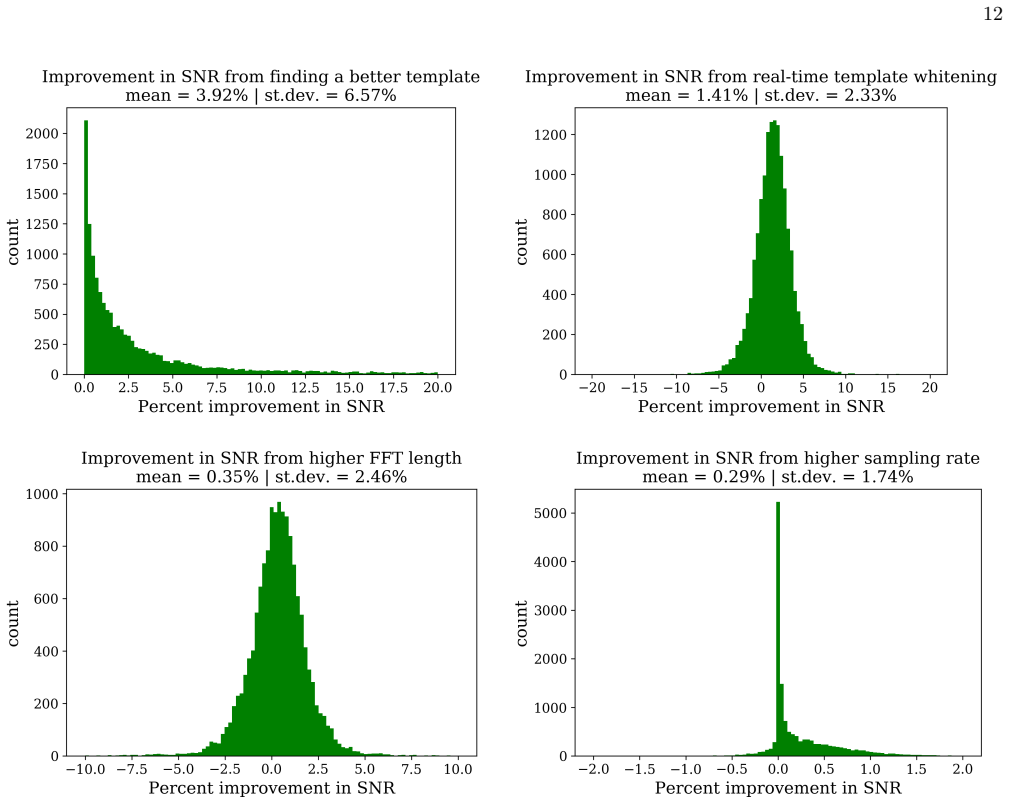
The SNR Optimizer relies on the GstLAL job which 12 FIG. 12. This plot shows the contributions from finding a better template (top left), real-time template whitening (top right), higher FFT length (bottom left), and higher data sampling rate (bottom right) towards the overall SNR gain obtained by the SNR Optimizer. During the process of finding a better ...
-
[13]
Sincekafkais not necessarily used by all search pipelines, this method of communication can instead by changed to be through GraceDB
The SNR Optimizer relies on theApache Kafka software package to get information from the GstLAL low-latency analysis about candidates it found. Sincekafkais not necessarily used by all search pipelines, this method of communication can instead by changed to be through GraceDB. There already exists code to continuously communicate with GraceDB about upload...
-
[14]
The SNR Optimizer can stop doing any maximiza- tion over templates, and to only use the template reported by GstLAL to produce the SNR Opti- mizer’s trigger
-
[15]
The SNR Optimizer can re-use the Hanford and Livingston data supplied by GstLAL, and only matched filter Virgo data and add it to the can- didate, while still observing the coincidence forma- tion method discussed in Sec. II
-
[16]
The SNR Optimizer can set its FFT length to be low, like GstLAL does (4 seconds worth of data)
-
[17]
The average internal la- tency of the SNR Optimizer in this low-latency mode is less than 1 second, with end-to-end latencies averaging around 10 seconds
The SNR Optimizer can set its data sampling rate to be low, like GstLAL does (2048Hz) By doing so, the SNR Optimizer is able to very quickly add Virgo data to the candidates formed by GstLAL from Hanford and Livingston data. The average internal la- tency of the SNR Optimizer in this low-latency mode is less than 1 second, with end-to-end latencies averag...
-
[18]
The LIGO Scientific Collaboration and the Virgo Collab- oration, GCN21505(2017)
2017
-
[19]
B. P. Abbottet al.(The LIGO Scientific Collabora- tion and the Virgo Collaboration), Phys. Rev. Lett.119, 161101 (2017), arXiv:1710.05832 [gr-qc]
Pith/arXiv arXiv 2017
-
[20]
B. P. Abbottet al.(The LIGO Scientific Collaboration and the Virgo Collaboration), Phys. Rev. X9, 031040 (2019), arXiv:1811.12907 [astro-ph.HE]
Pith/arXiv arXiv 2019
-
[21]
B. P. Abbottet al.(The LIGO Scientific Collabora- tion and the Virgo Collaboration), Phys. Rev. Lett.121, 161101 (2018)
2018
-
[22]
B. P. Abbottet al.(The LIGO Scientific Collabora- tion and the Virgo Collaboration), Phys. Rev. Lett.123, 011102 (2019)
2019
-
[23]
Aasiet al.(The LIGO Scientific Collaboration), Class
J. Aasiet al.(The LIGO Scientific Collaboration), Class. Quant. Grav.32, 074001 (2015), arXiv:1411.4547 [gr-qc]
Pith/arXiv arXiv 2015
-
[24]
Acerneseet al.(The Virgo Collaboration), Class
F. Acerneseet al.(The Virgo Collaboration), Class. Quant. Grav.32, 024001 (2015), arXiv:1408.3978 [gr-qc]
Pith/arXiv arXiv 2015
-
[25]
T. Akutsuet al., Progress of Theoretical and Exper- imental Physics2021(2020), 10.1093/ptep/ptaa125, 05A101, https://academic.oup.com/ptep/article- pdf/2021/5/05A101/37974994/ptaa125.pdf
-
[26]
GraceDB: A Gravitational Wave Candidate Event Database,
B. Moe, P. Brady, B. Stephens, E. Katsavounidis, R. Williams, and F. Zhang, “GraceDB: A Gravitational Wave Candidate Event Database,” (2014)
2014
-
[27]
C. Messicket al., Phys. Rev. D95, 042001 (2017), arXiv:1604.04324 [astro-ph.IM]
Pith/arXiv arXiv 2017
-
[28]
GstLAL: A software framework for gravitational wave discovery,
K. Cannonet al., “GstLAL: A software framework for gravitational wave discovery,” (2020), arXiv:2010.05082 [astro-ph.IM]
arXiv 2020
-
[29]
S. Sachdevet al., “The GstLAL Search Analysis Methods for Compact Binary Mergers in Advanced LIGO’s Second and Advanced Virgo’s First Observing Runs,” (2019), arXiv:1901.08580 [gr-qc]
Pith/arXiv arXiv 2019
-
[30]
C. Hannaet al., Phys. Rev.D101, 022003 (2020), arXiv:1901.02227 [gr-qc]
arXiv 2020
-
[31]
Venumadhav, B
T. Venumadhav, B. Zackay, J. Roulet, L. Dai, and M. Zaldarriaga, Phys. Rev. D100, 023011 (2019)
2019
-
[32]
2021, PhRvD, 104, 063030, doi: 10.1103/PhysRevD.104.063030
B. Zackay, L. Dai, T. Venumadhav, J. Roulet, and M. Zaldarriaga, Physical Review D104(2021), 10.1103/physrevd.104.063030
-
[33]
Aubin, F
F. Aubin, F. Brighenti, R. Chierici, D. Estevez, G. Greco, G. M. Guidi, V. Juste, F. Marion, B. Mours, E. Nitoglia, O. Sauter, and V. Sordini, Classical and Quantum Grav- ity38, 095004 (2021)
2021
-
[34]
Adams, D
T. Adams, D. Buskulic, V. Germain, G. M. Guidi, F. Marion, M. Montani, B. Mours, F. Piergiovanni, and G. Wang, Classical and Quantum Gravity33, 175012 (2016)
2016
-
[35]
T. D. Canton, A. H. Nitz, B. Gadre, G. S. C. Davies, V. Villa-Ortega, T. Dent, I. Harry, and L. Xiao, The Astrophysical Journal923, 254 (2021)
2021
-
[36]
G. S. Davies, T. Dent, M. T´ apai, I. Harry, C. McIsaac, and A. H. Nitz, Physical Review D102(2020), 10.1103/physrevd.102.022004
-
[38]
Q. Chu, Physical Review D105(2022), 10.1103/Phys- RevD.105.024023
-
[39]
Chu,Low-latency detection and localization of gravi- tational waves from compact binary coalescences, Ph.D
Q. Chu,Low-latency detection and localization of gravi- tational waves from compact binary coalescences, Ph.D. thesis, The University of Western Australia (2017)
2017
-
[40]
Lsc algorithm library,
LSC Algorithm Library, “Lsc algorithm library,”http:// www.lsc-group.phys.uwm.edu/lal, uRLhttp://www. lsc-group.phys.uwm.edu/lal
-
[41]
Aasiet al.(The LIGO Scientific Collaboration and the Virgo Collaboration), Phys
J. Aasiet al.(The LIGO Scientific Collaboration and the Virgo Collaboration), Phys. Rev. D88, 062001 (2013)
2013
-
[42]
Rapid Bayesian position re- construction for gravitational-wave transients,
L. P. Singer and L. R. Price, “Rapid Bayesian position re- construction for gravitational-wave transients,” (2016), arXiv:1508.03634 [gr-qc]
Pith/arXiv arXiv 2016
-
[43]
L. P. Singeret al., Astrophys. J. Lett.829, L15 (2016), arXiv:1603.07333 [astro-ph.HE]
Pith/arXiv arXiv 2016
-
[44]
G. Ashtonet al., Astrophys. J. Suppl.241, 27 (2019), arXiv:1811.02042 [astro-ph.IM]
Pith/arXiv arXiv 2019
-
[45]
I. M. Romero-Shawet al., Mon. Not. Roy. Astron. Soc. 499, 3295 (2020), arXiv:2006.00714 [astro-ph.IM]
Pith/arXiv arXiv 2020
-
[46]
S. Sakonet al., “Template bank for compact binary merg- ers in the fourth observing run of Advanced LIGO, Ad- vanced Virgo, and KAGRA,” (2022), arXiv:2211.16674 [gr-qc]
arXiv 2022
-
[47]
P. Joshi, W. Niu, C. Hanna, R. Huxford, D. Singh, L. Tsukada, S. Adhicary, P. Baral, A. Baylor, K. Can- non, S. Caudill, M. W. Coughlin, B. Cousins, J. D. E. Creighton, B. Ewing, H. Fong, R. N. George, S. Ghosh, P. Godwin, R. Harada, Y.-J. Huang, C. Messick, S. Morisaki, D. Mukherjee, A. Pace, C. Posnansky, A. Ray, S. Sachdev, S. Sakon, U. Shah, R. Tapia,...
Pith/arXiv arXiv 2025
-
[48]
P. Joshi, L. Tsukada, and C. Hanna, “Background Fil- ter: A method for removing signal contamination during significance estimation of a GstLAL anaysis,” (2023), arXiv:2305.18233 [gr-qc]
arXiv 2023
-
[49]
L. Tsukada, P. Joshi, S. Adhicary, R. George, A. Guimaraes, C. Hanna, R. Magee, A. Zimmerman, P. Baral, A. Baylor, K. Cannon, S. Caudill, B. Cousins, J. D. E. Creighton, B. Ewing, H. Fong, P. Godwin, R. Harada, Y.-J. Huang, R. Huxford, J. Kennington, S. Kuwahara, A. K. Y. Li, D. Meacher, C. Messick, S. Morisaki, D. Mukherjee, W. Niu, A. Pace, C. Posnan- s...
arXiv 2023
-
[50]
Igwn public alerts user guide,
“Igwn public alerts user guide,”https://emfollow. docs.ligo.org/userguide/analysis/index.html# alert-threshold
-
[51]
C. A. Rose,Rapid Parameter Estimation of Compact Bi- nary Coalescences with Gravitational Waves, Ph.D. the- sis, The University of Wisconsin-Milwaukee (2024)
2024
-
[52]
A. Rayet al., “When to Point Your Telescopes: Gravitational Wave Trigger Classification for Real- Time Multi-Messenger Followup Observations,” (2023), arXiv:2306.07190 [gr-qc]
arXiv 2023
-
[53]
V. Villa-Ortega, T. Dent, and A. C. Barroso, arXiv preprint arXiv:2203.10080 (2022)
arXiv 2022
-
[54]
Andres, M
N. Andres, M. Assiduo, F. Aubin, R. Chierici, D. Estevez, F. Faedi, G. M. Guidi, V. Juste, F. Marion, B. Mours, E. Nitoglia, and V. Sordini, Classical and Quantum 15 Gravity39, 055002 (2022)
2022
-
[55]
B. Ewing, R. Huxford, D. Singh, L. Tsukada, C. Hanna, Y.-J. Huang, P. Joshi, A. K. Y. Li, R. Magee, C. Mes- sick, A. Pace, A. Ray, S. Sachdev, S. Sakon, R. Tapia, S. Adhicary, P. Baral, A. Baylor, K. Cannon, S. Caudill, S. S. Chaudhary, M. W. Coughlin, B. Cousins, J. D. E. Creighton, R. Essick, H. Fong, R. N. George, P. Godwin, R. Harada, J. Kennington, S...
arXiv 2023
-
[56]
Hanna, P
C. Hanna, P. Joshi, R. Huxford, K. Cannon, S. Caudill, C. Chan, B. Cousins, J. D. E. Creighton, B. Ew- ing, M. Fernandez, H. Fong, P. Godwin, R. Magee, D. Meacher, C. Messick, S. Morisaki, D. Mukherjee, H. Ohta, A. Pace, S. Privitera, S. Sachdev, S. Sakon, D. Singh, R. Tapia, L. Tsukada, D. Tsuna, T. Tsutsui, K. Ueno, A. Viets, L. Wade, M. Wade, and J. Wa...
2022
-
[57]
Hanna, J
C. Hanna, J. Kennington, S. Sakon, S. Privitera, M. Fer- nandez, J. Wang, C. Messick, A. Pace, K. Cannon, P. Joshi, R. Huxford, S. Caudill, C. Chan, B. Cousins, J. D. E. Creighton, B. Ewing, H. Fong, P. Godwin, R. Magee, D. Meacher, S. Morisaki, D. Mukherjee, H. Ohta, S. Sachdev, D. Singh, R. Tapia, L. Tsukada, D. Tsuna, T. Tsutsui, K. Ueno, A. Viets, L. ...
2023
-
[58]
gwcelery,
“gwcelery,”https://git.ligo.org/emfollow/gwcelery (2023)
2023
-
[59]
Apache kafka,
A. S. Foundation, “Apache kafka,”
-
[60]
Low-latency alert products and their performance in anticipation of the fourth ligo-virgo- kagra observing run,
S. S. Chaudharyet al., “Low-latency alert products and their performance in anticipation of the fourth ligo-virgo- kagra observing run,” (in prep) (2023)
2023
-
[61]
Sidery, B
T. Sidery, B. Aylott, N. Christensen, B. Farr, W. Farr, F. Feroz, J. Gair, K. Grover, P. Graff, C. Hanna, V. Kalogera, I. Mandel, R. O’Shaughnessy, M. Pitkin, L. Price, V. Raymond, C. R¨ over, L. Singer, M. van der Sluys, R. J. E. Smith, A. Vecchio, J. Veitch, and S. Vi- tale, Phys. Rev. D89, 084060 (2014)
2014
-
[62]
Newmarch and J
J. Newmarch and J. Newmarch, Linux Sound Program- ming , 211 (2017)
2017
discussion (0)
Sign in with ORCID, Apple, or X to comment. Anyone can read and Pith papers without signing in.