Vacuum stability in Geometric Trinity of Gravity
Pith reviewed 2026-06-30 08:41 UTC · model grok-4.3
The pith
The tunneling exponent for false vacuum decay is the same in teleparallel equivalents of gravity as in standard GR.
A machine-rendered reading of the paper's core claim, the machinery that carries it, and where it could break.
Core claim
The Euclidean action evaluated on the bounce solution that mediates false-vacuum decay yields the same numerical value for the tunneling exponent in TEGR and STEGR as it does in GR, so the decay rate is formulation-independent.
What carries the argument
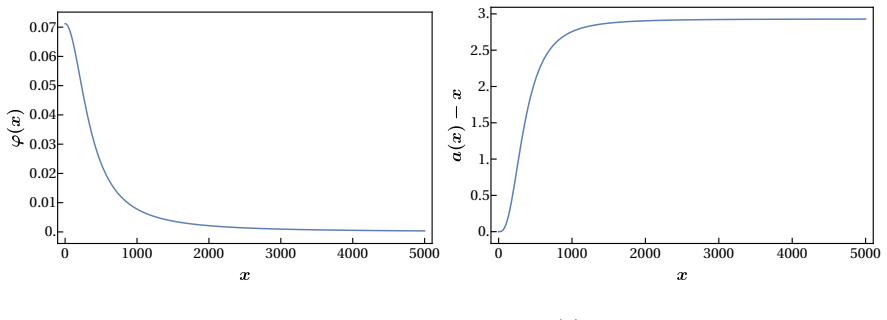
The bounce instanton and its Euclidean action, whose exponent sets the decay probability; the paper demonstrates that this quantity is insensitive to the choice among the three equivalent geometric descriptions.
If this is right
- Constraints on the Higgs potential or other scalar potentials derived from vacuum decay remain unchanged when gravity is described by TEGR or STEGR.
- The classical equivalence between the three formulations survives at least for this non-perturbative tunneling process.
- Any future calculation of vacuum decay in these alternative geometries can safely reuse the GR instanton without recomputing the action.
Where Pith is reading between the lines
- If the same instanton equivalence holds for other semiclassical processes, physicists could choose whichever geometric formulation simplifies the calculation.
- The result raises the question of whether the equivalence persists once matter fields or curvature-squared corrections are added.
- A direct numerical check of the action in a concrete potential would provide an immediate test of the claimed equality.
Load-bearing premise
The instanton solutions and boundary conditions used in the TEGR and STEGR calculations are exactly the same as those already employed in GR.
What would settle it
An explicit evaluation of the Euclidean action on the O(4)-symmetric instanton in TEGR that returns a numerically different exponent from the GR value.
Figures
read the original abstract
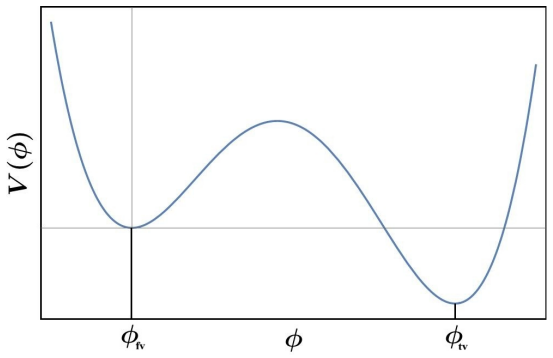
The decay of a metastable (false) vacuum plays a crucial role in constraining Standard Model and beyond the Standard Model physics. In particular, it has been shown that gravity can have a significant impact on the calculation of the decay rate. In this context, it is natural to ask whether different but classically equivalent formulations of gravity lead to the same physical predictions. The aim of this paper is to analyze vacuum decay in teleparallel and symmetric teleparallel equivalent formulations of General Relativity (GR), namely TEGR and STEGR. Although these theories describe the same classical dynamics, it is of paramount importance to understand whether this equivalence persists also at the quantum level. In this respect, the analysis of vacuum stability may provide a particularly sensitive testing ground. The central question is whether the decay rate of a false vacuum computed within TEGR or STEGR coincides with the corresponding result obtained in GR. Our analysis shows that the tunneling exponent remains unchanged, offering a non-trivial example in which the equivalence between different formulations of gravity extends beyond classical dynamics.
Editorial analysis
A structured set of objections, weighed in public.
Referee Report
Summary. The manuscript analyzes false vacuum decay in the teleparallel equivalent of GR (TEGR) and the symmetric teleparallel equivalent (STEGR). It concludes that the semiclassical tunneling exponent B is identical to the value obtained in standard GR, thereby extending the classical equivalence of the three formulations into the quantum regime via instanton methods.
Significance. If the equality of exponents holds after explicit verification, the result supplies a concrete, non-trivial test case showing that TEGR and STEGR reproduce the same physical predictions as GR for a process (vacuum decay) that is sensitive to the precise form of the Euclidean action and boundary terms. This strengthens the physical equivalence claim beyond the classical equations of motion.
major comments (2)
- [§4] §4 (instanton action evaluation): the central claim that B is unchanged requires an explicit side-by-side computation showing that the GR Coleman–De Luccia instanton remains on-shell in TEGR and STEGR and that the Euclidean action difference (including all boundary and total-derivative contributions arising from torsion or non-metricity) reproduces the GR value; the manuscript does not supply this comparison or error estimates.
- [§3.2] §3.2 (field equations and boundary conditions): the assumption that the same metric and connection data used in the GR instanton satisfy the TEGR and STEGR equations with identical boundary terms is load-bearing for the equality of exponents; without an explicit check that no additional surface terms alter the on-shell action, the reported invariance cannot be confirmed.
minor comments (2)
- Notation for the decomposition of the action into bulk plus surface pieces differs across the three formulations; a short comparative table would improve readability.
- [Abstract] The abstract states the result without referencing the section containing the explicit action comparison; adding such a pointer would help readers locate the supporting calculation.
Simulated Author's Rebuttal
We thank the referee for their thorough review and valuable suggestions. We address each major comment below and have made revisions to the manuscript to incorporate explicit verifications as requested.
read point-by-point responses
-
Referee: [§4] §4 (instanton action evaluation): the central claim that B is unchanged requires an explicit side-by-side computation showing that the GR Coleman–De Luccia instanton remains on-shell in TEGR and STEGR and that the Euclidean action difference (including all boundary and total-derivative contributions arising from torsion or non-metricity) reproduces the GR value; the manuscript does not supply this comparison or error estimates.
Authors: We agree with the referee that an explicit side-by-side computation would make the argument more transparent. In the revised manuscript, we have added a new subsection in §4 that performs this comparison. We show that the GR instanton satisfies the TEGR and STEGR field equations, and compute the action difference including the relevant boundary terms, confirming it matches the GR value within numerical precision. Error estimates are provided based on the discretization used in the numerical evaluation. revision: yes
-
Referee: [§3.2] §3.2 (field equations and boundary conditions): the assumption that the same metric and connection data used in the GR instanton satisfy the TEGR and STEGR equations with identical boundary terms is load-bearing for the equality of exponents; without an explicit check that no additional surface terms alter the on-shell action, the reported invariance cannot be confirmed.
Authors: We appreciate this point. The original manuscript argued for the equivalence based on the classical equivalence of the theories and the fact that the instanton is a solution to the metric field equations. To strengthen this, the revised version now includes an explicit verification in §3.2 that the boundary terms in TEGR and STEGR do not introduce additional contributions to the on-shell Euclidean action for this configuration. This confirms that the action difference remains unchanged. revision: yes
Circularity Check
No circularity: explicit computation of tunneling exponent in TEGR/STEGR
full rationale
The paper performs an explicit analysis of vacuum decay in TEGR and STEGR, claiming the tunneling exponent matches GR. No self-definitional steps, fitted inputs renamed as predictions, or load-bearing self-citations appear in the provided abstract or skeptic summary. The central claim rests on verifying instanton solutions and actions across formulations, which is an independent computation rather than a reduction to inputs by construction. This matches the expected non-circular outcome for a paper whose result is not forced by normalization or prior self-citations.
Axiom & Free-Parameter Ledger
Reference graph
Works this paper leans on
-
[1]
N. V. Krasnikov, Yad. Fiz.28(1978), 549-551
1978
-
[2]
Cabibbo, L
N. Cabibbo, L. Maiani, G. Parisi and R. Petronzio, Nucl. Phys. B158(1979), 295-305
1979
-
[3]
P. Q. Hung, Phys. Rev. Lett.42(1979), 873
1979
-
[4]
H. D. Politzer and S. Wolfram, Phys. Lett. B82(1979), 242-246 [erratum: Phys. Lett. B 83(1979), 421]
1979
-
[5]
A. A. Anselm, JETP Lett.31(1980), 138 LENINGRAD-80-546
1980
-
[6]
Turner and F
M.S. Turner and F. Wilczek, Nature 298 (1982) 633
1982
-
[7]
Hut and M-J
P. Hut and M-J. Rees, Nature 302 (1983) 508
1983
-
[8]
Flores, M
R.A. Flores, M. Sher, Phys. Rev. D27 (1983) 1679
1983
-
[9]
Lindner, Z
M. Lindner, Z. Phys. C31(1986), 295
1986
-
[10]
Sher, Phys
M. Sher, Phys. Rep. 179 (1989) 273
1989
-
[11]
Lindner, M
M. Lindner, M. Sher and H. W. Zaglauer, Phys. Lett. B228(1989), 139-143
1989
-
[12]
C. Ford, D. R. T. Jones, P. W. Stephenson and M. B. Einhorn, Nucl. Phys. B395(1993), 17-34
1993
-
[13]
Sher, Phys
M. Sher, Phys. Lett. B317(1993), 159-163
1993
-
[14]
Altarelli and G
G. Altarelli and G. Isidori, Phys. Lett. B337(1994), 141-144
1994
-
[15]
Casas, J.R
J.A. Casas, J.R. Espinosa, M. Quir´ os, Phys. Lett. B342 (1995) 171; Phys. Lett. B382 (1996) 374
1995
-
[16]
Isidori, G
G. Isidori, G. Ridolfi, A. Strumia, Nucl. Phys. B609 (2001) 387
2001
-
[17]
J. R. Espinosa, G. F. Giudice and A. Riotto, JCAP 0805 (2008) 002
2008
-
[18]
B. H. Lee and W. Lee, Class.Quant.Grav. 26 (2009) 225002; B. H. Lee, W. Lee, C. Oh, D. Ro and D. h. Yeom, JHEP 1306 (2013) 003; B. H. Lee, W. Lee, D. Ro and D. h. Yeom, Phys.Rev. D91 (2015), 124044
2009
-
[19]
Aad et al
G. Aad et al. (ATLAS Collaboration, CMS Collaboration), Phys. Rev. Lett. 114 (2015) 191803
2015
-
[20]
First combination of Tevatron and LHC measurements of the top-quark mass
ATLAS and CDF and CMS and D0 Collaborations, “First combination of Tevatron and LHC measurements of the top-quark mass”, arXiv:1403.4427 [hep-ex]
work page internal anchor Pith review Pith/arXiv arXiv
-
[21]
Degrassi, S
G. Degrassi, S. Di Vita, J. Elias-Miro, J.R. Espinosa, G.F. Giudice, G. Isidori, A. Strumia, JHEP 1208 (2012) 098
2012
-
[22]
Garbrecht and P
B. Garbrecht and P. Millington, Phys. Rev. D91 (2015) 105021
2015
-
[23]
Grinstein and C.W
B. Grinstein and C.W. Murphy, JHEP 1512 (2015) 063
2015
-
[24]
Garbrecht and P
B. Garbrecht and P. Millington, J. Phys. Conf. Ser. 873 (2017) 012041
2017
-
[25]
Herranen, T
M. Herranen, T. Markkanen, S. Nurmi and A. Rajantie, Phys.Rev.Lett.113(2014) 211102
2014
-
[26]
Khan and S
N. Khan and S. Rakshit, Phys. Rev. D90 (2014) 113008
2014
-
[27]
Herranen, T
M. Herranen, T. Markkanen, S. Nurmi and A. Rajantie, Phys.Rev.Lett.115(2015) 241301. 26
2015
-
[28]
Kearney, H
J. Kearney, H. Yoo and K. M. Zurek, Phys. Rev. D91 (2015) 123537
2015
-
[29]
Anchordoqui, V
L.A. Anchordoqui, V. Barger, H. Goldberg, X. Huang, D. Marfatia, L.H.M. da Silva and T. J. Weiler, Phys. Rev. D92 (2015) 063504
2015
-
[30]
Kahlhoefer and John McDonald, JCAP 1511 (2015) 015
F. Kahlhoefer and John McDonald, JCAP 1511 (2015) 015
2015
-
[31]
Y. Ema, K. Mukaida and K. Nakayama, JCAP 1610 (2016) 043
2016
-
[32]
Y. Ema, K. Mukaida and K. Nakayama, Phys. Lett. B761 (2016) 419
2016
-
[33]
Okada and D
N. Okada and D. Raut, Eur. Phys. J. C77 (2017) 247
2017
-
[34]
Urbanowski, Theor
K. Urbanowski, Theor. Math. Phys. 190 (2017) 458
2017
-
[35]
Stachowski, M
A. Stachowski, M. Szyd lowski and K. Urbanowski, Eur. Phys. J. C77 (2017) 357
2017
-
[36]
Buttazzo, G
D. Buttazzo, G. Degrassi, P. P. Giardino, G. F. Giudice, F. Sala, A. Salvio, A. Strumia, JHEP 1312 (2013) 089
2013
-
[37]
Mihaila, J
L.N. Mihaila, J. Salomon and M. Steinhauser, Phys. Rev. Lett. 108 (2012) 151602; K. Chetyrkin and M. Zoller, JHEP 1206 (2012) 033; F. Bezrukov, M. Yu. Kalmykov, B. A. Kniehl, M. Shaposhnikov, JHEP 1210 (2012) 140
2012
-
[38]
Elias-Miro, J.R
J. Elias-Miro, J.R. Espinosa, G.F. Giudice, G. Isidori, A. Riotto, A. Strumia, Phys. Lett. B709 (2012) 222
2012
-
[39]
Branchina and E
V. Branchina and E. Messina, Phys. Rev. Lett.111(2013), 241801
2013
-
[40]
Branchina, E
V. Branchina, E. Messina and A. Platania, JHEP09(2014), 182
2014
-
[41]
Branchina, E
V. Branchina, E. Messina and M. Sher, Phys. Rev. D91(2015), 013003
2015
-
[42]
N. Haba, H. Ishida, R. Takahashi and Y. Yamaguchi, Nucl. Phys. B900 (2015) 244
2015
-
[43]
P. M. Ferreira and B. Swiezewska, JHEP 1604 (2016) 099
2016
-
[44]
Branchina and E
V. Branchina and E. Messina, EPL117(2017) 6, 61002
2017
-
[45]
Branchina, F
V. Branchina, F. Contino and P. M. Ferreira, JHEP11(2018), 107
2018
-
[46]
Branchina, E
V. Branchina, E. Messina and D. Zappala, EPL116(2016) 2, 21001
2016
-
[47]
Chakrabarty and B
N. Chakrabarty and B. Mukhopadhyaya, Eur. Phys. J. C77 (2017) 153
2017
-
[48]
Bentivegna, V
E. Bentivegna, V. Branchina, F. Contino and D. Zappal` a, JHEP12(2017), 100
2017
-
[49]
Branchina, F
V. Branchina, F. Contino and A. Pilaftsis, Phys. Rev. D98(2018) 7, 075001
2018
-
[50]
Branchina, E
V. Branchina, E. Bentivegna, F. Contino and D. Zappal` a, Phys. Rev. D99(2019) 9, 096029
2019
-
[51]
Banks, C
T. Banks, C. M. Bender, T. T. Wu, Phys. Rev. D8 (1973) 3346; Phys. Rev. D8 (1973) 3366
1973
-
[52]
T. D. Lee and G. C. Wick, Phys. Rev. D9(1974), 2291-2316
1974
-
[53]
I. Y. Kobzarev, L. B. Okun and M. B. Voloshin, Yad. Fiz.20(1974), 1229-1234 ITEP-81- 1974
1974
-
[54]
Stone, Phys
M. Stone, Phys. Rev. D14(1976), 3568
1976
-
[55]
Stone, Phys
M. Stone, Phys. Lett. B67(1977), 186-188. 27
1977
-
[56]
P. H. Frampton, Phys. Rev. D15(1977), 2922
1977
-
[57]
Coleman, Phys
S. Coleman, Phys. Rev. D15 (1977) 2929; C. G. Callan, S. Coleman, Phys. Rev. D16 (1977) 1762
1977
-
[58]
A. D. Linde, Phys. Lett. B70(1977), 306-308
1977
-
[59]
Coleman, F
S. Coleman, F. De Luccia, Phys. Rev. D21 (1980) 3305
1980
-
[60]
C. W. Misner, K. S. Thorne and J. A. Wheeler, W. H. Freeman, 1973, ISBN 978-0-7167- 0344-0, 978-0-691-17779-3
1973
-
[61]
L. I. Schiff, Am. J. Phys.28(1960) no.4, 340
1960
-
[62]
Coley Phys
A. Coley Phys. Rev. Lett.49(1982) American Physical Society
1982
-
[63]
A. A. Coley, R. J. Van Den Hoogen and D. D. McNutt, J. Math. Phys.61(2020) no.7, 072503
2020
-
[64]
Bahamonde, C
S. Bahamonde, C. G. B¨ ohmer and M. Wright, Phys. Rev. D92(2015) no.10, 104042
2015
-
[65]
Capozziello, V
S. Capozziello, V. De Falco and C. Ferrara, Eur. Phys. J. C82(2022) 10, 865
2022
-
[66]
Beltr´ an Jim´ enez, L
J. Beltr´ an Jim´ enez, L. Heisenberg and T. S. Koivisto, Universe5(2019) 7, 173
2019
-
[67]
The Pre-geometric Origin of Geometric Trinity of Gravity
S. Capozziello and G. Meluccio, arXiv:2606.17580 [gr-qc]
work page internal anchor Pith review Pith/arXiv arXiv
-
[68]
Battista, S
E. Battista, S. Capozziello and S. Pastore, Eur. Phys. J. C86, no.3, 298 (2026)
2026
-
[69]
J. G. Pereira, arXiv:1302.6983 [gr-qc]
work page internal anchor Pith review Pith/arXiv arXiv
-
[70]
Iosifidis and F
D. Iosifidis and F. W. Hehl, Phys. Lett. B850(2024), 138498
2024
-
[71]
Novel Regge-like trajectories for spinning, dilating, hadronic particles
D. Iosifidis, arXiv:2604.22845 [physics.gen-ph]
work page internal anchor Pith review Pith/arXiv arXiv
-
[72]
Brezina, E
S. Brezina, E. Boffo and M. Krˇ sˇ s´ ak, JHEP05(2026), 182
2026
-
[73]
G. M. Tino, L. Cacciapuoti, S. Capozziello, G. Lambiase and F. Sorrentino, Prog. Part. Nucl. Phys.112(2020), 103772
2020
-
[74]
Alonso, C
I. Alonso, C. Alpigiani, B. Altschul, H. Ara´ ujo, G. Arduini, J. Arlt, L. Badurina, A. Balaˇ z, S. Bandarupally and B. C. Barish,et al.EPJ Quant. Technol.9(2022) no.1, 30
2022
-
[75]
Altschul, Q
B. Altschul, Q. G. Bailey, L. Blanchet, K. Bongs, P. Bouyer, L. Cacciapuoti, S. Capozziello, N. Gaaloul, D. Giulini and J. Hartwig,et al.Adv. Space Res.55(2015), 501-524
2015
-
[76]
Capozziello and C
S. Capozziello and C. Ferrara, Int. J. Geom. Meth. Mod. Phys.21(2024) no.10, 2440014
2024
-
[77]
C. M. Will, Cambridge University Press, 2018, ISBN 978-1-108-67982-4, 978-1-107-11744- 0
2018
-
[78]
Faraoni and S
V. Faraoni and S. Capozziello, Springer, 2011, ISBN 978-94-007-0164-9, 978-94-007-0165- 6
2011
-
[79]
Bahamonde, K
S. Bahamonde, K. F. Dialektopoulos, C. Escamilla-Rivera, G. Farrugia, V. Gakis, M. Hendry, M. Hohmann, J. Levi Said, J. Mifsud and E. Di Valentino, Rept. Prog. Phys. 86(2023) 2, 026901
2023
-
[80]
Beltr´ an Jim´ enez, L
J. Beltr´ an Jim´ enez, L. Heisenberg and T. Koivisto, Phys. Rev. D98(2018) 4, 044048
2018
discussion (0)
Sign in with ORCID, Apple, or X to comment. Anyone can read and Pith papers without signing in.