Fractional-Dimension Gravity and the Milky Way Galaxy
Pith reviewed 2026-07-03 19:17 UTC · model grok-4.3
The pith
A variable fractional dimension reproduces the Milky Way rotation curves without dark matter.
A machine-rendered reading of the paper's core claim, the machinery that carries it, and where it could break.
Core claim
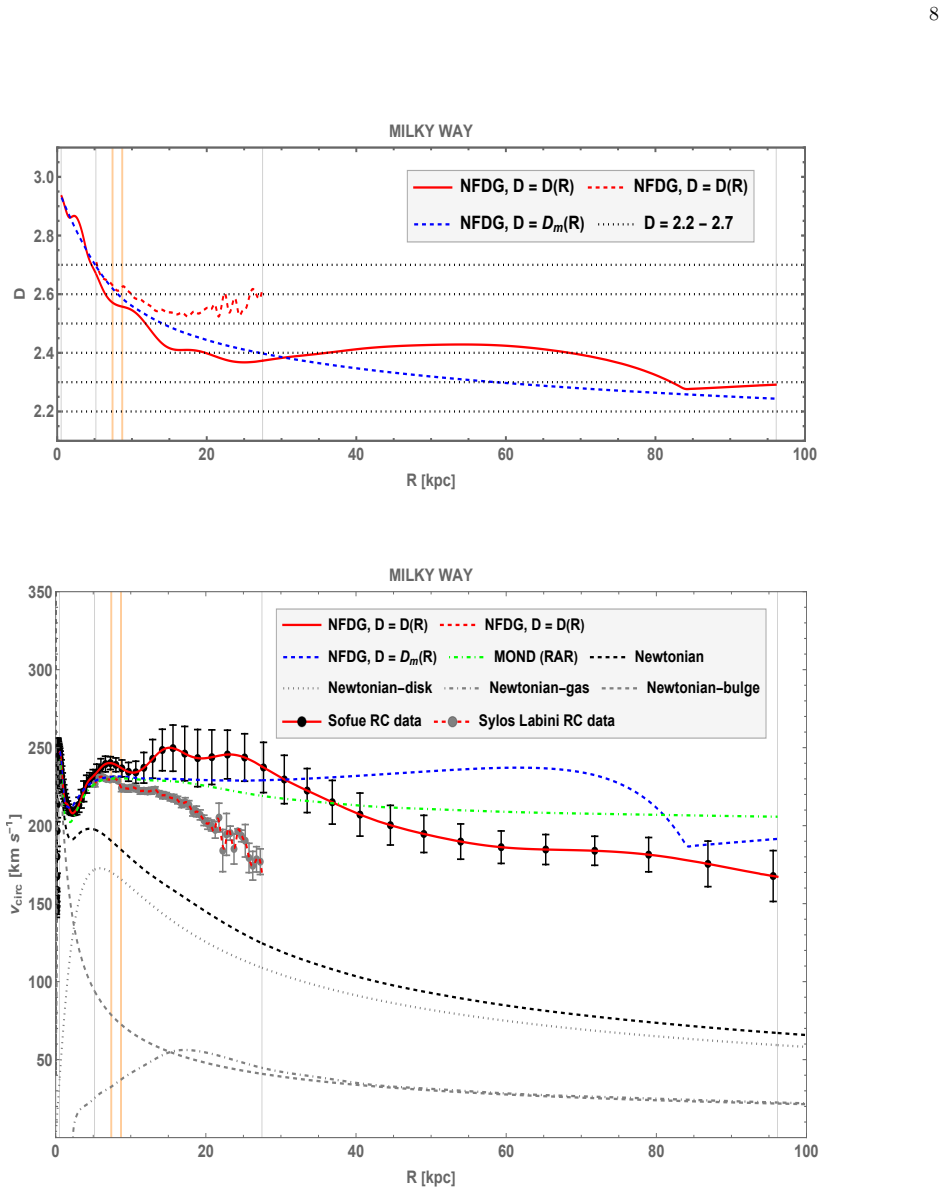
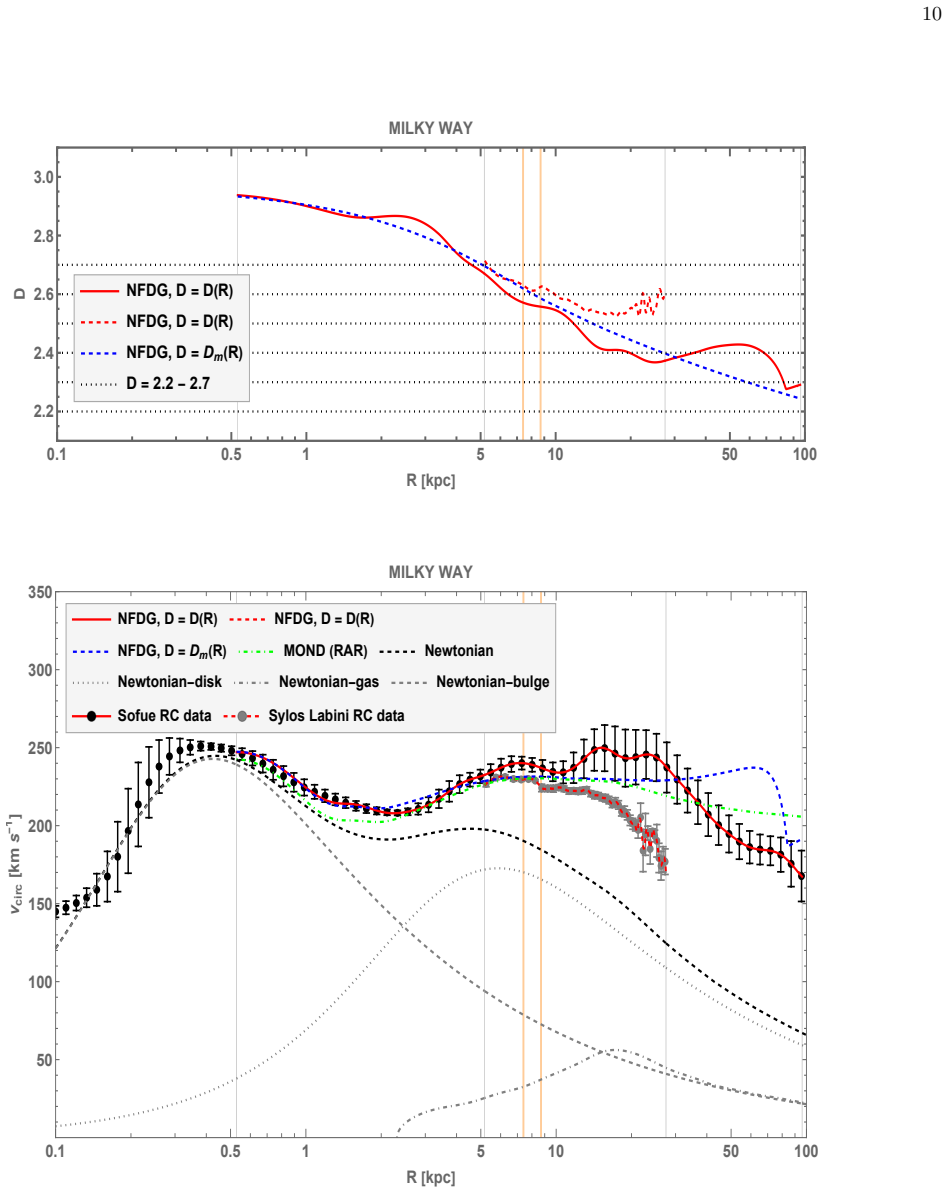
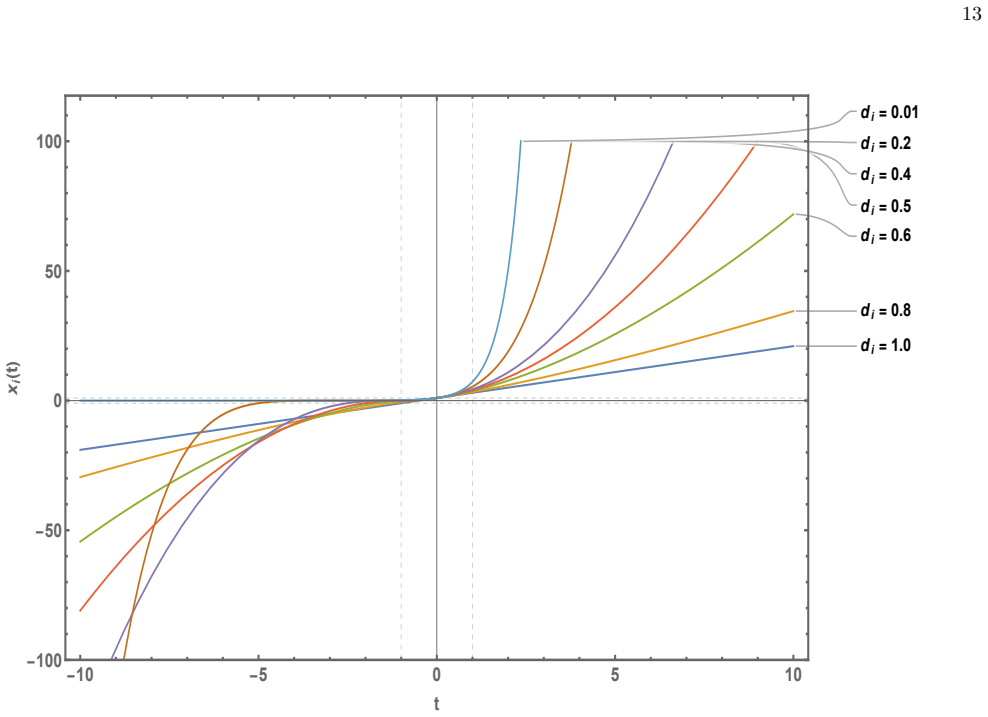
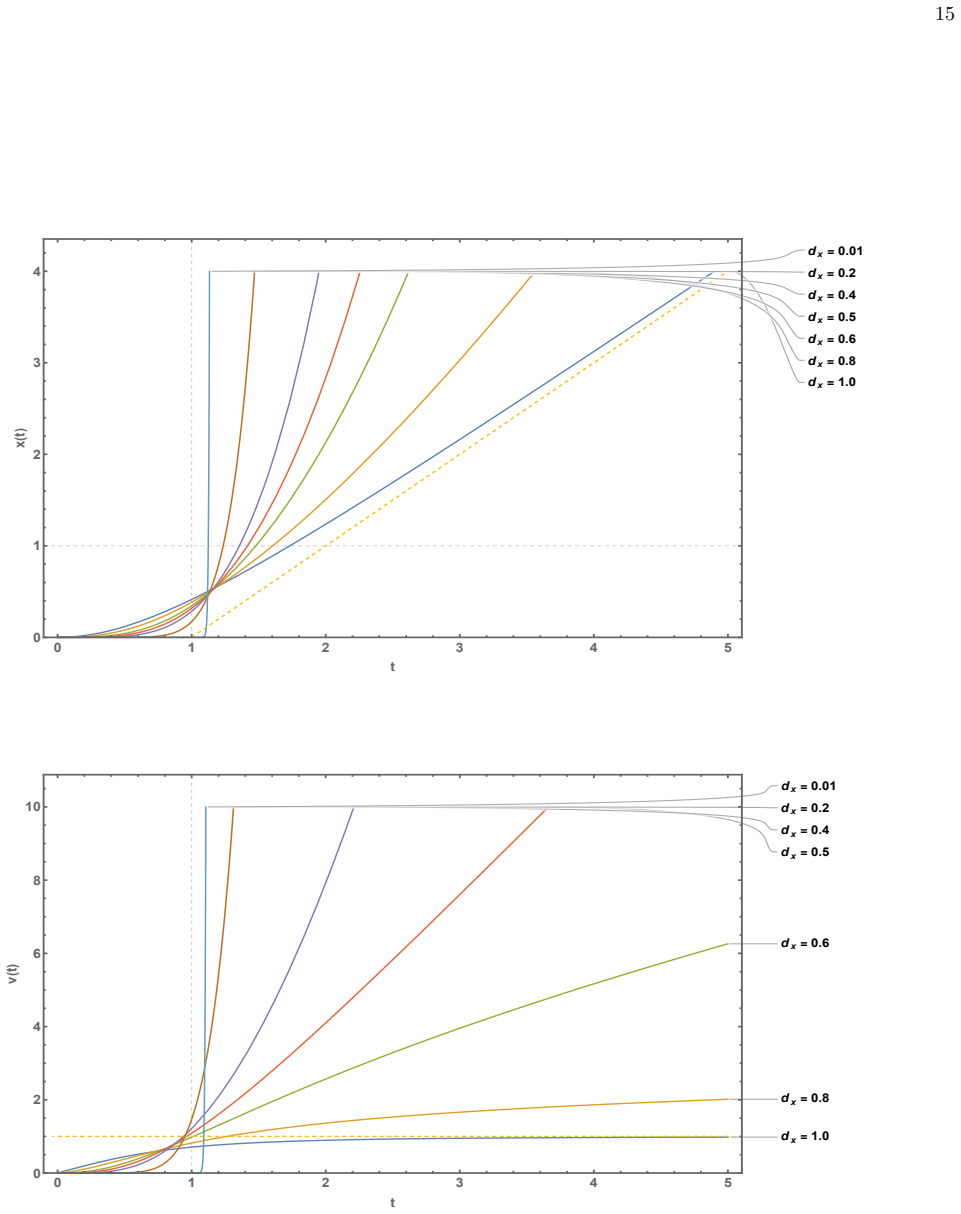
The observed rotation curves of the Milky Way are successfully reproduced by Fractional-Dimension Gravity with a variable fractional dimension D(R) chosen to fit the Gaia DR3 and prior data across the radial range. An alternative dimension function D_m(R) derived from the mass-dimension field equation yields less accurate results. The FDG metric introduces additional weights that modify the structure of special relativity in fractional spacetimes and allow the possibility of effective superluminal motion in regions where D is less than three.
What carries the argument
The variable fractional dimension D(R) inserted into the FDG field equations to adjust the gravitational force law and match rotation velocities without dark matter.
If this is right
- The Gaia DR3 rotation curve data for the Milky Way is matched by the FDG model across the observed radial range.
- The mass-based alternative dimension function D_m(R) produces less accurate fits to the same data.
- Effective superluminal motion is possible in galactic regions where the dimension drops below three.
- The additional weights in the FDG metric change the form of special relativity for fractional-dimensional spacetimes.
Where Pith is reading between the lines
- If a single D(R) form works across multiple galaxies, the model could be checked against cluster dynamics or weak lensing data for consistency.
- The superluminal possibility in low-dimension regions, though speculative in the paper, would require concrete kinematic tests at large galactic radii to evaluate.
- Independent high-resolution stellar velocity fields at the outer disk could distinguish the predicted fall-off from dark-matter halo expectations.
Load-bearing premise
A suitable functional form for the variable dimension D(R) exists and can be chosen to make the FDG equations match the rotation curve data over the observed radial range.
What would settle it
No choice of D(R) function simultaneously reproduces the full set of Milky Way rotation velocities from Gaia DR3 and other surveys at all measured radii, or a new precise velocity measurement at a radius where the chosen D(R) predicts a clear mismatch with data.
Figures

read the original abstract
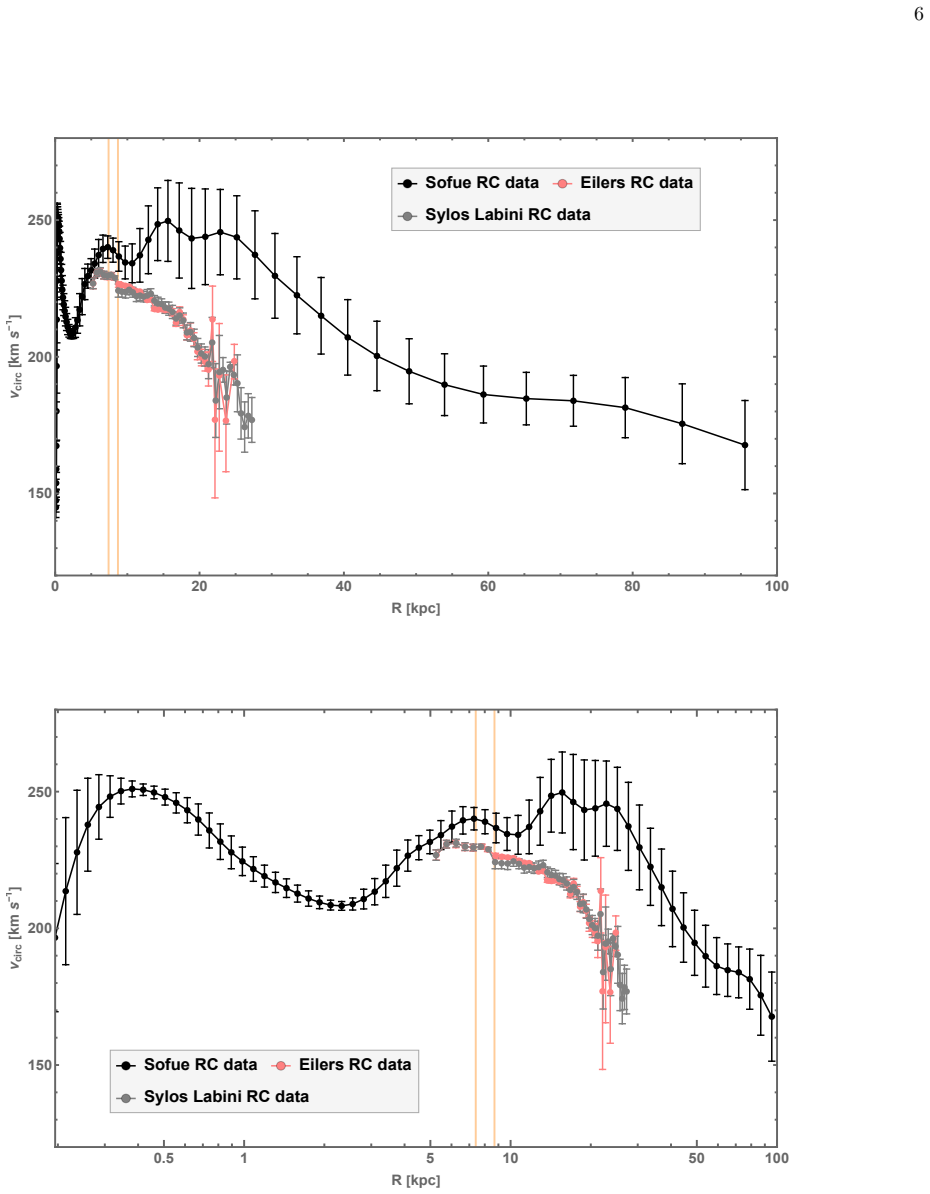
In this work, we focus our analysis of Fractional-Dimension Gravity (FDG) on our home galaxy, the Milky Way (MW), by using the latest Gaia DR3 data as well as previous rotation curve (RC) data for this galaxy. FDG is an alternative gravitational model (previously known as Newtonian Fractional-Dimension Gravity - NFDG) which does not require the dark matter (DM) paradigm. The MW is studied here with the methods of FDG and its observed rotation curves are successfully reproduced by using a variable fractional dimension $D\left (R\right)$, following previous studies of several other galaxies which were analyzed with the same methodology. An alternative dimension function $D_{m}\left(R \right)$, based on the mass-dimension field equation, was also used and yielded less accurate fits to the experimental data. In addition, we also considered possible implications of the FDG metric, based on the presence of additional weights, on the structure of Special Relativity (SR) for spacetimes with fractional dimension. One notable outcome of this analysis is the possibility of an effective superluminal motion in galactic regions where the space dimension is $D<3$. Although this result is very speculative, it opens interesting new perspectives for possible interstellar travel in our galaxy.
Editorial analysis
A structured set of objections, weighed in public.
Referee Report
Summary. The manuscript claims that Fractional-Dimension Gravity (FDG) reproduces the Milky Way rotation curve using Gaia DR3 and prior RC data via a radially varying dimension D(R), without dark matter, following the same methodology applied to other galaxies. An alternative mass-dimension function D_m(R) is tested and reported to yield less accurate fits. The paper also examines possible consequences of the FDG metric for special relativity in fractional-dimensional spacetimes, including speculative effective superluminal motion for D<3.
Significance. If FDG with a variable D(R) could be shown to arise from first principles or to make falsifiable predictions across multiple independent observables and galaxies, it would constitute a notable alternative to the dark-matter paradigm for galactic dynamics. In its present form the significance is limited because the reproduction relies on selecting and tuning D(R) to the data rather than deriving it independently; the SR discussion remains highly speculative and peripheral to the central dynamical claim.
major comments (3)
- [Abstract and FDG application to MW] Abstract and the section introducing the MW analysis: D(R) is explicitly chosen following prior galaxy studies to reproduce the observed rotation curve; the manuscript provides no independent derivation or constraint on its functional form from non-RC observables, so the successful match is by construction rather than a parameter-free prediction of the model.
- [Results on RC reproduction] Results section on rotation-curve fits: no reduced-χ² values, parameter uncertainties, covariance information, or direct quantitative comparison to a standard NFW or other DM-halo model are reported, preventing assessment of whether the FDG fit is statistically competitive or unique.
- [Alternative dimension function] Comparison with D_m(R): the statement that the mass-dimension alternative fits less well lacks details on the number of free parameters, fitting procedure, or statistical test used to quantify the difference, so the claim that D(R) is superior cannot be evaluated.
minor comments (2)
- [Notation] Notation for the two dimension functions D(R) and D_m(R) should be defined with explicit functional forms or equations in the main text rather than solely by reference to earlier papers.
- [Figures] Figure captions for the rotation-curve plots should include the explicit functional form and best-fit parameters adopted for D(R).
Simulated Author's Rebuttal
We thank the referee for the constructive report. We address each major comment below and have revised the manuscript to incorporate additional quantitative details and clarifications where feasible.
read point-by-point responses
-
Referee: Abstract and the section introducing the MW analysis: D(R) is explicitly chosen following prior galaxy studies to reproduce the observed rotation curve; the manuscript provides no independent derivation or constraint on its functional form from non-RC observables, so the successful match is by construction rather than a parameter-free prediction of the model.
Authors: We agree that the functional form of D(R) is selected phenomenologically to reproduce the rotation curve, following the same methodology as in our prior FDG studies of other galaxies. This is an inherent feature of the approach, where D(R) parameterizes the gravitational modification without dark matter, analogous to fitting halo parameters in standard models. We do not claim a first-principles or parameter-free prediction. We have revised the abstract and introduction to state this explicitly and to emphasize the need for future independent constraints from non-RC observables. revision: partial
-
Referee: Results section on rotation-curve fits: no reduced-χ² values, parameter uncertainties, covariance information, or direct quantitative comparison to a standard NFW or other DM-halo model are reported, preventing assessment of whether the FDG fit is statistically competitive or unique.
Authors: We accept this criticism. The original manuscript emphasized qualitative reproduction of the curves. The revised version now includes reduced-χ² values for the D(R) fits, uncertainties and covariance information for the fitted parameters, and a direct quantitative comparison to an NFW dark-matter halo model using identical Gaia DR3 and prior RC data sets. revision: yes
-
Referee: Comparison with D_m(R): the statement that the mass-dimension alternative fits less well lacks details on the number of free parameters, fitting procedure, or statistical test used to quantify the difference, so the claim that D(R) is superior cannot be evaluated.
Authors: We have expanded the relevant section. Both D(R) and D_m(R) employ the same number of free parameters and the identical least-squares fitting procedure. The revision now reports the χ² values for each and applies a statistical test (Δχ²) to quantify the difference, supporting the statement that D(R) provides a superior description of the data. revision: yes
- Independent derivation or constraint on the functional form of D(R) from first principles or non-RC observables
Circularity Check
D(R) selected to reproduce MW rotation curves; reproduction depends on fitted functional form
specific steps
-
fitted input called prediction
[Abstract]
"its observed rotation curves are successfully reproduced by using a variable fractional dimension D(R), following previous studies of several other galaxies which were analyzed with the same methodology. An alternative dimension function Dm(R), based on the mass-dimension field equation, was also used and yielded less accurate fits to the experimental data."
D(R) is introduced as a variable function whose specific form is selected (following prior work) so that the FDG equations match the observed RC data; the reported successful reproduction is therefore achieved by construction through this choice of input function, as confirmed by the explicit comparison to a worse-fitting alternative.
full rationale
The central result is that FDG reproduces the Milky Way rotation curves via a variable fractional dimension D(R). The abstract states this reproduction occurs 'by using a variable fractional dimension D(R), following previous studies' and contrasts it with an alternative Dm(R) that 'yielded less accurate fits'. This matches the fitted_input_called_prediction pattern: the functional form is chosen to match the target data (RC), so the reported success reduces to the selection of the input function rather than an independent model output. No first-principles derivation of the specific D(R) is shown in the provided text, and the claim remains dependent on this choice. The score is set at 6 because the circularity is confined to the reproduction step itself; the underlying FDG framework may retain independent content outside this application.
Axiom & Free-Parameter Ledger
free parameters (1)
- D(R) functional form and parameters
axioms (1)
- domain assumption The Fractional-Dimension Gravity field equations remain valid when the dimension is allowed to vary radially
invented entities (1)
-
variable fractional dimension D(R)
no independent evidence
Reference graph
Works this paper leans on
-
[1]
Modified Gravity and Cosmology
T. Clifton, P. G. Ferreira, A. Padilla, and C. Skordis, Phys. Rept.513, 1 (2012), arXiv:1106.2476 [astro-ph.CO]
work page internal anchor Pith review Pith/arXiv arXiv 2012
-
[2]
Y. Akramiet al.(CANTATA),Modified Gravity and Cosmology. An Update by the CANTATA Network, edited by E. N. Saridakis, R. Lazkoz, V. Salzano, P. Vargas Moniz, S. Capozziello, J. Beltr´ an Jim´ enez, M. De Laurentis, and G. J. Olmo (Springer, 2021) arXiv:2105.12582 [gr-qc]
-
[3]
K. Garrett and G. Duda, Adv. Astron.2011, 968283 (2011), arXiv:1006.2483 [hep-ph]
work page internal anchor Pith review Pith/arXiv arXiv 2011
-
[4]
C. M. Will, Living Rev. Rel.17, 4 (2014), arXiv:1403.7377 [gr-qc]
work page internal anchor Pith review Pith/arXiv arXiv 2014
-
[5]
Milgrom, Astrophys
M. Milgrom, Astrophys. J.270, 365 (1983)
1983
-
[6]
Milgrom, Astrophys
M. Milgrom, Astrophys. J.270, 371 (1983)
1983
-
[7]
Milgrom, Astrophys
M. Milgrom, Astrophys. J.270, 384 (1983)
1983
-
[8]
Modified Newtonian Dynamics (MOND): Observational Phenomenology and Relativistic Extensions
B. Famaey and S. McGaugh, Living Rev. Rel.15, 10 (2012), arXiv:1112.3960 [astro-ph.CO]
work page internal anchor Pith review Pith/arXiv arXiv 2012
-
[9]
P. D. Mannheim and D. Kazanas, Astrophys. J.342, 635 (1989)
1989
-
[10]
P. D. Mannheim and D. Kazanas, Gen. Rel. Grav.26, 337 (1994)
1994
-
[11]
P. D. Mannheim, Prog. Part. Nucl. Phys.56, 340 (2006), arXiv:0505266 [astro-ph]
2006
- [12]
-
[13]
Geometry and field theory in multi-fractional spacetime
G. Calcagni, JHEP01, 065, arXiv:1107.5041 [hep-th]
work page internal anchor Pith review Pith/arXiv arXiv
-
[14]
Fractal universe and quantum gravity
G. Calcagni, Phys. Rev. Lett.104, 251301 (2010), arXiv:0912.3142 [hep-th]
work page internal anchor Pith review Pith/arXiv arXiv 2010
-
[15]
Quantum field theory, gravity and cosmology in a fractal universe
G. Calcagni, JHEP03, 120, arXiv:1001.0571 [hep-th]
work page internal anchor Pith review Pith/arXiv arXiv
-
[16]
Calcagni, JCAP12, 041, arXiv:1307.6382 [hep-th]
G. Calcagni, JCAP12, 041, arXiv:1307.6382 [hep-th]
-
[17]
G. Calcagni and A. De Felice, Phys. Rev. D102, 103529 (2020), arXiv:2004.02896 [gr-qc]
-
[18]
G. Calcagni, Mod. Phys. Lett. A36, 2140006 (2021), arXiv:2103.06557 [hep-th]
-
[19]
G. Calcagni, Class. Quant. Grav.38, 165005 (2021), [Erratum: Class.Quant.Grav. 38, 169601 (2021)], arXiv:2106.15430 [gr-qc]
-
[20]
G. Calcagni and G. U. Varieschi, JHEP08, 024, arXiv:2112.13103 [gr-qc]
- [21]
- [22]
- [23]
-
[24]
B. B. Mandelbrot,The fractal geometry of nature /Revised and enlarged edition/(New York, W.H. Freeman and Co., 1983, 495 p., 1983)
1983
-
[25]
K. J. Falconer,The Geometry of Fractal Sets, Cambridge Tracts in Mathematics (Cambridge University Press, 1985)
1985
-
[26]
M. F. Barnsley,Fractals Everywhere, 2nd ed. (Morgan Kaufmann, 1993)
1993
-
[27]
Baryshev and P
Yu. Baryshev and P. Teerikorpi,Discovery of cosmic fractals(River Edge, USA: World Scientific (2002) 373 p, 2002)
2002
-
[28]
Nottale,Scale relativity and fractal space-time(London, UK: Imp
L. Nottale,Scale relativity and fractal space-time(London, UK: Imp. Coll. Pr. (2011) 742 p, 2011)
2011
-
[29]
Multifractional theories: an unconventional review
G. Calcagni, JHEP03, 138, [Erratum: JHEP 06, 020 (2017)], arXiv:1612.05632 [hep-th]
work page internal anchor Pith review Pith/arXiv arXiv 2017
- [30]
- [31]
- [32]
-
[33]
SPARC: Mass Models for 175 Disk Galaxies with Spitzer Photometry and Accurate Rotation Curves
F. Lelli, S. S. McGaugh, and J. M. Schombert, Astron. J.152, 157 (2016), arXiv:1606.09251 [astro-ph.GA]
work page internal anchor Pith review Pith/arXiv arXiv 2016
-
[34]
P. Li, F. Lelli, S. McGaugh, and J. Schombert, Astron. Astrophys.615, A3 (2018), arXiv:1803.00022 [astro-ph.GA]
work page internal anchor Pith review Pith/arXiv arXiv 2018
- [35]
- [36]
-
[37]
G. U. Varieschi,Newtonian Fractional-Dimension Gravity (NFDG)- https://gvarieschi.lmu.build/NFDG2020.html(2020)
2020
-
[38]
A. Giusti, Phys. Rev. D101, 124029 (2020), arXiv:2002.07133 [gr-qc]
- [39]
-
[40]
F. Benetti, A. Lapi, G. Gandolfi, P. Salucci, and L. Danese, Astrophys. J.949, 65 (2023), arXiv:2303.15767 [astro-ph.GA]
-
[41]
F. Benetti, A. Lapi, G. Gandolfi, B. S. Haridasu, and L. Danese, Universe9, 329 (2023), arXiv:2307.04655 [astro-ph.CO]
-
[42]
F. Benetti, A. Lapi, G. Gandolfi, M. A. Butt, Y. Boumechta, B. S. Haridasu, and C. Baccigalupi, Universe9, 478 (2023), arXiv:2311.03876 [astro-ph.CO]
- [43]
-
[44]
H. Moradpour, S. Jalalzadeh, and M. Javaherian, Astrophys. Space Sci.369, 98 (2024), arXiv:2409.12869 [gr-qc]
-
[45]
G. Pascoli, Can. J. Phys.102, 69 (2024), arXiv:2307.01555 [astro-ph.CO]
-
[46]
Pascoli, Universe10, 151 (2024), arXiv:2404.05421 [astro-ph.GA]
G. Pascoli, Universe10, 151 (2024), arXiv:2404.05421 [astro-ph.GA]
-
[47]
Pascoli and L
G. Pascoli and L. Pernas, Symmetry16, 937 (2024)
2024
-
[48]
Herrmann,Fractional calculus: An introduction for physicists(World Scientific, Hackensack, USA, 2011) p
R. Herrmann,Fractional calculus: An introduction for physicists(World Scientific, Hackensack, USA, 2011) p. 261
2011
-
[49]
Hilfer, ed.,Applications of fractional calculus in physics(World Scientific Publishing Co., Inc., River Edge, NJ, 2000) pp
R. Hilfer, ed.,Applications of fractional calculus in physics(World Scientific Publishing Co., Inc., River Edge, NJ, 2000) pp. viii+463
2000
-
[50]
G. U. Varieschi, J. Appl. Math. Phys.06, 1247 (2018), arXiv:1712.03473 [physics.class-ph]
work page internal anchor Pith review Pith/arXiv arXiv 2018
-
[51]
F. H. Stillinger, Journal of Mathematical Physics18, 1224 (1977), https://doi.org/10.1063/1.523395
-
[52]
Svozil, Journal of Physics A Mathematical General20, 3861 (1987)
K. Svozil, Journal of Physics A Mathematical General20, 3861 (1987)
1987
-
[53]
Palmer and P
C. Palmer and P. N. Stavrinou, Journal of Physics A: Mathematical and General37, 6987 (2004)
2004
-
[54]
C. G. Bollini and J. J. Giambiagi, Nuovo Cim.B12, 20 (1972)
1972
-
[55]
’t Hooft and M
G. ’t Hooft and M. J. G. Veltman, Nucl. Phys.B44, 189 (1972)
1972
-
[56]
K. G. Wilson, Phys. Rev.D7, 2911 (1973)
1973
-
[57]
M. E. Peskin and D. V. Schroeder,An Introduction to Quantum Field Theory, by Michael Edward Peskin and Daniel V. Schroeder. ISBN 13 978-0-201-50397-5, ISBN-10 0-201-50397-2. Published by Westview Press, Perseus Books Group, 1995.(1995)
1995
-
[58]
Binney and S
J. Binney and S. Tremaine,Galactic Dynamics: Second Edition, by James Binney and Scott Tremaine. ISBN 978-0-691- 13026-2 (HB). Published by Princeton University Press, Princeton, NJ USA, 2008.(2008)
2008
-
[59]
M. A. Bershady, M. A. W. Verheijen, K. B. Westfall, D. R. Andersen, R. A. Swaters, and T. Martinsson, Astrophys. J. 716, 234 (2010), arXiv:1004.5043 [astro-ph.CO]
work page internal anchor Pith review Pith/arXiv arXiv 2010
-
[60]
H. S. Cohl and E. G. Kalnins, Journal of Physics A Mathematical General45, 145206 (2012), arXiv:1105.0386 [math-ph]
work page internal anchor Pith review Pith/arXiv arXiv 2012
-
[61]
DLMF,NIST Digital Library of Mathematical Functions,https://dlmf.nist.gov/, Release 1.2.7 of 2026-06-15, f. W. J. Olver, A. B. Olde Daalhuis, D. W. Lozier, B. I. Schneider, R. F. Boisvert, C. W. Clark, B. R. Miller, B. V. Saunders, H. S. Cohl, and M. A. McClain, eds
2026
-
[62]
Rotation Curve of the Milky Way out to $\sim$ 200 kpc
P. Bhattacharjee, S. Chaudhury, and S. Kundu, Astrophys. J.785, 63 (2014), arXiv:1310.2659 [astro-ph.GA]
work page internal anchor Pith review Pith/arXiv arXiv 2014
-
[63]
Sofue, Galaxies8, 37 (2020), arXiv:2004.11688 [astro-ph.GA]
Y. Sofue, Galaxies8, 37 (2020), arXiv:2004.11688 [astro-ph.GA]
-
[64]
F. S. Labini, Z. Chrobakova, R. Capuzzo-Dolcetta, and M. Lopez-Corredoira, Astrophys. J.945, 10.3847/1538-4357/acb92c (2023), arXiv:2302.01379 [astro-ph.GA]
-
[65]
Gaia Collaboration, Vallenari, A., Brown, A. G. A., Prusti, T., de Bruijne, J. H. J., Arenou, F., Babusiaux, C., Biermann, M., Creevey, O. L., Ducourant, C., Evans, D. W., Eyer, L., Guerra, R., Hutton, A., Jordi, C., Klioner, S. A., Lammers, U. L., Lindegren, L., Luri, X., Mignard, F., Panem, C., Pourbaix, D., Randich, S., Sartoretti, P., Soubiran, C., Ta...
2023
-
[66]
Eilers, D
A.-C. Eilers, D. W. Hogg, H.-W. Rix, and M. K. Ness, Astrophys. J.871, 120 (2019)
2019
- [67]
-
[68]
F. Sylos Labini, Astrophys. J.976, 185 (2024), arXiv:2410.14307 [astro-ph.GA]
-
[69]
Q. Feng, Y. Huang, H. Zhang, and J. Liu, Mon. Not. Roy. Astron. Soc.546, stag011 (2026)
2026
-
[70]
Two estimates of the distance to the Galactic centre
C. Francis and E. Anderson, Mon. Not. Roy. Astron. Soc.441, 1105 (2014), arXiv:1309.2629 [astro-ph.GA]
work page internal anchor Pith review Pith/arXiv arXiv 2014
-
[71]
Miyamoto and R
M. Miyamoto and R. Nagai, Publ. Astron. Soc. Jap.27, 533 (1975)
1975
-
[72]
H. C. Plummer, Mon. Not. Roy. Astron. Soc.71, 460 (1911)
1911
-
[73]
E. Pouliasis, P. Di Matteo, and M. Haywood, Astron. Astrophys.598, A66 (2017), arXiv:1611.07979 [astro-ph.GA]
work page internal anchor Pith review Pith/arXiv arXiv 2017
-
[74]
Akiyama, A
Event Horizon Telescope Collaboration, K. Akiyama, A. Alberdi, W. Alef, J. C. Algaba, R. Anantua, K. Asada, R. Azulay, U. Bach, A.-K. Baczko, D. Ball, M. Balokovi´ c, J. Barrett, M. Baub¨ ock, B. A. Benson, D. Bintley, L. Blackburn, R. Blun- dell, K. L. Bouman, G. C. Bower, H. Boyce, M. Bremer, C. D. Brinkerink, R. Brissenden, S. Britzen, A. E. Broderick,...
2022
-
[75]
Gravity Collaboration, R. Abuter, N. Aimar, P. Amaro Seoane, A. Amorim, M. Baub¨ ock, J. P. Berger, H. Bonnet, G. Bourdarot, W. Brandner, V. Cardoso, Y. Cl´ enet, R. Davies, P. T. de Zeeuw, J. Dexter, A. Drescher, A. Eckart, F. Eisenhauer, H. Feuchtgruber, G. Finger, N. M. F¨ orster Schreiber, A. Foschi, P. Garcia, F. Gao, Z. Gelles, E. Gendron, R. Genzel...
-
[76]
A Universal Neutral Gas Profile for Nearby Disk Galaxies
F. Bigiel and L. Blitz, Astrophys. J.756, 183 (2012), arXiv:1208.1505 [astro-ph.CO]
work page internal anchor Pith review Pith/arXiv arXiv 2012
-
[77]
The Radial Acceleration Relation in Rotationally Supported Galaxies
S. McGaugh, F. Lelli, and J. Schombert, Phys. Rev. Lett.117, 201101 (2016), arXiv:1609.05917 [astro-ph.GA]
work page internal anchor Pith review Pith/arXiv arXiv 2016
-
[78]
One Law To Rule Them All: The Radial Acceleration Relation of Galaxies
F. Lelli, S. S. McGaugh, J. M. Schombert, and M. S. Pawlowski, Astrophys. J.836, 152 (2017), arXiv:1610.08981 [astro- ph.GA]
work page internal anchor Pith review Pith/arXiv arXiv 2017
-
[79]
D. J. Griffiths,Introduction to Electrodynamics, 4th ed. (Cambridge University Press, 2017)
2017
discussion (0)
Sign in with ORCID, Apple, or X to comment. Anyone can read and Pith papers without signing in.