REVIEW 2 major objections 5 minor 53 references
An infinite-dimensional structure group plus torsion constraints produces all NS-NS α' and α'² corrections without scattering amplitudes.
Reviewed by Pith at T0; open to challenge. T0 means a machine referee read the full paper against a public rubric. the ladder, T0–T4 →
T0 review · grok-4.5
2026-07-11 06:57 UTC pith:BUNM2VIO
load-bearing objection Clean recursive geometric algorithm that actually delivers the full a/b NS-NS towers at α' and α'² from T-duality alone, with explicit matching after documented redefinitions. the 2 major comments →
α'-Bootstrap
The pith
A machine-rendered reading of the paper's core claim, the machinery that carries it, and where it could break.
Core claim
The α'-bootstrap recovers all NS-NS higher-derivative corrections at order α' and α'²—the complete a and b towers—by imposing torsion constraints and a partial gauge fixing on an infinite-dimensional structure group of the megaspace. The output is a compact bi-parametric Lagrangian (equation 1.2 / 4.37) that matches the literature for both bosonic and heterotic strings after field redefinitions, without any direct scattering-amplitude computation.
What carries the argument
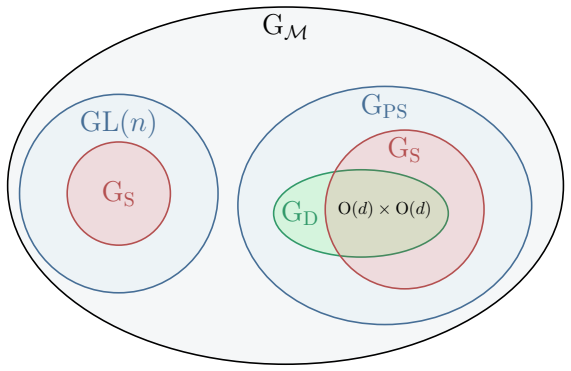
The infinite-dimensional structure group GS of the megaspace, whose generators and structure constants are defined recursively from a regularized ad-invariant bilinear καβ (the Killing form). Torsion constraints plus a new partial gauge fixing convert the gBdR identification into iterative algebraic relations that seed every higher-derivative term.
Load-bearing premise
That the regularized Killing form of this infinite algebra is the right bilinear, and that the same recursive identification continues without new free parameters or inconsistencies at every higher order.
What would settle it
Compute the α'³ NS-NS Lagrangian both by the bootstrap and by an independent amplitude or T-duality analysis; any mismatch that cannot be absorbed by field redefinitions or by a new admissible deformation of καβ would falsify the claim that the procedure captures the full tower.
If this is right
- All a/b-tower NS-NS corrections become computable by recursion rather than by matching amplitudes.
- The same algebraic structure yields the all-order Green-Schwarz transformations for the B-field and double Lorentz symmetry.
- Bosonic and heterotic Lagrangians at α' and α'² are recovered as special values of a single bi-parametric action.
- Any admissible deformation of the bilinear καβ that is still ad-invariant under GS can in principle generate new towers of corrections.
Where Pith is reading between the lines
- If a systematic classification of all ad-invariant bilinears on GS exists, the missing ζ(3), ζ(5), … towers may appear as higher deformations of the same algebra rather than as entirely new geometric data.
- The recursive formulae are already computer-algebra ready; an automated pipeline could push the known a/b towers well beyond α'³ once the ζ-sector is understood.
- The megaspace construction may supply a geometric origin for the non-manifest T-duality that currently obstructs a complete O(d,d) description of the ζ corrections.
Editorial analysis
A structured set of objections, weighed in public.
Referee Report
Summary. The paper develops an “α′-bootstrap” that reconstructs the NS-NS higher-derivative corrections of bosonic and heterotic string theory at orders α′ and α′^{2} (the full a/b towers) from consistency conditions alone. Starting from a Poláček–Siegel megaspace with duality group O(d+n,d+n), the authors construct an infinite-dimensional structure group GS whose regularized Killing form κ_αβ is split into independent left- and right-moving sectors controlled by two parameters a and b. Torsion constraints T_ABC = T_ABC = 0 together with a new partial gauge fixing A_iα = 0 determine the auxiliary fields order by order via recursive formulae (i0a)–(i4). The resulting four- and six-derivative Lagrangians (4.2) and (4.37) (after removal of the field-redefinition term L_redef (4.38)) are shown to match the known Metsaev–Tseytlin and Hronek–Wulff–Zacarias expressions once the concrete redefinitions of Appendix B are performed. All-order Green–Schwarz transformations are also obtained. The construction is conjectured to continue to all orders, though ζ-type corrections that begin at α′^{3} remain outside the present choice of κ_αβ.
Significance. If the recursive identification continues without obstruction, the method supplies a purely algebraic, T-duality-covariant algorithm that generates the entire a/b tower of NS-NS corrections without further amplitude input. The explicit match at α′ and α′^{2}, the transparent geometric interpretation of the gBdR identification as torsion constraints plus gauge fixing, and the all-order Green–Schwarz formulae already constitute a substantial technical advance over earlier formulations. The recursive formulae are well-suited to computer-algebra implementation, and the free choice of the ad-invariant bilinear κ_αβ offers a concrete route toward incorporating the missing ζ-towers. These features make the paper a valuable contribution to the systematic study of higher-derivative corrections in string theory.
major comments (2)
- The all-order claim rests on the conjecture (abstract and §5) that the same recursive identification generated by the regularized Killing form (3.25)–(3.32) continues without obstruction or new free parameters beyond a and b. While the explicit match at α′ and α′^{2} is solid, the manuscript provides no intermediate check (e.g., a partial computation of the eight-derivative sector or a consistency condition that would fail if new parameters appeared). A short discussion of possible obstructions, or an explicit statement that the conjecture is left for future work, would strengthen the central claim.
- Section 3.1.2 presents the regularized Killing form as “the most obvious (and relevant) example” of an ad-invariant bilinear, yet the uniqueness (or sufficiency) of this choice for generating precisely the physical a/b towers is not demonstrated. Because the abstract and §5 advertise the ease of generalization to ζ-type corrections via other bilinears, a clearer statement of the classification problem for admissible κ_αβ (even if deferred) is needed so that the reader can assess how much of the higher-order structure is already fixed.
minor comments (5)
- Abstract and throughout: “sting theories” should be “string theories”.
- Eq. (1.2) and the surrounding text introduce L^(6)_redef without an immediate forward reference to its explicit form (4.38); a parenthetical pointer would help the reader.
- Appendix B is essential for verifying the match with the literature; a short summary table listing which redefinitions map which scheme to which would improve readability.
- Notation for the two chiral sectors (under/over-bars versus (±) superscripts) is dense; a brief glossary or a consistent preference for one convention in intermediate steps would reduce cognitive load.
- References [1–3] are the authors’ own preceding works; a sentence clarifying what is genuinely new relative to those papers (the new gauge fixing, the recursive formulae free of tower collapse, the six-derivative match) would help situate the contribution.
Circularity Check
Minor residual self-citation of the authors' prior megaspace/gBdR framework papers; the explicit recursive identification, action computation, and matching to external Metsaev–Tseytlin/Hronek–Wulff–Zacarias results at α'/α'^{2} are independent and fully spelled out.
specific steps
-
self citation load bearing
[Abstract and §1 (Introduction); also §3 opening]
"Building on a series of previous works by some of the authors, [1–3], we present a refined version of an elegant and effective procedure... In section 3 we revisit the results of [1–3], solving the regularization issue referred in [2] as towers collapse and clarifying the underlying algebraic structure."
The geometric megaspace construction, Poláček–Siegel group, and gBdR-as-torsion+gauge-fixing interpretation that underwrite the entire bootstrap are introduced via self-citations to the authors' own prior papers. While the present work re-derives the algebra, supplies new recursive formulas, a new gauge fixing, and explicit α'/α'^{2} computations that match external literature, the foundational framework itself is not independently re-justified from first principles or external sources; the load-bearing geometric premise therefore rests partly on the authors' previous unverified (non-machine-checked) results.
full rationale
The paper's central claim is a constructive algebraic procedure (torsion constraints (3.36), gauge fixing (3.39)–(3.40), recursive identification (i0a)–(i4) generated from the regularized Killing form of GS via (3.24)–(3.32), and the resulting L^(4) (4.2) and L^(6) (4.37) after removing L_redef (4.38) via the redefinitions of Appendix B) that reproduces the known bi-parametric a/b towers and matches external literature for bosonic and heterotic cases. This chain is self-contained at the computed orders: the structure constants, fluxes, auxiliary fields A^(n)/Π^(n), and action terms are derived step-by-step from the stated algebraic constraints without reducing by definition to the target Lagrangians. Overall coefficients a,b are free parameters fixed by matching known theories (standard for effective actions), not fitted inputs re-labeled as predictions. The all-order conjecture and possible other καβ deformations are explicitly left open. The only mild circularity is ordinary self-citation of the authors' prior geometrization papers [1–3] for the megaspace setup and Green-Schwarz transformations; these are refined and re-derived here rather than load-bearing unverified uniqueness theorems. No self-definitional loop, no fitted-as-prediction, no smuggled ansatz that forces the α'/α'^{2} results, and no renaming of external data. Score 2 reflects the minor self-citation without elevating it to a reduction of the main claim.
Axiom & Free-Parameter Ledger
free parameters (1)
- a, b (overall coefficients of the two chiral towers) =
theory-dependent discrete choices
axioms (4)
- domain assumption The strong constraint / section condition of DFT holds and admits the canonical solution that reduces DFT to generalized geometry.
- ad hoc to paper The structure group GS admits a regularized Killing form that can be split into independent left- and right-moving sectors controlled by a and b.
- ad hoc to paper Torsion constraints T_ABC = T_ABC = 0 together with the partial gauge fixing A_iα = 0 completely determine the auxiliary fields order by order.
- ad hoc to paper The same recursive identification continues to all orders in α' without obstruction (conjecture).
invented entities (2)
-
megaspace M with duality group O(d+n,d+n) and infinite-dimensional structure group GS
no independent evidence
-
regularized infinite-dimensional Killing form κ_αβ of GS
no independent evidence
read the original abstract
Due to the exponential growth in the number of terms, computing $\alpha'$-corrections to string theory's low-energy effective actions is a challenging matter. In order to fix all the couplings, one has usually to deal with a large number of string scattering amplitudes. This difficulty can be overcome by exploiting T-duality, which severely constrains the allowed structure of the effective action. It is then convenient to work in a formulation where T-duality is a manifest symmetry. Building on a series of previous works by some of the authors, we present a refined version of an elegant and effective procedure that allows to obtain all the higher-derivative corrections of the NS-NS sector of sting theories at order $\alpha'$ and $\alpha'^2$, up to an overall coefficient. We dub this approach $\alpha'$-bootstrap, since it is based only on consistency conditions and avoids the direct computation of scattering amplitudes. The procedure relies on an infinite dimensional algebraic structure that we present in full detail, and it is conjectured to work at all orders. Although, at the moment, it still misses the $\zeta$-like corrections starting at order $\alpha'^3$, the ease with which it can be generalized is promising for future developments in this direction.
Figures
Reference graph
Works this paper leans on
-
[1]
F. Hassler, D. Osten, and Y. Sakatani,Duality covariant curvatures for the heterotic string,JHEP09(2025) 031, [arXiv:2412.17893]
Pith/arXiv arXiv 2025
-
[2]
A. Gitsis and F. Hassler,Unraveling the generalized Bergshoeff-de Roo identification, JHEP06(2025) 048, [arXiv:2412.17900]
Pith/arXiv arXiv 2025
-
[3]
A. Gitsis and F. Hassler,All-order generalized Green-Schwarz transformations,Phys. Rev. D113(2026), no. 2 026026, [arXiv:2511.09615]. 39
arXiv 2026
-
[4]
M. Gasperini and G. Veneziano,The Pre - big bang scenario in string cosmology,Phys. Rept.373(2003) 1–212, [hep-th/0207130]
Pith/arXiv arXiv 2003
-
[5]
K. Becker, M. Becker, M. Haack, and J. Louis,Supersymmetry breaking and alpha-prime corrections to flux induced potentials,JHEP06(2002) 060, [hep-th/0204254]
Pith/arXiv arXiv 2002
-
[6]
A. Buchel, J. T. Liu, and A. O. Starinets,Coupling constant dependence of the shear viscosity in N=4 supersymmetric Yang-Mills theory,Nucl. Phys. B707(2005) 56–68, [hep-th/0406264]
Pith/arXiv arXiv 2005
-
[7]
S. S. Gubser, I. R. Klebanov, and A. A. Tseytlin,Coupling constant dependence in the thermodynamics of N=4 supersymmetric Yang-Mills theory,Nucl. Phys. B534(1998) 202–222, [hep-th/9805156]
Pith/arXiv arXiv 1998
-
[8]
T. Banks and M. B. Green,Nonperturbative effects in AdS in five-dimensions x S**5 string theory and d = 4 SUSY Yang-Mills,JHEP05(1998) 002, [hep-th/9804170]
Pith/arXiv arXiv 1998
-
[9]
Callan, R
C. Callan, R. Myers, and M. Perry,Black holes in string theory,Nuclear Physics B311 (1989), no. 3 673–698
1989
-
[10]
R. C. Myers,Higher Derivative Gravity, Surface Terms and String Theory,Phys. Rev. D 36(1987) 392
1987
-
[11]
A. Sen,Black hole entropy function and the attractor mechanism in higher derivative gravity,JHEP09(2005) 038, [hep-th/0506177]
Pith/arXiv arXiv 2005
-
[12]
T. Mohaupt,Strings, higher curvature corrections, and black holes, inWorkshop on Mathematical and Physical Aspects of Quantum Gravity, pp. 237–262, 12, 2005. hep-th/0512048
Pith/arXiv arXiv 2005
-
[13]
M. R. Garousi and H. Razaghian,Minimal independent couplings at orderα′2,Phys. Rev. D100(2019), no. 10 106007, [arXiv:1905.10800]
Pith/arXiv arXiv 2019
-
[14]
M. R. Garousi,Effective action of bosonic string theory at orderα′2,Eur. Phys. J. C79 (2019), no. 10 827, [arXiv:1907.06500]
Pith/arXiv arXiv 2019
-
[15]
M. R. Garousi,On NS-NS couplings at orderα’3,Nucl. Phys. B971(2021) 115510, [arXiv:2012.15091]
Pith/arXiv arXiv 2021
-
[16]
H. Gholian and M. R. Garousi,More on closed string effective actions at orderα’2, Phys. Rev. D109(2024), no. 8 086007, [arXiv:2311.05207]
Pith/arXiv arXiv 2024
- [17]
-
[18]
M. R. Garousi,Effective action of heterotic string theory at orderα’2,JHEP09(2023) 020, [arXiv:2307.00544]
Pith/arXiv arXiv 2023
-
[19]
M. R. Garousi,An NS-NS basis for odd-parity couplings cm at orderα′3,Eur. Phys. J. C84(2024), no. 4 423, [arXiv:2402.16496]
Pith/arXiv arXiv 2024
-
[20]
M. R. Garousi,Minimal gauge invariant couplings at orderα′3: NS–NS fields,Eur. Phys. J. C80(2020), no. 11 1086, [arXiv:2006.09193]
Pith/arXiv arXiv 2020
-
[21]
M. R. Garousi,Effective action of type II superstring theories at orderα′3: NS-NS couplings,JHEP02(2021) 157, [arXiv:2011.02753]. 40
Pith/arXiv arXiv 2021
-
[22]
C. Hull and B. Zwiebach,Double Field Theory,JHEP09(2009) 099, [arXiv:0904.4664]
Pith/arXiv arXiv 2009
-
[23]
O. Hohm, C. Hull, and B. Zwiebach,Background independent action for double field theory,JHEP07(2010) 016, [arXiv:1003.5027]
Pith/arXiv arXiv 2010
-
[24]
O. Hohm, C. Hull, and B. Zwiebach,Generalized metric formulation of double field theory,JHEP08(2010) 008, [arXiv:1006.4823]
Pith/arXiv arXiv 2010
-
[25]
N. Hitchin,Generalized Calabi-Yau manifolds,arXiv Mathematics e-prints(Sept., 2002) math/0209099, [math/0209099]
Pith/arXiv arXiv 2002
-
[26]
M. Gualtieri,Generalized complex geometry,arXiv Mathematics e-prints(Jan., 2004) math/0401221, [math/0401221]
Pith/arXiv arXiv 2004
-
[27]
E. A. Bergshoeff and M. de Roo,The Quartic Effective Action of the Heterotic String and Supersymmetry,Nucl. Phys. B328(1989) 439–468
1989
-
[28]
W. H. Baron, E. Lescano, and D. Marqués,The generalized Bergshoeff-de Roo identification,JHEP11(2018) 160, [arXiv:1810.01427]
Pith/arXiv arXiv 2018
-
[29]
W. Baron and D. Marques,The generalized Bergshoeff-de Roo identification. Part II, JHEP01(2021) 171, [arXiv:2009.07291]
Pith/arXiv arXiv 2021
-
[30]
L. Wulff,Tree-level R4 correction from O(d, d): NS-NS five-point terms,JHEP09 (2024) 078, [arXiv:2406.15240]
Pith/arXiv arXiv 2024
-
[31]
S. W. Hsia, A. R. Kamal, and L. Wulff,No manifest T duality at orderα’3,Phys. Rev. D111(2025), no. 6 L061904, [arXiv:2411.15302]
Pith/arXiv arXiv 2025
-
[32]
M. Poláček and W. Siegel,Natural curvature for manifest T-duality,JHEP01(2014) 026, [arXiv:1308.6350]
Pith/arXiv arXiv 2014
-
[33]
F. Hassler, O. Hulik, and D. Osten,Current algebra and generalized Cartan geometry, Phys. Rev. D110(2024), no. 12 126022, [arXiv:2409.00176]
Pith/arXiv arXiv 2024
-
[34]
F. Hassler, D. Osten, and A. Swash,Gauged Extended Field Theory and Generalised Cartan Geometry,Phys. Rev. D113(2026) 066017, [arXiv:2509.04595]
Pith/arXiv arXiv 2026
-
[35]
G. Aldazabal, D. Marques, and C. Nunez,Double Field Theory: A Pedagogical Review, Class. Quant. Grav.30(2013) 163001, [arXiv:1305.1907]
Pith/arXiv arXiv 2013
-
[36]
D. Geissbuhler, D. Marques, C. Nunez, and V. Penas,Exploring Double Field Theory, JHEP06(2013) 101, [arXiv:1304.1472]
Pith/arXiv arXiv 2013
-
[37]
O. Hohm and S. K. Kwak,Double Field Theory Formulation of Heterotic Strings,JHEP 06(2011) 096, [arXiv:1103.2136]
Pith/arXiv arXiv 2011
-
[38]
Lescano,α’-corrections and their double formulation,J
E. Lescano,α’-corrections and their double formulation,J. Phys. A55(2022), no. 5 053002, [arXiv:2108.12246]
Pith/arXiv arXiv 2022
-
[39]
D. Marques and C. A. Nunez,T-duality andα’-corrections,JHEP10(2015) 084, [arXiv:1507.00652]
Pith/arXiv arXiv 2015
-
[40]
Geissbuhler,Double Field Theory and N=4 Gauged Supergravity,JHEP11(2011) 116, [arXiv:1109.4280]
D. Geissbuhler,Double Field Theory and N=4 Gauged Supergravity,JHEP11(2011) 116, [arXiv:1109.4280]. 41
Pith/arXiv arXiv 2011
-
[41]
G. Aldazabal, W. Baron, D. Marques, and C. Nunez,The effective action of Double Field Theory,JHEP11(2011) 052, [arXiv:1109.0290]. [Erratum: JHEP 11, 109 (2011)]
Pith/arXiv arXiv 2011
-
[42]
M. Grana and D. Marques,Gauged Double Field Theory,JHEP04(2012) 020, [arXiv:1201.2924]
Pith/arXiv arXiv 2012
-
[43]
M. B. Green and J. H. Schwarz,Anomaly Cancellation in Supersymmetric D=10 Gauge Theory and Superstring Theory,Phys. Lett. B149(1984) 117–122
1984
-
[44]
F. Hassler and T. Rochais,α′-Corrected Poisson-Lie T-Duality,Fortsch. Phys.68 (2020), no. 9 2000063, [arXiv:2007.07897]
Pith/arXiv arXiv 2020
-
[45]
R. Borsato and L. Wulff,Quantum Correction to GeneralizedTDualities,Phys. Rev. Lett.125(2020), no. 20 201603, [arXiv:2007.07902]
Pith/arXiv arXiv 2020
-
[46]
T. Codina and D. Marques,Generalized Dualities and Higher Derivatives,JHEP10 (2020) 002, [arXiv:2007.09494]
Pith/arXiv arXiv 2020
-
[47]
Wulff,Second order bosonic string effective action from O(d, d),JHEP02(2025) 194, [arXiv:2406.15234]
L. Wulff,Second order bosonic string effective action from O(d, d),JHEP02(2025) 194, [arXiv:2406.15234]
Pith/arXiv arXiv 2025
-
[48]
R. R. Metsaev and A. A. Tseytlin,Two loop beta function for the generalized bosonic sigma model,Phys. Lett. B191(1987) 354–362
1987
-
[49]
S. Hronek, L. Wulff, and S. Zacarias,Theα’2 correction from double field theory,JHEP 11(2022) 090, [arXiv:2206.10640]
Pith/arXiv arXiv 2022
-
[50]
xAct: Efficient tensor computer algebra for the Wolfram Language
José M. Martín-García, “xAct: Efficient tensor computer algebra for the Wolfram Language.”https://xact.es/, 2002
2002
-
[51]
Nutma,xTras: A field-theory inspired xAct package for mathematica,Comput
T. Nutma,xTras: A field-theory inspired xAct package for mathematica,Comput. Phys. Commun.185(2014) 1719–1738, [arXiv:1308.3493]
Pith/arXiv arXiv 2014
-
[52]
D. Brizuela, J. M. Martin-Garcia, and G. A. Mena Marugan,xPert: Computer algebra for metric perturbation theory,Gen. Rel. Grav.41(2009) 2415–2431, [arXiv:0807.0824]
Pith/arXiv arXiv 2009
-
[53]
K. A. Meissner,Symmetries of higher order string gravity actions,Phys. Lett. B392 (1997) 298–304, [hep-th/9610131]. 42
Pith/arXiv arXiv 1997
discussion (0)
Sign in with ORCID, Apple, or X to comment. Anyone can read and Pith papers without signing in.