REVIEW 3 major objections 4 minor 47 references
Janus-induced atomic reconstruction amplifies twist-angle modulation of interlayer thermal transport in moir\'e bilayers
T0 review · 3 major / 4 minor · reviewed 2026-08-01 · deepseek-v4-flash
Pith's one-line read Twisted Janus MoSSe/MoS2 bilayers make interlayer heat flow an order of magnitude more twist-sensitive than bilayer MoS2, via reconstruction into an aperiodic moiré pattern.
desk verdict Genuinely new TDTR data on twisted Janus MoSSe/MoS2 show a sharp small-angle dip in thermal conductance, but the order-of-magnitude amplification claim rests on a total-series-conductance comparison that does not isolate the interface or control for lattice mismatch. read the letter →
The pith
A machine-rendered reading of the paper's core claim, the machinery that carries it, and where it could break.
The reading
What carries the argument
The key object is the Janus layer — a monolayer with sulfur on one side and selenium on the other — whose broken out-of-plane mirror symmetry creates an intrinsic dipole. That dipole alters the interlayer stacking-energy landscape, lowering the sliding energy barrier and the elastic stiffness, which promotes atomic reconstruction into a locally distorted, aperiodic moiré pattern at small twist angles. The reconstructed pattern reduces interlayer force constants, and the low-frequency breathing mode tracks this weakening, providing the link between moiré texture and thermal conductance.
What would settle it
Measure the same twisted MoSSe/MoS2 samples with a method that isolates the bilayer's own interface conductance — for example, a differential TDTR series with different top-layer thicknesses or separate measurements of Al/MoSSe and MoS2/sapphire boundary conductances. If the parasitic interface terms drift by more than the observed 0–5° drop, the central claim fails; alternatively, if a non-Janus control with identical stacking shows the same steep minimum, atomic reconstruction is not the cause.
Extended reading notes
Core claim
The paper establishes that introducing a Janus layer into a twisted TMD bilayer changes the way interlayer thermal conductance responds to twist angle. In MoSSe/MoS2, the total measured conductance drops steeply within 0–5° of twist, reaches a minimum, and then partially recovers at intermediate angles, giving a reduction rate near 2.68 MW m⁻² K⁻¹ deg⁻¹ — about ten times the 0.253 value extracted for bilayer MoS2. The mechanism is atomic reconstruction: the broken mirror symmetry and intrinsic out-of-plane dipole of MoSSe lower the sliding energy barrier (0.0291 eV vs 0.0318 eV) and the in-plane elastic modulus (130.5 vs 140.8 N/m), so the lattice relaxes into a locally distorted, aperiodic
Load-bearing premise
The measured TDTR value is the total series conductance through Al, the bilayer, and sapphire, and the paper assumes the Al–TMD and TMD–sapphire interface conductances stay constant across all twist angles and sample types; if those parasitic interfaces vary with twist or differ between MoSSe/MoS2 and MoS2, the claimed order-of-magnitude enhancement is not established.
Editorial extensions
If this is right
- Small-twist-angle MoSSe/MoS2 junctions act as sharp thermal switches, with conductance dropping steeply within 0–5° of twist.
- Atomic reconstruction, not just rigid moiré periodicity, must be included when predicting interlayer heat flow in near-commensurate TMD stacks.
- The low-frequency breathing mode can serve as a non-contact proxy for interlayer thermal conductance in these systems.
- Janus functionalization provides a materials knob — dipole strength, layer stiffness — for tuning twist-angle sensitivity in phonon engineering.
Reading between the lines
- Other Janus heterobilayers (e.g., WSSe/MoS2, MoSSe/WS2) should show similar or stronger effects if the dipole magnitude and stiffness mismatch scale with the reconstruction tendency; this is a direct testable extension.
- Because the reconstructed aperiodic moiré depends on sample history — plasma conversion, annealing — thermal conductance may be additionally tunable by processing, potentially allowing patterned thermal properties within a single bilayer.
- If the parasitic Al–TMD and TMD–sapphire interfaces were separately measured, the intrinsic MoSSe–MoS2 interface reduction rate could turn out even steeper than the reported total-conductance value, or it could moderate; a differential measurement would settle this.
Signed reviews
Editorial analysis
A structured set of objections, weighed in public.
Referee Report
Summary. The paper reports time-domain thermoreflectance (TDTR) measurements of twist-angle-dependent thermal conductance in MoSSe/MoS2 Janus heterobilayers, finding a steep decrease near 0° and 60° with a pronounced minimum at small twist angles and a reduction rate of ~2.68 MW m⁻² K⁻¹ deg⁻¹, about an order of magnitude larger than in twisted bilayer MoS2 (0.253). TEM shows aperiodic, locally distorted moiré patterns at small twist angles in the Janus system, in contrast to the diamond-shaped reconstructed domains of bilayer MoS2. Low-frequency Raman reveals a larger breathing-mode softening in MoSSe/MoS2, with a Pearson correlation of r = 0.77 between total thermal conductance and breathing-mode frequency. DFT calculations are used to argue that the Janus dipole lowers the sliding-energy barrier, reduces the in-plane elastic modulus, and promotes reconstruction that weakens interlayer coupling.
Significance. If established, the result demonstrates a new phonon-engineering mechanism: combining twist with Janus-induced mirror-symmetry breaking to sharply amplify twist-angle modulation of cross-plane heat transport. The study combines a fresh TDTR data set, independent TEM imaging of reconstruction, low-frequency Raman characterization, and DFT sliding-energy calculations. The correlation between thermal conductance and breathing-mode frequency is a useful independent cross-check. However, the central quantitative and mechanistic claims rest on two load-bearing assumptions—that the measured total conductance isolates the interlayer response, and that differences between MoSSe/MoS2 and bilayer MoS2 are solely due to the Janus dipole rather than the ~2% lattice mismatch—neither of which is currently supported by the data.
major comments (3)
- [Methods, TDTR measurement] The measured quantity is the total series conductance G = Al/TMD/sapphire, not the MoSSe–MoS2 interface conductance G_TMD. For MoSSe/MoS2 the paper explicitly states G_TMD cannot be directly extracted, whereas for bilayer MoS2 an extracted G_TMD is used (Fig. 2c and Fig. S2). The headline comparison of reduction rates (2.68 vs 0.253 MW m⁻² K⁻¹ deg⁻¹) therefore compares a total-G slope with an extracted-interface slope. The assertion that G_Al–TMD and G_TMD–Sap remain constant across twist angles and sample types is not experimentally tested. If these parasitic terms drift with twist angle or differ between the two heterostructures, the order-of-magnitude amplification is not established. This is a load-bearing issue for the main quantitative claim.
- [Abstract and Results (Thermal conductance; Moiré pattern evolution)] The attribution of the enhanced twist-angle dependence to the Janus dipole is underdetermined because the only experimental comparison is MoSSe/MoS2 vs bilayer MoS2. These systems differ not only in mirror-symmetry breaking and out-of-plane dipole but also in lattice mismatch: a(MoSSe) = 0.318 nm vs a(MoS2) = 0.312 nm, as used in L0 = a/sqrt(theta^2 + delta^2). The mismatch itself creates a moiré pattern at zero twist and can drive reconstruction in heterobilayers. The DFT calculations (Fig. 3m,n) similarly compare only MoSSe/MoS2 with MoS2/MoS2, conflating dipole and mismatch. A non-Janus heterobilayer control with similar mismatch but negligible dipole (e.g., MoS2/MoSe2 or MoS2/WS2) is needed to attribute the observed aperiodic reconstruction and amplified thermal-conductance response specifically to the Janus dipole.
- [DFT sliding-energy calculations (Fig. 3m,n; Methods)] The proposed mechanistic chain relies on a lower sliding-energy barrier promoting easier reconstruction, but the computed difference is small: 0.0291 eV for MoSSe/MoS2 vs 0.0318 eV for bilayer MoS2 (~9% reduction). This quantitative gap does not by itself justify the language 'frictionless interface' or 'facilitates easier sliding' as the controlling factor behind a qualitatively different moiré pattern and an order-of-magnitude change in thermal-conductance sensitivity. The comparison again conflates the dipole with lattice mismatch and mass changes; no calculation is shown that separates the dipole effect (e.g., by removing the dipole while retaining the Janus geometry). Strengthening this link is needed to support the proposed mechanism.
minor comments (4)
- [Figure callouts] The text refers to 'Fig. 5m' and 'Fig. 5n' in the Results section; the cited figures are actually Fig. 3m and 3n. Also 'Fig. 3k, i' should likely be 'Fig. 3k,l'.
- [Fig. 2c and Fig. S2] For clarity, explicitly state in the figure captions which conductance is plotted (total G for MoSSe/MoS2 vs extracted G_TMD for MoS2) and how the reduction rates are computed.
- [General typography] Minor typos include 'grey aera' (Figs. 2c, 4c), inconsistent use of 'MoSSe/MoS₂' vs 'MoSSe/MoS2', and incomplete sentence in the TEM analysis section ('the bilayer samples were transferred...' missing capitalization).
- [DFT exchange-correlation] The DFT calculations use LDA without explicit van der Waals correction. Since interlayer sliding barriers and binding are central, the sensitivity of the 0.0291 vs 0.0318 eV result to the exchange-correlation functional and dispersion treatment should be discussed or tested.
Circularity Check
No circularity: thermal data, TEM imaging, DFT energy calculations, and Raman cross-checks are independent; the only self-citations are auxiliary protocol references.
full rationale
Walking the derivation chain, no claimed prediction reduces by construction to an input. The central TC twist-angle trend is a direct TDTR measurement; the quoted 2.68 MW m-2 K-1 deg-1 reduction rate is read from the measured G(theta) curve and is not produced by fitting the reconstruction model. Atomic reconstruction is evidenced independently by TEM images showing the aperiodic moire texture, and the DFT sliding-energy/elastic-modulus results are first-principles calculations that do not ingest the measured thermal conductances. The low-frequency breathing mode is an independent Raman observable; its r=0.77 correlation with TC is a cross-check, not a fitted parameter renamed as prediction. The paper's one self-citation (ref 30, 'based on our previous protocol30') supplies the pick-up/TDTR fabrication and measurement protocol; it is auxiliary and not the logical source of the Janus result. Refs 28/29 are external prior work providing the dipole-modified stacking-energy premise. The Methods passage explicitly acknowledges a real limitation: for MoSSe/MoS2, 'the presence of asymmetric interfaces prevents the direct extraction of G_TMD,' so the paper uses total G under the stated assumption that G_Al-TMD and G_TMD-Sap remain constant across twist angles. This is a measurement-interpretation assumption, not an identity between input and output, and therefore is a validity risk rather than circularity. Similarly, the absence of a non-Janus heterobilayer control is an external-control weakness, not a circular derivation. Overall the paper is self-contained against its own measurements and supporting calculations.
Assumptions & free parameters
assumptions (6)
- domain assumption LDA exchange-correlation functional adequately captures interlayer binding, sliding barriers, and elastic moduli of TMD bilayers.
- domain assumption G_Al–TMD and G_TMD–sap are twist-angle-independent across all measured samples.
- domain assumption Atomic reconstruction toward low-energy stacking registries bounded by soliton-like domain walls is the correct framework for small-angle twisted TMDs.
- domain assumption Breathing-mode frequency is a monotone proxy for the out-of-plane interlayer force constant and hence for interlayer thermal conductance.
- domain assumption Plasma conversion yields ~100% MoS2→MoSSe with a uniform Janus layer inside the buried overlap region.
- domain assumption The TEM-imaged moiré structure is representative of the same local stacking state that governs the measured TC.
Cite this review
Pith. "Pith review of Janus-induced atomic reconstruction amplifies twist-angle modulation of interlayer thermal transport in moir\'e bilayers." pith.science (2026). https://pith.science/paper/QO73N65X
@misc{pith2026260723103,
  author       = {Pith},
  title        = {Pith review of: Janus-induced atomic reconstruction amplifies twist-angle modulation of interlayer thermal transport in moir\'e bilayers},
  year         = {2026},
  howpublished = {\url{https://pith.science/paper/QO73N65X}},
  note         = {Machine review of arXiv:2607.23103}
}
read the original abstract
In two-dimensional moir\'e bilayers, atomic reconstruction, the spontaneous structural relaxation toward energy-minimizing stacking registries in the near-commensurate regime, can strongly modify local stacking and interlayer coupling, providing a possibility to significantly control phonon-mediated properties. Here we show that the twist-angle dependence of interlayer thermal conductance can be modified by introducing Janus-induced mirror-symmetry breaking into bilayer MoS2. The intrinsic out-of-plane dipole in MoSSe/MoS2 bilayers leads to frictionless interface, and reduces the lattice deformation energy, thereby promoting atomic-reconstruction into locally distorted aperiodic moir\'e patterns. These features weaken interlayer coupling and suppress phonon transmission across the interface, leading to an anomalously strong twist-angle dependence of thermal conductance, with a pronounced minimum at small twist angles and a reduction rate nearly one order of magnitude larger than that of twisted bilayer MoS2. Our results demonstrate that interlayer thermal transport is modified by atomic reconstruction, highlighting Janus-induced mirror-symmetry breaking as an effective way to promoting phonon engineering in two-dimensional moir\'e structures.
Figures

Reference graph
Works this paper leans on
-
[1]
Novoselov, K. S. et al. Electric Field Effect in Atomically Thin Carbon Films. Science (80-. ). 306, 666–669 (2004)
2004
-
[2]
Cao, T. et al. Valley-selective circular dichroism of monolayer molybdenum disulphide. Nat. Commun. 3, 887 (2012)
2012
-
[3]
Li, X. et al. Graphene and related two-dimensional materials: Structure-property relationships for electronics and optoelectronics. Appl. Phys. Rev. 4, 021306 (2017)
2017
-
[4]
Weston, A. et al. Atomic reconstruction in twisted bilayers of transition metal dichalcogenides. Nat. Nanotechnol. 15, 592–597 (2020)
2020
-
[5]
Bai, Y. et al. Excitons in strain-induced one-dimensional moiré potentials at transition metal dichalcogenide heterojunctions. Nat. Mater. 19, (2020)
2020
-
[6]
Mak, K. F. & Shan, J. Semiconductor moiré materials. Nat. Nanotechnol. 17, 686–695 (2022)
2022
-
[7]
Tan, Q. et al. Layer-dependent correlated phases in WSe2/MoS2 moiré superlattice. Nat. Mater. 22, 605–611 (2023)
2023
-
[8]
Zhao, S. et al. Excitons in mesoscopically reconstructed moiré heterostructures. Nat. Nanotechnol. 18, 572–579 (2023)
2023
Show all 47 references
-
[9]
Andersen, T. I. et al. Excitons in a reconstructed moiré potential in twisted WSe2/WSe2 homobilayers. Nat. Mater. 20, 480–487 (2021)
2021
-
[10]
Song, T. et al. Direct visualization of magnetic domains and moiré magnetism in twisted 2D magnets. Science (80-. ). 374, 1140–1144 (2021)
2021
-
[11]
Quan, J. et al. Phonon renormalization in reconstructed MoS2 moiré superlattices. Nat. Mater. 20, 1100–1105 (2021)
2021
-
[12]
Gadelha, A. C. et al. Localization of lattice dynamics in low-angle twisted bilayer graphene. Nature 590, 405–409 (2021)
2021
-
[13]
Kim, K. S. et al. Non-epitaxial single-crystal 2D material growth by geometric confinement. Nature 614, 88–94 (2023)
2023
-
[14]
Kim, K. S. et al. Growth-based monolithic 3D integration of single-crystal 2D semiconductors. Nature 636, 615–621 (2024)
2024
-
[15]
Jayachandran, D., Sakib, N. U. & Das, S. 3D integration of 2D electronics. Nat. Rev. Electr. Eng. 1, 300–316 (2024)
2024
-
[16]
Kim, S. E. et al. Extremely anisotropic van der Waals thermal conductors. Nature 597, 660–665 (2021)
2021
-
[17]
Qin, Z. et al. Moiré Pattern Controlled Phonon Polarizer Based on Twisted Graphene. Adv. Mater. 36, 2312176 (2024)
2024
-
[18]
Cao, Y. et al. Unconventional superconductivity in magic-angle graphene superlattices. Nature 556, 43–50 (2018). 15
2018
-
[19]
Yang, F. et al. Ultrahigh Thermal Conductance across Superlubric Interfaces in Twisted Graphite. Phys. Rev. Lett. 134, 146302 (2025)
2025
-
[20]
Vaziri, S. et al. Ultrahigh thermal isolation across heterogeneously layered two-dimensional materials. Sci. Adv. 5, 1–8 (2019)
2019
-
[21]
Yuan, W. et al. Control of Thermal Conductance across Vertically Stacked Two-Dimensional van der Waals Materials via Interfacial Engineering. ACS Nano 15, 15902–15909 (2021)
2021
-
[22]
Sood, A. et al. Engineering Thermal Transport across Layered Graphene-MoS2Superlattices. ACS Nano 15, 19503–19512 (2021)
2021
-
[23]
Zhang, Y. et al. Anomalous enhancement of thermal conduction across twisted van der Waals heterointerfaces. Proc. Natl. Acad. Sci. U. S. A. 123, 1–8 (2026)
2026
-
[24]
Tebyetekerwa, M. et al. Twist-driven wide freedom of indirect interlayer exciton emission in MoS2/WS2 heterobilayers. Cell Reports Phys. Sci. 2, 100509 (2021)
2021
-
[25]
Zhang, J. et al. Janus Monolayer Transition-Metal Dichalcogenides. ACS Nano 11, 8192–8198 (2017)
2017
-
[26]
Lu, A.-Y. et al. Janus monolayers of transition metal dichalcogenides. Nat. Nanotechnol. 12, 744–749 (2017)
2017
-
[27]
Suzuki, H. et al. Intermediate State between MoSe 2 and Janus MoSeS during Atomic Substitution Process. Nano Lett. 23, 4533–4540 (2023)
2023
-
[28]
Zhang, K. et al. Enhancement of van der Waals Interlayer Coupling through Polar Janus MoSSe. J. Am. Chem. Soc. 142, 17499–17507 (2020)
2020
-
[29]
Zhang, K. et al. Spectroscopic Signatures of Interlayer Coupling in Janus MoSSe/MoS2 Heterostructures. ACS Nano 15, 14394–14403 (2021)
2021
-
[30]
Xu, B. et al. Heat Conduction Modulation in Incommensurate Twisted Stacking of Transition‐ Metal Dichalcogenide. Adv. Funct. Mater. 35, 2422761 (2025)
2025
-
[31]
Baek, J. H. et al. Thermally induced atomic reconstruction into fully commensurate structures of transition metal dichalcogenide layers. Nat. Mater. 22, 1463–1469 (2023)
2023
-
[32]
Van Winkle, M. et al. Rotational and dilational reconstruction in transition metal dichalcogenide moiré bilayers. Nat. Commun. 14, 2989 (2023)
2023
-
[33]
Zhang, W. et al. Chemically Tailored Semiconductor Moiré Superlattices of Janus Heterobilayers. Small Struct. 5, 1–8 (2024)
2024
-
[34]
Boora, M. et al. Low-Frequency Raman Study of Large-Area Twisted Bilayers of WS2 Stacked by an Etchant-Free Transfer Method. ACS Appl. Mater. Interfaces 16, 2902–2911 (2024)
2024
-
[35]
Huang, S. et al. Low-Frequency Interlayer Raman Modes to Probe Interface of Twisted Bilayer MoS 2. Nano Lett. 16, 1435–1444 (2016)
2016
-
[36]
& MacDonald, A
Jung, J., Raoux, A., Qiao, Z. & MacDonald, A. H. Ab initio theory of moiré superlattice bands in layered two-dimensional materials. Phys. Rev. B 89, 205414 (2014). 16
2014
-
[37]
& Furthmüller, J
Kresse, G. & Furthmüller, J. Efficiency of ab-initio total energy calculations for metals and semiconductors using a plane-wave basis set. Comput. Mater. Sci. 6, 15–50 (1996)
1996
-
[38]
From ultrasoft pseudopotentials to the projector augmented -wave method
Joubert, D. From ultrasoft pseudopotentials to the projector augmented -wave method. Phys. Rev. B - Condens. Matter Mater. Phys. 59, 1758–1775 (1999)
1999
-
[39]
Huang, S. et al. Probing the interlayer coupling of twisted bilayer MoS2 using photoluminescence spectroscopy. Nano Lett. 14, 5500–5508 (2014)
2014
-
[40]
Zhao, Y. et al. Interlayer breathing and shear modes in few-trilayer MoS2 and WSe2. Nano Lett. 13, 1007–1015 (2013)
2013
-
[41]
Puretzky, A. A. et al. Low-Frequency Raman Fingerprints of Two-Dimensional Metal Dichalcogenide Layer Stacking Configurations. ACS Nano 9, 6333–6342 (2015)
2015
-
[42]
Van Der Zande, A. M. et al. Tailoring the electronic structure in bilayer molybdenum disulfide via interlayer twist. Nano Lett. 14, 3869–3875 (2014)
2014
-
[44]
CellMatch: Combining two unit cells into a common supercell with minimal strain
Lazić, P. CellMatch: Combining two unit cells into a common supercell with minimal strain. Comput. Phys. Commun. 197, 324–334 (2015)
2015
-
[45]
& Henkelman, G
Tang, W., Sanville, E. & Henkelman, G. A grid-based Bader analysis algorithm without lattice bias. J. Phys. Condens. Matter 21, (2009)
2009
-
[46]
Henkelman, G., Uberuaga, B. P. & Jónsson, H. A climbing image nudged elastic band method for finding saddle points and minimum energy paths. J. Chem. Phys. 113, 9901–9904 (2000)
2000
-
[47]
C., Tang, G
Wang, V., Xu, N., Liu, J. C., Tang, G. & Geng, W. T. VASPKIT: A user-friendly interface facilitating high-throughput computing and analysis using VASP code. Comput. Phys. Commun. 267, 108033 (2021)
2021
-
[48]
& Saxe, P
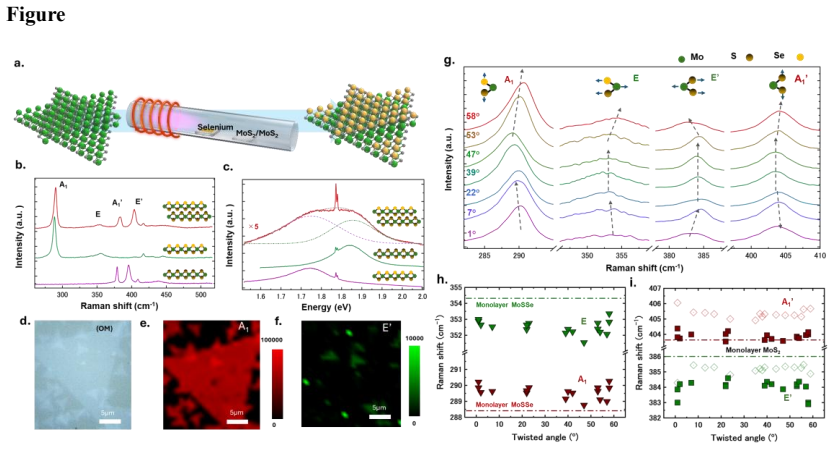
Le Page, Y. & Saxe, P. Symmetry-general least-squares extraction of elastic coefficients from ab initio total energy calculations. Phys. Rev. B - Condens. Matter Mater. Phys. 63, 1–8 (2001). 17 Figure Figure 1. Fabrication of high -quality twisted bilayer MoSSe/MoS 2. a. Schem...
2001
Reviewed August 1, 2026 · model on record in the stance chip above.
Discussion (0). Continue with ORCID to comment.