REVIEW 3 major objections 3 minor 34 references
2,020 math images now come with accessibility-focused descriptions
Reviewed by Pith at T0; open to challenge. T0 means a machine referee read the full paper against a public rubric. the ladder, T0–T4 →
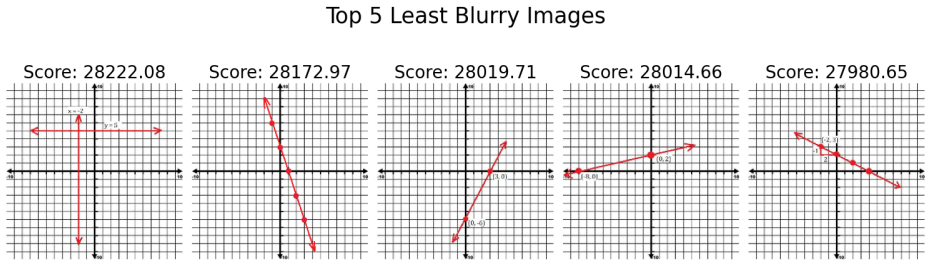
MIDAL provides 2,020 described math images to train vision-language models for accessible math image descriptions and improved math reasoning.
T0 review reviewed 2026-08-05 challenge →
load-bearing objection A modest, honest dataset proposal whose value rests entirely on data quality and availability that the abstract does not show. the 3 major comments →
MIDAL: A Dataset of Math Image Descriptions for Accessible Learning
The pith
A machine-rendered reading of the paper's core claim, the machinery that carries it, and where it could break.
The reading
Core claim
The central claim is that MIDAL, a curated set of 2,020 image-description pairs covering mathematical content at several educational levels, can serve as training data for vision-language models to produce image descriptions that follow accessibility best practices. The paper also claims the dataset is not limited to description generation: it can be used to fine-tune language models that develop better mathematical reasoning and answers. The dataset is positioned as a contribution to accessibility in STEM higher education.
What carries the argument
The central object is the MIDAL dataset itself: 2,020 mathematical images paired with descriptions constructed according to accessibility guidelines. The image-description pairing is the mechanism that carries the argument, because supervised fine-tuning on these pairs is what transfers accessibility best practices into model behavior, and the text component can separately fine-tune language models for mathematical reasoning.
Load-bearing premise
The dataset's descriptions consistently follow accessibility best practices and are accurate across all 2,020 images, even though the abstract provides no evidence of annotation quality, guidelines, or verification.
What would settle it
Take a random sample of MIDAL image-description pairs, have accessibility experts or blind and low-vision users evaluate whether each description meets established alt-text/accessibility standards, and then fine-tune a vision-language model on MIDAL and test its generated descriptions on held-out math images; if a substantial fraction of descriptions fail the accessibility review, the central training-value claim collapses.
If this is right
- Vision-language models fine-tuned on MIDAL could generate accessible alt-text for math images, addressing a specific gap in open educational resources.
- Instructors and content creators could use such models to draft descriptions at scale, reducing the manual burden of making STEM materials accessible.
- Fine-tuning language models on MIDAL's textual descriptions could yield measurable gains in mathematical reasoning and answer generation on downstream tasks.
- MIDAL provides a shared resource for comparing and evaluating different approaches to accessible math description generation.
- The dataset spans multiple educational levels, so models trained on it may generalize across introductory to advanced math content.
Where Pith is reading between the lines
- MIDAL could double as an evaluation benchmark for accessible math alt-text, though the paper does not propose this use itself.
- The approach may extend to other symbol-heavy STEM fields such as physics or chemistry, where description best practices are similarly underdeveloped and the same training recipe could apply.
- The accessibility best-practice quality of the descriptions is not evidenced in the abstract; an independent audit by accessibility experts would be needed to confirm that models trained on MIDAL inherit genuinely accessible output patterns.
- A model fine-tuned solely on MIDAL may still require human verification of outputs, since dataset coverage of complex mathematical notation is finite and real-world images may fall outside its distribution.
Editorial analysis
A structured set of objections, weighed in public.
Referee Report
Summary. The manuscript introduces MIDAL, a dataset of 2,020 mathematical images with descriptions intended to follow accessibility best practices, spanning multiple educational levels. It states that MIDAL can aid in training vision-language models to generate accessible image descriptions and claims, further, that fine-tuning on MIDAL can improve mathematical reasoning and answers. The reviewed text is abstract-only, so no annotation details, examples, or evaluation are available.
Significance. If the dataset descriptions are accurate and genuinely adhere to accessibility best practices, MIDAL would fill a recognized gap in STEM OER accessibility and could serve as a useful training resource for accessible description generation. The secondary claim about improved mathematical reasoning is interesting but requires experimental support. The significance is conditional on dataset quality and availability, neither of which is established in the reviewed text.
major comments (3)
- [Abstract] The central claim that MIDAL descriptions 'follow accessibility best practices' is load-bearing: if descriptions are noisy or not truly accessible, models trained on MIDAL would propagate flawed output. The abstract provides no annotation guidelines, annotator qualifications, quality-control protocol, inter-annotator agreement, or example descriptions. This gap should be addressed by adding a detailed annotation and quality section, or by tempering the claim in the abstract.
- [Abstract] The statement that MIDAL 'can also be used to fine-tune language models that can have improved mathematical reasoning and answers' is an unsupported empirical claim. No experiment, benchmark, or comparison is reported. Either remove this sentence or provide evaluation results demonstrating the improvement.
- [Abstract] No dataset availability information is given (e.g., hosting link, license, download instructions). For a dataset-introduction paper, availability is essential to the 'valuable resource' claim. If the full paper includes this information, the concern is resolved; otherwise it is a substantive omission.
minor comments (3)
- [Abstract] The phrase 'This dataset is however not just limited' is awkward; suggest rewriting for clarity.
- [Abstract] The terms 'multiple educational levels' and 'accessibility best practices' are vague. Citing a specific standard (e.g., WCAG, DIAGRAM) and giving examples of levels would help readers evaluate the dataset's scope.
- [Abstract] Clarify whether the 2,020 items are images, image-description pairs, or something else, and indicate whether the descriptions are human-written or machine-generated.
Circularity Check
No circularity: MIDAL is an abstract-only dataset introduction with no derivation chain to reduce to its own inputs.
full rationale
The available manuscript is the abstract only. It introduces a dataset and states intended downstream uses (training vision-language models for accessible math image descriptions, and fine-tuning for improved mathematical reasoning). There is no fitted parameter renamed as a prediction, no self-citation invoked as load-bearing support, no uniqueness theorem, and no equation in which an output is defined in terms of the quantity it is said to predict. The dataset itself is the contribution, and claims about its usefulness are empirical expectations rather than derivations. The concern that description quality and accessibility adherence are unverified is a real evidence gap, but it is not circularity: the paper's claims do not reduce by construction to its own contents unless the paper later evaluates on the same MIDAL training data, and no such evaluation is present in the available text. Per the hard rules, circularity must be exhibited as a specific reduction or fitted-input-as-prediction; no such step can be quoted from this abstract. Honest finding: no significant circularity, score 0.
Axiom & Free-Parameter Ledger
axioms (3)
- domain assumption There exists a well-defined set of accessibility best practices for image descriptions that applies to mathematical images.
- domain assumption The 2,020 collected images are representative of mathematical content across educational levels.
- domain assumption Training on MIDAL can improve vision-language model performance for math description generation and math reasoning.
Cite this review
Pith. "Pith review of MIDAL: A Dataset of Math Image Descriptions for Accessible Learning." pith.science (2026). https://pith.science/paper/HCZVFHEH
@misc{pith2026260800868,
  author       = {Pith},
  title        = {Pith review of: MIDAL: A Dataset of Math Image Descriptions for Accessible Learning},
  year         = {2026},
  howpublished = {\url{https://pith.science/paper/HCZVFHEH}},
  note         = {Machine review of arXiv:2608.00868}
}
read the original abstract
Many open educational resources are lacking in accessibility, especially in-depth image descriptions. In subjects like Science and Mathematics, however, it can be particularly difficult to write image descriptions since there can be many complicated expressions and names depending upon the course level. To help fill that gap in a small way, we introduce Math Image Descriptions for Accessible Learning (MIDAL), a math image-description dataset of 2,020 mathematical images spanning multiple educational levels, to aid in training vision language models to create image descriptions following accessibility best practices. We hope MIDAL is a valuable resource in enhancing the conversation and innovation regarding accessibility of STEM content in higher education. This dataset is however not just limited in math description generation but can also be used to fine-tune language models that can have improved mathematical reasoning and answers.
Figures


Reference graph
Works this paper leans on
-
[1]
Accessed: 2026-02-09.url:https: / / www
National Center for Accessible Media.Effective Practices for Description of Science Content – Guidelines for Describing STEM Images. Accessed: 2026-02-09.url:https: / / www . wgbh . org / foundation / services / ncam / tools - resources / effective - practices-for-description-of-science-content-guidelines-for-describing- stem-images
work page 2026
-
[2]
Alamo Colleges District.Open Educational Resources (OER) / AlamoOpen. Website. Accessed: 2026-02-09.url:https://www.alamo.edu/nvc/academics/resources/ oer/
work page 2026
-
[3]
Not open for all: Accessibil- ity of open textbooks
Elena Azadbakht, Teresa Schultz, and Jennifer Arellano. “Not open for all: Accessibil- ity of open textbooks”. In:Insights: The UKSG Journal34.1 (2021), p. 24
work page 2021
-
[4]
Sami Baral et al.DrawEduMath: Evaluating Vision Language Models with Expert- Annotated Students’ Hand-Drawn Math Images. 2025. arXiv:2501.14877 [cs.CL]. url:https://arxiv.org/abs/2501.14877
work page internal anchor Pith review Pith/arXiv arXiv 2025
-
[5]
BCcampus.BCcampus OpenEd Resources. Website. Accessed: 2026-02-09.url:https: //open.bccampus.ca/
work page 2026
-
[6]
Gary Bradski. “The OpenCV Library”. In:Dr. Dobb’s Journal of Software Tools (2000)
work page 2000
-
[7]
British Columbia Institute of Technology.Open BCIT. Website. Accessed: 2026-02-09. url:https://www.bcit.ca/open/
work page 2026
-
[8]
Minwoo Byeon et al.COYO-700M: Image-Text Pair Dataset.https://github.com/ kakaobrain/coyo-dataset. 2022. [9]ChatGPT - chatgpt.com.https://chatgpt.com/. [Accessed 09-02-2026]. [10]Fact Sheet: New Rule on the Accessibility of Web Content and Mobile Apps Provided by State and Local Governments. Accessed: 2026-04-20. Apr. 2024.url:https://www. ada.gov/resourc...
work page 2022
-
[12]
Accessible Mathematics: Representation of Functions Through Sound and Touch
Salvatore Gatto et al. “Accessible Mathematics: Representation of Functions Through Sound and Touch”. In:IEEE Access12 (2024), pp. 121552–121569.doi:10.1109/ ACCESS.2024.3448509
-
[13]
Danna Gurari et al. “VizWiz-Priv: A Dataset for Recognizing the Presence and Pur- pose of Private Visual Information in Images Taken by Blind People”. In:Proceedings of the IEEE/CVF Conference on Computer Vision and Pattern Recognition (CVPR). June 2019
work page 2019
-
[14]
Indiana University Libraries.Open Educational Resources (OER). Website. Accessed: 2026-02-09.url:https://guides.libraries.indiana.edu/oer
work page 2026
-
[15]
Version 1.4.2.url:https://inkscape.org/
Inkscape Project.Inkscape. Version 1.4.2.url:https://inkscape.org/
-
[16]
Andrew Kirkpatrick et al., eds.Web Content Accessibility Guidelines (WCAG) 2.1. W3C Recommendation. May 2025.url:https://www.w3.org/TR/WCAG21/
work page 2025
-
[17]
Veronica Lewis.How to Write Alt Text and Image Descriptions for the visually im- paired. Accessed: 2026-07-18. Jan. 2026.url:https://www.perkins.org/resource/ how-write-alt-text-and-image-descriptions-visually-impaired/
work page 2026
-
[18]
Tsung-Yi Lin et al.Microsoft COCO: Common Objects in Context. 2015. arXiv:1405. 0312 [cs.CV].url:https://arxiv.org/abs/1405.0312. 10
Pith/arXiv arXiv 2015
-
[19]
Maricopa Community Colleges.Open Educational Resources (OER). Website. Ac- cessed: 2026-02-09.url:https://www.maricopa.edu/students/academic-support/ open-educational-resources-oer. [20]Microsoft Copilot: Your AI companion – copilot.microsoft.com.https://copilot. microsoft.com/. [Accessed 09-02-2026]
work page 2026
-
[21]
Open Oregon Educational Resources.Open Oregon Educational Resources. Website. Accessed: 2026-02-09.url:https://openoregon.org/
work page 2026
-
[22]
OpenStax.About OpenStax. Website. Accessed: 2026-02-09.url:https://openstax. org/about/
work page 2026
-
[23]
Penn State.OER and Low-Cost Materials at Penn State. Website. Accessed: 2026-02- 09.url:https://oer.psu.edu/
work page 2026
-
[24]
Pierce College.Open Educational Resources (OER). Website. Accessed: 2026-02-09. url:https://www.pierce.ctc.edu/pay-college/oer.html
work page 2026
-
[25]
Portland Community College Library.Open Educational Resources @ PCC. Website. Accessed: 2026-02-09.url:https://www.pcc.edu/library/oer/
work page 2026
-
[26]
Rhode Island College (Adams Library).Open Educational Resources (OER). Website. Accessed: 2026-02-09.url:https://library.ric.edu/oer
work page 2026
-
[27]
Vasu Singla et al.From Pixels to Prose: A Large Dataset of Dense Image Captions
-
[28]
Austin State University (Steen Library).Open Educational Resources for English Courses at SF A
Stephen F. Austin State University (Steen Library).Open Educational Resources for English Courses at SF A. Website. Accessed: 2026-02-09.url:https://sfasu.libguides. com/ENG-OER
work page 2026
- [29]
-
[30]
Texas A&M University Libraries.Open-Ed at Texas A&M. Website. Accessed: 2026- 02-09.url:https://library.tamu.edu/open-ed/
work page 2026
-
[31]
The University of Sheffield Library.OER case studies. Website. Accessed: 2026-02- 09.url:https://sheffield.ac.uk/library/open- access/open- educational- resources/oer-case-studies
work page 2026
-
[32]
Open source software available from https://github.com/HumanSignal/label-studio
Maxim Tkachenko et al.Label Studio: Data labeling software. Open source software available from https://github.com/HumanSignal/label-studio. 2020-2025.url:https: //github.com/HumanSignal/label-studio
work page 2020
-
[33]
University of Lethbridge Library.Open Educational Resources (OER). Website. Ac- cessed: 2026-02-09.url:https://library.ulethbridge.ca/OER
work page 2026
-
[34]
University of Northern Colorado.Open Educational Resources @ UNC. Website. Ac- cessed: 2026-02-09.url:https://digscholarship.unco.edu/oer/
work page 2026
-
[35]
University of South Carolina.Math Equations - Digital Accessibility. Website. Accessed 12-02-2025.url:https : / / sc . edu / about / offices _ and _ divisions / digital - accessibility/toolbox/math/
work page 2025
-
[36]
Virginia Military Institute.Open Educational Resource Policy (General Order 92). PDF. Accessed: 2026-02-09.url:https://www.vmi.edu/media/content-assets/ documents/general-orders/GO92.pdf
work page 2026
-
[37]
Chengke Zou et al.DynaMath: A Dynamic Visual Benchmark for Evaluating Mathe- matical Reasoning Robustness of Vision Language Models. 2025. arXiv:2411.00836 [cs.CV].url:https://arxiv.org/abs/2411.00836. 11 Books Used in the Dataset Author(s) Title Book URL Abramson, J. and Falduto, V. and Gross, R. and Lippman, D. and Rasmussen, M. and Norwood, R. and Bell...
Pith/arXiv arXiv 2025
-
[2024]
arXiv:2406.10328 [cs.CV].url:https://arxiv.org/abs/2406.10328
This paper was first reviewed by deepseek-v4-flash on August 5, 2026.
discussion (0)
Sign in with ORCID, Apple, or X to comment. Anyone can read and Pith papers without signing in.