REVIEW 3 major objections 5 minor 52 references
Weak valley-layer coupling and valley polarization in centrosymmetric $\mathrm{FeCl_2}$ monolayer
T0 review · 3 major / 5 minor · reviewed 2026-08-07 · deepseek-v4-flash
Pith's one-line read Centrosymmetric monolayer FeCl2 shows weak valley-layer coupling, so an out-of-plane electric field produces a 57.2 meV valley splitting at 0.25 V/Å, and AA-stacked bilayer FeCl2 spontaneously polarizes its valleys by about 6 meV without…
desk verdict A competent DFT study whose genuinely new claims — the weak valley-layer coupling framing and the PT-bilayer spontaneous valley polarization — are plausible but rest on small energy differences that need functional checks. read the letter →
The pith
A machine-rendered reading of the paper's core claim, the machinery that carries it, and where it could break.
The reading
What carries the argument
The central object is the weak valley-layer coupling: a layer-resolved orbital character in which the two valleys (-K and K) are both dominated by the middle Fe layer, with opposite small weights from the upper and lower Cl layers. The paper's quantitative machinery is the valley-splitting expression $\Delta E_V = 4\alpha\cos\theta$ for $d_{x^2-y^2}/d_{xy}$ valence bands, where $\theta$ measures the magnetization angle from the plane normal, and the linear-in-field estimate $\alpha e E d$ with the dimensionless reduction factor $\alpha = 0.081$, which encodes how much weaker the coupling is than the ideal $eEd$ limit. For the bilayer, the machinery is the AA stacking of two ferromagnetic monolayers with antiferromagnetic interlayer coupling, which makes the combined system a PT-symmetric antiferromagnet; the layer-dependent built-in potential plays the role of the external electric field.
What would settle it
Measure the interlayer exchange of mechanically stacked or epitaxial bilayer FeCl2 (for example by torque magnetometry or inelastic neutron scattering on bulk analogs) and check whether the antiferromagnetic AA stacking is really preferred; if the ferromagnetic stacking is the ground state, the spontaneous 6 meV valley splitting cannot occur. Alternatively, compute the monolayer with a functional that captures van der Waals and correlation effects more accurately (e.g., a hybrid functional or RPA) and see whether the out-of-plane easy axis and the linear $\alpha e E d$ splitting survive; a sign change of the magnetic anisotropy energy would remove the valley-layer coupling entirely.
Extended reading notes
Core claim
In the language of the paper, monolayer FeCl2 in the 1T phase is centrosymmetric with P symmetry and a ferromagnetic ground state whose easy axis is out of plane. Its valence band maxima at -K and K are dominated by Fe $d_{x^2-y^2}+d_{xy}$ states, with both valleys receiving essentially equal Fe contributions; the upper and lower Cl layers contribute oppositely but with small weight, which is exactly the weak valley-layer coupling regime. An out-of-plane electric field therefore breaks the equivalence of the two valleys linearly, with the splitting described by $\alpha e E d$ with $\alpha = 0.081$ and $d = 2.82$ Å; reversing either E or M flips the polarization. When two monolayers are stacked in AA order with antiferromagnetic interlayer coupling, the bilayer is a PT-antiferromagnet whose spin-degenerate bands nonetheless show a spontaneous valley splitting of about 6 meV, because each layer experiences the other as a built-in field with reversed E and M, so both layers polarize the same valley. This contradicts the authors' earlier rule that a PT-antiferromagnetic bilayer's building block must itself have valley polarization.
Load-bearing premise
The bilayer's spontaneous valley polarization exists only if the antiferromagnetic interlayer coupling is the true ground state of the stacked system, but the calculation places it just 3.3 meV below the ferromagnetic stacking, an energy difference small enough that a different exchange-correlation treatment could reverse it; similarly, the monolayer's out-of-plane easy axis rests on a magnetic anisotropy energy of only 95 µeV per Fe atom.
Editorial extensions
If this is right
- An out-of-plane electric field alone can split the valleys of centrosymmetric FeCl2 by about 57 meV at 0.25 V/Å, with the splitting proportional to field strength.
- Valley polarization in FeCl2 can be switched by reversing either the electric field or the magnetization, giving two independent control knobs.
- AA-stacked bilayer FeCl2 exhibits spontaneous valley polarization of about 6 meV without an external field, as a PT-antiferromagnet with spin-degenerate bands.
- Centrosymmetric materials with out-of-plane magnetization and layer-resolved d-orbital valleys are candidate platforms for weak valley-layer coupling, and can be tuned by stacking engineering.
- Because valley-layer coupling vanishes for in-plane magnetization, the effect can serve as a probe of the magnetization direction.
Reading between the lines
- The reduction factor $\alpha = 0.081$ suggests that the electric field mostly couples to the Cl-derived tail of the wavefunction; substituting Cl with Br or I might tune $\alpha$ and hence the required field strength, a testable extension the paper does not explore.
- At the large fields achievable by dual ionic gating (above 0.4 V/Å), the predicted linear scaling implies a splitting approaching 90 meV, competitive with magnetic-field-induced valley Zeeman splittings; measuring this would connect the calculation to device experiments.
- The bilayer result suggests a design rule opposite to the one the authors previously proposed: a PT-antiferromagnetic bilayer can polarize valleys even when its monolayer building block has no valley polarization, provided the stacking reverses both magnetization and built-in field between layers; this could be tested in other 1T transition-metal dihalides.
Editorial analysis
A structured set of objections, weighed in public.
Referee Report
Summary. This manuscript reports first-principles PBE+U+SOC calculations on a centrosymmetric 1T-FeCl2 monolayer and its AA-stacked bilayer. The authors find that the monolayer exhibits 'weak valley-layer coupling': at the valence-band -K and K valleys, Fe orbitals dominate both valleys, while the upper and lower Cl layers give small opposite contributions. An out-of-plane electric field E breaks inversion symmetry and produces a valley splitting of 57.2 meV at E = 0.25 V/Å, with the sign of the polarization controlled by the product of E and the magnetization M; reversing either E or M reverses the polarization, while reversing both leaves it unchanged. In-plane magnetization removes the effect. The paper introduces a reduction factor α = 0.081 and approximates the splitting as αeEd. For the AA-stacked bilayer with intralayer FM and interlayer AFM order, described as a PT-antiferromagnet, a spontaneous valley splitting of about 6 meV is predicted without an external field.
Significance. If the predicted magnetic ground states and easy axes are robust, the paper provides a conceptually interesting extension of valley-layer coupling to the weak-coupling regime and a stacking-based route to spontaneous valley polarization in zero-net-magnetization systems. The symmetry arguments connecting E and M reversals to valley polarization are internally consistent, and the linear field dependence in Fig. 5(g) is a clear DFT result. The bilayer idea, treating the adjacent layer as a built-in field, is simple and potentially useful for device proposals. The computational setup (PBE+U with U = 4 eV, 21×21×1 k-mesh, 500 eV cutoff) is standard for this class of materials. The paper does not provide input files or raw data, and the headline quantitative claims rest on very small energy differences; nevertheless, the qualitative predictions are falsifiable, including the 57 meV monolayer splitting at 0.25 V/Å and the 6 meV bilayer splitting.
major comments (3)
- [Computational detail; Crystal structures and valley-layer coupling] The out-of-plane easy axis is a load-bearing assumption: the authors state that valley-layer coupling and the resulting electric-field valley splitting exist only for out-of-plane magnetization and vanish for in-plane magnetization (main text and FIG.S2). The computed MAE is 95 µeV/Fe, which is at or below the typical accuracy of PBE+U for magnetic anisotropy, and no U-dependence, van der Waals correction, hybrid-functional test, or zero-point estimate is reported. If a more accurate treatment yielded an in-plane easy axis, the monolayer valley-splitting mechanism would not operate in the ground state. Please provide robustness checks of the MAE (e.g., U = 3 and 5 eV, or a hybrid functional) and report the MAE values as a function of electric field from FIG.S4 in the main text.
- [Bilayer stacking-induced valley polarization] The spontaneous valley polarization in the AA-stacked bilayer relies on the FM-AFM interlayer configuration being the ground state, favored by only 3.3 meV over FM-FM for AA stacking and by 2.7 meV for AB stacking; AA is preferred over AB by 2.8 meV. These energy differences are of the same order as typical PBE+U errors, and the paper does not report vdW-corrected calculations or a U sweep. Because the PT symmetry, and hence the 6 meV valley splitting, disappears if the FM-FM ordering becomes the ground state, the bilayer claim is not yet quantitatively secured. Please test the interlayer ordering with vdW-corrected functionals (e.g., DFT-D3 or optB88-vdW) and a range of U values, and report the resulting valley splitting.
- [Electric field-induced valley polarization] The parameter α = 0.081 is introduced as a reduction factor in the estimate αeEd, but it is not an independent parameter: with d = 2.82 Å and E = 0.25 V/Å, eEd = 705 meV, and the computed splitting is 57.2 meV, so α is exactly the ratio of the two. Using αeEd to 'estimate' the splitting therefore merely restates the DFT point used to define α and cannot validate the linear dependence. The linearity in Fig. 5(g) is a legitimate computational result; please reframe α as an empirical fit to the DFT data or derive it from a microscopic model, and state explicitly which data were used to obtain it.
minor comments (5)
- [Electric field-induced valley polarization] The text 'the valley splitting of FeCl2 will be 4α/0' should read '4α for out-of-plane and 0 for in-plane magnetization'; as written it suggests division by zero.
- [Electric field-induced valley polarization] The symbol α is overloaded: it denotes the reduction factor α = 0.081 and also the SOC-related parameter in ΔEV = 4α cosθ. Please use separate symbols for these two quantities.
- [Computational detail] Please specify how the out-of-plane electric field is applied in the slab supercell (e.g., sawtooth potential with dipole correction); the computational detail section gives cutoffs and k-mesh but no field-application method.
- [Crystal structures and valley-layer coupling] The qualitative claim of weak valley-layer coupling is based on visual inspection of projected band weights in Fig. 3(e–h); quantitative orbital and layer weights at -K and K would make the distinction between weak and strong coupling explicit.
- [Crystal structures and valley-layer coupling] The statement that the AFM2 configuration 'converges to a non-magnetic solution' means its energy cannot be compared with the other magnetic orderings as an AFM state; please clarify this in the text.
Circularity Check
The valley-layer coupling and electric-field/bilayer valley splittings are direct DFT observations; the only circular element is the fitted α in the αeEd estimate, which reproduces the computed splitting by construction.
-
fitted input called prediction
[Electric field-induced valley polarization section, after Fig. 5(g)]
"For weak valley-layer coupling, a similar expression can also be used for the valley splitting calculation, but it needs to be multiplied by a reduction factor α. For FeCl2, αeEd can be used to estimate the valley splitting, where α=0.081 and d=2.82 Å."
The factor α is not an independent parameter: α = 0.081 is exactly the ratio of the computed splitting at E=0.25 V/Å (57.2 meV) to eEd = 0.25 V/Å × 2.82 Å ≈ 705 meV (or equivalently the slope of the calculated Δ versus E curve divided by e d). Therefore the statement 'αeEd can be used to estimate the valley splitting' merely rewrites the DFT result at the fitted field and assumes linearity elsewhere; it is a parametrization of the same calculated data rather than a prediction or independent estimate. This step is minor, since the central valley-layer coupling claim rests on direct orbital-projection calculations, not on this formula.
full rationale
The central claims are direct first-principles observations: (i) the orbital- and layer-projected band structure in Fig. 3 shows unequal Cl-layer contributions to the -K and K valleys while Fe dominates both, defining weak valley-layer coupling; (ii) the 57.2 meV valley splitting at 0.25 V/Å and its switching behavior under E and M reversal are read directly from computed bands; and (iii) the bilayer's ~6 meV spontaneous valley polarization under PT symmetry is obtained from DFT for the AA-stacked FM-AFM ground state. None of these is derived from a fitted constant, and they do not reduce to the paper's inputs by construction. The only genuine circular element is the αeEd estimate: α is fitted to the same computed splitting, so presenting αeEd as an 'estimate' is a restatement of the calculation rather than an independent check. The paper's self-citations (refs. 24-26, 36, 51) are used for context and classification; in particular, ref. 51 is explicitly challenged ('This finding challenges our original proposal'), so it is not load-bearing support. The small energy differences that set the magnetic ground state (95 µeV/Fe MAE, 3.3 meV interlayer exchange) raise robustness concerns under DFT accuracy, but that is a correctness/functional-convergence issue, not circularity. Overall, the derivation chain is self-contained aside from the minor fitted-α step, giving a low circularity score.
Assumptions & free parameters
free parameters (2)
- Hubbard U_eff on Fe 3d =
4 eV
- Reduction factor α in αeEd estimate =
0.081
assumptions (6)
- domain assumption DFT with PBE+U (Dudarev) and SOC gives a faithful description of FeCl2's electronic structure, magnetic ground state, and orbital character at the K valleys.
- domain assumption Layer-resolved atomic projections onto Fe and the upper/lower Cl atoms are a valid diagnostic of valley-layer coupling and its strength.
- domain assumption An out-of-plane electric field acts as a layer-dependent electrostatic potential that shifts the two layers relative to each other.
- ad hoc to paper In the AA-stacked bilayer, the adjacent FeCl2 layer acts as a built-in electric field on each monolayer, equivalent to reversing both E and M for the lower layer.
- domain assumption The valley splitting formula ΔEV = 4αcosθ with C3h symmetry and d_{x2-y2}/d_{xy} orbital character applies to FeCl2.
- standard math PT symmetry in the AFM bilayer enforces spin degeneracy and, combined with horizontal mirror symmetry, makes upper and lower layer bands coincide.
Cite this review
Pith. "Pith review of Weak valley-layer coupling and valley polarization in centrosymmetric $\mathrm{FeCl_2}$ monolayer." pith.science (2026). https://pith.science/paper/5V4TKVY4
@misc{pith2026250522392,
  author       = {Pith},
  title        = {Pith review of: Weak valley-layer coupling and valley polarization in centrosymmetric $\mathrmFeCl_2$ monolayer},
  year         = {2026},
  howpublished = {\url{https://pith.science/paper/5V4TKVY4}},
  note         = {Machine review of arXiv:2505.22392}
}
abstract
Using the valley degree of freedom as a carrier of information for storage and processing, valley polarization plays a crucial role. A variety of mechanisms for valley polarization have been proposed, among which the valley-layer coupling mechanism involves the induction of valley polarization by an out-of-plane electric field. Here, through first-principles calculations, it is found that the weak valley-layer coupling can exist in centrosymmetric $\mathrm{FeCl_2}$ monolayer. It is crucial to note that valley-layer coupling only occurs with out-of-plane magnetization and vanishes with in-plane magnetization. Compared to monolayers with strong valley-layer coupling, $\mathrm{FeCl_2}$ requires an extremely strong electric field to achieve the same magnitude of valley splitting. Valley polarization switching can be achieved by manipulating the directions of magnetization and electric field. Reversing only one of these directions switches the valley polarization, whereas reversing both simultaneously leaves it unchanged. Moreover, the simply stacked bilayer $\mathrm{FeCl_2}$, as a $PT$-antiferromagnet, can spontaneously achieve valley polarization without an external electric field, highlighting its potential for miniaturization, ultradensity, and ultrafast performance. Our work provides guidelines for identifying materials with weak valley-layer coupling, and further enables the regulation of valley polarization through electric field and stacking engineering.
Figures
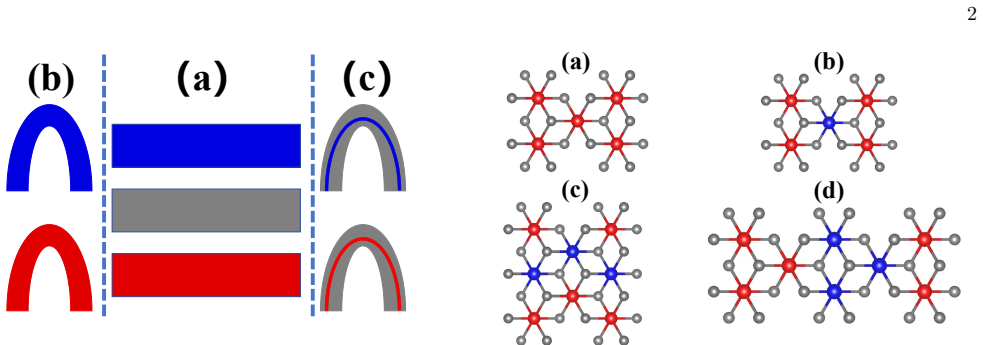


Figures from the paper (2 more)


Reference graph
Works this paper leans on
-
[1]
J. R. Schaibley, H. Yu, G. Clark, P. Rivera, J. S. Ross, K. L. Seyler, W. Yao and X. Xu, Valleytronics in 2D materials, Nat. Rev. Mater. 1, 16055 (2016)
work page 2016
-
[2]
Pacchioni, Valleytronics with a twist, Nat
G. Pacchioni, Valleytronics with a twist, Nat. Rev. Mater. 5, 480 (2020)
work page 2020
-
[3]
D. Xiao, M. C. Chang and Q. Niu, Berry phase effects on electronic properties, Rev. Mod. Phys. 82, 1959 (2010)
work page 2010
-
[4]
A. Srivastava, M. Sidler, A. V. Allain, D. S. Lembke, A. Kis and A. Imamoglu, Valley Zeeman effect in elementary optical excitations of monolayer WSe 2, Nat. Phys. 11, 141 (2015)
work page 2015
-
[5]
K. F. Mak, K. He, J. Shan and T. F. Heinz, Control of valley polarization in monolayer MoS2 by optical helicity, Nat. Nanotechnol. 7, 494 (2012)
work page 2012
-
[6]
H. Zeng, J. Dai, W. Yao, D. Xiao, and X. Cui, Valley po- larization in MoS 2 monolayers by optical pumping, Nat. Nanotechnol. 7, 490 (2012)
work page 2012
-
[7]
M. Zeng, Y. Xiao, J. Liu, K. Yang and L. Fu, Exploring two-dimensional materials toward the next-generation circuits: from monomer design to assembly control, Chem. Rev. 118, 6236 (2018)
work page 2018
-
[8]
C. Zhao, T. Norden, P. Zhang, P. Zhao, Y. Cheng, F. Sun, J. P. Parry, P. Taheri, J. Wang, Y. Yang, T. Scrace, K. Kang, S. Yang, G. Miao, R. Sabirianov, G. Kioseoglou, W. Huang, A. Petrou and H. Zeng, Enhanced valley split- ting in monolayer WSe 2 due to magnetic exchange field, Nat. Nanotechnol. 12, 757 (2017)
work page 2017
Show all 52 references
-
[9]
MacNeill, C
D. MacNeill, C. Heikes, K. F. Mak, Z. Anderson, A. Korm´anyos, V. Z´olyomi, J. Park and D. C. Ralph, Break- ing of Valley Degeneracy by Magnetic Field in Monolayer MoSe2, Phys. Rev. Lett. 114, 037401 (2015)
2015
-
[10]
X. X. Zhang, Y. Lai, E. Dohner, S. Moon, T. Taniguchi, K. Watanabe, D. Smirnov and T. F. Heinz, Zeeman- Induced Valley-Sensitive Photocurrent in Monolayer MoS2, Phys. Rev. Lett. 122, 127401 (2019)
2019
-
[11]
T. Cao, G. Wang, W. Han, H. Ye, C. Zhu, J. Shi, Q. Niu, P. Tan, E. Wang, B. Liu and J. Feng, Valley-selective circular dichroism of monolayer molybdenum disulphide, Nat. Commun. 3, 887 (2012)
2012
-
[12]
W. Y. Tong, S. J. Gong, X. Wan and C. G. Duan, Con- cepts of ferrovalley material and anomalous valley Hall effect, Nat. Commun. 7, 13612 (2016)
2016
-
[13]
Y. B. Liu, T. Zhang, K. Y. Dou, W. H. Du, R. Peng, Y. Dai, B. B. Huang, and Y. D. Ma, Valley-Contrasting Physics in Single-Layer CrSi 2N4 and CrSi 2P4, J. Phys. Chem. Lett. 12, 8341 (2021)
2021
-
[14]
Z. Song, X. Sun, J. Zheng, F. Pan, Y. Hou, M.-H. Yung, J. Yang, and J. Lu, Spontaneous valley splitting and valley pseudospin field effect transistors of monolayer V AgP2Se6, Nanoscale 10, 13986 (2018)
2018
-
[15]
J. Zhou, Y. P. Feng, and L. Shen, Atomic-orbital-free intrinsic ferromagnetism in electrenes, Phys. Rev. B 102, 180407(R) (2020)
2020
-
[16]
P. Zhao, Y. Ma, C. Lei, H. Wang, B. Huang, and Y. Dai, Single-layer LaBr 2: Two-dimensional valleytronic semiconductor with spontaneous spin and valley polar- izations, Appl. Phys. Lett. 115, 261605 (2019)
2019
-
[17]
X. Y. Feng, X. L. Xu, Z. L. He, R. Peng, Y. Dai, B. B. Huang and Y. D. Ma, Valley-related multiple Hall effect in monolayer VSi2P4, Phys. Rev. B 104, 075421 (2021)
2021
-
[18]
S. D. Guo, J. X. Zhu, W. Q. Mu and B. G. Liu, Possi- ble way to achieve anomalous valley Hall effect by piezo- electric effect in a GdCl 2 monolayer, Phys. Rev. B 104, 224428 (2021)
2021
-
[19]
Y. Zang, Y. Ma, R. Peng, H. Wang, B. Huang, and Y. Dai, Large valley-polarized state in single-layer NbX 2 (X = S, Se): Theoretical prediction, Nano Res. 14, 834 (2021)
2021
-
[20]
Li and Y
C. Li and Y. An, Two-dimensional rare-earth Janus 2H- GdXY (X,Y=Cl, Br, I; X = Y) monolayers: Bipolar fer- romagnetic semiconductors with high Curie temperature and large valley polarization, Phys. Rev. B 107, 115428 (2023)
2023
-
[22]
Hu, Half-metallic antiferromagnet as a prospective material for spintronics, Adv
X. Hu, Half-metallic antiferromagnet as a prospective material for spintronics, Adv. Mater. 24, 294 (2012)
2012
-
[23]
Jungwirth, J
T. Jungwirth, J. Sinova, A. Manchon, X. Marti, J. Wun- derlich and C. Felser, The multiple directions of antifer- romagnetic spintronics, Nat. Phys. 14, 200 (2018)
2018
-
[24]
S. D. Guo, Valley polarization in two-dimensional zero- net-magnetization magnets, Appl. Phys. Lett. 126, 080502 (2025)
2025
-
[25]
S. D. Guo, W. Xu, Y. Xue, G. Zhu and Y. S. Ang, Layer-locked anomalous valley Hall effect in a two- dimensional A-type tetragonal antiferromagnetic insula- tor, Phys. Rev. B 109, 134426 (2024)
2024
-
[26]
S. D. Guo, X. S. Guo and G. Wang, Valley polarization in two-dimensional tetragonal altermagnetism, Phys. Rev. B 110, 184408 (2024)
2024
-
[27]
H.-Y. Ma, M. L. Hu, N. N. Li, J. P. Liu, W. Yao, J. F. Jia and J. W. Liu, Multifunctional antiferromagnetic ma- terials with giant piezomagnetism and noncollinear spin current, Nat. Commun. 12, 2846 (2021)
2021
-
[28]
X. Chen, D. Wang, L. Y. Li and B. Sanyal, Giant spin- splitting and tunable spin-momentum locked transport in room temperature collinear antiferromagnetic semimetal- lic CrO monolayer, Appl. Phys. Lett.123, 022402 (2023)
2023
-
[29]
Y. Zhu, T. Chen, Y. Li, L. Qiao, X. Ma, C. Liu, T. Hu, H. Gao and W. Ren, Multipiezo Effect in Altermagnetic V2SeTeO Monolayer, Nano Lett. 24, 472 (2024)
2024
-
[30]
Y. Wu, L. Deng, X. Yin, J. Tong, F. Tian and X. Zhang, Valley-Related Multipiezo Effect and Noncollinear Spin Current in an Altermagnet Fe 2Se2O Monolayer, Nano Lett. 24, 10534 (2024)
2024
-
[31]
T. Zhao, S. Xing, J. Zhou, N. Miao and Z. Sun, Stack- ing order modulated anomalous valley Hall effect in an- tiferromagnetic MXene, Journal of Materiomics 10, 269 (2024)
2024
-
[32]
W. Du, R. Peng, Z. He, Y. Dai, B. Huang, and Y. Ma, Anomalous valley Hall effect in antiferromagnetic mono- layers, npj 2D Mater. Appl. 6, 11 (2022)
2022
-
[33]
Y. Xu, H. Liu, Y. Dai, B. Huang and W. Wei, Spinvalley splitting and spontaneous valley polarization in antifer- romagnetic Mn 2P2X3Y3 monolayers, Appl. Phys. Lett. 122, 242404 (2023)
2023
-
[34]
Z. M. Yu, S. Guan, X. L. Sheng, W. Gao and S. A. Yang, Valley-Layer Coupling: A New Design Principle for Val- leytronics, Phys. Rev. Lett. 124, 037701 (2020)
2020
-
[35]
R. W. Zhang, C. X. Cui, R. Z. Li, J. Y. Duan, L. Li, Z. M. Yu and Y. G. Yao, Predictable gate-field control of spin in altermagnets with spin-layer coupling, Phys. Rev. 7 Lett. 133, 056401 (2024)
2024
-
[36]
S. D. Guo, Y. Liu, J. Yu and C. C. Liu, Valley polar- ization in twisted altermagnetism, Phys. Rev. B 110, L220402 (2024)
2024
-
[37]
Zhu, J.-T
Y. Zhu, J.-T. Sun, J. Pan, J. Deng and S. Du, Enforced Symmetry Breaking for Anomalous Valley Hall Effect in Two-Dimensional Hexagonal Lattices, Phys. Rev. Lett. 134, 046403 (2025)
2025
-
[38]
Hohenberg and W
P. Hohenberg and W. Kohn, Inhomogeneous Electron Gas, Phys. Rev. 136, B864 (1964); W. Kohn and L. J. Sham, Self-Consistent Equations Including Exchange and Correlation Effects, Phys. Rev. 140, A1133 (1965)
1964
-
[39]
Kresse, Ab initio molecular dynamics for liquid met- als, J
G. Kresse, Ab initio molecular dynamics for liquid met- als, J. Non-Cryst. Solids 193, 222 (1995)
1995
-
[40]
Kresse and J
G. Kresse and J. Furthm¨uller, Efficiency of ab-initio total energy calculations for metals and semiconductors using a plane-wave basis set, Comput. Mater. Sci. 6, 15 (1996)
1996
-
[41]
Kresse and D
G. Kresse and D. Joubert, From ultrasoft pseudopoten- tials to the projector augmented-wave method, Phys. Rev. B 59, 1758 (1999)
1999
-
[42]
J. P. Perdew, K. Burke and M. Ernzerhof, Generalized gradient approximation made simple, Phys. Rev. Lett. 77, 3865 (1996)
1996
-
[43]
A. S. Botana and M. R. Norman, Electronic structure and magnetism of transition metal dihalides: Bulk to monolayer, Phys. Rev. Materials 3, 044001, (2019)
2019
-
[44]
S. L. Dudarev, G. A. Botton, S. Y. Savrasov, C. J. Humphreys, and A. P. Sutton, Electron-energy-loss spec- tra and the structural stability of nickel oxide: An LSDA+U study, Phys. Rev. B 57, 1505 (1998)
1998
-
[45]
McGuire, Crystal and Magnetic Structures in Lay- ered, Transition Metal Dihalides and Trihalides, Crystals 7, 121 (2017)
M. McGuire, Crystal and Magnetic Structures in Lay- ered, Transition Metal Dihalides and Trihalides, Crystals 7, 121 (2017)
2017
-
[46]
Jiang, G
S. Jiang, G. Wang, H. Deng et al., General Synthesis of 2D Magnetic Transition Metal Dihalides via Trihalide Reduction, ACS Nano 17, 363 (2022)
2022
-
[47]
X. Zhou, B. Brzostowski, A. Durajski et al., Atomically Thin 1T-FeCl 2 Grown by Molecular-Beam Epitaxy, J. Phys. Chem. C 124, 9416 (2020)
2020
-
[48]
See Supplemental Material at [] for the related energy band structures; the magnetic energy differences and MAE as a function of the electric field
-
[49]
P. Zhao, Y. Dai, H. Wang, B. Huang and Y. Ma, Intrinsic valley polarization and anomalous valley hall effect in single-layer 2H-FeCl2, ChemPhysMater 1, 56 (2022)
2022
-
[50]
R. Li, J. W. Jiang, W. B. Mi and H. L. Bai, Room temperature spontaneous valley polarization in two- dimensional FeClBr monolayer, Nanoscale 13, 14807 (2021)
2021
-
[51]
S. D. Guo, P. Li and G. Wang, First-principles calcu- lations study of valley polarization in antiferromagnetic bilayer systems, Phys. Rev. B 111, L140404 (2025)
2025
-
[52]
B. I. Weintrub, Y. L. Hsieh, S. Kovalchuk, J. N. Kirchhof, K. Greben, and K. I. Bolotin, Generating intense electric fields in 2D materials by dual ionic gating, Nat. Commun. 13, 6601 (2022)
2022
-
[53]
F. Yao, M. Liao, M. Gibertini et al., Switching on and off the spin polarization of the conduction band in antifer- romagnetic bilayer transistors. Nat. Nanotechnol. (2025). https://doi.org/10.1038/s41565-025-01872-w
2025 doi
Reviewed August 7, 2026 · model on record in the stance chip above.
Discussion (0). Sign in to comment.