REVIEW 5 major objections 5 minor 35 references
Low-Resource Language Processing: An OCR-Driven Summarization and Translation Pipeline
T0 review · 5 major / 5 minor · reviewed 2026-08-15 · deepseek-v4-flash
Pith's one-line read A five-stage OCR-to-translation pipeline aims to make scanned Indian-language documents accessible, and reports stagewise metrics including 88% classification accuracy.
desk verdict An off-the-shelf OCR-to-NLP demo whose evaluation numbers are asserted, not demonstrated; no new research contribution, but a legitimate prototype concept. read the letter →
The pith
A machine-rendered reading of the paper's core claim, the machinery that carries it, and where it could break.
The reading
What carries the argument
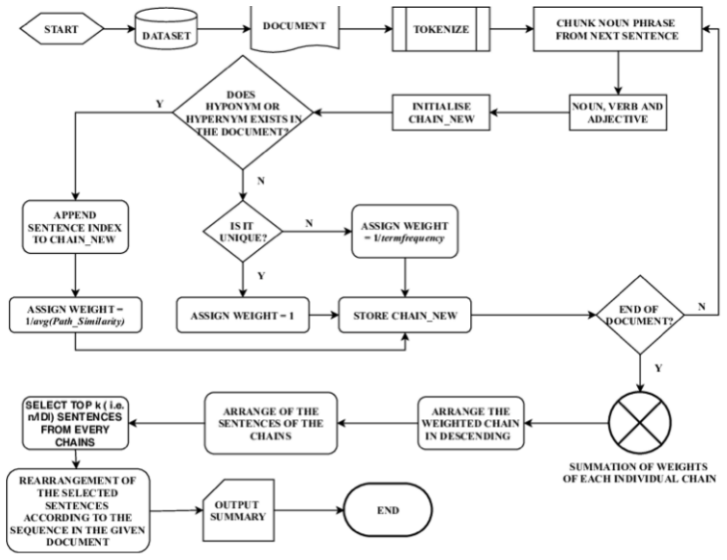
The load-bearing object is the pipeline itself: image input, OCR via Tesseract, text preprocessing, abstractive summarization through Cohere or Gemini, machine translation through Google Translate or Gemini, and output through a Gradio interface, with auxiliary sentiment, topic classification, and date extraction modules. The mechanistic claim is that each off-the-shelf stage preserves enough information for the next stage, such that OCR errors do not cascade beyond usability, and that the zero-shot BART classifier adds useful document context without task-specific training.
What would settle it
Run the same five-stage pipeline on a public Indic OCR benchmark such as IIIT-ILOCR, measure character error rate and word error rate before and after the correction step, then measure translation BLEU on the FLORES Indic language pairs; if the correction step produces no word error rate change or BLEU degrades, the central integration claim fails.
Extended reading notes
Core claim
The central claim is that an end-to-end pipeline built from publicly available OCR, a large-language-model API for abstractive summarization, a translation API, and a BART-based zero-shot topic classifier can process image documents in Indic scripts into summarized, translated text with usable quality. The paper presents stagewise numbers as evidence, including 12.7% average character error rate, 18.4% word error rate, ROUGE-1 of 0.41 to 0.56, BLEU of 18.7 to 32.1, human adequacy at 72%, fluency at 68%, and a summary quality rating of 3.7 out of 5. It further claims that the pipeline's modular architecture and its chosen logistic-regression classifier, at 88% accuracy, make the system suitable for resource-constrained multilingual settings.
Load-bearing premise
The paper's central claim rests on the assumption that the reported evaluation numbers come from actual measurements made on defined documents under the described protocol, and that the post-OCR correction step that improves word error rate by about 3.4 points really exists and was applied.
Editorial extensions
If this is right
- Scanned documents in Hindi, Tamil, Bengali, and similar languages can be summarized and translated without custom model training, using a combination of free OCR and commercial APIs.
- The reported 3.4-point word error rate improvement from post-OCR correction suggests that lightweight correction steps materially benefit downstream summarization and translation.
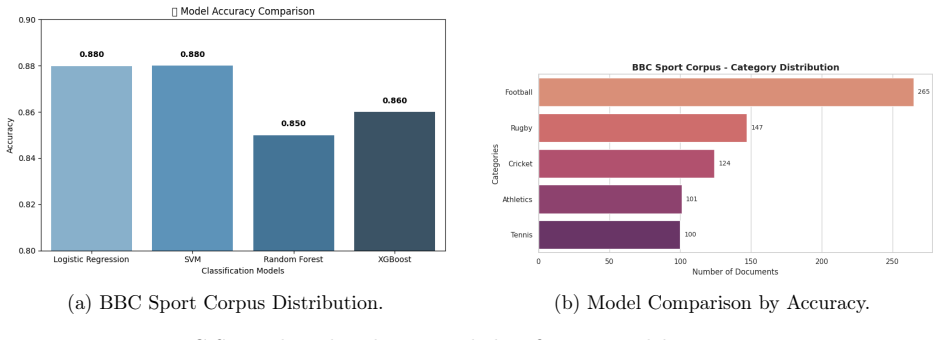
- A logistic-regression classifier at 88% accuracy, with lower computational cost than alternatives, indicates that simple models remain competitive for document classification in low-resource settings.
- The BLEU range from 18.7 to 32.1 implies that translation quality varies sharply with language-pair resource availability, so low-resource pairs remain the clear bottleneck.
- If the pipeline holds together, it provides a template for other low-resource language communities to build document-access tools from existing APIs rather than waiting for dedicated models.
Reading between the lines
- Beyond the paper, the reported metrics are not tied to any named public dataset in the text, so the strongest testable inference is that the numbers should reproduce on a standard Indic OCR benchmark; if they do, the integration claim is robust.
- The pipeline's reliance on commercial APIs leaves open the question of reproducibility and long-term cost; a local-model variant using open-weight summarization and translation models would be the natural extension.
- The paper's own observation that OCR quality gates machine translation suggests a concrete experiment the paper does not run: deliberately degrade OCR output in controlled increments and measure the resulting BLEU drop for a fixed language pair.
- If the 3.4-point WER improvement is genuine, it should translate into a measurable BLEU gain; the paper does not report that, so verifying that link would strengthen the pipeline's causal story.
Signed reviews
Editorial analysis
A structured set of objections, weighed in public.
Referee Report
Summary. The paper describes an end-to-end multilingual document-processing pipeline that combines Tesseract OCR, text preprocessing, abstractive summarization via Cohere or Gemini, Google Translate, sentiment analysis, topic classification, and date extraction, all exposed through a Gradio interface. It reports classification accuracy comparisons (Table 1), OCR error rates (CER 12.7%, WER 18.4%), summarization quality (ROUGE-1 0.41–0.56, ROUGE-L 0.39, human rating 3.7/5), and translation quality (BLEU 18.7–32.1, human adequacy 72%, fluency 68%), and claims the pipeline is suitable for low-resource Indian languages. The manuscript provides no evaluation datasets, dataset sizes, language pair lists, reference construction details, or metric computation protocols, and several figure references are broken.
Significance. If the reported performance were supported by a reproducible evaluation, the pipeline could be a useful integration of existing tools for Indic-language document access, particularly for users needing summarized and translated content from images. The paper's strength is the modular assembly of readily available APIs and models, and the design choices are easy to follow. However, it introduces no new method, provides no code or evaluation artifacts, and its quantitative claims are currently unverifiable because the evaluation is not described. The significance of the contribution therefore depends entirely on evidence that is absent from the manuscript.
major comments (5)
- [Section 5] All quantitative results are asserted without any description of evaluation datasets, sizes, language distributions, or metric computation protocols. The classification accuracies in Table 1, the CER/WER averages, the ROUGE/BLEU scores, and the human ratings are presented as bare numbers; the reader cannot verify whether the error rates were computed on OCR output, whether reference summaries and translations were human-authored, how many documents were used, or which language pairs were tested. Because these numbers are the only evidence that the pipeline works, the central claim is unsupported.
- [Section 5 (OCR Performance Impact)] The 'post-OCR correction' that improves average WER by 3.4 percentage points is never defined. The paper does not state whether this refers to a learned model, a rule-based normalizer, or a component of the pipeline, nor does it explain how the correction was applied to the OCR output. Without this definition, the reported OCR error rates cannot be interpreted or reproduced.
- [Sections 3–5] The description of the classification component is internally inconsistent: Section 3 says SVM and Random Forest are used, the Introduction mentions zero-shot facebook/bart-large-mnli, and Section 5 evaluates Logistic Regression, SVM, Random Forest, and XGBoost and selects Logistic Regression. The reader cannot determine which classifier is actually in the pipeline, so the '88% accuracy' claim may not correspond to the system being described.
- [Section 5 (Translation Performance)] The human evaluation numbers (3.7/5 for summaries, 72% adequacy and 68% fluency for translations) are reported without any details on the number of raters, the language pairs involved, the annotation instructions, or inter-annotator agreement. As with the automatic metrics, these numbers are not sufficient to support the claimed reliability of the pipeline.
- [Section 5 / Figures] Figure references are broken: the text cites 'Figure ??' twice for the BBC Sport dataset and the model accuracy comparison, and the figures are not connected to the metric claims. The visual evidence is therefore not accessible, which further weakens the presentation of the results.
minor comments (5)
- [Abstract and Section 4] The abstract says sentiment analysis is performed with a custom-trained TensorFlow model, but no training or evaluation for that model is described anywhere, and the pipeline stages in Section 4 do not mention sentiment analysis as a module.
- [Table 1] The 'Limitation' column entries are not objective limitations and some are misleading (e.g., 'assumes linear relationships' is not inherently a limitation for all datasets). The accuracy values are also reported as integers without confidence intervals, standard deviations, or dataset sizes.
- [Section 4.2] Removing stop words and punctuation before feeding text to an abstractive summarization API may remove information that is useful for summarization, and the paper does not justify this aggressive preprocessing for the summarization stage.
- [References] Reference [1] is an unpublished GitHub repository with a placeholder access date, and references [17] and [19] both refer to the same underlying artifact (FLORES-200/NLLB), which should be cited cleanly.
- [Section 6] The conclusion repeats the reported numbers without synthesizing the results, discussing limitations of the pipeline, or providing concrete directions for improvement; it also overstates the reliability of the system given the missing evaluation details.
Circularity Check
No circular derivation: reported metrics are empirical measurements, not fitted outputs; the only self-citation ([1]) is background and non-load-bearing.
full rationale
The paper does not contain a derivation chain in which an output is reused as an input. Each pipeline stage (Tesseract OCR, preprocessing, Cohere/Gemini summarization, Google Translate, classifier) is described as an off-the-shelf component, and Section 5 reports measured CER/WER/ROUGE/BLEU/accuracy/human scores. These are empirical results, not quantities fitted to the same data and then renamed as predictions. No equation in the paper defines one reported metric in terms of another, and no parameter is fitted from a subset and used to predict a closely related subset. The only self-reference is [1], a GitHub repository attributed to 'JC230903 et al.' with a name matching the described pipeline; it is cited in the Introduction for general background ('Text summarization solves this problem... [1]', 'This module yields machine-readable text from images and handles various languages such as English, Hindi, Tamil, Urdu, Bengali, and Telugu [1]'). Those citations are consistent with a repository by the same group, but they do not support any numerical claim and are not used to force a modeling choice. If [1] were removed, Section 5's reported measurements would be unchanged (though their verifiability would not improve). The paper's most serious issue is missing evaluation detail: Section 5 gives aggregate numbers without specifying datasets, split sizes, reference construction, or the nature of the 'post-OCR correction', and Figure 4 has unresolved 'Figure ??' references. That is a reproducibility/evidence problem, not circularity. Accordingly the score is 1: a minor, non-load-bearing self-citation is present, but no circular derivation.
Assumptions & free parameters
assumptions (4)
- domain assumption The reported evaluation numbers (CER 12.7%, WER 18.4%, ROUGE-1 0.41-0.56, BLEU 18.7-32.1, accuracy 85-88%) were obtained by the authors on real datasets using a consistent protocol.
- domain assumption Tesseract's pretrained models are sufficiently accurate for the tested Indic scripts.
- ad hoc to paper The unnamed 'post-OCR correction' technique exists and is what improved WER by 3.4 points.
- domain assumption Closed APIs (Gemini, Google Translate) behave consistently and produce the described quality.
Cite this review
Pith. "Pith review of Low-Resource Language Processing: An OCR-Driven Summarization and Translation Pipeline." pith.science (2026). https://pith.science/paper/5VIHC36S
@misc{pith2026250511177,
  author       = {Pith},
  title        = {Pith review of: Low-Resource Language Processing: An OCR-Driven Summarization and Translation Pipeline},
  year         = {2026},
  howpublished = {\url{https://pith.science/paper/5VIHC36S}},
  note         = {Machine review of arXiv:2505.11177}
}
read the original abstract
This paper presents an end-to-end suite for multilingual information extraction and processing from image-based documents. The system uses Optical Character Recognition (Tesseract) to extract text in languages such as English, Hindi, and Tamil, and then a pipeline involving large language model APIs (Gemini) for cross-lingual translation, abstractive summarization, and re-translation into a target language. Additional modules add sentiment analysis (TensorFlow), topic classification (Transformers), and date extraction (Regex) for better document comprehension. Made available in an accessible Gradio interface, the current research shows a real-world application of libraries, models, and APIs to close the language gap and enhance access to information in image media across different linguistic environments
Figures


Figures from the paper (1 more)
Reference graph
Works this paper leans on
-
[1]
JC230903 et al. (2024). NLP-low-resource-pipeline-for-indian-languages. GitHub Repository. https://github.com/JC230903/NLP-low-resource-pipeline-for-indian-languages . (Accessed: [Insert Access Date])
work page 2024
-
[2]
Kumar, S., & Jawahar, C. V. (2007). A Benchmark OCR System for Indian Scripts. InPro- ceedings of the 9th International Conference on Document Analysis and Recognition (ICDAR)
work page 2007
-
[3]
Krishna, V., et al. (2022). IIIT-ILOCR: A New Benchmark Dataset for Indic Languages OCR. arXiv preprint arXiv:2201.10668 . 6
arXiv 2022
- [4]
-
[5]
Baek, J., et al. (2019). What Is Wrong With Scene Text Recognition Model Comparisons? Dataset and Model Analysis. In Proceedings of the IEEE/CVF International Conference on Computer Vision (ICCV)
work page 2019
- [6]
-
[7]
Xu, Y., et al. (2020). LayoutLM: Pre-Training of Text and Layout for Document Image Under- standing. In Proceedings of the 26th ACM SIGKDD International Conference on Knowledge Discovery & Data Mining (KDD)
work page 2020
-
[8]
Li, M., et al. (2021). TrOCR: Transformer-Based Optical Character Recognition With Pre- trained Models. arXiv preprint arXiv:2109.10282
arXiv 2021
Show all 35 references
-
[9]
Gupta, R., et al. (2020). A Dataset for News Summarization in Indic Languages. InProceedings of the 12th Language Resources and Evaluation Conference (LREC)
2020
-
[10]
Radhakrishnan, A., et al. (2021). HiBERT: Document-Level Pre-training of Hierarchical Bidi- rectional Transformers for Document Summarization. InFindings of the Association for Com- putational Linguistics: ACL-IJCNLP 2021
2021
-
[11]
Liu, Y., & Lapata, M. (2019). Text Summarization With Pretrained Encoders. InProceedings of the 2019 Conference on Empirical Methods in Natural Language Processing and the 9th International Joint Conference on Natural Language Processing (EMNLP-IJCNLP)
2019
-
[12]
Lewis, M., et al. (2020). BART: Denoising Sequence-to-Sequence Pre-training for Natural Lan- guage Generation, Translation, and Comprehension. InProceedings of the 58th Annual Meeting of the Association for Computational Linguistics (ACL)
2020
-
[13]
Narayan, S., et al. (2018). Don’t Give Me the Details, Just the Summary! Topic-Aware Convo- lutional Neural Networks for Extreme Summarization. InProceedings of the 2018 Conference on Empirical Methods in Natural Language Processing (EMNLP)
2018
-
[14]
Sharma, A., et al. (2021). CLTS: A Cross-Lingual Topic-Aware Summarization Dataset. In Findings of the Association for Computational Linguistics: ACL-IJCNLP 2021
2021
-
[15]
Guzmán, F., et al. (2019). The FLORES Evaluation Datasets for Low-Resource Machine Trans- lation: Nepali–English and Sinhala–English. InProceedings of the 2019 Conference on Empir- ical Methods in Natural Language Processing and the 9th International Joint Conference on Natura...
2019
-
[16]
Lin, C., et al. (2021). FLORES-101: Evaluating Multilingual Machine Translation on 101 Languages. In Proceedings of the 2021 Conference on Empirical Methods in Natural Language Processing (EMNLP)
2021
-
[18]
Anastasopoulos, A., & Neubig, G. (2019). Tied Multilingual Models for Zero-Shot Cross- Lingual Transfer. In Proceedings of the 57th Annual Meeting of the Association for Compu- tational Linguistics (ACL)
2019
-
[19]
NLLB Team et al. (2022). No Language Left Behind: Scaling Human-Centered Machine Trans- lation. Transactions of the Association for Computational Linguistics (TACL) , 10, 145-162. (Also arXiv:2207.04672)
2022 arXiv
-
[20]
Jain, A., et al. (2020). A Neural Machine Translation Model for Translating Between Related Low-Resource Languages. InProceedings of the 4th Workshop on Technologies for MT of Low Resource Languages (LoResMT 2020) at AACL-IJCNLP 2020
2020
-
[21]
Kakwani, D., et al. (2020). IndicCorp: A Diverse Multilingual Corpus for Indic Languages. arXiv preprint arXiv:2005.00085
2020 arXiv
-
[22]
Doddapaneni, S., et al. (2021). AI4Bharat-IndicNLP Corpus: Monolingual Corpora and Word Embeddings for Indic Languages. InProceedings of the 13th Language Resources and Evaluation Conference (LREC)
2021
-
[23]
Xue, L., et al. (2020). mT5: A Massively Multilingual Pre-trained Text-to-Text Transformer. arXiv preprint arXiv:2010.11934 . (Published NAACL 2021)
2020 arXiv
-
[24]
Devlin, J., et al. (2019). BERT: Pre-training of Deep Bidirectional Transformers for Language Understanding. In Proceedings of the 2019 Conference of the North American Chapter of the Association for Computational Linguistics: Human Language Technologies (NAACL-HLT)
2019
-
[25]
Sikka, K., et al. (2022). Dhruva: A Unified Platform for Translating Indian Languages. AI4Bharat. (Provide more details if available, e.g., conference demo, website)
2022
-
[26]
Joshi, P., et al. (2020). The State and Fate of Linguistic Diversity and Inclusion in the NLP World. In Proceedings of the 58th Annual Meeting of the Association for Computational Lin- guistics (ACL)
2020
-
[27]
Conneau, A., et al. (2020). Unsupervised Cross-lingual Representation Learning at Scale. In Proceedings of the 58th Annual Meeting of the Association for Computational Linguistics (ACL)
2020
-
[28]
I., et al
Winata, G. I., et al. (2021). Multilingual Low-Resource Speech Recognition and Translation: A Preliminary Study on Indonesian Languages and Dialects. InICASSP 2021 - 2021 IEEE International Conference on Acoustics, Speech and Signal Processing (ICASSP)
2021
-
[29]
Malaviya, C., et al. (2022). Linguistically Informed Self-Attention for Multilingual Speech Recognition. In Proceedings of the 60th Annual Meeting of the Association for Computational Linguistics (ACL)
2022
-
[30]
Srivastava, A., et al. (2021). iNLTK: Natural Language Toolkit for Indic Languages. InPro- ceedings of the 59th Annual Meeting of the Association for Computational Linguistics: System Demonstrations (ACL-IJCNLP 2021 Demos)
2021
-
[31]
Bhattacharyya, P. (2016). Machine Translation in India: Perspectives and Challenges.Com- puter, 49(4), 74–78. 8
2016
-
[32]
Vaswani, A., et al. (2017). Attention Is All You Need. InAdvances in Neural Information Processing Systems (NeurIPS)
2017
-
[33]
Radford, A., et al. (2018). Improving Language Understanding by Generative Pre-Training. OpenAI Blog. https://openai.com/blog/language-unsupervised/
2018
-
[34]
Raffel, C., et al. (2020). Exploring the Limits of Transfer Learning with a Unified Text-to-Text Transformer. Journal of Machine Learning Research (JMLR) , 21(140), 1-67
2020
-
[35]
Sellam, T., et al. (2020). BLEURT: Learning Robust Metrics for Text Generation. InProceed- ings of the 58th Annual Meeting of the Association for Computational Linguistics (ACL)
2020
-
[36]
Papineni, K., et al. (2002). BLEU: a Method for Automatic Evaluation of Machine Translation. In Proceedings of the 40th Annual Meeting of the Association for Computational Linguistics (ACL). 9
2002
Reviewed August 15, 2026 · model on record in the stance chip above.
Discussion (0). Continue with ORCID to comment.