REVIEW 4 major objections 6 minor 53 references
TIM: A Large-Scale Dataset and large Timeline Intelligence Model for Open-domain Timeline Summarization
T0 review · 4 major / 6 minor · reviewed 2026-08-15 · deepseek-v4-flash
Pith's one-line read A 14-billion-parameter model, trained with topic-aware instruction tuning and dual-alignment reward learning on a new 1,189-topic dataset, outperforms much larger general-purpose LLMs on open-domain timeline summarization.
desk verdict A big new TLS dataset and a plausible but not yet proven SOTA claim, because the evaluation gold and the training reward come from the same GPT-4o pipeline. read the letter →
The pith
A machine-rendered reading of the paper's core claim, the machinery that carries it, and where it could break.
The reading
What carries the argument
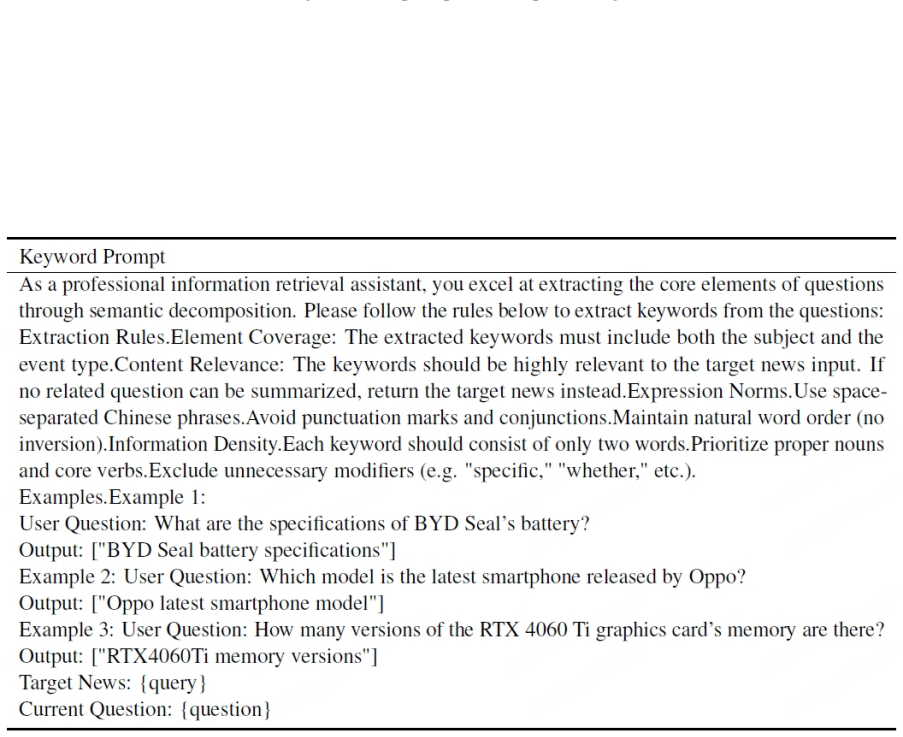
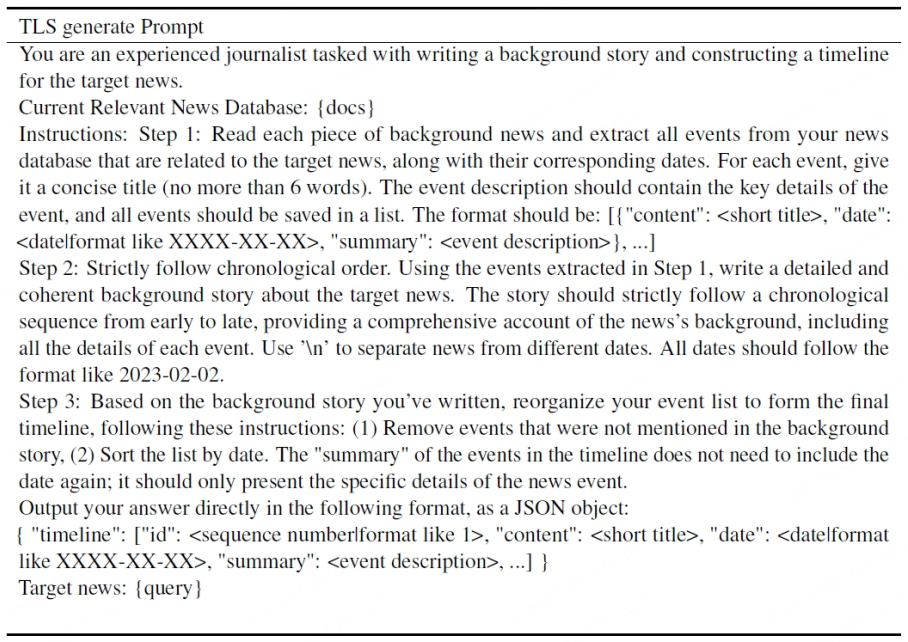
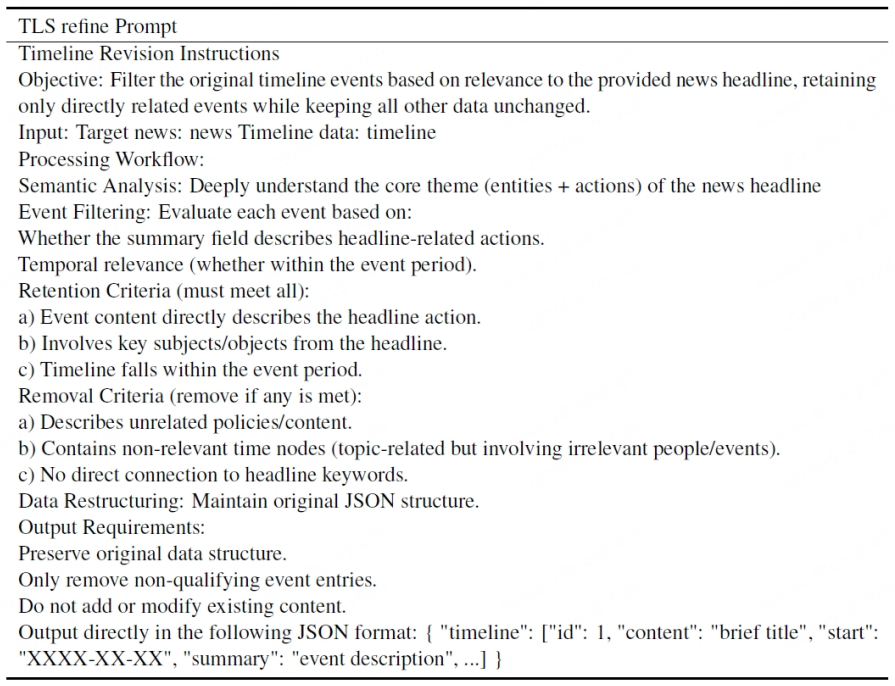
The machinery is a progressive optimization pipeline with three load-bearing pieces. First, instruction tuning uses a topic-aware sampling objective in which high-relevance and low-relevance news documents are weighted by a learnable sigmoid parameter, so the model learns both to summarize salient content and to discard off-topic noise. Second, dual-alignment reward learning applies a preference-optimization loss, inspired by direct preference optimization, in which positive and negative timeline candidates are constructed using the Alignment F1 metric, rewarding the model for matching both the reference wording and the reference dates. Third, the pipeline rests on TLS-I, a dataset of 1,189 topics, 3,567 annotated timelines, and over 100,000 source articles across 12 domains, with each topic carrying separate basic-retrieval, enhanced-retrieval, and merged timelines.
What would settle it
Take the same 132 test queries and have annotators independently build gold timelines directly from primary news sources, then score TIM-14B (Pro) and a top general LLM on Date F1 and Alignment F1 against that independent standard; if TIM's margin disappears or reverses, the reported superiority is an artifact of sharing the same generation pipeline.
Extended reading notes
Core claim
The central claim is that task-specific training, not raw scale, is what open-domain timeline summarization requires. General LLMs produce redundant content and inaccurate timestamps because they lack task-specific knowledge of topic relevance and topic evolution; TIM, trained on a large purpose-built dataset, learns to filter off-topic news, select salient events, and align them to correct dates. The paper demonstrates this with TIM-7B and TIM-14B, showing state-of-the-art results on Alignment F1, Date F1, and ROUGE metrics over all compared general LLMs, including a 685B parameter model, with TIM-14B (Pro) achieving an average improvement of more than 14% over that model.
Load-bearing premise
The paper assumes that the reference timelines produced by an LLM and then reviewed by human experts are the correct gold standard; if that gold standard is biased, both the training rewards and the evaluation scores are biased in the same direction.
Editorial extensions
If this is right
- A compact 14B parameter model can set the state of the art in open-domain timeline summarization, suggesting that current frontier LLMs are not necessary for this structured summarization task.
- Performance improves consistently from 7B to 14B parameters, indicating that the same recipe should scale to larger model sizes and yield further gains.
- The dataset's split into basic and enhanced timelines supports separate study of retrieval quality, event extraction, and redundancy filtering across twelve news domains.
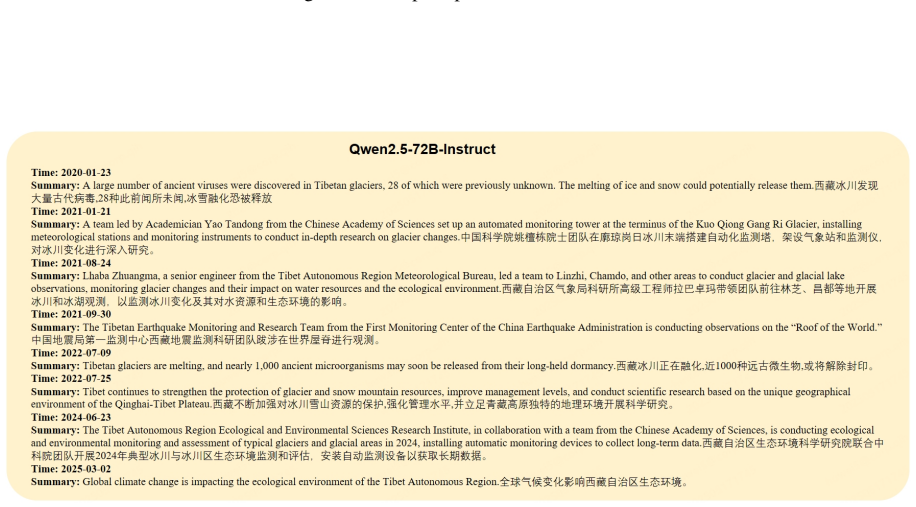
- General LLMs tend to lose timestamps and inject irrelevant time nodes; TIM reduces both failure modes, making timelines more reliable for monitoring evolving news topics.
- The paper's finding that an untrained model suffices for merging two generated timelines means the trainable effort can be concentrated on the generation step alone.
Reading between the lines
- Because both the training data and the 132-query test set share the same automated LLM-plus-human generation pipeline, an independent gold standard built directly from primary news sources would reveal how much of TIM's reported advantage is genuine temporal grounding rather than stylistic alignment with the reference generator.
- The dual-alignment reward recipe could transfer to other date-sensitive tasks such as event tracking, temporal question answering, or historical fact-checking, where matching content and timestamps simultaneously is the core difficulty.
- The reported margin over a 685B parameter general LLM may be understated on sensitive queries, because several API models refused to answer politically sensitive topics while TIM produced outputs for all queries.
- Applying the same progressive optimization to a 32B or 72B base model is a direct, untested extension; the authors cite resource limits rather than any evidence that the gains would plateau.
Signed reviews
Editorial analysis
A structured set of objections, weighed in public.
Referee Report
Summary. The paper introduces TLS-I, a large open-domain timeline summarization dataset in Chinese (1,189 topics, 3,567 timelines, over 1.2 million source articles, 12 domains), and proposes TIM, a timeline intelligence model trained with a progressive strategy. The strategy first applies instruction tuning with topic-aware sampling that mixes high- and low-relevance documents (Eq. 2), then applies a dual-alignment reward learning stage based on a DPO-style objective (Eq. 3) to improve semantic and temporal alignment. The authors evaluate TIM-7B and TIM-14B against general LLMs on a held-out set of 132 queries, reporting that TIM-14B (Pro) outperforms DeepSeek-V3-0326 by over 14% on alignment-related metrics (Section 6.2, Table 2). The paper also includes ablations on sampling strategy and an analysis of generation versus merging model sizes.
Significance. If the reported results hold, this is a useful contribution to timeline summarization: TLS-I is substantially larger than prior datasets (Table 1), the progressive training recipe is clearly motivated, and demonstrating that a 14B model can outperform a 685B general LLM on a structured, retrieval-augmented task would be practically significant. The authors are explicit about releasing dataset, code, and models. However, the central SOTA claim is currently supported only by a single test set whose gold data are produced by the same GPT-4o-plus-human pipeline used to construct training data and preference rewards, and by results without error bars or significance testing. The closed-loop concern raised in the stress-test note is real and needs to be addressed with an independent evaluation or at least additional evidence.
major comments (4)
- [Section 5.2, Eq. (3)] The stated dual-alignment objective is not DPO as written. Standard DPO requires the difference of implicit reward log-probabilities relative to a frozen reference policy, i.e., log(pi_theta(y_w|x)/pi_ref(y_w|x)) - log(pi_theta(y_l|x)/pi_ref(y_l|x)), with a KL-divergence term. Equation (3) instead contains only log pi_theta(s+_i|a_i) - log p_theta(s-_i|a_i), omitting pi_ref and using inconsistent notation (p_theta vs pi_theta, s vs y). This is a load-bearing part of the proposed method because the paper attributes the TIM (Pro) gain to this objective. Please provide the correct loss, state whether a reference model is used, and specify the construction of positive and 'partially aligned negative' samples, including how Alignment F1 is used to rank them.
- [Sections 4.1, 5.2, 6.1] The evaluation design creates a closed loop that undermines the SOTA claim. Training data, preference pairs, and the 132-query test gold are all produced by the same GPT-4o generation plus human-expert voting pipeline (Section 4.1, Figure 3), and the dual-alignment reward uses Alignment F1, the same metric used for evaluation. Even though the 132 test queries are disjoint from training queries, the gold reference style and the metric are identical in training and evaluation, so the reported margin over zero-shot general LLMs may reflect learned mimicry of GPT-4o-style outputs rather than intrinsically better timelines. Human review mitigates but does not eliminate this concern. Please report inter-annotator agreement on the test set, provide evidence that test gold was independently constructed from source articles, or evaluate on an external benchmark such as Crisis or T17 with their established gold timelines.
- [Section 6.2, Table 2] No variance or significance information is reported. Table 2 gives single values for each model, and several key differences are small (e.g., TIM-7B Pro Alignment F1 0.368 vs TIM-7B Standard 0.338; TIM-7B Standard vs DeepSeek-V3-0326 on full Alignment F1, 0.338 vs 0.336). Without confidence intervals, bootstrap estimates, or significance tests on the 132-query set, the claim that TIM (Pro) consistently outperforms all baselines is not yet established. Please add such statistics and a per-domain breakdown, since open-domain generalization is a central claim.
- [Section 4.2 and Table 1] The reported dataset scale is internally inconsistent. Section 4.2 states the dataset contains 'more than 100,000 collected source news,' while Table 1 reports 1,252,017 articles for TLS-I. The abstract also emphasizes scale. Please correct the numbers and ensure the article count is consistent throughout, as this is a primary claimed contribution.
minor comments (6)
- [Section 6.1] The evaluation does not state the language of the 132 test queries or the prompt language used for the baselines. Since TLS-I is listed as Chinese in Table 1, please clarify whether all queries and prompts are in Chinese and whether the English-named baselines were run in Chinese.
- [Appendix A.3] The text says 'their results are not reported in the Table 3,' but the overall results appear in Table 2. Please fix the reference.
- [Section 6.3.2, Table 3] The heading 'Training preferences for models with different parameter sizes' is unclear; the table appears to compare TIM (Pro) against the base instruct models on base and enhanced splits rather than displaying preferences. Please rename the heading and explain what 'preferences' means here.
- [Throughout] There are several typos and unclear formulations, e.g., 'the validated of the model's generalization capabilities' in Section 2.2, the column header 'the volume of refusal' in Table 2, and inconsistent use of y and s in Section 5.2. A careful proofread is needed.
- [References] The reference list contains entries that appear to be template artifacts (e.g., Aho and Ullman 1972, APA 1983, Gusfield 1997) and many entries ending in 'and 1 others.' Please clean the bibliography so that only cited works appear with complete author lists, or use a consistent abbreviation style.
- [Section 4.1] Fleiss' Kappa is mentioned as the inter-annotator agreement measure, but no actual Kappa value is reported for the training split or the test set. Please report the observed agreement values.
Circularity Check
No significant circularity: TIM's central SOTA result is evaluated on held-out queries with an external metric, and no load-bearing claim reduces by construction to its training inputs.
full rationale
The paper's central claim (Section 6.2: TIM-14B (Pro) beats DeepSeek-V3-0326 by over 14% on Alignment F1) is an empirical result, not a derivation from its own inputs. Training uses instruction tuning on TLS-I (Section 5.1) and DPO with preference pairs scored by Alignment F1 (Section 5.2, Eq. 3), while evaluation uses 132 queries explicitly not present in the dataset (Section 6.1). Alignment F1 is an external metric from Martschat and Markert (2017, 2018), not defined in terms of TIM's own outputs, so using it both as a reward signal and as the headline metric does not make the claim true by construction. The main caveat is validity, not circularity: both the training gold and the test gold come from the same GPT-4o-plus-human pipeline (Section 4.1: 'utilizing GPT-4o for generating a basic timeline' and 'no fewer than five artificial experts review and refine the output'; Section 6.1: 'Consistent with the data collection process'), so the model may match the annotation style of its own gold distribution. That is a benchmark-independence concern, not a self-definitional or fitted-input reduction, because the test queries are disjoint and human review intervenes. There is no load-bearing self-citation chain, no imported uniqueness theorem, and no ansatz smuggled in via citation. The Limitations section (model sizes, search-engine design) does not assert any circular dependence. Accordingly, no circular step meets the quoted-reduction standard.
Assumptions & free parameters
free parameters (4)
- learnable weight beta in topic-aware loss =
not reported
- DPO temperature beta =
not reported
- retrieval top-K =
10
- high- and low-relevance sample counts =
10 each per query
assumptions (5)
- domain assumption The retrieved document set A contains enough information to construct a complete timeline for the query.
- domain assumption Human-corrected GPT-4o outputs constitute reliable ground truth for TLS quality.
- ad hoc to paper Low-relevance documents improve topic perception when included in training.
- domain assumption The 132 test queries are representative of open-domain TLS and disjoint from training topics.
- standard math DPO framework (Rafailov et al., 2023) is valid for preference optimization.
Cite this review
Pith. "Pith review of TIM: A Large-Scale Dataset and large Timeline Intelligence Model for Open-domain Timeline Summarization." pith.science (2026). https://pith.science/paper/65JUXZHU
@misc{pith2026250621616,
  author       = {Pith},
  title        = {Pith review of: TIM: A Large-Scale Dataset and large Timeline Intelligence Model for Open-domain Timeline Summarization},
  year         = {2026},
  howpublished = {\url{https://pith.science/paper/65JUXZHU}},
  note         = {Machine review of arXiv:2506.21616}
}
read the original abstract
Open-domain Timeline Summarization (TLS) is crucial for monitoring the evolution of news topics. To identify changes in news topics, existing methods typically employ general Large Language Models (LLMs) to summarize relevant timestamps from retrieved news. While general LLMs demonstrate capabilities in zero-shot news summarization and timestamp localization, they struggle with assessing topic relevance and understanding topic evolution. Consequently, the summarized information often includes irrelevant details or inaccurate timestamps. To address these issues, we propose the first large Timeline Intelligence Model (TIM) for open-domain TLS, which is capable of effectively summarizing open-domain timelines. Specifically, we begin by presenting a large-scale TLS dataset, comprising over 1,000 news topics and more than 3,000 annotated TLS instances. Furthermore, we propose a progressive optimization strategy, which gradually enhance summarization performance. It employs instruction tuning to enhance summarization and topic-irrelevant information filtering capabilities. Following this, it exploits a novel dual-alignment reward learning method that incorporates both semantic and temporal perspectives, thereby improving the understanding of topic evolution principles. Through this progressive optimization strategy, TIM demonstrates a robust ability to summarize open-domain timelines. Extensive experiments in open-domain demonstrate the effectiveness of our TIM.
Figures


Figures from the paper (10 more)





Reference graph
Works this paper leans on
-
[1]
Aho and Jeffrey D
Alfred V. Aho and Jeffrey D. Ullman. 1972. The Theory of Parsing, Translation and Compiling, volume 1. Prentice-Hall, Englewood Cliffs, NJ
1972
-
[2]
American Psychological Association . 1983. Publications Manual. American Psychological Association, Washington, DC
1983
-
[3]
Rie Kubota Ando and Tong Zhang. 2005. A framework for learning predictive structures from multiple tasks and unlabeled data. Journal of Machine Learning Research, 6:1817--1853
2005
-
[4]
Galen Andrew and Jianfeng Gao. 2007. Scalable training of L1 -regularized log-linear models. In Proceedings of the 24th International Conference on Machine Learning, pages 33--40
2007
-
[5]
Akari Asai, Zeqiu Wu, Yizhong Wang, Avirup Sil, and Hannaneh Hajishirzi. 2023. Self-rag: Learning to retrieve, generate, and critique through self-reflection. In The Twelfth International Conference on Learning Representations
2023
-
[6]
Jinze Bai, Shuai Bai, Yunfei Chu, Zeyu Cui, Kai Dang, Xiaodong Deng, Yang Fan, Wenbin Ge, Yu Han, Fei Huang, and 1 others. 2023. Qwen technical report. arXiv preprint arXiv:2309.16609
arXiv 2023
-
[7]
Giang Binh Tran, Mohammad Alrifai, and Dat Quoc Nguyen. 2013. Predicting relevant news events for timeline summaries. In Proceedings of the 22nd International Conference on World Wide Web, pages 91--92
work page 2013
-
[8]
Ashok K. Chandra, Dexter C. Kozen, and Larry J. Stockmeyer. 1981. https://doi.org/10.1145/322234.322243 Alternation . Journal of the Association for Computing Machinery, 28(1):114--133
arXiv 1981
Show all 53 references
-
[9]
Jianlv Chen, Shitao Xiao, Peitian Zhang, Kun Luo, Defu Lian, and Zheng Liu. 2024. https://arxiv.org/abs/2402.03216 Bge m3-embedding: Multi-lingual, multi-functionality, multi-granularity text embeddings through self-knowledge distillation . Preprint, arXiv:2402.03216
2024 arXiv
-
[10]
Hyung Won Chung, Le Hou, Shayne Longpre, Barret Zoph, Yi Tay, William Fedus, Yunxuan Li, Xuezhi Wang, Mostafa Dehghani, Siddhartha Brahma, and 1 others. 2024. Scaling instruction-finetuned language models. Journal of Machine Learning Research, 25(70):1--53
2024
-
[11]
Darren Edge, Ha Trinh, Newman Cheng, Joshua Bradley, Alex Chao, Apurva Mody, Steven Truitt, Dasha Metropolitansky, Robert Osazuwa Ness, and Jonathan Larson. 2024. From local to global: A graph rag approach to query-focused summarization. arXiv preprint arXiv:2404.16130
2024 arXiv
-
[12]
Ahmed El-Kishky, Alexander Wei, Andre Saraiva, Borys Minaiev, Daniel Selsam, David Dohan, Francis Song, Hunter Lightman, Ignasi Clavera, Jakub Pachocki, and 1 others. 2025. Competitive programming with large reasoning models. arXiv preprint arXiv:2502.06807
2025 arXiv
-
[13]
Hossein Rajaby Faghihi, Bashar Alhafni, Ke Zhang, Shihao Ran, Joel Tetreault, and Alejandro Jaimes. 2022. Crisisltlsum: A benchmark for local crisis event timeline extraction and summarization. In Findings of the Association for Computational Linguistics: EMNLP 2022, pages 5455--5477
2022
-
[14]
Joseph L Fleiss. 1971. Measuring nominal scale agreement among many raters. Psychological bulletin, 76(5):378
1971
-
[15]
Demian Gholipour Ghalandari and Georgiana Ifrim. 2020. Examining the state-of-the-art in news timeline summarization. In Proceedings of the 58th Annual Meeting of the Association for Computational Linguistics
2020
-
[16]
Aaron Grattafiori, Abhimanyu Dubey, Abhinav Jauhri, Abhinav Pandey, Abhishek Kadian, Ahmad Al-Dahle, Aiesha Letman, Akhil Mathur, Alan Schelten, Alex Vaughan, and 1 others. 2024. The llama 3 herd of models. arXiv preprint arXiv:2407.21783
2024 arXiv
-
[17]
Daya Guo, Dejian Yang, Haowei Zhang, Junxiao Song, Ruoyu Zhang, Runxin Xu, Qihao Zhu, Shirong Ma, Peiyi Wang, Xiao Bi, and 1 others. 2025. Deepseek-r1: Incentivizing reasoning capability in llms via reinforcement learning. arXiv preprint arXiv:2501.12948
2025 arXiv
-
[18]
Dan Gusfield. 1997. Algorithms on Strings, Trees and Sequences. Cambridge University Press, Cambridge, UK
1997
-
[19]
Muhammad Usman Hadi, Rizwan Qureshi, Abbas Shah, Muhammad Irfan, Anas Zafar, Muhammad Bilal Shaikh, Naveed Akhtar, Jia Wu, Seyedali Mirjalili, and 1 others. 2023. A survey on large language models: Applications, challenges, limitations, and practical usage. Authorea Preprints, 3
2023
-
[20]
Jian Hu, Xibin Wu, Weixun Wang, Xianyu, Dehao Zhang, and Yu Cao. 2024 a . Openrlhf: An easy-to-use, scalable and high-performance rlhf framework. arXiv preprint arXiv:2405.11143
2024 arXiv
-
[21]
Qisheng Hu, Geonsik Moon, and Hwee Tou Ng. 2024 b . From moments to milestones: Incremental timeline summarization leveraging large language models. In Proceedings of the 62nd Annual Meeting of the Association for Computational Linguistics (Volume 1: Long Papers), pages 7232--7246
2024
-
[22]
Woosuk Kwon, Zhuohan Li, Siyuan Zhuang, Ying Sheng, Lianmin Zheng, Cody Hao Yu, Joseph Gonzalez, Hao Zhang, and Ion Stoica. 2023. Efficient memory management for large language model serving with pagedattention. In Proceedings of the 29th Symposium on Operating Systems Princip...
2023
-
[23]
Moreno La Quatra, Luca Cagliero, Elena Baralis, Alberto Messina, and Maurizio Montagnuolo. 2021. Summarize dates first: A paradigm shift in timeline summarization. In Proceedings of the 44th International ACM SIGIR Conference on Research and Development in Information Retrieva...
2021
-
[24]
u ttler, Mike Lewis, Wen-tau Yih, Tim Rockt \
Patrick Lewis, Ethan Perez, Aleksandra Piktus, Fabio Petroni, Vladimir Karpukhin, Naman Goyal, Heinrich K \"u ttler, Mike Lewis, Wen-tau Yih, Tim Rockt \"a schel, and 1 others. 2020. Retrieval-augmented generation for knowledge-intensive nlp tasks. Advances in neural informati...
2020
-
[25]
Aixin Liu, Bei Feng, Bing Xue, Bingxuan Wang, Bochao Wu, Chengda Lu, Chenggang Zhao, Chengqi Deng, Chenyu Zhang, Chong Ruan, and 1 others. 2024. Deepseek-v3 technical report. arXiv preprint arXiv:2412.19437
2024 arXiv
-
[26]
Fatma Yasmine Loumachi, Mohamed Chahine Ghanem, and Mohamed Amine Ferrag. 2025. Advancing cyber incident timeline analysis through retrieval-augmented generation and large language models. Computers, 14(67):1--42
2025
-
[27]
Qianren Mao, Jiazheng Wang, Zheng Wang, Xi Li, Bo Li, and Jianxin Li. 2021. Cntls: A benchmark dataset for abstractive or extractive chinese timeline summarization. arXiv e-prints, pages arXiv--2105
2021
-
[28]
Sebastian Martschat and Katja Markert. 2017. Improving rouge for timeline summarization. In Proceedings of the 15th Conference of the European Chapter of the Association for Computational Linguistics: Volume 2, Short Papers, pages 285--290
2017
-
[29]
Sebastian Martschat and Katja Markert. 2018. A temporally sensitive submodularity framework for timeline summarization. In Proceedings of the 22nd Conference on Computational Natural Language Learning, pages 230--240
2018
-
[30]
Long Ouyang, Jeffrey Wu, Xu Jiang, Diogo Almeida, Carroll Wainwright, Pamela Mishkin, Chong Zhang, Sandhini Agarwal, Katarina Slama, Alex Ray, and 1 others. 2022. Training language models to follow instructions with human feedback. Advances in neural information processing sys...
2022
-
[31]
Xiao Pu, Mingqi Gao, and Xiaojun Wan. 2023. Summarization is (almost) dead. arXiv preprint arXiv:2309.09558
2023 arXiv
-
[32]
Muhammad Reza Qorib, Qisheng Hu, and Hwee Tou Ng. 2025. Just what you desire: Constrained timeline summarization with self-reflection for enhanced relevance. In Proceedings of the AAAI Conference on Artificial Intelligence, volume 39, pages 25065--25073
2025
-
[33]
Rafael Rafailov, Archit Sharma, Eric Mitchell, Christopher D Manning, Stefano Ermon, and Chelsea Finn. 2023. Direct preference optimization: Your language model is secretly a reward model. Advances in Neural Information Processing Systems, 36:53728--53741
2023
-
[34]
Tetreault
Mohammad Sadegh Rasooli and Joel R. Tetreault. 2015. http://arxiv.org/abs/1503.06733 Yara parser: A fast and accurate dependency parser . Computing Research Repository, arXiv:1503.06733. Version 2
2015 arXiv
-
[35]
Kunal Sawarkar, Abhilasha Mangal, and Shivam Raj Solanki. 2024. Blended rag: Improving rag (retriever-augmented generation) accuracy with semantic search and hybrid query-based retrievers. In 2024 IEEE 7th International Conference on Multimedia Information Processing and Retri...
2024
-
[36]
Jiayu Song, Mahmud Akhter, Dana Atzil Slonim, and Maria Liakata. 2024. Temporal reasoning for timeline summarisation in social media. arXiv preprint arXiv:2501.00152
2024 arXiv
-
[37]
Julius Steen and Katja Markert. 2019. Abstractive timeline summarization. In Proceedings of the 2nd Workshop on New Frontiers in Summarization, pages 21--31
2019
-
[38]
Kimi Team, Angang Du, Bofei Gao, Bowei Xing, Changjiu Jiang, Cheng Chen, Cheng Li, Chenjun Xiao, Chenzhuang Du, Chonghua Liao, and 1 others. 2025. Kimi k1. 5: Scaling reinforcement learning with llms. arXiv preprint arXiv:2501.12599
2025 arXiv
-
[39]
Giang Tran, Mohammad Alrifai, and Eelco Herder. 2015. Timeline summarization from relevant headlines. In Advances in Information Retrieval: 37th European Conference on IR Research, ECIR 2015, Vienna, Austria, March 29-April 2, 2015. Proceedings 37, pages 245--256. Springer
2015
-
[40]
Tiannan Wang, Jiamin Chen, Qingrui Jia, Shuai Wang, Ruoyu Fang, Huilin Wang, Zhaowei Gao, Chunzhao Xie, Chuou Xu, Jihong Dai, and 1 others. 2024. Weaver: Foundation models for creative writing. arXiv preprint arXiv:2401.17268
2024 arXiv
-
[41]
Yubo Wang, Xueguang Ma, Ping Nie, Huaye Zeng, Zhiheng Lyu, Yuxuan Zhang, Benjamin Schneider, Yi Lu, Xiang Yue, and Wenhu Chen. 2025. Scholarcopilot: Training large language models for academic writing with accurate citations. arXiv preprint arXiv:2504.00824
2025 arXiv
-
[42]
Jason Wei, Xuezhi Wang, Dale Schuurmans, Maarten Bosma, Fei Xia, Ed Chi, Quoc V Le, Denny Zhou, and 1 others. 2022. Chain-of-thought prompting elicits reasoning in large language models. Advances in neural information processing systems, 35:24824--24837
2022
-
[43]
Weiqi Wu, Shen Huang, Yong Jiang, Pengjun Xie, Fei Huang, and Hai Zhao. 2025. Unfolding the headline: Iterative self-questioning for news retrieval and timeline summarization. arXiv preprint arXiv:2501.00888
2025 arXiv
-
[44]
Shitao Xiao, Zheng Liu, Peitian Zhang, Niklas Muennighoff, Defu Lian, and Jian-Yun Nie. 2024. C-pack: Packed resources for general chinese embeddings. In Proceedings of the 47th international ACM SIGIR conference on research and development in information retrieval, pages 641--649
2024
-
[45]
An Yang, Baosong Yang, Beichen Zhang, Binyuan Hui, Bo Zheng, Bowen Yu, Chengyuan Li, Dayiheng Liu, Fei Huang, Haoran Wei, and 1 others. 2024. Qwen2. 5 technical report. arXiv preprint arXiv:2412.15115
2024 arXiv
-
[46]
Yi Yu, Adam Jatowt, Antoine Doucet, Kazunari Sugiyama, and Masatoshi Yoshikawa. 2021. Multi-timeline summarization (mtls): Improving timeline summarization by generating multiple summaries. In Proceedings of the 59th Annual Meeting of the Association for Computational Linguist...
2021
-
[47]
Chenlong Zhang, Tong Zhou, Pengfei Cao, Zhuoran Jin, Yubo Chen, Kang Liu, and Jun Zhao. 2024. Dtels: Towards dynamic granularity of timeline summarization. arXiv preprint arXiv:2411.09297
2024 arXiv
-
[48]
Penghao Zhao, Hailin Zhang, Qinhan Yu, Zhengren Wang, Yunteng Geng, Fangcheng Fu, Ling Yang, Wentao Zhang, and Bin Cui. 2024. Retrieval-augmented generation for ai-generated content: A survey. CoRR
2024
-
[49]
Wayne Xin Zhao, Ji-Rong Wen, and Xiaoming Li. 2016. Generating timeline summaries with social media attention. Frontiers of Computer Science, 10:702--716
2016
-
[50]
Yaowei Zheng, Richong Zhang, Junhao Zhang, Yanhan Ye, Zheyan Luo, Zhangchi Feng, and Yongqiang Ma. 2024. http://arxiv.org/abs/2403.13372 Llamafactory: Unified efficient fine-tuning of 100+ language models . In Proceedings of the 62nd Annual Meeting of the Association for Compu...
2024 arXiv
-
[51]
Chunting Zhou, Pengfei Liu, Puxin Xu, Srinivasan Iyer, Jiao Sun, Yuning Mao, Xuezhe Ma, Avia Efrat, Ping Yu, Lili Yu, and 1 others. 2023. Lima: Less is more for alignment. Advances in Neural Information Processing Systems, 36:55006--55021
2023
-
[52]
online" 'onlinestring :=
ENTRY address archivePrefix author booktitle chapter edition editor eid eprint eprinttype howpublished institution journal key month note number organization pages publisher school series title type volume year doi pubmed url lastchecked label extra.label sort.label short.list...
-
[53]
write newline
" write newline "" before.all 'output.state := FUNCTION n.dashify 't := "" t empty not t #1 #1 substring "-" = t #1 #2 substring "--" = not "--" * t #2 global.max substring 't := t #1 #1 substring "-" = "-" * t #2 global.max substring 't := while if t #1 #1 substring * t #2 gl...
Reviewed August 15, 2026 · model on record in the stance chip above.
Discussion (0). Continue with ORCID to comment.