Description of curved spacetimes by finite-size matrices in the type IIB matrix model
Pith reviewed 2026-06-25 22:15 UTC · model grok-4.3
The pith
Berezin-Toeplitz quantization regularizes infinite matrices to finite size for describing curved spacetimes in the type IIB matrix model.
A machine-rendered reading of the paper's core claim, the machinery that carries it, and where it could break.
Core claim
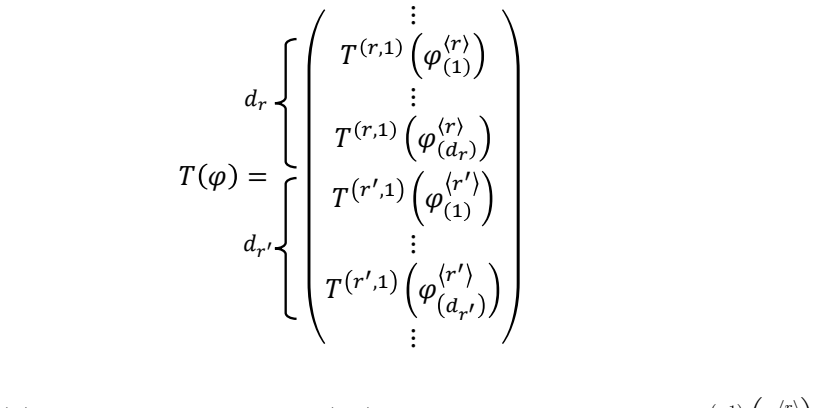
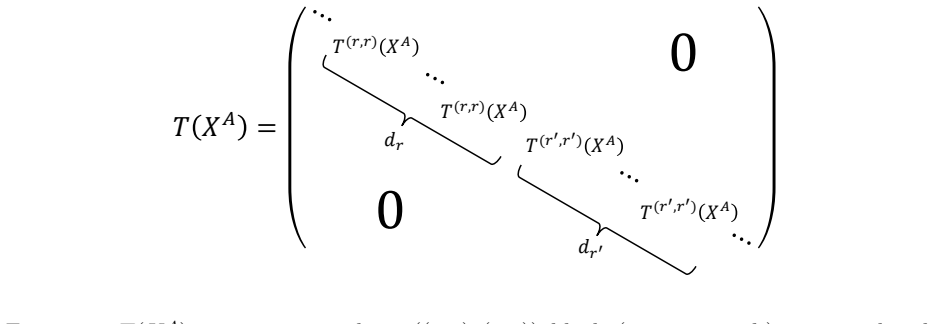
By using the Berezin-Toeplitz quantization, the matrices identified with certain covariant derivatives in the type IIB matrix model, which are infinite-size, can be regularized as finite-size ones while maintaining the necessary properties to describe curved spacetimes such as T^{2n} and S^2.
What carries the argument
Berezin-Toeplitz quantization applied to the covariant derivatives in the matrix model to produce finite-size matrix approximations.
If this is right
- The regularization enables calculation of quantum effects within the covariant derivative interpretation.
- It allows the interpretation to be applied directly to outcomes from numerical simulations of the matrix model.
- Explicit finite-size matrix constructions exist for the geometries of flat tori T^{2n} and the sphere S^2.
Where Pith is reading between the lines
- This method may facilitate numerical investigations of quantum gravity effects in curved backgrounds within the matrix model framework.
- The approach could extend to other curved manifolds if similar quantization procedures are developed.
- Connecting analytic curved spacetime descriptions with discrete matrix simulations might reveal new insights into string theory dynamics.
Load-bearing premise
Berezin-Toeplitz quantization must supply a faithful finite-size approximation that keeps the algebraic and geometric properties required by the covariant derivative interpretation.
What would settle it
Demonstrating that the finite-size matrices fail to reproduce the expected commutator relations or curvature for the sphere S^2 in the large matrix size limit.
Figures
read the original abstract
The type IIB matrix model is expected to give a nonperturbative formulation of superstring theory. Its covariant derivative interpretation provides a method to describe curved spacetimes in the model. There, matrices are identified with certain covariant derivatives which can be viewed as infinite-size matrices. Here, by using the Berezin-Toeplitz quantization, we develop a method to regularize these matrices as finite-size ones, which is needed to calculate quantum effects in the interpretation or in particular to apply the interpretation to the results of numerical simulations. As examples, we examine the cases of $T^{2n}$ and $S^2$ in detail.
Editorial analysis
A structured set of objections, weighed in public.
Referee Report
Summary. The paper claims that Berezin-Toeplitz quantization provides a regularization of the infinite-size matrices identified with covariant derivatives in the type IIB matrix model's covariant derivative interpretation, yielding finite-size matrices suitable for computing quantum effects or matching numerical simulations. Explicit constructions are given for the cases of T^{2n} and S^2.
Significance. If the finite-N matrices preserve the algebraic relations (commutators yielding the curvature 2-form) required by the interpretation, the method would enable practical calculations of quantum corrections on curved backgrounds within the matrix model, strengthening its utility as a nonperturbative formulation of superstring theory.
major comments (1)
- [Sections on explicit constructions for T^{2n} and S^2] The sections detailing the T^{2n} and S^2 constructions do not verify that the quantized finite matrices satisfy the operator identity [D_μ, D_ν] = i F_{μν} (plus higher-order terms vanishing as N→∞) without spurious finite-N contributions to the extracted curvature; this algebraic closure is load-bearing for the covariant derivative interpretation to remain valid when the regularization is applied to quantum effects or simulations.
Simulated Author's Rebuttal
We thank the referee for their detailed review and for highlighting the importance of algebraic closure in the constructions. We address the single major comment below.
read point-by-point responses
-
Referee: [Sections on explicit constructions for T^{2n} and S^2] The sections detailing the T^{2n} and S^2 constructions do not verify that the quantized finite matrices satisfy the operator identity [D_μ, D_ν] = i F_{μν} (plus higher-order terms vanishing as N→∞) without spurious finite-N contributions to the extracted curvature; this algebraic closure is load-bearing for the covariant derivative interpretation to remain valid when the regularization is applied to quantum effects or simulations.
Authors: We agree that explicit verification of the commutator relation at finite N strengthens the case for applying the regularization to quantum effects. The Berezin-Toeplitz quantization map is constructed so that the symbol of the commutator reproduces the curvature 2-form plus terms that vanish in the semiclassical (large-N) limit by standard properties of the quantization. Nevertheless, the manuscript does not include a direct finite-N computation of [D_μ, D_ν] − i F_{μν} for the explicit matrix representatives of T^{2n} and S^2. In the revised version we will add such calculations (or the corresponding symbol-level estimates) in the relevant sections, confirming that any finite-N deviations are higher-order and vanish as N → ∞, thereby removing the possibility of spurious contributions to the extracted curvature. revision: yes
Circularity Check
No significant circularity; construction applies external quantization technique
full rationale
The paper takes the covariant derivative interpretation (matrices as infinite-size operators on curved spaces) as given and applies the standard Berezin-Toeplitz quantization procedure to produce finite-N regularizations for T^{2n} and S^2. No equation or claim reduces by definition to a fitted parameter, self-citation chain, or renamed input; the algebraic closure and curvature extraction are asserted to follow from the quantization map in the N→∞ limit, with explicit constructions supplied rather than derived tautologically from the target result. The central method is therefore independent of its own outputs.
Axiom & Free-Parameter Ledger
axioms (2)
- domain assumption The type IIB matrix model is expected to give a nonperturbative formulation of superstring theory.
- domain assumption Matrices can be identified with covariant derivatives that describe curved spacetimes.
Reference graph
Works this paper leans on
-
[1]
M theory as a matrix model: A conjecture,
T. Banks, W. Fischler, S. H. Shenker, and L. Susskind, “M theory as a matrix model: A conjecture,”Phys. Rev. D55(1997) 5112–5128,arXiv:hep-th/9610043
Pith/arXiv arXiv 1997
-
[2]
A Large N reduced model as superstring,
N. Ishibashi, H. Kawai, Y. Kitazawa, and A. Tsuchiya, “A Large N reduced model as superstring,”Nucl. Phys. B498(1997) 467–491,arXiv:hep-th/9612115
Pith/arXiv arXiv 1997
-
[3]
The effects of SUSY on the emergent spacetime in the Lorentzian type IIB matrix model,
M. Hirasawa, K. N. Anagnostopoulos, T. Azuma, K. Hatakeyama, J. Nishimura, S. Papadoudis, and A. Tsuchiya, “The effects of SUSY on the emergent spacetime in the Lorentzian type IIB matrix model,”PoSCORFU2023(2024) 257, arXiv:2407.03491 [hep-th]
arXiv 2024
-
[4]
K. N. Anagnostopoulos, T. Azuma, M. Hirasawa, J. Nishimura, A. Tsuchiya, and N. Yamamori, “Impact of supersymmetry on the dynamical emergence of the spacetime in the type IIB matrix model with the Lorentz symmetry ”gauge fixed”,” in 42th International Symposium on Lattice Field Theory. 4, 2026.arXiv:2604.25564 [hep-lat]. 45
Pith/arXiv arXiv 2026
-
[5]
K. N. Anagnostopoulos, T. Azuma, M. Hirasawa, J. Nishimura, S. Papadoudis, and A. Tsuchiya, “The emergence of (3+1)-dimensional expanding spacetime from complex Langevin simulations of the Lorentzian type IIB matrix model with deformations,” arXiv:2604.19836 [hep-th]
-
[6]
Defining the Type IIB Matrix Model without Breaking Lorentz Symmetry,
Y. Asano, J. Nishimura, W. Piensuk, and N. Yamamori, “Defining the Type IIB Matrix Model without Breaking Lorentz Symmetry,”Phys. Rev. Lett.134no. 4, (2025) 041603,arXiv:2404.14045 [hep-th]
arXiv 2025
-
[7]
Quantisation of type IIB superstring theory and the matrix model,
Y. Asano, “Quantisation of type IIB superstring theory and the matrix model,”JHEP 10(2024) 082,arXiv:2408.04000 [hep-th]
arXiv 2024
-
[8]
H. C. Steinacker,Quantum Geometry, Matrix Theory, and Gravity. Cambridge University Press, 4, 2024
2024
-
[9]
Quantum hs-Yang-Mills from the IKKT matrix model,
H. C. Steinacker and T. Tran, “Quantum hs-Yang-Mills from the IKKT matrix model,”Nucl. Phys. B1005(2024) 116608,arXiv:2405.09804 [hep-th]
arXiv 2024
-
[10]
On the Origin of theSO(9)→SO(3)×SO(6) Symmetry Breaking in the IKKT Matrix Model,
R. Brandenberger and J. Pasiecznik, “On the Origin of theSO(9)→SO(3)×SO(6) Symmetry Breaking in the IKKT Matrix Model,”arXiv:2409.00254 [hep-th]
-
[11]
S. Laliberte, “Effective mass and symmetry breaking in the Ishibashi-Kawai-Kitazawa-Tsuchiya matrix model from compactification,”Phys. Rev. D110no. 2, (2024) 026024,arXiv:2401.16401 [hep-th]
arXiv 2024
-
[12]
The polarised IKKT matrix model,
S. A. Hartnoll and J. Liu, “The polarised IKKT matrix model,”JHEP03(2025) 060, arXiv:2409.18706 [hep-th]
arXiv 2025
-
[13]
hs-extended gravity from the IKKT matrix model,
A. Manta, H. C. Steinacker, and T. Tran, “hs-extended gravity from the IKKT matrix model,”JHEP02(2025) 031,arXiv:2411.02598 [hep-th]
arXiv 2025
-
[14]
Minimal covariant quantum space-time,
A. Manta and H. C. Steinacker, “Minimal covariant quantum space-time,”J. Phys. A 58no. 17, (2025) 175204,arXiv:2502.02498 [hep-th]
arXiv 2025
-
[15]
Dynamical covariant quantum spacetime with fuzzy extra dimensions in the IKKT model,
A. Manta and H. C. Steinacker, “Dynamical covariant quantum spacetime with fuzzy extra dimensions in the IKKT model,”JHEP02(2026) 062,arXiv:2509.24753 [hep-th]
arXiv 2026
-
[16]
Regularization of Matrices in the Covariant Derivative Interpretation of Matrix Models,
K. Hattori, Y. Mizuno, and A. Tsuchiya, “Regularization of Matrices in the Covariant Derivative Interpretation of Matrix Models,”PTEP2024no. 12, (2024) 123B06, arXiv:2410.13414 [hep-th]
arXiv 2024
-
[17]
J. Gohara and A. Sako, “Quantization of Lie–Poisson algebra and Lie algebra solutions of mass-deformed type IIB matrix model,”J. Math. Phys.67no. 2, (2026) 022301, arXiv:2503.24060 [hep-th]
arXiv 2026
-
[18]
General Relativity in IIB matrix model,
P.-M. Ho, H. Kawai, and H. C. Steinacker, “General Relativity in IIB matrix model,” JHEP02(2026) 070,arXiv:2509.06646 [hep-th]. 46
arXiv 2026
-
[19]
Spatially flat cosmological quantum spacetimes,
C. Gaß and H. C. Steinacker, “Spatially flat cosmological quantum spacetimes,”Phys. Rev. D113no. 2, (2026) 024050,arXiv:2510.21283 [hep-th]
arXiv 2026
-
[20]
A New Type of Saddle in the Euclidean IKKT Matrix Model and Its Emergent Geometry,
H. Liao and R. Maeta, “A New Type of Saddle in the Euclidean IKKT Matrix Model and Its Emergent Geometry,”arXiv:2512.03161 [hep-th]
-
[21]
Modified gravity at large scales on quantum spacetime in the IKKT model,
H. C. Steinacker, “Modified gravity at large scales on quantum spacetime in the IKKT model,”JHEP04(2026) 044,arXiv:2601.08031 [hep-th]
arXiv 2026
-
[22]
Einstein gravity from a matrix integral. Part I,
S. Komatsu, A. Martina, J. Penedones, A. Vuignier, and X. Zhao, “Einstein gravity from a matrix integral. Part I,”JHEP12(2025) 029,arXiv:2410.18173 [hep-th]
arXiv 2025
-
[23]
Einstein gravity from a matrix integral. Part II,
S. Komatsu, A. Martina, J. Penedones, A. Vuignier, and X. Zhao, “Einstein gravity from a matrix integral. Part II,”JHEP12(2025) 030,arXiv:2411.18678 [hep-th]
arXiv 2025
-
[24]
Statistical physics of the polarised IKKT matrix model,
S. A. Hartnoll and J. Liu, “Statistical physics of the polarised IKKT matrix model,” SciPost Phys.19no. 4, (2025) 099,arXiv:2504.06481 [hep-th]
arXiv 2025
-
[25]
Monte Carlo Studies of the Emergent Spacetime in the Polarized Type IIB Matrix Model,
C.-Y. Chou, J. Nishimura, and C.-T. Wang, “Monte Carlo Studies of the Emergent Spacetime in the Polarized Type IIB Matrix Model,”Phys. Rev. Lett.135no. 22, (2025) 221601,arXiv:2507.18472 [hep-th]
arXiv 2025
-
[26]
C.-Y. Chou, J. Nishimura, and A. Tripathi, “Inequivalence between the Euclidean and Lorentzian Versions of the Type IIB Matrix Model from Lefschetz Thimble Calculations,”Phys. Rev. Lett.134no. 21, (2025) 211601,arXiv:2501.17798 [hep-th]
arXiv 2025
-
[27]
Describing curved spaces by matrices,
M. Hanada, H. Kawai, and Y. Kimura, “Describing curved spaces by matrices,”Prog. Theor. Phys.114(2006) 1295–1316,arXiv:hep-th/0508211
Pith/arXiv arXiv 2006
-
[28]
Curved superspaces and local supersymmetry in supermatrix model,
M. Hanada, H. Kawai, and Y. Kimura, “Curved superspaces and local supersymmetry in supermatrix model,”Prog. Theor. Phys.115(2006) 1003–1025, arXiv:hep-th/0602210
Pith/arXiv arXiv 2006
-
[29]
Regularization of the covariant derivative on curved space by finite matrices,
M. Hanada, “Regularization of the covariant derivative on curved space by finite matrices,”Prog. Theor. Phys.115(2006) 1189–1209,arXiv:hep-th/0606163
Pith/arXiv arXiv 2006
-
[30]
Field equations of massless fields in the new interpretation of the matrix model,
K. Furuta, M. Hanada, H. Kawai, and Y. Kimura, “Field equations of massless fields in the new interpretation of the matrix model,”Nucl. Phys. B767(2007) 82–99, arXiv:hep-th/0611093
Pith/arXiv arXiv 2007
-
[31]
Superfield formulation of 4D, N=1 massless higher spin gauge field theory and supermatrix model,
T. Saitou, “Superfield formulation of 4D, N=1 massless higher spin gauge field theory and supermatrix model,”JHEP07(2007) 057,arXiv:0704.2449 [hep-th]
Pith/arXiv arXiv 2007
-
[32]
Quantum gravity equation in large N Yang-Mills quantum mechanics,
T. Matsuo, D. Tomino, W.-Y. Wen, and S. Zeze, “Quantum gravity equation in large N Yang-Mills quantum mechanics,”JHEP11(2008) 088,arXiv:0807.1186 [hep-th]
Pith/arXiv arXiv 2008
-
[33]
Factorization of the Effective Action in the IIB Matrix Model,
Y. Asano, H. Kawai, and A. Tsuchiya, “Factorization of the Effective Action in the IIB Matrix Model,”Int. J. Mod. Phys. A27(2012) 1250089,arXiv:1205.1468 [hep-th]. 47
Pith/arXiv arXiv 2012
-
[34]
Stability of the Matrix Model in Operator Interpretation,
K. Sakai, “Stability of the Matrix Model in Operator Interpretation,”Nucl. Phys. B 925(2017) 195–211,arXiv:1709.02588 [hep-th]
Pith/arXiv arXiv 2017
-
[35]
A note on higher spin symmetry in the IIB matrix model with the operator interpretation,
K. Sakai, “A note on higher spin symmetry in the IIB matrix model with the operator interpretation,”Nucl. Phys. B949(2019) 114801,arXiv:1905.10067 [hep-th]
arXiv 2019
-
[36]
Progress in the numerical studies of the type IIB matrix model,
K. N. Anagnostopoulos, T. Azuma, K. Hatakeyama, M. Hirasawa, Y. Ito, J. Nishimura, S. K. Papadoudis, and A. Tsuchiya, “Progress in the numerical studies of the type IIB matrix model,”Eur. Phys. J. ST232no. 23-24, (2023) 3681–3695, arXiv:2210.17537 [hep-th]
arXiv 2023
-
[37]
Toeplitz quantization of Kahler manifolds and gl(N), N —>infinity limits,
M. Bordemann, E. Meinrenken, and M. Schlichenmaier, “Toeplitz quantization of Kahler manifolds and gl(N), N —>infinity limits,”Commun. Math. Phys.165(1994) 281–296,arXiv:hep-th/9309134
Pith/arXiv arXiv 1994
-
[38]
Geometric quantization of vector bundles and the correspondence with deformation quantization,
E. Hawkins, “Geometric quantization of vector bundles and the correspondence with deformation quantization,”Communications in Mathematical Physics215no. 2, (Dec.,
-
[39]
409–432.http://dx.doi.org/10.1007/s002200000308
-
[40]
Laplacians on Fuzzy Riemann Surfaces,
H. Adachi, G. Ishiki, S. Kanno, and T. Matsumoto, “Laplacians on Fuzzy Riemann Surfaces,”Phys. Rev. D103no. 12, (2021) 126003,arXiv:2103.09967 [hep-th]
arXiv 2021
-
[41]
Matrix regularization for tensor fields,
H. Adachi, G. Ishiki, S. Kanno, and T. Matsumoto, “Matrix regularization for tensor fields,”PTEP2023no. 1, (2023) 013B06,arXiv:2110.15544 [hep-th]
arXiv 2023
-
[42]
Vector bundles on fuzzy K¨ ahler manifolds,
H. Adachi, G. Ishiki, and S. Kanno, “Vector bundles on fuzzy K¨ ahler manifolds,” PTEP2023no. 2, (2023) 023B01,arXiv:2210.01397 [hep-th]
arXiv 2023
-
[43]
N=4 Super Yang-Mills from the Plane Wave Matrix Model,
T. Ishii, G. Ishiki, S. Shimasaki, and A. Tsuchiya, “N=4 Super Yang-Mills from the Plane Wave Matrix Model,”Phys. Rev. D78(2008) 106001,arXiv:0807.2352 [hep-th]. 48
Pith/arXiv arXiv 2008
discussion (0)
Sign in with ORCID, Apple, or X to comment. Anyone can read and Pith papers without signing in.