REVIEW 4 major objections 6 minor 18 references
This paper tries to show that compositional quantum models can be pushed beyond English by encoding Hindi grammar—including the negation particle nahi—directly into the quantum circuits used for sentiment classification.
Reviewed by Pith at T0; open to challenge. T0 means a machine referee read the full paper against a public rubric. the ladder, T0–T4 →
T0 review · deepseek-v4-flash
2026-08-01 19:59 UTC pith:7VIDRMN3
load-bearing objection A plausible proof-of-concept for Hindi QNLP with a negation-aware grammar, but the evidence is too thin to back the strong conclusion. the 4 major comments →
Extending the Frontiers of QNLP Beyond English: Grammar-Sensitive Pipeline for Hindi Sentiment Classification Using Compositional Quantum Models
The pith
A machine-rendered reading of the paper's core claim, the machinery that carries it, and where it could break.
Core claim
Compositional QNLP can be extended beyond English by manually constructing a pregroup grammar for the target language. The central move is the treatment of negation: nahi is assigned the compound type x·x^l for the verb phrase it modifies, so a negated verb phrase keeps the same syntactic type as its affirmative counterpart and the sentence still reduces to the sentence type s. Negation is thus part of the syntactic structure before any learning happens. From each typed sentence, a string diagram is built and then compiled into a parameterized quantum circuit, with trainable rotations playing the role of word meanings and entangling gates realizing grammatical contractions. Training hybrid q
What carries the argument
The load-bearing object is the pregroup grammar type system for Hindi. Words receive atomic types such as s for sentence, n for noun, o for object, π for pronoun, τ for tense, and κ for case markers, with right and left adjoints that cancel during reduction. Negation is encoded by giving nahi the type x·x^l for the verb phrase type x, making the particle a type-preserving modifier inserted before the verb; this one rule lets negated sentences reduce exactly like affirmative ones. The typed reductions are then rendered as string diagrams and compiled into parameterized quantum circuits, where each grammatical contraction becomes an entangling gate and each word a trainable unitary block.
Load-bearing premise
The claim rests on the hand-written pregroup type assignments being a correct and consistent formalization of Hindi syntax—especially the rule that nahi is a type-preserving modifier—and on the 250 manually selected sentences being representative enough for the reported accuracies to reflect genuine language processing rather than grammar fit.
What would settle it
Take the same hand-typed pregroup grammar to a fresh, independently annotated Hindi corpus with new vocabulary and syntactic constructions, and compare against a classical bag-of-words or sequence model on identical splits. If accuracy drops to chance while the classical model holds, the compositional pipeline is not generalizing. A more targeted probe: hold out all sentences containing nahi and test whether polarity predictions for negated sentences track the grammar-induced circuit structure rather than surface word choices.
If this is right
- A QNLP pipeline can be built for a morphologically rich SOV language by hand-authoring pregroup types, not only for English SVO sentences.
- Negation of the type found in Hindi can be represented structurally as a type-preserving modifier, so polarity changes are visible in the circuit itself.
- Hybrid quantum-classical models are trainable on small hand-annotated corpora for both binary and ternary sentiment, with binary classification more reliable than ternary.
- Larger training proportions improve accuracy in these experiments, indicating quantum parameter optimization is sensitive to data volume.
- The manually annotated Hindi dataset, with balanced vocabulary and native-speaker verification, exists as a proof-of-concept resource for further QNLP work.
Where Pith is reading between the lines
- If the hand-written grammar is sound, the same type-preserving negation rule should transfer to other Indo-Aryan languages with pre-verbal negation, such as Marathi or Nepali, without redesigning the circuit ansatz.
- Because the grammar types were hand-assigned to match the dataset's constructions, the reported accuracies are plausibly an upper bound on generalization; an independent corpus with unseen syntactic patterns would test this.
- The ternary-versus-binary gap suggests the neutral class may need a different representation or decision rule, not merely more training examples.
- A direct classical baseline (e.g., bag-of-words or an LSTM on the same sentences) would clarify how much of the accuracy is due to the compositional quantum circuit rather than to the small, vocabulary-balanced dataset.
Editorial analysis
A structured set of objections, weighed in public.
Referee Report
Summary. The paper proposes a grammar-aware QNLP pipeline for Hindi sentiment classification. It introduces a manually annotated dataset of 250 Hindi sentences labeled positive/negative/neutral, assigns pregroup grammar types to Hindi words, incorporates the negation particle 'nahi' via the compound type x·x^l, and uses Lambeq to convert parsed sentences into parameterized quantum circuits trained with hybrid quantum-classical neural networks. Binary and ternary sentiment classification results are reported for two train/validation/test splits, with accuracies ranging from 55% to 73%. The paper concludes that the compositional QNLP method successfully detects Hindi morphological patterns and negation-induced semantic transformations.
Significance. If the claims were supported, the paper would contribute to extending QNLP beyond English to a morphologically rich SOV language, with a pregroup treatment of sentential negation and a full Lambeq-to-HQNN pipeline for Hindi. The authors are to be credited for constructing a Hindi pregroup grammar resource, for explicitly modeling 'nahi' in a compositional grammar, and for demonstrating the use of Lambeq with manually parsed Hindi sentences. However, the current evidence is not sufficient to support the central claims: there is no classical baseline, no statistical analysis, no negation-specific evaluation, no ablation of the hand-assigned negation rule, and no release of code or data. The paper is best seen as a proof-of-concept pipeline demonstration, not as a validated demonstration that the grammar-sensitive compositional mechanism is responsible for the reported accuracy.
major comments (4)
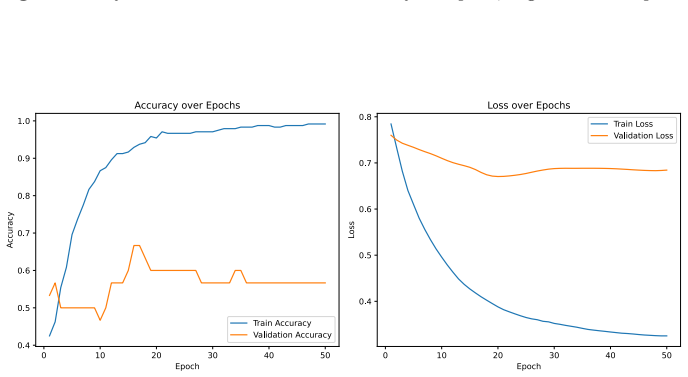
- [§5, Table 3] The headline accuracies (55.0/61.0% ternary, 68.0/73.0% binary) are point estimates with no error bars, confidence intervals, or significance tests. With only 250 total sentences, the 70:10:20 and 80:10:10 splits give test sets of roughly 50 and 25 sentences, respectively. For example, 55% ternary accuracy on 50 test sentences has a 95% binomial confidence interval of roughly 40–69%, and 61% on 25 sentences has an interval of about 40–79%. The conclusion that the model 'successfully detects Hindi semantic features' is not supported by these numbers alone. The authors should report per-split test sizes, confidence intervals, and significance relative to random and majority-class baselines.
- [§5, Table 3] No classical baseline is reported. The authors claim that vocabulary balancing removes lexical bias, but a simple bag-of-words logistic regression, n-gram SVM, or frequency-based heuristic could easily match the reported accuracies on a 250-sentence handcrafted dataset. Without a classical baseline, the results do not show that the grammar-aware / compositional quantum mechanism contributes anything over surface features. A baseline comparison is essential to interpret the accuracy numbers.
- [§3.1, Table 2] The negation rule assigning 'nahi' the type x·x^l is a hand-assigned, potentially ad-hoc choice. The paper provides no linguistic validation beyond two example sentences, and no ablation: there is no experiment comparing the model with and without the negation-specific type, nor a breakdown of accuracy on negated versus non-negated sentences. The Conclusion's claim that the model 'successfully detects negation-induced semantic transformations' is therefore not directly supported by any reported result. The authors should add a negation-focused evaluation and an ablation of the negation rule.
- [§3.2, §4.1] The dataset is described as a hand-curated 'proof-of-concept' of 250 sentences with balanced vocabulary, but no code, dataset, or detailed corpus statistics are provided. This makes the results non-reproducible and prevents assessment of generalization. In addition, the split description is ambiguous: §4.1 says 70:10:20, while §5 reports both 70:10:20 and 80:10:10. The paper should state exact train/validation/test sizes for each split, report the number of negated sentences and class distributions, and release the dataset and code to allow verification. The conclusion should also be tempered to match the 'proof-of-concept' scope stated in §3.2.
minor comments (6)
- [Throughout] There are typographical issues: 'T able 1' in Table 1, and the running header 'QNLP Hindi Sentimental Analysis' should probably be 'Sentiment Analysis'.
- [§2.4, Eq. (1)] Equation (1) is garbled; the types are not typeset cleanly and it is hard to see the intended reduction. Please reformat.
- [§4.2, Figures 2–4] Figure captions and labels are inconsistent: 'pi13', 'tau_21' in the code output differ from the mathematical notation π13 and τ2 used in the text. Please make the notation uniform.
- [§2.4, Table 1] Several type symbols (e.g., κ1–κ8, ρ1, ρ2, α1–α3) are listed but not used or explained in the sentence examples. It would help to give a short example of how these types reduce.
- [§4.2, Step 4] The text says 'classical post-processing layer (Section 3.3)', but Section 3.3 is 'Sentence Composition'; the reference is apparently to a later subsection or an omitted description.
- [References] The citation of Lorenz et al. appears as (2021) in the text but the bibliography lists 2023 (J. Artif. Int. Res. 76). Please reconcile the dates.
Circularity Check
No significant circularity: the accuracy numbers are measured against independent human labels; the grammar is an input, not a fitted prediction.
full rationale
The paper's central claim is empirical: a hybrid quantum-classical model is trained on 250 manually annotated Hindi sentences and evaluated on held-out test splits (Table 3: 55.0/61.0% ternary, 68.0/73.0% binary). The sentiment labels are assigned by native Hindi speakers, independently of the pregroup grammar; the grammar types and negation rule (x·x^l for 'nahi') are inputs that determine circuit structure, not quantities fitted to the test labels. There is no equation in the paper that reduces the reported accuracy to the grammar definitions. The negation rule being hand-coded means the model's ability to process negation is assumed in the architecture, but the sentiment predictions themselves are not derived from that rule by construction. The only self-citation to the authors' prior work, reference [18], appears in Section 4.2 Step 1 to support the standard DisCoCat statement that 'cups exist as entangled wire pairs that connect the words in the diagram'; this is a background fact, not load-bearing for the classification result or the conclusion. The paper's own limitations—small proof-of-concept dataset, no classical baseline, no negation-specific ablation—weaken the conclusion that negation-induced semantic transformations are 'successfully detected,' but that is an evidence-quality or correctness concern, not a circularity. The derivation chain is therefore self-contained with respect to circularity, and no specific reduction of a prediction to an input can be exhibited.
Axiom & Free-Parameter Ledger
free parameters (2)
- Circuit parameters θ_i =
Not reported (trained by Adam)
- Hand-written pregroup type assignments for each word =
Not fully enumerated in paper
axioms (4)
- standard math DisCoCat model of meaning as tensor networks/quantum circuits
- domain assumption Pregroup grammar correctly models Hindi syntax with assigned types
- ad hoc to paper The negation particle 'nahi' can be typed as x·x^l for any verb phrase x
- domain assumption The 250-sentence dataset is sufficient for meaningful classification evaluation
read the original abstract
Advancements in Natural Language Processing (NLP), whether on classical or quantum platforms, have predominantly focused on English due to its widespread use and abundant linguistic resources. Although English remains the most studied language in computational linguistics, Hindi, the third most spoken language worldwide after Mandarin, has received comparatively limited attention. Spoken primarily in India, Hindi differs significantly from English in its script, syntactic structure, and linguistic characteristics. Hindi uses the Devanagari script, exhibits rich morphological inflection, and follows a subject-object-verb (SOV) word order, unlike English's subject-verb-object (SVO) structure. Motivated by Hindi's linguistic complexity and its underrepresentation in Quantum Natural Language Processing (QNLP), we propose a grammar-aware QNLP pipeline for Hindi sentiment classification with a focus on sentential negation. We use a manually annotated Hindi sentiment dataset labeled as positive, negative, or neutral, and encode sentences using pregroup grammar types. Sentences are processed with Lambeq to generate quantum circuits using a novel negation-aware compositional grammar. Hybrid Quantum Neural Networks (HQNNs) are trained for both binary and ternary sentiment classification. Our results demonstrate effective sentiment classification and highlight the potential of compositional QNLP for morphologically rich languages.
Figures


Reference graph
Works this paper leans on
-
[1]
PHI Learning Pvt
Akshar, B., Chaitanya, V., et al.: Natural language processing: a Paninian per- spective. PHI Learning Pvt. Ltd. (1995) 14 Naik et al
1995
-
[2]
Lin- guistic Analysis31(3), 301–315 (2001)
Bargelli, D., Lambek, J.: An algebraic approach to arabic sentence structure. Lin- guistic Analysis31(3), 301–315 (2001)
2001
-
[3]
Cardinal, K.: An algebraic study of japanese grammar (2002)
2002
-
[4]
In: International tbilisi symposium on logic, language, and computation
Casadio, C., Sadrzadeh, M.: Clitic movement in pregroup grammar: a cross- linguistic approach. In: International tbilisi symposium on logic, language, and computation. pp. 197–214. Springer (2009)
2009
-
[5]
In: Horizons of the Mind
Casadio, C., Sadrzadeh, M.: Word order alternation in sanskrit via precyclicity in pregroup grammars. In: Horizons of the Mind. A Tribute to Prakash Panangaden: Essays Dedicated to Prakash Panangaden on the Occasion of His 60th Birthday, pp. 229–249. Springer (2014)
2014
-
[6]
arXiv preprint arXiv:1003.4394 (2010)
Coecke, B., Sadrzadeh, M., Clark, S.: Mathematical foundations for a composi- tional distributional model of meaning. arXiv preprint arXiv:1003.4394 (2010)
Pith/arXiv arXiv 2010
-
[7]
Journal of Logic, Language and Information32(5), 759–776 (2023)
Debanth, A., Shrivastava, M.: A computational algebraic analysis of hindi syntax. Journal of Logic, Language and Information32(5), 759–776 (2023)
2023
-
[8]
In: 2022 Second Inter- national Conference on Power, Control and Computing Technologies (ICPC2T)
Ganguly, S., Morapakula, S.N., Coronado, L.M.P.: Quantum natural language processing based sentiment analysis using lambeq toolkit. In: 2022 Second Inter- national Conference on Power, Control and Computing Technologies (ICPC2T). pp. 1–6 (2022). https://doi.org/10.1109/ICPC2T53885.2022.9776836
arXiv 2022
-
[9]
HindiPod101.com: Negation in hindi: How to make negative sentences (2021), https://www.hindipod101.com/blog/2021/08/10/hindi-negation/, accessed: 2025- 05-18
2021
-
[10]
Kartsaklis, D., Fan, I., Yeung, R., Pearson, A., Lorenz, R., Toumi, A., de Felice, G., Meichanetzidis, K., Clark, S., Coecke, B.: lambeq: An efficient high-level python library for quantum nlp (2021), https://arxiv.org/abs/2110.04236
Pith/arXiv arXiv 2021
-
[11]
In: Lecomte, A., Lamarche, F., Perrier, G
Lambek, J.: Type grammar revisited. In: Lecomte, A., Lamarche, F., Perrier, G. (eds.) Logical Aspects of Computational Linguistics. pp. 1–27. Springer Berlin Heidelberg, Berlin, Heidelberg (1999)
1999
-
[12]
Mathematical Intelli- gencer28(2) (2006)
Lambek, J.: Pregroups and natural language processing. Mathematical Intelli- gencer28(2) (2006)
2006
-
[13]
Lorenz, R., Pearson, A., Meichanetzidis, K., Kartsaklis, D., Coecke, B.: Qnlp in practice: Running compositional models of meaning on a quantum com- puter. J. Artif. Int. Res.76(May 2023). https://doi.org/10.1613/jair.1.14329, https://doi.org/10.1613/jair.1.14329
-
[14]
arXiv preprint arXiv:2209.03152 (2022)
Martinez, V., Leroy-Meline, G.: A multiclass q-nlp sentiment analysis experiment using discocat. arXiv preprint arXiv:2209.03152 (2022)
Pith/arXiv arXiv 2022
-
[15]
Elec- tronic Proceedings in Theoretical Computer Science340, 213–229 (Sep 2021)
Meichanetzidis, K., Gogioso, S., de Felice, G., Chiappori, N., Toumi, A., Coecke, B.: Quantum natural language processing on near-term quantum computers. Elec- tronic Proceedings in Theoretical Computer Science340, 213–229 (Sep 2021). https://doi.org/10.4204/eptcs.340.11, http://dx.doi.org/10.4204/EPTCS.340.11
-
[16]
In: The 7th international conference on natural language processing
Palmer, M., Bhatt, R., Narasimhan, B., Rambow, O., Sharma, D.M., Xia, F.: Hindi syntax: Annotating dependency, lexical predicate-argument structure, and phrase structure. In: The 7th international conference on natural language processing. pp. 14–17 (2009)
2009
-
[17]
IEEE Access11, 120612–120627 (2023)
Ruskanda, F.Z., Abiwardani, M.R., Syafalni, I., Larasati, H.T., Mulyawan, R.: Simple sentiment analysis ansatz for sentiment classification in quantum natural language processing. IEEE Access11, 120612–120627 (2023)
2023
-
[18]
arXiv preprint arXiv:2312.01221 (2023)
Srivastava, N., Belekar, G., Saumya, S., et al.: Enabling quantum natural language processing for hindi language. arXiv preprint arXiv:2312.01221 (2023)
Pith/arXiv arXiv 2023
discussion (0)
Sign in with ORCID, Apple, or X to comment. Anyone can read and Pith papers without signing in.