REVIEW 3 major objections 5 minor 4 cited by
Causal Fermion Systems: An Elementary Introduction to Physical Ideas and Mathematical Concepts
T0 review · 3 major / 5 minor · reviewed 2026-08-14 · deepseek-v4-flash
Pith's one-line read A single measure may unify spacetime and matter, giving general relativity and quantum theory as limits.
desk verdict A clear, honest survey of the causal fermion system program; the big unification claims are deferred to prior work, and the paper's value is expository, not novel. read the letter →
The pith
A machine-rendered reading of the paper's core claim, the machinery that carries it, and where it could break.
The reading
What carries the argument
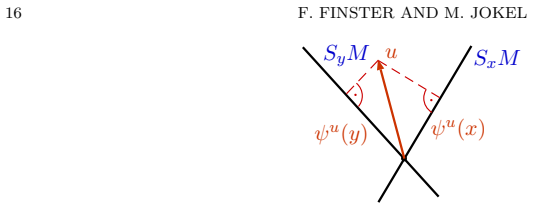
The central object is the universal measure ρ, a positive Borel measure on a set of finite-rank self-adjoint operators on a Hilbert space; all spacetime structures are derived from it. The key mechanism is the causal action principle, which minimizes the integral of the causal Lagrangian—a sum over squared differences of absolute eigenvalues of the operator product xy—subject to volume, trace, and boundedness constraints. The causal structure (timelike, spacelike, lightlike separation) is defined spectrally from the eigenvalues of xy, and the spin spaces, wave functions, and gauge symmetries all arise from the operators themselves, so geometry and matter are described by a single object.
What would settle it
Construct a specific causal fermion system whose universal measure is a minimizer of the causal action, then compute its effective macroscopic equations and compare the resulting particle content and coupling constants with observation; if no choice of regularization yields the standard model and gravity with the observed parameters, the claim that the theory reproduces known physics would be falsified.
Extended reading notes
Core claim
The paper claims that a causal fermion system—defined by a Hilbert space, a set of finite-rank self-adjoint operators with at most n positive and n negative eigenvalues, and a positive Borel measure on that set—can serve as a unified description of nature. Spacetime is defined as the support of this universal measure, so spacetime points are operators rather than points of a manifold. The causal action, formed by integrating a Lagrangian built from eigenvalues of operator products, is minimized under volume, trace, and boundedness constraints; the Euler–Lagrange equations of this principle are meant to describe all dynamics. The paper shows how a Lorentzian spacetime with Dirac spinors can be reconstructed from a causal fermion system, with the Minkowski vacuum worked out explicitly in the limit of vanishing regularization, and states that general relativity and quantum theory are obtained as limiting cases, with the standard model interactions and gravity arising at the continuum limit.
Load-bearing premise
The method of variable regularization requires that the detailed unknown microstructure of spacetime does not affect the effective physical equations at accessible scales, entering only through a finite number of free parameters; if it affects predictions in a way that cannot be absorbed, the theory loses predictive power.
Editorial extensions
If this is right
- If the central claim is correct, general relativity and quantum theory become limiting cases of one variational principle, resolving their mathematical incompatibility at the Planck scale.
- The standard model interactions and gravity would emerge from the continuum limit of the causal action principle, with masses and coupling constants possibly depending on the unknown spacetime microstructure.
- The divergence problems of quantum field theory would be avoided because the theory works directly with regularized objects, treating the regularization as part of the physical spacetime structure.
- Spacetime would not need to be a smooth manifold at small scales; discrete or otherwise nontrivial microstructures would be allowed and determined dynamically by the causal action principle.
Reading between the lines
- The spectral definition of causality suggests that the causal structure of spacetime is not an input but an emergent property of the minimizer, which could in principle produce causal relations different from those of any Lorentzian manifold.
- The method of variable regularization implies that the predictive content of the theory at accessible scales must survive a coarse-graining over all possible microstructures; testing this would amount to deriving the effective field theory from the causal action without fixing a regularization.
- One could probe the theory by asking whether the causal action principle predicts the specific fermion content and gauge group of the standard model, since the gauge group emerges from the spin scalar product fixed by the operator spectrum.
Signed reviews
Editorial analysis
A structured set of objections, weighed in public.
Referee Report
Summary. This paper is an elementary introduction to causal fermion systems (CFS) written by two of the framework's principal developers. After an overview of the incompatibility between general relativity and quantum field theory, the authors define a causal fermion system (H, F, rho) of spin dimension n (Definition 3.1), introduce the causal action principle (Definitions 3.2 and 3.3), and derive from it the structures of spacetime (Definition 3.4), causal structure (Definition 3.5), spin spaces and wave functions (Definitions 3.6 and 3.7), and the kernel of the fermionic projector with its closed chain (Definition 3.8 and Eq. (3.9)). Section 4 explains how a globally hyperbolic Lorentzian spacetime with a Dirac solution space and a regularization operator R gives rise to a causal fermion system through the local correlation operators F(p) and the push-forward measure rho = F_* dmu_M (Definition 4.1, Eq. (4.2)), and it works out the Minkowski vacuum in detail. Section 5 claims that general relativity and quantum theory arise as limiting cases and that the continuum limit yields the interactions of the standard model and gravity, with the derivations deferred primarily to the monograph [12] and other works by the same group.
Significance. Causal fermion systems, if the program succeeds, offer a genuinely unified description: one variational principle and one object (the universal measure) from which spacetime, spin geometry, gauge structure, matter dynamics, and a Planck-scale cutoff all emerge. The paper's strengths are the precision of its definitions and the unusual candor of its limitation statements: Section 3.7 admits that discreteness of minimizers is established only in model examples, Section 4.2 states plainly that the physical regularization is completely unknown and that minimization over regularizations is out of reach, and Section 5 flags the derivation of quantum field theory from first principles as ongoing work. These admissions are themselves evidence that the exposition is careful about what is and is not known; but they also show that the claims of Sections 4 and 5 are an assemblage of results proven elsewhere, not proven here. The paper contains no machine-checked proofs, reproducible code, or testable numerical predictions; its value at this stage is as a clear conceptual map of a candidate framework with an honest citation trail to the primary papers.
major comments (3)
- [Section 4.2] The predictive-power claim rests entirely on the variable-regularization assumption, but the paper gives the reader no basis to assess it. Section 4.2 states that the physical regularization is “completely unknown”, that minimizing the causal action over all regularizations is “out of reach”, and that “the only available method is the method of variable regularization”; it then asserts in a single sentence that “In [12] it was shown that these conditions are indeed satisfied.” The conditions in question — that the detailed microstructure does not influence the form of the effective equations and that it enters only through a finite number of free parameters — are exactly the load-bearing ones. If different admissible regularizations produce structurally different effective Lagrangians, the universal measure is underdetermined and the Section 5 claim that the theory “gives General Relativity and Quantum Theory as limiting cases” lacks unique content. The authors should state the relevant theorem from [12] with its precise assumptions (including the class of regularizations covered), and they should enumerate the free parameters of the effective theory (the ultraviolet scale epsilon of Section 4.2 and the boundedness-constraint constant C of Eq. (3.5) being the only ones acknowledged in this paper), or else explicitly mark the finite-parameter condition as an unproven assumption on which the programme depends.
- [Sections 4.1 and 5] The construction in Section 4.1 establishes that a Lorentzian spacetime (M, g), a chosen subspace of Dirac solutions H, and a regularization R produce a causal fermion system via rho = F_* dmu_M. This is an embedding direction: known physics is encoded into the framework. The dynamical claim of Sections 3.2 and 5 — that minimizing the causal action selects spacetime and everything in it — is the opposite direction and is not demonstrated here. The paper itself supplies the caveats: Section 3.7 states that discreteness of minimizing measures is an open problem for general systems, and Section 5 gives the existence of minimizers only for finite-dimensional Hilbert spaces and finite total volume. Given these caveats, the sentence in Section 5 stating that “Causal fermion systems provide a mathematically consistent theory which gives General Relativity and Quantum Theory as limiting cases” is stronger than the evidence presented in this paper. The authors should label explicitly which of these statements are theorems proved elsewhere, which are established only in special cases, and which are conjectures, so that the reader can see the precise epistemic status of the unification claim.
- [Section 5(b)] The sentence that the continuum limit “gives rise to the interactions of the standard model and gravity, on the level of classical bosonic fields interacting with a second-quantized fermionic field” is the paper's central evidence for its main claim, yet it is a single sentence with no statement of hypotheses, content, or limitations. The reader cannot tell which particle content and gauge group are obtained, to which order in perturbation theory, which assumptions on the regularization are needed, and which quantities are computed rather than assumed. Since this is the decisive link between the axioms and the standard model, and since the derivation is deferred to the first author's monograph [12], the introduction should at minimum state the precise theorem, its assumptions, and its output (for example, which bosonic and fermionic fields appear and how the Einstein-Hilbert term and the Dirac equation are recovered), even if all details are left to the reference. Without that, the central claim is an assertion with a citation rather than a result the reader can evaluate.
minor comments (5)
- [Title and running headers] The title and running headers contain words split by spurious spaces (“ELEMENT AR Y”, “MA THEMA TICAL”, “FE RMION”); these typesetting defects should be corrected in the final version.
- [Section 4.3] The statement that as epsilon tends to 0 the inherent structures of the causal fermion system go over to the usual objects in Minkowski space is introduced with “One finds that...”; a short outline of how the spectral causal condition of Definition 3.5 turns into the Minkowski light-cone condition would make the cleanest explicit example of the paper much more instructive.
- [Section 2.5.2] Global hyperbolicity is assumed in the scalar product (2.4) without a definition; for the intended mathematical readership, a one-sentence definition and a pointer to the literature would make the section self-contained.
- [Section 3.2.1] The dimension count dim F_reg = 4n(dim H − n) is attributed to reference [25], which is listed as “in preparation” and is available only through a Dropbox link; a published reference or a short derivation of this dimension count would be preferable.
- [Section 3.2.2] The candid note that the causal action is “the result of many computations and long considerations” leaves the reader without any intuition for the Lagrangian (3.2); one or two sentences explaining why the sum of squared differences of spectral values is a natural building block (for instance, that it vanishes for spacelike separation and thereby implements the causality principle) would make the introduction considerably more self-contained.
Circularity Check
Predictive-power claim is supported by self-citations to the continuum-limit monograph, and the Minkowski-vacuum example recovers by construction only what was put in.
-
self citation load bearing
[Section 4.2, 'Physical Significance of the Regularization Operator']
"For the method of variable regularization to be sensible and to retain the predictive power of the theory, the detailed form of the microstructure must have no influence on the effective physical equations which are valid on the energy scales accessible to experiments. ... the unknown microstructure of spacetime should enter the effective physical equations only by a finite (hopefully small) number of free parameters, which can then be taken as empirical free parameters of the effective macroscopic theory. In [12] it was shown that these conditions are indeed satisfied."
The predictive power of causal fermion systems is made contingent on the property that all admissible regularizations affect the effective equations only through finitely many parameters. The only support offered is the citation '[12]', a monograph by the first author. The text itself concedes that the physical regularization is 'completely unknown' and that determining it by minimizing the causal action is 'out of reach'; the variable-regularization method is therefore an assumption whose verification is delegated to a self-authored work. No derivation or independent check is given in this paper, so the claimed prediction of the effective macroscopic equations reduces to a self-citation chain.
-
self citation load bearing
[Section 5, 'Results of the Theory and Further Reading', item (b)]
"The limiting case ε ց 0, when the ultraviolet regularization is removed, is worked out in detail in [12]. In this limiting case, the so-called continuum limit, the causal action principle gives rise to the interactions of the standard model and gravity, on the level of classical bosonic fields interacting with a second-quantized fermionic field."
The paper's headline result — that causal fermion systems give General Relativity and Quantum Theory, including the standard model interactions, as limiting cases — is not derived in this article. It is delegated to [12], the same author's monograph, which is also the sole warrant for the variable-regularization condition in Section 4.2. Thus the central physical predictions of the framework rest on a citation to the authors' own prior work rather than on an independently checkable derivation in this paper. For an elementary introduction this may be acceptable as a review, but as a derivation chain it is a load-bearing self-citation.
1 more flagged steps
-
self definitional
[Section 4.1, Eq. (4.2), with Definition 3.4 and Section 4.3]
"Finally, we introduce the universal measure dρ :=F∗dµM (4.2) as the push-forward of the volume measure on M under the mapping F (thus ρ(Ω) := µM(F −1(Ω))). We thus obtain a causal fermion system (H,F,ρ) of spin dimension two."
Definition 3.4 declares spacetime to be supp ρ, while Eq. (4.2) defines ρ as the push-forward of the volume measure on a pre-existing Lorentzian manifold M. Therefore the Section 4.3 statement that mapping p to F(p) gives a one-to-one correspondence between Minkowski space M and the causal-fermion spacetime M := supp ρ is not a derived prediction; it is the identity of the construction whenever F is injective. The causal structure and spin spaces used are those put in through the Dirac solutions on Minkowski space. The example thus re-labels the input spacetime as the output spacetime and cannot independently support the claim that the theory derives spacetime from the universal measure.
full rationale
This is an elementary introduction and review of the authors' own framework, so the presence of many self-citations is normal. However, two load-bearing claims are supported only by self-citation: the variable-regularization condition that is said to guarantee predictive power (Section 4.2, citing [12]) and the continuum-limit claim that the causal action principle yields the standard model and gravity (Section 5, again citing [12]). These are not machine-checked, code-reproduced, or independently verified in the present text. In addition, the Minkowski-vacuum example constructs the universal measure as a push-forward from Minkowski space and then 'recovers' Minkowski space as the support of that measure; this is a definitional round-trip rather than a derivation from the causal action principle. I do not count the many other references to the authors' prior mathematical work (e.g. [9], [22]-[24]) as circular, since they concern specific technical results outside the present derivation. The central framework still has independent mathematical content as a proposed structure, so the score is moderate rather than extreme.
Assumptions & free parameters
free parameters (2)
- UV regularization scale ε
- Boundedness constraint constant C
assumptions (4)
- domain assumption The universe is described by a causal fermion system with a universal measure ρ and the causal action principle.
- domain assumption The detailed microstructure (regularization) does not affect the effective physical equations at accessible scales.
- domain assumption Spacetime is globally hyperbolic so Cauchy surfaces exist.
- domain assumption The Hilbert space H for the Minkowski vacuum is the closure of the negative-frequency solutions of the Dirac equation.
invented entities (3)
-
Universal measure ρ
-
Causal action principle
-
Regularization operator R
Cite this review
Pith. "Pith review of Causal Fermion Systems: An Elementary Introduction to Physical Ideas and Mathematical Concepts." pith.science (2026). https://pith.science/paper/AJC4GNZZ
@misc{pith2026190808451,
  author       = {Pith},
  title        = {Pith review of: Causal Fermion Systems: An Elementary Introduction to Physical Ideas and Mathematical Concepts},
  year         = {2026},
  howpublished = {\url{https://pith.science/paper/AJC4GNZZ}},
  note         = {Machine review of arXiv:1908.08451}
}
read the original abstract
We give an elementary introduction to the theory of causal fermion systems, with a focus on the underlying physical ideas and the conceptual and mathematical foundations.
Figures

Forward citations
Cited by 4 Pith papers
-
A Geometric Derivation of the Einstein Equations from the Causal Action Principle
Using osculating vacua, the authors derive Einstein's equations from the causal action principle, with the gravitational coupling identified as the square of the regularization length.
-
The Cauchy Problem for Symmetric Hyperbolic Systems with Nonlocal Potentials
Under smallness and decay conditions on nonlocal potentials, symmetric hyperbolic systems on curved spacetimes admit strong solutions to the Cauchy problem, with a sharp threshold beyond which solutions fail.
-
The $\mathcal{L}$-Calculus for Causal Variational Principles: An Exterior Differential Calculus on Non-Smooth Spaces
An exterior differential calculus, based on Lagrangian-mollified weak derivatives and osculating vacua, is constructed for non-smooth causal variational principles, with cohomology, Stokes and Gauss theorems, and work...
-
A Gauge Fixing Procedure for Causal Fermion Systems
A canonical gauge fixing for causal fermion systems is constructed via symmetric and Gaussian wave charts, fixing local gauge freedom up to global transformations.
Reference graph
Works this paper leans on
-
[12]
, The Continuum Limit of Causal Fermion Systems , arXiv:1605.04742 [math-ph], Funda- mental Theories of Physics, vol. 186, Springer, 2016
arXiv 2016
-
[1]
L. B¨ auml, F. Finster, H. von der Mosel, and D. Schiefened er, Singular support of minimizers of the causal variational principle on the sphere , arXiv:1808.09754 [math.CA], Calc. Var. Partial Differential Equations 58 (2019), no. 6, 205
arXiv 2019
-
[2]
J.D. Bjorken and S.D. Drell, Relativistic Quantum Mechanics , McGraw-Hill Book Co., New York, 1964
work page 1964
-
[3]
, Relativistic Quantum Fields , McGraw-Hill Book Co., New York, 1965
work page 1965
-
[4]
J. Bogn´ ar, Indefinite Inner Product Spaces , Springer-Verlag, New York, 1974, Ergebnisse der Mathematik und ihrer Grenzgebiete, Band 78
work page 1974
-
[5]
Quantum Field Theory on Curved Backgrounds
R. Brunetti and K. Fredenhagen, Quantum field theory on curved backgrounds , Quantum Field Theory on Curved Spacetimes (C. B¨ ar and K. Fredenhagen, eds.), arXiv:0901.2063 [gr-qc], Lecture Notes in Phys., vol. 786, Springer, Berlin, 2009, pp. 129–15 5
work page Pith review arXiv 2009
-
[6]
C. Dappiaggi and F. Finster, Linearized fields for causal variational principles: Exist ence theory and causal structure , arXiv:1811.10587 [math-ph], to appear in Methods Appl. An al. (2020)
arXiv 2020
-
[7]
F. Finster, The Principle of the Fermionic Projector , hep-th/0001048, hep-th/0202059, hep-th/0210121, AMS/IP Studies in Advanced Mathematics, v ol. 35, American Mathematical Society, Providence, RI, 2006
arXiv 2006
Show all 29 references
-
[8]
, On the regularized fermionic projector of the vacuum , arXiv:math-ph/0612003, J. Math. Phys. 49 (2008), no. 3, 032304, 60
2008 arXiv
-
[9]
Reine Angew
, Causal variational principles on measure spaces , arXiv:0811.2666 [math-ph], J. Reine Angew. Math. 646 (2010), 141–194
2010 arXiv
-
[10]
, A formulation of quantum field theory realizing a sea of inter acting Dirac particles , arXiv:0911.2102 [hep-th], Lett. Math. Phys. 97 (2011), no. 2, 165–183
2011 arXiv
-
[11]
, Perturbative quantum field theory in the framework of the fer mionic projector , arXiv:1310.4121 [math-ph], J. Math. Phys. 55 (2014), no. 4, 042301
2014 arXiv
-
[13]
Phys.: Conf
, Causal fermion systems: A primer for Lorentzian geometers , arXiv:1709.04781 [math- ph], J. Phys.: Conf. Ser. 968 (2018), 012004
2018 arXiv
-
[14]
Phys.: Conf
, Causal fermion systems: Discrete space-times, causation a nd finite propagation speed , arXiv:1812.00238 [math-ph], J. Phys.: Conf. Ser. 1275 (2019), 012009
2019 arXiv
-
[15]
, Perturbation theory for critical points of causal variatio nal principles , arXiv:1703.05059 [math-ph], to appear in Adv. Theor. Math. Phys. (2020)
2020 arXiv
-
[16]
Finster and A
F. Finster and A. Grotz, A Lorentzian quantum geometry, arXiv:1107.2026 [math-ph], Adv. Theor. Math. Phys. 16 (2012), no. 4, 1197–1290
2012 arXiv
-
[17]
Finster, A
F. Finster, A. Grotz, and D. Schiefeneder, Causal fermion systems: A quantum space-time emerg- ing from an action principle , arXiv:1102.2585 [math-ph], Quantum Field Theory and Grav ity (F. Finster, O. M¨ uller, M. Nardmann, J. Tolksdorf, and E. Ze idler, eds.), Birkh¨ auser ...
2012 arXiv
-
[18]
Finster and N
F. Finster and N. Kamran, Fermionic Fock space dynamics for causal fermion systems , in prepa- ration
-
[19]
, Complex structures on jet spaces and bosonic Fock space dyna mics for causal variational principles, arXiv:1808.03177 [math-ph] (2018)
2018 arXiv
-
[20]
, Spinors on singular spaces and the topology of causal fermio n systems , arXiv:1403.7885 [math-ph], Mem. Amer. Math. Soc. 259 (2019), no. 1251, v+83 pp
2019 arXiv
-
[21]
Finster and J
F. Finster and J. Kleiner, Causal fermion systems as a candidate for a unified physical t heory, arXiv:1502.03587 [math-ph], J. Phys.: Conf. Ser. 626 (2015), 012020. 24 F. FINSTER AND M. JOKEL
2015 arXiv
-
[22]
, Noether-like theorems for causal variational principles , arXiv:1506.09076 [math-ph], Calc. Var. Partial Differential Equations 55:35 (2016), no. 2, 41
2016 arXiv
-
[23]
, A Hamiltonian formulation of causal variational principle s, arXiv:1612.07192 [math-ph], Calc. Var. Partial Differential Equations 56:73 (2017), no. 3, 33
2017 arXiv
-
[24]
, A class of conserved surface layer integrals for causal vari ational principles , arXiv:1801.08715 [math-ph], Calc. Var. Partial Differenti al Equations 58:38 (2019), 34
2019 arXiv
-
[25]
Finster, J
F. Finster, J. Kleiner, and J.-H. Treude, An Introduction to the Fermionic Projector and Causal Fermion Systems , in preparation, https://www.dropbox.com/s/4g0nh4nxxc b9175/intro- public.pdf?dl=0
-
[26]
Finster and M
F. Finster and M. Reintjes, A non-perturbative construction of the fermionic projecto r on globally hyperbolic manifolds I – Space-times of finite lifetime , arXiv:1301.5420 [math-ph], Adv. Theor. Math. Phys. 19 (2015), no. 4, 761–803
2015 arXiv
-
[27]
Finster and D
F. Finster and D. Schiefeneder, On the support of minimizers of causal variational principl es, arXiv:1012.1589 [math-ph], Arch. Ration. Mech. Anal. 210 (2013), no. 2, 321–364
2013 arXiv
-
[28]
Gohberg, P
I. Gohberg, P. Lancaster, and L. Rodman, Indefinite Linear Algebra and Applications , Birkh¨ auser Verlag, Basel, 2005
2005
-
[29]
Peskin and D.V
M.E. Peskin and D.V. Schroeder, An Introduction to Quantum Field Theory , Addison-Wesley Publishing Company Advanced Book Program, Reading, MA, 199 5. F akult¨at f ¨ur Mathematik, Universit ¨at Regensburg, D-93040 Regensburg, Germany E-mail address : finster@ur.de, maximilian....
Reviewed August 14, 2026 · model on record in the stance chip above.
Discussion (0). Continue with ORCID to comment.