HRVConformer: Neonatal Hypoxic-Ischemic Encephalopathy Classification from the Heart Rate signals
Pith reviewed 2026-06-29 22:53 UTC · model grok-4.3
The pith
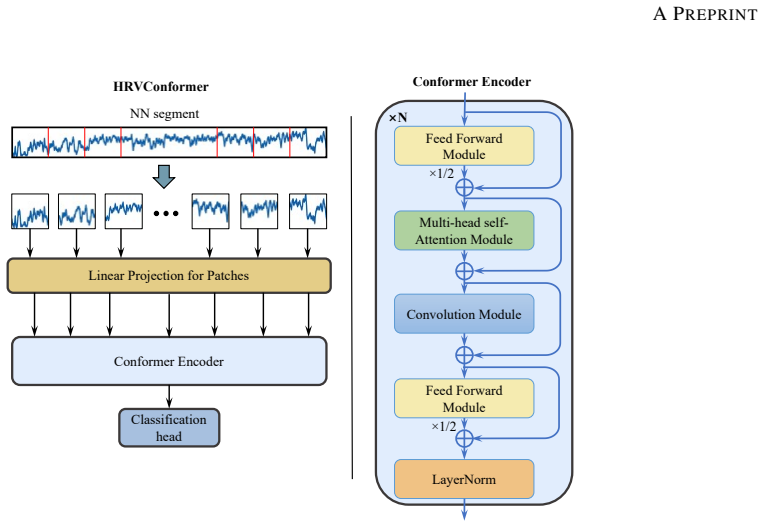
HRVConformer classifies neonatal HIE from raw heart rate signals by combining convolutions with transformer attention.
A machine-rendered reading of the paper's core claim, the machinery that carries it, and where it could break.
Core claim
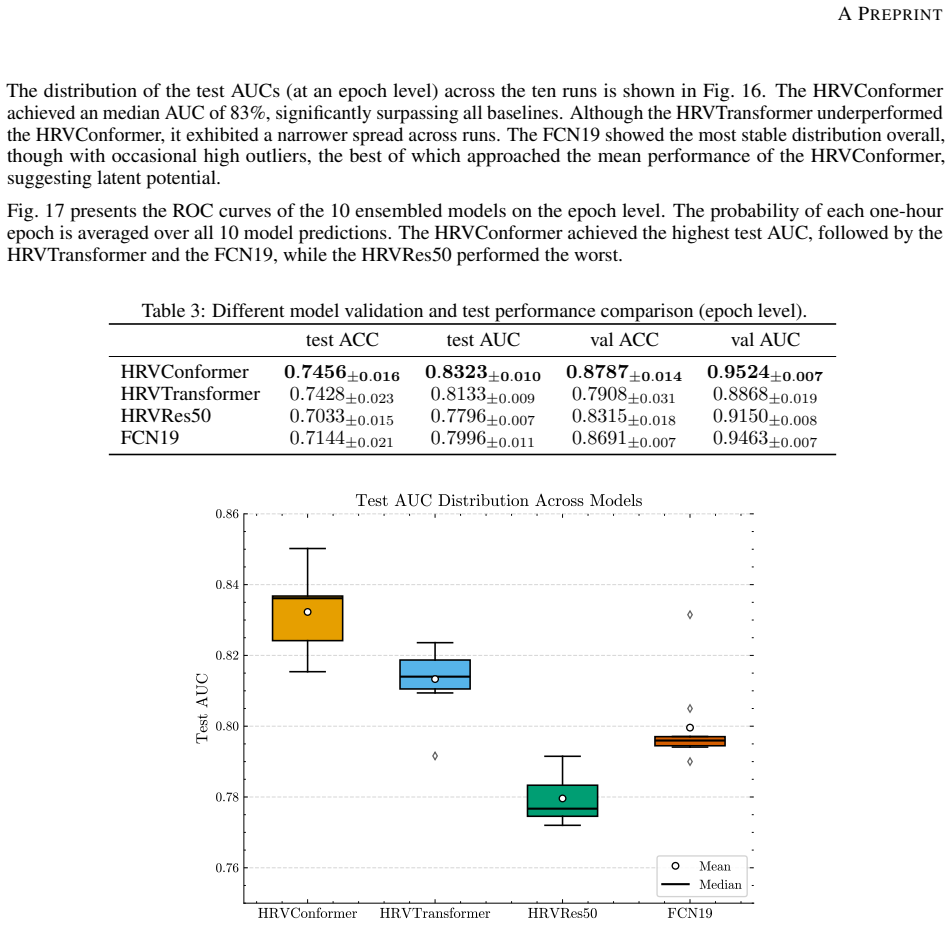
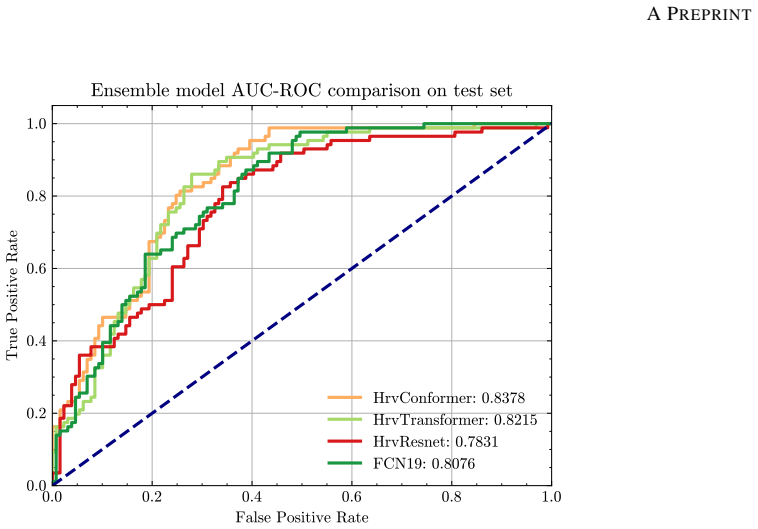
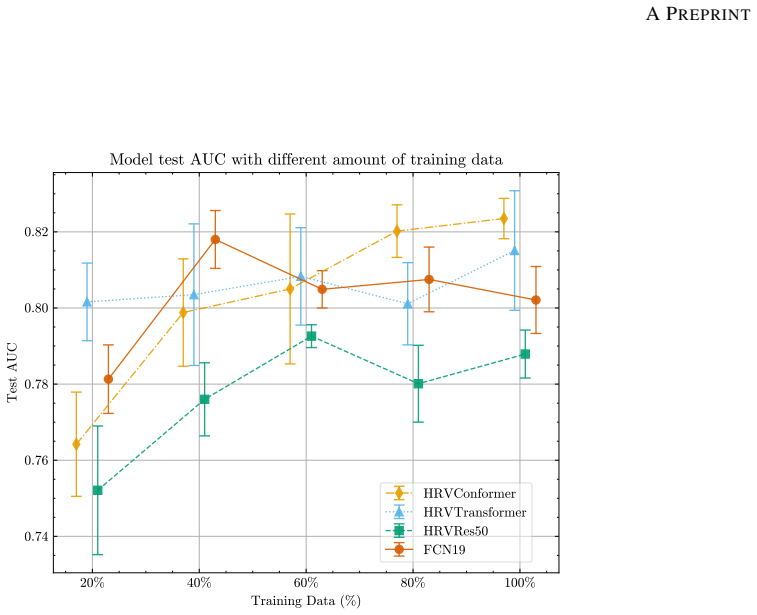
HRVConformer is a hybrid deep learning architecture that integrates convolutional layers and Transformer-based attention mechanisms to process raw instantaneous heart rate signals for the classification of hypoxic-ischemic encephalopathy. The model was trained on 1,573 one-hour epochs including 259 expert-annotated ones and weakly labelled data, with signals extracted via an improved Pan-Tompkins algorithm. It achieves an AUC of 83.23% and accuracy of 74.56% on an independent 215-hour expert-annotated test set, outperforming pure Transformer, ResNet50, and fully convolutional network models.
What carries the argument
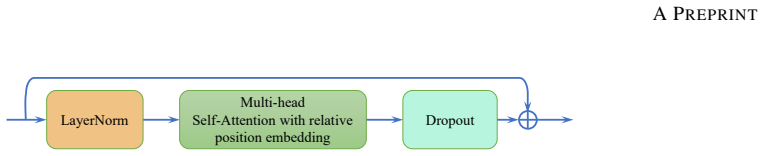
Hybrid Convolution-Transformer framework that extracts local features via convolutions and models global context via attention on raw HR signals.
If this is right
- The integration of convolutional and attention components improves signal representation for HIE classification.
- End-to-end processing of raw HR signals eliminates the need for manual feature engineering.
- Weakly labelled data can be leveraged to increase training scale while maintaining performance.
- Improved Pan-Tompkins algorithm increases usable data from ECG recordings.
Where Pith is reading between the lines
- The architecture might transfer to other time-series classification tasks in neonatal care.
- Performance gains could enable earlier intervention in HIE cases if deployed in real-time monitoring.
- Combining HR with other vital signs could further enhance diagnostic accuracy in future extensions.
Load-bearing premise
The expert annotations and weakly labelled data together with the improved signal extraction yield training examples whose quality is high enough for the reported accuracy to indicate genuine discriminative power rather than noise or extraction errors.
What would settle it
Evaluating the same architecture on a fresh test set where every label is confirmed by at least two independent experts and checking whether the AUC remains above 80 percent.
Figures
read the original abstract
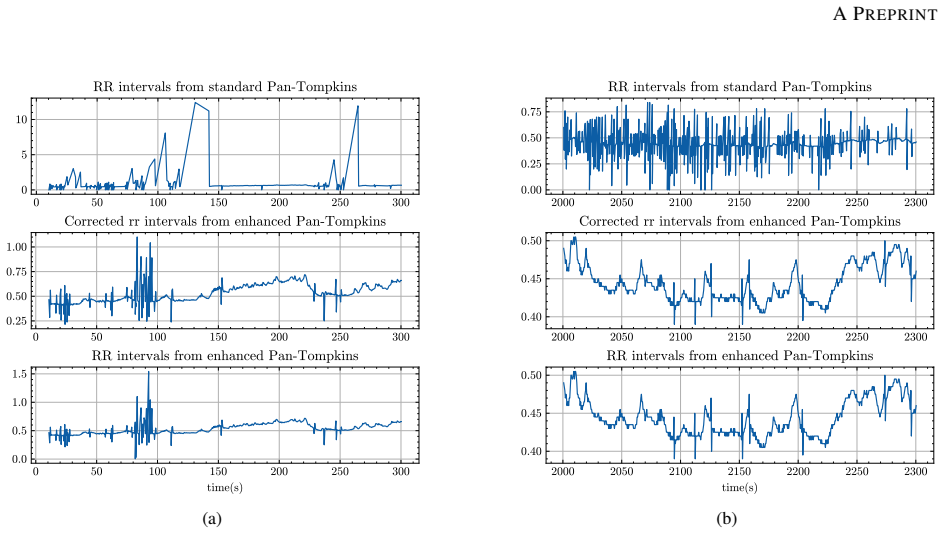
This paper presents the HRVConformer, a novel deep learning architecture for the classification of hypoxic-ischemic encephalopathy (HIE) using the instantaneous heart rate (HR) signal. Unlike conventional approaches that rely on handcrafted features, HRVConformer directly processes raw HR signals in an end-to-end manner, capturing both local and long-range dependencies through a hybrid Convolution-Transformer framework. By integrating convolutional layers for local feature extraction and Transformer-based attention mechanisms for global context modelling, the architecture effectively enhances signal representation and classification performance. The model was trained using supervised learning on a large HR dataset consisting of 1,573 one-hour epochs, including 259 one-hour expert-annotated epochs and a substantial set of weakly labelled data. A 314-hour validation set provided a robust performance estimation, while an independent 215-hour dataset with expert annotations was reserved for final testing. HR signals were extracted from electrocardiogram (ECG) recordings using an improved Pan-Tompkins algorithm, which significantly enhanced both signal quality and data availability. Experimental results demonstrate that the HRVConformer achieves an AUC of 83.23\% and accuracy of 74.56\% on the test set. These results surpass the performance of the Transformer, ResNet50 and fully convolutional networks baselines, highlighting the advantages of integrating convolutional and Transformer-based components for HR-based HIE classification. The proposed method provides a promising step toward a more accurate and automated assessment of HIE using HR signals. The code is available at: https://github.com/syu-kylin/HRVConformer.
Editorial analysis
A structured set of objections, weighed in public.
Referee Report
Summary. The manuscript introduces HRVConformer, a hybrid convolutional-Transformer model for end-to-end classification of neonatal hypoxic-ischemic encephalopathy (HIE) from instantaneous heart rate (HR) signals extracted via an improved Pan-Tompkins algorithm. It trains on 1,573 one-hour epochs (259 expert-annotated plus a substantial weakly labelled portion), uses a 314-hour validation set, and reports final test performance on an independent 215-hour expert-annotated set, achieving AUC 83.23% and accuracy 74.56% that surpass Transformer, ResNet50, and FCN baselines. Code is released at https://github.com/syu-kylin/HRVConformer.
Significance. If the performance claims hold under rigorous validation, the work could advance non-invasive, automated HIE assessment from routine ECG recordings without reliance on handcrafted HRV features. The hybrid architecture's ability to capture both local and long-range dependencies is a plausible technical contribution, and the public code release supports reproducibility.
major comments (3)
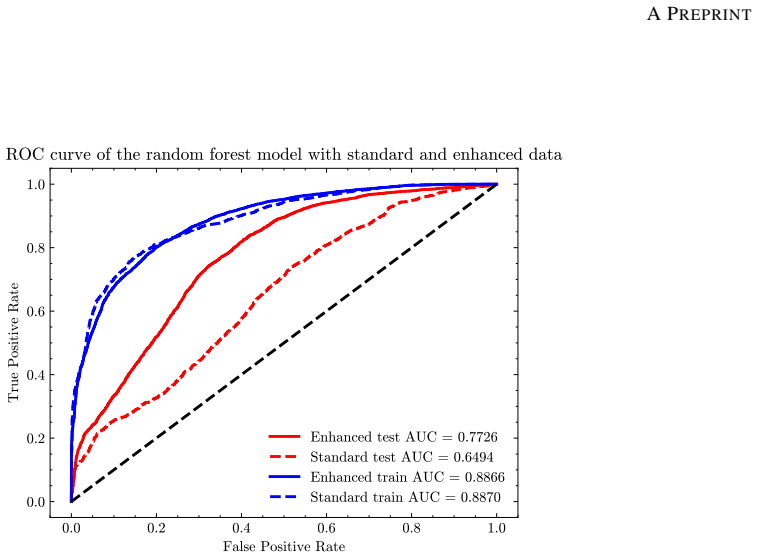
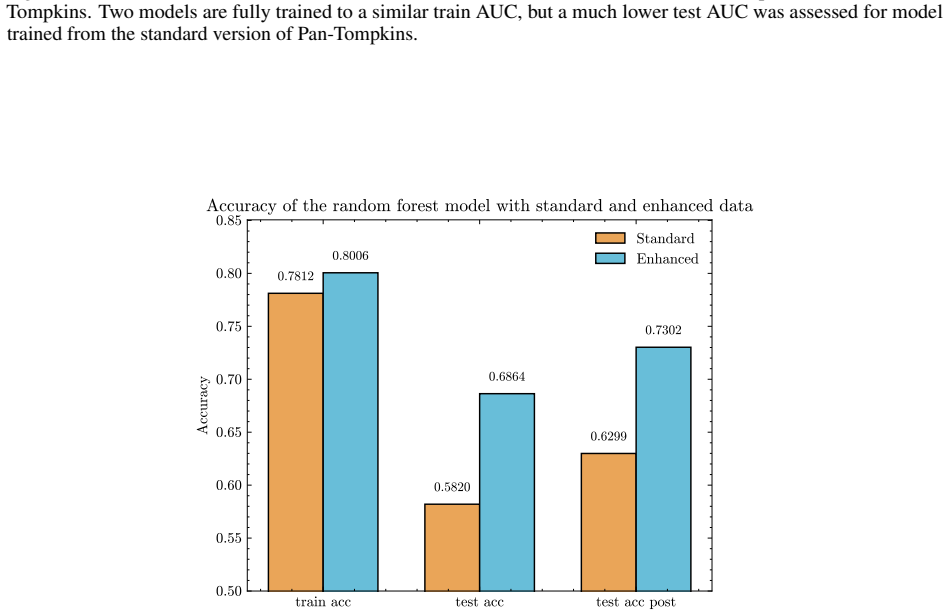
- [Methods / HR signal extraction] Methods (data preprocessing and HR extraction): The claim that the improved Pan-Tompkins algorithm 'significantly enhanced both signal quality and data availability' is load-bearing for the central performance result, yet no quantitative benchmark against the standard Pan-Tompkins algorithm or manual R-peak annotations on the same ECG recordings is provided. Because the 215-hour test set is processed through the identical extraction pipeline, it remains possible that the reported margin over baselines arises from consistent extraction artefacts rather than genuine HRV features.
- [Results / Experimental setup] Experimental results and training description: The abstract and results section report AUC 83.23% and accuracy 74.56% on the expert-annotated test set without any description of hyper-parameter search, class-imbalance handling, or statistical significance testing of the improvements over the three baselines. These omissions make it impossible to determine whether the superiority is robust or sensitive to modelling choices.
- [Dataset / Training procedure] Dataset construction: The training set combines 259 expert-annotated epochs with a 'substantial set of weakly labelled data,' but neither the provenance, estimated label accuracy, nor the contribution of the weakly labelled portion to the final test performance is quantified. This directly affects the weakest assumption that the reported numbers reflect true discriminative power rather than label noise patterns.
minor comments (1)
- [Abstract] The abstract states the test set comprises 215 hours but does not clarify whether this is the total duration or the number of one-hour epochs; consistent epoch-level reporting would improve clarity.
Simulated Author's Rebuttal
We thank the referee for the constructive comments. We address each major point below and commit to revisions that strengthen the manuscript.
read point-by-point responses
-
Referee: [Methods / HR signal extraction] Methods (data preprocessing and HR extraction): The claim that the improved Pan-Tompkins algorithm 'significantly enhanced both signal quality and data availability' is load-bearing for the central performance result, yet no quantitative benchmark against the standard Pan-Tompkins algorithm or manual R-peak annotations on the same ECG recordings is provided. Because the 215-hour test set is processed through the identical extraction pipeline, it remains possible that the reported margin over baselines arises from consistent extraction artefacts rather than genuine HRV features.
Authors: We agree that a quantitative benchmark is required to substantiate the claim and exclude extraction artefacts. In the revised manuscript we will add a comparison on the subset of recordings possessing manual R-peak annotations, reporting detection precision, recall, F1, and the resulting gain in usable epochs. We will also state explicitly that the same pipeline is applied to the test set and discuss why the observed performance differences are unlikely to stem solely from consistent artefacts. revision: yes
-
Referee: [Results / Experimental setup] Experimental results and training description: The abstract and results section report AUC 83.23% and accuracy 74.56% on the expert-annotated test set without any description of hyper-parameter search, class-imbalance handling, or statistical significance testing of the improvements over the three baselines. These omissions make it impossible to determine whether the superiority is robust or sensitive to modelling choices.
Authors: We acknowledge the omissions. The revision will document the hyper-parameter search procedure and ranges, the class-imbalance strategy (class-weighted loss), and statistical significance testing (DeLong test for AUC differences together with p-values). These additions will allow readers to assess robustness. revision: yes
-
Referee: [Dataset / Training procedure] Dataset construction: The training set combines 259 expert-annotated epochs with a 'substantial set of weakly labelled data,' but neither the provenance, estimated label accuracy, nor the contribution of the weakly labelled portion to the final test performance is quantified. This directly affects the weakest assumption that the reported numbers reflect true discriminative power rather than label noise patterns.
Authors: We will expand the dataset section to describe the provenance of the weakly labelled epochs and any available label-quality estimates derived from overlap with expert annotations. We will also report an ablation that trains the model on expert-annotated data only versus the full training set, thereby quantifying the weakly labelled data's contribution to test-set performance. revision: yes
Circularity Check
No circularity: empirical ML evaluation on held-out test data
full rationale
The paper reports standard supervised training of a hybrid CNN-Transformer model on a mix of expert-annotated and weakly labelled epochs, followed by evaluation on an independent expert-annotated test set. Performance (AUC, accuracy) is compared directly to external baselines (Transformer, ResNet50, FCN). No equations, first-principles derivations, uniqueness theorems, or parameter-fitting steps are present that could reduce a claimed result to its own inputs by construction. The weak-labelling strategy and Pan-Tompkins extraction are methodological choices whose validity is an external correctness question, not a circularity issue. The central claim therefore remains self-contained against external benchmarks.
Axiom & Free-Parameter Ledger
free parameters (1)
- model hyperparameters (learning rate, number of layers, attention heads, etc.)
axioms (2)
- domain assumption The instantaneous heart-rate signal extracted via the improved Pan-Tompkins algorithm contains discriminative information for HIE classification
- domain assumption Weakly labelled data can be combined with the 259 expert-annotated epochs without introducing systematic label noise that invalidates the test-set evaluation
Reference graph
Works this paper leans on
-
[1]
Defining the pathogenesis and pathophysiology of neonatal encephalopathy and cerebral palsy
G Hankins. Defining the pathogenesis and pathophysiology of neonatal encephalopathy and cerebral palsy. Obstetrics & Gynecology, 102(3):628–636, September 2003
2003
-
[2]
Kurinczuk, Melanie White-Koning, and Nadia Badawi
Jennifer J. Kurinczuk, Melanie White-Koning, and Nadia Badawi. Epidemiology of neonatal encephalopathy and hypoxic–ischaemic encephalopathy.Early Human Development, 86(6):329–338, June 2010
2010
-
[3]
Allen and Debra H
Kimberly A. Allen and Debra H. Brandon. Hypoxic Ischemic Encephalopathy: Pathophysiology and Experimental Treatments.Newborn and Infant Nursing Reviews, 11(3):125–133, September 2011
2011
-
[4]
Lawn, Anne CC Lee, Mary Kinney, Lynn Sibley, Wally A
Joy E. Lawn, Anne CC Lee, Mary Kinney, Lynn Sibley, Wally A. Carlo, Vinod K. Paul, Robert Pattinson, and Gary L. Darmstadt. Two million intrapartum-related stillbirths and neonatal deaths: Where, why, and what can be done?International Journal of Gynecology & Obstetrics, 107(Supplement):S5–S19, 2009. 20 A PREPRINT
2009
-
[5]
Hypothermia and neonatal encephalopathy.Pediatrics, 133(6):1146–1150, 2014
Committee on Fetus and Newborn. Hypothermia and neonatal encephalopathy.Pediatrics, 133(6):1146–1150, 2014
2014
-
[6]
O’Toole, Aisling A
Minoo Ashoori, John M. O’Toole, Aisling A. Garvey, Ken D. O’Halloran, Brian Walsh, Michael Moore, An- dreea M. Pavel, Geraldine B. Boylan, Deirdre M. Murray, Eugene M. Dempsey, and Fiona B. McDonald. Machine learning models of cerebral oxygenation (rcSO2) for brain injury detection in neonates with hypoxic-ischaemic encephalopathy.The Journal of Physiolog...
2024
-
[7]
Pola Kosteczko, Patrycja Maria Pelczar, Magdalena Kosanowska, Klaudia Ko´sla, and Adrianna Wieleba. Thera- peutic hypothermia as a form of neonatal hypoxic-ischemic encephalopathy neuroprotection and novel therapeutic options.Journal of Pre-Clinical and Clinical Research, September 2025
2025
-
[8]
Vergales, Santina A
Brooke D. Vergales, Santina A. Zanelli, Julie A. Matsumoto, Howard P. Goodkin, Douglas E. Lake, J. Randall Moorman, and Karen D. Fairchild. Depressed Heart Rate Variability is Associated with Abnormal EEG, MRI, and Death in Neonates with Hypoxic Ischemic Encephalopathy.American journal of perinatology, 31(10):855–862, November 2014
2014
-
[9]
Heart rate characteristics and neurode- velopmental outcome in very low birth weight infants.Journal of Perinatology, 29(11):750–756, November 2009
K Addison, M P Griffin, J R Moorman, D E Lake, and T M O’Shea. Heart rate characteristics and neurode- velopmental outcome in very low birth weight infants.Journal of Perinatology, 29(11):750–756, November 2009
2009
-
[10]
Mads Andersen, Ted C. K. Andelius, Mette V . Pedersen, Kasper J. Kyng, and Tine B. Henriksen. Severity of hypoxic ischemic encephalopathy and heart rate variability in neonates: A systematic review.BMC Pediatrics, 19(1):242, December 2019
2019
-
[11]
Goulding, Nathan J
Robert M. Goulding, Nathan J. Stevenson, Deirdre M. Murray, Vicki Livingstone, Peter M. Filan, and Geraldine B. Boylan. Heart rate variability in hypoxic ischemic encephalopathy during therapeutic hypothermia.Pediatric Research, 81(4):609–615, April 2017
2017
-
[12]
Iliana Bersani, Fiammetta Piersigilli, Diego Gazzolo, Francesca Campi, Immacolata Savarese, Andrea Dotta, Pietro Paolo Tamborrino, Cinzia Auriti, and Corrado Di Mambro. Heart rate variability as possible marker of brain damage in neonates with hypoxic ischemic encephalopathy: A systematic review.European Journal of Pediatrics, 180(5):1335–1345, May 2021
2021
-
[13]
Massaro, Heather E
An N. Massaro, Heather E. Campbell, Marina Metzler, Tareq Al-Shargabi, Yunfei Wang, Adre du Plessis, and R.B. Govindan. Effect of temperature on heart rate variability in neonatal intensive care unit patients with hypoxic ischemic encephalopathy.Pediatric critical care medicine : a journal of the Society of Critical Care Medicine and the World Federation ...
2017
-
[14]
A Systematic Review of EEG and MRI Features for Predicting Long-Term Neurological Outcomes in Cooled Neonates With Hypoxic-Ischemic Encephalopathy (HIE).Cureus, October 2024
Sylvia Edoigiawerie, Julia Henry, Naoum Issa, and Henry David. A Systematic Review of EEG and MRI Features for Predicting Long-Term Neurological Outcomes in Cooled Neonates With Hypoxic-Ischemic Encephalopathy (HIE).Cureus, October 2024
2024
-
[15]
M. A. Z. Fariha, R. Ikeura, S. Hayakawa, and S. Tsutsumi. Analysis of Pan-Tompkins Algorithm Performance with Noisy ECG Signals.Journal of Physics: Conference Series, 1532(1):012022, June 2020
2020
-
[16]
Pan-Tompkins++: A Robust Approach to Detect R-peaks in ECG Signals
Md Niaz Imtiaz and Naimul Khan. Pan-Tompkins++: A Robust Approach to Detect R-peaks in ECG Signals. In 2022 IEEE International Conference on Bioinformatics and Biomedicine (BIBM), pages 2905–2912, December 2022
2022
-
[17]
Hamilton and Willis J
Patrick S. Hamilton and Willis J. Tompkins. Quantitative Investigation of QRS Detection Rules Using the MIT/BIH Arrhythmia Database.IEEE Transactions on Biomedical Engineering, BME-33(12):1157–1165, December 1986
1986
-
[18]
Cardiac Disease Detection Using Modified Pan-Tompkins Algorithm.Journal of Sensor Science and Technology, 28(1):13–16, January 2019
Amrita Rana and Kyung Ki Kim. Cardiac Disease Detection Using Modified Pan-Tompkins Algorithm.Journal of Sensor Science and Technology, 28(1):13–16, January 2019
2019
-
[19]
Peak Detection and HRV Feature Evaluation on ECG and PPG Signals.Symmetry, 14(6):1139, 2022
Filipa Esgalhado, Arnaldo Batista, Valentina Vassilenko, Sara Russo, and Manuel Ortigueira. Peak Detection and HRV Feature Evaluation on ECG and PPG Signals.Symmetry, 14(6):1139, 2022
2022
-
[20]
Sahambi, S.N
J.S. Sahambi, S.N. Tandon, and R.K.P. Bhatt. A new approach for on-line ECG characterization. InProceedings of the 1996 Fifteenth Southern Biomedical Engineering Conference, pages 409–411, March 1996
1996
-
[21]
Study of HRV Dynamics and Comparison Using Wavelet Analysis and Pan Tompkins Algorithm
Yamini Goyal and Anshul Jain. Study of HRV Dynamics and Comparison Using Wavelet Analysis and Pan Tompkins Algorithm. In2012 ASE/IEEE International Conference on BioMedical Computing (BioMedCom), pages 43–49, December 2012
2012
-
[22]
Desh Deepak Gautam, V . K. Giri, and K. G. Upadhyay. Feature extraction of HRV signal using wavelet transform. In2017 2nd International Conference for Convergence in Technology (I2CT), pages 1030–1034, April 2017
2017
-
[23]
Verma, S
A. Verma, S. Cabrera, A. Mayorga, and H. Nazeran. A Robust Algorithm for Derivation of Heart Rate Variability Spectra from ECG and PPG Signals. In2013 29th Southern Biomedical Engineering Conference, pages 35–36, Miami, FL, May 2013. IEEE. 21 A PREPRINT
2013
-
[24]
Application of the phasor transform for automatic delineation of single-lead ECG fiducial points.Physiological Measurement, 31(11):1467–1485, November 2010
Arturo Martínez, Raúl Alcaraz, and José Joaquín Rieta. Application of the phasor transform for automatic delineation of single-lead ECG fiducial points.Physiological Measurement, 31(11):1467–1485, November 2010
2010
-
[25]
Pavel, Sean R
Andreea M. Pavel, Sean R. Mathieson, Vicki Livingstone, John M. O’Toole, Ronit M. Pressler, Linda S. de Vries, Janet M. Rennie, Subhabrata Mitra, Eugene M. Dempsey, Deirdre M. Murray, William P. Marnane, Geraldine B. Boylan, and AnseR Consortium. Heart rate variability analysis for the prediction of EEG grade in infants with hypoxic ischaemic encephalopat...
2023
-
[26]
Pattern of brain injury and depressed heart rate variability in newborns with hypoxic ischemic encephalopathy.Pediatric Research, 82(3):438–443, September 2017
Marina Metzler, Rathinaswamy Govindan, Tareq Al-Shargabi, Gilbert Vezina, Nickie Andescavage, Yunfei Wang, Adre Du Plessis, and An N Massaro. Pattern of brain injury and depressed heart rate variability in newborns with hypoxic ischemic encephalopathy.Pediatric Research, 82(3):438–443, September 2017
2017
-
[27]
Ersin Ersoy and Mahmut Hekim. Feature Extraction Based on Pan Tompkins Algorithm from ECG Signals and Diagnosis of Arrhythmia Using Multilayer Perceptron Neural Network.Journal of New Results in Science, 5, November 2016
2016
-
[28]
Detection of Potential Hypertension with Pan Tompkins Extraction and Naive Bayes Classifier Methods
Mardi Turnip, Abdi Dharma, Siti Aisyah, Delima Sitanggang, Yennimar, Mohammad Taufik, Dhanny Rukmana Manday, and Arjon Turnip. Detection of Potential Hypertension with Pan Tompkins Extraction and Naive Bayes Classifier Methods. In2024 IEEE International Conference on Artificial Intelligence and Mechatronics Systems (AIMS), pages 1–7, February 2024
2024
-
[29]
Oksana Semenova, Giorgia Carra, Gordon Lightbody, Geraldine Boylan, Eugene Dempsey, and Andriy Temko. Prediction of short-term health outcomes in preterm neonates from heart-rate variability and blood pressure using boosted decision trees.Computer Methods and Programs in Biomedicine, 180:104996, October 2019
2019
-
[30]
Daphna Yasova Barbeau, Charlene Krueger, Melissa Huene, Nicole Copenhaver, Jeffrey Bennett, Michael Weaver, and Michael D. Weiss. Heart rate variability and inflammatory markers in neonates with hypoxic-ischemic encephalopathy.Physiological Reports, 7(15):e14110, 2019
2019
-
[31]
Inflammatory cytokine response and reduced heart rate variability in newborns with hypoxic-ischemic encephalopathy.Journal of Perinatology, 37(6):668–672, June 2017
T Al-Shargabi, R B Govindan, R Dave, M Metzler, Y Wang, A Du Plessis, and A N Massaro. Inflammatory cytokine response and reduced heart rate variability in newborns with hypoxic-ischemic encephalopathy.Journal of Perinatology, 37(6):668–672, June 2017
2017
-
[32]
ECG Stress Detection Model Based on Heart Rate Variability Feature Extraction
Ling Wang, Jiayu Hao, Tie Hua Zhou, and Fangjie Song. ECG Stress Detection Model Based on Heart Rate Variability Feature Extraction. InProceedings of the 2023 7th International Conference on High Performance Compilation, Computing and Communications, pages 184–188, Jinan China, June 2023. ACM
2023
-
[33]
Sharan, Shlomo Berkovsky, Hao Xiong, and Enrico Coiera
Roneel V . Sharan, Shlomo Berkovsky, Hao Xiong, and Enrico Coiera. ECG-Derived Heart Rate Variability Inter- polation and 1-D Convolutional Neural Networks for Detecting Sleep Apnea. In2020 42nd Annual International Conference of the IEEE Engineering in Medicine & Biology Society (EMBC), pages 637–640, July 2020
2020
-
[34]
Goulding, Nathan J
Robert M. Goulding, Nathan J. Stevenson, Deirdre M. Murray, Vicki Livingstone, Peter M. Filan, and Geraldine B. Boylan. Heart rate variability in hypoxic ischemic encephalopathy: Correlation with EEG grade and 2-y neurodevelopmental outcome.Pediatric Research, 77(5):681–687, May 2015
2015
-
[35]
Heart Rate Variability in Neonates with Hypoxic Ischemic Encephalopathy.The Indian Journal of Pediatrics, 79(11):1468– 1472, November 2012
Didem Aliefendio˘glu, Tolga Do˘gru, Meryem Albayrak, Emine DibekMısırlıo˘glu, and Cihat ¸ Sanlı. Heart Rate Variability in Neonates with Hypoxic Ischemic Encephalopathy.The Indian Journal of Pediatrics, 79(11):1468– 1472, November 2012
2012
-
[36]
RRWaveNet: A Compact End-to-End Multiscale Residual CNN for Robust PPG Respiratory Rate Estimation.IEEE Internet of Things Journal, 10(18):15943–15952, September 2023
Pongpanut Osathitporn, Guntitat Sawadwuthikul, Punnawish Thuwajit, Kawisara Ueafuea, Thee Mateepithak- tham, Narin Kunaseth, Tanut Choksatchawathi, Proadpran Punyabukkana, Emmanuel Mignot, and Theerawit Wilaiprasitporn. RRWaveNet: A Compact End-to-End Multiscale Residual CNN for Robust PPG Respiratory Rate Estimation.IEEE Internet of Things Journal, 10(18...
2023
-
[37]
Rencheng Song, Senle Zhang, Chang Li, Yunfei Zhang, Juan Cheng, and Xun Chen. Heart Rate Estimation From Facial Videos Using a Spatiotemporal Representation With Convolutional Neural Networks.IEEE Transactions on Instrumentation and Measurement, 69(10):7411–7421, October 2020
2020
-
[38]
Jay Karhade, Shaswati Dash, Samit Kumar Ghosh, Dinesh Kumar Dash, and Rajesh Kumar Tripathy. Time– Frequency-Domain Deep Learning Framework for the Automated Detection of Heart Valve Disorders Using PCG Signals.IEEE Transactions on Instrumentation and Measurement, 71:1–11, 2022
2022
-
[39]
Ramalakshmi, Neha Garg, Manzoore Elahi M
V . Ramalakshmi, Neha Garg, Manzoore Elahi M. Soudagar, Daxa Vekariya, Harshal Patil, and Arun Shalin L V . Developing Deep Learning Model for Abnormal Heartbeat Detection in Electrocardiography Signals. In2024 2nd International Conference on Intelligent Data Communication Technologies and Internet of Things (IDCIoT), pages 315–320, January 2024
2024
-
[40]
Deep residual learning for image recognition
Kaiming He, Xiangyu Zhang, Shaoqing Ren, and Jian Sun. Deep residual learning for image recognition. In Proceedings of the IEEE conference on computer vision and pattern recognition, pages 770–778, 2016. 22 A PREPRINT
2016
-
[41]
Imagenet classification with deep convolutional neural networks.Advances in neural information processing systems, 25, 2012
Alex Krizhevsky, Ilya Sutskever, and Geoffrey E Hinton. Imagenet classification with deep convolutional neural networks.Advances in neural information processing systems, 25, 2012
2012
-
[42]
An Image is Worth 16x16 Words: Transformers for Image Recognition at Scale, June 2021
Alexey Dosovitskiy, Lucas Beyer, Alexander Kolesnikov, Dirk Weissenborn, Xiaohua Zhai, Thomas Unterthiner, Mostafa Dehghani, Matthias Minderer, Georg Heigold, Sylvain Gelly, Jakob Uszkoreit, and Neil Houlsby. An Image is Worth 16x16 Words: Transformers for Image Recognition at Scale, June 2021
2021
-
[43]
Medformer: A multi-granularity patching transformer for medical time-series classification.Advances in Neural Information Processing Systems, 37:36314– 36341, 2024
Yihe Wang, Nan Huang, Taida Li, Yujun Yan, and Xiang Zhang. Medformer: A multi-granularity patching transformer for medical time-series classification.Advances in Neural Information Processing Systems, 37:36314– 36341, 2024
2024
-
[44]
Coyle, and Ervin Sejdic
Ayman Anwar, Yassin Khalifa, James L. Coyle, and Ervin Sejdic. Transformers in biosignal analysis: A review. Information Fusion, 114:102697, February 2025
2025
-
[45]
Conformer: Local Features Coupling Global Representations for Visual Recognition
Zhiliang Peng, Wei Huang, Shanzhi Gu, Lingxi Xie, Yaowei Wang, Jianbin Jiao, and Qixiang Ye. Conformer: Local Features Coupling Global Representations for Visual Recognition. In2021 IEEE/CVF International Conference on Computer Vision (ICCV), pages 357–366, Montreal, QC, Canada, October 2021. IEEE
2021
-
[46]
Uformer: A Unet Based Dilated Complex & Real Dual-Path Conformer Network for Simultaneous Speech Enhancement and Dereverberation
Yihui Fu, Yun Liu, Jingdong Li, Dawei Luo, Shubo Lv, Yukai Jv, and Lei Xie. Uformer: A Unet Based Dilated Complex & Real Dual-Path Conformer Network for Simultaneous Speech Enhancement and Dereverberation. InICASSP 2022 - 2022 IEEE International Conference on Acoustics, Speech and Signal Processing (ICASSP), pages 7417–7421, May 2022
2022
-
[47]
EEG Conformer: Convolutional Transformer for EEG Decoding and Visualization.IEEE Transactions on Neural Systems and Rehabilitation Engineering, 31:710–719, 2023
Yonghao Song, Qingqing Zheng, Bingchuan Liu, and Xiaorong Gao. EEG Conformer: Convolutional Transformer for EEG Decoding and Visualization.IEEE Transactions on Neural Systems and Rehabilitation Engineering, 31:710–719, 2023
2023
-
[48]
CNN-Informer: A hybrid deep learning model for seizure detection on long-term EEG.Neural Networks, 181:106855, January 2025
Chuanyu Li, Haotian Li, Xingchen Dong, Xiangwen Zhong, Haozhou Cui, Dezan Ji, Landi He, Guoyang Liu, and Weidong Zhou. CNN-Informer: A hybrid deep learning model for seizure detection on long-term EEG.Neural Networks, 181:106855, January 2025
2025
-
[49]
Conformer: Convolution-augmented Transformer for Speech Recognition, May 2020
Anmol Gulati, James Qin, Chung-Cheng Chiu, Niki Parmar, Yu Zhang, Jiahui Yu, Wei Han, Shibo Wang, Zhengdong Zhang, Yonghui Wu, and Ruoming Pang. Conformer: Convolution-augmented Transformer for Speech Recognition, May 2020
2020
-
[50]
Fast Conformer With Linearly Scalable Attention For Efficient Speech Recognition
Dima Rekesh, Nithin Rao Koluguri, Samuel Kriman, Somshubra Majumdar, Vahid Noroozi, He Huang, Oleksii Hrinchuk, Krishna Puvvada, Ankur Kumar, Jagadeesh Balam, and Boris Ginsburg. Fast Conformer With Linearly Scalable Attention For Efficient Speech Recognition. In2023 IEEE Automatic Speech Recognition and Understanding Workshop (ASRU), pages 1–8, December 2023
2023
-
[51]
SE-Conformer: Time-Domain Speech Enhancement Using Conformer
Eesung Kim and Hyeji Seo. SE-Conformer: Time-Domain Speech Enhancement Using Conformer. InInterspeech 2021, pages 2736–2740. ISCA, August 2021
2021
-
[52]
Janet M Rennie, Linda S De Vries, Mats Blennow, Adrienne Foran, Divyen K Shah, Vicki Livingstone, Alexander C Van Huffelen, Sean R Mathieson, Elena Pavlidis, Lauren C Weeke, Mona C Toet, Mikael Finder, Raga Mallika Pinnamaneni, Deirdre M Murray, Anthony C Ryan, William P Marnane, and Geraldine B Boylan. Characterisation of neonatal seizures and their trea...
2019
-
[53]
A machine-learning algorithm for neonatal seizure recognition: A multicentre, randomised, controlled trial.The Lancet Child & Adolescent Health, 4(10):740–749, October 2020
Andreea M Pavel, Janet M Rennie, Linda S De Vries, Mats Blennow, Adrienne Foran, Divyen K Shah, Ronit M Pressler, Olga Kapellou, Eugene M Dempsey, Sean R Mathieson, Elena Pavlidis, Alexander C Van Huffelen, Vicki Livingstone, Mona C Toet, Lauren C Weeke, Mikael Finder, Subhabrata Mitra, Deirdre M Murray, William P Marnane, and Geraldine B Boylan. A machin...
2020
-
[54]
Murray, Geraldine B
Deirdre M. Murray, Geraldine B. Boylan, Cornelius A. Ryan, and Sean Connolly. Early EEG Findings in Hypoxic-Ischemic Encephalopathy Predict Outcomes at 2 Years.Pediatrics, 124(3):e459–e467, September 2009
2009
-
[55]
Tompkins
Jiapu Pan and Willis J. Tompkins. A Real-Time QRS Detection Algorithm.IEEE Transactions on Biomedical Engineering, BME-32(3):230–236, March 1985
1985
-
[56]
Méndez Penín, and X
Raúl Alonso Álvarez, Arturo J. Méndez Penín, and X. Antón Vila Sobrino. A Comparison of Three QRS Detection Algorithms Over a Public Database.Procedia Technology, 9:1159–1165, 2013
2013
-
[57]
An open source benchmarked toolbox for cardiovascular waveform and interval analysis.Physiological Measurement, 39(10):105004, October 2018
Adriana N Vest, Giulia Da Poian, Qiao Li, Chengyu Liu, Shamim Nemati, Amit J Shah, and Gari D Clifford. An open source benchmarked toolbox for cardiovascular waveform and interval analysis.Physiological Measurement, 39(10):105004, October 2018
2018
-
[58]
An overview of heart rate variability metrics and norms.Frontiers in public health, 5:258, 2017
Fred Shaffer and Jay P Ginsberg. An overview of heart rate variability metrics and norms.Frontiers in public health, 5:258, 2017. 23 A PREPRINT
2017
-
[59]
Short-term heart rate variability—influence of gender and age in healthy subjects.PloS one, 10(3):e0118308, 2015
Andreas V oss, Rico Schroeder, Andreas Heitmann, Annette Peters, and Siegfried Perz. Short-term heart rate variability—influence of gender and age in healthy subjects.PloS one, 10(3):e0118308, 2015
2015
-
[60]
Heart rate variability as a marker and predictor of inflammation, nosocomial infection, and sepsis–a systematic review.Autonomic Neuroscience, 249:103116, 2023
Josephine Adam, Sven Rupprecht, Erika CS Künstler, and Dirk Hoyer. Heart rate variability as a marker and predictor of inflammation, nosocomial infection, and sepsis–a systematic review.Autonomic Neuroscience, 249:103116, 2023
2023
-
[61]
Transformer-XL: Attentive Language Models beyond a Fixed-Length Context
Zihang Dai, Zhilin Yang, Yiming Yang, Jaime Carbonell, Quoc Le, and Ruslan Salakhutdinov. Transformer-XL: Attentive Language Models beyond a Fixed-Length Context. InProceedings of the 57th Annual Meeting of the Association for Computational Linguistics, pages 2978–2988, Florence, Italy, 2019. Association for Computational Linguistics
2019
-
[62]
Rezaei, K
K. Rezaei, K. Yu, S. R. Mathieson, A. Flynn, G. Lightbody, G.B. Boylan, and W. P. Marnane. Assessing the Effectiveness of Heart Rate Variability as A Diagnostic Tool for Brain Injuries in Infants. In2024 46th Annual International Conference of the IEEE Engineering in Medicine and Biology Society (EMBC), pages 1–4, July 2024
2024
-
[63]
Neonatal hypoxic-ischemic encephalopathy grading from multi-channel eeg time-series data using a fully convolutional neural network
Shuwen Yu, William P Marnane, Geraldine B Boylan, and Gordon Lightbody. Neonatal hypoxic-ischemic encephalopathy grading from multi-channel eeg time-series data using a fully convolutional neural network. Technologies, 11(6):151, 2023
2023
-
[64]
Quantifying attention flow in transformers.arXiv preprint arXiv:2005.00928, 2020
Samira Abnar and Willem Zuidema. Quantifying attention flow in transformers.arXiv preprint arXiv:2005.00928, 2020
-
[65]
Active visual exploration based on attention-map entropy.arXiv preprint arXiv:2303.06457, 2023
Adam Pardyl, Grzegorz Rype´s´c, Grzegorz Kurzejamski, Bartosz Zieli´nski, and Tomasz Trzci´nski. Active visual exploration based on attention-map entropy.arXiv preprint arXiv:2303.06457, 2023
-
[66]
Exploiting information redundancy in attention maps for extreme quantization of vision transformers
Lucas Maisonnave, Karim Haroun, and Tom Pégeot. Exploiting information redundancy in attention maps for extreme quantization of vision transformers. InProceedings of the IEEE/CVF International Conference on Computer Vision, pages 4033–4041, 2025
2025
-
[67]
Miguel, Leandro A
Pedro L. Miguel, Leandro A. Neves, Alessandra Lumini, Giuliano C. Medalha, Guilherme F. Roberto, Guilherme B. Rozendo, Adriano M. Cansian, Thaína A. A. Tosta, and Marcelo Z. do Nascimento. Entropy-Regularized Attention for Explainable Histological Classification with Convolutional and Hybrid Models.Entropy, 27(7):722, July 2025
2025
-
[68]
Entropy-guided attention for private llms.arXiv preprint arXiv:2501.03489, 2025
Nandan Kumar Jha and Brandon Reagen. Entropy-guided attention for private llms.arXiv preprint arXiv:2501.03489, 2025. 24
discussion (0)
Sign in with ORCID, Apple, or X to comment. Anyone can read and Pith papers without signing in.