REVIEW 3 major objections 5 minor 47 references
Transformer-Based Spatial-Temporal Counterfactual Outcomes Estimation
T0 review · 3 major / 5 minor · reviewed 2026-08-06 · deepseek-v4-flash
Pith's one-line read A Transformer-based IPW estimator is claimed to give consistent, asymptotically normal counterfactual outcomes for spatial-temporal point patterns.
desk verdict A well-written deep-learning IPW estimator for spatio-temporal counterfactual outcomes whose headline theory does not match the implemented method: the count-based propensity score is not the full-pattern score analyzed, and the martingale proof has a measurability gap. read the letter →
The pith
A machine-rendered reading of the paper's core claim, the machinery that carries it, and where it could break.
The reading
What carries the argument
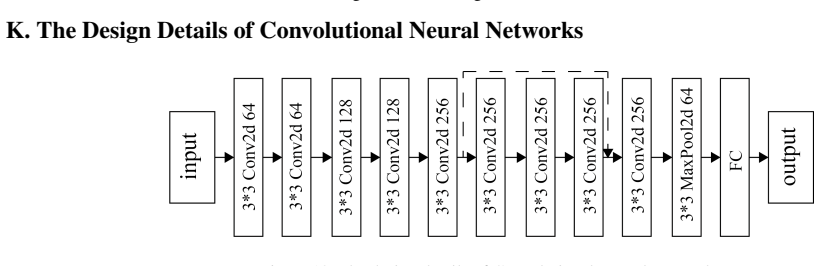
The load-bearing object is the IPW estimator $\hat{N}_t^\omega(F_H)=\int_\omega \hat{Y}_t(F_H,s)\,ds$ with $\hat{Y}_t(F_H,s)=\prod_{j=t-M+1}^t \frac{p_{h_j}(z_j)}{e_j(z_j)}\,\lambda_{Y_t^{ob}(z_{\le t})}(s)$, where the product reweights observed outcome intensity by the ratio of counterfactual to observed treatment probabilities. Its two supporting mechanisms are the dimension-reduction map $R(Z_t)=|\{s:Z_t(s)=1\}|$, which turns a high-dimensional treatment pattern into a Poisson count for both propensity and counterfactual probabilities, and a Transformer network that estimates the outcome intensity by maximizing the Poisson point-process likelihood with a KL regularization term. The proof of Proposition 3 decomposes estimation error into a martingale difference series, which obeys a central limit theorem, and a smoothing error, which is assumed to vanish faster than $1/\sqrt{T}$.
What would settle it
Simulate outcomes whose intensity at each location depends on distances to treated locations, vary only the spatial arrangement of treated points while fixing their total number, and check whether the count-based estimator's bias moves with that arrangement.
Extended reading notes
Core claim
On the paper's own terms, the central discovery is that the spatial-temporal potential-outcomes framework can be realized by an inverse-probability-weighting estimator in which both unknown ingredients are learned: the propensity score is obtained from a CNN together with a Poisson count reduction of the high-dimensional treatment pattern, and the outcome intensity is obtained from a Transformer-based neural point process. Under unconfoundedness, overlap, boundedness, and Poisson assumptions, the paper proves that the mean counterfactual outcome estimator is consistent and asymptotically normal by splitting the error into a treatment-assignment martingale difference term and a neural-network smoothing term that is assumed to vanish. Simulation experiments are offered as evidence that this estimator has lower relative error than MSMs, RMSNs, Causal Forest, and linear regression baselines, and a real-data experiment estimates the causal effect of conflict on forest loss in Colombia.
Load-bearing premise
The load-bearing premise is that replacing a whole spatial treatment pattern by the single count of treated locations preserves everything the counterfactual estimator needs, even though the consistency proof concerns the full-pattern propensity score rather than the count-based score actually implemented.
Editorial extensions
If this is right
- Because the estimator is asymptotically normal, confidence intervals can in principle be attached to counterfactual outcome estimates under the stated assumptions.
- The time-varying intervention distributions allow counterfactual questions about treatment strategies that never appear in the observed data, including strategies with multi-period carryover effects.
- The CNN propensity module makes high-dimensional point-pattern treatments tractable, so spatial-temporal counterfactual estimation no longer relies on scalar summaries or hand-specified kernels.
- The real-data conclusion implies that longer and more intense conflict in Colombia leads to more forest loss, matching the direction of prior findings in the environmental-conflict literature.
Reading between the lines
- We infer that the framework is most vulnerable when outcomes depend on the spatial layout of treated locations rather than only on their number; a natural test is to compare the count-based weights against full-pattern weights on small spatial grids where full-pattern propensity scores are computable.
- We infer that replacing the Poisson count summary with richer spatial summaries, such as nearest-neighbor distances or point-pattern embeddings, would let the same IPW-plus-Transformer architecture extend to repulsive or clustered treatment processes.
- We infer that the Colombia application could be stress-tested by varying the intervention horizon M and the intensity constant c across years or subregions to see whether the monotone forest-loss response is stable rather than an artifact of the chosen counterfactual strategy.
Editorial analysis
A structured set of objections, weighed in public.
Referee Report
Summary. The paper proposes a deep-learning framework for estimating counterfactual outcomes from spatial-temporal point-pattern data, extending the IPW approach of Papadogeorgou et al. (2022). The treatment propensity score is computed via a CNN after reducing the treatment pattern to its count R(Z_t), the counterfactual treatment probability is computed from a Poisson model on that count, and the outcome intensity is estimated with a Transformer-based neural network trained with a Poisson-process likelihood. The authors claim that, under mild assumptions, the resulting estimator is consistent and asymptotically normal, and they support this with synthetic experiments and a real-data study of conflict effects on forest loss in Colombia. The paper includes proofs of identifiability and of the asymptotic result in appendices, together with a reproducibility statement and public code.
Significance. If the central claims were correct, the paper would contribute a practical deep-learning extension of spatial-temporal causal inference, addressing high-dimensional treatment patterns that classical methods handle poorly. The work is ambitious in combining CNNs, Transformers, and IPW in a point-process setting, and it ships code and a real-data analysis with a clear policy-relevant question. However, the significance is substantially undercut by the fact that the estimator implemented and evaluated in Section 5 is not the estimator for which the theoretical results are proved, and by the presence of an assumption that effectively postulates the convergence rate the theorem claims to derive. The paper's empirical claims are therefore not backed by a valid statistical justification, and the core theoretical contribution, as stated, does not apply to the proposed method.
major comments (3)
- [Section 4.6.1 and Proposition 3] The implemented estimator uses the count-based propensity score e_t(R(z_t)) and counterfactual probability p_h(R(z_t)) defined in Eqs. (5)-(9), while the theoretical consistency and asymptotic normality result in Proposition 3 and its proof in Appendix C are stated for the full treatment pattern z_t through e_j(z_j) and p_{h_j}(z_j). No theorem in the paper establishes consistency or asymptotic normality for the count-based estimator that is actually run in the experiments. This mismatch is load-bearing: under the paper's own synthetic DGP in Eq. (18), the outcome intensity depends on distances to treated locations through Z^*_{[t-3,t]}(s), so two treatment realizations with the same value of R(Z_t) can lead to different counterfactual outcome expectations. The dimension reduction claim in Section 4.6.1 that R(Z_t) 'preserves the information in the treatments' is therefore false in this model, and Proposition 2 (the balancing-score property of the full propensity score) does not imply that R(Z_t) is a balancing score. The authors would need either to prove an analogous result for count-based propensity scores under an explicit sufficient-statistic assumption, or to implement and evaluate the full-pattern estimator.
- [Appendix C.5, Lemma 1] The proof of Proposition 3 claims that E_{1t} = prod_{j=t-M+1}^t (p_{h_j}(z_j)/e_j(z_j)) N_omega(Y_t) - N_t^omega(F_H) is a martingale difference series with respect to the filtration F_t = H_{<=t-M+1}. However, E_{1t} depends on the treatments z_{t-M+1}, ..., z_t and on the outcome Y_t, which are not contained in H_{<=t-M+1} (the potential history up to time t-M+1). Therefore E_{1t} is not measurable with respect to F_t, and the martingale central limit theorem invoked in Appendix C.4 cannot be applied as stated. This is a direct logical error in the proof of the paper's principal theoretical result, not merely a presentation issue.
- [Appendix C.1, Assumption 3(c)-(d)] Assumptions 3(c) and 3(d) posit that the integrated absolute error of the neural-network outcome intensity estimator is bounded by an infinitesimal beta and that beta = o(1/sqrt(T)). This is precisely the kind of rate result that the theorem is supposed to prove for the overall estimator: the second error component E_{2t} is driven to zero at rate sqrt(T) only because the neural-network approximation error is assumed to be o(1/sqrt(T)). The paper provides no convergence theory for the Transformer trained via Eq. (10) that would establish such a bound from more primitive conditions. Consequently, the proof of Proposition 3 does not derive the asymptotic normality from model assumptions; it assumes the key rate as part of the assumptions, which substantially weakens the theoretical claim stated in the abstract and Section 4.5.
minor comments (5)
- [Section 4.6.1] The sentence 'Therefore, this dimension reduction map preserves the information in the treatments while facilitating efficient computation of propensity scores' is not justified and is contradicted by the paper's own data-generating process; at minimum, the claim should be replaced with an explicit assumption or a proof under a restricted model.
- [Appendix M.2] The ground truth N_t^omega(F_H) is described as the average over samples generated from the intensity function; this is a Monte Carlo approximation rather than an exact value, so the reported RER contains Monte Carlo error that is not quantified.
- [Section 5.4] The real-data conclusion that longer and more intense conflicts increase forest loss is based on a table of point estimates with standard deviations; no confidence intervals for the counterfactual estimands or adjustment for multiple comparisons over the grid of (c, M) values are provided, so the strength of the stated conclusion exceeds what the experiments directly support.
- [Appendix D] In the identifiability proof, Eq. (14) to Eq. (15) silently replaces the observed outcome Y_t^{ob}(z_{<=t}(F_H)) with the potential outcome Y_t(Z_{<=t} ~ F_H) under the intervention; the transition is plausible but should be spelled out, since it is exactly the step where consistency is used.
- [Section 2.2] The description of Wu et al. (2024) as introducing 'a conditional generative framework' is accurate, but the reference list in the main text does not include full page numbers for several entries; please verify the bibliographic details against the publisher's final version.
Circularity Check
No significant circularity: the asymptotic claim is a conditional IPW/martingale proof; the count-based implementation is an unproven step rather than a circular reduction, and the self-citations are background only.
full rationale
The paper's formal derivation chain (Assumptions 1-3, Propositions 1-3, Appendix C) is a standard inverse-probability-weighting argument. Lemma 1 verifies that the weighted outcome summand is a martingale difference series with conditional mean N_t^omega(F_H), using unconfoundedness, overlap, and the definition of the estimand; the CLT for martingale difference series then yields asymptotic normality of the IPW component. The intensity-estimation remainder E2t is controlled by explicit high-level conditions, Assumption 3(c)-(d), which assume rather than prove the o(1/sqrt(T)) rate for the neural network smoother. Strong as that assumption is, it is a conditional-theorem hypothesis, not the theorem's conclusion recycled, so it does not make the derivation circular. The largest gap is Section 4.6.1: the implemented estimator replaces the full treatment pattern z_j with the count R(z_j) and asserts that 'this dimension reduction map preserves the information in the treatments.' Proposition 3 and Lemma 1 are proved for the full-pattern propensity e_j(z_j) and counterfactual probability p_{h_j}(z_j), not for e_j(R(z_j)) and p_{h_j}(R(z_j)). Under the paper's own synthetic DGP, Eq. (18), the outcome intensity depends on distances to treated locations, so two patterns with the same count can have different counterfactual expectations; R is therefore not shown to be a balancing score, and the consistency/asymptotic-normality claim for the estimator actually run is unsupported. This is a correctness and omitted-proof concern, not a circularity: no equation is defined in terms of the quantity it is used to prove, and no fitted parameter is renamed as a prediction. The self-citations (Chi et al., 2024; Zhang et al., 2024) appear only as background mentions in Section 2.1 and are not load-bearing; their presence gives a small non-load-bearing self-citation component but no circular reduction.
Assumptions & free parameters
free parameters (4)
- Synthetic DGP intensity coefficients =
fixed constants (see Appendix M.1)
- Intervention intensity multiplier c =
swept over {3,4,5,6,7}
- Intervention duration M =
swept over {1,3,5,7} in real data, {1,3} in synthetic
- CNN and Transformer hyperparameters =
epochs 200/300, lr 0.001/0.0001, batch 64, 8 blocks, 16 heads, 8 MLP layers
assumptions (6)
- domain assumption Unconfoundedness: Z_t is independent of potential history H<=t given observed history h<=t (Assumption 1, Section 4.3).
- domain assumption Poisson process assumption: Z_t, Y_t(Z<=t), and Z_t|h<=t-1 are generated by spatial Poisson point processes (Assumption 2, Section 4.3).
- domain assumption Overlap: e_t(zt)/p_h(zt) > delta_z for all zt (Appendix C.1, Assumption 2).
- ad hoc to paper Intensity estimator error bound: the integrated neural-network intensity error beta is infinitesimal and beta = o(1/sqrt(T)) (Assumption 3(c)-(d), Appendix C.1).
- ad hoc to paper Count-reduction preserves IPW information: replacing full treatment patterns by counts R(Z_t) in propensity and counterfactual probabilities yields an unbiased IPW estimator (implicit in Section 4.6.1).
- ad hoc to paper Intensity network estimates the conditional intensity given history: net(s) trained via Eq. (10) is assumed to equal the conditional intensity lambda_{Y^ob_t(z<=t)}(s) used in Eq. (3).
Cite this review
Pith. "Pith review of Transformer-Based Spatial-Temporal Counterfactual Outcomes Estimation." pith.science (2026). https://pith.science/paper/G3ZXYQJ5
@misc{pith2026250621154,
  author       = {Pith},
  title        = {Pith review of: Transformer-Based Spatial-Temporal Counterfactual Outcomes Estimation},
  year         = {2026},
  howpublished = {\url{https://pith.science/paper/G3ZXYQJ5}},
  note         = {Machine review of arXiv:2506.21154}
}
read the original abstract
The real world naturally has dimensions of time and space. Therefore, estimating the counterfactual outcomes with spatial-temporal attributes is a crucial problem. However, previous methods are based on classical statistical models, which still have limitations in performance and generalization. This paper proposes a novel framework for estimating counterfactual outcomes with spatial-temporal attributes using the Transformer, exhibiting stronger estimation ability. Under mild assumptions, the proposed estimator within this framework is consistent and asymptotically normal. To validate the effectiveness of our approach, we conduct simulation experiments and real data experiments. Simulation experiments show that our estimator has a stronger estimation capability than baseline methods. Real data experiments provide a valuable conclusion to the causal effect of conflicts on forest loss in Colombia. The source code is available at https://github.com/lihe-maxsize/DeppSTCI_Release_Version-master.
Figures


Figures from the paper (8 more)




Reference graph
Works this paper leans on
-
[1]
Spatial causality: A systematic review on spatial causal inference
Akbari, K., Winter, S., and Tomko, M. Spatial causality: A systematic review on spatial causal inference. Geographical Analysis, 55 0 (1): 0 56--89, 2023
work page 2023
-
[2]
Baddeley, A. et al. Analysing spatial point patterns in r. Technical report, Technical report, CSIRO, 2010. Version 4. Available at www. csiro. au …, 2008
work page 2010
-
[3]
Baum-Snow, N. and Ferreira, F. Causal inference in urban and regional economics. In Handbook of regional and urban economics, volume 5, pp.\ 3--68. Elsevier, 2015
work page 2015
-
[4]
Bica, I., Alaa, A., and Van Der Schaar, M. Time series deconfounder: Estimating treatment effects over time in the presence of hidden confounders. In International conference on machine learning, pp.\ 884--895. PMLR, 2020 a
work page 2020
-
[5]
M., Jordon, J., and van der Schaar, M
Bica, I., Alaa, A. M., Jordon, J., and van der Schaar, M. Estimating counterfactual treatment outcomes over time through adversarially balanced representations. arXiv preprint arXiv:2002.04083, 2020 b
arXiv 2002
-
[6]
Chi, H., Li, H., Yang, W., Liu, F., Lan, L., Ren, X., Liu, T., and Han, B. Unveiling causal reasoning in large language models: Reality or mirage? Advances in Neural Information Processing Systems, 37: 0 96640--96670, 2024
work page 2024
-
[7]
Christiansen, R., Baumann, M., Kuemmerle, T., Mahecha, M. D., and Peters, J. Toward causal inference for spatio-temporal data: conflict and forest loss in colombia. Journal of the American Statistical Association, 117 0 (538): 0 591--601, 2022
work page 2022
-
[8]
Cressie, N. and Wikle, C. K. Statistics for spatio-temporal data. John Wiley & Sons, 2015
work page 2015
Show all 47 references
-
[9]
and Sundberg, R
Croicu, M. and Sundberg, R. Ucdp georeferenced event dataset codebook version 4.0. Journal of Peace Research, 50 0 (4): 0 523--532, 2015
2015
-
[10]
and Lahey, J
Dague, L. and Lahey, J. N. Causal inference methods: Lessons from applied microeconomics. Journal of Public Administration Research and Theory, 29 0 (3): 0 511--529, 2019
2019
-
[11]
Extreme conflict and tropical forests, volume 5
De Jong, W., Donovan, D., and Abe, K.-i. Extreme conflict and tropical forests, volume 5. Springer Science & Business Media, 2007
2007
-
[12]
Die feldgleichungen der gravitation
Einstein, A. Die feldgleichungen der gravitation. Sitzungsberichte der K \"o niglich Preu ischen Akademie der Wissenschaften , pp.\ 844--847, 1915
1915
-
[13]
Die grundlage der allgemeinen relativit \"a tstheorie , volume 49
Einstein, A. Die grundlage der allgemeinen relativit \"a tstheorie , volume 49. JA Barth, 1922
1922
-
[14]
Causal contrastive learning for counterfactual regression over time
El Bouchattaoui, M., Tami, M., Lepetit, B., and Courn \`e de, P.-H. Causal contrastive learning for counterfactual regression over time. Advances in Neural Information Processing Systems, 37: 0 1333--1369, 2024
2024
-
[15]
A., Haile, A., and Yihdego, T
Eniang, E. A., Haile, A., and Yihdego, T. Impacts of landmines on the environment and biodiversity. Envtl. Pol'y & L., 37: 0 501, 2007
2007
-
[16]
Garz \'o n, F. A. M. and Val \'a nszki, I. Environmental armed conflict assessment using satellite imagery. Journal of Environmental Geography, 13 0 (3-4): 0 1--14, 2020
2020
-
[17]
Granger, C. W. Investigating causal relations by econometric models and cross-spectral methods. Econometrica: journal of the Econometric Society, pp.\ 424--438, 1969
1969
-
[18]
C., Potapov, P
Hansen, M. C., Potapov, P. V., Moore, R., Hancher, M., Turubanova, S. A., Tyukavina, A., Thau, D., Stehman, S. V., Goetz, S. J., Loveland, T. R., et al. High-resolution global maps of 21st-century forest cover change. science, 342 0 (6160): 0 850--853, 2013
2013
-
[19]
F., Diggle, P., and Chetwynd, A
Jarner, M. F., Diggle, P., and Chetwynd, A. G. Estimation of spatial variation in risk using matched case-control data. Biometrical Journal: Journal of Mathematical Methods in Biosciences, 44 0 (8): 0 936--945, 2002
2002
-
[20]
Impact of war on conservation: Rwandan environment and wildlife in agony
Kanyamibwa, S. Impact of war on conservation: Rwandan environment and wildlife in agony. Biodiversity & Conservation, 7: 0 1399--1406, 1998
1998
-
[21]
Determinantal point process models and statistical inference
Lavancier, F., M ller, J., and Rubak, E. Determinantal point process models and statistical inference. Journal of the Royal Statistical Society Series B: Statistical Methodology, 77 0 (4): 0 853--877, 2015
2015
-
[22]
A., Harbord, R
Lawlor, D. A., Harbord, R. M., Sterne, J. A., Timpson, N., and Davey Smith, G. Mendelian randomization: using genes as instruments for making causal inferences in epidemiology. Statistics in medicine, 27 0 (8): 0 1133--1163, 2008
2008
-
[23]
From representation to reasoning: Towards both evidence and commonsense reasoning for video question-answering
Li, J., Niu, L., and Zhang, L. From representation to reasoning: Towards both evidence and commonsense reasoning for video question-answering. In Proceedings of the IEEE/CVF conference on computer vision and pattern recognition, pp.\ 21273--21282, 2022
2022
-
[24]
Knowledge proxy intervention for deconfounded video question answering
Li, J., Niu, L., and Zhang, L. Knowledge proxy intervention for deconfounded video question answering. In Proceedings of the IEEE/CVF International Conference on Computer Vision, pp.\ 2782--2793, 2023
2023
-
[25]
Hftcrnet: Hierarchical fusion transformer for interbank credit rating and risk assessment
Li, J., Zhou, Z., Zhang, J., Cheng, D., and Jiang, C. Hftcrnet: Hierarchical fusion transformer for interbank credit rating and risk assessment. IEEE Transactions on Neural Networks and Learning Systems, pp.\ 1--15, 2024
2024
-
[26]
Li, R., Shahn, Z., Li, J., Lu, M., Chakraborty, P., Sow, D., Ghalwash, M., and Lehman, L.-w. H. G-net: a deep learning approach to g-computation for counterfactual outcome prediction under dynamic treatment regimes. arXiv preprint arXiv:2003.10551, 2020
2003 arXiv
-
[27]
Forecasting treatment responses over time using recurrent marginal structural networks
Lim, B. Forecasting treatment responses over time using recurrent marginal structural networks. Advances in neural information processing systems, 31, 2018
2018
-
[28]
Estimating individual treatment effects with time-varying confounders
Liu, R., Yin, C., and Zhang, P. Estimating individual treatment effects with time-varying confounders. In 2020 IEEE International Conference on Data Mining (ICDM), pp.\ 382--391. IEEE, 2020
2020
-
[29]
Causal transformer for estimating counterfactual outcomes
Melnychuk, V., Frauen, D., and Feuerriegel, S. Causal transformer for estimating counterfactual outcomes. In International Conference on Machine Learning, pp.\ 15293--15329. PMLR, 2022
2022
-
[30]
Bayesian method for causal inference in spatially-correlated multivariate time series
Ning, B., Ghosal, S., and Thomas, J. Bayesian method for causal inference in spatially-correlated multivariate time series. arXiv preprint arXiv:1801.06282, 2018
2018 arXiv
-
[31]
Causal inference with spatio-temporal data: estimating the effects of airstrikes on insurgent violence in iraq
Papadogeorgou, G., Imai, K., Lyall, J., and Li, F. Causal inference with spatio-temporal data: estimating the effects of airstrikes on insurgent violence in iraq. Journal of the Royal Statistical Society Series B: Statistical Methodology, 84 0 (5): 0 1969--1999, 2022
1969
-
[32]
An introduction to causal inference
Pearl, J. An introduction to causal inference. The international journal of biostatistics, 6 0 (2), 2010
2010
-
[33]
S., Min, J
Prosperi, M., Guo, Y., Sperrin, M., Koopman, J. S., Min, J. S., He, X., Rich, S., Wang, M., Buchan, I. E., and Bian, J. Causal inference and counterfactual prediction in machine learning for actionable healthcare. Nature Machine Intelligence, 2 0 (7): 0 369--375, 2020
2020
-
[34]
M., Hernan, M
Robins, J. M., Hernan, M. A., and Brumback, B. Marginal structural models and causal inference in epidemiology, 2000
2000
-
[35]
Rubin, D. B. Estimating causal effects of treatments in randomized and nonrandomized studies. Journal of educational Psychology, 66 0 (5): 0 688, 1974
1974
-
[36]
Rubin, D. B. Bayesian inference for causal effects: The role of randomization. The Annals of statistics, pp.\ 34--58, 1978
1978
-
[37]
Continuous-time modeling of counterfactual outcomes using neural controlled differential equations
Seedat, N., Imrie, F., Bellot, A., Qian, Z., and van der Schaar, M. Continuous-time modeling of counterfactual outcomes using neural controlled differential equations. arXiv preprint arXiv:2206.08311, 2022
2022 arXiv
-
[38]
Van der Vaart, A. W. Time series. VU University Amsterdam, lecture notes, 2010
2010
-
[39]
and Fran c ois, D
Verleysen, M. and Fran c ois, D. The curse of dimensionality in data mining and time series prediction. In International work-conference on artificial neural networks, pp.\ 758--770. Springer, 2005
2005
-
[40]
V., Wei, P., Bergsma, W., and Leong, T
Vo, T. V., Wei, P., Bergsma, W., and Leong, T. Y. Causal modeling with stochastic confounders. In International Conference on Artificial Intelligence and Statistics, pp.\ 3025--3033. PMLR, 2021
2021
-
[41]
and Athey, S
Wager, S. and Athey, S. Estimation and inference of heterogeneous treatment effects using random forests. Journal of the American Statistical Association, 113 0 (523): 0 1228--1242, 2018
2018
-
[42]
C., Xiao, Z., Mao, Y., Qu, Y., Shen, J., Lv, Y., and Ji, X
Wang, Q. C., Xiao, Z., Mao, Y., Qu, Y., Shen, J., Lv, Y., and Ji, X. Model predictive task sampling for efficient and robust adaptation, 2025. URL https://arxiv.org/abs/2501.11039
2025
-
[43]
Counterfactual generative models for time-varying treatments
Wu, S., Zhou, W., Chen, M., and Zhu, S. Counterfactual generative models for time-varying treatments. In Proceedings of the 30th ACM SIGKDD Conference on Knowledge Discovery and Data Mining, pp.\ 3402--3413, 2024
2024
-
[44]
A causal multiomics study discriminates the early immune features of ad5-vectored ebola vaccine recipients
Zhang, Z., Yang, W., Chen, Z., Chi, H., Wu, S., Zheng, W., Jin, R., Wang, B., Wang, Y., Huo, N., et al. A causal multiomics study discriminates the early immune features of ad5-vectored ebola vaccine recipients. The Innovation, 5 0 (3), 2024
2024
-
[45]
Neural point process for learning spatiotemporal event dynamics
Zhou, Z., Yang, X., Rossi, R., Zhao, H., and Yu, R. Neural point process for learning spatiotemporal event dynamics. In Learning for Dynamics and Control Conference, pp.\ 777--789. PMLR, 2022
2022
-
[46]
Transformer hawkes process
Zuo, S., Jiang, H., Li, Z., Zhao, T., and Zha, H. Transformer hawkes process. In International conference on machine learning, pp.\ 11692--11702. PMLR, 2020
2020
-
[47]
write newline
" write newline "" before.all 'output.state := FUNCTION n.dashify 't := "" t empty not t #1 #1 substring "-" = t #1 #2 substring "--" = not "--" * t #2 global.max substring 't := t #1 #1 substring "-" = "-" * t #2 global.max substring 't := while if t #1 #1 substring * t #2 gl...
Reviewed August 6, 2026 · model on record in the stance chip above.
Discussion (0). Sign in to comment.