REVIEW 4 major objections 3 minor 29 references
The paper introduces ReCowGnition, a public benchmark of 6,838 cow-face images of 161 Holstein cows recorded automatically on a dairy farm, together with two verification and four identification protocols and six baseline models.
Reviewed by Pith at T0; open to challenge. T0 means a machine referee read the full paper against a public rubric. the ladder, T0–T4 →
T0 review · deepseek-v4-flash
2026-08-01 05:51 UTC pith:GVOS4Y2O
load-bearing objection ReCowGnition is a genuinely useful public benchmark for cow face recognition — the first with proper biometric protocols — but the identity labels rest on one farm employee's unvalidated judgment and the baseline numbers are selected on the test set; both are fixable. the 4 major comments →
ReCowGnition: A Realistic Biometric Benchmark for Cow Face Recognition
The pith
A machine-rendered reading of the paper's core claim, the machinery that carries it, and where it could break.
Core claim
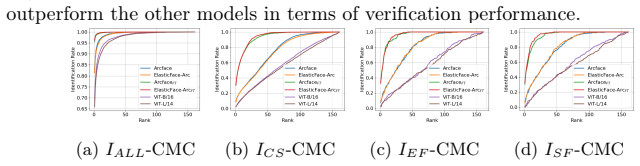
The authors claim ReCowGnition is the first public benchmark to establish a realistic dairy-farm scenario for cow face recognition, nearly doubling the evaluation imagery used in prior work and releasing data, protocols, and preprocessing code. The central discovery on their own terms is that a biometric evaluation framing changes the apparent difficulty: the strongest model, a human face recognizer fine-tuned for cows, reaches 96.39% Top-1 identification accuracy when same-session gallery images are allowed, but falls to 30.30% when those images are removed. The paper reads this drop as evidence that current methods lean on within-session similarity rather than stable facial identity, and i
What carries the argument
The load-bearing component is CowDetect, a detection-and-alignment pipeline that finds the cow's face and muzzle and rotates and scales each crop so the muzzle appears at a fixed position, producing standardized 112x112 face images. This preprocessing is what is supposed to strip away non-facial identifiers such as readable ear-tag numbers. The evaluation protocols are equally central: the harder verification and identification splits (V_CS and I_CS) delete same-session genuine pairs or gallery entries to force cross-session matching, while the fusion protocols (I_EF and I_SF) aggregate embeddings or scores across frames from a video clip to test whether temporal redundancy helps.
Load-bearing premise
The load-bearing premise is that cropped, aligned images contain no usable identification cues beyond the cow's facial features; the paper asserts this after preprocessing but does not demonstrate it, and if background, coat patterns, or session-specific lighting remain visible, the benchmark would measure context rather than cow faces.
What would settle it
Re-run the released baselines on versions of the dataset where the face region is masked out while the background and visible coat remain; if identification accuracy stays well above the random baseline of about 0.68 percent, non-face cues are doing the work. A complementary check is to evaluate the same models on images from a new recording session at the same farm and compare against the reported I_CS accuracy.
If this is right
- A public dataset with fixed protocols turns cow face recognition into a comparably benchmarked field, so new methods no longer need to be judged against private, inconsistent splits.
- The measured gap between same-session and cross-session accuracy gives a concrete target: any method that improves I_CS Top-1 beyond 30 percent is genuinely generalizing, not memorizing a session.
- Verification metrics at fixed false-match rates let practitioners choose operating points for safety-relevant uses such as confirming the right cow before treatment.
- The released detection and alignment pipeline lets subsequent work start from standardized crops rather than raw video, lowering the barrier to reproducing and extending results.
- Because evaluation is framed as biometric verification and identification rather than classification, solutions can enroll new cows without retraining, matching open-farm deployment.
Where Pith is reading between the lines
- Editorial inference: if background, coat-patch texture, or session-specific lighting survives cropping, the reported accuracies may overstate true face recognition; masking or segmenting the face region in the released images would test this directly.
- Editorial inference: the identity labels supplied by farm staff are not independently audited, so a small rate of labeling error would contaminate both genuine and impostor pair statistics; a label check against ear-tag records or manual image matching would strengthen the benchmark.
- Editorial inference: the same-session versus cross-session gap suggests that recording the same cows over longer time intervals and at additional farms would be a natural next stress test, since even I_CS may underestimate real-world identity drift.
- Editorial inference: fusion only helped the fine-tuned models in the reported results, which suggests that averaging embeddings or scores is useful only when the base embeddings already carry reliable identity signal; testing fusion with stronger models would clarify this boundary.
Editorial analysis
A structured set of objections, weighed in public.
Referee Report
Summary. The paper introduces ReCowGnition, a public cow face recognition benchmark consisting of 6,838 cropped face images of 161 Holstein dairy cows recorded in five sessions at a working dairy farm. It defines two verification protocols (V_ALL, V_CS) and four identification protocols (I_ALL, I_CS, I_EF, I_SF), releases a cow face/muzzle detection and alignment pipeline, and reports evaluations of six baselines: two from-scratch models, two human-pretrained fine-tuned models, and two zero-shot CLIP models. The central claim is that this provides the first realistic, reproducible public benchmark enabling comparable cow FR research.
Significance. If validated, the dataset is a significant community resource. It is larger and more realistic than most prior evaluation sets, and the cross-session protocols specifically address a known leakage issue in existing cattle recognition evaluations. The authors also release evaluation code and the detection pipeline, which is commendable. The benchmark design is sound in principle. However, the paper's value rests on the correctness of the identity labels and on the absence of non-face shortcut cues; these points are not demonstrated and need to be addressed before the benchmark can be relied upon.
major comments (4)
- [§3.1] The identity labels were assigned by a single farm employee using farm records and markers not visible in the released videos/images. No inter-annotator agreement, RFID cross-check, or label-error analysis is provided. Because all protocols in §4 and all results in Table 3 are defined against these labels, a small number of mis-assigned videos would directly bias every reported metric and undermine the benchmark's claim to provide trustworthy ground truth. Please add an independent label check (e.g., a second annotator on a subset, cross-session consistency review, or RFID comparison) or, if impossible, report the verification procedure and quantify residual label uncertainty.
- [§5.1 and Table 3] The trained models are selected by evaluating every fifth epoch and reporting the best performance in terms of I_ALL. I_ALL is one of the official evaluation protocols, so this constitutes test-set model selection. It inflates all four trained-model results and makes them non-comparable with future methods that follow the protocol. Use a separate validation split for checkpoint selection, or report final-epoch or averaged performance. For the zero-shot CLIP models, no checkpoint selection is performed, but this should be stated explicitly.
- [§3.2] The paper asserts that after cropping and alignment, no non-face cues such as ear tags are consistently visible or readable, but no evidence is provided. Background objects, lighting conditions, or session-specific artifacts may remain and could allow models to achieve high accuracy without learning cow identities. This is a construct validity concern for a benchmark that intends to measure face recognition. Provide an empirical check, e.g., compare performance on face-only crops vs. background-only crops, report the fraction of images with visible context, or release sample full frames; at minimum, show that removing the face region drops performance to chance.
- [Table 3 and §6] All results are reported as single point estimates without variance. The qualitative comparisons in §6 (e.g., 'the fine-tuned models outperform' and the fusion improvements) may not be stable across training runs. Please report at least three runs with mean and standard deviation, or bootstrap confidence intervals, so that the baseline table can serve as a meaningful reference for future comparisons.
minor comments (3)
- [Table 1 / §2.1] The claim that the dataset 'nearly doubles the total amount of currently used evaluation images' is contradicted by the table: the cited related-work evaluation sets sum to roughly 20,400 images, so 6,838 is about one third. If the intended comparison is to the largest single dataset (3,646 images), please say so explicitly.
- [Table 3 / §6] Units in Table 3 are inconsistent: Top-1/Top-5 are percentages (e.g., 82.76) while verification metrics (EER, FNMR) appear to be fractions (e.g., 0.254). The header '[in %]' is therefore confusing. Also, the text in §6 quotes V_CS EER for ArcFace_FT as 0.164 while Table 3 lists 0.163.
- [Minor editorial] In Figure 1 caption, 'The image shows' should be 'The images show'. Several sentences in §2.1 and §3.1 are long and could be split for readability.
Circularity Check
No circularity: ReCowGnition provides new external data, fixed protocols, and measured baselines; no prediction is constructed from fitted parameters or self-referential assumptions.
full rationale
The paper's contributions are a new public dataset (6,838 images of 161 cows), two verification and four identification protocols, and baseline results from six models. There is no derivation chain in which an output is statistically or definitionally forced by its inputs. The benchmark models are trained on external datasets (CSCE873CV and the dataset of [28]) explicitly stated to have no identity overlap with the ReCowGnition cows, and the benchmark models are evaluated on the newly collected data. Hyperparameters such as m=0.5 and s=64 are taken from the original ArcFace/ElasticFace papers, not fitted to this benchmark. The only self-citations (ElasticFace loss and a prior foundation-model FR study) are references to published methods and are not load-bearing for the core benchmark claim. Remaining concerns—the single-annotator farm-based identity labels and the possibility of residual background or session cues—are data-quality and measurement-validity issues, not circularity, and the paper discloses the labeling procedure and the preprocessing claim. They do not make the benchmark's claim equivalent to its inputs, so the circularity score is 0.
Axiom & Free-Parameter Ledger
free parameters (1)
- Checkpoint selection (best epoch by I_ALL) =
Unknown epoch; chosen by test-set (I_ALL) performance
axioms (5)
- domain assumption The employee-supplied identity labels are correct for all 6,838 images.
- domain assumption Images contain no usable identification shortcuts besides the face.
- domain assumption Every 5th frame extraction yields sufficiently independent samples.
- standard math Evaluation metrics (EER, FNMR@FMR, CMC) follow ISO/IEC biometric standards.
- domain assumption The training data from [5] and [28] are correctly labeled and usable for model training.
read the original abstract
With the development of precision livestock farming and the advances in computer vision, visual animal biometrics has gained attention. Using biometric technologies that have been proven effective for humans to identify livestock can increase animal welfare as well as production efficiency. However, challenges such as complex scenarios, similar appearances, occlusions, and non-cooperative behavior, as well as the limited amount of publicly available labeled datasets, remain. In this work, we contribute a novel, publicly available cow face benchmark dataset that has been collected in a realistic automatic scenario with 6,838 images of 161 different cows at a dairy farm. In addition to the public dataset, we define two verification and four identification evaluation protocols to foster comparable research in the cow recognition research field. Further, we provide evaluation results on our dataset of six benchmark models, which include models trained on limited data, cross-species fine-tuned models, and zero-shot foundation model approaches.
Figures


Reference graph
Works this paper leans on
-
[1]
Animals8(8) (2018)
Adcock, S.J.J., Tucker, C.B., Weerasinghe, G., Rajapaksha, E.: Branding practices on four dairies in kantale, sri lanka. Animals8(8) (2018)
2018
-
[2]
IEEE Internet Things J.11(2) (2024)
Bakhshayeshi, I., Erfani, E., Taghikhah, F.R., Elbourn, S., Beheshti, A., Asadnia, M.: An intelligence cattle reidentification system over transport by siamese neural networks and YOLO. IEEE Internet Things J.11(2) (2024)
2024
-
[3]
animal18(3) (2024)
Bergman, N., Yitzhaky, Y., Halachmi, I.: Biometric identification of dairy cows via real-time facial recognition. animal18(3) (2024)
2024
-
[4]
In: CVPR Workshops
Boutros, F., Damer, N., Kirchbuchner, F., Kuijper, A.: Elasticface: Elastic margin loss for deep face recognition. In: CVPR Workshops. IEEE (2022)
2022
-
[5]
CattleDetection: Csce873cv dataset.https://universe.roboflow.com/ cattledetection-dn9uy/csce873cv-pd9an(oct 2025), visited on 2026-01-08
2025
-
[6]
In: ICPR
Chen,S.,Wang,S.,Zuo,X.,Yang,R.:Anguscattlerecognitionusingdeeplearning. In: ICPR. IEEE (2020)
2020
-
[7]
Comput.156(2025)
Chettaoui, T., Damer, N., Boutros, F.: Froundation: Are foundation models ready for face recognition? Image Vis. Comput.156(2025)
2025
-
[8]
In: CVPR
Deng, J., Guo, J., Xue, N., Zafeiriou, S.: Arcface: Additive angular margin loss for deep face recognition. In: CVPR. Computer Vision Foundation / IEEE (2019)
2019
-
[9]
Journal of Dairy Science106(7) (2023)
Harmon, M.L., Downey, B.C., Drwencke, A.M., Tucker, C.B.: Development and application of a novel approach to scoring ear tag wounds in dairy calves. Journal of Dairy Science106(7) (2023)
2023
-
[10]
Hossain, M.E., Kabir, M.A., Zheng, L., Swain, D.L., McGrath, S., Medway, J.: A systematic review of machine learning techniques for cattle identification: Datasets, methods and future directions. CoRRabs/2210.09215(2022)
Pith/arXiv arXiv 2022
-
[11]
International Standard (2021) ReCowGnition: A Realistic Biometric Benchmark for Cow Face Recognition 15
ISO/IEC: ISO/IEC 19795-1:2021(en): Information technology — biometric perfor- mance testing and reporting — part 1: Principles and framework. International Standard (2021) ReCowGnition: A Realistic Biometric Benchmark for Cow Face Recognition 15
2021
-
[12]
com/ultralytics/ultralytics
Jocher, G., Qiu, J., Chaurasia, A.: Ultralytics YOLO (Jan 2023),https://github. com/ultralytics/ultralytics
2023
-
[13]
IEEE Trans
Kumar, N., Singh, S.K.: Cattledit: A distillation-driven transformer for cattle iden- tification. IEEE Trans. Biom. Behav. Identity Sci.7(4) (2025)
2025
-
[14]
Applied Animal Behaviour Science127(3) (2010)
Leslie, E., Hernández-Jover, M., Newman, R., Holyoake, P.: Assessment of acute pain experienced by piglets from ear tagging, ear notching and intraperitoneal injectable transponders. Applied Animal Behaviour Science127(3) (2010)
2010
-
[15]
Li, Z., Lei, X., Liu, S.: A lightweight deep learning model for cattle face recognition. Comput. Electron. Agric.195(2022)
2022
-
[16]
In: ECCV (5)
Lin, T., Maire, M., Belongie, S.J., Hays, J., Perona, P., Ramanan, D., Dollár, P., Zitnick, C.L.: Microsoft COCO: common objects in context. In: ECCV (5). Lecture Notes in Computer Science, Springer (2014)
2014
-
[17]
In: ECCV (1)
Liu, C., Zoph, B., Neumann, M., Shlens, J., Hua, W., Li, L., Fei-Fei, L., Yuille, A.L., Huang, J., Murphy, K.: Progressive neural architecture search. In: ECCV (1). Lecture Notes in Computer Science, Springer (2018)
2018
-
[18]
Information Processing in Agriculture 12(3) (2025)
Mahato,S.,Neethirajan,S.:Integratingartificialintelligenceindairyfarmmanage- ment biometric facial recognition for cows. Information Processing in Agriculture 12(3) (2025)
2025
-
[19]
Animal Genetics46(1) (2015)
Mészáros, G., Petautschnig, E., Schwarzenbacher, H., Sölkner, J.: Genomic regions influencing coat color saturation and facial markings in fleckvieh cattle. Animal Genetics46(1) (2015)
2015
-
[20]
In: ICML
Radford, A., Kim, J.W., Hallacy, C., Ramesh, A., Goh, G., Agarwal, S., Sastry, G., Askell, A., Mishkin, P., Clark, J., Krueger, G., Sutskever, I.: Learning trans- ferable visual models from natural language supervision. In: ICML. Proceedings of Machine Learning Research, PMLR (2021)
2021
-
[21]
Journal of Physics: Conference Series1453(1) (jan 2020)
Wang, H., Qin, J., Hou, Q., Gong, S.: Cattle face recognition method based on pa- rameter transfer and deep learning. Journal of Physics: Conference Series1453(1) (jan 2020)
2020
-
[22]
Weng, Z., Meng, F., Liu, S., Zhang, Y., Zheng, Z., Gong, C.: Cattle face recognition based on a two-branch convolutional neural network. Comput. Electron. Agric.196 (2022)
2022
-
[23]
Xu, B., Wang, W., Guo, L., Chen, G., Li, Y., Cao, Z., Wu, S.: Cattlefacenet: A cattle face identification approach based on retinaface and arcface loss. Comput. Electron. Agric.193(2022)
2022
-
[24]
Xu, X., Deng, H., Wang, Y., Zhang, S., Song, H.: Boosting cattle face recognition under uncontrolled scenes by embedding enhancement and optimization. Appl. Soft Comput.164(2024)
2024
-
[25]
Information Processing in Agricul- ture11(4) (2024)
Yang, L., Xu, X., Zhao, J., Song, H.: Fusion of retinaface and improved facenet for individual cow identification in natural scenes. Information Processing in Agricul- ture11(4) (2024)
2024
-
[26]
In: CSCloud/EdgeCom
Yang, L., Liu, X., Kim, J.S.: Cloud-based livestock monitoring system using RFID and blockchain technology. In: CSCloud/EdgeCom. IEEE (2020)
2020
-
[27]
In: CCBR
Yang, Z., Xiong, H., Chen, X., Liu, H., Kuang, Y., Gao, Y.: Dairy cow tiny face recognition based on convolutional neural networks. In: CCBR. Lecture Notes in Computer Science, Springer (2019)
2019
-
[28]
In: ACM TUR-C
Yao, L., Hu, Z., Liu, C., Liu, H., Kuang, Y., Gao, Y.: Cow face detection and recognition based on automatic feature extraction algorithm. In: ACM TUR-C. ACM (2019)
2019
-
[29]
Zhang, K., Zhang, Z., Li, Z., Qiao, Y.: Joint face detection and alignment using multi-task cascaded convolutional networks. CoRRabs/1604.02878(2016)
Pith/arXiv arXiv 2016
discussion (0)
Sign in with ORCID, Apple, or X to comment. Anyone can read and Pith papers without signing in.