REVIEW 3 major objections 5 minor 31 references
Cost-Aware Routing for Efficient Text-To-Image Generation
T0 review · 3 major / 5 minor · reviewed 2026-08-15 · deepseek-v4-flash
Pith's one-line read The paper claims that routing each text prompt to a pre-trained model selected by predicted quality minus cost yields higher average image quality than any single model in the pool at the same compute budget.
desk verdict Routing across a heterogeneous pool of pre-trained T2I models is a genuine empirical win, but the theory is imported from prior work and the learned router's advantage is real but thin at the cheapest operating points. read the letter →
The pith
A machine-rendered reading of the paper's core claim, the machinery that carries it, and where it could break.
The reading
What carries the argument
The load-bearing object is the cost-adjusted Bayes optimal routing rule r*(x)=argmax_m E[q(x,h^(m)(x))|x] − λ c^(m), a Lagrange multiplier form of constrained quality maximization. The paper's contribution is to turn this rule into a trained plug-in estimator: a quality estimator γhat^(m)(x) (K-NN or Transformer over frozen CLIP text embeddings) predicts each candidate's expected quality per prompt, and at inference the router picks the candidate with maximum γhat^(m)(x) − λ c^(m). The sweep over λ generates a deferral curve (quality vs average TFLOPs), which is the paper's main evaluation device and the mechanism by which 'match any fixed model's quality at lower cost' is demonstrated.
What would settle it
Take a held-out set of prompts from a distribution unlike training; for each prompt measure each candidate's true average quality over many seeds and compute the rank correlation between the router's predicted qualities in Eq. (3) and the truth. If that correlation is near zero while the candidates' costs differ, the router's deferral curve will collapse toward the random-routing curve of Figure 12, and the central claim of beating every single model at matched cost would be refuted.
Extended reading notes
Core claim
The central claim is that optimal per-prompt routing among M pre-trained text-to-image generators reduces to a simple score: route x to the model that maximizes E[q(x,h^(m)(x))|x] − λ c^(m), where λ is a cost-quality knob. The paper constructs a plug-in router by training a small quality estimator (K-nearest neighbors on CLIP embeddings, or a two-layer Transformer head) to predict each candidate's expected quality from the prompt, then sweeping λ to trace a quality-cost frontier. Empirically, with nine models spanning step counts, distilled SDXL variants, DeepCache, and the autoregressive Infinity model, the learned router's deferral curve lies above every fixed model's operating point on COCO and DiffusionDB, and Table 3 reports matching the quality of SDXL at 100 steps using as little as 0.13% of its cost on the sharpness metric. In the authors' words, the approach delivers an average quality higher than that achievable by any of these models alone, including when the pool is expanded with FLUX.1-dev at multiple step counts.
Load-bearing premise
The router's advantage rests on per-prompt image quality being predictable from the text prompt alone by a cheap estimator; if quality cannot be predicted from the prompt, routing degrades toward random model choice and can fall below fixed baselines.
Editorial extensions
If this is right
- A serving system can raise average image quality without raising average cost by making the pool heterogeneous: adding better models such as FLUX moves the whole quality-cost frontier upward.
- The same router can match the quality of the most expensive model in the pool at a fraction of its cost; on the sharpness metric the reported cost ratio versus SDXL-100 is 0.13%.
- The routing decision transfers across quality metrics; routers trained on CLIPScore, sharpness, ImageReward, or aesthetic score each beat the fixed baselines when evaluated on their own metric, and the aesthetic-trained router tracks human preference scores best.
- Routing remains effective on an unseen prompt distribution: a KNN estimator trained on DiffusionDB prompts and applied to COCO still beats fixed models, indicating prompt difficulty is learnable beyond keyword correlation.
- At extreme budgets the router necessarily sends all prompts to one model, so the benefit is interior to the cost range rather than at the endpoints.
Reading between the lines
- One could extend the same cost-adjusted rule to any stochastic generator with a per-call cost, such as video or audio diffusion models, provided an instance-level quality measure and a prompt embedding exist; the paper's formulation places no constraint on the generator class.
- Because the router is prompt-only and the quality estimator is cheap (under 0.001 TFLOPs versus 1.5 TFLOPs for the smallest base model), the main cost of adoption is generating quality labels; for a new pool, reusing labels from an old pool is a plausible warm start if prompt-difficulty rankings are stable across model families.
- A testable prediction follows from the paper's noise analysis: routing gains should scale with pool diversity; a pool of near-identical checkpoints should produce a frontier barely above a single model, while adding models with very different cost-quality profiles should widen the gap to every fixed baseline.
Signed reviews
Editorial analysis
A structured set of objections, weighed in public.
Referee Report
Summary. This paper proposes CATImage, a prompt-level routing framework for text-to-image generation. Given a fixed pool of generation functions (SDXL at varying denoising steps plus Turbo, Lightning, DDIM, DeepCache, Infinity, and optionally FLUX), the router predicts the expected quality of each candidate for a prompt using a K-NN or Transformer estimator and selects the candidate maximizing predicted quality minus lambda times cost. The formulation is a constrained quality-cost optimization, and the optimal rule is Proposition 1 from Jitkrittum et al. (2025), applied here with a plug-in estimator. Deferral curves are produced by sweeping lambda. Experiments on COCO and DiffusionDB report quality-cost trade-offs under CLIPScore, Sharpness, Aesthetic, ImageReward, and HPSv2, with oracle and noisy-oracle controls, significance tests, cross-dataset generalization, and a small user study. The principal claim is that the trained router achieves higher average quality than any fixed model in the pool at matched cost.
Significance. If the claim holds, the paper makes a practical contribution: adaptive per-prompt computation that can be tuned at deployment time via lambda, with an extensive empirical evaluation across 9-12 models and multiple quality metrics, oracle upper bounds, cross-dataset checks, and a human-preference audit. The deferral-curve evaluation protocol, the noisy-oracle analysis as a calibration tool, and the released code are concrete strengths. The theoretical result is borrowed from prior work by co-authors, so the novelty lies in the application and empirical evaluation rather than in the routing rule itself. The main gaps are that the robustness of low-cost operating points is not fully established and the cost accounting of the router overhead is inconsistent and potentially omitted from the reported curves.
major comments (3)
- [Section M, Eq. (5), Table 6, Figure 12] The paper's own robustness analysis places the learned router between the noisy-oracle curves with beta=1 and beta=2 (Figure 12). At the Turbo operating point, Table 6 reports Ours 0.2800 versus Fixed 0.2798, a gain of only 0.0002 CLIPScore, while the beta=2 noisy oracle falls below the fixed baseline (0.2780). Thus the low-cost margin is comparable to the estimator noise identified by the authors. Because the paper does not report direct diagnostics of gamma-hat accuracy (e.g., correlation between predicted and held-out per-model quality, or argmax accuracy on test prompts), the reader cannot assess how close the deployed router is to the beta=2 failure boundary. This gap matters because the abstract's headline claim is stated without cost-regime qualification.
- [Section 5.1 vs Appendix D and Appendix E] The statement that both quality estimators incur less than 0.001 TFLOPs is inconsistent with the appendix numbers: Appendix E reports the Transformer estimator as 15.61 GFLOPs (0.0156 TFLOPs), and Appendix D reports about 13.087 GFLOPs for the Flan-T5 embedding when Infinity is selected (0.0131 TFLOPs). More importantly, the deferral curves and Table 6 costs appear to use base-model TFLOPs only, without adding these router overheads. Since the reported gain at the Turbo operating point is only 0.0002 CLIPScore, excluding router overhead can change the matched-cost comparison. The paper should state explicitly whether router overhead is included in all reported costs and correct the contradictory overhead figures.
- [Appendix A, HPSv2 table] The external human-preference check shows that routers trained on CLIPScore, Sharpness, or ImageReward do not consistently beat the fixed Lightning baseline (e.g., Ours (CLIPScore) 0.287 versus Fixed 0.304; Ours (Sharpness) 0.293 versus Fixed 0.304). The abstract's phrasing, 'average quality that is higher than that achievable by any of these models alone,' is therefore stronger than the evidence unless it is explicitly qualified as quality measured by the chosen metric. The main text should add this qualification and discuss the transfer of metric-specific routing to human preference.
minor comments (5)
- [Introduction] The text refers to 'Stable Diffusion XL from Radford et al. (2021)'; Radford et al. is the CLIP paper, while SDXL is introduced in Podell et al. (2023). Please correct the citation.
- [Appendix M] The appendix refers to 'Theorem 1' twice, but the paper's result is Proposition 1; the numbering should be aligned.
- [Table 2] The column headers (INFI, TURB, LIGH, SDXL DEEP, etc.) should be expanded in the caption for readability, and the bold 'highest score' claims should be accompanied by pairwise significance tests since several values in adjacent columns overlap at one standard error.
- [Appendix C] The sentence 'In Section C, we report...' should say 'In this appendix, we report...'.
- [Table 5] The caption says 'presented in Table 5' but appears to refer to the K-NN (SDXL+) results from the main paper; please clarify which table is being referenced.
Circularity Check
No circularity: the routing rule is an explicit application of an independent general optimality result, and reported gains are measured on held-out generations rather than fitted predictions.
full rationale
The claimed derivation chain is (i) cast per-prompt model selection as the constrained program in Eq. (1); (ii) cite Proposition 1 of Jitkrittum et al. (2025) for the Lagrange-multiplier form of the optimal rule; (iii) replace the unknown conditional expectation with a plug-in estimator trained on held-out prompt-quality labels; and (iv) evaluate the resulting router on held-out test prompts by actually generating images and measuring quality. Step (ii) is a general theorem about utility-minus-cost maximization whose assumptions (a finite model pool, a per-instance quality metric, linear costs) do not encode the text-to-image setting, so it is independent support rather than a self-definitional input. Step (iii) is standard supervised learning: the estimator is fitted to quality labels, but the final reported CLIPScore, Sharpness, Aesthetic, and ImageReward numbers are computed from real generated images of the selected models, not read off from the estimated quality scores. Using the same metric for training the estimator and for evaluation is not a construction-level equivalence; the router's argmax in Eq. (3) is not equal to the evaluation objective by construction, because the estimator is a lossy predictor. The oracle/noise analysis in Section M only quantifies the gap between the learned router and an oracle; it does not define the method. The only author-overlapping citation is Proposition 1, which is a general result independent of the present data and fitted values, so it does not raise the circularity score.
Assumptions & free parameters
free parameters (5)
- Lambda (quality-cost trade-off knob) =
swept over [0, inf)
- K in K-NN quality estimator =
100
- Image samples per prompt S =
4 (main experiments)
- SDXL candidate denoising step set =
12 representative steps in 1-100
- Prompt sub-sampling CLIP similarity threshold =
0.75
assumptions (5)
- domain assumption Per-prompt expected quality E[q(x,h^(m)(x))|x] is predictable from a text embedding by a lightweight estimator.
- domain assumption Each candidate model has a fixed, prompt-independent cost c^(m) in FLOPs.
- domain assumption The instance-level quality metrics (CLIPScore, Sharpness, Aesthetic, ImageReward) proxy the image quality users care about.
- domain assumption The routing pool H is fixed and the prompt distribution at deployment matches the training distribution.
- domain assumption A fixed random seed across denoising step counts makes step-to-step comparisons meaningful.
Cite this review
Pith. "Pith review of Cost-Aware Routing for Efficient Text-To-Image Generation." pith.science (2026). https://pith.science/paper/IEOQBK46
@misc{pith2026250614753,
  author       = {Pith},
  title        = {Pith review of: Cost-Aware Routing for Efficient Text-To-Image Generation},
  year         = {2026},
  howpublished = {\url{https://pith.science/paper/IEOQBK46}},
  note         = {Machine review of arXiv:2506.14753}
}
read the original abstract
Diffusion models are well known for their ability to generate a high-fidelity image for an input prompt through an iterative denoising process. Unfortunately, the high fidelity also comes at a high computational cost due to the inherently sequential generative process. In this work, we seek to optimally balance quality and computational cost, and propose a framework to allow the amount of computation to vary for each prompt, depending on its complexity. Each prompt is automatically routed to the most appropriate text-to-image generation function, which may correspond to a distinct number of denoising steps of a diffusion model, or a disparate, independent text-to-image model. Unlike uniform cost reduction techniques (e.g., distillation, model quantization), our approach achieves the optimal trade-off by learning to reserve expensive choices (e.g., 100+ denoising steps) only for a few complex prompts, and employ more economical choices (e.g., small distilled model) for less sophisticated prompts. We empirically demonstrate on COCO and DiffusionDB that by learning to route to nine already-trained text-to-image models, our approach is able to deliver an average quality that is higher than that achievable by any of these models alone. Code is available at https://github.com/winglicopy/CATImage.
Figures


Figures from the paper (9 more)




Reference graph
Works this paper leans on
-
[2]
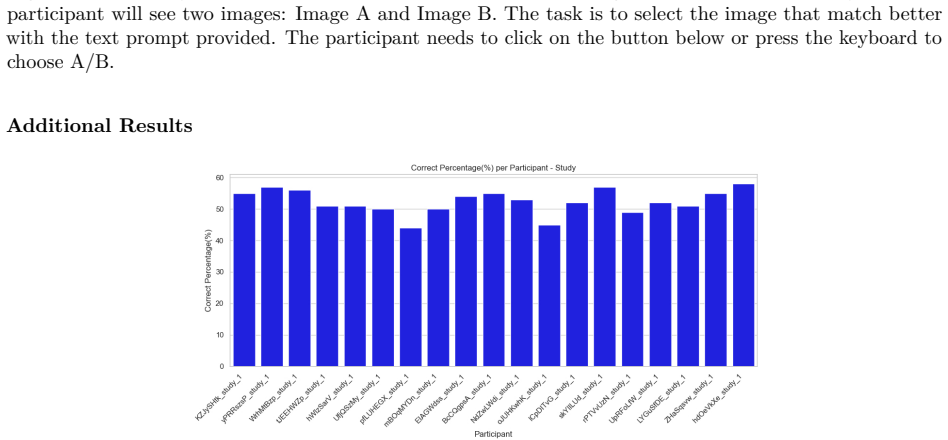
image produced by the baseline SDXL at fixed 22 denoising steps. Note that the produced image may be from a non-SDXL model (e.g., Turbo) since our approach may route to other baseline models described in Section 5.1. Participants were instructed to select the image that matches the input text prompt better. Each participant will be assigned 100 trials (10...
-
[6]
Routerbench: A benchmark for multi-LLM routing system
Qitian Jason Hu, Jacob Bieker, Xiuyu Li, Nan Jiang, Benjamin Keigwin, Gaurav Ranganath, Kurt Keutzer, and Shriyash Kaustubh Upadhyay. Routerbench: A benchmark for multi-LLM routing system. InAgentic Markets Workshop at ICML 2024,
work page 2024
-
[7]
Dongfu Jiang, Xiang Ren, and Bill Yuchen Lin
URLhttps://openreview.net/forum?id=IVXmV8Uxwh. Dongfu Jiang, Xiang Ren, and Bill Yuchen Lin. Llm-blender: Ensembling large language models with pairwise comparison and generative fusion. InProceedings of the 61th Annual Meeting of the Association for Computational Linguistics (ACL 2023),
work page 2023
-
[8]
Lynn H Kaack, Priya L Donti, Emma Strubell, George Kamiya, Felix Creutzig, and David Rolnick
URLhttps://arxiv.org/abs/2502.08773. Lynn H Kaack, Priya L Donti, Emma Strubell, George Kamiya, Felix Creutzig, and David Rolnick. Aligning artificial intelligence with climate change mitigation.Nature Climate Change, 12(6):518–527,
-
[9]
Steven Kolawole, Don Dennis, Ameet Talwalkar, and Virginia Smith
URLhttps://arxiv.org/ abs/1312.6114. Steven Kolawole, Don Dennis, Ameet Talwalkar, and Virginia Smith. Agreement-based cascading for efficient inference,
-
[10]
URLhttps://arxiv.org/abs/2407.02348. Lijiang Li, Huixia Li, Xiawu Zheng, Jie Wu, Xuefeng Xiao, Rui Wang, Min Zheng, Xin Pan, Fei Chao, and Rongrong Ji. Autodiffusion: Training-free optimization of time steps and architectures for automated diffusion model acceleration. InProceedings of the IEEE/CVF International Conference on Computer Vision, pp. 7105–711...
-
[11]
Sdxl-lightning: Progressive adversarial diffusion distillation
Shanchuan Lin, Anran Wang, and Xiao Yang. Sdxl-lightning: Progressive adversarial diffusion distillation. ArXiv, abs/2402.13929,
-
[12]
URLhttps://api.semanticscholar.org/CorpusID:267770548. 13 Published in Transactions on Machine Learning Research (03/2026) Tsung-Yi Lin, Michael Maire, Serge Belongie, James Hays, Pietro Perona, Deva Ramanan, Piotr Dollár, and C Lawrence Zitnick. Microsoft COCO: Common objects in context. InComputer Vision–ECCV 2014: 13th European Conference, Zurich, Swit...
work page 2026
Show all 31 references
-
[14]
Latent consistency models: Synthesizing high-resolution images with few-step inference.arXiv preprint arXiv:2310.04378,
Simian Luo, Yiqin Tan, Longbo Huang, Jian Li, and Hang Zhao. Latent consistency models: Synthesizing high-resolution images with few-step inference.arXiv preprint arXiv:2310.04378,
-
[15]
Roni Paiss, Ariel Ephrat, Omer Tov, Shiran Zada, Inbar Mosseri, Michal Irani, and Tali Dekel
URLhttps://openreview.net/forum?id= 8sSqNntaMr. Roni Paiss, Ariel Ephrat, Omer Tov, Shiran Zada, Inbar Mosseri, Michal Irani, and Tali Dekel. Teaching clip to count to ten.arXiv preprint arXiv:2302.12066,
-
[17]
Local laplacian filters: Edge-aware image processing with a laplacian pyramid.ACM Trans
14 Published in Transactions on Machine Learning Research (03/2026) Sylvain Paris, Samuel W Hasinoff, and Jan Kautz. Local laplacian filters: Edge-aware image processing with a laplacian pyramid.ACM Trans. Graph., 30(4):68,
2026
-
[18]
Konpat Preechakul, Nattanat Chatthee, Suttisak Wizadwongsa, and Supasorn Suwajanakorn
URL https://arxiv.org/abs/2307.01952. Konpat Preechakul, Nattanat Chatthee, Suttisak Wizadwongsa, and Supasorn Suwajanakorn. Diffusion autoencoders: Toward a meaningful and decodable representation. InProceedings of the IEEE/CVF Conference on Computer Vision and Pattern Recogn...
-
[19]
Tim Salimans and Jonathan Ho
URLhttps://arxiv.org/abs/2205.11487. Tim Salimans and Jonathan Ho. Progressive distillation for fast sampling of diffusion models.arXiv preprint arXiv:2202.00512,
-
[20]
Fasthigh- resolution image synthesis with latent adversarial diffusion distillation.arXiv preprint arXiv:2403.12015,
AxelSauer, FredericBoesel, TimDockhorn, AndreasBlattmann, PatrickEsser, andRobinRombach. Fasthigh- resolution image synthesis with latent adversarial diffusion distillation.arXiv preprint arXiv:2403.12015,
-
[21]
ISBN 9781713871088
Curran Associates Inc. ISBN 9781713871088. Jiaming Song, Chenlin Meng, and Stefano Ermon. Denoising diffusion implicit models.arXiv preprint arXiv:2010.02502,
2010 arXiv
-
[23]
Shengkun Tang, Yaqing Wang, Caiwen Ding, Yi Liang, Yao Li, and Dongkuan Xu
URLhttps://arxiv.org/abs/2403.02683. Shengkun Tang, Yaqing Wang, Caiwen Ding, Yi Liang, Yao Li, and Dongkuan Xu. Adadiff: Accelerating diffusion models through step-wise adaptive computation.arXiv preprint arXiv:2309.17074,
-
[24]
Attention is all you need.Advances in neural information processing systems, 30,
15 Published in Transactions on Machine Learning Research (03/2026) Ashish Vaswani, Noam Shazeer, Niki Parmar, Jakob Uszkoreit, Llion Jones, Aidan N Gomez, Łukasz Kaiser, and Illia Polosukhin. Attention is all you need.Advances in neural information processing systems, 30,
2026
-
[25]
Kitani, Yair Movshovitz-Attias, and Elad Eban
Xiaofang Wang, Dan Kondratyuk, Eric Christiansen, Kris M. Kitani, Yair Movshovitz-Attias, and Elad Eban. Wisdom of committees: An overlooked approach to faster and more accurate models. InInternational Conference on Learning Representations, 2022a. URLhttps://openreview.net/fo...
-
[26]
Denoising diffusion step-aware models.arXiv preprint arXiv:2310.03337,
Shuai Yang, Yukang Chen, Luozhou Wang, Shu Liu, and Yingcong Chen. Denoising diffusion step-aware models.arXiv preprint arXiv:2310.03337,
-
[27]
Adadiff: Adaptive step selection for fast diffusion.ArXiv, abs/2311.14768,
Hui Zhang, Zuxuan Wu, Zhen Xing, Jie Shao, and Yu-Gang Jiang. Adadiff: Adaptive step selection for fast diffusion.ArXiv, abs/2311.14768,
-
[28]
URLhttps://openreview.net/forum?id=Fs9EabmQrJ. 16 Published in Transactions on Machine Learning Research (03/2026) Cost-Aware Routing for Efficient Text-To-Image Generation Appendix A Human Preference Score To quantitatively evaluate how our routing decisions from each metric ...
2021
-
[30]
Here we can clearly see how our adaptive routing consistently achieves a higher quality score than the fixed-model baselines at every computational budget
These curves complement the fixed-cost comparison in Table 2 by showing the changes in quality score across the entire cost spectrum. Here we can clearly see how our adaptive routing consistently achieves a higher quality score than the fixed-model baselines at every computati...
2026
-
[31]
Indeed, it makes use of the ground-truth quality labelyto make a routing decision
Evidently, this routing rule exhibits an excellent quality-cost trade-off compared to other routing approaches. Indeed, it makes use of the ground-truth quality labelyto make a routing decision. By construction, no other routing methods can give 24 Published in Transactions on...
2024
-
[2014]
Pseudo numerical methods for diffusion models on manifolds
Luping Liu, Yi Ren, Zhijie Lin, and Zhou Zhao. Pseudo numerical methods for diffusion models on manifolds. arXiv preprint arXiv:2202.09778,
-
[2016]
Examples are grouped by the three most frequently selected models: Infinity, Turbo, and FLUX-15
11 Published in Transactions on Machine Learning Research (03/2026) Figure 4: Example results from our routing framework compared to a fixed FLUX model (30 denoising steps). Examples are grouped by the three most frequently selected models: Infinity, Turbo, and FLUX-15. We obs...
2026
-
[2017]
Frugalgpt: How to use large language models while reducing cost and improving performance, 2023a
Lingjiao Chen, Matei Zaharia, and James Zou. Frugalgpt: How to use large language models while reducing cost and improving performance, 2023a. URLhttps://arxiv.org/abs/2305.05176. Yu-Hui Chen, Raman Sarokin, Juhyun Lee, Jiuqiang Tang, Chuo-Ling Chang, Andrei Kulik, and Matthia...
2016 arXiv
-
[2020]
Consistency models.arXiv preprint arXiv:2303.01469,
Yang Song, Prafulla Dhariwal, Mark Chen, and Ilya Sutskever. Consistency models.arXiv preprint arXiv:2303.01469,
-
[2022]
GitHub repository, commit 6d122ad (15 Aug 2022); accessed 15 May
2022
-
[2023]
T-stitch: Accelerating sampling in pre-trained diffusion models with trajectory stitching
Zizheng Pan, Bohan Zhuang, De-An Huang, Weili Nie, Zhiding Yu, Chaowei Xiao, Jianfei Cai, and Anima Anandkumar. T-stitch: Accelerating sampling in pre-trained diffusion models with trajectory stitching. arXiv preprint arXiv:2402.14167,
-
[2024]
Martin Heusel, Hubert Ramsauer, Thomas Unterthiner, Bernhard Nessler, and Sepp Hochreiter
URLhttps: 12 Published in Transactions on Machine Learning Research (03/2026) //arxiv.org/abs/2412.04431. Martin Heusel, Hubert Ramsauer, Thomas Unterthiner, Bernhard Nessler, and Sepp Hochreiter. GANs trained by a two time-scale update rule converge to a local nash equilibriu...
2026 arXiv
-
[2025]
Make it count: Text-to-image generation with an accurate number of objects.arXiv preprint arXiv:2406.10210,
Lital Binyamin, Yoad Tewel, Hilit Segev, Eran Hirsch, Royi Rassin, and Gal Chechik. Make it count: Text-to-image generation with an accurate number of objects.arXiv preprint arXiv:2406.10210,
Reviewed August 15, 2026 · model on record in the stance chip above.
Discussion (0). Continue with ORCID to comment.