Regular Black Holes from Anisotropic Source with Hydrodynamic Equation of State
Pith reviewed 2026-06-26 16:43 UTC · model grok-4.3
The pith
Regular black holes sourced by anisotropic fluids obeying P = P(ρ) always place strong-energy-condition violation before the pressure root, which precedes the pressure maximum.
A machine-rendered reading of the paper's core claim, the machinery that carries it, and where it could break.
Core claim
When the energy-momentum tensor is decomposed into isotropic and anisotropic pieces and the isotropic pressure is required to obey a hydrodynamic relation P = P(ρ) that is consistent with the Einstein equations, the resulting pressure profile necessarily develops a root followed by a maximum; these two points, together with the onset of strong-energy-condition violation, occur in a fixed order that holds for every choice of P(ρ) capable of producing a regular spherically symmetric geometry.
What carries the argument
The hydrodynamic equation of state P = P(ρ) imposed on the isotropic pressure component of the decomposed anisotropic energy-momentum tensor.
If this is right
- The square of the sound speed changes sign exactly at the pressure maximum, signalling a possible hydrodynamic instability inside the horizon.
- A subluminal bound on sound speed excludes any model in which energy density falls off exponentially.
- The ordering of strong-energy-condition violation, pressure root, and pressure maximum is independent of the concrete functional form chosen for P(ρ).
- Different choices of P(ρ) generate both previously known regular black hole metrics and new families of solutions.
Where Pith is reading between the lines
- The fixed ordering may constrain possible phase transitions or stability criteria for matter inside regular black holes.
- The same decomposition and hydrodynamic assumption might be tested in axisymmetric or rotating regular black hole spacetimes if an analogous pressure-density relation can be imposed.
- The location of the pressure maximum could leave an imprint on the ringdown or shadow observables of regular black holes.
Load-bearing premise
A hydrodynamic pressure-density relation can be chosen that satisfies the Einstein equations while keeping the geometry regular and spherically symmetric.
What would settle it
An explicit regular black hole solution in which the pressure profile has no root, no maximum, or reverses the stated order among strong-energy-condition violation, pressure root, and pressure maximum would falsify the universality claim.
Figures
read the original abstract
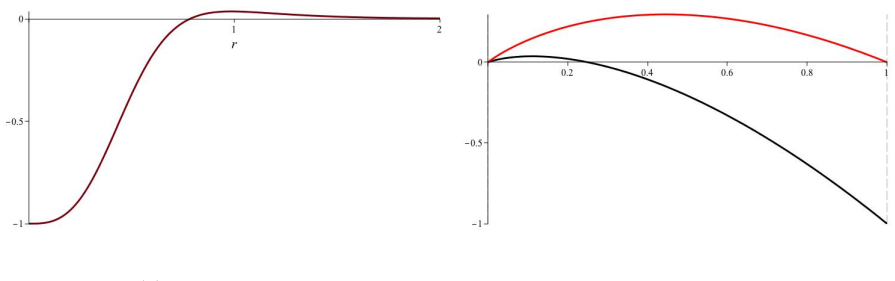
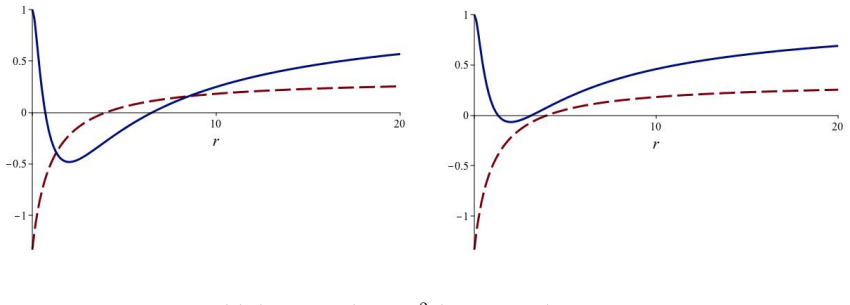
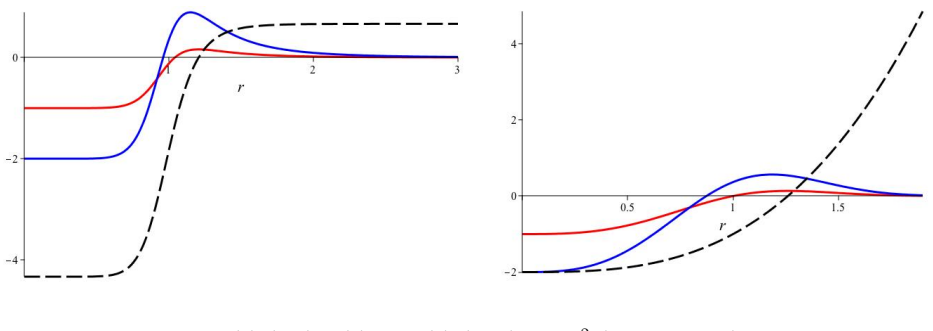
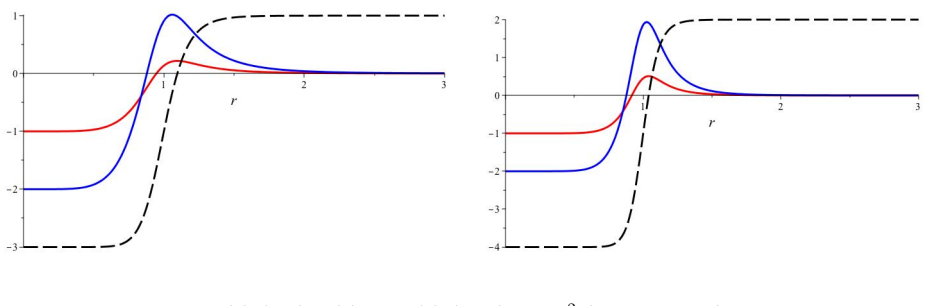
We study regular black hole solutions sourced by an anisotropic energy momentum tensor. It is well known that the geometry of the interior of a spherically symmetric regular black hole approaches the dS metric. Having decomposed the energy momentum tensor into its isotropic and anisotropic components, we assume a hydrodynamic equation of state, $P= P(\rho)$, for the pressure, and look for spherically symmetric, regular black hole solutions. We consider different forms of $ P(\rho)$ which yield the previously known regular black hole solutions, as well as various new metrics. We show that the profile of $ P(\rho)$ has a root and a maximum as it approaches $0^+$ at large distances. Consequently, the square of the sound speed of perturbations, $c_s^2$, changes sign at the point where $P$ reaches its maximum, indicating a potential hydrodynamic instability. In addition, imposing the subluminal bound on $c_s$ puts strong constraints on the model parameters, excluding models in which the energy density has an exponential fall off. We establish a universal hierarchy among the relative positions at which the strong energy condition is violated, at which $P$ has its root, and at which $P$ attains its maximum.
Editorial analysis
A structured set of objections, weighed in public.
Referee Report
Summary. The paper examines spherically symmetric regular black hole geometries sourced by an anisotropic energy-momentum tensor that is decomposed into isotropic and anisotropic contributions. Assuming a hydrodynamic equation of state P=P(ρ) for the isotropic pressure, the authors consider families of P(ρ) that recover known regular metrics (e.g., Bardeen, Hayward) as well as new solutions. They analyze the radial profile of P(ρ), note that it possesses a root and a maximum before approaching zero at large r, show that c_s² changes sign at the P-maximum (suggesting possible hydrodynamic instability), derive constraints from the subluminal bound on c_s that exclude exponential fall-off models, and claim a universal hierarchy among the radii at which the strong energy condition is violated, P=0, and P attains its maximum.
Significance. If the claimed hierarchy is shown to follow structurally from the Einstein equations plus the T_{\mu u} decomposition and regularity conditions rather than from the specific P(ρ) ansätze, the result would supply a model-independent organizing principle for the interior structure of regular black holes and tighten viability constraints on anisotropic sources. The sound-speed analysis and subluminal bounds are useful but secondary to the hierarchy claim.
major comments (1)
- [Abstract, §4] Abstract and §4 (hierarchy discussion): the claim that the ordering of the SEC-violation radius, the P=0 root, and the P-maximum radius is 'universal' is presented as a general result, yet the text derives it by explicit integration for a finite set of P(ρ) forms that recover known metrics or produce new ones. No general argument is supplied that starts from the decomposed Einstein equations, the hydrostatic equilibrium condition, and asymptotic flatness/regularity and proves the ordering must hold for arbitrary P(ρ) that yield regular solutions. This is load-bearing for the central claim.
minor comments (3)
- [§2] §2: the decomposition T_{\mu u} = T_{\mu u}^{iso} + T_{\mu u}^{ani} is introduced without an explicit expression for the anisotropic stress tensor in terms of the metric functions; adding the component-wise expressions would clarify how the hydrodynamic EOS is imposed.
- [Figures] Figure 3 (or equivalent): the plotted P(ρ) curves lack error bands or sensitivity checks with respect to the free parameters in each P(ρ) family; this makes it difficult to assess robustness of the root/maximum locations.
- [§3.2] §3.2: the statement that exponential fall-off models are excluded by the subluminal bound is stated without quoting the explicit inequality on the model parameters; the derivation of that bound should be shown in an appendix or inline.
Simulated Author's Rebuttal
We thank the referee for their careful reading and for identifying this key issue with the presentation of our central claim. We respond to the major comment below.
read point-by-point responses
-
Referee: [Abstract, §4] Abstract and §4 (hierarchy discussion): the claim that the ordering of the SEC-violation radius, the P=0 root, and the P-maximum radius is 'universal' is presented as a general result, yet the text derives it by explicit integration for a finite set of P(ρ) forms that recover known metrics or produce new ones. No general argument is supplied that starts from the decomposed Einstein equations, the hydrostatic equilibrium condition, and asymptotic flatness/regularity and proves the ordering must hold for arbitrary P(ρ) that yield regular solutions. This is load-bearing for the central claim.
Authors: We agree that the hierarchy is demonstrated via explicit integration over the specific P(ρ) families that produce regular solutions (both recovered known metrics and new ones), rather than via a general derivation from the decomposed Einstein equations, hydrostatic equilibrium, and regularity/asymptotic flatness conditions that would apply to arbitrary admissible P(ρ). In the revised manuscript we will qualify the language in the abstract and §4 to state that the ordering is observed for all P(ρ) forms examined in this work. We will also add a short discussion of the structural features of ρ(r) and P(r) required by regularity that appear to enforce the ordering in these cases, thereby addressing the concern without overstating generality. revision: partial
Circularity Check
No significant circularity; hierarchy observed from constructed solutions
full rationale
The paper selects specific forms of the hydrodynamic EOS P(ρ) that recover known regular metrics or generate new ones, inserts them into the Einstein equations with the isotropic/anisotropic decomposition, and then reports the resulting ordering of the SEC-violation radius, P-root, and P-maximum. This ordering is a derived property of the integrated solutions rather than a quantity defined into the input or recovered by construction from a fit. No self-citation chain, ansatz smuggling, or uniqueness theorem imported from prior work is invoked to force the result; the derivation remains self-contained against the chosen EOS families.
Axiom & Free-Parameter Ledger
axioms (1)
- domain assumption The energy-momentum tensor of the source can be decomposed into isotropic and anisotropic components with a hydrodynamic equation of state P = P(ρ).
Reference graph
Works this paper leans on
-
[1]
Penrose,Gravitational collapse and space-time singularities,Phys
R. Penrose,Gravitational collapse and space-time singularities,Phys. Rev. Lett.14(1965) 57–59
1965
-
[2]
S. W. Hawking and R. Penrose,The Singularities of gravitational collapse and cosmology, Proc. Roy. Soc. Lond. A314(1970) 529–548
1970
-
[3]
S. W. Hawking and G. F. R. Ellis,The Large Scale Structure of Space-Time. Cambridge Monographs on Mathematical Physics. Cambridge University Press, 2, 2023, 10.1017/9781009253161
-
[4]
S. Ansoldi,Spherical black holes with regular center: A Review of existing models including a recent realization with Gaussian sources, inConference on Black Holes and Naked Singularities, 2, 2008,0802.0330
Pith/arXiv arXiv 2008
-
[5]
V. P. Frolov,Notes on nonsingular models of black holes,Phys. Rev. D94(2016) 104056, [1609.01758]
Pith/arXiv arXiv 2016
-
[6]
H. Maeda,Quest for realistic non-singular black-hole geometries: regular-center type,JHEP 11(2022) 108, [2107.04791]
arXiv 2022
-
[7]
J. M. Bardeen,Proceedings of International Conferences GR5 (Tbilisi, USSR, 1968) p. 174,
1968
-
[8]
Dymnikova,Vacuum nonsingular black hole,Gen
I. Dymnikova,Vacuum nonsingular black hole,Gen. Rel. Grav.24(1992) 235–242
1992
-
[9]
I. Dymnikova,Regular electrically charged structures in nonlinear electrodynamics coupled to general relativity,Class. Quant. Grav.21(2004) 4417–4429, [gr-qc/0407072]
Pith/arXiv arXiv 2004
-
[10]
Dymnikova,Spherically symmetric space-time with the regular de Sitter center,Int
I. Dymnikova,Spherically symmetric space-time with the regular de Sitter center,Int. J. Mod. Phys. D12(2003) 1015–1034, [gr-qc/0304110]
Pith/arXiv arXiv 2003
-
[11]
Dymnikova,Cosmological term as a source of mass,Class
I. Dymnikova,Cosmological term as a source of mass,Class. Quant. Grav.19(2002) 725–740, [gr-qc/0112052]
Pith/arXiv arXiv 2002
-
[12]
M. R. Mbonye and D. Kazanas,A Non-singular black hole model as a possible end-product of gravitational collapse,Phys. Rev. D72(2005) 024016, [gr-qc/0506111]
Pith/arXiv arXiv 2005
-
[13]
S. A. Hayward,Formation and evaporation of regular black holes,Phys. Rev. Lett.96(2006) 031103, [gr-qc/0506126]
Pith/arXiv arXiv 2006
-
[14]
Z.-Y. Fan and X. Wang,Construction of Regular Black Holes in General Relativity,Phys. Rev. D94(2016) 124027, [1610.02636]
Pith/arXiv arXiv 2016
-
[15]
E. Ayon-Beato and A. Garcia,Regular black hole in general relativity coupled to nonlinear electrodynamics,Phys. Rev. Lett.80(1998) 5056–5059, [gr-qc/9911046]
Pith/arXiv arXiv 1998
-
[16]
E. Ayon-Beato and A. Garcia,Nonsingular charged black hole solution for nonlinear source, Gen. Rel. Grav.31(1999) 629–633, [gr-qc/9911084]. 23
Pith/arXiv arXiv 1999
-
[17]
E. Ayon-Beato and A. Garcia,New regular black hole solution from nonlinear electrodynamics, Phys. Lett. B464(1999) 25, [hep-th/9911174]
Pith/arXiv arXiv 1999
-
[18]
K. A. Bronnikov,Regular magnetic black holes and monopoles from nonlinear electrodynamics, Phys. Rev. D63(2001) 044005, [gr-qc/0006014]
Pith/arXiv arXiv 2001
-
[19]
K. A. Bronnikov,Nonlinear electrodynamics, regular black holes and wormholes,Int. J. Mod. Phys. D27(2018) 1841005, [1711.00087]
arXiv 2018
-
[20]
K. A. Bronnikov,Regular black holes sourced by nonlinear electrodynamics,2211.00743
-
[21]
L. Balart and E. C. Vagenas,Regular black holes with a nonlinear electrodynamics source, Phys. Rev. D90(2014) 124045, [1408.0306]
Pith/arXiv arXiv 2014
-
[22]
H. Maeda, M. Hassaine and C. Martinez,Magnetic black holes with higher-order curvature and gauge corrections in even dimensions,JHEP08(2010) 123, [1006.3604]
Pith/arXiv arXiv 2010
-
[23]
A. D. Sakharov,Nachal’naia stadija rasshirenija Vselennoj i vozniknovenije neodnorodnosti raspredelenija veshchestva,Sov. Phys. JETP22(1966) 241
1966
-
[24]
Poisson and W
E. Poisson and W. Israel,Structure of the Black Hole Nucleus,Class. Quant. Grav.5(1988) L201–L205
1988
-
[25]
V. P. Frolov, M. A. Markov and V. F. Mukhanov,Through a Black Hole into a New Universe?,Phys. Lett. B216(1989) 272–276
1989
-
[26]
V. P. Frolov, M. A. Markov and V. F. Mukhanov,Black Holes as Possible Sources of Closed and Semiclosed Worlds,Phys. Rev. D41(1990) 383
1990
-
[27]
Firouzjahi,Primordial Universe Inside the Black Hole and Inflation,1610.03767
H. Firouzjahi,Primordial Universe Inside the Black Hole and Inflation,1610.03767
-
[28]
G. F. R. Ellis and H. van Elst,Cosmological models: Cargese lectures 1998,NATO Sci. Ser. C 541(1999) 1–116, [gr-qc/9812046]
Pith/arXiv arXiv 1998
-
[29]
Firouzjahi,Quantum fluctuations in the interior of black holes and backreactions,Phys
H. Firouzjahi,Quantum fluctuations in the interior of black holes and backreactions,Phys. Rev. D110(2024) 025022, [2405.05750]
arXiv 2024
-
[30]
Kantowski and R
R. Kantowski and R. K. Sachs,Some spatially homogeneous anisotropic relativistic cosmological models,J. Math. Phys.7(1966) 443
1966
-
[31]
E. Elizalde and S. R. Hildebrandt,The Family of regular interiors for nonrotating black holes with T0(0)=T1(1),Phys. Rev. D65(2002) 124024, [gr-qc/0202102]
Pith/arXiv arXiv 2002
-
[32]
O. B. Zaslavskii,Regular black holes and energy conditions,Phys. Lett. B688(2010) 278–280, [1004.2362]
Pith/arXiv arXiv 2010
-
[33]
P´ erez, G
D. P´ erez, G. E. Romero and S. E. Perez-Bergliaffa,An Analysis of a Regular Black Hole Interior Model,Int. J. Theor. Phys.53(2014) 734–753
2014
-
[34]
C. Moreno and O. Sarbach,Stability properties of black holes in selfgravitating nonlinear electrodynamics,Phys. Rev. D67(2003) 024028, [gr-qc/0208090]. 24
Pith/arXiv arXiv 2003
-
[35]
Breton,Stability of nonlinear magnetic black holes,Phys
N. Breton,Stability of nonlinear magnetic black holes,Phys. Rev. D72(2005) 044015, [hep-th/0502217]
Pith/arXiv arXiv 2005
-
[36]
A. Flachi and J. P. S. Lemos,Quasinormal modes of regular black holes,Phys. Rev. D87 (2013) 024034, [1211.6212]
Pith/arXiv arXiv 2013
-
[37]
E. Chaverra, J. C. Degollado, C. Moreno and O. Sarbach,Black holes in nonlinear electrodynamics: Quasinormal spectra and parity splitting,Phys. Rev. D93(2016) 123013, [1605.04003]
Pith/arXiv arXiv 2016
-
[38]
Wu,Quasinormal frequencies of gravitational perturbation in regular black hole spacetimes, Eur
C. Wu,Quasinormal frequencies of gravitational perturbation in regular black hole spacetimes, Eur. Phys. J. C78(2018) 283
2018
- [39]
-
[40]
Poisson and W
E. Poisson and W. Israel,Inner-horizon instability and mass inflation in black holes,Phys. Rev. Lett.63(1989) 1663–1666
1989
-
[41]
Poisson and W
E. Poisson and W. Israel,Internal structure of black holes,Phys. Rev. D41(1990) 1796–1809
1990
-
[42]
Haud and J
U. Haud and J. Einasto,Galactic models with massive corona I. Method,Astron. Astrophys. 223(1989) 89–94
1989
-
[43]
E. Retana-Montenegro, E. Van Hese, G. Gentile, M. Baes and F. Frutos-Alfaro,Analytical properties of Einasto dark matter haloes,Astron. Astrophys.540(2012) A70, [1202.5242]
Pith/arXiv arXiv 2012
-
[44]
R. A. Konoplya and A. Zhidenko,Dark matter halo as a source of regular black-hole geometries,Phys. Rev. D113(2026) 043011, [2511.03066]
arXiv 2026
-
[45]
G. Alencar, C. R. Muniz and F. Tello-Ortiz,Field Sources for Dark Matter Black Holes, 2605.25071
-
[46]
B. C. L¨ utf¨ uo˘ glu, J. Rayimbaev, S. Murodov, M. Abdullaev and M. Akhmedov,Ringing Regularity: Gravitational Perturbations and Quasinormal Modes of Einasto-Supported Black Holes,2602.20601. 25
discussion (0)
Sign in with ORCID, Apple, or X to comment. Anyone can read and Pith papers without signing in.