Integrating Large Language Model Agents with Digital Twins for Industrial Autonomous Systems
Pith reviewed 2026-06-26 16:35 UTC · model grok-4.3
The pith
A three-layer framework integrates LLM agents with digital twins to enable adaptive task execution in industrial automation.
A machine-rendered reading of the paper's core claim, the machinery that carries it, and where it could break.
Core claim
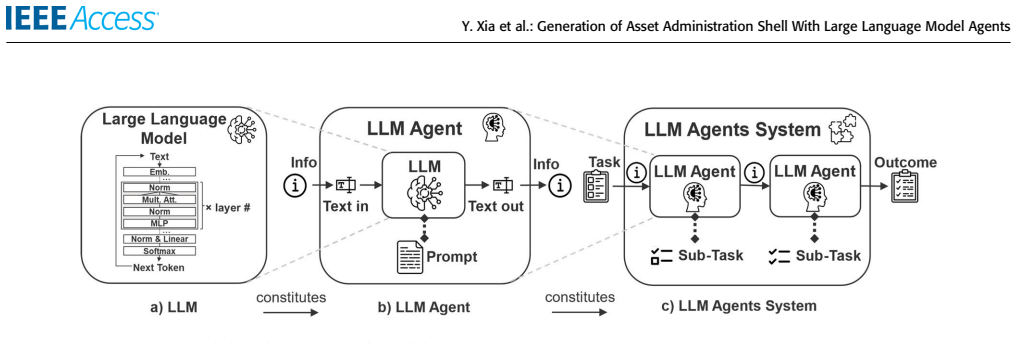
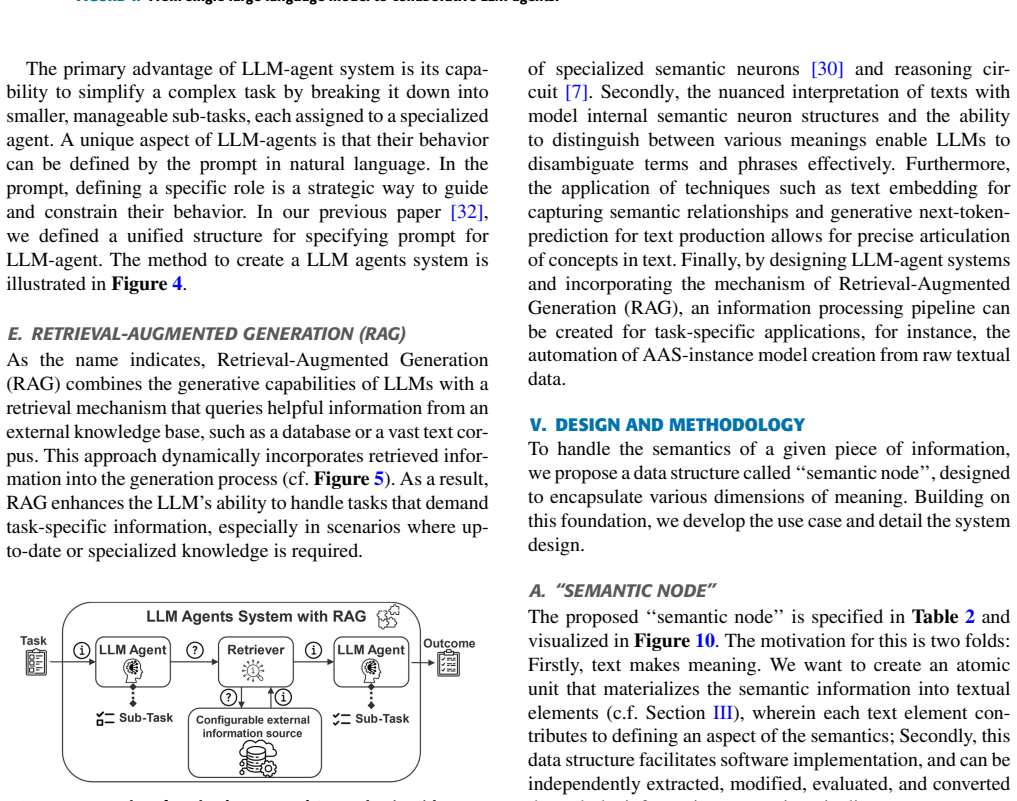
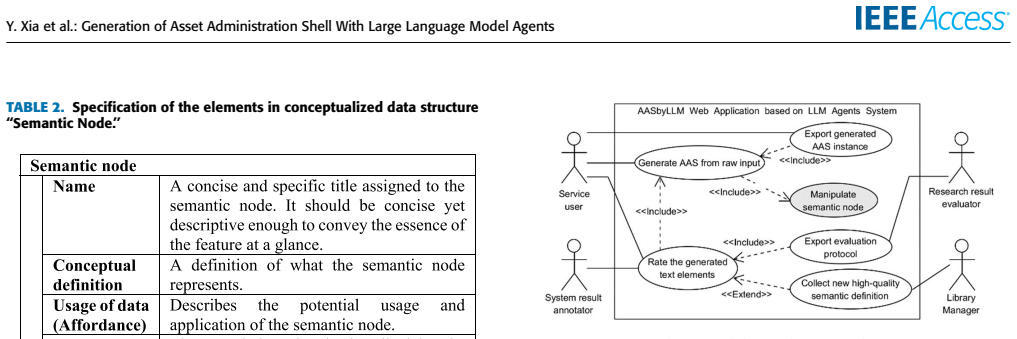
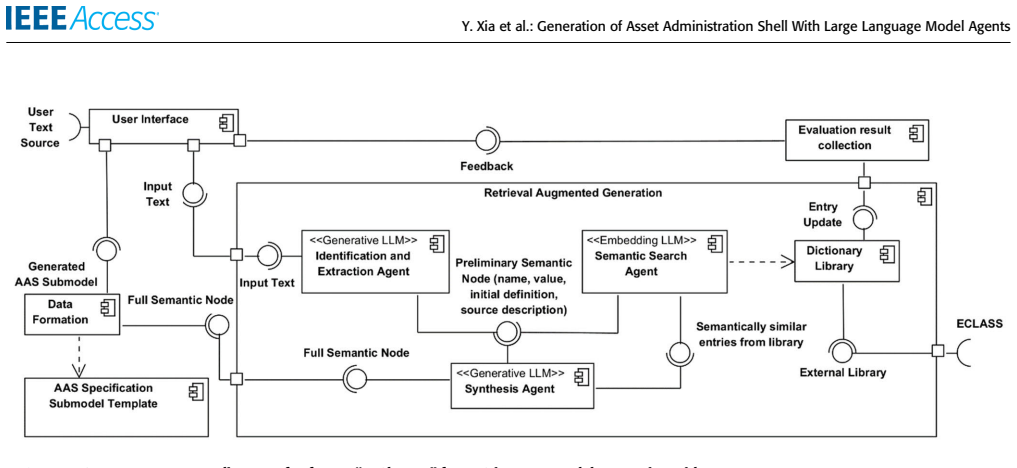
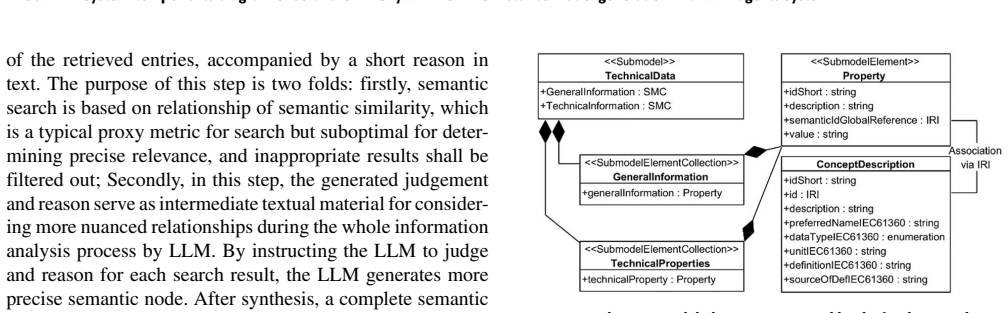
The dissertation proposes a three-layer framework integrating LLMs, digital twins, and automation systems into an autonomous system, with autonomy defined as a design property enabled through LLM-based reasoning. The Task-Process-Service-Resource (TPSR) model transforms user tasks into executable processes, supported by four LLM roles: process orchestration, service matching, digital resource generation, and agent-as-a-service. Five studies using design science methodology demonstrate adaptive task planning, event-driven control, simulation-based parameterization, and digital model generation, with results indicating high task executability, command correctness, and content-generation accura
What carries the argument
The Task-Process-Service-Resource (TPSR) model that transforms user tasks into executable processes via LLM roles.
If this is right
- User tasks can be interpreted and planned adaptively without fixed rule sets.
- Event-driven control and simulation-based parameterization become feasible for reconfiguration.
- Digital resources and models can be generated on demand to reduce configuration time.
- Overall system usability improves in non-safety-critical operations through reduced manual input.
Where Pith is reading between the lines
- The approach could support integration with other heterogeneous systems where physical-digital alignment is feasible.
- Safety-critical applications would likely still require human oversight layers even if the framework scales.
- Testing in environments with rapid physical changes could reveal limits of current LLM reliability for real-time decisions.
Load-bearing premise
Digital twins provide sufficiently accurate representations of physical systems to support reliable simulation and control, while LLMs can perform orchestration, matching, and generation roles without critical errors.
What would settle it
A deployment where the digital twin deviates from physical reality and LLM-generated commands produce incorrect or unsafe control actions in a dynamic production scenario.
Figures
read the original abstract
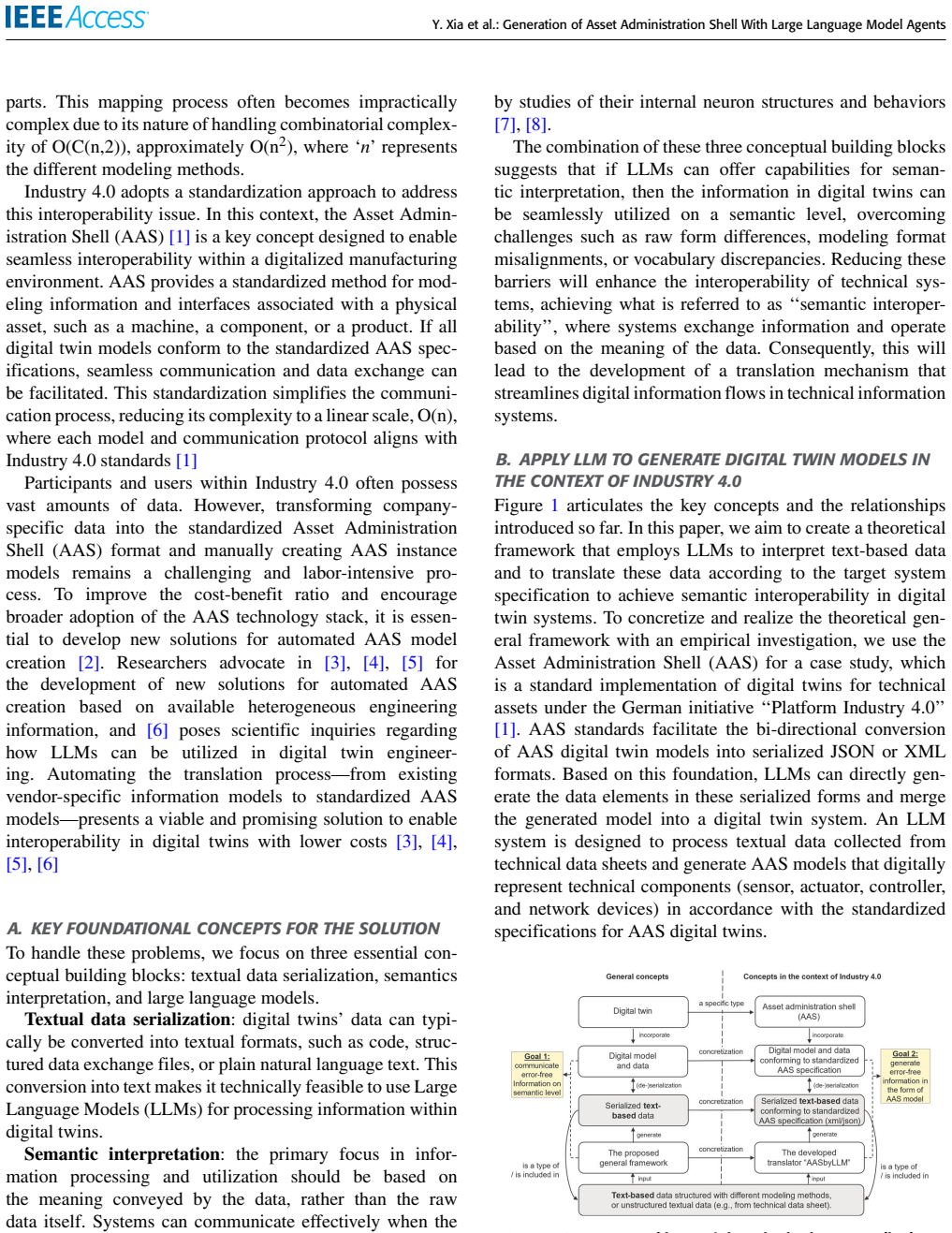
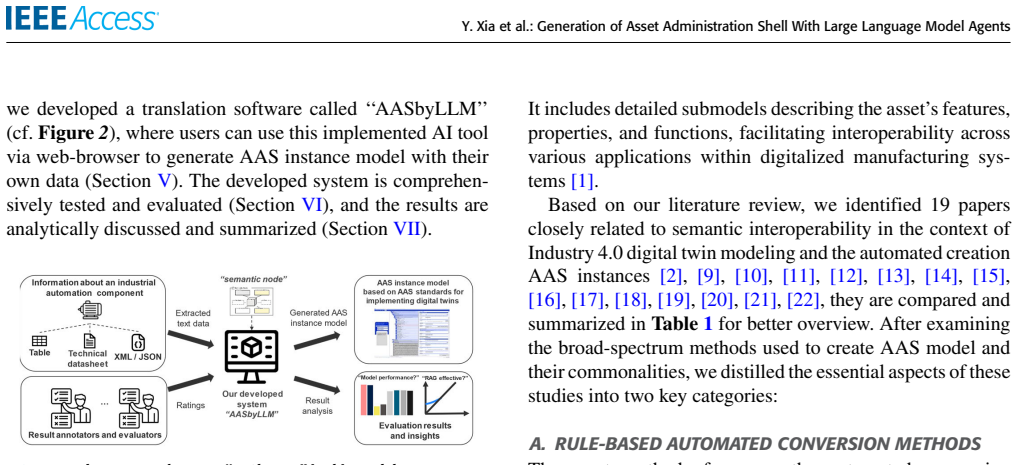
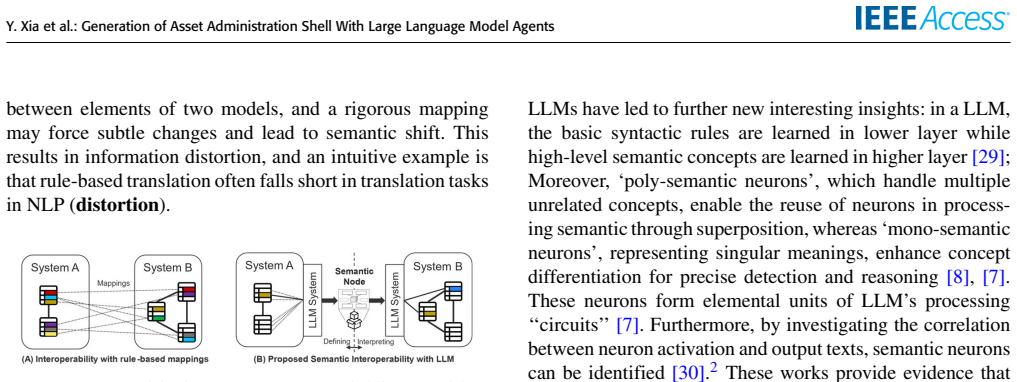
Industrial automation is being transformed by digitalization and the increasing use of cyber-physical systems. Modern production environments require greater adaptability, faster reconfiguration, and more intuitive human-machine interaction. However, traditional rule-based systems rely on fixed logic and cannot autonomously adapt to changing conditions. Consequently, current automation systems lack a systematic approach for integrating adaptive and generalizable reasoning capabilities for interpreting, planning, and executing user tasks across dynamic environments and heterogeneous components. This dissertation proposes a three-layer framework that integrates large language models (LLMs), digital twins, and automation systems into an autonomous system. Autonomy is defined as a design property assigned to system components and enabled through LLM-based reasoning to achieve adaptive, goal-oriented behavior. The Task-Process-Service-Resource (TPSR) model is introduced to transform user tasks into executable processes. Four LLM roles are identified: process orchestration, service matching, digital resource generation, and agent-as-a-service. Five peer-reviewed studies develop and refine these concepts using the design science research methodology. Case studies and prototypes demonstrate adaptive task planning, event-driven control, simulation-based parameterization, and digital model generation. Results show high task executability, command correctness, and content-generation accuracy while reducing manual effort. The framework enables the integration of LLM-based reasoning into industrial automation systems and improves adaptability and usability. Limitations include dependence on accurate digital representations, the computational demands of LLMs, and the need for human intervention in safety-critical situations.
Editorial analysis
A structured set of objections, weighed in public.
Referee Report
Summary. The manuscript is a dissertation proposing a three-layer framework that integrates large language models (LLMs), digital twins, and automation systems to enable autonomous industrial systems. Autonomy is defined as a design property enabled by LLM-based reasoning for adaptive, goal-oriented behavior. The Task-Process-Service-Resource (TPSR) model is introduced to transform user tasks into executable processes, and four LLM roles (process orchestration, service matching, digital resource generation, agent-as-a-service) are identified. Five peer-reviewed studies using design science methodology develop these concepts, with case studies and prototypes demonstrating adaptive task planning, event-driven control, simulation-based parameterization, and digital model generation. Results are reported as showing high task executability, command correctness, and content-generation accuracy while reducing manual effort. Limitations including dependence on accurate digital representations and need for human intervention in safety-critical cases are noted.
Significance. If the framework's effectiveness is substantiated, the work could advance industrial automation by offering a systematic approach to incorporating generalizable LLM reasoning into cyber-physical systems, addressing the rigidity of traditional rule-based automation. The use of design science methodology across multiple peer-reviewed studies provides a structured development path, and the TPSR model offers a concrete transformation mechanism. However, the absence of quantitative metrics or external validation limits the immediate significance to a conceptual proposal rather than a validated contribution.
major comments (3)
- [Abstract] Abstract: The central claim that 'case studies and prototypes demonstrate ... high task executability, command correctness, and content-generation accuracy while reducing manual effort' supplies no quantitative metrics, success rates, baseline comparisons, error bars, or exclusion criteria. This absence directly undermines verification of the claimed improvements in adaptability and usability.
- [Five peer-reviewed studies] Five peer-reviewed studies: All reported results derive from the author's own prior studies using design science methodology on the proposed framework, creating a self-referential evaluation loop without independent external benchmarks, shipped code, or third-party replication. This is load-bearing for the claim that the framework 'enables the integration of LLM-based reasoning into industrial automation systems'.
- [Limitations paragraph] Limitations paragraph: The framework's autonomy definition and TPSR transformation rest on the untested assumptions that digital twins provide sufficiently accurate representations for simulation-based parameterization and event-driven control, and that LLMs execute the four identified roles without critical errors in dynamic environments. These assumptions are flagged but not quantified or tested at industrial scale, making the autonomy claims conditional.
minor comments (1)
- [Abstract] The abstract would be strengthened by briefly indicating the scale of the case studies (e.g., number of tasks or components) even if detailed metrics appear later.
Simulated Author's Rebuttal
We thank the referee for the constructive feedback on our manuscript. We address each major comment below and indicate where revisions will be made to improve clarity and substantiation.
read point-by-point responses
-
Referee: [Abstract] Abstract: The central claim that 'case studies and prototypes demonstrate ... high task executability, command correctness, and content-generation accuracy while reducing manual effort' supplies no quantitative metrics, success rates, baseline comparisons, error bars, or exclusion criteria. This absence directly undermines verification of the claimed improvements in adaptability and usability.
Authors: We agree that the abstract would benefit from greater specificity. In the revised version, we will incorporate key quantitative results drawn from the five peer-reviewed studies, including task executability rates, command correctness percentages, and accuracy metrics, along with brief references to the evaluation conditions used in those studies. revision: yes
-
Referee: [Five peer-reviewed studies] Five peer-reviewed studies: All reported results derive from the author's own prior studies using design science methodology on the proposed framework, creating a self-referential evaluation loop without independent external benchmarks, shipped code, or third-party replication. This is load-bearing for the claim that the framework 'enables the integration of LLM-based reasoning into industrial automation systems'.
Authors: The manuscript is a dissertation synthesizing five studies that were each independently peer-reviewed and published prior to this work. This provides external validation through the peer-review process for each component. We acknowledge the value of additional external benchmarks and will add a dedicated subsection on reproducibility, including plans to release relevant prototypes and code where feasible. The design science methodology was chosen precisely because it supports iterative development and evaluation of novel frameworks in applied domains. revision: partial
-
Referee: [Limitations paragraph] Limitations paragraph: The framework's autonomy definition and TPSR transformation rest on the untested assumptions that digital twins provide sufficiently accurate representations for simulation-based parameterization and event-driven control, and that LLMs execute the four identified roles without critical errors in dynamic environments. These assumptions are flagged but not quantified or tested at industrial scale, making the autonomy claims conditional.
Authors: We will expand the limitations section to include more explicit discussion of these assumptions, drawing on quantitative observations from the case studies (e.g., digital twin fidelity levels observed and LLM error rates in the tested scenarios). We will also clarify that claims remain conditional on these factors and that industrial-scale validation lies outside the current scope. revision: yes
Circularity Check
Central claims of framework effectiveness rest on author's own five prior studies without independent external benchmarks
specific steps
-
self citation load bearing
[Abstract]
"Five peer-reviewed studies develop and refine these concepts using the design science research methodology. Case studies and prototypes demonstrate adaptive task planning, event-driven control, simulation-based parameterization, and digital model generation. Results show high task executability, command correctness, and content-generation accuracy while reducing manual effort. The framework enables the integration of LLM-based reasoning into industrial automation systems and improves adaptability and usability."
The performance results and demonstrations that support the framework's claimed benefits are derived exclusively from the author's own five prior peer-reviewed studies. This makes the central empirical claims (high executability, accuracy, reduced manual effort) justified only by self-citations, without independent external verification or benchmarks outside the author's body of work.
full rationale
The paper proposes a three-layer framework and TPSR model, then asserts high task executability, command correctness, and accuracy based on case studies and prototypes. These demonstrations are explicitly attributed to the author's five peer-reviewed studies using design science methodology. This creates a self-reinforcing evaluation loop where the load-bearing evidence for the central claims (adaptability, usability, integration) reduces to self-citations. No machine-checked proofs, parameter-free derivations, or externally falsifiable benchmarks outside the author's work are referenced. The derivation chain is therefore partially circular at the validation step, though the conceptual definitions of autonomy and LLM roles retain independent content.
Axiom & Free-Parameter Ledger
axioms (2)
- domain assumption Digital twins provide accurate enough representations of physical systems for simulation and control
- domain assumption LLMs can reliably execute the four identified roles without hallucinations or failures in industrial contexts
invented entities (1)
-
TPSR model
no independent evidence
Reference graph
Works this paper leans on
-
[1]
Weyrich, Industrial Automation and Information Technology
M. Weyrich, Industrial Automation and Information Technology. Berlin, Heidelberg: Springer Berlin Heidelberg, 202 4. doi: 10.1007/978-3-662-69243-1
-
[2]
An architecture of an Intelligent Digital Twin in a Cyber-Physical Production System,
B. Ashtari Talkhestani et al., “An architecture of an Intelligent Digital Twin in a Cyber-Physical Production System, ” At- Automatisierungstechnik, vol. 67, no. 9, pp. 762–782, Sep. 2019, doi: 10.1515/AUTO-2019-0039/PDF
-
[3]
A. S. Eddington, The nature of the physical world, vol. 39, no. 5. Dent, 1928
1928
-
[4]
Barbour, The End of Time: The Next Revolution in Physics
J. Barbour, The End of Time: The Next Revolution in Physics . Weidenfeld & Nicholson, 1999
1999
-
[5]
Language Models Repr esent Space and Time,
W. Gurnee and M. Tegmark, “Language Models Repr esent Space and Time,” in International Conference on Learning Representations, 2023. doi: 10.48550/ARXIV.2310.02207
-
[6]
Language models show human-like content effects on reasoning tasks,
I. Dasgupta et al., “Language models show human-like content effects on reasoning tasks,” Jul. 2022, doi: 10.48550/arXiv.2207.07051
-
[7]
Chain-of-Thought Prompting Elicits Reasoning in Large Language Models,
J. Wei et al., “Chain-of-Thought Prompting Elicits Reasoning in Large Language Models,” in Advances in Neural Information Processing Systems , S. Koyejo, S. Mohamed, A. Agarwal, D. Belgrave, K. Cho, and A. Oh, Eds., Curran Associates, Inc., 2022, pp. 24824–24837
2022
-
[8]
Procedural Knowledge in Pretraining Drives Reasoning in Large Language Models,
L. Ruis et al. , “Procedural Knowledge in Pretraining Drives Reasoning in Large Language Models,” in ICLR 2025, Nov. 2024. [Online]. Available: https://openreview.net/forum?id=1hQKHHUsMx
2025
-
[9]
Physics-informed neural networks: A step towards data-driven optimization of additive manufacturing,
Y. Xia, D. Dittler, N. Jazdi, H. Chen, and M. W eyrich, “LLM experiments with simulation: Large Language Model Multi-Agent System for Simulation Model Parametrization in Digi tal Twins,” in 2024 IEEE 29th ETFA , IEEE, Sep. 2024, pp. 1–4. doi: 10.1109/ETFA61755.2024.10710900
-
[10]
Y. Xia, J. Zhang, N. Jazdi, and M. Weyrich, “I ncorporating Large Language Models into Production Systems for Enhance d Task Automation and Flexibility,” Automation 2024, Jul. 2024, doi: 10.51202/9783181024379
-
[11]
Control Industrial Automation System with Large Language Models,
Y. Xia, N. Jazdi, J. Zhang, C. Shah, and M. We yrich, “Control Industrial Automation System with Large Language Models,” Sep. 2024, doi: 10.48550/arXiv.2409.18009
-
[12]
Y. Xia, M. Shenoy, N. Jazdi, and M. Weyrich, “ Towards autonomous system: Flexible modular production syst em enhanced with large language model agents,” IEEE ETFA, 2023, doi: 10.1109/ETFA54631.2023.10275362
-
[13]
Survey of hallucination in natural language generation,
Z. Ji et al. , “Survey of Hallucination in Natural Language Generation,” ACM Comput Surv , vol. 55, no. 12, Dec. 2023, [Online]. Available: https://dl.acm.org/doi/10.1145/3571730
-
[14]
Retrieval-Augmented Generation for Knowledge- Intensive NLP Tasks,
P. Lewis et al., “Retrieval-Augmented Generation for Knowledge- Intensive NLP Tasks,” in Advances in Neural Information Processing Systems, H. Larochelle, M. Ranzato, R. Hadsell, M. F. Balcan, and H. Lin, Eds., Curran Associates, Inc., 2020, pp. 9459–
2020
-
[15]
doi: 10.48550/arXiv.2501.00309
work page internal anchor Pith review Pith/arXiv arXiv doi:10.48550/arxiv.2501.00309
-
[16]
Retrieval-Augmented Generation for Knowledge-Intensive NLP Tasks
H. Han et al. , “Retrieval-Augmented Generation with Graphs (GraphRAG),” Dec. 2024, doi: 10.48550/arXiv.2005.11401
work page internal anchor Pith review Pith/arXiv arXiv doi:10.48550/arxiv.2005.11401 2024
-
[17]
ART: Automatic multi-step reaso ning and tool-use for large language models,
B. Paranjape, S. Lundberg, S. Singh, H. Hajish irzi, L. Zettlemoyer, and M. T. Ribeiro, “ART: Automatic multi-step reaso ning and tool-use for large language models,” Mar. 2023
2023
-
[18]
ToolLLM Facilitating Large Language Models to Master 16000+ Real-world APIs,
Y. Qin et al., “ToolLLM Facilitating Large Language Models to Master 16000+ Real-world APIs,” in The 12th International Conference on Learning Representations, 2024
2024
-
[19]
Model Context Protocol (MCP)
Anthropic, “Model Context Protocol (MCP).” [On line]. Available: https://docs.anthropic.com/en/docs/agents-and-tools/mcp
-
[20]
Scalin g LLM Test-Time Compute Optimally can be More Effective than Scalin g Model Parameters,
C. Snell, J. Lee, K. Xu, and A. Kumar, “Scalin g LLM Test-Time Compute Optimally can be More Effective than Scalin g Model Parameters,” Aug. 2024
2024
-
[21]
ReAct: Synergizing Reasoning and Acting in Language Models,
S. Yao et al. , “ReAct: Synergizing Reasoning and Acting in Language Models,” in International Conference on Learning Representations, 2023
2023
-
[22]
DeepSeek-R1: Incentivizing Reasoning Capability in LLMs via Reinforcement Learning,
D. Guo et al., “DeepSeek-R1: Incentivizing Reasoning Capability in LLMs via Reinforcement Learning,” Jan. 2025
2025
-
[23]
J. Gu et al., “A Survey on LLM-as-a-Judge,” Nov. 2024, [Online]. Available: https://arxiv.org/abs/2411.15594 Paper E: 8
Pith/arXiv arXiv 2024
discussion (0)
Sign in with ORCID, Apple, or X to comment. Anyone can read and Pith papers without signing in.