REVIEW 3 major objections 6 minor 7 references
From Bias to Accountability: How the EU AI Act Confronts Challenges in European GeoAI Auditing
T0 review · 3 major / 6 minor · reviewed 2026-08-07 · deepseek-v4-flash
Pith's one-line read Widely deployed GeoAI systems qualify as high-risk under the EU AI Act, making bias audits a legal requirement for their providers.
desk verdict Useful synthesis of GeoAI bias and EU AI Act obligations, but the high-risk classification overreaches for several illustrative systems. read the letter →
The pith
A machine-rendered reading of the paper's core claim, the machinery that carries it, and where it could break.
The reading
What carries the argument
The central legal machinery is the EU AI Act's risk-based classification under Article 6 with Annex III, which designates AI systems in areas like law enforcement, critical infrastructure, access to public services, justice, education, and migration as high-risk. The paper operationalizes this classification by pairing each high-risk area with a concrete GeoAI example and then constructing a bias-to-article mapping table that assigns each bias mechanism to the article that first obliges the provider to prevent or document the error source. This mapping table is the operative compliance structure the paper offers to practitioners and regulators.
What would settle it
If a systematic audit of a European high-risk GeoAI deployment, such as a Copernicus-based flood-vulnerability model or a German predictive-policing tool, found no significant accuracy disparities across spatial subgroups and no representativeness gaps in the underlying EU datasets, the paper's empirical justification for routine pre-2027 audits would be falsified; alternatively, a binding ruling that the GeoAI applications in Table 1 are not high-risk under Annex III would falsify the legal classification.
Extended reading notes
Core claim
On its own terms, the paper's central claim is that applying the EU AI Act's high-risk criteria to currently deployed GeoAI applications—predictive policing, disaster management, access to public services, administration of justice, education, and migration—shows they fall under Annex III, and therefore Articles 9-15 impose bias-related obligations on their providers. The paper constructs a mapping from bias mechanisms to 'gatekeeper' articles: Article 10 for data representativeness, Article 9 for risk management covering aggregation and subgroup effects, and Article 15 for accuracy, robustness, and post-market monitoring. It argues that existing technical audits, though scarce, already demonstrate detectable biases of these types, making routine audits a compliance necessity rather than an optional practice. As far as the authors know, this is the first integration of GeoAI bias evidence into the EU AI Act context.
Load-bearing premise
The paper generalizes from audits of non-European systems (Malawi, Philippines, Tanzania, and global tweets) to conclude that European GeoAI needs routine bias audits, without presenting a direct audit of a European high-risk GeoAI system.
Editorial extensions
If this is right
- Providers of GeoAI systems in the listed high-risk areas must implement data-governance checks for representativeness under Article 10, risk-management analyses that consider aggregation and subgroup effects under Article 9, and accuracy and robustness monitoring including post-deployment feedback loops under Article 15.
- Routine bias audits become a regulatory necessity for these systems before August 2027, not an optional best practice, with non-compliance potentially leading to fines of up to 7% of global turnover.
- Publicly documented audits of European datasets and GeoAI systems remain scarce, so the paper argues that even well-curated European datasets should be proactively audited to meet the Act's standards.
- The paper's mapping table gives practitioners a starting checklist for compliance, indicating which article gates each bias type and which secondary obligations, such as transparency under Article 13 and human oversight under Article 14, follow once the gatekeeper task is complete.
Reading between the lines
- If the classification holds, the same legal obligations could extend to general-purpose GeoAI foundation models once they mature, since the Act's general-purpose AI provisions also require bias documentation and reporting.
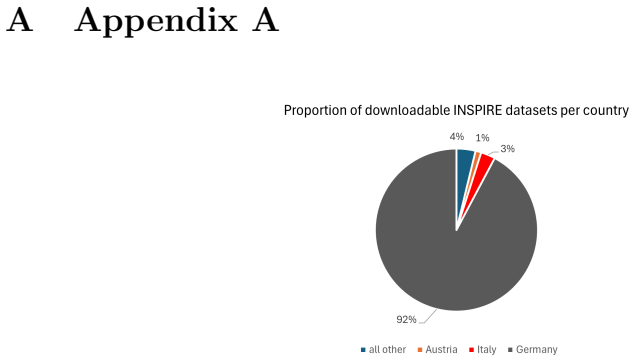
- The paper's reliance on non-European audits implies a testable prediction: targeted audits of European high-risk GeoAI deployments, such as Copernicus-based flood mapping or German predictive policing, will reveal analogous representation or aggregation biases, given that roughly 92% of INSPIRE datasets originate from German sources.
- The audit-tool market for spatial fairness metrics is likely to grow as the 2027 compliance deadline approaches, with existing tools such as AI Fairness 360 and Aequitas needing extensions to handle spatial autocorrelation and modifiable areal unit problems.
- A binding regulatory interpretation that a specific GeoAI application listed in Table 1 does not fall under Annex III would immediately shrink the scope of the obligation, so the paper's legal reading is provisional and deployment-specific.
Editorial analysis
A structured set of objections, weighed in public.
Referee Report
Summary. The paper synthesizes the fragmented literature on bias in geospatial AI (GeoAI), distinguishes representation, aggregation, and algorithmic bias, and maps these to specific provisions of the EU AI Act (Articles 9–15). It presents a classification table (Table 1) arguing that several widespread GeoAI applications—such as predictive policing, disaster management, access to public services, education, and border control—qualify as high-risk under Annex III, and a second table (Table 2) assigning each bias mechanism a 'gatekeeper' article. The paper then reviews three empirical audits (building footprints in the Philippines and Tanzania, flood-vulnerability mapping in Malawi, and global geoparsing benchmarks) and concludes that routine bias audits are needed before the AI Act's high-risk provisions take full effect in 2027. The authors explicitly label the conclusions provisional because direct European GeoAI audits are lacking.
Significance. If the high-risk classification claim is correct, the paper would identify a concrete legal obligation for many GeoAI providers, making bias auditing a compliance requirement rather than a best practice. The paper is clearly written and offers a useful, accessible synthesis of bias mechanisms, a practical table linking bias types to regulatory articles, and a transparent discussion of the current scarcity of audits. Strengths include the use of external evidence (published audits and the Act's text), no fitted parameters or circular derivations, and an explicit acknowledgement of the provisional nature of the conclusions. The mapping table is a plausible starting point for practitioners. However, the central claim that 'widely deployed GeoAI applications qualify as high-risk' is legally under-supported and requires substantial revision before the paper's policy recommendations can be accepted.
major comments (3)
- [Section 4.2, Table 1] The claim that widely deployed GeoAI applications qualify as high-risk under Annex III is not established, because several examples do not match the Annex's intended-use criteria. For example, FloodAI is listed under critical infrastructure (Annex III point 2), but the relevant criterion is whether the AI is a safety component in the management and operation of critical digital infrastructure, road traffic, or water/gas/heating/electricity supply; flood-vulnerability maps are not shown to be such a component. TreesAI is listed under access to public services (point 5(a)), but that point requires use by public authorities to evaluate eligibility for public assistance benefits or to grant or deny such benefits; optimizing urban tree planting does not evaluate eligibility. School geocoding is listed under education (point 3), but that point requires determining access or assigning individuals to educational institutions; travel-distance mapping is not that. Article 6(3) further excludes Annex III systems that do not materially influence decision-making. A case-by-case intended-purpose analysis is needed for each example, or the paper should explicitly narrow its claim to systems that are clearly covered (e.g., predictive policing and certain border-control uses).
- [Section 3, Section 7, Appendix A] The empirical urgency of routine bias audits for European GeoAI rests on audits of non-European systems (Malawi, Philippines, Tanzania, and global tweets) rather than on direct audits of European high-risk GeoAI. The authors concede this in Section 7, where they state that their conclusions rely on general evidence and remain provisional. The 92% INSPIRE provenance statistic in Appendix A is not sufficient to bridge that gap: it is described as a percentage computed in Excel from counts of downloadable datasets, but the note provides no sampling frame, query date, total count, or uncertainty, and the body text says 'all INSPIRE datasets' while the appendix says 'downloadable datasets.' Please provide a documented methodology for this statistic or relabel it as a weak illustrative indicator, and strengthen the argument that findings from non-EU settings transfer to European data quality.
- [Section 4.3, Table 2] The 'gatekeeper article' designations in Table 2 are asserted without legal reasoning. For example, aggregation bias is assigned to Article 9 (risk management), yet Article 10 explicitly lists 'aggregation' among the data governance practices and requires examining data for biases that could impact fundamental rights, so Article 10 is at least as natural a first-line obligation. The paper does not explain why Article 10 is not the gatekeeper for aggregation bias. Because the bias-to-article mapping is one of the paper's four claimed contributions, each row needs a legal justification, or the table should be relabeled as a heuristic interpretive aid rather than a definitive mapping.
minor comments (6)
- [Section 3] The abbreviation is inconsistent: 'ERPS' should be 'EPRS' (European Parliamentary Research Service).
- [Section 7] The text cites 'Masinde et al. (2022)' but attributes the quote to '(2024, p. 2)'; the reference list contains both Masinde et al. (2022) and Masinde et al. (2024), so please correct the citation year and ensure the quote matches the source.
- [Table 1] The first row contains a typo: 'spatio-termporal' should be 'spatio-temporal'.
- [Section 7] The conclusion refers to 'Chapter 3', but the paper uses 'Section 3' for the evidence-gap discussion; please make the cross-reference consistent.
- [Abstract and Introduction] The claim 'as far as we know, this study represents the first integration of GeoAI bias evidence into the EU AI Act context' is an unverifiable novelty assertion; suggest softening to 'to our knowledge' and acknowledging that prior legal analyses of the AI Act may have touched on geospatial data.
- [Appendix A] The figure note should state the exact date of data access and the number of downloadable datasets used, since the 92% statistic is self-computed and currently not reproducible from the given information.
Circularity Check
No significant circularity: the paper's high-risk classification and bias-to-article mapping are interpretive applications of the external EU AI Act text to external audit evidence; nothing is fitted, predicted from fitted inputs, or reduced to a self-citation.
full rationale
This paper performs no quantitative derivation: its chain runs from externally documented bias mechanisms (Friedman & Nissenbaum; Mehrabi et al.; Masinde et al.; Gevaert et al.; Liu et al.), through the text of the EU AI Act (Annex III, Articles 9-15, Recitals), to an interpretive mapping of bias types to legal obligations. No parameter is fitted, no quantity is predicted from fitted inputs, and no claim is defined in terms of its own conclusion. The 'high-risk' status of the Table 1 examples is asserted by applying Annex III's categories to external applications, and the paper explicitly hedges the Table 2 mapping as 'a practical summary, not a legal opinion' (Section 4.3). The reference list contains no self-citations by the present authors (Matuszczyk, Barnes, Gupta, Ozel, Mitra), so there is no load-bearing self-citation chain; the cited audits, the EPRS and Europol reports, and the Act itself are external evidence with stated assumptions that do not include the paper's conclusions. The Appendix A provenance statistic (roughly 92% of INSPIRE datasets of German origin) is descriptive and explicitly qualified ('This observation does not prove bias'), so it does not smuggle in the conclusion. Section 7 candidly concedes the empirical limitation that 'our conclusions rely on general evidence of bias in GeoAI and on only a few European studies rather than direct proof in high-risk GeoAI,' which is an external-validity caveat, not evidence of circularity. Whether Table 1's examples genuinely satisfy Annex III's intended-use criteria (e.g., whether flood-vulnerability maps are a safety component of critical infrastructure, or whether school geocoding determines access to education) is a contestable legal-interpretation question, i.e., a correctness risk rather than a circularity; per the review rules, 'not standard consensus' is not a circularity argument. The paper is self-contained against external benchmarks and exhibits no reduction of any derived claim to its own inputs, so the appropriate finding is no significant circularity (score 0).
Assumptions & free parameters
assumptions (3)
- domain assumption The EU AI Act Articles 9-15 impose the data, risk-management, transparency, human-oversight, and robustness obligations as summarized in the paper.
- domain assumption The cited empirical audits (Gevaert et al. 2024, Masinde et al. 2024, Liu et al. 2022) accurately document bias in their respective systems.
- domain assumption The 92% INSPIRE provenance statistic computed in Appendix A is accurate.
Cite this review
Pith. "Pith review of From Bias to Accountability: How the EU AI Act Confronts Challenges in European GeoAI Auditing." pith.science (2026). https://pith.science/paper/KJTPU4CU
@misc{pith2026250518236,
  author       = {Pith},
  title        = {Pith review of: From Bias to Accountability: How the EU AI Act Confronts Challenges in European GeoAI Auditing},
  year         = {2026},
  howpublished = {\url{https://pith.science/paper/KJTPU4CU}},
  note         = {Machine review of arXiv:2505.18236}
}
read the original abstract
Bias in geospatial artificial intelligence (GeoAI) models has been documented, yet the evidence is scattered across narrowly focused studies. We synthesize this fragmented literature to provide a concise overview of bias in GeoAI and examine how the EU's Artificial Intelligence Act (EU AI Act) shapes audit obligations. We discuss recurring bias mechanisms, including representation, algorithmic and aggregation bias, and map them to specific provisions of the EU AI Act. By applying the Act's high-risk criteria, we demonstrate that widely deployed GeoAI applications qualify as high-risk systems. We then present examples of recent audits along with an outline of practical methods for detecting bias. As far as we know, this study represents the first integration of GeoAI bias evidence into the EU AI Act context, by identifying high-risk GeoAI systems and mapping bias mechanisms to the Act's Articles. Although the analysis is exploratory, it suggests that even well-curated European datasets should employ routine bias audits before 2027, when the AI Act's high-risk provisions take full effect.
Figures

Figures from the paper (4 more)



Reference graph
Works this paper leans on
-
[1]
Abedi, F., & Rajabifard, A. (2024). Ethics, privacy and the perils of ’deepfake geography’ [[Accessed 30-03-2025]]. https://pursuit.unimelb.edu.au/articles/Ethics,-privacy- and-the-perils-of-deepfake-geography AI HLEG. (2019). Ethics guidelines for trustworthy ai (tech. rep.). European Commission. https://ec.europa.eu/newsroom/dae/document.cfm?doc id=6041...
work page 2024
-
[2]
Brochado, G. T., & Renn´ o, C. D. (2024). New method to correct vegetation bias in a copernicus digital elevation model to improve flow path delineation. Remote Sensing, 16 (22). https://doi.org/10.3390/rs16224332 Chen, S., Long, G., Jiang, J., Liu, D., & Zhang, C. (2023). Foundation models for weather and climate data understanding: A comprehensive surve...
arXiv 2024
-
[9]
Mahmood, H. (2022). Strategic foresight to applications of geospatial artificial intelligence (geoai) to achieve disaster-related sustainable development goals. Masinde, B., Gevaert, C. M., Nagenborg, M. H., van den Homberg, M., & Zevenbergen, J. A. (2022). Algorithmic fairness in geo-intelligence workflows through causality. n.d. Masinde, B., Gevaert, C....
work page 2022
-
[15]
Saleiro, P., Kuester, B., Hinkson, L., London, J., Stevens, A., Anisfeld, A., Rodolfa, K. T., & Ghani, R. (2018). Aequitas: A bias and fairness audit toolkit. arXiv preprint arXiv:1811.05577. Shaban, M., Salim, R., Abu Khalifeh, H., Khelifi, A., Shalaby, A., El-Mashad, S., Mah- moud, A., Ghazal, M., & El-Baz, A. (2021). A deep-learning framework for the d...
arXiv 2018
-
[419]
Mehrabi, N., Morstatter, F., Saxena, N., Lerman, K., & Galstyan, A. (2021). A survey on bias and fairness in machine learning. ACM computing surveys (CSUR), 54 (6), 1–35. Minghini, M., Cetl, V., Kotsev, A., Tomas, R., & Lutz, M. (2021). Inspire: The entry point to europe’s big geospatial data infrastructure. In M. Werner & Y.-Y. Chi- ang (Eds.), Handbook ...
-
[2351]
Shankar, S., Halpern, Y., Breck, E., Atwood, J., Wilson, J., & Sculley, D. (2017). No classification without representation: Assessing geodiversity issues in open data sets for the developing world. arXiv preprint arXiv:1711.08536 . 21 Stevens, J., Smith, J. M., & Bianchetti, R. A. (2012). Mapping our changing world. MacEachren AM, Peuquet DJ. Department ...
arXiv 2017
-
[4540]
Richardson, R., Schultz, J. M., & Crawford, K. (2019). Dirty data, bad predictions: How civil rights violations impact police data, predictive policing systems, and justice. NYUL Rev. Online , 94,
work page 2019
Reviewed August 7, 2026 · model on record in the stance chip above.
Discussion (0). Continue with ORCID to comment.