REVIEW 2 major objections 5 minor 73 references
A single conditional diffusion model learns a shared safe policy from multi-task offline data, meeting different cost limits at test time without retraining.
Reviewed by Pith at T0; open to challenge. T0 means a machine referee read the full paper against a public rubric. the ladder, T0–T4 →
T0 review · grok-4.5
2026-07-11 23:07 UTC pith:N2AO4SUC
load-bearing objection First clean formulation of multi-task offline safe RL plus a workable diffusion planner that actually switches cost thresholds at test time; the MetaDrive numbers hold up, the independence assumption in the guidance is the soft spot. the 2 major comments →
CDCP: Conditional Diffusion Model with Contextual Prompts for Multi-task Offline Safe Reinforcement Learning
The pith
A machine-rendered reading of the paper's core claim, the machinery that carries it, and where it could break.
Core claim
The multi-task offline safe RL problem (maximise average reward subject to per-task cumulative cost constraints, using only offline trajectories) can be solved by casting it as conditional generation of action sequences with a diffusion model, where classifier-free guidance on remaining reward and cost supplies flexible safety without Q-functions or Lagrangian multipliers.
What carries the argument
Classifier-free guided cost-constraint strategy inside the diffusion reverse process: the noise predictor is conditioned on observation history and contextual prompt always, and on remaining discounted reward and cost with probability 1-p_β; at sampling the two conditional scores are combined with an unconditional score so that different cost thresholds can be realised simply by changing the cost condition after training.
Load-bearing premise
That normalising remaining discounted cost to [0,1] and feeding it as a classifier-free condition is an accurate enough, non-conflicting signal to enforce cumulative (or state-wise) safety across tasks whose raw cost scales and distributions differ.
What would settle it
Retrain or re-evaluate CDCP on the same nine MetaDrive tasks after deliberately mis-normalising or removing the remaining-cost condition; if mean cost then exceeds the stated thresholds while reward stays high, or if test-time threshold changes no longer control cost, the flexible-constraint claim fails.
If this is right
- A single offline-trained model can serve multiple cost budgets for the same set of tasks by editing only the cost condition at inference.
- Setting the cost condition to zero converts cumulative cost constraints into state-wise constraints without architectural change.
- Contextual trajectory-plus-text prompts allow the same model to be adapted to previously unseen tasks from few expert trajectories.
- Gradient-loss synchronisation removes the need for manual task weighting when training a shared diffusion policy on heterogeneous offline datasets.
Where Pith is reading between the lines
- The same remaining-cost guidance idea could be ported to non-driving multi-task offline settings (robotic manipulation suites, process control) where cost scales also differ across tasks.
- If the independence assumption between reward and cost conditions is relaxed, a joint reward-cost embedding might further reduce residual cost overshoots observed on a few hard tasks.
- Because the method never estimates Q-values, it may scale more gracefully than conservative Q-learning variants when the number of simultaneous tasks grows beyond the nine used here.
Editorial analysis
A structured set of objections, weighed in public.
Referee Report
Summary. The paper defines multi-task offline safe RL (MTOS/CMTOS) as learning a shared policy that maximizes average discounted reward across tasks while satisfying per-task cumulative cost constraints from static multi-task datasets (Definition 1–2, Eq. 6). It recasts the problem as conditional diffusion generation of action sequences (Lemma IV.1, Eqs. 7–9), trains a DDPM-style noise predictor with classifier-free guidance that jointly conditions on remaining discounted reward and cost (Eq. 10, Prop. IV.2 / Eq. 11), injects contextual prompts consisting of short expert trajectory snippets plus a frozen language-model embedding of the task description (Eqs. 12–13), and balances multi-task gradients via a learned weight layer driven by loss norms and decay rates (Eqs. 14–19). On nine MetaDrive driving tasks the method reports higher mean reward (≈270) than five adapted baselines while keeping mean cost near or under a threshold of 25, supports different thresholds at test time without retraining (Table III, Remark IV.3), and shows limited few-shot transfer (Table IV).
Significance. If the empirical claims hold, the work supplies the first concrete formulation and practical algorithm for multi-task offline safe RL, a setting that is practically relevant for autonomous driving and multi-skill robotics where interaction is costly and safety is non-negotiable. The combination of supervised diffusion generation (thereby sidestepping OOD Q-value extrapolation), classifier-free cost guidance that permits post-hoc threshold changes, language-plus-trajectory contextual prompts, and a GradNorm-style loss synchronizer is a coherent engineering package. The experimental suite—nine heterogeneous MetaDrive tasks, three seeds, best-model evaluation over ten episodes, ablations of the three proposed components, few-shot transfer, and a cost-threshold sweep without retraining—is more thorough than is common for early papers in this niche and gives the community a usable baseline and dataset reference.
major comments (2)
- The central claim of flexible test-time cost control (Remark IV.3, Table III) rests on two linked modeling choices whose validity is not isolated: (i) feeding the remaining discounted trajectory cost after simple per-task min-max normalization (Eqs. 20–21 plus the free correction η_C) as a CFG condition, and (ii) the derivation of the combined perturbation noise (Prop. IV.2 / Eq. 11 and the Appendix proof) that treats reward and cost conditions as conditionally independent given the noisy action sequence. Figs. 3–4 show that the nine MetaDrive tasks possess markedly different raw cost scales and strong negative reward–cost correlation. If either the normalization fails to produce a commensurate guidance signal or the independence assumption is violated, the guidance direction becomes mis-specified and the model cannot be trusted to stay under a newly chosen threshold while preserving the
- All baselines are single-task offline-safe or multi-task offline methods that the authors themselves extend by simple task-ID embeddings or by adding CFG cost conditions (MTCPQ, MTCOptiDICE, MTCDT, CMTDD, CMTDiff). Because no prior multi-task offline safe RL algorithm exists, this is understandable, yet it leaves open whether the observed gains arise from the proposed architecture or merely from the fact that the baselines were never designed for the joint setting. A stronger experimental design would include at least one carefully re-tuned multi-task constrained offline method (e.g., a multi-task Lagrangian or multi-task COptiDICE with shared critics) so that the contribution of diffusion + contextual prompts can be isolated from the contribution of “being the first method purpose-built for the problem.”
minor comments (5)
- Notation inconsistency: the cost threshold is written both ¯c_i^τ and ¯C(τ_c); the correction factors η_R, η_C appear only in the practical-algorithm section and are never listed among the free parameters of the method.
- Fig. 5 and the ablation curves (Fig. 6) report only mean ± std over three seeds; individual-task learning curves or a table of final per-task costs under the zero-threshold setting would make the safety claim easier to inspect.
- The proof of Prop. IV.2 (Appendix) invokes conditional independence of y′, R and C given x_k; a short remark on how strongly this is violated by the MetaDrive data would help readers gauge the approximation quality.
- Several acronyms (MTOS, CMTOS, CDCP GradSync, etc.) are introduced without a glossary; a compact notation table would improve readability.
- Typos: “contained optimization” (p. 12), “unclassified guidance” (p. 11), “sightly exceeds” (p. 11), and occasional missing articles.
Circularity Check
No circularity: standard supervised diffusion reformulation of multi-task offline safe RL with empirical roll-out evaluation; flexible cost conditioning is by design of CFG, not a forced prediction.
full rationale
The paper reformulates the multi-task constrained objective (Defs. 1–2) as conditional generation (Lemma IV.1) and trains a diffusion model by ordinary supervised denoising loss (Eq. 10) on offline trajectories. Classifier-free guidance for reward/cost (Prop. IV.2 / Eq. 11) follows the standard multi-condition derivation under an explicit independence assumption whose proof is self-contained in the appendix; the resulting test-time flexibility (Remarks IV.3–IV.4) is a direct consequence of feeding remaining discounted cost as a free condition after per-task min-max normalization, not a mathematical identity that equates outputs to fitted inputs. Reported rewards/costs (Tables I–III) are measured on held-out environment roll-outs, not reconstructed from the training objective. Free parameters (κ, p_β, η_R, η_C) are ablated or fixed once. Self-citations to the authors’ prior single-task work (VOCE, POCE, etc.) appear only in related-work discussion and do not underwrite any uniqueness claim or load-bearing step of the multi-task derivation. No self-definitional loop, no fitted quantity re-labeled as prediction, and no ansatz smuggled via citation. The derivation chain is therefore self-contained against external benchmarks.
Axiom & Free-Parameter Ledger
free parameters (5)
- classifier-free guidance scale κ
- dropout probability p_β
- reward/cost correction factors η_R, η_C
- gradient-loss decay exponent η
- low-temperature sampling scale α
axioms (4)
- domain assumption Standard CMDP formulation of safe RL (Eq. 1) and multi-task average-reward objective (Eq. 2).
- standard math Diffusion reverse process can be trained by the simplified noise-prediction loss (Eq. 5) and sampled with DDPM.
- ad hoc to paper Reward and cost conditions are conditionally independent given the noisy action sequence (used in Prop. IV.2).
- ad hoc to paper Min-max normalization of remaining discounted return/cost maps every task onto a common [0,1] scale that preserves constraint semantics.
invented entities (2)
-
Contextual prompt M(τ) = [trajectory snippet, language embedding]
no independent evidence
-
Gradient-loss synchronization weight layer W
no independent evidence
read the original abstract
Multi-task offline safe reinforcement learning (RL) promises to learn a shared optimal safe policy from offline data across multiple tasks. This paradigm provides an effective means for the widespread application of RL in multi-task scenarios with high risk and interaction costs. However, the triple challenges of multi-tasking, safety constraints, and out-of-distribution (OOD) actions pose a significant hurdle for existing methods to ensure safety while maximizing reward returns. In this work, we propose a Conditional Diffusion model with Contextual Prompts (CDCP) to address these challenges. Concretely, we first rethink the requirements and challenges in current multi-task decision-making and control scenarios and establish the objectives of multi-task offline safe RL. Subsequently, we transform the multi-task constrained optimization problem into a conditional generation problem using the diffusion model. Based on this, we design a classifier-free guided cost-constraint strategy to provide flexible cost constraints and eliminate extrapolation errors from OOD actions via supervised learning. Additionally, we introduce a novel contextual prompting method to enhance multi-task representation accuracy and adaptability to unseen tasks. A gradient loss synchronization strategy is also introduced to eliminate gradient interference, improving training stability. Finally, extensive experiments demonstrate that the CDCP algorithm exhibits higher performance and safety in multi-task scenarios than the current state-of-the-art baseline methods. It meets different cost constraints without further training, providing a more flexible cost-constraint solution for the multi-task safe RL.
Figures


Reference graph
Works this paper leans on
-
[1]
Multi-task reinforcement learning in humans,
M. S. Tomov, E. Schulz, and S. J. Gershman, “Multi-task reinforcement learning in humans,”Nature Human Behaviour, vol. 5, no. 6, pp. 764– 773, 2021
2021
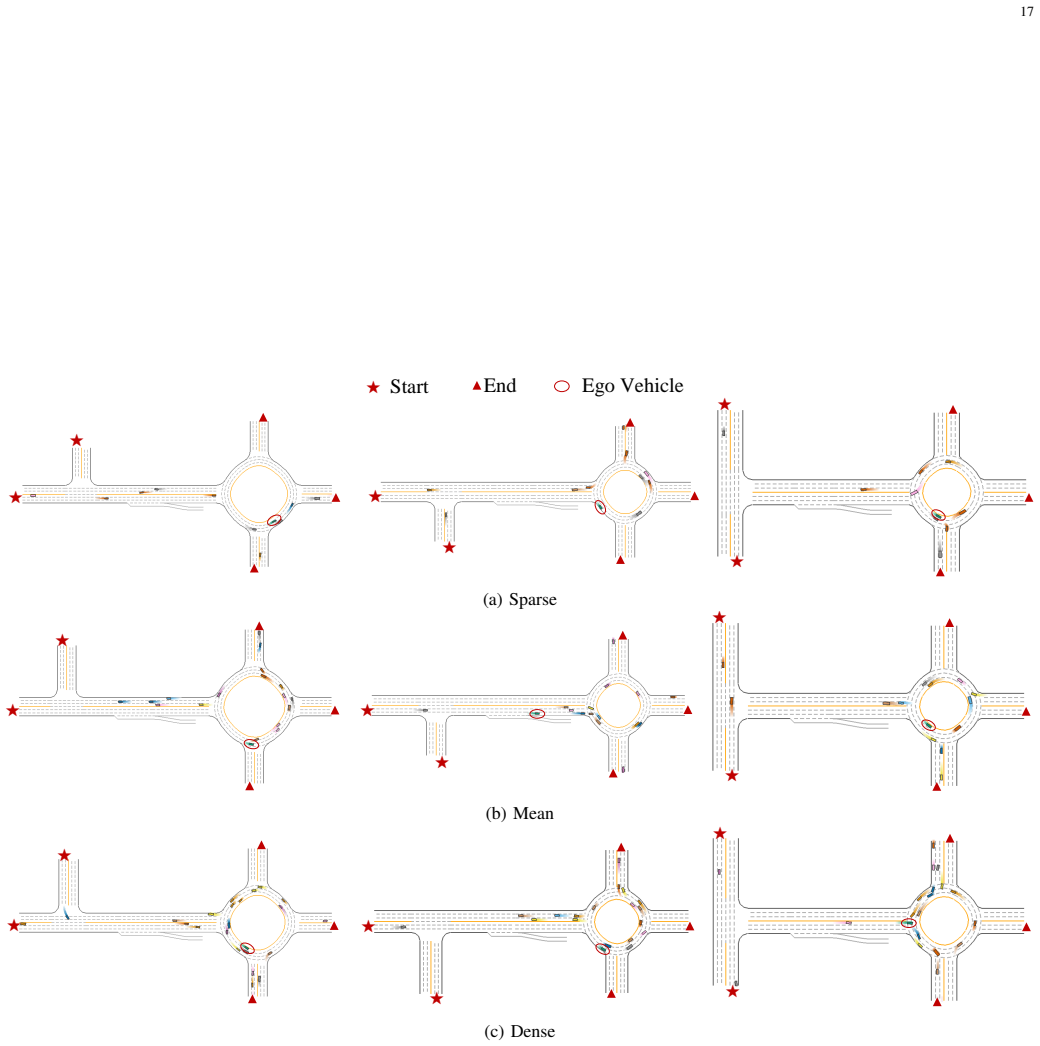
-
[2]
Curriculum-based asymmetric multi-task reinforcement learning,
H. Huang, D. Ye, L. Shen, and W. Liu, “Curriculum-based asymmetric multi-task reinforcement learning,”IEEE transactions on pattern anal- ysis and machine intelligence, vol. 45, no. 6, pp. 7258–7269, 2022
2022
-
[3]
Multi-task reinforcement learning with soft modularization,
R. Yang, H. Xu, Y . WU, and X. Wang, “Multi-task reinforcement learning with soft modularization,” inAdvances in Neural Information Processing Systems, vol. 33, 2020, pp. 4767–4777
2020
-
[4]
Meta-world: A benchmark and evaluation for multi-task and meta reinforcement learning,
T. Yu, D. Quillen, Z. He, R. Julian, K. Hausman, C. Finn, and S. Levine, “Meta-world: A benchmark and evaluation for multi-task and meta reinforcement learning,” inConference on robot learning. PMLR, 2020, pp. 1094–1100
2020
-
[5]
Lifelong robotic reinforcement learning by retain- ing experiences,
A. Xie and C. Finn, “Lifelong robotic reinforcement learning by retain- ing experiences,” inConference on Lifelong Learning Agents. PMLR, 2022, pp. 838–855
2022
-
[6]
Multi-task batch reinforcement learning with metric learning,
J. Li, Q. Vuong, S. Liu, M. Liu, K. Ciosek, H. Christensen, and H. Su, “Multi-task batch reinforcement learning with metric learning,” Advances in Neural Information Processing Systems, vol. 33, pp. 6197– 6210, 2020
2020
-
[7]
A discrete soft actor-critic decision-making strategy with sample filter for freeway autonomous driving,
J. Guan, G. Chen, J. Huang, Z. Li, L. Xiong, J. Hou, and A. Knoll, “A discrete soft actor-critic decision-making strategy with sample filter for freeway autonomous driving,”IEEE Transactions on Vehicular Technology, vol. 72, no. 2, pp. 2593–2598, 2022
2022
-
[8]
Longitudinal speed control of autonomous vehicle based on a self-adaptive pid of radial basis function neural network,
L. Nie, J. Guan, C. Lu, H. Zheng, and Z. Yin, “Longitudinal speed control of autonomous vehicle based on a self-adaptive pid of radial basis function neural network,”IET Intelligent Transport Systems, vol. 12, no. 6, pp. 485–494, 2018
2018
-
[9]
Skills regularized task decomposition for multi-task offline reinforcement learning,
M. Yoo, S. Cho, and H. Woo, “Skills regularized task decomposition for multi-task offline reinforcement learning,” in Advances in Neural Information Processing Systems, S. Koyejo, S. Mohamed, A. Agarwal, D. Belgrave, K. Cho, and A. Oh, Eds., vol. 35. Curran Associates, Inc., 2022, pp. 37 432–37 444. [Online]. Available: https://proceedings.neurips.cc/pape...
2022
-
[10]
Gnfactor: Multi-task real robot learning with generalizable neural feature fields,
Y . Ze, G. Yan, Y .-H. Wu, A. Macaluso, Y . Ge, J. Ye, N. Hansen, L. E. Li, and X. Wang, “Gnfactor: Multi-task real robot learning with generalizable neural feature fields,” inConference on Robot Learning. PMLR, 2023, pp. 284–301
2023
-
[11]
Multi-task learning with attention for end-to-end autonomous driving,
K. Ishihara, A. Kanervisto, J. Miura, and V . Hautamaki, “Multi-task learning with attention for end-to-end autonomous driving,” inPro- ceedings of the IEEE/CVF conference on computer vision and pattern recognition, 2021, pp. 2902–2911
2021
-
[12]
Aoi-aware resource allocation for platoon-based c-v2x networks via multi-agent multi-task reinforcement learning,
M. Parvini, M. R. Javan, N. Mokari, B. Abbasi, and E. A. Jorswieck, “Aoi-aware resource allocation for platoon-based c-v2x networks via multi-agent multi-task reinforcement learning,”IEEE Transactions on Vehicular Technology, vol. 72, no. 8, pp. 9880–9896, 2023
2023
-
[13]
A multi-task-learning- based transfer deep reinforcement learning design for autonomic optical networks,
X. Chen, R. Proietti, C.-Y . Liu, and S. B. Yoo, “A multi-task-learning- based transfer deep reinforcement learning design for autonomic optical networks,”IEEE Journal on Selected Areas in Communications, vol. 39, no. 9, pp. 2878–2889, 2021
2021
-
[14]
Multi-task deep reinforcement learning with popart,
M. Hessel, H. Soyer, L. Espeholt, W. Czarnecki, S. Schmitt, and H. Van Hasselt, “Multi-task deep reinforcement learning with popart,” in Proceedings of the AAAI Conference on Artificial Intelligence, vol. 33, no. 01, 2019, pp. 3796–3803
2019
-
[15]
A survey of multi-task deep reinforcement learning,
N. Vithayathil Varghese and Q. H. Mahmoud, “A survey of multi-task deep reinforcement learning,”Electronics, vol. 9, no. 9, p. 1363, 2020
2020
-
[16]
Provably efficient multi-task reinforcement learning with model transfer,
C. Zhang and Z. Wang, “Provably efficient multi-task reinforcement learning with model transfer,”Advances in Neural Information Process- ing Systems, vol. 34, pp. 19 771–19 783, 2021
2021
-
[17]
Toward trustworthy decision-making for autonomous vehicles: A robust reinforcement learning approach with safety guarantees,
X. He, W. Huang, and C. Lv, “Toward trustworthy decision-making for autonomous vehicles: A robust reinforcement learning approach with safety guarantees,”Engineering, vol. 33, pp. 77–89, 2024
2024
-
[18]
Residual policy learning facilitates efficient model-free autonomous racing,
R. Zhang, J. Hou, G. Chen, Z. Li, J. Chen, and A. Knoll, “Residual policy learning facilitates efficient model-free autonomous racing,”IEEE Robotics and Automation Letters, vol. 7, no. 4, pp. 11 625–11 632, 2022
2022
-
[19]
Metadrive: Composing diverse driving scenarios for generalizable reinforcement learning,
Q. Li, Z. Peng, L. Feng, Q. Zhang, Z. Xue, and B. Zhou, “Metadrive: Composing diverse driving scenarios for generalizable reinforcement learning,”IEEE transactions on pattern analysis and machine intelli- gence, vol. 45, no. 3, pp. 3461–3475, 2022
2022
-
[20]
Safe reinforce- ment learning for arm manipulation with constrained markov decision process,
P. Adjei, N. Tasfi, S. Gomez-Rosero, and M. A. Capretz, “Safe reinforce- ment learning for arm manipulation with constrained markov decision process,”Robotics, vol. 13, no. 4, p. 63, 2024
2024
-
[21]
Safe exploration in reinforcement learning: A generalized formulation and algorithms,
A. Wachi, W. Hashimoto, X. Shen, and K. Hashimoto, “Safe exploration in reinforcement learning: A generalized formulation and algorithms,” Advances in Neural Information Processing Systems, vol. 36, 2024
2024
-
[22]
Constraints penalized q-learning for safe offline reinforcement learning,
H. Xu, X. Zhan, and X. Zhu, “Constraints penalized q-learning for safe offline reinforcement learning,”Proceedings of the AAAI Conference on Artificial Intelligence, vol. 36, no. 8, pp. 8753–8760, 2022
2022
-
[23]
Poce: Primal policy optimization with conservative estimation for multi-constraint offline reinforcement learning,
J. Guan, L. Shen, A. Zhou, L. Li, H. Hu, X. He, G. Chen, and C. Jiang, “Poce: Primal policy optimization with conservative estimation for multi-constraint offline reinforcement learning,” inProceedings of the IEEE/CVF Conference on Computer Vision and Pattern Recognition, 2024, pp. 26 243–26 253
2024
-
[24]
J. Lee, C. Paduraru, D. J. Mankowitz, N. Heess, D. Precup, K.- E. Kim, and A. Guez, “Coptidice: Offline constrained reinforcement learning via stationary distribution correction estimation,”arXiv preprint arXiv:2204.08957, 2022
Pith/arXiv arXiv 2022
-
[25]
Constrained offline policy optimization,
N. Polosky, B. C. Da Silva, M. Fiterau, and J. Jagannath, “Constrained offline policy optimization,” inInternational Conference on Machine Learning. PMLR, 2022, pp. 17 801–17 810
2022
-
[26]
VOCE: Variational optimization with conservative estimation for offline safe reinforcement learning,
J. Guan, G. Chen, J. Ji, L. Yang, A. Zhou, Z. Li, and changjun jiang, “VOCE: Variational optimization with conservative estimation for offline safe reinforcement learning,” inThirty-seventh Conference on Neural Information Processing Systems, 2023. [Online]. Available: https://openreview.net/forum?id=sIU3WujeSl
2023
-
[27]
Sharing knowledge in multi-task deep reinforcement learning,
C. D’Eramo, D. Tateo, A. Bonarini, M. Restelli, and J. Peters, “Sharing knowledge in multi-task deep reinforcement learning,” inInternational Conference on Learning Representations, 2019
2019
-
[28]
Optimization of deep rein- forcement learning with hybrid multi-task learning,
N. V . Varghese and Q. H. Mahmoud, “Optimization of deep rein- forcement learning with hybrid multi-task learning,” in2021 IEEE International Systems Conference (SysCon). IEEE, 2021, pp. 1–8
2021
-
[29]
Conservative data sharing for multi-task offline reinforcement learn- ing,
T. Yu, A. Kumar, Y . Chebotar, K. Hausman, S. Levine, and C. Finn, “Conservative data sharing for multi-task offline reinforcement learn- ing,”Advances in Neural Information Processing Systems, vol. 34, pp. 11 501–11 516, 2021
2021
-
[30]
Multi-task reinforcement learning with context-based representations,
S. Sodhani, A. Zhang, and J. Pineau, “Multi-task reinforcement learning with context-based representations,” inInternational Conference on Machine Learning. PMLR, 2021, pp. 9767–9779
2021
-
[31]
Just pick a sign: Optimizing deep multitask models 13 with gradient sign dropout,
Z. Chen, J. Ngiam, Y . Huang, T. Luong, H. Kretzschmar, Y . Chai, and D. Anguelov, “Just pick a sign: Optimizing deep multitask models 13 with gradient sign dropout,”Advances in Neural Information Processing Systems, vol. 33, pp. 2039–2050, 2020
2039
-
[32]
Conflict-averse gradi- ent descent for multi-task learning,
B. Liu, X. Liu, X. Jin, P. Stone, and Q. Liu, “Conflict-averse gradi- ent descent for multi-task learning,”Advances in Neural Information Processing Systems, vol. 34, pp. 18 878–18 890, 2021
2021
-
[33]
Multi-task reinforcement learning with soft modularization,
R. Yang, H. Xu, Y . Wu, and X. Wang, “Multi-task reinforcement learning with soft modularization,”Advances in Neural Information Processing Systems, vol. 33, pp. 4767–4777, 2020
2020
-
[34]
Paco: Parameter- compositional multi-task reinforcement learning,
L. Sun, H. Zhang, W. Xu, and M. Tomizuka, “Paco: Parameter- compositional multi-task reinforcement learning,”Advances in Neural Information Processing Systems, vol. 35, pp. 21 495–21 507, 2022
2022
-
[35]
Recomposing the reinforcement learning building blocks with hypernetworks,
E. Sarafian, S. Keynan, and S. Kraus, “Recomposing the reinforcement learning building blocks with hypernetworks,” inInternational Confer- ence on Machine Learning. PMLR, 2021, pp. 9301–9312
2021
-
[36]
Batch policy learning under con- straints,
H. Le, C. V oloshin, and Y . Yue, “Batch policy learning under con- straints,” inInternational Conference on Machine Learning. PMLR, 2019, pp. 3703–3712
2019
-
[37]
Gendice: Generalized offline estimation of stationary values,
R. Zhang, B. Dai, L. Li, and D. Schuurmans, “Gendice: Generalized offline estimation of stationary values,” inInternational Conference on Learning Representations, 2019
2019
-
[38]
Coindice: Off-policy confidence interval estimation,
B. Dai, O. Nachum, Y . Chow, L. Li, C. Szepesv ´ari, and D. Schuur- mans, “Coindice: Off-policy confidence interval estimation,”Advances in neural information processing systems, vol. 33, pp. 9398–9411, 2020
2020
-
[39]
Optidice: Offline policy optimization via stationary distribution correction estimation,
J. Lee, W. Jeon, B. Lee, J. Pineau, and K.-E. Kim, “Optidice: Offline policy optimization via stationary distribution correction estimation,” in International Conference on Machine Learning. PMLR, 2021, pp. 6120–6130
2021
-
[40]
Coptidice: Offline constrained reinforcement learning via stationary distribution correction estimation,
J. Lee, C. Paduraru, D. J. Mankowitz, N. Heess, D. Precup, K.-E. Kim, and A. Guez, “Coptidice: Offline constrained reinforcement learning via stationary distribution correction estimation,” inInternational Confer- ence on Learning Representations, 2022
2022
-
[41]
Con- strained decision transformer for offline safe reinforcement learning,
Z. Liu, Z. Guo, Y . Yao, Z. Cen, W. Yu, T. Zhang, and D. Zhao, “Con- strained decision transformer for offline safe reinforcement learning,” inInternational Conference on Machine Learning. PMLR, 2023, pp. 21 611–21 630
2023
-
[42]
Saformer: A conditional sequence model- ing approach to offline safe reinforcement learning,
Q. Zhang, L. Zhang, H. Xu, L. Shen, B. Wang, Y . Chang, X. Wang, B. Yuan, and D. Tao, “Saformer: A conditional sequence model- ing approach to offline safe reinforcement learning,”arXiv preprint arXiv:2301.12203, 2023
Pith/arXiv arXiv 2023
-
[43]
Scaling up multi-task robotic reinforcement learning,
D. Kalashnikov, J. Varley, Y . Chebotar, B. Swanson, R. Jonschkowski, C. Finn, S. Levine, and K. Hausman, “Scaling up multi-task robotic reinforcement learning,” in5th Annual Conference on Robot Learning, 2021
2021
-
[44]
Perceiver-actor: A multi-task transformer for robotic manipulation,
M. Shridhar, L. Manuelli, and D. Fox, “Perceiver-actor: A multi-task transformer for robotic manipulation,” inConference on Robot Learning. PMLR, 2023, pp. 785–799
2023
-
[45]
Effective adapta- tion in multi-task co-training for unified autonomous driving,
X. Liang, Y . Wu, J. Han, H. Xu, C. Xu, and X. Liang, “Effective adapta- tion in multi-task co-training for unified autonomous driving,”Advances in Neural Information Processing Systems, vol. 35, pp. 19 645–19 658, 2022
2022
-
[46]
Learning shared rep- resentations in multi-task reinforcement learning,
D. Borsa, T. Graepel, and J. Shawe-Taylor, “Learning shared rep- resentations in multi-task reinforcement learning,”arXiv preprint arXiv:1603.02041, 2016
Pith/arXiv arXiv 2016
-
[47]
Multi-task reinforcement learning with attention-based mixture of experts,
G. Cheng, L. Dong, W. Cai, and C. Sun, “Multi-task reinforcement learning with attention-based mixture of experts,”IEEE Robotics and Automation Letters, 2023
2023
-
[48]
Shar- ing knowledge in multi-task deep reinforcement learning,
C. DEramo, D. Tateo, A. Bonarini, M. Restelli, and J. Peters, “Shar- ing knowledge in multi-task deep reinforcement learning,” inEighth International Conference on Learning Representations (ICLR 2020). OpenReview. net, 2020
2020
-
[49]
Impala: Scalable dis- tributed deep-rl with importance weighted actor-learner architectures,
L. Espeholt, H. Soyer, R. Munos, K. Simonyan, V . Mnih, T. Ward, Y . Doron, V . Firoiu, T. Harley, I. Dunninget al., “Impala: Scalable dis- tributed deep-rl with importance weighted actor-learner architectures,” inInternational conference on machine learning. PMLR, 2018, pp. 1407–1416
2018
-
[50]
Multi-goal reinforcement learning: Challenging robotics environments and request for research,
M. Plappert, M. Andrychowicz, A. Ray, B. McGrew, B. Baker, G. Pow- ell, J. Schneider, J. Tobin, M. Chociej, P. Welinderet al., “Multi-goal reinforcement learning: Challenging robotics environments and request for research,”arXiv preprint arXiv:1802.09464, 2018
Pith/arXiv arXiv 2018
-
[51]
Asynchronous methods for deep rein- forcement learning,
V . Mnih, A. P. Badia, M. Mirza, A. Graves, T. Lillicrap, T. Harley, D. Silver, and K. Kavukcuoglu, “Asynchronous methods for deep rein- forcement learning,” inInternational conference on machine learning. PMLR, 2016, pp. 1928–1937
2016
-
[52]
Deterministic policy gradient algorithms,
D. Silver, G. Lever, N. Heess, T. Degris, D. Wierstra, and M. Riedmiller, “Deterministic policy gradient algorithms,” inInternational conference on machine learning. Pmlr, 2014, pp. 387–395
2014
-
[53]
Sharing knowledge in multi-task deep reinforcement learning,
C. D’Eramo, D. Tateo, A. Bonarini, M. Restelli, J. Peterset al., “Sharing knowledge in multi-task deep reinforcement learning,” in8th International Conference on Learning Representations,{ICLR}2020, Addis Ababa, Ethiopia, April 26-30, 2020. International Conference on Learning Representations, ICLR, 2020, pp. 1–11
2020
-
[54]
Multi-game decision transformers,
K.-H. Lee, O. Nachum, M. S. Yang, L. Lee, D. Freeman, S. Guadarrama, I. Fischer, W. Xu, E. Jang, H. Michalewskiet al., “Multi-game decision transformers,”Advances in Neural Information Processing Systems, vol. 35, pp. 27 921–27 936, 2022
2022
-
[55]
Diffusion model is an effective planner and data synthesizer for multi-task reinforcement learning,
H. He, C. Bai, K. Xu, Z. Yang, W. Zhang, D. Wang, B. Zhao, and X. Li, “Diffusion model is an effective planner and data synthesizer for multi-task reinforcement learning,” inThirty-seventh Conference on Neural Information Processing Systems, 2023. [Online]. Available: https://openreview.net/forum?id=fAdMly4ki5
2023
-
[56]
Altman,Constrained Markov decision processes: stochastic modeling
E. Altman,Constrained Markov decision processes: stochastic modeling. Routledge, 1999
1999
-
[57]
Conservative q-learning for offline reinforcement learning,
A. Kumar, A. Zhou, G. Tucker, and S. Levine, “Conservative q-learning for offline reinforcement learning,”Advances in Neural Information Processing Systems, vol. 33, pp. 1179–1191, 2020
2020
-
[58]
Uac: Offline reinforcement learning with uncertain action constraint,
J. Guan, S. Gu, Z. Li, J. Hou, Y . Yang, G. Chen, and C. Jiang, “Uac: Offline reinforcement learning with uncertain action constraint,”IEEE Transactions on Cognitive and Developmental Systems, vol. 16, no. 2, pp. 671–680, 2023
2023
-
[59]
Generative modeling by estimating gradients of the data distribution,
Y . Song and S. Ermon, “Generative modeling by estimating gradients of the data distribution,”Advances in neural information processing systems, vol. 32, 2019
2019
-
[60]
Denoising diffusion probabilistic models,
J. Ho, A. Jain, and P. Abbeel, “Denoising diffusion probabilistic models,” Advances in neural information processing systems, vol. 33, pp. 6840– 6851, 2020
2020
-
[61]
Variational inference: A review for statisticians,
D. M. Blei, A. Kucukelbir, and J. D. McAuliffe, “Variational inference: A review for statisticians,”Journal of the American statistical Associa- tion, vol. 112, no. 518, pp. 859–877, 2017
2017
-
[62]
Efficient diffusion policies for offline reinforcement learning,
B. Kang, X. Ma, C. Du, T. Pang, and S. Yan, “Efficient diffusion policies for offline reinforcement learning,”Advances in Neural Information Processing Systems, vol. 36, 2024
2024
-
[63]
Is conditional generative modeling all you need for decision-making?
A. Ajay, Y . Du, A. Gupta, J. B. Tenenbaum, T. S. Jaakkola, and P. Agrawal, “Is conditional generative modeling all you need for decision-making?” inNeurIPS 2022 Foundation Models for Decision Making Workshop, 2022
2022
-
[64]
Efficient learning of safe driving policy via human-ai copilot optimization,
Q. Li, Z. Peng, and B. Zhou, “Efficient learning of safe driving policy via human-ai copilot optimization,” inInternational Conference on Learning Representations, 2021
2021
-
[65]
Safe driving via expert guided policy optimization,
Z. Peng, Q. Li, C. Liu, and B. Zhou, “Safe driving via expert guided policy optimization,” inConference on Robot Learning. PMLR, 2022, pp. 1554–1563
2022
-
[66]
Denoising diffusion probabilistic models,
J. Ho, A. Jain, and P. Abbeel, “Denoising diffusion probabilistic models,” inAdvances in Neural Information Processing Systems, H. Larochelle, M. Ranzato, R. Hadsell, M. Balcan, and H. Lin, Eds., vol. 33. Curran Associates, Inc., 2020, pp. 6840–6851. [Online]. Available: https://proceedings.neurips.cc/paper files/paper/ 2020/file/4c5bcfec8584af0d967f1ab10...
2020
-
[67]
Gradnorm: Gradient normalization for adaptive loss balancing in deep multitask networks,
Z. Chen, V . Badrinarayanan, C.-Y . Lee, and A. Rabinovich, “Gradnorm: Gradient normalization for adaptive loss balancing in deep multitask networks,” inInternational conference on machine learning. PMLR, 2018, pp. 794–803
2018
-
[68]
Datasets and benchmarks for offline safe reinforcement learning,
Z. Liu, Z. Guo, H. Lin, Y . Yao, J. Zhu, Z. Cen, H. Hu, W. Yu, T. Zhang, J. Tanet al., “Datasets and benchmarks for offline safe reinforcement learning,”arXiv preprint arXiv:2306.09303, 2023
Pith/arXiv arXiv 2023
-
[69]
Learning to simulate self-driven particles system with coordinated policy optimization,
Z. Peng, Q. Li, K. M. Hui, C. Liu, and B. Zhou, “Learning to simulate self-driven particles system with coordinated policy optimization,”Ad- vances in Neural Information Processing Systems, vol. 34, pp. 10 784– 10 797, 2021
2021
-
[70]
Understanding diffusion models: A unified perspective,
C. Luo, “Understanding diffusion models: A unified perspective,”arXiv preprint arXiv:2208.11970, 2022
Pith/arXiv arXiv 2022
-
[71]
Denoising diffusion implicit models,
J. Song, C. Meng, and S. Ermon, “Denoising diffusion implicit models,” inInternational Conference on Learning Representations, 2022. 14 VII. SUPPLEMENTARYMATERIAL A. Proof and Discussion the Proposition IV .2 Proposition VII.1.The perturbation noiseˆϵin the interme- diate steps of the denoising process, which takes the state sequenceO(τ c)and task context...
2022
-
[72]
Table 2 outlines the primary network parameters of the model implemented by our CDCP algorithm
Experimental Setting:The experiment is conducted on a server equipped with L40s, utilizing PyTorch for model construction, training, and testing. Table 2 outlines the primary network parameters of the model implemented by our CDCP algorithm. Furthermore, the code appendix contains detailed configuration information for the testing environment. For instruc...
-
[73]
These scenarios include environments such as curves, intersections, T-junctions, and roundabouts
Tasks for Experimental:Our experiments select nine safety-constrained autonomous driving scenarios encompass- ing diverse driving situations and traffic densities. These scenarios include environments such as curves, intersections, T-junctions, and roundabouts. Regarding traffic density, the tasks cover sparse, medium, and dense traffic flow. Fig. 8 prese...
discussion (0)
Sign in with ORCID, Apple, or X to comment. Anyone can read and Pith papers without signing in.