REVIEW 2 major objections 2 minor 3 references
"\^{I}n\c{t}elegi Rom\^ane\c{s}te?'' A Recipe for Romanian Vision-Language Models
T0 review · 2 major / 2 minor · reviewed 2026-06-28 · grok-4.3
Pith's one-line read Translating English vision-language datasets into Romanian produces models that outperform both same-sized and next-larger English-trained models on benchmarks.
desk verdict Romanian VLM adaptation via translated data beats size baselines but the MT step for in-image text lacks supporting checks. read the letter →
The pith
A machine-rendered reading of the paper's core claim, the machinery that carries it, and where it could break.
The reading
What carries the argument
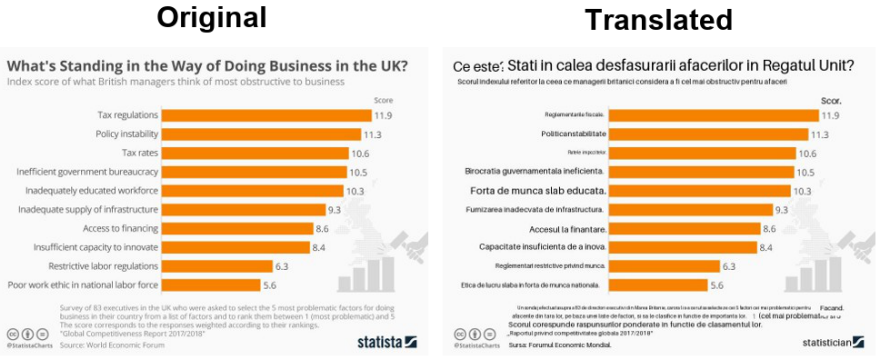
The translation pipeline that converts textual annotations and in-image text from English VLM datasets into Romanian, paired with ablations over vision backbones, language backbones, and OCR data.
What would settle it
A controlled test where the same model architecture trained on the translated Romanian data shows no improvement or lower scores than the English baseline on the same Romanian benchmarks would falsify the central performance claim.
Extended reading notes
Core claim
Romanian-adapted VLMs, built by translating established English VLM training and evaluation corpora into Romanian while preserving visual grounding, consistently outperform their same-sized counterparts and surpass models from the next larger size category across all evaluated benchmarks, including the new HoraVQA set.
Load-bearing premise
Machine translation of textual annotations and in-image text preserves visual grounding and cultural relevance enough for the data to train effective VLMs.
Editorial extensions
If this is right
- Romanian VLMs can be created without collecting new large-scale native image-text pairs.
- Adapting language backbones to Romanian yields measurable gains even when vision components remain multilingual.
- Including translated in-image text during training improves handling of Romanian text appearing in images.
- Culturally native test sets like HoraVQA reveal performance differences not captured by translated English benchmarks alone.
Reading between the lines
- The same translation-based recipe could be applied to other low-resource languages that lack native VLM data.
- If the approach scales, it reduces reliance on expensive native data collection for many languages.
- Performance edges on Romanian tasks may translate to better results in practical applications such as Romanian image captioning or visual question answering.
Editorial analysis
A structured set of objections, weighed in public.
Referee Report
Summary. The paper presents a systematic pipeline for adapting Vision-Language Models to Romanian: it translates English VLM training/evaluation corpora (annotations and in-image text) via machine translation, trains and ablates models varying vision backbones, language backbones (multilingual vs. Romanian-adapted), and OCR-style data, introduces the culturally grounded HoraVQA benchmark, and claims that the resulting Romanian-adapted VLMs outperform same-sized baselines and even surpass next-larger-size models across all evaluated benchmarks.
Significance. If the performance claims hold after addressing data-quality verification, the work supplies a concrete, reproducible recipe for low-resource VLM adaptation that could extend to other languages, while the new HoraVQA set adds a culturally native evaluation resource. The systematic ablations on backbone choices and the explicit handling of in-image text translation are strengths that would make the contribution actionable for the field.
major comments (2)
- [Data construction] Data construction section: the central claim that Romanian-adapted VLMs outperform same-size and next-larger baselines rests on the assumption that MT of in-image text preserves visual grounding and alignment; however, no independent quality metric, post-editing protocol, human evaluation scores, or ablation isolating MT-induced misalignment is reported, leaving open the possibility that observed gains are confounded by translation artifacts rather than language adaptation.
- [Results] Results and ablations: the abstract states performance gains from adaptation and ablations but supplies no quantitative tables, error bars, statistical tests, or per-benchmark breakdowns; without these, it is impossible to verify whether the "surpass next larger size category" result is robust or driven by particular benchmarks where MT artifacts may be less penalizing.
minor comments (2)
- [Methods] Notation for model variants (e.g., vision vs. language backbone combinations) should be standardized in a table early in the methods section for clarity.
- [Evaluation] The description of HoraVQA curation would benefit from explicit details on image sourcing, annotation protocol, and inter-annotator agreement to allow replication.
Simulated Author's Rebuttal
We thank the referee for the constructive feedback. We address the two major comments point-by-point below and will revise the manuscript to improve clarity and verifiability.
read point-by-point responses
-
Referee: [Data construction] Data construction section: the central claim that Romanian-adapted VLMs outperform same-size and next-larger baselines rests on the assumption that MT of in-image text preserves visual grounding and alignment; however, no independent quality metric, post-editing protocol, human evaluation scores, or ablation isolating MT-induced misalignment is reported, leaving open the possibility that observed gains are confounded by translation artifacts rather than language adaptation.
Authors: We agree that the absence of explicit quality verification for in-image text translation is a limitation. The current manuscript applies off-the-shelf MT to both annotations and in-image text while keeping visual content fixed, but does not report BLEU scores, human alignment ratings, or a dedicated ablation on MT artifacts. In revision we will add a dedicated subsection reporting automatic metrics on a held-out sample, a small human evaluation of grounding preservation, and an explicit discussion of potential confounding effects. This will allow readers to assess whether gains are driven by language adaptation or translation artifacts. revision: yes
-
Referee: [Results] Results and ablations: the abstract states performance gains from adaptation and ablations but supplies no quantitative tables, error bars, statistical tests, or per-benchmark breakdowns; without these, it is impossible to verify whether the "surpass next larger size category" result is robust or driven by particular benchmarks where MT artifacts may be less penalizing.
Authors: The full manuscript already contains quantitative tables, ablation results, and per-benchmark breakdowns in the Experiments section, including direct comparisons against same-size and next-larger models. The abstract intentionally provides only a high-level summary. To address the concern we will (i) insert a small number of key quantitative highlights into the abstract and (ii) ensure error bars and any available statistical tests are explicitly shown or referenced in the main results tables. We maintain that the "surpass next larger" pattern holds across the full set of benchmarks, but agree that clearer per-benchmark visibility will strengthen the claim. revision: partial
Circularity Check
No circularity: empirical training and evaluation pipeline
full rationale
The paper describes an empirical pipeline of machine-translating English VLM corpora (annotations and in-image text) into Romanian, followed by model training, ablation studies on vision/language backbones and OCR data, and evaluation on benchmarks including a new culturally native set. No equations, fitted parameters, or derivations are presented that reduce to inputs by construction. No self-citations are invoked as load-bearing uniqueness theorems or ansatzes. The central claims rest on direct experimental outcomes rather than self-referential definitions or renamings, making the work self-contained against external benchmarks.
Assumptions & free parameters
assumptions (1)
- domain assumption Machine translation of English annotations and in-image text is of sufficient quality to preserve visual grounding for VLM training.
Cite this review
Pith. "Pith review of "\^{I}n\c{t}elegi Rom\^ane\c{s}te?'' A Recipe for Romanian Vision-Language Models." pith.science (2026). https://pith.science/paper/OTFN7GON
@misc{pith2026260531401,
  author       = {Pith},
  title        = {Pith review of: "\^In\ctelegi Rom\^ane\cste?'' A Recipe for Romanian Vision-Language Models},
  year         = {2026},
  howpublished = {\url{https://pith.science/paper/OTFN7GON}},
  note         = {Machine review of arXiv:2605.31401}
}
read the original abstract
Vision-Language Models (VLMs) largely follow the text-only LLM trajectory, excelling on English benchmarks but sharply degrading on low-resource languages, where neither large-scale image-text corpora nor culturally grounded evaluations exist. We present a systematic study of building a language-specific VLM for Romanian, covering the full pipeline from data construction to architectural choices. We translate established English VLM training and evaluation corpora into Romanian, applying machine translation to textual annotations and to in-image text, preserving visual grounding while adapting the textual content. Using this data, we train and ablate a series of VLMs to isolate the contribution of (i) vision backbones of varying scale and pretraining, (ii) language backbones from multilingual to Romanian-adapted LLMs, and (iii) OCR-style image-text data. We further curate HoraVQA, a culturally native evaluation set grounded in Romanian everyday scenes. Romanian-adapted VLMs consistently outperform their same-sized counterparts and, across all evaluated benchmarks, even surpass models from the next larger size category.
Figures


Figures from the paper (6 more)



Reference graph
Works this paper leans on
-
[1]
Parameter efficient multimodal instruction tuning for romanian vision language models.arXiv preprint arXiv:2512.14926. Chaoyou Fu, Peixian Chen, Yunhang Shen, Yulei Qin, Mengdan Zhang, Xu Lin, Jinrui Yang, Xiawu Zheng, Ke Li, Xing Sun, and 1 others. 2026. Mme: A comprehensive evaluation benchmark for multimodal large language models.Advances in Neural Inf...
work page Pith review arXiv 2026
-
[2]
Qwen2-VL: Enhancing Vision-Language Model's Perception of the World at Any Resolution
All languages matter: Evaluating lmms on culturally diverse 100 languages. InProceedings of the Computer Vision and Pattern Recognition Con- ference, pages 19565–19575. Peng Wang, Shuai Bai, Sinan Tan, Shijie Wang, Zhi- hao Fan, Jinze Bai, Keqin Chen, Xuejing Liu, Jialin Wang, Wenbin Ge, and 1 others. 2024. Qwen2- vl: Enhancing vision-language model’s per...
work page Pith review arXiv 2024
-
[3]
Penguin-vl: Exploring the efficiency limits of vlm with llm-based vision encoders.arXiv preprint arXiv:2603.06569. Kaichen Zhang, Bo Li, Peiyuan Zhang, Fanyi Pu, Joshua Adrian Cahyono, Kairui Hu, Shuai Liu, Yuan- han Zhang, Jingkang Yang, Chunyuan Li, and Zi- wei Liu. 2024. Lmms-eval: Reality check on the evaluation of large multimodal models.Preprint, ar...
Reviewed June 28, 2026 · model on record in the stance chip above.
Discussion (0). Sign in to comment.