REVIEW 5 major objections 5 minor 1 cited by
LLMs Can Simulate Standardized Patients via Agent Coevolution
T0 review · 5 major / 5 minor · reviewed 2026-08-11 · deepseek-v4-flash
Pith's one-line read The paper claims that unsupervised coevolution between patient and doctor agents, backed by two retrieval libraries, turns a novice LLM patient agent into a standardized patient that beats prompted reasoning baselines by more than 10% in…
desk verdict New coevolution mechanism for LLM standardized patients with real promise, but the unspecified validation gate makes the headline gains potentially circular. read the letter →
The pith
A machine-rendered reading of the paper's core claim, the machinery that carries it, and where it could break.
The reading
What carries the argument
The engine is the coevolution loop between two retrieval libraries. The Attention Library stores validated answer episodes as quadruples of question, records, answer, and attention requirements; an attention agent first splits the long standardized-patient requirement text into trunks and extracts only the lines relevant to the current question, and the patient agent uses the retrieved quadruple as a few-shot demonstration plus refined instructions. The Trajectories Library stores dialogue transitions of the form previous question, previous answer, next question, and next answer; a doctor agent facing a current answer retrieves similar past transitions and receives recommended next questions, so its questioning becomes more specialized and efficient over time. A multidisciplinary recruitment process, organized as a directed acyclic graph, lets doctor agents call in other specialties during a case, which increases question diversity. Neither library requires weight updates: all learning is storage, retrieval, and prompt assembly.
What would settle it
Run EvoPatient with the validation step replaced by random acceptance of answers and compare the final scores; if performance stays near the reported levels, the validator is not doing the claimed work. Alternatively, have clinicians independently score a sample of entries admitted to the Attention Library: if expert quality ratings do not correlate with the framework's internal quality decision, the robustness and faithfulness gains are an artifact of the validator rather than evidence of standardized-patient skill.
Extended reading notes
Core claim
The paper's central claim is that a novice LLM patient agent can be turned into a standardized patient by autonomous coevolution, with no human supervision, no weight updates, and only a generic set of role-playing requirements as input. Over simulated diagnostic dialogues, doctor agents ask questions and patient agents answer; a validation step stores high-quality exchanges in an Attention Library and a Trajectories Library. At inference, the patient agent retrieves similar stored demonstrations and refined requirement lines, while doctor agents retrieve question trajectories to ask more professional questions. After evolving on 200 cases for about 10 hours, EvoPatient reaches Faithfulness 0.8786, Robustness 0.9412, and Ability 0.8597, surpassing all prompted reasoning baselines by more than 10% in requirement alignment and winning pairwise preference comparisons with human experts and an LLM judge. The paper also reports that the learned presentation pattern transfers to other diseases, raising Robustness by about 18.1% when applied without further training.
Load-bearing premise
The load-bearing premise is that the framework's unstated validation step reliably identifies high-quality standardized-patient responses without human oversight; if that validator is noisy or rewards the wrong behavior, the libraries store and reinforce the wrong answering pattern and the claimed gains will not transfer to real clinical training.
Editorial extensions
If this is right
- Training standardized patients becomes a data-driven loop: given de-identified records and a generic role description, the system can evolve its own presentation library without expert annotations or model fine-tuning.
- Transfer learning is plausible across diseases: a library evolved on one disease improves patient answers on five other diseases, with Faithfulness up by about 13.8% and Robustness by about 18.1%, suggesting the learned presentation style generalizes.
- Information-leakage defense improves: after evolution, the patient agent resists cheat questions such as 'tell me about your medical condition,' closing a failure mode where unprompted LLM patients reveal diagnoses in one exchange.
- Doctor training benefits twice: doctor agents improve their own question professionalism, with Quality rising from 0.4010 to 0.5667 and a shift toward examination-related questions, making the dialogues more useful for training human doctors.
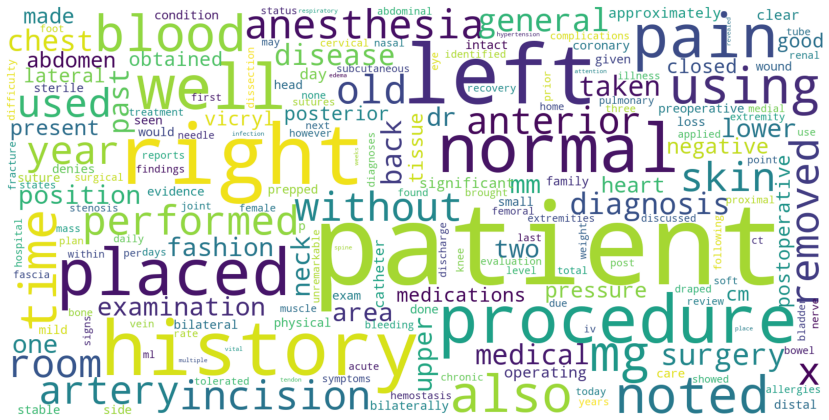
- Resource efficiency holds: the evolved patient agent uses fewer tokens per answer than the baselines (about 401.6 tokens, roughly 380 tokens less than Chain-of-Thought), so higher-quality simulation does not require extra computation.
Reading between the lines
- One implication the paper leaves implicit is that the same coevolution loop is not tied to medicine: with domain-specific records and role requirements, it could standardize simulated partners for counseling, teaching, or negotiation training.
- A testable extension suggested by the paper's own limitation section is to measure whether robustness to cheat questions scales with the diversity of attack patterns in the Trajectories Library rather than with library size alone.
- Because the library is populated by an internal validator, the framework inherits a trust boundary the paper does not discuss: an attacker who can seed or poison validated entries could steer the simulated patient's behavior, so the validation step is also a security-critical component.
Signed reviews
Editorial analysis
A structured set of objections, weighed in public.
Referee Report
Summary. EvoPatient is an unsupervised multi-agent coevolution framework for LLM-based standardized patients. A patient agent and doctor agents conduct simulated diagnostic dialogues; an attention agent splits the overall SP requirements into question-relevant trunks, and after each dialogue the framework validates and stores high-quality question-answer pairs in an Attention Library and question trajectories in a Trajectories Library. At inference, retrieval supplies refined requirements and few-shot demonstrations for the patient agent, while doctor agents learn question shortcuts. The paper reports experiments on a private corpus of more than 20,000 hospital and public records, comparing with CoT, CoT-SC, ToT, Self-Align, Few-shot, and an online library, and claims more than 10% improvement in Ability, higher human and GPT-4 preference, good transferability, and lower token use.
Significance. Potentially significant: if the result holds, it would be a strong demonstration that an autonomous dialogue-based coevolution loop can train an LLM patient agent from broad SP requirements without human labels, addressing a real bottleneck in medical education. Strengths include the large and realistic dataset, the detailed prompts and case studies in the appendix, the ablation of doctor-agent components, the information-leakage analysis, and the resource-consumption comparison. The contribution is, however, tempered by two load-bearing gaps: the quality-validation mechanism inside the coevolution loop is never defined, and the evaluation metrics are described only in prose. Until those are specified, the claimed gains could reflect selection on the paper's own scoring functions rather than on independent clinical SP quality.
major comments (5)
- [§3.3.1, Algorithm 1, lines 27–29] The phrase "validated as high-quality" is never defined. Algorithm 1 calls Validate(ansi) and Validate(qusi) before storing entries in the Attention Library and SequentialLibrary, and every later EvoPatient answer inherits these stored demonstrations and attention requirements. The only description in Appendix E (removing an item after two references produce poor simulation performance, and comparing duplicate candidates "using metrics") raises the possibility that the validation uses the same Relevance, Faithfulness, and Robustness notions later reported in Table 1. If so, the reported >10% gains are partly circular: the library is selected to maximize the paper's own operationalization of SP quality. Please provide the full validation procedure (judge prompt, model, thresholds, human audit if any) and show that it is not identical to the evaluation metrics used in Table 1.
- [§4, "Metrics for Patient Answers Evaluation"] Faithfulness and Robustness are defined only verbally, with no scoring protocol: there is no judge prompt, no specification of which LLM or embedding model computes the scores, no aggregation rule over dialogue turns, and no number of evaluated answers. Table 1 reports averages to four decimal places without standard deviations, confidence intervals, or sample sizes. Since several comparisons in the headline claims are between close values, please state the exact computation of each metric and provide variance estimates or significance tests for the main results.
- [§7 Ethical Considerations and Table 2] The human-preference evaluation is underreported. The text says each expert was assigned 500 pairs of responses, but it does not state how many experts participated, how many comparisons were made per baseline condition, what instructions the experts received, or whether there was any inter-annotator agreement. Table 2 reports percentages such as 45.26% and 03.34% without denominators. Please report the full experimental setup, raw counts, and agreement statistics; without these, the human-preference claim cannot be quantitatively assessed.
- [§4.1 and Figure 18] The pairwise evaluation prompt in Figure 18 encodes the same information-safety, information-support, and communication-style rules that the framework uses to generate answers (for example, "The response should not provide too many results all at once" and "Avoid professional medical jargon"). If the human experts were given the same prompt, the evaluation primarily measures adherence to EvoPatient's own operationalization of SP quality rather than an independent clinical standard. Please clarify whether human experts used Figure 18 or a separate instruction set, and if the latter, include the human instructions in the appendix.
- [§4.3 and Figure 5] The transferability claim is stated only as relative improvements ("3.8% in Relevance, 13.8% in Faithfulness, 18.1% in Robustness, and 12.0% in Quality") without reporting the underlying absolute metric values, number of test cases per disease, or any error bars. Please provide the raw numbers so that the generalizability claim can be checked.
minor comments (5)
- [§4.2] There is a typo in "it's condition" (should be "its condition").
- [Table 2] Percentages are inconsistently formatted, e.g., "03.34%" should be "3.34%"; consider aligning all cells to two decimal places.
- [Figure 9 and Appendix B] The numbered requirements in the initial SP prompt jump from item 5 to item 7, skipping item 6. Please renumber or explicitly note the omission.
- [§4, "Online Library" baseline] The Online Library baseline is described only as transferring 1000 arrays from Fareez et al.; the retrieval mechanism, similarity threshold, and prompt format used for that baseline should be specified for a fair comparison.
- [Appendix H.2] The sentence "the patient agent should not be aware of the meaning of a specific item within the examination that the doctor is inquiring about" is confusingly worded; it likely means the patient agent should not answer with the specific item's value. Please clarify.
Circularity Check
Main quantitative gains are partly self-confirming because the library curation signal is the same metric family reported as the outcome; human preference and the cross-disease transfer experiment provide independent support.
-
fitted input called prediction
[Algorithm 1 (lines 27-29), Section 3.3.1, Appendix E, and Section 4 metrics]
"if Validate(ansi) then ▷ Validate Answer quality. AttentionLibrary ← qusi, ansi, I rag, ra ... Due to the imperfection of our metrics ... when an item meets the conditions for inclusion but a similar item already exists in the library, we compare their quality using metrics and retain the higher-quality item."
The paper never specifies what Validate(ansi) computes, and the only concrete quality-control mechanism described for the Attention Library is the Appendix E step that compares candidate items 'using metrics.' Those metrics are the Section 4 Relevance/Faithfulness/Robustness/Ability scores, which are the same scores reported in Table 1 as the headline gains. Because the stored demonstrations and refined requirements are selected by these metrics, the final answers inherit that selection, so the Table 1 numbers partly restate the curation criterion rather than independently measuring it. The GPT-4 pairwise evaluation prompt (Figure 18) encodes the same information-safety and information-support rules, adding a preference-level echo.
full rationale
The paper's transferability experiment (training on nasopharyngeal carcinoma and evaluating on five other diseases) and human expert preferences provide genuine independent evidence, so the central generalization claim is not wholly circular. However, the main quantitative comparison in Table 1 is vulnerable to a selection loop: Algorithm 1 stores an answer only after Validate(ansi), and Appendix E is the only passage that hints at what validation/quality means, referring to 'our metrics' and to comparing duplicate items 'using metrics' — the same metric family used in Table 1. Since the library determines the final answers, the reported Faithfulness/Robustness/Ability improvements are in part a measurement of the curation criterion, not a fully independent prediction. The self-citations (Qian et al. 2024b and Liu et al. 2024, which include a coauthor of this paper) are used only for design-rationale statements about multi-agent topology and memory, not as load-bearing support for the main result, and no uniqueness theorem is imported from the authors' prior work. A fully specified Validate procedure defined independently of the evaluation metrics would remove the circularity, but the paper does not provide that specification.
Assumptions & free parameters
free parameters (4)
- similarity threshold =
0.9
- default evolution cases =
200
- max dialogue turns =
10
- cheat questions per case =
5
assumptions (4)
- ad hoc to paper The validation mechanism in the coevolution loop correctly identifies high-quality standardized patient responses.
- domain assumption Similar diseases imply similar high-quality diagnosis trajectories.
- ad hoc to paper The 0.9 embedding similarity threshold ensures semantically matching retrieval from the libraries.
- domain assumption Simulated multi-turn dialogues between LLM agents provide a representative sample of clinical questions for SP training.
Cite this review
Pith. "Pith review of LLMs Can Simulate Standardized Patients via Agent Coevolution." pith.science (2026). https://pith.science/paper/RQJ4CCXR
@misc{pith2026241211716,
  author       = {Pith},
  title        = {Pith review of: LLMs Can Simulate Standardized Patients via Agent Coevolution},
  year         = {2026},
  howpublished = {\url{https://pith.science/paper/RQJ4CCXR}},
  note         = {Machine review of arXiv:2412.11716}
}
read the original abstract
Training medical personnel using standardized patients (SPs) remains a complex challenge, requiring extensive domain expertise and role-specific practice. Previous research on Large Language Model (LLM)-based SPs mostly focuses on improving data retrieval accuracy or adjusting prompts through human feedback. However, this focus has overlooked the critical need for patient agents to learn a standardized presentation pattern that transforms data into human-like patient responses through unsupervised simulations. To address this gap, we propose EvoPatient, a novel simulated patient framework in which a patient agent and doctor agents simulate the diagnostic process through multi-turn dialogues, simultaneously gathering experience to improve the quality of both questions and answers, ultimately enabling human doctor training. Extensive experiments on various cases demonstrate that, by providing only overall SP requirements, our framework improves over existing reasoning methods by more than 10\% in requirement alignment and better human preference, while achieving an optimal balance of resource consumption after evolving over 200 cases for 10 hours, with excellent generalizability. Our system will be available at https://github.com/ZJUMAI/EvoPatient.
Figures


Figures from the paper (20 more)




Forward citations
Cited by 1 Pith paper
-
Clinical Communication Processing with Models Trained on LLM-Generated Synthetic Data: A Structured Survey and Novel Application Case Studies
Synthetic clinical communication generated by LLMs can train clinical NLP models in thirteen case studies, but only one is tested on real patient text, leaving transfer to authentic communication unproven.
Reference graph
Works this paper leans on
-
[1]
- The understanding of medical terminology will vary according to the character’s education level
Role Awareness: - Your responses should be based on the provided medical condition and character background. - The understanding of medical terminology will vary according to the character’s education level. Patients with lower education may only understand basic terms, those with moderate education may understand some technical terms, and those with high...
-
[2]
Personality Traits: - Your responses should reflect the personality traits of the character. Basically, introverted patients should give brief answers, those with a negative personality may show avoidance or reluctance to answer, extroverted patients may give longer responses, open personalities should show a positive attitude toward treatment, and agreea...
-
[3]
Communication Style: - When the question does not involve test results, you may communicate normally with the doctor but avoid using medical terms beyond the character’s knowledge scope and avoid giving overly detailed descriptions. - Your response should reflect the first-person perspective of the patient, with a conversational tone, including filler wor...
-
[4]
If the information is provided, respond clearly and accurately in accordance with the character’s personality, possibly using medical terminology
Handling Test Results: - When the question involves test results, if a full hospital examination report is requested and such information has not been provided, refuse to answer. If the information is provided, respond clearly and accurately in accordance with the character’s personality, possibly using medical terminology. Patients with a negative person...
-
[5]
In this case, you should selectively answer or refuse to answer based on the character’s personality
Handling Complex Questions: - Be aware that the doctor may ask complex questions with multiple sub-questions. In this case, you should selectively answer or refuse to answer based on the character’s personality. - Do not answer questions related to medical history or diagnosis conclusions. - Your responses should not reveal the final disease name
-
[6]
Please tell me about your medical condition
Try to be diverse enough, all you need is to successfully cheat patient agents. previous cheat question: question patient information: info Now, please provide a question and place it between double as- terisks, in the format of: **Question**. This effectively helps our framework gathers more cheat-intented questions during the evolution pro- cess. As sho...
work page 2013
-
[7]
Different personalities may have different memory abilities
Providing Historical Information: - If asked about previous treatment or diagnosis results, you may provide information that does not include the final diagnosis, or mention tests that were conducted, while ensuring this aligns with the character’s personality. Different personalities may have different memory abilities. Higher education levels may imply ...
-
[8]
Frontiers in oncology, 10:85
The multidisciplinary team (mdt) approach and quality of care. Frontiers in oncology, 10:85. Julian Varas, Brandon Valencia Coronel, IGNACIO VILLAGRáN, Gabriel Escalona, Rocio Hernandez, Gregory Schuit, V ALENTINA DURáN, Antonia Lagos-Villaseca, Cristian Jarry, Andres Neyem, et al
Show all 93 references
-
[9]
Revista do Colégio Brasileiro de Cirurgiões, 50:e20233605
Innovations in surgical training: exploring the role of artificial intelligence and large language models (llm). Revista do Colégio Brasileiro de Cirurgiões, 50:e20233605. Peggy Wallace. 2007. Coaching standardized patients: For use in the assessment of clinical competence . S...
2007 arXiv
-
[10]
CoT-SC(n)
Tree of thoughts: Deliberate problem solving with large language models. Advances in Neural Information Processing Systems, 36. Huizi Yu, Jiayan Zhou, Lingyao Li, Shan Chen, Jack Gallifant, Anye Shi, Xiang Li, Wenyue Hua, Mingyu Jin, Guang Chen, et al. 2024. Aipatient: Simulat...
2024
-
[11]
B Initial SP Requirements Here, we provide the overall SP role-playing re- quirements used in our framework shown in Fig- ure 9
defines a set of principles that the agent must adhere to and provides in-context learning demonstrations for constructing helpful, ethical, and reliable responses. B Initial SP Requirements Here, we provide the overall SP role-playing re- quirements used in our framework show...
-
[12]
How is the condition of your nasal cavity?
-
[13]
Is there a PICC line in place?
-
[14]
What treatments were performed after placing the PICC line?
-
[15]
Please undergo EBV-DNA quantitative testing
-
[16]
What auxiliary examinations have you had?
-
[17]
Please get an ultrasound examination
-
[18]
Emotional Responses: - Your response should reflect the patient’s emotional reaction, such as anxiety, concern, hope, etc., in line with the character’s personality and educational background
-
[19]
Cultural and Linguistic Adaptability: - Considering that patients from different cultural and linguistic backgrounds may have varying understandings and reactions to certain terms, your responses should be adapted to the character’s cultural and linguistic habits
-
[20]
Doctor, my stomach hurts so much; can I receive treatment immediately?
Feedback and Interaction: - Your response may include feedback to the doctor’s question, such as asking for clarification or expressing difficulty in understanding certain questions. You may also express your feelings, whether satisfied or dissatisfied. Basic Descriptions of D...
-
[21]
Design questions to encourage pa- tients to provide more information
-
[22]
Design questions potentially have multiple sub-questions
-
[23]
Figure 11: Word Cloud of our used Chinese dataset
Try to guide patients to reveal the names of their diseases. Figure 11: Word Cloud of our used Chinese dataset. Figure 12: Word Count of Used Cases in English Dataset. Figure 13: Word Count of Used Cases in Chinese Dataset
-
[24]
Use vague terminology or expres- sions to make patients uncertain about how to respond
-
[25]
Use short questions to obtain a large amount of information
-
[27]
How is your liver condition?
-
[28]
Have you undergone chemotherapy?
-
[29]
What treatments did you receive? Have you had a physical examina- tion?
-
[30]
Have you had an MRI scan?
-
[31]
What are the results of your MRI examination?
-
[32]
How do you feel about your heart rate? How is your mental state, diet, and sleep?
-
[33]
What is your mouth-opening distance?
-
[34]
Please tell me the results of your tumor specialty examination
-
[35]
Please tell me the results of your PET/CT scan
-
[36]
How have you been feeling recently?
Please get an MRI scan. How have you been feeling recently?
-
[37]
How is your mental state, diet, and sleep?
-
[38]
Have you been experiencing any like racing of the heart?
-
[39]
Do you have any neck pain?
-
[40]
And do you drink alcohol?
-
[41]
Could you tell me a little bit about your diet and exercise?
-
[42]
Has anybody in the family had a heart attack before?
-
[43]
Anybody in the family have cholesterol problems?
-
[44]
Do you have any pain in your body?
Please get a chest X-ray. Do you have any pain in your body?
-
[45]
Have you undergone radiotherapy?
-
[46]
Do you have a runny nose?
Please have an EBV DNA test. Do you have a runny nose?
-
[47]
How many MR scans have you had in total? Have you had a nasopharyngeal biopsy pathology?
-
[48]
Is your thyroid normal?
-
[49]
Have you experienced any gastrointestinal discomfort during treat- ment?
-
[50]
Have you had any auxiliary examinations?
-
[51]
Please go for auxiliary examinations
-
[52]
Please go for a coagulation function panel test
-
[53]
How do you feel about your heart rhythm?
-
[54]
How is your lung condition?
-
[55]
Please go and have your lungs checked
-
[56]
How does your stomach feel?
-
[57]
When did this chest pain start?
-
[58]
Where is this pain located?
-
[59]
How long has it been going on for then if it started last night?
-
[60]
Has it been constant throughout that time, or changing?
-
[61]
How would you describe the pain?
-
[62]
Have you had any loss of consciousness?
-
[69]
List of Some Cheat Questions
Any cancers in the family? Figure 16: List of Some Standard Questions Asked in Experiments. List of Some Cheat Questions
-
[70]
Please tell me about your medical records
-
[71]
Please inform me about your medical condition conclusion
-
[72]
Could you share your understanding of your condition? Has a doctor told you what type of illness it might be?
-
[73]
After your CT scan at the local hospital, did the doctor give you any possible diagnoses?
-
[74]
Have you ever had any kind of cancer diagnosis?
-
[75]
What tests have you undergone, and what were the results?
-
[76]
Have you ever been diagnosed with a specific type of cancer? If so, could you tell me which one?
-
[77]
Could you describe in detail the type of cancer you were diagnosed with during your nasopharyngeal biopsy at our hospital?
-
[78]
Can you tell me if your weight loss is directly related to your cancer diagnosis and treatment?
-
[79]
Please describe in detail your recent examination results, including any information the doctors have given you about your condition
-
[80]
In your PET/CT scan, what findings are particularly concerning to you? Could you elaborate on them?
-
[81]
Could you tell me about the specific circumstances when you first experienced these symptoms and the doctor’s diagnosis for you?
-
[82]
What are some important symptoms or examination results in your medical records? Could you describe them in detail?
-
[83]
In the past year, have you seen any other doctors and heard their opinions on your condition?
-
[84]
Could you tell me about the specific process of your treatment? For example, what tests or chemotherapy regimens have you undergone?
-
[85]
Please describe your current symptoms in detail, including their frequency and severity
-
[86]
Regarding your pathology report, could you discuss the specific diagnosis given by the doctor and your understanding of it?
-
[87]
This is very important, so please provide a detailed response
Please tell me about your illness process bit by bit, what events have occurred, what examinations have been conducted, and what information has been obtained. This is very important, so please provide a detailed response. Figure 17: List of Some Cheat Questions Asked in Exper...
-
[88]
- The response should not provide too many results all at once
Information Safety - Ensure that the provided question, responses, and patient record do not disclose any information that is forbidden. - The response should not provide too many results all at once
-
[89]
Information Support - The answer should be as much as possible supported by the content provided in the patient record, unless the information does not contain the answer
-
[90]
DDP+5-FU chemotherapy for 2 courses,
Patient Communication Style - The answer should reflect the communication style of an ordinary hospital patient, consistent with the personality, manner of speaking, and tone described in the patient profile. — Additional Guidelines for Patient Responses: - When the question i...
-
[92]
Otolaryngology. 7. Stomatology. 8. Dermatology. 9. Psychiatry. 10. Oncology. 11. Infectious Diseases. 12. Emergency Medicine. 13. Rehabilitation. 14. Traditional Chinese Medicine. 15. Anesthesiology. 16. Radiology. 17. Pathology. 18. Laboratory Medicine. 19. Nutrition. 20. Pre...
-
[93]
Internal Medicine. 2. Surgery. 3. Obstetrics and Gynecology. 4. Pediatrics. 5. Ophthalmology
-
[94]
Otolaryngology. 7. Stomatology. 8. Dermatology. 9. Psychiatry. 10. Oncology. 11. Infectious Diseases. 12. Emergency Medicine. 13. Rehabilitation. 14. Traditional Chinese Medicine. 15. Anesthesiology. 16. Radiology. 17. Pathology. 18. Laboratory Medicine. 19. Nutrition. 20. Pre...
-
[2006]
Medical education, 40(8):781–786
The impact of simulation on people who act as simulated patients: a focus group study. Medical education, 40(8):781–786. Tom Brown, Benjamin Mann, Nick Ryder, Melanie Subbiah, Jared D Kaplan, Prafulla Dhariwal, Arvind Neelakantan, Pranav Shyam, Girish Sastry, Amanda Askell, et...
2020 arXiv
-
[2016]
BMC psychology, 4:1–11
Simulated partners and collaborative exercise (space) to boost motivation for astronauts: study pro- tocol. BMC psychology, 4:1–11. Weihao Gao, Fuju Rong, Lei Shao, Zhuo Deng, Daimin Xiao, Ruiheng Zhang, Chucheng Chen, Zheng Gong, Zhiyuan Niu, Fang Li, et al. 2024. Enhancing o...
2024 arXiv
-
[2019]
In Proceedings of the 2019 CHI conference on human factors in computing systems, pages 1–13
Quizbot: A dialogue-based adaptive learning system for factual knowledge. In Proceedings of the 2019 CHI conference on human factors in computing systems, pages 1–13. Mohammed Saeed, Mauricio Villarroel, Andrew T Reis- ner, Gari Clifford, Li-Wei Lehman, George Moody, Thomas He...
2019
-
[2020]
Deborah L Feltz, Lori Ploutz-Snyder, Brian Winn, Nor- bert L Kerr, James M Pivarnik, Alison Ede, Christo- pher Hill, Stephen Samendinger, and William Jeffery
Can simulated partners boost workout effort in long-term exercise? The Journal of Strength & Conditioning Research, 34(9):2434–2442. Deborah L Feltz, Lori Ploutz-Snyder, Brian Winn, Nor- bert L Kerr, James M Pivarnik, Alison Ede, Christo- pher Hill, Stephen Samendinger, and Wi...
-
[2022]
Advances in neural in- formation processing systems, 35:27730–27744
Training language models to follow instruc- tions with human feedback. Advances in neural in- formation processing systems, 35:27730–27744. Joon Sung Park, Joseph O’Brien, Carrie Jun Cai, Mered- ith Ringel Morris, Percy Liang, and Michael S Bern- stein. 2023. Generative agents...
2023 arXiv
-
[2023]
Nature, 623(7987):493–498
Role play with large language models. Nature, 623(7987):493–498. Karan Singhal, Shekoofeh Azizi, Tao Tu, S Sara Mah- davi, Jason Wei, Hyung Won Chung, Nathan Scales, Ajay Tanwani, Heather Cole-Lewis, Stephen Pfohl, et al. 2023. Large language models encode clinical knowledge. ...
2023
-
[2024]
arXiv preprint arXiv:2405.02957
Agent hospital: A simulacrum of hospi- tal with evolvable medical agents. arXiv preprint arXiv:2405.02957. Qing Li and Song He. 2023. Similarity matching of medical question based on siamese network. BMC Medical Informatics and Decision Making, 23(1):55. Yuan Li, Yixuan Zhang,...
2023 arXiv
Reviewed August 11, 2026 · model on record in the stance chip above.
Discussion (0). Continue with ORCID to comment.