Exploring Exotic Spin-Dependent Interactions Beyond the Standard Model: Theoretical Foundations and Experimental Investigations
Pith reviewed 2026-06-27 06:23 UTC · model grok-4.3
The pith
Axion-like particles may mediate new spin-dependent interactions that address the strong CP problem and dark matter.
A machine-rendered reading of the paper's core claim, the machinery that carries it, and where it could break.
Core claim
Interactions mediated by novel lightweight particles such as ALPs arise from the Peccei-Quinn mechanism, string theory, and supersymmetry breaking, offer solutions to several challenges in modern physics including the strong CP problem, and can serve as cold dark matter; many predicted interactions are spin-dependent and the review compiles theoretical expressions along with current experimental constraints on them.
What carries the argument
Axion-like particles (ALPs) as mediators of spin-dependent interactions
If this is right
- These interactions provide a potential explanation for cold dark matter.
- Spin-dependent channels offer a distinctive experimental signature distinct from other forces.
- Current experimental bounds can be used to test and narrow predictions from string theory and supersymmetry.
- Formulas derived in the theoretical section directly support the design of future searches.
Where Pith is reading between the lines
- If such interactions are found, they would link particle physics searches directly to astrophysical dark matter observations.
- The same ALP mediators might produce detectable effects in precision measurements of atomic or molecular systems not yet explored in the reviewed experiments.
- Extensions to other interaction types (scalar or vector) could be tested with similar experimental techniques.
Load-bearing premise
The review assumes that the Peccei-Quinn mechanism, string theory, and supersymmetry breaking correctly predict the existence and properties of ALPs that mediate spin-dependent interactions.
What would settle it
A precision experiment that finds no evidence of spin-dependent forces in the mass-coupling range where ALPs are expected to solve the strong CP problem or constitute dark matter.
Figures
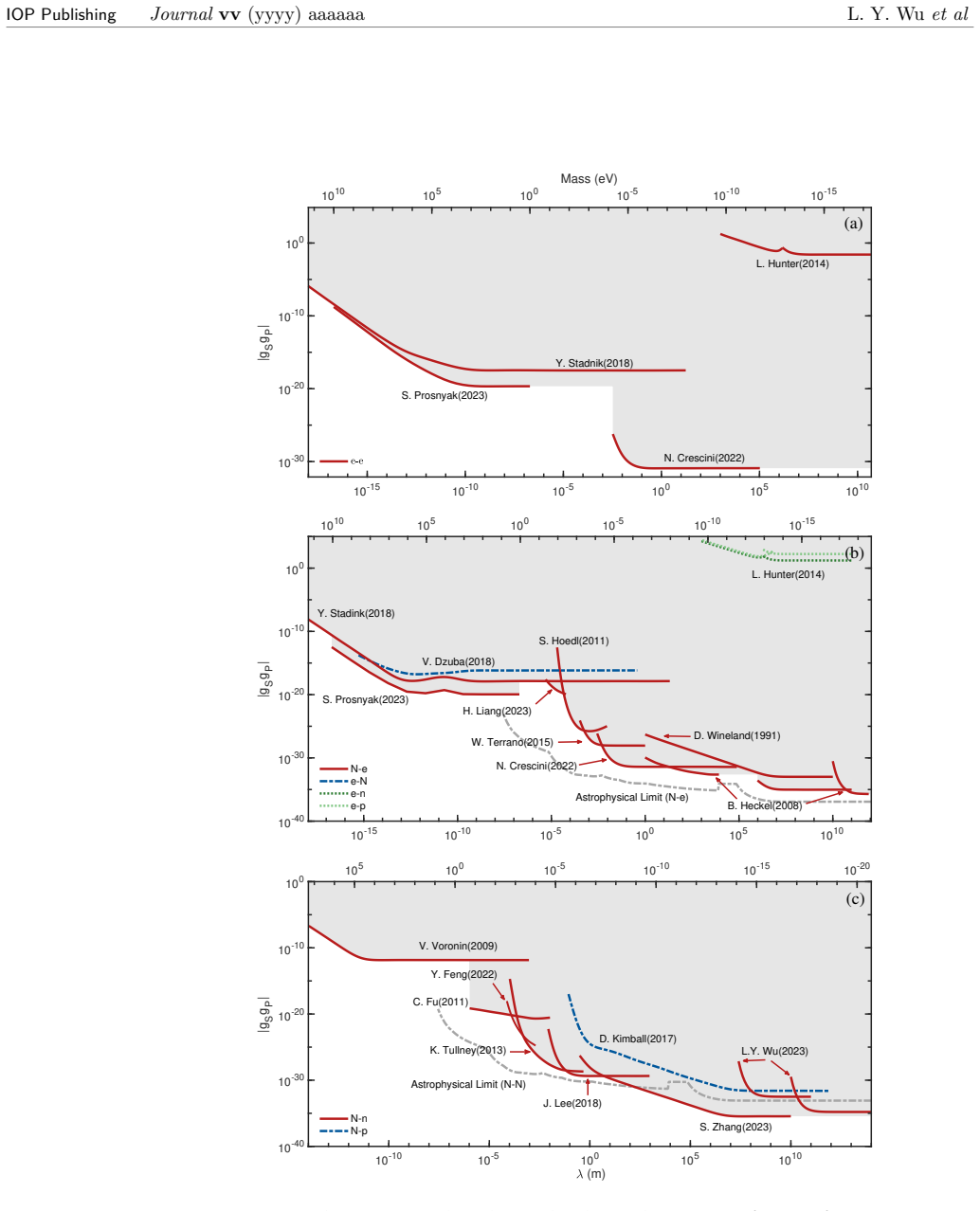
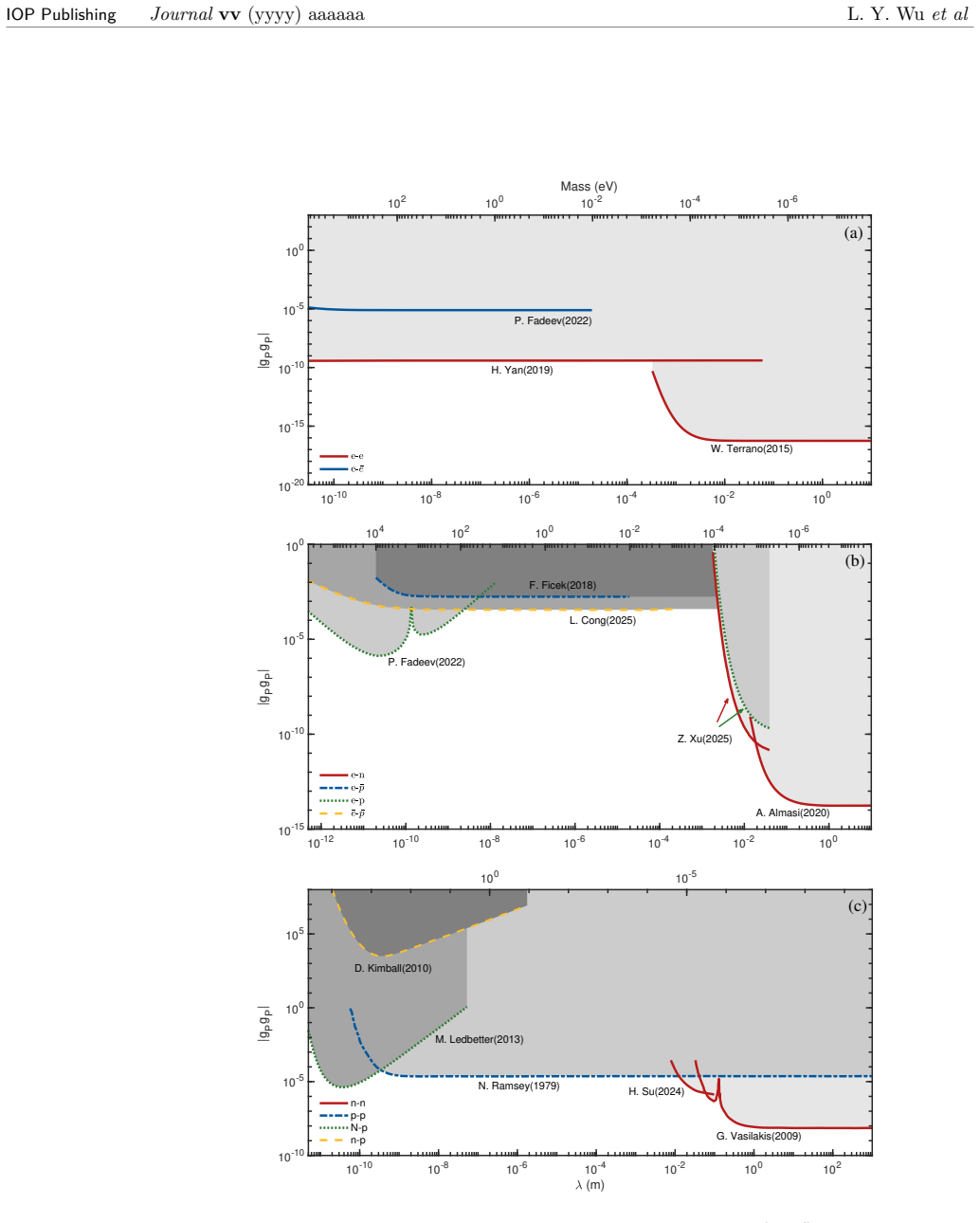
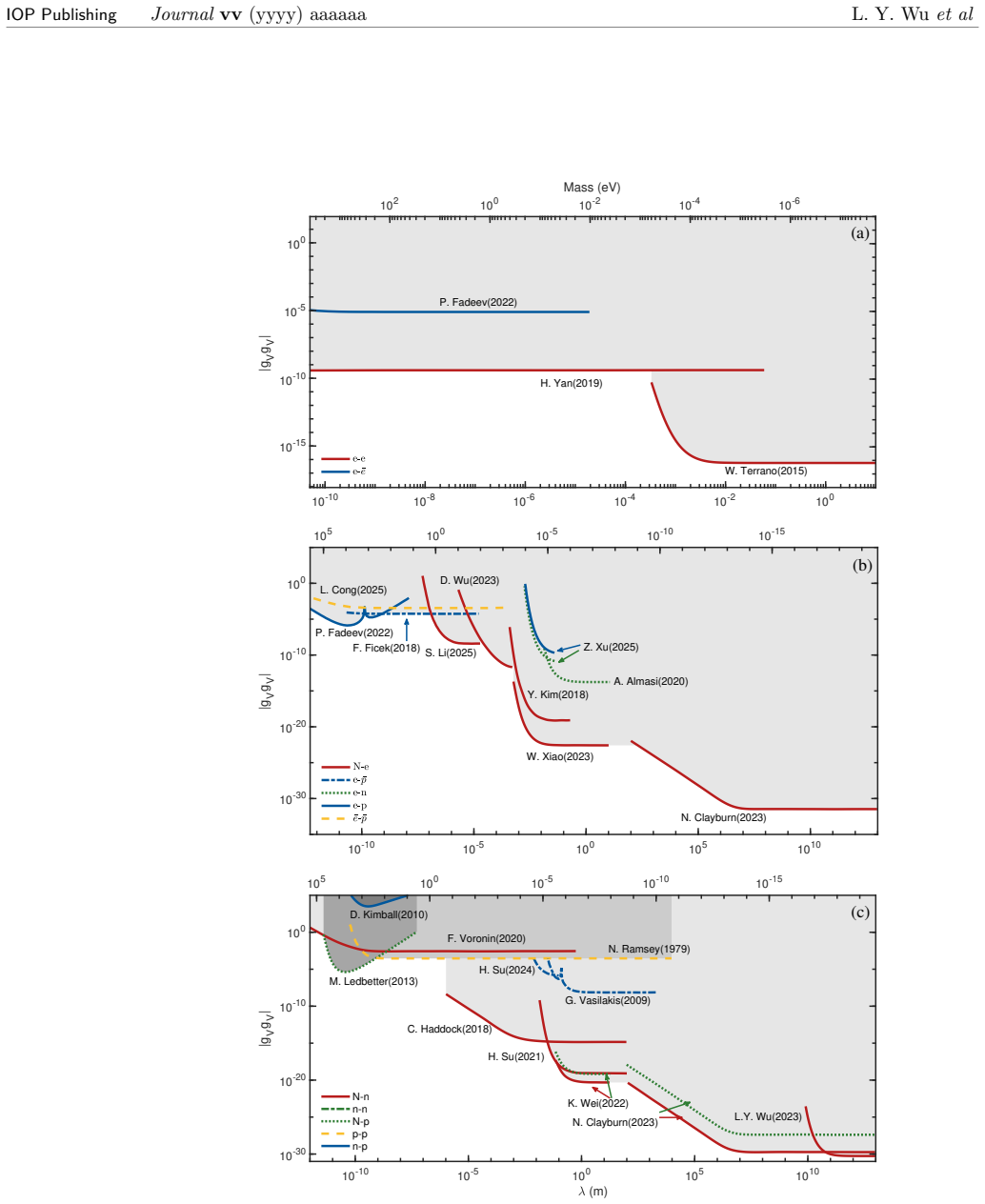
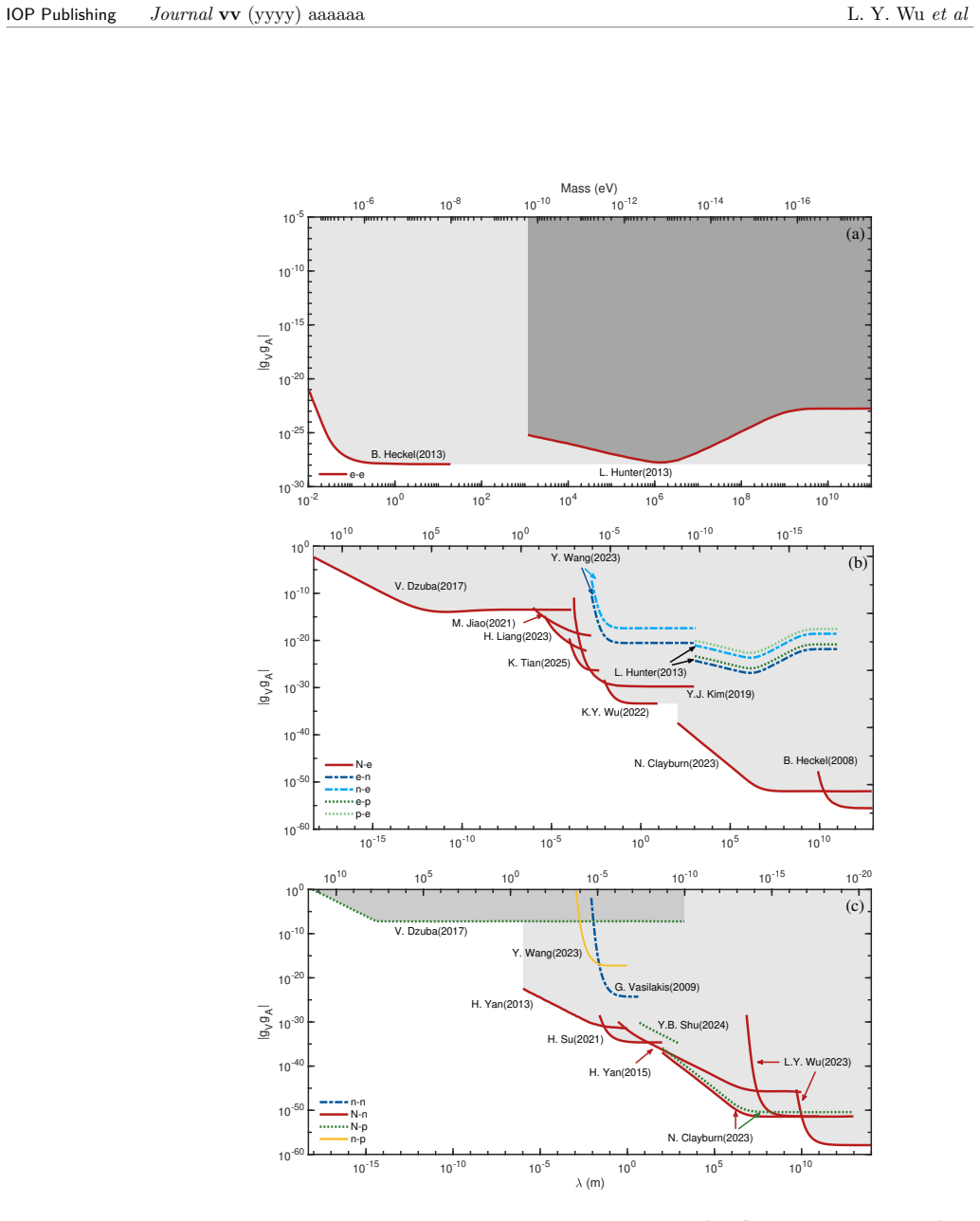
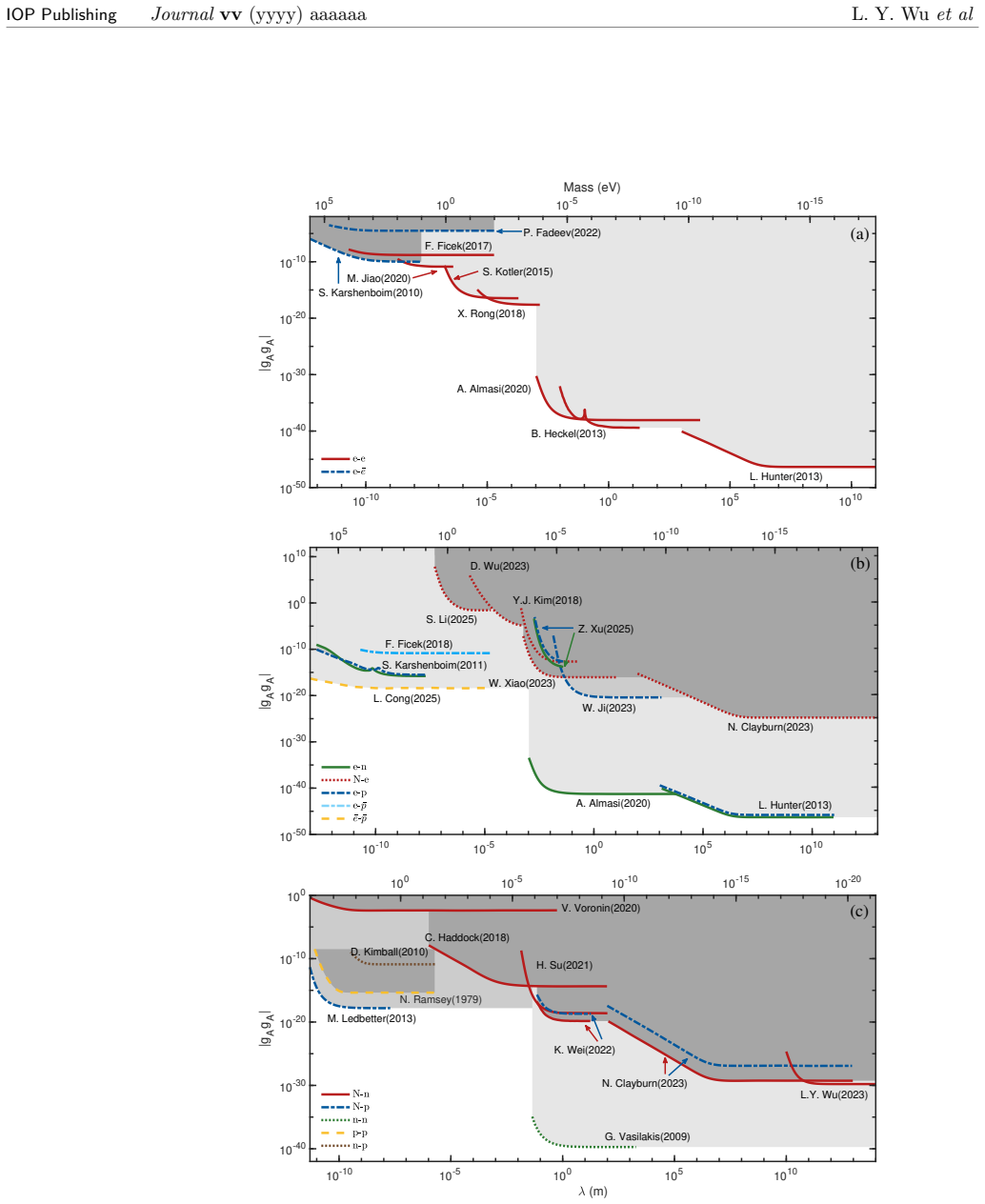
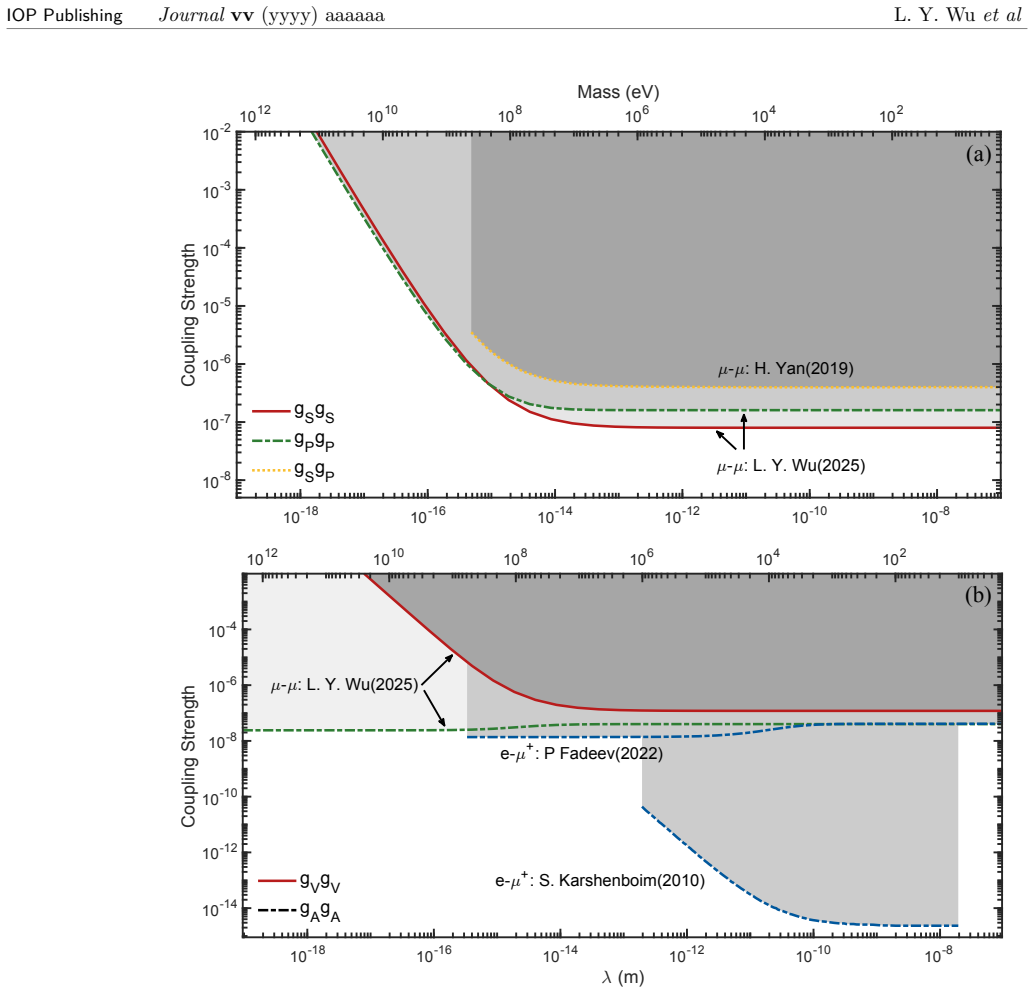
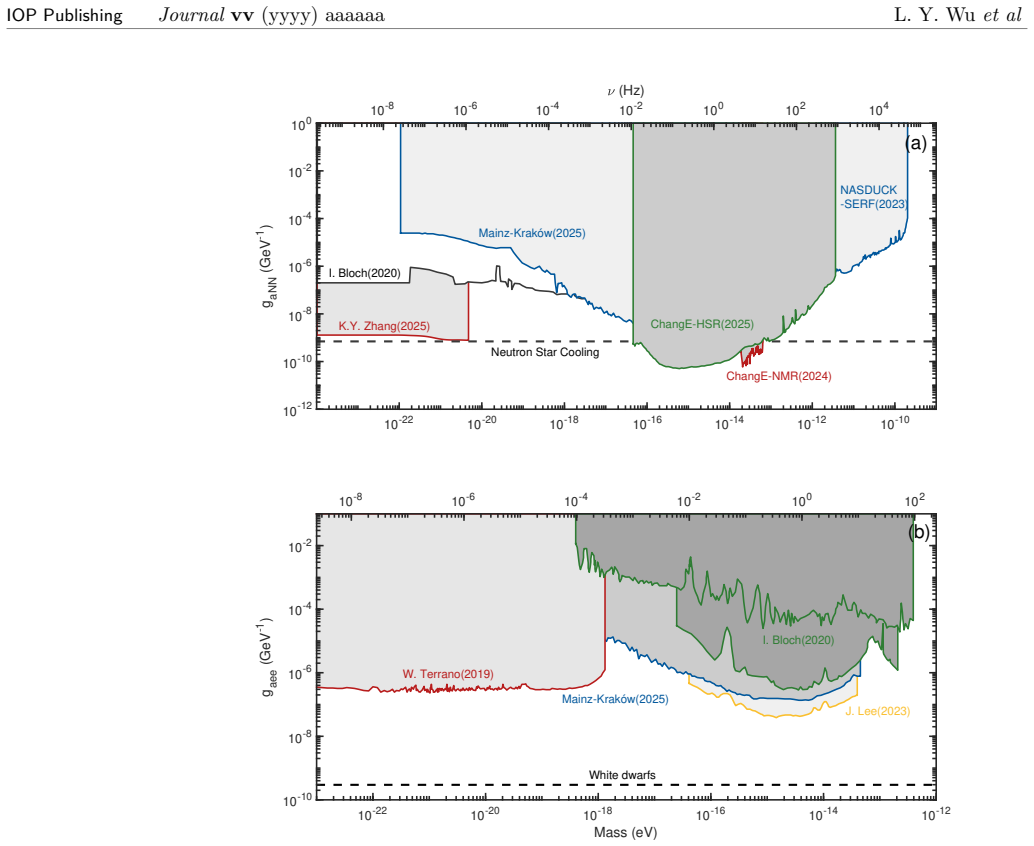
read the original abstract
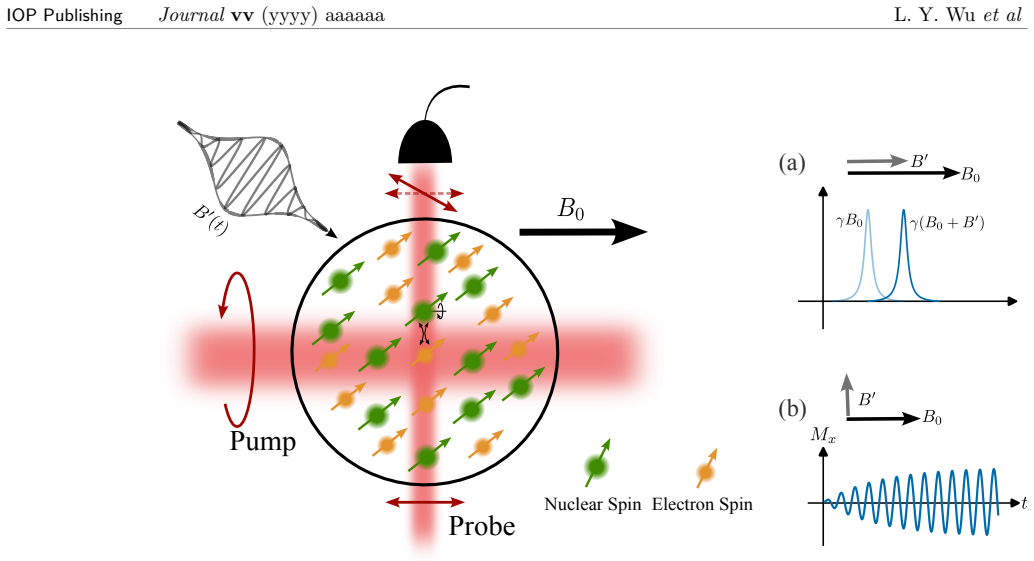
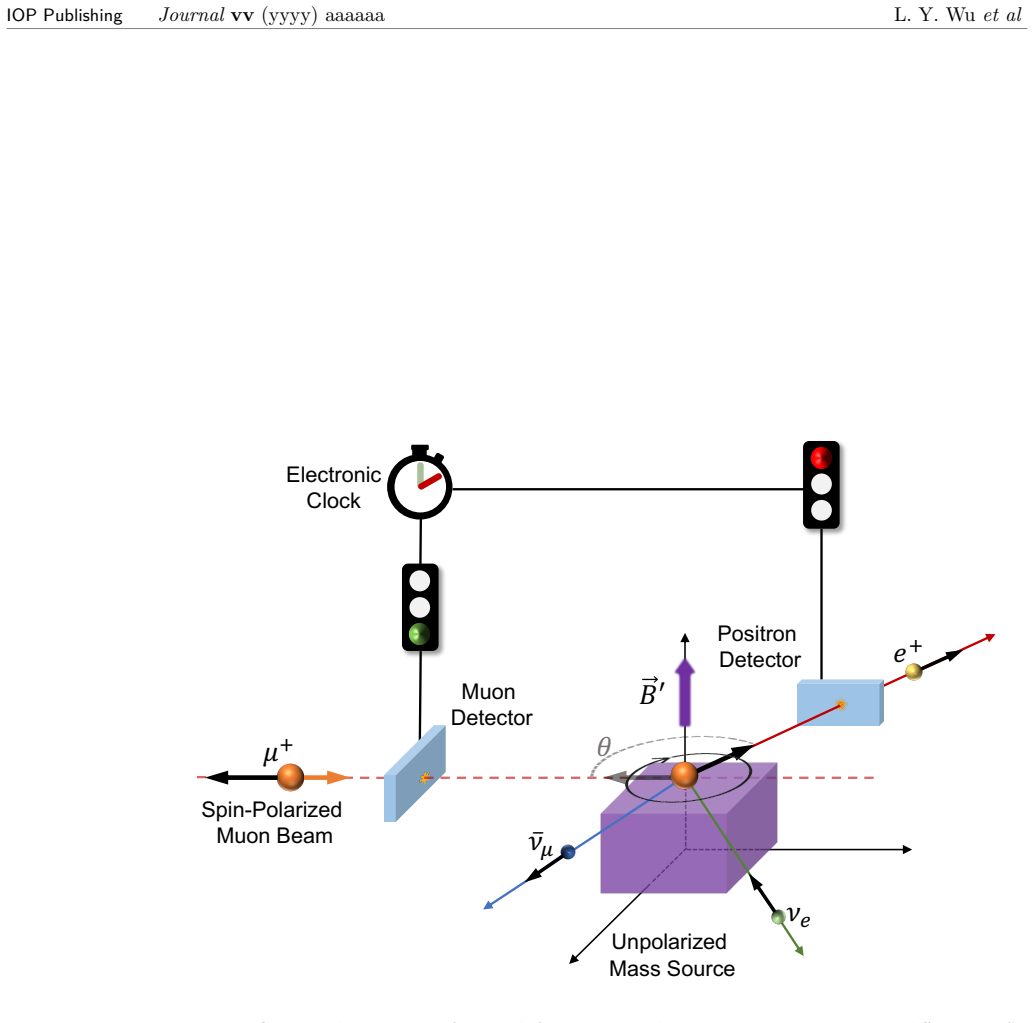
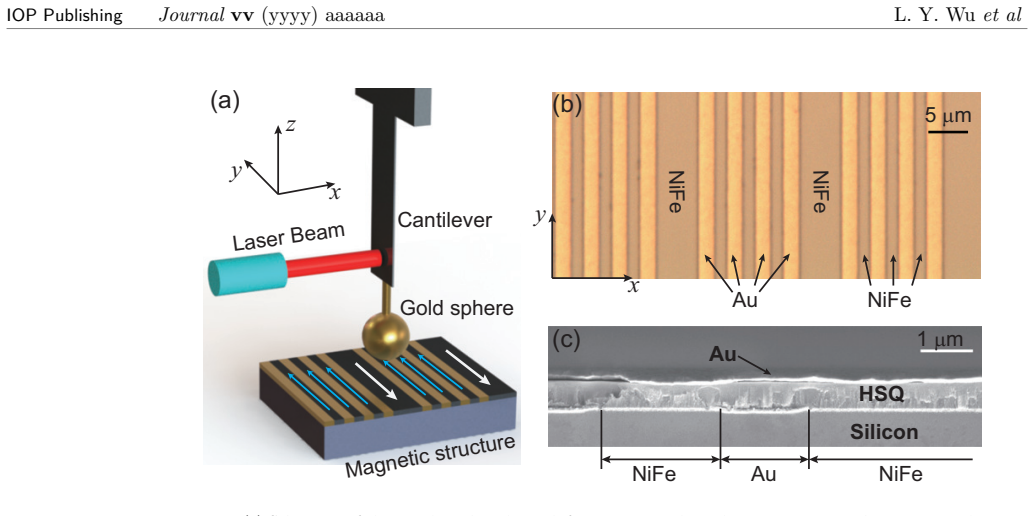
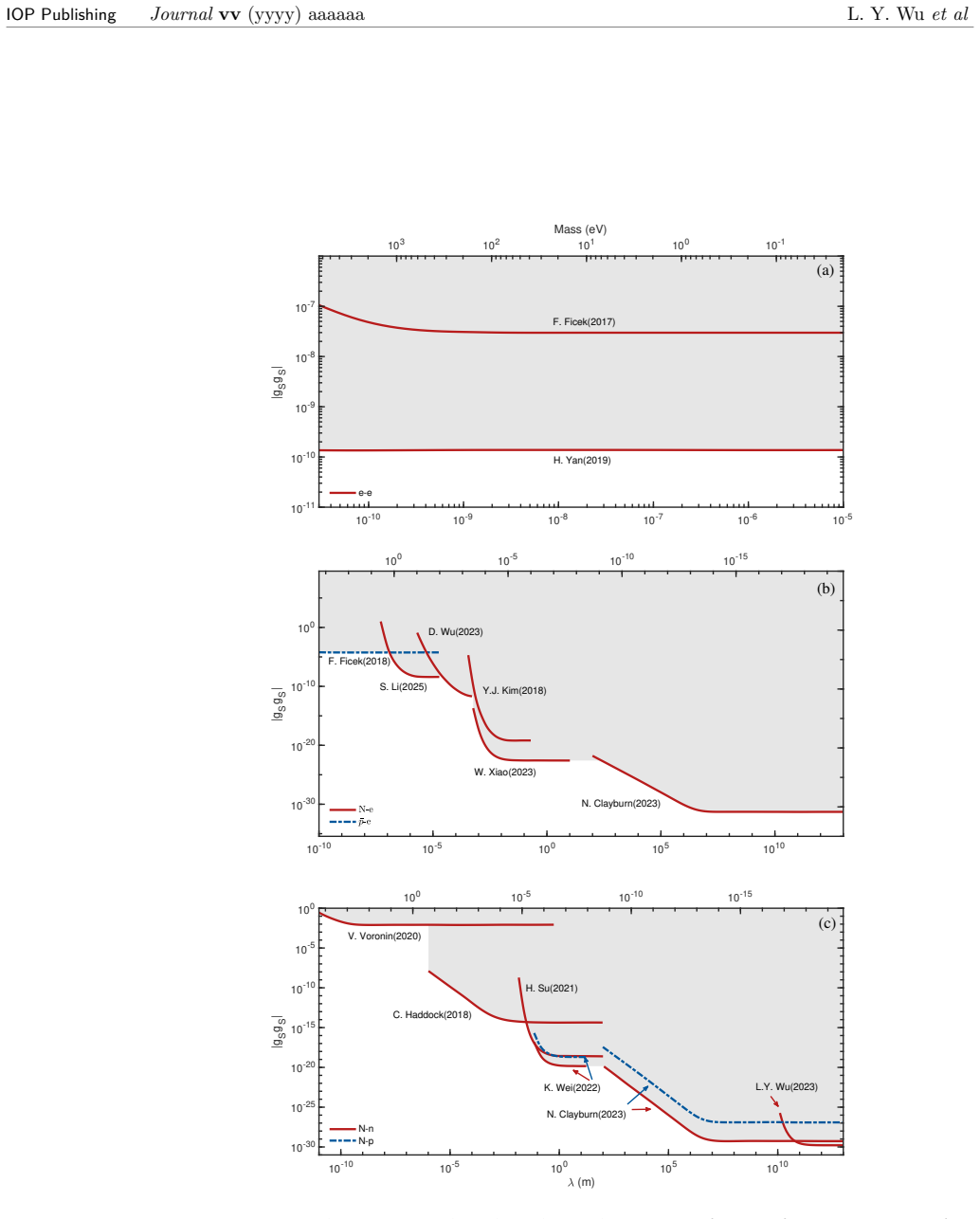
New interactions mediated by novel particles propose solutions to several important questions in modern physics. Axions serve as examples of such particles; they are lightweight and interact weakly with ordinary matter. This category of particles, including those similar to axions-termed Axion-Like Particles (ALPs)-arises from diverse theoretical frameworks, such as the Peccei-Quinn mechanism addressing the strong CP problem, string theory, and spontaneous supersymmetry breaking. Given their light mass and weak coupling, ALPs are also possible candidates for cold dark matter. Introducing these new interactions mediated by novel particles not only tackles several challenges in modern physics but also raises a crucial question: Are there undiscovered interactions beyond the Standard Model? Many of the interactions predicted by these theories are spin-dependent, which is the primary focus of this review. In this review, we first outline the theoretical foundations for investigating exotic spin-dependent interactions, highlighting their importance in various models beyond the Standard Model. We examine the potential roles of new lightweight particles in mediating these interactions, which may enhance our understanding of dark matter. Relevant formulas derived from theoretical models are included to support experimental investigations. Following this theoretical framework, we conduct a detailed review of recent experimental efforts to detect these exotic interactions. A systematic review of current constraints on these interactions is presented, along with an assessment of various detection approaches.
Editorial analysis
A structured set of objections, weighed in public.
Referee Report
Summary. The manuscript is a review article outlining theoretical foundations for exotic spin-dependent interactions mediated by Axion-Like Particles (ALPs) arising from the Peccei-Quinn mechanism, string theory, and supersymmetry breaking. It positions ALPs as potential cold dark matter candidates, includes relevant formulas from these models to support experimental work, and systematically reviews recent experimental efforts along with current constraints on such interactions beyond the Standard Model.
Significance. If the compilation of theoretical motivations and experimental bounds is accurate and reasonably comprehensive, the review could serve as a useful reference point for connecting ALP-mediated spin-dependent forces to ongoing searches, particularly by organizing literature on detection approaches and highlighting links to dark matter and the strong CP problem.
minor comments (1)
- [Abstract] Abstract: the phrasing 'relevant formulas derived from theoretical models are included' risks implying original derivations; since the paper is a review of prior literature, rephrase to 'relevant formulas from theoretical models are summarized' for accuracy.
Simulated Author's Rebuttal
We thank the referee for their positive assessment of the manuscript as a useful reference compiling theoretical motivations and experimental bounds on ALP-mediated spin-dependent interactions. The recommendation for minor revision is noted. No specific major comments were raised in the report.
Circularity Check
Review article; no derivation chain present
full rationale
The manuscript is a review that compiles existing theoretical motivations (Peccei-Quinn, string theory, SUSY breaking) and experimental constraints from prior literature. No new derivations, parameter fits, or predictions are advanced inside the paper; the abstract and structure explicitly frame the work as an outline of foundations and a survey of constraints. No load-bearing steps reduce to self-definition, fitted inputs, or self-citation chains. The premise that ALPs mediate spin-dependent forces is taken as the starting point from established frameworks, not derived here.
Axiom & Free-Parameter Ledger
Reference graph
Works this paper leans on
-
[1]
Ramond,Field Theory: A Modern Primer, Westview Press, 2nd ed
P. Ramond,Field Theory: A Modern Primer, Westview Press, 2nd ed. (2001)
2001
-
[2]
Weinberg,The Quantum Theory of Fields, Volume 1: Foundations, Cambridge University Press (1995)
S. Weinberg,The Quantum Theory of Fields, Volume 1: Foundations, Cambridge University Press (1995)
1995
-
[3]
Peccei and H.R
R.D. Peccei and H.R. Quinn,Constraints imposed byCPconservation in the presence of pseudoparticles,Phys. Rev. D16(1977) 1791
1977
-
[4]
Peccei and H.R
R.D. Peccei and H.R. Quinn, CPconservation in the presence of pseudoparticles,Phys. Rev. Lett.38(1977) 1440
1977
-
[5]
Wilczek,Problem of strong p and t invariance in the presence of instantons,Phys
F. Wilczek,Problem of strong p and t invariance in the presence of instantons,Phys. Rev. Lett. 40(1978) 279
1978
-
[6]
Weinberg,A new light boson?,Phys
S. Weinberg,A new light boson?,Phys. Rev. Lett.40(1978) 223
1978
-
[7]
John Preskill, Mark B
F.W. John Preskill, Mark B. Wise,Cosmology of the invisible axion,Physics Letters B120 (1983) 127. 50 IOP PublishingJournalvv(yyyy) aaaaaa L. Y. Wuet al
1983
-
[8]
Abbott and P
L. Abbott and P. Sikivie,A cosmological bound on the invisible axion,Physics Letters B120 (1983) 133
1983
-
[9]
Dine and W
M. Dine and W. Fischler,The not-so-harmless axion,Physics Letters B120(1983) 137
1983
-
[10]
Marsh,Axion cosmology,Physics Reports643(2016) 1
D.J. Marsh,Axion cosmology,Physics Reports643(2016) 1
2016
-
[11]
Chadha-Day, J
F. Chadha-Day, J. Ellis and D.J.E. Marsh,Axion dark matter: What is it and why now?, Science Advances8(2022) eabj3618
2022
-
[12]
Hlozek, D
R. Hlozek, D. Grin, D.J.E. Marsh and P.G. Ferreira,A search for ultralight axions using precision cosmological data,Phys. Rev. D91(2015) 103512
2015
-
[13]
Desjacques, A
V. Desjacques, A. Kehagias and A. Riotto,Impact of ultralight axion self-interactions on the large scale structure of the universe,Phys. Rev. D97(2018) 023529
2018
-
[14]
O’Hare,Cosmology of axion dark matter, inProceedings of 1st General Meeting and 1st Training School of the COST Action COSMIC WSIPers — PoS(COSMICWISPers), p
C. O’Hare,Cosmology of axion dark matter, inProceedings of 1st General Meeting and 1st Training School of the COST Action COSMIC WSIPers — PoS(COSMICWISPers), p. 040, Sissa Medialab, Apr., 2024, DOI
2024
-
[15]
Cicoli, F.G
M. Cicoli, F.G. Pedro and G. Tasinato,Axion-like particle inflation and dark energy,Journal of Cosmology and Astroparticle Physics2012(2012) 044
2012
-
[16]
Kim,Weak-interaction singlet and strongCPinvariance,Phys
J.E. Kim,Weak-interaction singlet and strongCPinvariance,Phys. Rev. Lett.43(1979) 103
1979
-
[17]
Shifman, A
M. Shifman, A. Vainshtein and V. Zakharov,Can confinement ensure natural cp invariance of strong interactions?,Nuclear Physics B166(1980) 493
1980
-
[18]
Svrcek and E
P. Svrcek and E. Witten,Axions in string theory,J. High Energy Phys.2006(2006) 051
2006
-
[19]
Arvanitaki, S
A. Arvanitaki, S. Dimopoulos, S. Dubovsky, N. Kaloper and J. March-Russell,String axiverse, Phys. Rev. D81(2010) 123530
2010
-
[20]
P.,Effects of the spin-1 partner of the goldstino (gravitino) on neutral current phenomenology,Phys
F. P.,Effects of the spin-1 partner of the goldstino (gravitino) on neutral current phenomenology,Phys. Lett. B95(1980) 285
1980
-
[21]
Fayet,Parity violation effects induced by a new gauge boson,Physics Letters B96(1980) 83
P. Fayet,Parity violation effects induced by a new gauge boson,Physics Letters B96(1980) 83
1980
-
[22]
Langacker,The physics of heavyZ ′ gauge bosons,Rev
P. Langacker,The physics of heavyZ ′ gauge bosons,Rev. Mod. Phys.81(2009) 1199
2009
-
[23]
Bob,Two u(1) ′s andϵcharge shifts,Phys
H. Bob,Two u(1) ′s andϵcharge shifts,Phys. Lett. B166(1986) 196
1986
-
[24]
Dobrescu,Massless gauge bosons other than the photon,Phys
B.A. Dobrescu,Massless gauge bosons other than the photon,Phys. Rev. Lett.94(2005) 151802
2005
-
[25]
Kosteleck´ y and R
V.A. Kosteleck´ y and R. Lehnert,Stability, causality, and lorentz and CPT violation,Phys. Rev. D63(2001) 065008
2001
-
[26]
Moody and F
J.E. Moody and F. Wilczek,New macroscopic forces?,Phys. Rev. D30(1984) 130
1984
-
[27]
Dobrescu and I
B.A. Dobrescu and I. Mocioiu,Spin-dependent macroscopic forces from new particle exchange, Journal of High Energy Physics2006(2006) 005
2006
-
[28]
F.W. Hehl, P. von der Heyde, G.D. Kerlick and J.M. Nester,General relativity with spin and torsion: Foundations and prospects,Rev. Mod. Phys.48(1976) 393
1976
-
[29]
Hari Dass,A new spin test for the equivalence principle,General Relativity and Gravitation8(1977) 89
N.D. Hari Dass,A new spin test for the equivalence principle,General Relativity and Gravitation8(1977) 89
1977
-
[30]
Leitner and S
J. Leitner and S. Okubo,Parity, charge conjugation, and time reversal in the gravitational interaction,Phys. Rev.136(1964) B1542
1964
-
[31]
Kosteleck´ y and J.D
V.A. Kosteleck´ y and J.D. Tasson,Matter-gravity couplings and lorentz violation,Phys. Rev. D 83(2011) 016013
2011
-
[32]
Georgi,Unparticle physics,Phys
H. Georgi,Unparticle physics,Phys. Rev. Lett.98(2007) 221601
2007
-
[33]
Yi and L.J
L. Yi and L.J. Yuan,Long-range electron spin-spin interactions from unparticle exchange,Phys. Rev. Lett.99(2007) 191804. 51 IOP PublishingJournalvv(yyyy) aaaaaa L. Y. Wuet al
2007
-
[34]
Costantino, S
A. Costantino, S. Fichet and P. Tanedo,Exotic spin-dependent forces from a hidden sector,J. High Energy Phys.2020(2020) 148
2020
-
[35]
Safronova, D
M.S. Safronova, D. Budker, D. DeMille, D.F.J. Kimball, A. Derevianko and C.W. Clark, Search for new physics with atoms and molecules,Rev. Mod. Phys.90(2018) 025008
2018
-
[36]
Jiang, H
M. Jiang, H. Su, Y. Chen, M. Jiao, Y. Huang, Y. Wang et al.,Searches for exotic spin-dependent interactions with spin sensors,Reports on Progress in Physics88(2025) 016401
2025
-
[37]
L. Cong, W. Ji, P. Fadeev, F. Ficek, M. Jiang, V.V. Flambaum et al.,Spin-dependent exotic interactions,Rev. Mod. Phys.97(2025) 025005
2025
-
[38]
Fadeev, Y.V
P. Fadeev, Y.V. Stadnik, F. Ficek, M.G. Kozlov, V.V. Flambaum and D. Budker,Revisiting spin-dependent forces mediated by new bosons: Potentials in the coordinate-space representation for macroscopic- and atomic-scale experiments,Phys. Rev. A99(2019) 022113
2019
-
[39]
Malta, L
P. Malta, L. Ospedal, K. Veiga, J. Helay¨ el-Neto et al.,Comparative aspects of spin-dependent interaction potentials for spin-1/2 and spin-1 matter fields,Advances in High Energy Physics 2016(2016)
2016
-
[40]
Georgi,Another odd thing about unparticle physics,Physics Letters B650(2007) 275
H. Georgi,Another odd thing about unparticle physics,Physics Letters B650(2007) 275
2007
-
[41]
L.Y. Wu, K.Y. Zhang and H. Yan,Exotic spin-dependent interactions through unparticle exchange,Journal of High Energy Physics2024(2024) 83
2024
-
[42]
Fadeev,New gauge bosons and where to find them, Ph.D
P. Fadeev,New gauge bosons and where to find them, Ph.D. thesis, MS dissertation of Ludwig Maximilian University of Munich, 2018
2018
-
[43]
Ficek, D.F.J
F. Ficek, D.F.J. Kimball, M.G. Kozlov, N. Leefer, S. Pustelny and D. Budker,Constraints on exotic spin-dependent interactions between electrons from helium fine-structure spectroscopy, Phys. Rev. A95(2017) 032505
2017
-
[44]
J.A. Dror, S. Gori, J.M. Leedom and N.L. Rodd,Sensitivity of spin-precession axion experiments,Physical Review Letters130(2023) 181801
2023
-
[45]
Graham and S
P.W. Graham and S. Rajendran,New observables for direct detection of axion dark matter, Physical Review D88(2013) 035023
2013
-
[46]
Smorra, Y.V
C. Smorra, Y.V. Stadnik, P.E. Blessing, M. Bohman, M.J. Borchert, J.A. Devlin et al.,Direct limits on the interaction of antiprotons with axion-like dark matter,Nature575(2019) 310
2019
-
[47]
T. Wu, J.W. Blanchard, G.P. Centers, N.L. Figueroa, A. Garcon, P.W. Graham et al.,Search for axionlike dark matter with a liquid-state nuclear spin comagnetometer,Physical Review Letters122(2019) 191302
2019
-
[48]
Bloch, Y
I.M. Bloch, Y. Hochberg, E. Kuflik and T. Volansky,Axion-like relics: New constraints from old comagnetometer data,Journal of High Energy Physics2020(2020) 167
2020
-
[49]
Jackson Kimball, S
D.F. Jackson Kimball, S. Afach, D. Aybas, J.W. Blanchard, D. Budker, G. Centers et al., Overview of the cosmic axion spin precession experiment (casper), inMicrowave Cavities and Detectors for Axion Research, (Cham), pp. 105–121, Springer International Publishing, 2020
2020
-
[50]
Jiang, H
M. Jiang, H. Su, A. Garcon, X. Peng and D. Budker,Search for axion-like dark matter with spin-based amplifiers,Nature Physics17(2021) 1402
2021
-
[51]
Bloch, G
I.M. Bloch, G. Ronen, R. Shaham, O. Katz, T. Volansky and O. Katz,New constraints on axion-like dark matter using a floquet quantum detector,Science Advances8(2022) eabl8919
2022
-
[52]
J. Lee, M. Lisanti, W.A. Terrano and M. Romalis,Laboratory constraints on the neutron-spin coupling of fev-scale axions,Physical Review X13(2023) 011050
2023
-
[53]
Bloch, R
I.M. Bloch, R. Shaham, Y. Hochberg, E. Kuflik, T. Volansky and O. Katz,Constraints on axion-like dark matter from a serf comagnetometer,Nature Communications14(2023) 5784
2023
-
[54]
Fierlinger, M
P. Fierlinger, M. Holl, D. Milstead, V. Santoro, W.M. Snow and Y.V. Stadnik,Proposal for a ramsey neutron-beam experiment to search for ultralight axion dark matter at the european spallation source,Physical Review Letters133(2024) 181001. 52 IOP PublishingJournalvv(yyyy) aaaaaa L. Y. Wuet al
2024
-
[55]
Zhang, L.Y
K.Y. Zhang, L.Y. Wu and H. Yan,New limits on ultralight axionlike dark matter from reanalyzed data, 2025
2025
-
[56]
Graham and S
P.W. Graham and S. Rajendran,Axion dark matter detection with cold molecules,Phys. Rev. D84(2011) 055013
2011
-
[57]
Abel, N.J
C. Abel, N.J. Ayres, G. Ban, G. Bison, K. Bodek, V. Bondar et al.,Search for axionlike dark matter through nuclear spin precession in electric and magnetic fields,Phys. Rev. X7(2017) 041034
2017
-
[58]
Chu, Y.J
P.-H. Chu, Y.J. Kim and I. Savukov,Search for an axion-induced oscillating electric dipole moment for electrons using atomic magnetometers,Phys. Rev. D99(2019) 075031
2019
-
[59]
Di Luzio, H
L. Di Luzio, H. Gisbert and P. Sørensen,On the oscillating electric dipole moment induced by axion-fermion couplings,Journal of High Energy Physics2024(2024) 76
2024
-
[60]
Riccardo Catena and Piero Ullio,A novel determination of the local dark matter density, Journal of Cosmology and Astroparticle Physics2010(2010) 004
2010
-
[61]
Centers, J.W
G.P. Centers, J.W. Blanchard, J. Conrad, N.L. Figueroa, A. Garcon, A.V. Gramolin et al., Stochastic fluctuations of bosonic dark matter,Nature Communications12(2021) 7321
2021
-
[62]
Luders,On the equivalence of invariance under time reversal and under particle-antiparticle conjugation for relativistic field theories,Kong
G. Luders,On the equivalence of invariance under time reversal and under particle-antiparticle conjugation for relativistic field theories,Kong. Dan. Vid. Sel. Mat. Fys. Med.28N5(1954) 1
1954
-
[63]
Pauli,Exclusion principle, lorentz group and reflection of space-time and charge, in Wolfgang Pauli: Das Gewissen der Physik, C.P
W. Pauli,Exclusion principle, lorentz group and reflection of space-time and charge, in Wolfgang Pauli: Das Gewissen der Physik, C.P. Enz and K. v. Meyenn, eds., (Wiesbaden), pp. 459–479, Vieweg+Teubner Verlag (1988), DOI
1988
-
[64]
Greenberg,cptviolation implies violation of lorentz invariance,Phys
O.W. Greenberg,cptviolation implies violation of lorentz invariance,Phys. Rev. Lett.89 (2002) 231602
2002
-
[65]
Colladay and V.A
D. Colladay and V.A. Kosteleck´ y,Lorentz-violating extension of the standard model,Phys. Rev. D58(1998) 116002
1998
-
[66]
Kosteleck´ y,Gravity, lorentz violation, and the standard model,Phys
V.A. Kosteleck´ y,Gravity, lorentz violation, and the standard model,Phys. Rev. D69(2004) 105009
2004
-
[67]
Kosteleck´ y and N
V.A. Kosteleck´ y and N. Russell,Data tables for lorentz and cpt violation,Rev. Mod. Phys.83 (2011) 11
2011
-
[68]
Bailey, R.D
Q.G. Bailey, R.D. Everett and J.M. Overduin,Limits on violations of lorentz symmetry from gravity probe b,Phys. Rev. D88(2013) 102001
2013
-
[69]
Xiao and L
Z. Xiao and L. Shao,The cpt-violating effects on neutrons’ gravitational bound state,Journal of Physics G: Nuclear and Particle Physics47(2020) 085002
2020
-
[70]
Ivanov, M
A. Ivanov, M. Wellenzohn and H. Abele,Quantum gravitational states of ultracold neutrons as a tool for probing of beyond-riemann gravity,Physics Letters B822(2021) 136640
2021
-
[71]
Ye and Z
C. Ye and Z. Xiao,Analogy of the lorentz-violating fermion-gravity and fermion photon couplings,Phys. Rev. D106(2022) 115030
2022
-
[72]
Kosteleck´ y and C.D
V.A. Kosteleck´ y and C.D. Lane,Constraints on lorentz violation from clock-comparison experiments,Physical Review D60(1999) 116010
1999
-
[73]
Lehnert, W
R. Lehnert, W. Snow and H. Yan,A first experimental limit on in-matter torsion from neutron spin rotation in liquid 4he,Physics Letters B730(2014) 353
2014
-
[74]
Hari Dass,Test for c, p, and t nonconservation in gravitation,Phys
N.D. Hari Dass,Test for c, p, and t nonconservation in gravitation,Phys. Rev. Lett.36(1976) 393
1976
-
[75]
Kosteleck´ y and A.J
V.A. Kosteleck´ y and A.J. Vargas,Lorentz and c p t tests with clock-comparison experiments, Physical Review D98(2018) 036003
2018
-
[76]
Allmendinger, W
F. Allmendinger, W. Heil, S. Karpuk, W. Kilian, A. Scharth, U. Schmidt et al.,New limit on lorentz-invariance- andcpt-violating neutron spin interactions using a free-spin-precession 3He-129Xecomagnetometer,Phys. Rev. Lett.112(2014) 110801. 53 IOP PublishingJournalvv(yyyy) aaaaaa L. Y. Wuet al
2014
-
[77]
Brown, S.J
J.M. Brown, S.J. Smullin, T.W. Kornack and M.V. Romalis,New limit on lorentz- and cpt-violating neutron spin interactions,Phys. Rev. Lett.105(2010) 151604
2010
-
[78]
Smiciklas, J.M
M. Smiciklas, J.M. Brown, L.W. Cheuk, S.J. Smullin and M.V. Romalis,New test of local lorentz invariance using a 21Ne−Rb−Kcomagnetometer,Phys. Rev. Lett.107(2011) 171604
2011
-
[79]
Duan, X.-B
X.-C. Duan, X.-B. Deng, M.-K. Zhou, K. Zhang, W.-J. Xu, F. Xiong et al.,Test of the universality of free fall with atoms in different spin orientations,Phys. Rev. Lett.117(2016) 023001
2016
-
[80]
Schiff,Possible new experimental test of general relativity theory,Phys
L.I. Schiff,Possible new experimental test of general relativity theory,Phys. Rev. Lett.4(1960) 215
1960
discussion (0)
Sign in with ORCID, Apple, or X to comment. Anyone can read and Pith papers without signing in.