REVIEW 2 major objections 3 minor 1 cited by
Entropy from decoherence: a case study using glasma-based occupation numbers
T0 review · 2 major / 3 minor · reviewed 2026-08-06 · deepseek-v4-flash
Pith's one-line read The entropy per particle produced by decoherence of the glasma coherent state falls below the two-dimensional thermal gluon-gas value, except for proton-nucleus collisions at small coupling.
desk verdict A clean application of phase-damping decoherence to Glasma occupation numbers whose central quantitative claim is underdetermined by an unspecified longitudinal box length Lz. read the letter →
The pith
A machine-rendered reading of the paper's core claim, the machinery that carries it, and where it could break.
The reading
What carries the argument
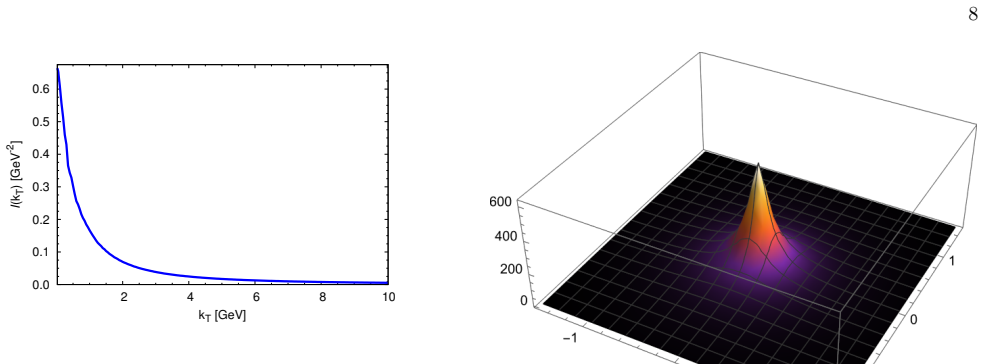
The central object is the phase-damping model of decoherence, defined by the system-reservoir Hamiltonian $H_{SR}=a^\dagger a(\Gamma^\dagger+\Gamma)$ and the vacuum Lindblad master equation. This interaction kills the off-diagonal elements of the density matrix exponentially while leaving occupation numbers intact, so each mode relaxes to the Poisson mixture $\rho_\infty = \sum_\ell e^{-n_k} n_k^\ell/\ell!\,|\ell\rangle\langle\ell|$. The map from glasma fields to occupation numbers is carried by the standard color-glass-condensate color-charge correlators, yielding $n_k^{AA}\propto L_z (g\mu_A)^2(g\mu_B)^2 I(k_T)/\omega_k$ and the analogous $pA$ expression, where $I(k_T)$ is a UV- and IR-finite transverse momentum integral. The comparison target is $S_{\rm SB}/N = 2.19$ for a two-dimensional ultrarelativistic Bose gas of gluons.
What would settle it
Compute $S_\infty/N$ using the full event distribution of $|a_k|^2$ instead of the single-coherent-state replacement $\beta_k=\sqrt{\langle |a_k|^2\rangle}$, and scan the longitudinal length $L_z$ in the occupation-number formulas: the central conclusion fails if the ratio crosses the thermal value $2.19$ or moves by more than a few percent as $L_z$ varies.
Extended reading notes
Core claim
The central discovery is that the asymptotic entropy of a decohered glasma coherent state is a sum over modes of the Shannon entropy of the Poisson distribution $\lambda_\ell = e^{-n_k} n_k^\ell/\ell!$, and that when the $n_k$ are taken from the glasma occupation numbers this entropy per particle falls short of the thermal benchmark. For nucleus-nucleus collisions, $S_\infty/N$ is independent of the transverse area and stays well below the two-dimensional ultrarelativistic gluon gas value $s_{SB}=2.19$; for proton-nucleus collisions it lies in the range roughly $0.35$--$0.75$ of $s_{SB}$ at LHC-relevant couplings, reaching or exceeding the thermal value only for the smallest $g\mu$ and largest transverse areas. As $g\mu$ grows the initial coherent state becomes denser and $S_\infty/N$ falls further behind the thermal value, because the total occupation number $N$ grows faster than the entropy $S_\infty$.
Load-bearing premise
The load-bearing premise is that the event-averaged glasma can be replaced, mode by mode, by one coherent state of amplitude $\beta_k=\sqrt{\langle |a_k|^2\rangle}$, and that the longitudinal box length $L_z$ cancels from the entropy per particle; because the von Neumann entropy is nonlinear in the occupation number, neither step is guaranteed, and $L_z$ is never fixed in the paper.
Editorial extensions
If this is right
- For nucleus-nucleus collisions at $g\mu \simeq 2$ GeV, the decohered state reaches only about ten percent of the two-dimensional thermal gluon-gas entropy per particle, so most of the final entropy must come from later non-abelian dynamics.
- As the glasma density parameter $g\mu$ increases, $S_\infty/N$ moves further below the thermal benchmark because $N$ grows faster than $S_\infty$; denser initial coherent states are therefore farther from decoherence-driven thermalization.
- The two-dimensional thermal benchmark $S_{\rm SB}/N = 2.19$ is the appropriate comparison for a boost-invariant glasma; using the three-dimensional value $3.60$ would make the shortfall even larger.
- In proton-nucleus collisions, decoherence brings the system closer to thermal equilibrium than in nucleus-nucleus collisions, with the gap closing only at small $g\mu$ and large transverse area.
Reading between the lines
- Editorial extension: replacing the single coherent amplitude $\beta_k=\sqrt{\langle |a_k|^2\rangle}$ with the full distribution of $|a_k|^2$ would shift $S_\infty/N$, since entropy is nonlinear in $n_k$; a direct numerical test would settle the direction and size of the shift.
- Editorial extension: because the environment is taken to be the vacuum, the computed entropy is a lower bound; coupling the glasma to a thermal reservoir through amplitude damping should add both particles and entropy, and the model predicts the $S/N$ gap would close as the reservoir temperature rises.
- Editorial extension: the same Poisson-entropy map could be applied to anisotropic or overoccupied pre-equilibrium distributions to test whether subthermal decoherence entropy is generic for saturated gluon states.
Editorial analysis
A structured set of objections, weighed in public.
Referee Report
Summary. The paper computes the asymptotic von Neumann entropy produced by phase-damping decoherence of a coherent state whose mode occupation numbers are taken from the McLerran-Venugopalan Glasma in AA and pA collisions. It compares the decoherence entropy per particle S∞/N with the entropy per particle of a thermal ultrarelativistic gluon gas and concludes that decoherence alone is insufficient to thermalize, except possibly for pA at small gμ and large transverse areas.
Significance. If fully established, the result would be a useful step in quantifying the role of decoherence in the early-stage thermalization problem. The single-mode decoherence result (Eqs. 23–28) is a standard and correct application of the phase-damping model, and the MV-model computation of the occupation numbers (Secs. IV) is internally consistent and clearly presented. The paper explicitly identifies the limitations of the phase-damping model. However, the central quantitative comparison is compromised by two load-bearing issues.
major comments (2)
- [Eqs. (69), (86)–(93), Figs. 4–5] The ratio S∞/N is not well defined because the occupation numbers scale with the longitudinal box length Lz. For AA, n_k ∝ Lz (Eq. 86); for pA, n_k ∝ Lz/AT (Eq. 87). In the mode sums of Eqs. (92)–(93), the integration is only over transverse momenta with dkx dky = (2π)^2/AT; there is no compensating dkz or factor 1/Lz. Since the Poisson entropy S∞(n_k) is a nonlinear function of n_k (Eq. 28), S∞ and N scale differently with Lz, so S∞/N depends on the arbitrary, never-specified Lz. The paper never states a value or physical justification for Lz, and Figs. 4–5 therefore do not follow from the equations. The central comparison with the thermal value sSB = 2.19 is underdetermined.
- [Eq. (46), Sec. III.A] The replacement of the event-averaged Glasma by a single coherent state with amplitude β_k = sqrt(⟨|a_k|^2⟩) is not justified. The MV model produces a distribution of color-charge configurations and hence a distribution of occupation numbers n_k per event. The decoherence entropy S(n_k) is a concave function of n_k, so by Jensen's inequality S(⟨n_k⟩) ≥ ⟨S(n_k)⟩. The calculation therefore overestimates the event-averaged entropy, and the reported S∞/N is not the entropy per particle of the decohered Glasma ensemble. The paper neither computes the distribution of n_k nor quantifies the resulting error.
minor comments (3)
- [Secs. II and III] The notation for the coherent-state amplitude changes from α (Sec. II) to β (Sec. III) without explanation; this is confusing when comparing Eqs. (10) and (40).
- [Figs. 4–5] The numerical value of Lz used for the curves is not stated anywhere; the captions and text should specify all inputs needed to reproduce the results.
- [Abstract] The abstract's qualifier 'except for proton-nucleus collisions at small values of gμ' is not precise, since the small-gμ range depends on the unstated Lz and on AT; the statement should be reformulated after the Lz issue is resolved.
Circularity Check
No significant circularity: the decoherence entropy is an un-fitted function of MV-model glasma occupation numbers, and the only self-citations are non-load-bearing; the Lz dependence is a determinacy concern, not a circularity.
full rationale
The central derivation chain is not circular. The phase-damping solution for a coherent state is independent of the target result: Eq. (28) gives S∞ as the von Neumann entropy of the Poisson distribution with mean n = |α|^2, and Eq. (29) is a standard consequence. The occupation numbers n_k are then computed from the McLerran-Venugopalan glasma, Eqs. (65)-(83), without fitting any parameter to the entropy or to the thermal benchmark sSB = 2.19. The comparison with a 2D/3D ultrarelativistic Bose gas is an external, independently defined reference, not an input to the calculation. The self-citations present, such as Ref. [56] for the pA parameters c = 1.25 and xg = 3.94, are not load-bearing because the paper states those values are taken from Refs. [55,57], which are external. Likewise, the coherent-state mapping follows Ref. [47], which is not by the present authors. A separate, non-circular weakness is that n_k in Eqs. (86)-(87) is proportional to the never-specified longitudinal length Lz, while the mode sums in Eqs. (92)-(93) are only over transverse momenta with dkx dky = (2π)^2/AT; since S∞(n_k) is nonlinear in n_k, S∞/N depends on Lz, so the numerical values in Fig. 5 are underdetermined. This is a correctness/robustness issue, not a self-referential reduction of the prediction to its inputs, and therefore does not raise the circularity score beyond the minor self-citation level.
Assumptions & free parameters
free parameters (8)
- m (IR regulator) =
0.2 GeV used for Fig. 1; stated range 0.1-0.4 GeV
- g (QCD coupling) =
g = 2 in Figs. 2-3; g mu scanned from 1 to 6 GeV
- mu_A, mu_B (MV color charge density scales) =
mu_A = mu_B = 0.5 GeV in Figs. 2-3; g mu scanned
- c (hotspot normalization) =
1.25 from Refs. [55,57]
- xg (gluon distribution at fixed x) =
3.94 from Refs. [55,57]
- AT (transverse quantization area) =
1, 4, 9 fm^2 in Figs. 4-5
- Lz (longitudinal box length) =
not specified
- Bq, Bcq (proton thickness widths) =
values not stated in text; taken from Refs. [55,56]
assumptions (7)
- domain assumption Color charges of the colliding objects are Gaussian random variables with local correlations (MV model), with F(u) = delta^2(u).
- domain assumption Quantum field operators can be replaced by classical fields, with the coherent-state amplitude equal to the classical Fourier mode (following Ref. [47]).
- domain assumption Decoherence of the Glasma against vacuum is described by the Born-Markov phase-damping master equation with a Markovian reservoir.
- domain assumption The Glasma is boost-invariant, so only kz = 0 modes contribute and the transverse gauge fields can be set to zero in Coulomb gauge.
- standard math Wick's theorem applies to the four-point correlator of color charges because fluctuations are Gaussian.
- standard math The entropy of the total density matrix is the sum of single-mode von Neumann entropies because the modes are in a product state.
- ad hoc to paper Each mode is represented by one coherent state with amplitude beta_k = sqrt(n_k), using the ensemble-averaged occupation number.
Cite this review
Pith. "Pith review of Entropy from decoherence: a case study using glasma-based occupation numbers." pith.science (2026). https://pith.science/paper/SZF43SA7
@misc{pith2026250704809,
  author       = {Pith},
  title        = {Pith review of: Entropy from decoherence: a case study using glasma-based occupation numbers},
  year         = {2026},
  howpublished = {\url{https://pith.science/paper/SZF43SA7}},
  note         = {Machine review of arXiv:2507.04809}
}
abstract
We compute the entropy-per-particle, $S/N$, produced by the decoherence of a coherent state interacting with an environment, using an analytical open quantum system approach. The coherent state considered is characterized by occupation numbers borrowed from the glasma fields produced in the early stages of high-energy nuclear collisions. The environment is modeled as the vacuum, and decoherence arises from the interaction of the state with vacuum fluctuations. We describe the system-environment interaction via a phase-damping model, which represents continuous measurements on the system without altering its energy or particle number. Starting from the occupation numbers typical of the Glasma in high-energy proton-nucleus and nucleus-nucleus collisions, we find that the final $S/N$ after decoherence is lower than that of a two-dimensional thermal bath of ultrarelativistic gluons, except for proton-nucleus collisions at small values of $g\mu$. Our results indicate that quantum decoherence alone does not generate sufficient entropy to transform the initial coherent state into a thermalized gluon bath.
Figures


Forward citations
Cited by 1 Pith paper
-
Quantum decoherence: a study applied to quarkonium-like bound states in strongly interacting matter
A Lindblad master equation for a J/psi-like harmonic oscillator in an expanding QGP shows that hydrodynamic cooling slows quantum decoherence compared to a static bath, with viscosity having negligible impact.
Reference graph
Works this paper leans on
-
[47]
J. H. Liu, S. Plumari, S. K. Das, V. Greco, and M. Rug- gieri, Diffusion of heavy quarks in the early stage of high-energy nuclear collisions at energies available at the BNL Relativistic Heavy Ion Collider and at the CERN Large Hadron Collider, Phys. Rev. C102, 044902 (2020), arXiv:1911.02480 [nucl-th]
work page Pith review arXiv 2020
-
[1]
(63) gives ⟨˜ρa(kT )˜ρb(qT )⟩ = (2π)2(gµ)2δabδ2(kT + qT )
MV model with coordinate-independent µ: AA collisions For a µ that does not depend on the transverse plane coordinates, Eq. (63) gives ⟨˜ρa(kT )˜ρb(qT )⟩ = (2π)2(gµ)2δabδ2(kT + qT ). (64) 2 The use of the Wick theorem in this context is justified by the fact that the fluctuations of the color charges are gaussian. In this case, using (2π)2δ2(0) = AT , wit...
-
[2]
MV model with coordinate-dependent µ: pA collisions If µ depends on the transverse plane coordinates, as it happens for the proton, we instead must consider ⟨ρa(xT )ρb(yT )⟩ = ⟨[gµ (v)]2⟩δabδ2(u), (70) ⟨˜ρa(kT )˜ρb(qT )⟩ = δab Z d2v⟨[gµ(v)]2⟩e−iv·(kT +qT ). (71) FIG. 2. nAA kaz defined in Eq. (69), in the (kx, ky) plane. Calcu- lations correspond to µA = ...
-
[3]
(73) is the gluon distribution function at fixed x and virtuality Q2
in Eq. (73) is the gluon distribution function at fixed x and virtuality Q2
-
[4]
In this case, the ensemble average at a fixed value of xT of the transverse plane amounts to average Tp(xT ) over the locations of the constituent quarks [56]. It is an easy exercise to show that ⟨[Qs(v)]2⟩ = Z d2xiQ2 s(v)Tcq(xi) (76) = 2π2αs Nc (xg) e−v2/2(Bq+Bcq) 2π(Bq + Bcq) , (77) which gives ⟨[gµ(v)]2⟩ = c2π 2Nc (xg) e−v2/2(Bq+Bcq) 2π(Bq + Bcq) . (78...
work page 2022
-
[5]
High Density QCD and Entropy Production at Heavy Ion Colliders
K. Geiger, High density QCD and entropy production at heavy ion colliders, in NATO Advanced Study Workshop on Hot Hadronic Matter: Theory and Experiment (1994) pp. 233–240, arXiv:hep-ph/9409219
work page Pith review arXiv 1994
-
[6]
M. Reiter, A. Dumitru, J. Brachmann, J. A. Maruhn, H. Stoecker, and W. Greiner, Entropy production in col- lisions of relativistic heavy ions: A Signal for quark gluon plasma phase transition?, Nucl. Phys. A 643, 99 (1998), arXiv:nucl-th/9806010
work page Pith review arXiv 1998
-
[7]
C. Das, R. K. Tripathi, and J. Cugnon, Entropy produc- tion in heavy-ion collisions, Phys. Rev. Lett. 56, 1663 (1986)
work page 1986
Show all 62 references
-
[8]
Kunihiro, B
T. Kunihiro, B. Muller, A. Ohnishi, and A. Schafer, Towards a Theory of Entropy Production in the Lit- tle and Big Bang, Prog. Theor. Phys. 121, 555 (2009), arXiv:0809.4831 [hep-ph]
2009 arXiv
-
[9]
R. J. Fries, T. Kunihiro, B. Muller, A. Ohnishi, and A. Schafer, From 0 to 5000 in 2 x 10**-24 seconds: En- tropy production in relativistic heavy-ion collisions, Nucl. Phys. A 830, 519C (2009), arXiv:0906.5293 [nucl-th]
2009 arXiv
-
[10]
Dumitru, E
A. Dumitru, E. Moln´ ar, and Y. Nara, Entropy production in high-energy heavy-ion collisions and the correlation of shear viscosity and thermalization time, Phys. Rev. C 76, 024910 (2007)
2007
-
[11]
Y. B. Ivanov and A. A. Soldatov, Entropy Production and Effective Viscosity in Heavy-Ion Collisions, Eur. Phys. J. A 52, 367 (2016), arXiv:1605.02476 [nucl-th]
2016 arXiv
-
[12]
Muller and A
B. Muller and A. Schafer, Entropy Creation in Relativis- tic Heavy Ion Collisions, Int. J. Mod. Phys. E 20, 2235 (2011), arXiv:1110.2378 [hep-ph]
2011 arXiv
-
[13]
W. H. Zurek and J. P. Paz, Decoherence, chaos, and the second law, Phys. Rev. Lett. 72, 2508 (1994), arXiv:gr- qc/9402006
1994
-
[14]
Elze, Quantum decoherence, entropy and thermal- ization in strong interactions at high-energy
H.-T. Elze, Quantum decoherence, entropy and thermal- ization in strong interactions at high-energy. 1: Noisy and dissipative vacuum effects in toy models, Nucl. Phys. B 436, 213 (1995), arXiv:hep-ph/9404215
1995 arXiv
-
[15]
J. Rais, H. van Hees, and C. Greiner, Bound-state forma- tion and thermalization within the Lindblad approach, Phys. Rev. C 111, 054918 (2025)
2025
-
[16]
Delorme, R
S. Delorme, R. Katz, T. Gousset, P. B. Gossiaux, and J.- P. Blaizot, Quarkonium dynamics in the quantum Brow- nian regime with non-abelian quantum master equations, JHEP 06, 060, arXiv:2402.04488 [hep-ph]
-
[17]
Neidig, J
T. Neidig, J. Rais, M. Bleicher, H. van Hees, and C. Greiner, Open quantum systems with Kadanoff- Baym equations, Phys. Lett. B 851, 138589 (2024), arXiv:2308.07659 [nucl-th]
2024 arXiv
-
[18]
Brambilla, M
N. Brambilla, M. A. Escobedo, M. Strickland, A. Vairo, P. Vander Griend, and J. H. Weber, Bottomonium sup- pression in an open quantum system using the quantum trajectories method, JHEP 05, 136, arXiv:2012.01240 [hep-ph]
2012 arXiv
-
[19]
Kajimoto, Y
S. Kajimoto, Y. Akamatsu, M. Asakawa, and A. Rothkopf, Dynamical dissociation of quarkonia by wave function decoherence, Phys. Rev. D 97, 014003 (2018), arXiv:1705.03365 [nucl-th]
2018 arXiv
-
[20]
Brambilla, M
N. Brambilla, M. A. Escobedo, J. Soto, and A. Vairo, Quarkonium suppression in heavy-ion collisions: an open quantum system approach, Phys. Rev. D 96, 034021 (2017), arXiv:1612.07248 [hep-ph]
2017 arXiv
-
[21]
Akamatsu and A
Y. Akamatsu and A. Rothkopf, Stochastic potential and quantum decoherence of heavy quarkonium in the quark-gluon plasma, Phys. Rev. D 85, 105011 (2012), arXiv:1110.1203 [hep-ph]
2012 arXiv
-
[22]
Blaizot and M
J.-P. Blaizot and M. A. Escobedo, Quantum and classi- cal dynamics of heavy quarks in a quark-gluon plasma, JHEP 06, 034, arXiv:1711.10812 [hep-ph]
-
[23]
Katz and P
R. Katz and P. B. Gossiaux, The Schr¨ odinger–Langevin equation with and without thermal fluctuations, Annals Phys. 368, 267 (2016), arXiv:1504.08087 [quant-ph]
2016 arXiv
-
[24]
W. A. De Jong, M. Metcalf, J. Mulligan, M. P losko´ n, F. Ringer, and X. Yao, Quantum simulation of open quantum systems in heavy-ion collisions, Phys. Rev. D 104, 051501 (2021), arXiv:2010.03571 [hep-ph]
2021 arXiv
-
[25]
Lindblad, On the Generators of Quantum Dynamical Semigroups, Commun
G. Lindblad, On the Generators of Quantum Dynamical Semigroups, Commun. Math. Phys. 48, 119 (1976)
1976
-
[26]
Gorini, A
V. Gorini, A. Kossakowski, and E. C. G. Sudarshan, Completely Positive Dynamical Semigroups of N Level Systems, J. Math. Phys. 17, 821 (1976)
1976
-
[27]
H. J. Carmichael, Statistical methods in quantum optics: Vol. 1: Master equations and Fokker-Planck equations; 1st ed., 2nd corr. print , Texts and monographs in physics (Springer, Berlin, 1999) p. 365 p
1999
-
[28]
Breuer and F
H.-P. Breuer and F. Petruccione, The Theory of Open Quantum Systems (Oxford University Press, 2007)
2007
-
[29]
Vidiella-Barranco, Evolution of a quantum harmonic oscillator coupled to a minimal thermal environment, Physica A 459, 78 (2016), arXiv:1605.01050 [quant-ph]
A. Vidiella-Barranco, Evolution of a quantum harmonic oscillator coupled to a minimal thermal environment, Physica A 459, 78 (2016), arXiv:1605.01050 [quant-ph]
2016 arXiv
-
[30]
L. E. Estes, T. H. Keil, and L. M. Narducci, Quantum- mechanical description of two coupled harmonic oscilla- tors, Physical Review 175, 286 (1968)
1968
-
[31]
E. B. Davies, Quantum Theory of Open Systems (Aca- demic Press, 1976)
1976
-
[32]
Mandel and E
L. Mandel and E. Wolf, Optical Coherence and Quantum Optics (Cambridge University Press, 1995)
1995
-
[33]
L. D. McLerran and R. Venugopalan, Computing quark and gluon distribution functions for very large nuclei, Phys. Rev. D 49, 2233 (1994), arXiv:hep-ph/9309289
1994 arXiv
-
[34]
L. D. McLerran and R. Venugopalan, Gluon distribu- tion functions for very large nuclei at small transverse momentum, Phys. Rev. D 49, 3352 (1994), arXiv:hep- ph/9311205
1994
-
[35]
L. D. McLerran and R. Venugopalan, Green’s functions in the color field of a large nucleus, Phys. Rev. D 50, 2225 (1994), arXiv:hep-ph/9402335
1994 arXiv
-
[36]
Iancu, A
E. Iancu, A. Leonidov, and L. D. McLerran, Nonlinear gluon evolution in the color glass condensate. 1., Nucl. Phys. A 692, 583 (2001), arXiv:hep-ph/0011241. 13
2001 arXiv
-
[37]
Fukushima and F
K. Fukushima and F. Gelis, The evolving Glasma, Nucl. Phys. A 874, 108 (2012), arXiv:1106.1396 [hep-ph]
2012 arXiv
-
[38]
Gelis, E
F. Gelis, E. Iancu, J. Jalilian-Marian, and R. Venu- gopalan, The Color Glass Condensate, Ann. Rev. Nucl. Part. Sci. 60, 463 (2010), arXiv:1002.0333 [hep-ph]
2010 arXiv
-
[39]
Iancu and R
E. Iancu and R. Venugopalan, The Color glass conden- sate and high-energy scattering in QCD, in Quark-gluon plasma 4 , edited by R. C. Hwa and X.-N. Wang (2003) pp. 249–3363, arXiv:hep-ph/0303204
2003 arXiv
-
[40]
McLerran, A Brief Introduction to the Color Glass Condensate and the Glasma, in 38th International Sym- posium on Multiparticle Dynamics (2009) pp
L. McLerran, A Brief Introduction to the Color Glass Condensate and the Glasma, in 38th International Sym- posium on Multiparticle Dynamics (2009) pp. 3–18, arXiv:0812.4989 [hep-ph]
2009 arXiv
-
[41]
Gelis, Color Glass Condensate and Glasma, Int
F. Gelis, Color Glass Condensate and Glasma, Int. J. Mod. Phys. A 28, 1330001 (2013), arXiv:1211.3327 [hep- ph]
2013 arXiv
-
[42]
Avramescu, V
D. Avramescu, V. Greco, T. Lappi, H. M¨ antysaari, and D. M¨ uller, Heavy-Flavor Angular Correlations as a Di- rect Probe of the Glasma, Phys. Rev. Lett. 134, 172301 (2025), arXiv:2409.10565 [hep-ph]
2025 arXiv
-
[43]
Oliva, G
L. Oliva, G. Parisi, V. Greco, and M. Ruggieri, Melting of cc¯ and bb¯ pairs in the pre-equilibrium stage of proton- nucleus collisions at the Large Hadron Collider, Phys. Rev. D 112, 014008 (2025), arXiv:2412.07967 [hep-ph]
2025 arXiv
-
[44]
Pooja, S. K. Das, V. Greco, and M. Ruggieri, Ther- malization and isotropization of heavy quarks in a non- Markovian medium in high-energy nuclear collisions, Phys. Rev. D 108, 054026 (2023), arXiv:2306.13749 [hep- ph]
2023 arXiv
-
[45]
Avramescu, V
D. Avramescu, V. B˘ aran, V. Greco, A. Ipp, D. I. M¨ uller, and M. Ruggieri, Simulating jets and heavy quarks in the glasma using the colored particle-in-cell method, Phys. Rev. D 107, 114021 (2023), arXiv:2303.05599 [hep-ph]
2023 arXiv
-
[46]
Y. Sun, G. Coci, S. K. Das, S. Plumari, M. Ruggieri, and V. Greco, Impact of Glasma on heavy quark observables in nucleus-nucleus collisions at LHC, Phys. Lett. B 798, 134933 (2019), arXiv:1902.06254 [nucl-th]
2019 arXiv
-
[48]
Boguslavski, A
K. Boguslavski, A. Kurkela, T. Lappi, and J. Peuron, Heavy quark diffusion in an overoccupied gluon plasma, JHEP 09, 077, arXiv:2005.02418 [hep-ph]
2005 arXiv
-
[49]
M. E. Carrington, A. Czajka, and S. Mrowczynski, The energy-momentum tensor at the earliest stage of rela- tivistic heavy-ion collisions, Eur. Phys. J. A 58, 5 (2022), arXiv:2012.03042 [hep-ph]
2022 arXiv
-
[50]
M. E. Carrington, A. Czajka, and S. Mr´ owczy´ nski, Physi- cal characteristics of glasma from the earliest stage of rel- ativistic heavy ion collisions, Phys. Rev. C 106, 034904 (2022), arXiv:2105.05327 [hep-ph]
2022 arXiv
-
[51]
H. Iida, T. Kunihiro, A. Ohnishi, and T. T. Taka- hashi, Time evolution of gluon coherent state and its von Neumann entropy in heavy-ion collisions, (2014), arXiv:1410.7309 [hep-ph]
2014 arXiv
-
[52]
Matsuda, T
H. Matsuda, T. Kunihiro, A. Ohnishi, and T. T. Taka- hashi, Entropy production in a longitudinally expanding Yang–Mills field with use of the Husimi function: semi- classical approximation, PTEP 2022, 073D02 (2022), arXiv:2203.02859 [hep-ph]
2022 arXiv
-
[53]
Tsukiji, T
H. Tsukiji, T. Kunihiro, A. Ohnishi, and T. T. Takahashi, Entropy production and isotropization in Yang–Mills theory using a quantum distribution function, PTEP 2018, 013D02 (2018), arXiv:1709.00979 [hep-ph]
2018 arXiv
-
[54]
Tsukiji, H
H. Tsukiji, H. Iida, T. Kunihiro, A. Ohnishi, and T. T. Takahashi, Entropy production from chaoticity in Yang- Mills field theory with use of the Husimi function, Phys. Rev. D 94, 091502 (2016), arXiv:1603.04622 [hep-ph]
2016 arXiv
-
[55]
H. Iida, T. Kunihiro, B. Mueller, A. Ohnishi, A. Schae- fer, and T. T. Takahashi, Entropy production in classical Yang-Mills theory from Glasma initial conditions, Phys. Rev. D 88, 094006 (2013), arXiv:1304.1807 [hep-ph]
2013 arXiv
-
[56]
Muller and A
B. Muller and A. Schafer, The Decoherence time in high energy heavy ion collisions, Phys. Rev. C 73, 054905 (2006), arXiv:hep-ph/0512100
2006 arXiv
-
[57]
R. J. Glauber, The Quantum theory of optical coherence, Phys. Rev. 130, 2529 (1963)
1963
-
[58]
D. F. Walls and G. J. Milburn, Effect of dissipation on quantum coherence, Phys. Rev. A 31, 2403 (1985)
1985
-
[59]
Schenke, C
B. Schenke, C. Shen, and P. Tribedy, Running the gamut of high energy nuclear collisions, Phys. Rev. C 102, 044905 (2020), arXiv:2005.14682 [nucl-th]
2020 arXiv
-
[60]
Parisi, V
G. Parisi, V. Greco, and M. Ruggieri, Anisotropic fluc- tuations of momentum and angular momentum of heavy quarks in the pre-equilibrium stage of pA collisions at the LHC, (2025), arXiv:2505.08441 [hep-ph]
2025
-
[61]
A. H. Rezaeian, M. Siddikov, M. Van de Klundert, and R. Venugopalan, Analysis of combined HERA data in the Impact-Parameter dependent Saturation model, Phys. Rev. D 87, 034002 (2013), arXiv:1212.2974 [hep-ph]
2013 arXiv
-
[62]
Lappi, Wilson line correlator in the MV model: Re- lating the glasma to deep inelastic scattering, Eur
T. Lappi, Wilson line correlator in the MV model: Re- lating the glasma to deep inelastic scattering, Eur. Phys. J. C 55, 285 (2008), arXiv:0711.3039 [hep-ph]
2008 arXiv
Reviewed August 6, 2026 · model on record in the stance chip above.
Discussion (0). Continue with ORCID to comment.