Go-with-the-Track: Video Compositing and Motion Control with Point Tracking
Pith reviewed 2026-06-26 17:49 UTC · model grok-4.3
The pith
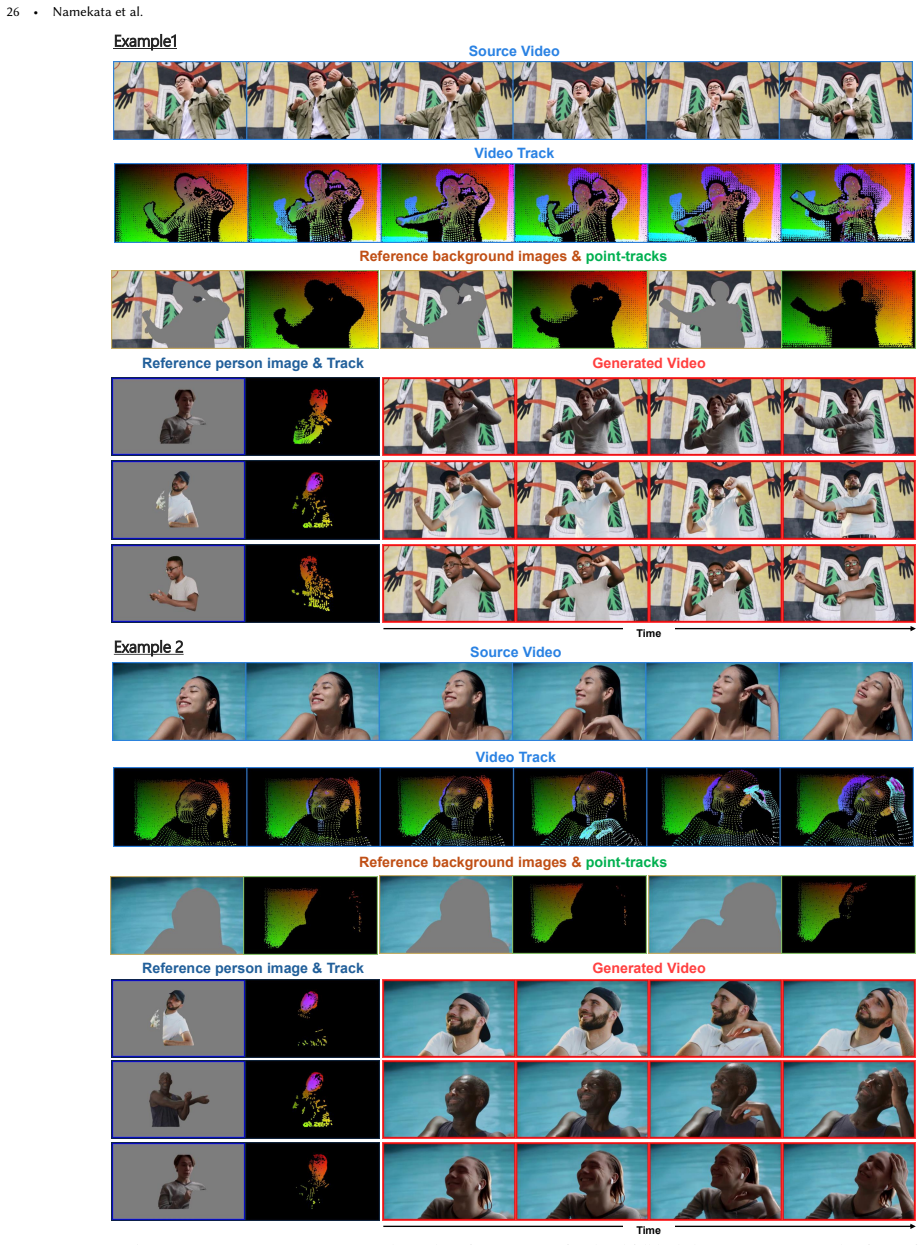
Point-track embeddings anchored to reference images allow a single video diffusion model to control both content compositing and motion across frames.
A machine-rendered reading of the paper's core claim, the machinery that carries it, and where it could break.
Core claim
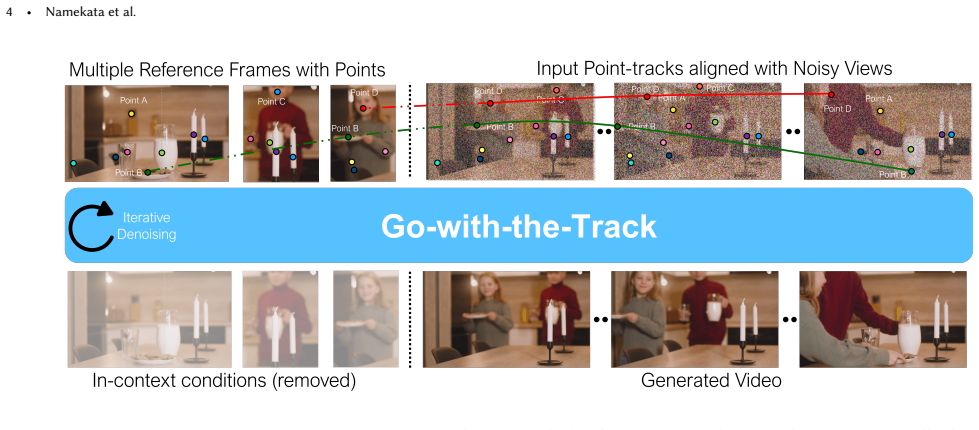
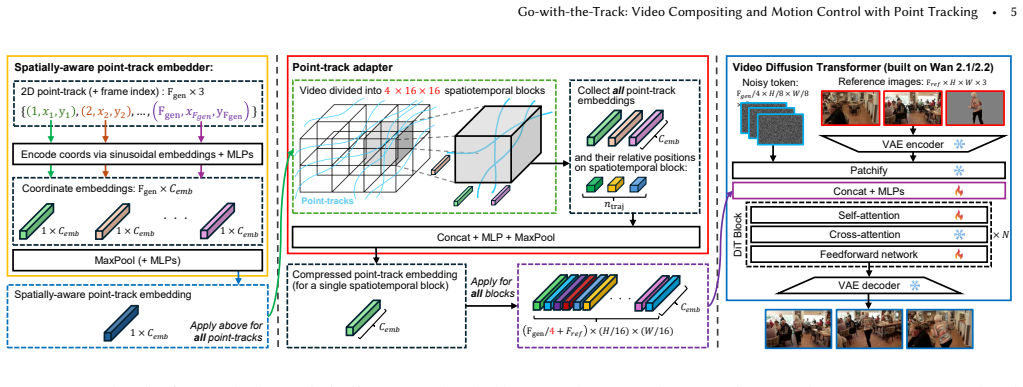
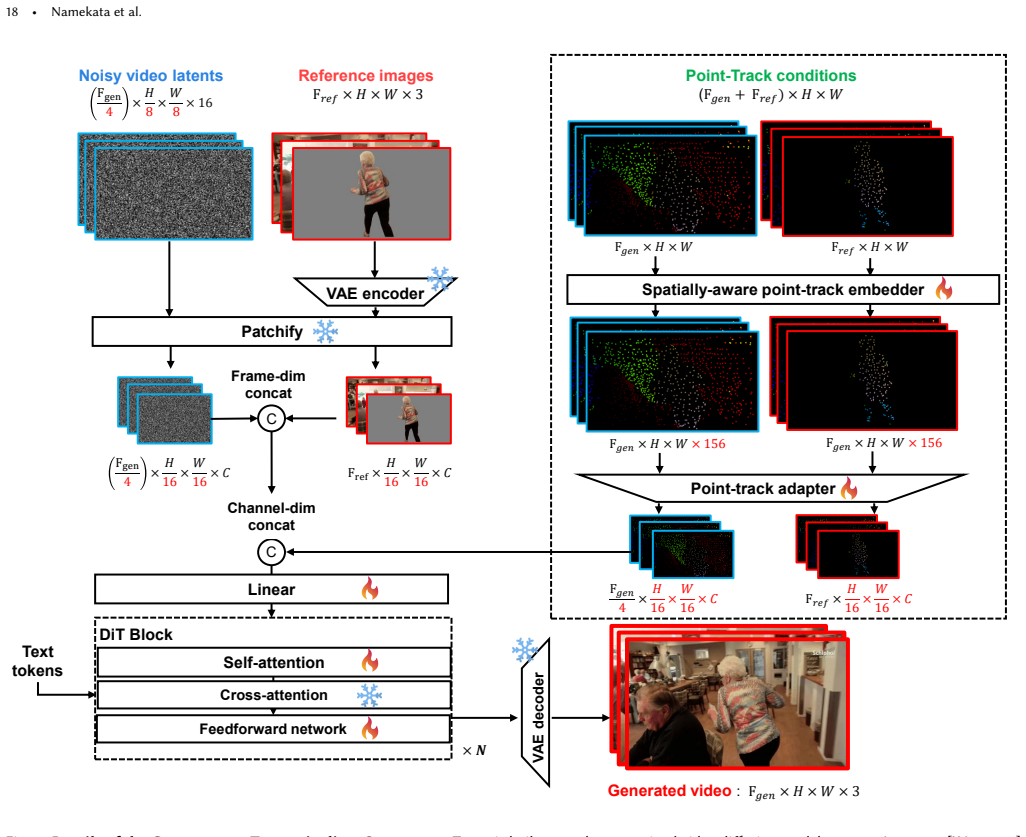
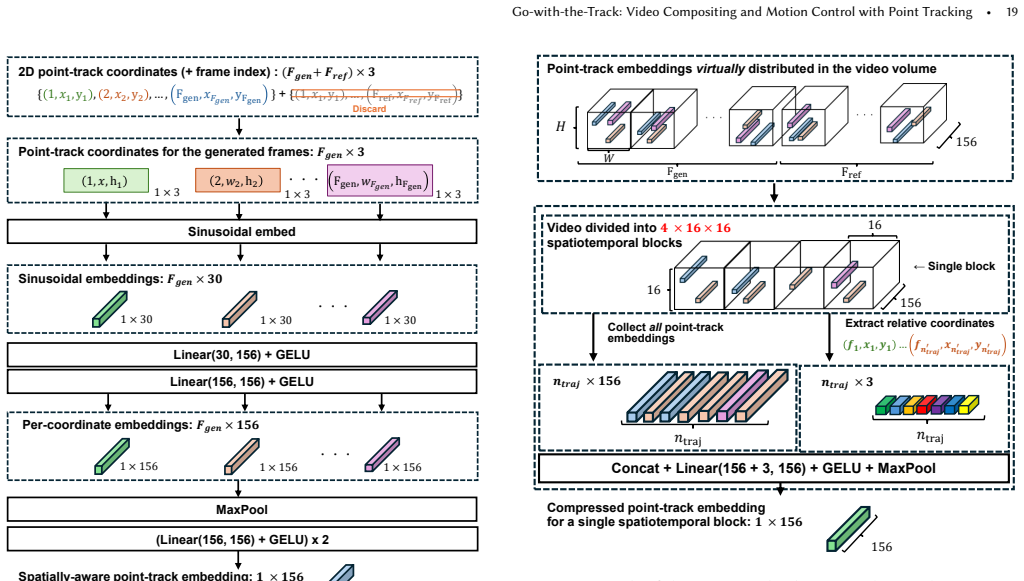
Go-with-the-Track unifies point-track-conditioned image-to-video generation and reference-to-video generation by conditioning on multiple reference images together with reference-anchored point-tracks. The tracks explicitly link each generated frame to the reference images, enabling compositing and motion control throughout the sequence. Spatially-aware point-track embeddings are formed by passing coordinate sequences through a coordinate-wise MLP followed by temporal pooling; these embeddings are then injected into the video diffusion transformer by a lightweight adapter that resolves pixel-to-patch mismatch without the motion-detail loss of naive subsampling. A hybrid training regimen on d
What carries the argument
Spatially-aware point-track embeddings formed by a coordinate-wise MLP on coordinate sequences followed by temporal pooling, injected via a lightweight adapter into a video diffusion transformer.
If this is right
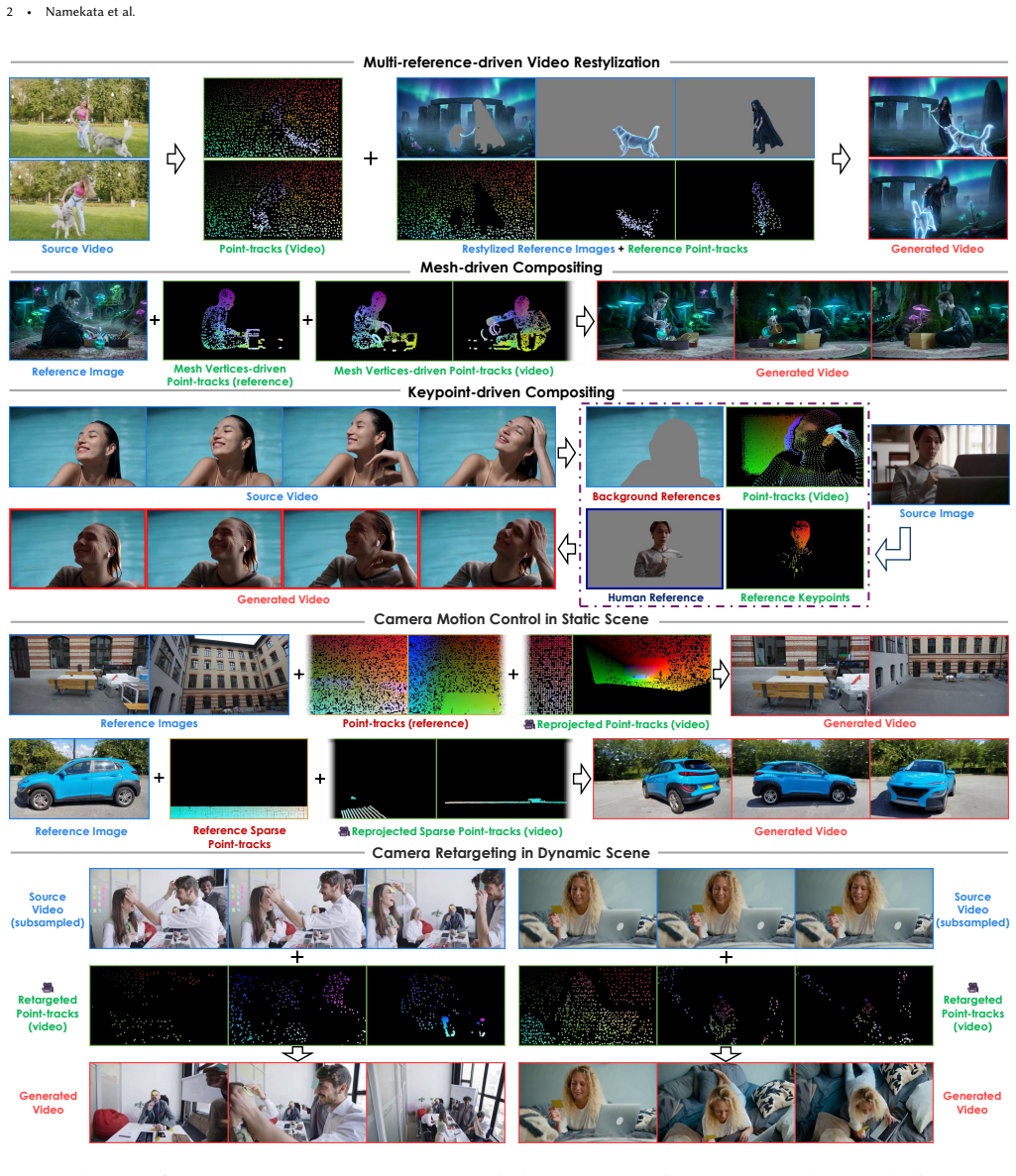
- Multi-reference video generation becomes possible in which point tracks drive the placement and motion of each reference throughout the sequence.
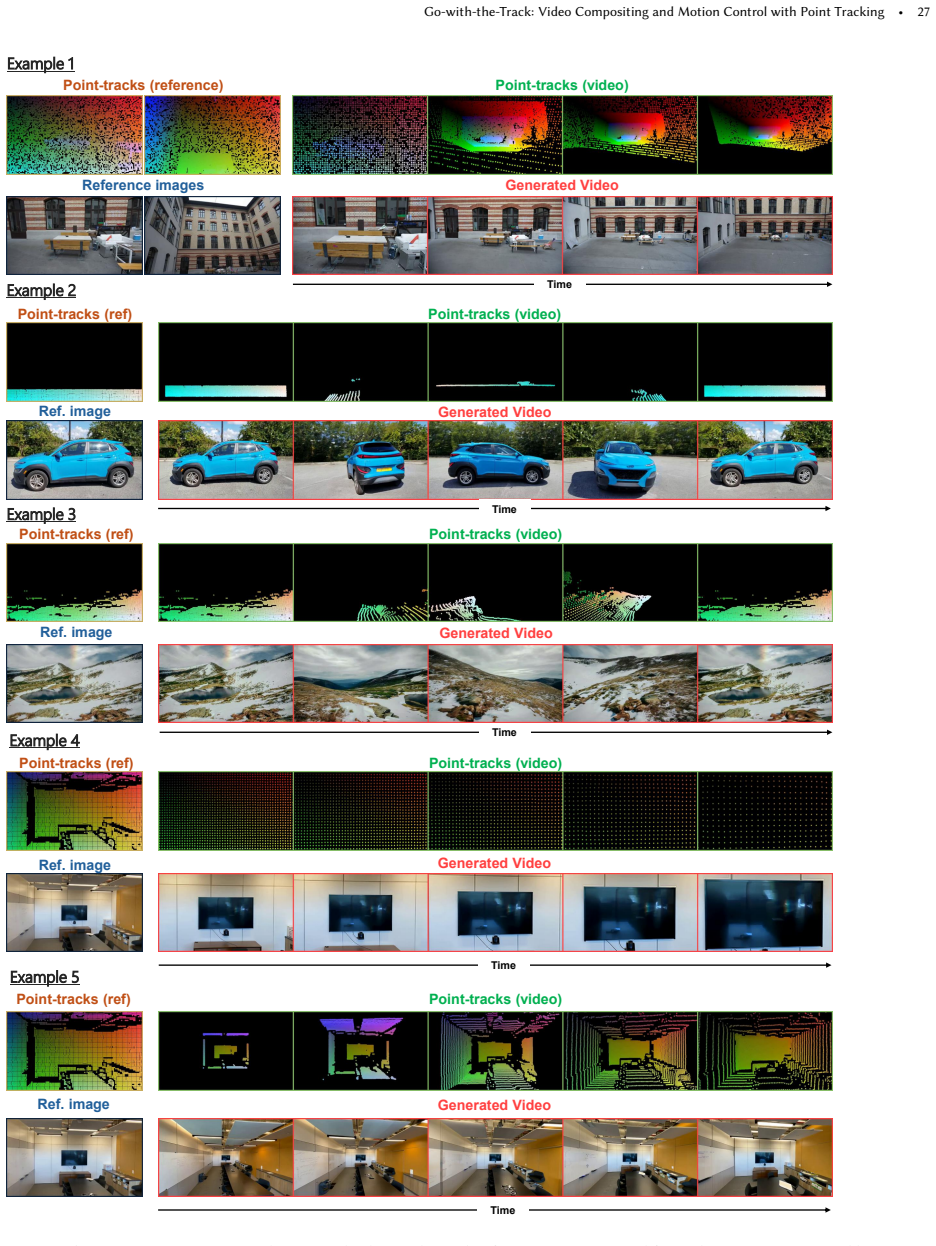
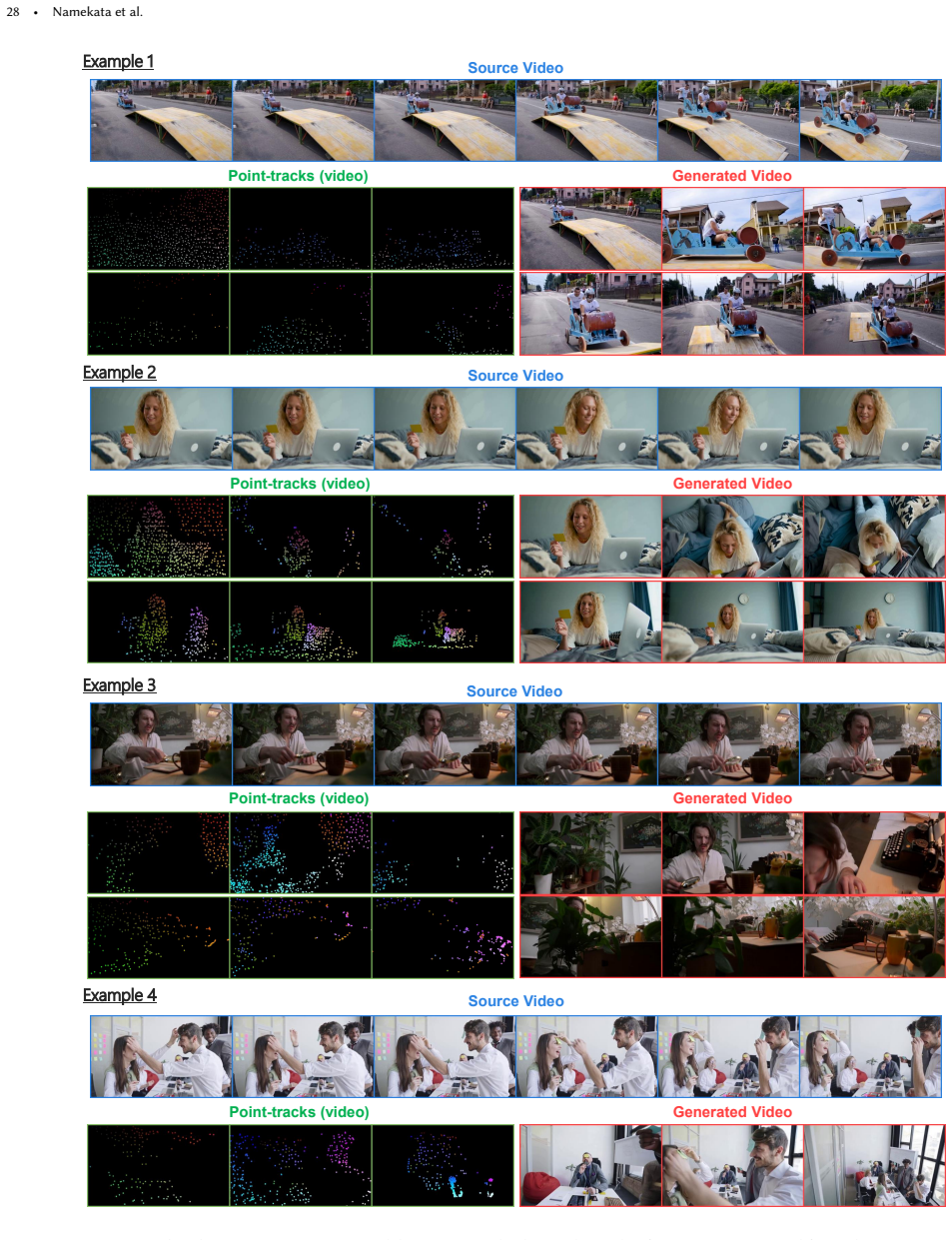
- Camera control works for both static and dynamic scenes within the same trained model.
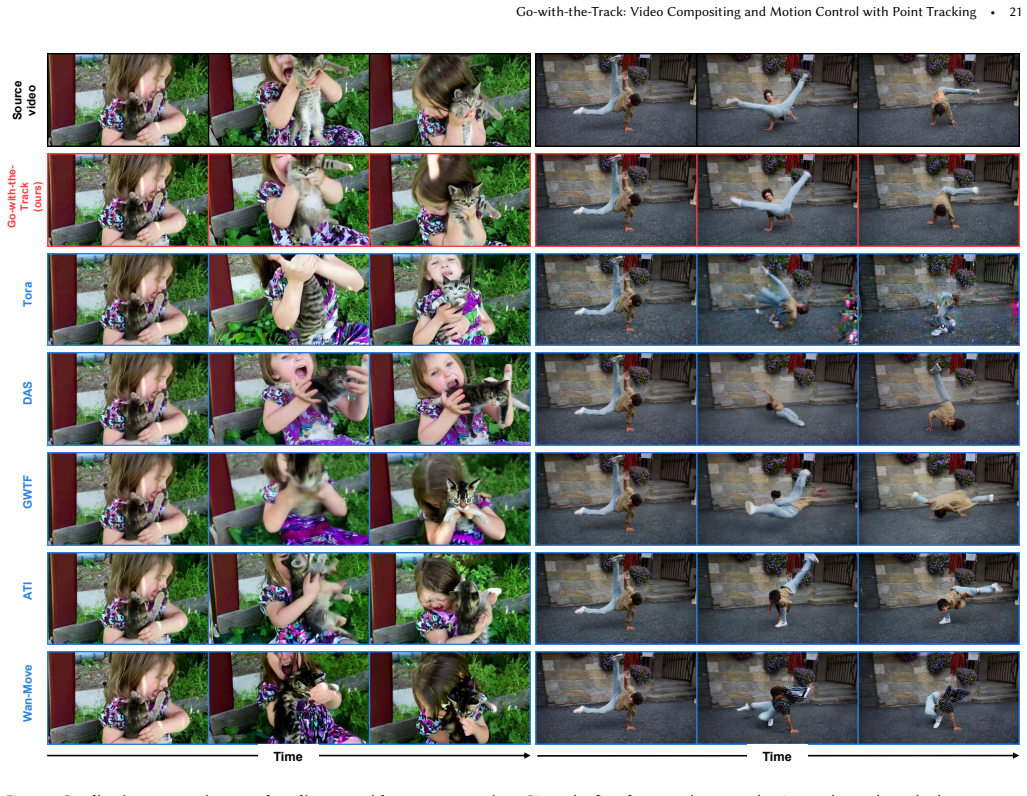
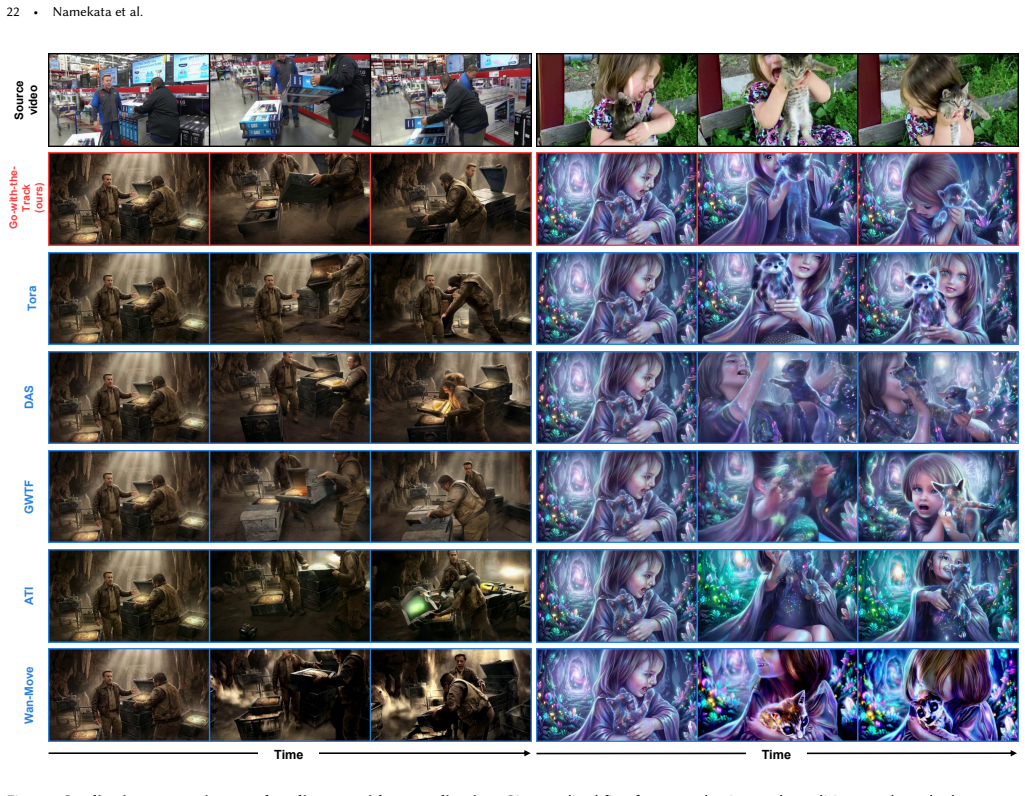
- A single set of weights achieves higher motion fidelity and reference fidelity than models specialized for only one task.
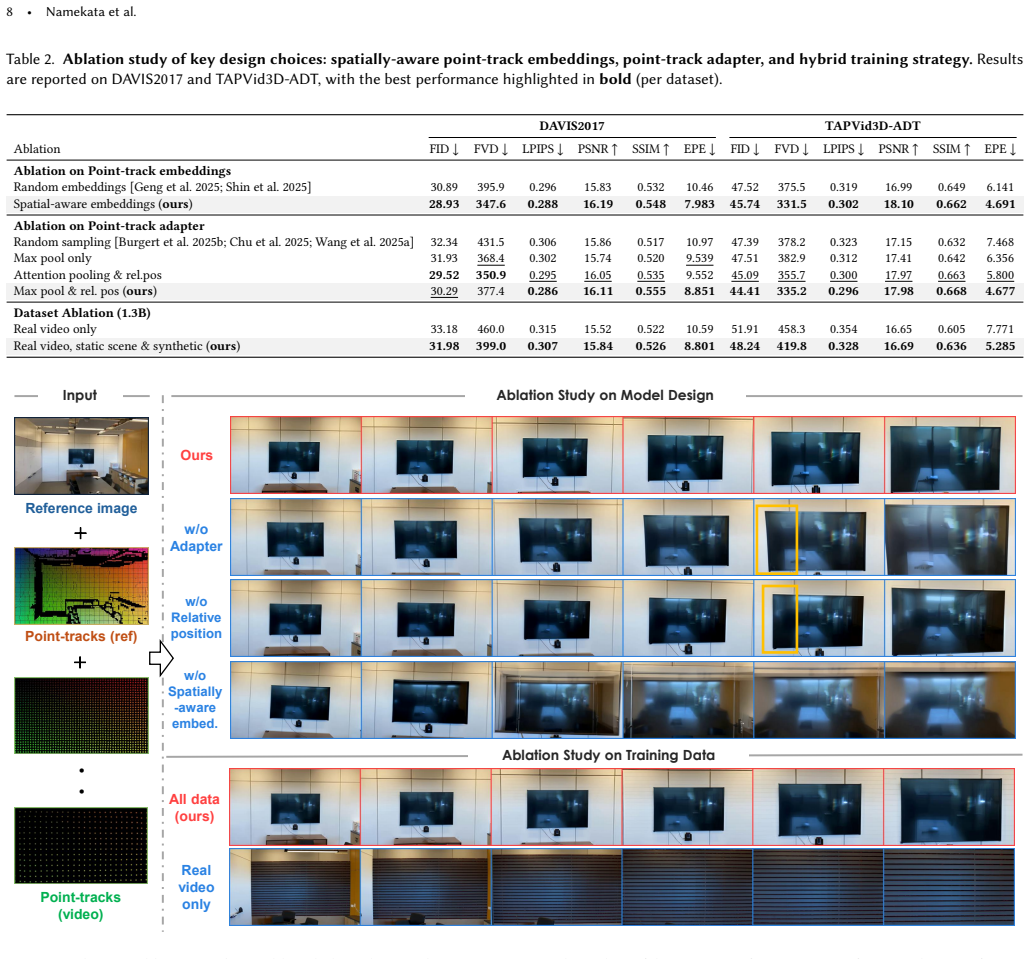
- Hybrid training on mixed scene types improves generalization to both camera motion and object motion.
Where Pith is reading between the lines
- The same embedding strategy could be tested with other dense control signals such as optical flow or depth maps to see whether they inherit the same spatial-proximity property.
- If the adapter remains lightweight, the method may support interactive editing loops where users drag tracked points to adjust generated motion on the fly.
- Extending the tracks to include uncertainty or occlusion flags might allow the model to handle cases where references become partially hidden without retraining.
Load-bearing premise
The embeddings produced by the coordinate-wise MLP and temporal pooling can preserve motion detail and correctly associate point tracks with reference content despite the resolution mismatch between pixels and patches.
What would settle it
A test set of videos in which provided point tracks are followed by the generated content only when the reference images are the first-frame input but fail to maintain correct placement or motion when the same references must be composited at later frames.
Figures

read the original abstract
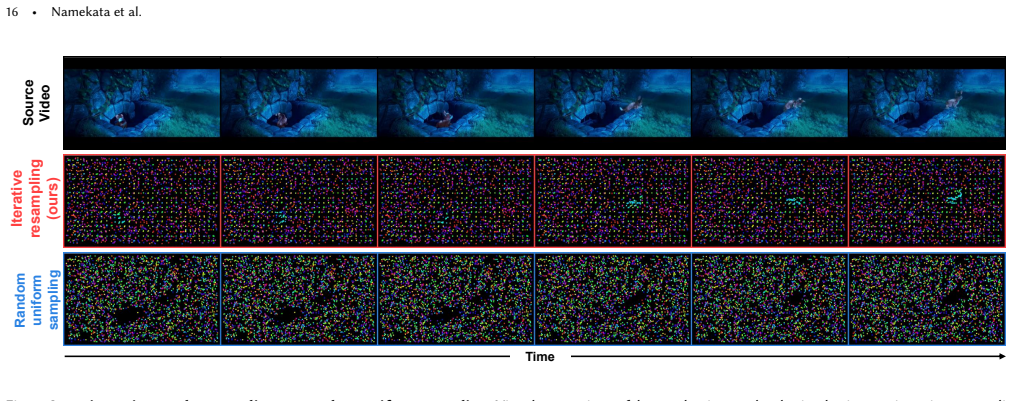
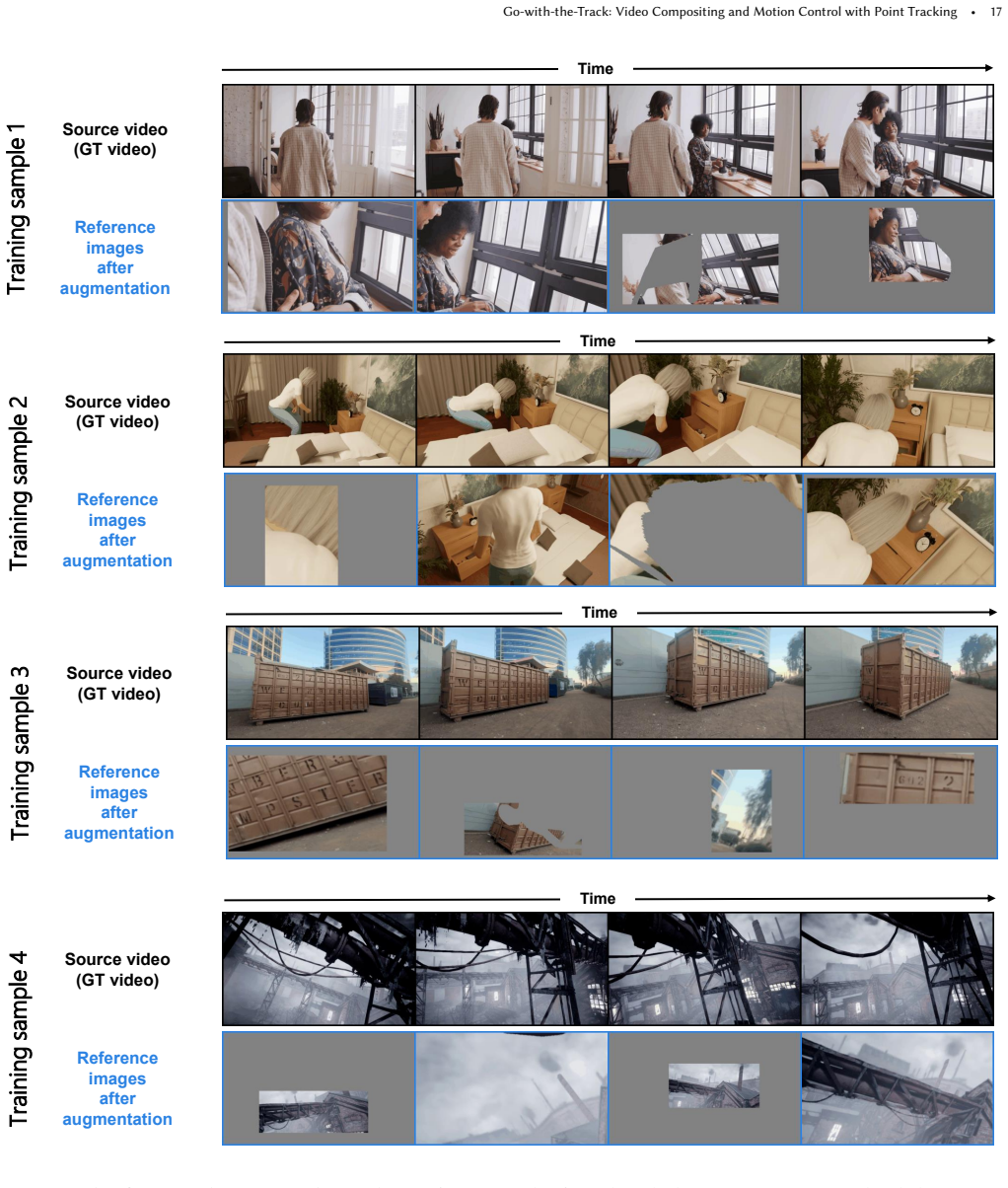
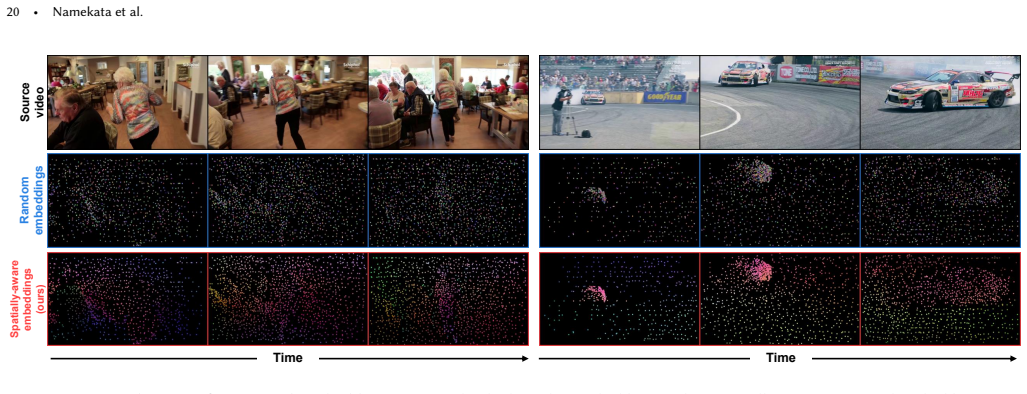
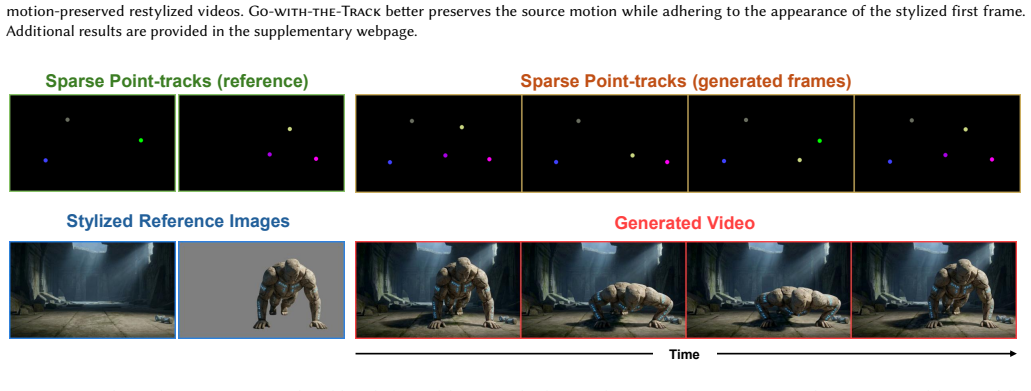
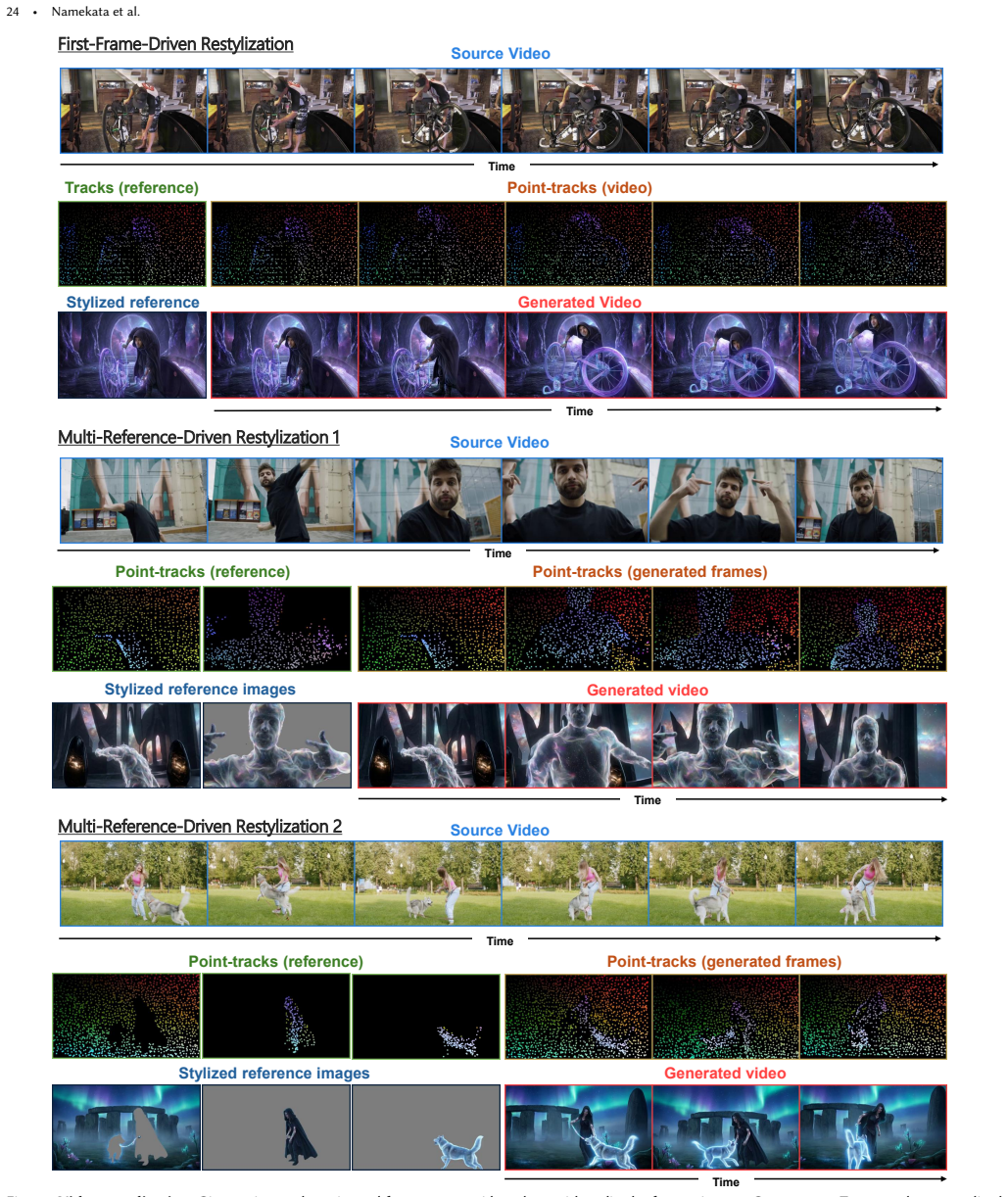
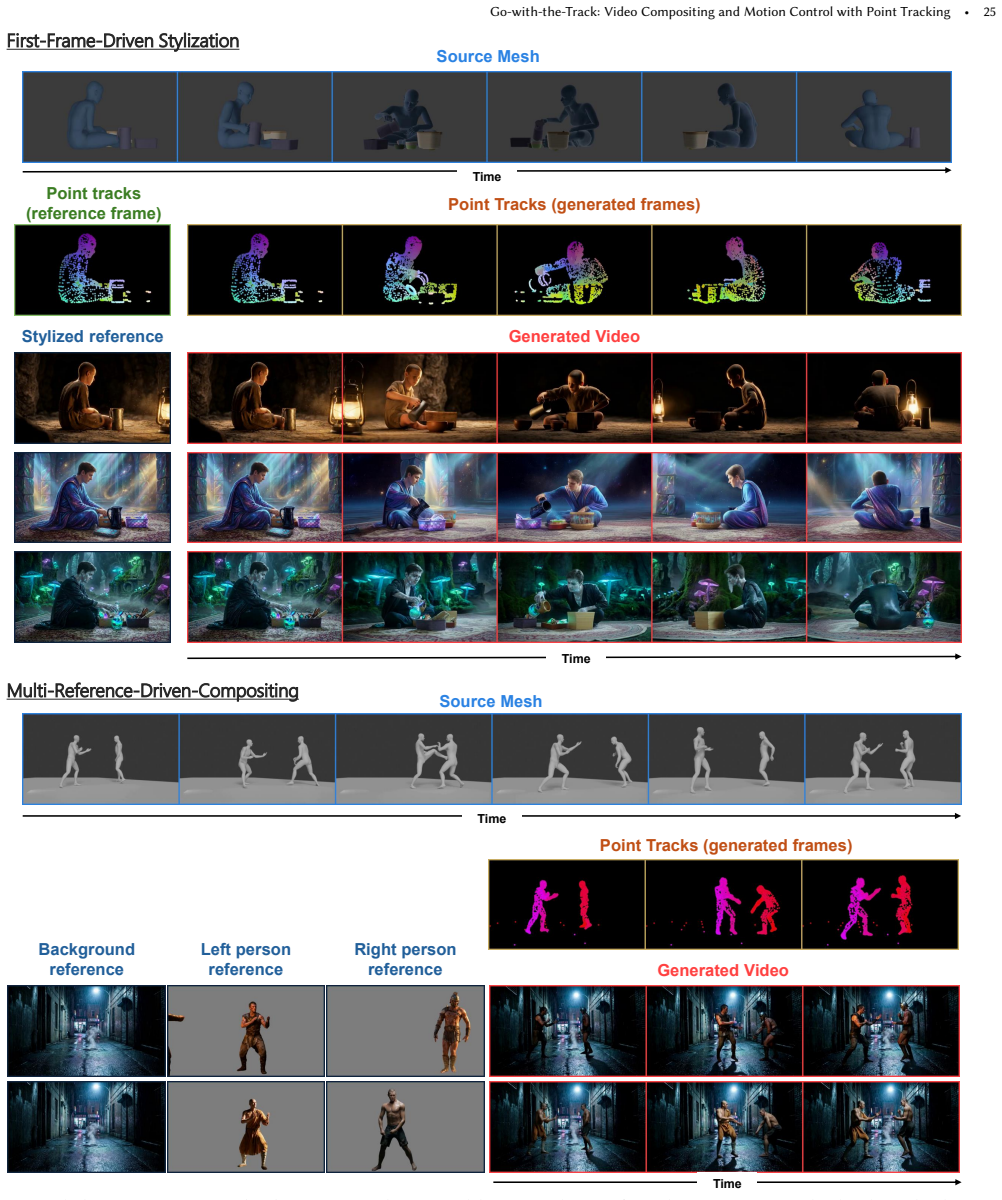
Filmmaking demands precise motion control and reference image compositing -- capabilities that existing methods treat separately. Point-track-conditioned image-to-video models restrict content insertion to the first frame, while reference-to-video models lack fine-grained spatial-temporal control over how reference content integrates across frames. We present Go-with-the-Track, which unifies both capabilities by jointly conditioning on multiple reference images and reference-anchored point-tracks -- extending conventional point-tracks to explicitly establish correspondences between generated frames and reference images, thus enabling precise compositing and motion control throughout the video. To achieve this, we introduce spatially-aware point-track embeddings that encode the full sequence of point-track coordinates using a coordinate-wise MLP followed by temporal pooling. This representation captures the spatial characteristics of each point-track (serving as a unique identifier), while the embedding similarity correlates directly with spatial proximity, enhancing the model's ability to distinguish and associate point-tracks. We inject these point-track embeddings into a video diffusion transformer via a lightweight adapter, resolving the pixel-to-patch resolution mismatch while avoiding the substantial motion detail loss inherent in naive point-track subsampling. We use a hybrid training strategy to train jointly on dynamic, static, and synthetic scene video datasets to boost motion controllability. Experiments demonstrate that Go-with-the-Track achieves superior motion and reference control in a single model and enables new capabilities: multi-reference conditioned video generation with point-track driven compositing, as well as camera control for both static and dynamic scenes. Project Page: https://eyeline-labs.github.io/Go-with-the-Track/
Editorial analysis
A structured set of objections, weighed in public.
Referee Report
Summary. The manuscript presents Go-with-the-Track, a video diffusion transformer conditioned jointly on multiple reference images and reference-anchored point-tracks. It introduces spatially-aware point-track embeddings formed by a coordinate-wise MLP followed by temporal pooling, injected via a lightweight adapter to address pixel-to-patch mismatch. A hybrid training strategy on dynamic, static, and synthetic datasets is used, with claims of superior motion/reference control and new capabilities including multi-reference compositing and camera control for static/dynamic scenes.
Significance. If the central claims hold with supporting evidence, the work would advance controllable video generation by unifying point-track motion control with reference-based compositing in one model, potentially enabling new applications in video editing and filmmaking. The embedding approach and hybrid training are conceptually relevant for handling spatial correspondences without naive subsampling.
major comments (2)
- [Method (spatially-aware point-track embeddings)] Method description (spatially-aware point-track embeddings): the embeddings are produced by coordinate-wise MLP on the full coordinate sequence followed by temporal pooling to yield one vector per track. For the central claim of precise motion control throughout the video (including camera control via point-tracks), it must be shown how per-timestep coordinate values reach the diffusion transformer; if the pooled embedding replaces rather than augments raw trajectories, the motion signal risks being summarized away, undermining the advantage over subsampling.
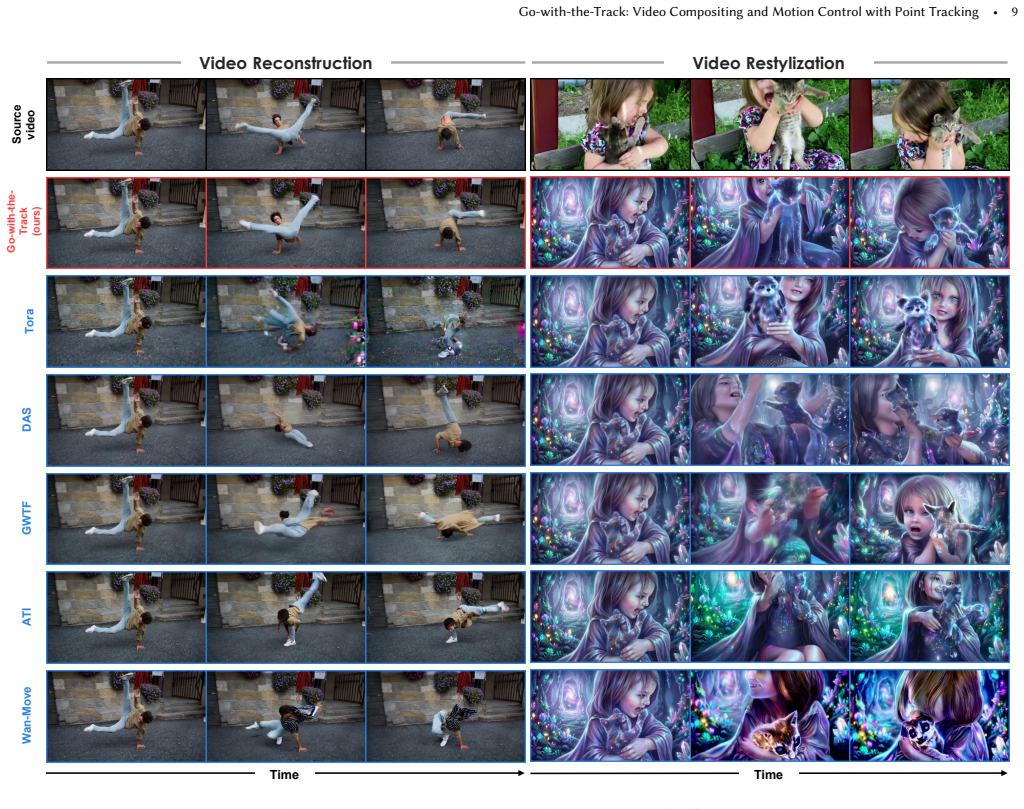
- [Abstract and Experiments] Abstract/Experiments: the manuscript asserts experimental superiority in motion and reference control without quantitative metrics, baselines, dataset details, ablations, or error bars. This absence leaves the performance claims unsupported and prevents assessment of whether the embedding and adapter resolve the stated issues.
Simulated Author's Rebuttal
We thank the referee for the constructive feedback on our manuscript. The comments highlight important areas for clarification and strengthening the experimental evidence. We respond to each major comment below and indicate where revisions will be made.
read point-by-point responses
-
Referee: [Method (spatially-aware point-track embeddings)] Method description (spatially-aware point-track embeddings): the embeddings are produced by coordinate-wise MLP on the full coordinate sequence followed by temporal pooling to yield one vector per track. For the central claim of precise motion control throughout the video (including camera control via point-tracks), it must be shown how per-timestep coordinate values reach the diffusion transformer; if the pooled embedding replaces rather than augments raw trajectories, the motion signal risks being summarized away, undermining the advantage over subsampling.
Authors: We appreciate the referee pointing out this potential ambiguity in the method description. The coordinate-wise MLP processes the full sequence of per-track coordinates to encode temporal dynamics, after which temporal pooling produces a compact per-track vector that serves as a spatially-aware identifier. This embedding is injected via the adapter into the diffusion transformer at each timestep, enabling the model to leverage the encoded motion information for precise control. However, the current text does not explicitly detail the injection mechanism or confirm whether raw trajectories augment the embeddings. We will revise the method section to provide this clarification, including a step-by-step description and diagram of how per-timestep information from the original trajectories is preserved and utilized during diffusion. revision: yes
-
Referee: [Abstract and Experiments] Abstract/Experiments: the manuscript asserts experimental superiority in motion and reference control without quantitative metrics, baselines, dataset details, ablations, or error bars. This absence leaves the performance claims unsupported and prevents assessment of whether the embedding and adapter resolve the stated issues.
Authors: The referee is correct that the current version relies on qualitative results to support claims of superior motion and reference control. To address this, the revised manuscript will include quantitative metrics for motion accuracy and reference fidelity, direct comparisons to relevant baselines, full dataset descriptions, ablation studies on the embedding and adapter components, and error bars on reported results. These additions will provide the necessary evidence to evaluate the contributions. revision: yes
Circularity Check
No significant circularity detected
full rationale
The paper presents an empirical method for video generation via a new conditioning scheme (spatially-aware point-track embeddings formed by coordinate-wise MLP + temporal pooling, injected through a lightweight adapter, trained jointly on mixed datasets). No equations, derivations, or self-citations are exhibited that reduce any claimed result to its inputs by construction, nor any fitted-input-called-prediction pattern. The central claims concern trained-model performance on external data and are not tautological. This is the normal non-circular case.
Axiom & Free-Parameter Ledger
Reference graph
Works this paper leans on
-
[1]
FreeTraj: Tuning-Free Trajectory Control in Video Diffusion Models.arXiv preprint arXiv:2406.16863(2024). Xuanchi Ren, Tianchang Shen, Jiahui Huang, Huan Ling, Yifan Lu, Merlin Nimier- David, Thomas Müller, Alexander Keller, Sanja Fidler, and Jun Gao. 2025. GEN3C: 3D-Informed World-Consistent Video Generation with Precise Camera Control. In Proceedings of...
arXiv 2024
-
[2]
PointOdyssey: A Large-Scale Synthetic Dataset for Long-Term Point Tracking. InICCV. SIGGRAPH Conference Papers ’26, July 19–23, 2026, Los Angeles, CA, USA. Go-with-the-Track: Video Compositing and Motion Control with Point Tracking•13 Bojia Zi, Penghui Ruan, Marco Chen, Xianbiao Qi, Shaozhe Hao, Shihao Zhao, Youze Huang, Bin Liang, Rong Xiao, and Kam-Fai ...
2026
discussion (0)
Sign in with ORCID, Apple, or X to comment. Anyone can read and Pith papers without signing in.