Hidden quantum-informatic symmetries of quasi-de Sitter backgrounds
Pith reviewed 2026-07-02 09:30 UTC · model grok-4.3
The pith
Wands-dual quasi-de Sitter backgrounds produce identical symplectic eigenvalues and quantum entanglement measures for primordial fluctuations.
A machine-rendered reading of the paper's core claim, the machinery that carries it, and where it could break.
Core claim
For a generic Wands-dual pair of backgrounds, while the individual entries of the covariance matrix are highly background-dependent, the symplectic eigenvalues -- and hence the entanglement entropy, mutual information, quantum discord and log-negativity -- all coincide for the two dual realizations. Our results unveil a new quantum-informatic symmetry of the de Sitter vacuum, according to which local linear entanglement witnesses constructed from coarse-grained fields cannot distinguish between Wands-dual inflationary histories, even though their background trajectories differ. The special nature of the Wands-duality symmetry, of being local, scale-independent canonical transformations, is a
What carries the argument
Symplectic eigenvalues of the covariance matrix constructed from coarse-grained scalar fluctuations in the continuous-variable Gaussian formalism, preserved by Wands duality viewed as local scale-independent canonical transformations.
If this is right
- Entanglement entropy coincides for dual backgrounds.
- Mutual information, quantum discord and log-negativity are identical.
- Local linear entanglement witnesses fail to distinguish Wands-dual histories.
- The invariance arises because Wands duality preserves symplectic invariants through canonical transformations.
Where Pith is reading between the lines
- If the symmetry holds, then any probe relying on these entanglement measures would be insensitive to which dual background is realized.
- This may connect to broader questions about the uniqueness of quantum states in de Sitter space.
- Extensions could test whether the symmetry persists in non-Gaussian regimes or for different mode selections.
Load-bearing premise
The continuous-variable Gaussian formalism for coarse-grained scalar fluctuations accurately captures the relevant quantum correlations, with Wands duality acting exactly as local scale-independent canonical transformations that preserve the symplectic invariants.
What would settle it
Computing the symplectic eigenvalues explicitly for a concrete Wands-dual pair of backgrounds and finding they differ would falsify the claim, or detecting different entanglement signatures in observations of dual inflationary models.
Figures
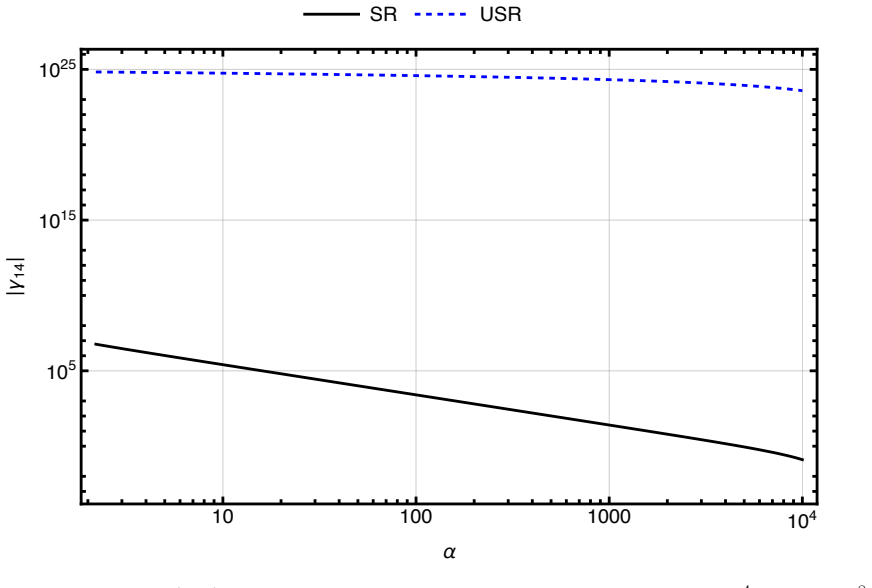
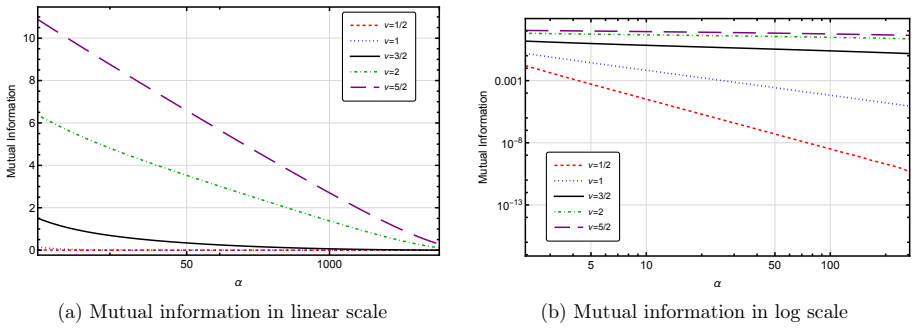
read the original abstract
We investigate how degeneracies in quasi-de Sitter backgrounds, in the sense of Wands' duality, are reflected in real-space quantum correlations of primordial perturbations. Using the continuous-variable Gaussian formalism for coarse-grained scalar fluctuations, we construct the covariance matrix of a pair of spatially localized modes in inflationary spacetime, and extract the symplectic invariants of the system. For a generic Wands-dual pair of backgrounds, we find that while the individual entries of the covariance matrix are highly background-dependent, the symplectic eigenvalues -- and hence the entanglement entropy, mutual information, quantum discord and log-negativity -- all coincide for the two dual realizations. Our results unveil a new ''quantum-informatic symmetry'' of the de Sitter vacuum, according to which local linear entanglement witnesses constructed from coarse-grained fields cannot distinguish between Wands-dual inflationary histories, even though their background trajectories differ. We show that the special nature of the Wands-duality symmetry (of being local, scale-independent canonical transformations) is at the heart of this duality.
Editorial analysis
A structured set of objections, weighed in public.
Referee Report
Summary. The paper claims that for a generic Wands-dual pair of quasi-de Sitter backgrounds, while the individual entries of the covariance matrix for a pair of spatially localized coarse-grained scalar modes are highly background-dependent, the symplectic eigenvalues coincide. Consequently the entanglement entropy, mutual information, quantum discord and log-negativity are identical for the two dual realizations. The coincidence is traced to the fact that Wands duality acts as a local, scale-independent canonical transformation on the phase-space variables, thereby preserving the symplectic invariants and revealing a quantum-informatic symmetry of the de Sitter vacuum.
Significance. If the result holds, the work establishes a concrete invariance of quantum-information measures under Wands duality, showing that local entanglement witnesses constructed from coarse-grained fields cannot distinguish dual inflationary histories. Credit is due for the explicit construction of the dual covariance matrices within the continuous-variable Gaussian formalism (standard for free scalar fluctuations in the Bunch-Davies vacuum) and for confirming that the duality supplies a k-independent symplectic map without further dynamical assumptions.
minor comments (2)
- A brief sentence clarifying the precise coarse-graining window used for the localized modes would aid reproducibility.
- Notation for the symplectic matrix J and the covariance matrix elements could be collected in a short table or appendix for readers less familiar with continuous-variable quantum information.
Simulated Author's Rebuttal
We thank the referee for their positive assessment of the manuscript, recognition of the explicit construction within the continuous-variable Gaussian formalism, and recommendation to accept.
Circularity Check
No significant circularity; invariance is a direct consequence of symplectic properties
full rationale
The central claim is that symplectic eigenvalues (hence entanglement measures) coincide for Wands-dual backgrounds because the duality acts as a local, scale-independent canonical transformation, which by definition preserves symplectic invariants. The paper constructs the covariance matrices explicitly and identifies the transformation property, making the coincidence a mathematical consequence of the Gaussian formalism and the duality definition rather than a reduction to fitted inputs, self-citations, or ansatzes. No load-bearing steps match the enumerated circularity patterns; the result is self-contained against the stated assumptions.
Axiom & Free-Parameter Ledger
axioms (2)
- domain assumption Wands duality is realized as local, scale-independent canonical transformations
- domain assumption Continuous-variable Gaussian formalism applies to coarse-grained scalar fluctuations in quasi-de Sitter spacetime
Reference graph
Works this paper leans on
-
[1]
Mukhanov, V. F. & Chibisov, G. V. Quantum Fluctuations and a Nonsingular Universe. JETP Lett.33,532–535 (1981)
1981
-
[2]
Mukhanov, V. F. & Chibisov, G. V. The Vacuum energy and large scale structure of the universe.Sov. Phys. JETP56,258–265 (1982)
1982
-
[3]
Inflationary spectra and violations of Bell inequalities
Campo, D. & Parentani, R. Inflationary spectra and violations of Bell inequalities.Phys. Rev. D74,025001. arXiv:astro-ph/0505376(2006)
work page internal anchor Pith review Pith/arXiv arXiv 2006
-
[4]
A model with cosmological Bell inequalities
Maldacena, J. A model with cosmological Bell inequalities.Fortsch. Phys.64,10–23. arXiv: 1508.01082 [hep-th](2016)
work page internal anchor Pith review Pith/arXiv arXiv 2016
-
[5]
& Vennin, V
Martin, J. & Vennin, V. Quantum Discord of Cosmic Inflation: Can we Show that CMB Anisotropies are of Quantum-Mechanical Origin?Phys. Rev. D93,023505. arXiv:1510. 04038 [astro-ph.CO](2016). 17
2016
-
[6]
Bell's Inequalities for Continuous-Variable Systems in Generic Squeezed States
Martin, J. & Vennin, V. Bell inequalities for continuous-variable systems in generic squeezed states.Phys. Rev. A93,062117. arXiv:1605.02944 [quant-ph](2016)
work page internal anchor Pith review Pith/arXiv arXiv 2016
-
[7]
Martin, J. & Vennin, V. Obstructions to Bell CMB Experiments.Phys. Rev. D96,063501. arXiv:1706.05001 [astro-ph.CO](2017)
-
[8]
Green, D. & Porto, R. A. Signals of a Quantum Universe.Phys. Rev. Lett.124,251302. arXiv:2001.09149 [hep-th](2020)
-
[9]
Espinosa-Portalés, L. & Vennin, V. Real-space Bell inequalities in de Sitter.JCAP07,037. arXiv:2203.03505 [quant-ph](2022)
-
[10]
Sou, C. M., Wang, J. & Wang, Y. Cosmological Bell tests with decoherence effects.JCAP 10,084. arXiv:2405.07141 [hep-th](2024)
-
[11]
Kanno, S., Shock, J. P. & Soda, J. Quantum discord in de Sitter space.Phys. Rev. D94, 125014. arXiv:1608.02853 [hep-th](2016)
work page internal anchor Pith review Pith/arXiv arXiv 2016
-
[12]
Hollowood, T. J. & McDonald, J. I. Decoherence, discord and the quantum master equation for cosmological perturbations.Phys. Rev. D95,103521. arXiv:1701 . 02235 [gr-qc] (2017)
2017
-
[13]
Gomez, C. & Jimenez, R. Cosmology from Quantum Information.Phys. Rev. D102, 063511. arXiv:2002.04294 [hep-th](2020)
- [14]
-
[15]
Brahma, S., Berera, A. & Calderón-Figueroa, J. Universal signature of quantum entangle- ment across cosmological distances.Class. Quant. Grav.39,245002. arXiv:2107.06910 [hep-th](2022)
-
[16]
Gómez, C. & Jimenez, R. Quantum Fisher Cosmology: confronting observations and the trans-Planckian problem.JCAP09,016. arXiv:2105.05251 [astro-ph.CO](2021)
-
[17]
Gomez, C. & Jimenez, R. Model Independent Prediction of the Spectral Index of Primordial Quantum Fluctuations.JCAP10,052. arXiv:2103.10144 [hep-th](2021)
-
[18]
Colas, T., Grain, J. & Vennin, V. Benchmarking the cosmological master equations.Eur. Phys. J. C82,1085. arXiv:2209.01929 [hep-th](2022)
-
[19]
Colas, T., Grain, J. & Vennin, V. Quantum recoherence in the early universe.EPL142, 69002. arXiv:2212.09486 [gr-qc](2023)
-
[20]
Brahma, S., Berera, A. & Calderón-Figueroa, J. Quantum corrections to the primordial tensor spectrum: open EFTs & Markovian decoupling of UV modes.JHEP08,225. arXiv: 2206.05797 [hep-th](2022)
- [21]
- [22]
-
[23]
& Seery, D
Brahma, S., Calderón-Figueroa, J., Luo, X. & Seery, D. The special case of slow-roll attrac- tors in de Sitter: non-Markovian noise and evolution of entanglement entropy.JCAP04,
- [24]
- [25]
-
[26]
P., Colas, T., Holman, R., Kaplanek, G
Burgess, C. P., Colas, T., Holman, R., Kaplanek, G. & Vennin, V. Cosmic purity lost: perturbativeandresummedlate-timeinflationarydecoherence.JCAP08,042.arXiv:2403. 12240 [gr-qc](2024)
2024
-
[27]
Colas, T., de Rham, C. & Kaplanek, G. Decoherence out of fire: purity loss in expanding and contracting universes.JCAP05,025. arXiv:2401.02832 [hep-th](2024)
- [28]
-
[29]
Lopez, F. & Bartolo, N. Quantum signatures and decoherence during inflation from deep subhorizon perturbations. arXiv:2503.23150 [astro-ph.CO](Mar. 2025)
-
[30]
Piotrak, M., Colas, T., Alonso-Serrano, A. & Serafini, A. Quantum estimation of cosmo- logical parameters.JHEP02,199. arXiv:2507.12228 [astro-ph.CO](2026)
-
[31]
Martin, J. & Vennin, V. Real-space entanglement of quantum fields.Phys. Rev. D104, 085012. arXiv:2106.14575 [hep-th](2021)
-
[32]
Martin, J. & Vennin, V. Real-space entanglement in the Cosmic Microwave Background. JCAP10,036. arXiv:2106.15100 [gr-qc](2021)
-
[33]
Weedbrook, C.et al.Gaussian quantum information.Rev. Mod. Phys.84,621. arXiv: 1110.3234 [quant-ph](2012)
work page internal anchor Pith review Pith/arXiv arXiv 2012
-
[34]
Quantum information with Gaussian states
Wang,X.-B.,Hiroshima,T.,Tomita,A.&Hayashi,M.QuantuminformationwithGaussian states.Physics reports448,1–111. arXiv:0801.4604 [quant-ph](2007)
work page internal anchor Pith review Pith/arXiv arXiv 2007
-
[35]
Agullo, I., Bonga, B. & Ribes-Metidieri, P. Inflation does not create entanglement in local observables.Class. Quant. Grav.43,01LT01. arXiv:2409.16366 [gr-qc](2026)
-
[36]
Ribes-Metidieri, P., Agullo, I. & Bonga, B. Entanglement and correlations between local observables in de Sitter spacetime.Phys. Rev. D113,065001. arXiv:2511.17382 [gr-qc] (2026)
-
[37]
Duality Invariance of Cosmological Perturbation Spectra
Wands, D. Duality invariance of cosmological perturbation spectra.Phys. Rev. D60, 023507. arXiv:gr-qc/9809062(1999)
work page internal anchor Pith review Pith/arXiv arXiv 1999
-
[38]
Ireland, A. & Vennin, V. When inflationary perturbations refuse to classicalise: the role of non-Gaussianity in Wigner negativity. arXiv:2601.22219 [gr-qc](Jan. 2026)
-
[39]
Symplectic invariants, entropic measures and correlations of Gaussian states
Serafini, A., Illuminati, F. & De Siena, S. Von Neumann entropy, mutual information and total correlations of Gaussian states.J. Phys. B37,L21. arXiv:quant-ph/0307073(2004)
work page internal anchor Pith review Pith/arXiv arXiv 2004
-
[40]
Williamson theorem in classical, quantum, and statistical physics.Am
Nicacio, F. Williamson theorem in classical, quantum, and statistical physics.Am. J. Phys. 89,1139. arXiv:2106.11965 [quant-ph](2021)
-
[41]
Serafini, A.Quantum continuous variables: a primer of theoretical methods(CRC press, 2023)
2023
-
[42]
J., Leuchs, G
Cerf, N. J., Leuchs, G. & Polzik, E. S.Quantum information with continuous variables of atoms and light(World Scientific, 2007)
2007
-
[43]
Large Scale Quantum Fluctuations in the Inflationary Universe.Prog
Sasaki, M. Large Scale Quantum Fluctuations in the Inflationary Universe.Prog. Theor. Phys.76,1036 (1986)
1986
-
[44]
F., Feldman, H
Mukhanov, V. F., Feldman, H. A. & Brandenberger, R. H. Theory of cosmological pertur- bations. Part 1. Classical perturbations. Part 2. Quantum theory of perturbations. Part 3. Extensions.Phys. Rept.215,203–333 (1992)
1992
-
[45]
Pattison, C., Vennin, V., Assadullahi, H. & Wands, D. Stochastic inflation beyond slow roll. JCAP07,031. arXiv:1905.06300 [astro-ph.CO](2019)
-
[46]
arXiv:2501.14681 [astro-ph.CO](2025)
Briaud, V.et al.How deep is the dip and how tall are the wiggles in inflationary power spectra?JCAP05,097. arXiv:2501.14681 [astro-ph.CO](2025). 19
-
[47]
Williamson, J. On the Algebraic Problem Concerning the Normal Forms of Linear Dynam- ical Systems.American Journal of Mathematics58,141–163.issn: 00029327, 10806377. http://www.jstor.org/stable/2371062(2026) (1936)
-
[48]
Micheli, A., Oshima, Y. & Takahashi, T. Quantum state of interacting primordial inhomo- geneities: de-squeezing and decoherence. arXiv:2512.17622 [hep-th](Dec. 2025). 20
discussion (0)
Sign in with ORCID, Apple, or X to comment. Anyone can read and Pith papers without signing in.