REVIEW 4 major objections 6 minor 17 references
Abnormality Detection in Musculoskeletal Radiographs with Convolutional Neural Networks(Ensembles) and Performance Optimization
T0 review · 4 major / 6 minor · reviewed 2026-08-14 · deepseek-v4-flash
Pith's one-line read An ensemble of three CNNs (DenseNet201, MobileNet, NASNetMobile) scores a Cohen's kappa of 0.66 overall and 0.653 on finger studies, beating the MURA baseline and all three radiologists on fingers.
desk verdict A modest ensemble benchmark on MURA whose headline result is undermined by using the validation set for both model selection and final evaluation. read the letter →
The pith
A machine-rendered reading of the paper's core claim, the machinery that carries it, and where it could break.
The reading
What carries the argument
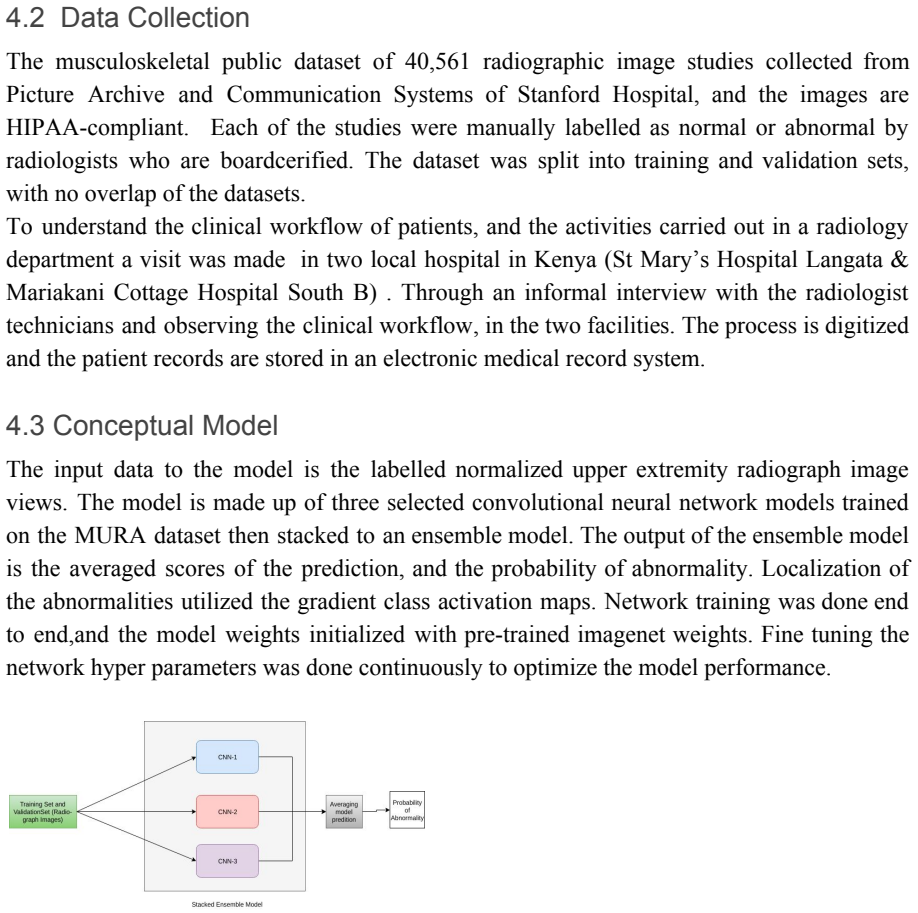
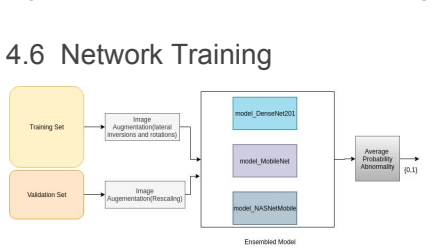
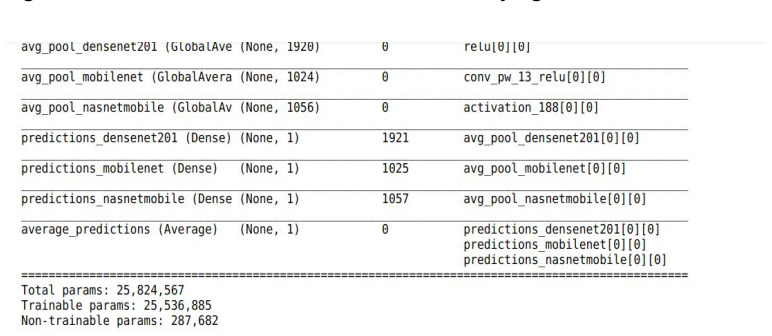
The load-bearing mechanism is a prediction-averaging ensemble: the sigmoid outputs of DenseNet201, MobileNet, and NASNetMobile feed an added averaging layer whose output is the abnormality probability. Cohen's kappa is the selection statistic because it measures agreement with radiologist labels beyond chance. Training uses ImageNet-initialized weights, binary cross-entropy, the Adam optimizer, class-weight balancing for the imbalanced normal/abnormal split, and augmentation via random flips and rotations. The paper argues that architectural variety matters: the best ensemble pairs one deep CNN with two compact CNNs. Gradient-weighted Class Activation Maps are then applied to highlight the image regions behind each prediction, which the paper presents as the interpretability layer for clinical use.
What would settle it
Run the trained ensemble200 on a held-out test cohort that was never used for model selection, for example the official MURA test set, and compare per-study Cohen's kappa with the MURA v4 baseline. If the finger-study kappa no longer exceeds the radiologists' finger scores, or if the wrist-to-hand spread widens, the claimed consistency advantage is an artifact of validation-set selection.
Extended reading notes
Core claim
The central claim is that a deliberately heterogeneous ensemble—one deep architecture, DenseNet201, paired with two compact architectures, MobileNet and NASNetMobile—detects abnormality in upper-extremity radiographs more consistently than the single-model DenseNet baseline. On the MURA validation set, this ensemble200 model scores Cohen's kappa 0.66 with F1 0.86, precision 0.81, and recall 0.92; across study types its kappa ranges from 0.7408 (wrist) to 0.5844 (hand), and on finger studies it reaches 0.653. That finger result is above the MURA v4 model's 0.389 and every radiologist's finger score (best 0.410). The overall kappa remains below the MURA v4 model (0.705) and the best radiologist (0.778), so the contribution is framed as improved consistency and balanced recall rather than higher overall agreement.
Load-bearing premise
The reported kappa values were computed on the same validation set used to choose the best ensemble, so the headline scores assume that this validation performance carries over to patients never seen during development.
Editorial extensions
If this is right
- Finger studies, where the baseline model and every radiologist score lowest, become the clearest target for automated pre-screening if the ensemble result holds.
- A model with per-study kappa spanning 0.5844 to 0.7408 would still need per-site reporting and calibration before use as a general upper-extremity screener.
- The reported gains depend jointly on architecture choice, class balancing, and augmentation, so removing any one component should erode the consistency advantage.
- Grad-CAM localization gives clinicians a concrete region to check, which is the intended path from a prediction to a verifiable clinical decision.
Reading between the lines
- Because the ensemble was selected on the same validation set used for the reported numbers, the finger-study kappa of 0.653 is likely an optimistic estimate; a held-out cohort would probably show a smaller gap (my inference from the paper's table note).
- The paper attributes the gain to architectural diversity, which suggests a testable comparison: averaging the same architecture over many seeds should yield less cross-study stability than mixing DenseNet201 with compact models.
- The recipe may transfer to other small-bone radiographs (toes, ankles) or to modalities with similar class imbalance and expert scarcity, but that is an extrapolation beyond the evidence presented.
- A cleaner test of the ensemble's value would compare ensemble200 against a single DenseNet201 trained with the same augmentation, class balancing, and training budget, isolating ensemble averaging from the other optimization techniques.
Signed reviews
Editorial analysis
A structured set of objections, weighed in public.
Referee Report
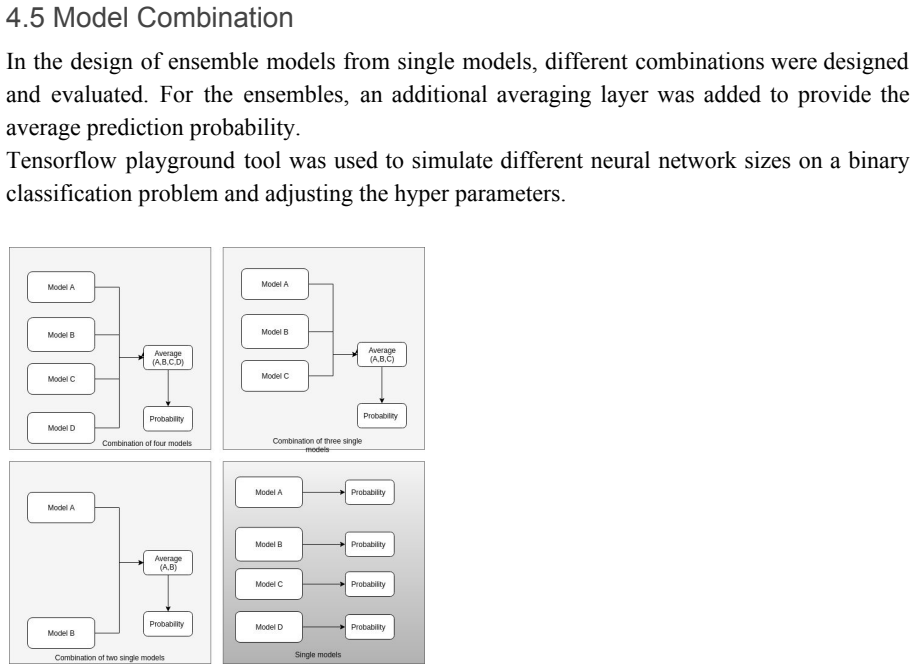
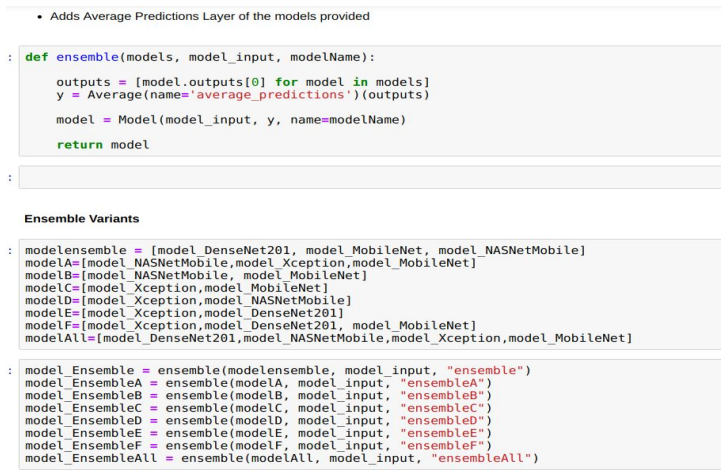
Summary. The paper presents an empirical study of convolutional neural network ensembles for abnormality detection in musculoskeletal radiographs using the public MURA dataset. The authors train four single models (DenseNet201, Xception, MobileNet, NASNetMobile), combine them into eight ensembles via averaging of sigmoid outputs, and evaluate all candidates on the MURA validation set using accuracy, F1 score, precision, recall, AUROC, and Cohen's kappa. The best ensemble, Ensemble200 (DenseNet201, MobileNet, NASNetMobile), reportedly achieves an overall kappa of 0.66 and a finger-study kappa of 0.653, which the authors compare with the MURA v4 model's finger score of 0.389. The paper also includes Grad-CAM localization examples and a web-based demonstration.
Significance. If the reported result held on a properly held-out test set, the paper would provide a useful data point on whether ensembling standard CNN architectures improves abnormality detection on MURA, particularly for finger studies and for reducing performance variability across anatomical regions. The paper addresses a practically important problem and honestly discloses in the Table 5 note that its final results are based on validation-set data. The qualitative Grad-CAM examples and the web interface are welcome additions. However, the central generalization claim is not supported by the current evaluation design, and the absence of uncertainty quantification and reproducible code further limits the paper's present contribution.
major comments (4)
- [§4.7 and §5, Table 5 note]
- [§5, Tables 3 and 4]
- [§5, Tables 3 and 4, and §4.6]
- [§4.6 and §5]
minor comments (6)
- [Abstract and throughout]
- [§2.2 vs. §1]
- [§4.4 and Figure 4]
- [§5, Tables 3 and 4]
- [§5, Table 5, Shoulder row]
- [References]
Circularity Check
Validation-set Kappa is used both to select ensemble200 and to report its final performance, so the claimed improvement over DenseNet is an order statistic, not independent evidence.
-
fitted input called prediction
[Section 1 (Introduction) and Section 5 / Table 5 note]
"To improve on the performance consistency and generalization of the convolutional neural network model, an ensemble model was built ... which involved evaluating different ensemble combination performance and selecting the best using the copen kappa statistic. ... (This evaluation results were based on the validation set data.)"
The ensemble model is chosen by maximizing Cohen Kappa on the validation set (Section 1: 'selecting the best using the copen kappa statistic'), and the same validation-set Cohen Kappa is then reported as the final evidence of performance (Tables 4-5, note: 'This evaluation results were based on the validation set data.'). The reported Kappa of 0.66 overall and 0.653 for finger studies is therefore the maximum of the candidate ensembles' validation Kappas, not an independent estimate of generalization. By construction, selecting a model on a metric and then evaluating that same metric on the same data turns the reported value into an order statistic; even with no true ensemble advantage, the selected model's Kappa will tend to exceed a fixed baseline such as MURA v4's 0.705.
full rationale
This paper is an empirical benchmark rather than a formal derivation, so most circularity patterns do not apply: there is no self-citation chain, no imported uniqueness theorem, and no ansatz disguised as a derived rescaling. The central generalization claim, however, rests on a validation-set selection loop. Section 1 states that ensemble combinations were evaluated and the best was selected using the Cohen Kappa statistic; Section 5/Table 5 then reports the selected ensemble200's Kappa on the same validation set as its final performance, explicitly noting 'This evaluation results were based on the validation set data.' The reported Kappa is therefore an order statistic of the candidate ensembles on the validation set, not an unbiased estimate of performance on unseen data. This makes the claimed superiority over the fixed MURA(v4) baseline of 0.705 statistically forced by the selection procedure rather than demonstrated on a held-out test. The paper's own note is a limitation statement that confirms the issue rather than resolving it. This is a partial circularity in the evaluation, not a circular derivation of equations; hence the score is 6 rather than higher. If a held-out test had been reported separately, this paper would merit a score of 0-2 as a self-contained external benchmark.
Assumptions & free parameters
free parameters (5)
- Ensemble composition (model subset) =
DenseNet201, MobileNet, NASNetMobile
- Learning rate (Adam) =
1e-4
- Weight decay =
1e-4
- Batch size =
32
- Class weight balancing heuristic =
Not specified
assumptions (4)
- domain assumption MURA dataset labels are ground truth.
- domain assumption The MURA validation set is an i.i.d. sample representative of the clinical population.
- domain assumption Cohen Kappa is the appropriate metric for comparing model and radiologist performance.
- domain assumption Pretrained ImageNet weights transfer positively to radiographs.
Cite this review
Pith. "Pith review of Abnormality Detection in Musculoskeletal Radiographs with Convolutional Neural Networks(Ensembles) and Performance Optimization." pith.science (2026). https://pith.science/paper/X7IMGFLU
@misc{pith2026190802170,
  author       = {Pith},
  title        = {Pith review of: Abnormality Detection in Musculoskeletal Radiographs with Convolutional Neural Networks(Ensembles) and Performance Optimization},
  year         = {2026},
  howpublished = {\url{https://pith.science/paper/X7IMGFLU}},
  note         = {Machine review of arXiv:1908.02170}
}
read the original abstract
Musculoskeletal conditions affect more than 1.7 billion people worldwide based on a study by Global Burden Disease, and they are the second greatest cause of disability[1,2]. The diagnosis of these conditions vary but mostly physical exams carried out and image tests. There are few imaging and diagnostic experts while there is a huge workload of radiograph examinations which might affect diagnostic accuracy. We built machine learning models to perform abnormality detection using the available musculoskeletal public dataset [3]. Convolutional Neural Networks (CNN) were used as are the most successful models in performing various tasks such as classification and object detection [4]. The development of the models involved theoretical study, iterative prototyping, and empirical evaluation of the results. The current model, 169 layer DenseNet, by Pranav et al.(2018) on the abnormality detection task, the performance was lower than the worst radiologist in 5 out of the 7 studies, and the overall model performance was lower than the best radiologist. We developed the ensemble200 model which scored 0.66 Cohen Kappa which was lower than the DenseNet model (Pranav et al, 2018) but the model performance with the F1 score outperforms the DenseNet model and its Cohen Kappa score variability with the different studies is lower as the best cohen kappa score on the upper extremity studies is 0.7408 (Wrist) and the lowest is (0.5844) hand. The ensemble200 model outperformed DenseNet model on the finger studies with a Cohen Kappa score of 0.653 showing reduced performance variability on the model performance.
Figures
Figures from the paper (4 more)


Reference graph
Works this paper leans on
-
[1]
Thelancet.com. (2016). On the road to universal health care in Indonesia, 1990–2016: a systematic analysis for the Global Burden of Disease Study
work page 2016
-
[5]
World Health Organization. (n.d.). Musculoskeletal conditions. [online] Available at: http://www.who.int/mediacentre/factsheets/musculoskeletal/en/ [Accessed 27 Jun. 2018]
work page 2018
-
[6]
[online] Available at: https://hiskenya.org/ [Accessed 24 Jun
Kenya Health Information System. [online] Available at: https://hiskenya.org/ [Accessed 24 Jun. 2018]
work page 2018
-
[7]
iHRIS Manage Kenya. [online] Ihris.or.ke. Available at: http://ihris.or.ke/moh/index.php/login [Accessed 24 Jun. 2018]
work page 2018
-
[8]
Chexnet: Radiologist-level pneumonia detection on chest x-rays with deep learning
Rajpurkar, Pranav, Irvin, Jeremy, Zhu, Kaylie, Yang, Brandon, Mehta, Hershel, Duan, Tony, Ding,Daisy, Bagul, Aarti, Langlotz, Curtis, Shpanskaya, Katie, et al. Chexnet: Radiologist-level pneumonia detection on chest x-rays with deep learning. arXiv preprint arXiv:1711.05225, 2017b
-
[9]
RADNET: Radiologist Level Accuracy using Deep Learning for HEMORRHAGE detection in CT Scans
Grewal, M., Srivastava, M., Kumar, P. and Varadarajan, S. (2017). RADNET: Radiologist Level Accuracy using Deep Learning for HEMORRHAGE detection in CT Scans. [online] arXiv.org. Available at: https://arxiv.org/abs/1710.04934 [Accessed 24 Jun. 2018]
work page Pith review arXiv 2017
-
[10]
Dermatologist-level classification of skin cancer with deep neural networks
Esteva A, et al., (2017). Dermatologist-level classification of skin cancer with deep neural networks. - PubMed - NCBI . [online] Ncbi.nlm.nih.gov. Available at: https://www.ncbi.nlm.nih.gov/pubmed/28117445 [Accessed 27 Jun. 2018]
-
[11]
Xi, P., Shu, C. and Goubran, R. (2018). Abnormality Detection in Mammography using Deep Convolutional Neural Networks - IEEE Conference Publication. [online] Ieeexplore.ieee.org. Available at: https://ieeexplore.ieee.org/document/8438639 [Accessed 27 Jun. 2018]
Show all 17 references
-
[13]
and Batra, D
Selvaraju, R., Cogswell, M., Das, A., Vedantam, R., Parikh, D. and Batra, D. (2019). Grad-CAM: Visual Explanations from Deep Networks via Gradient-based Localization. [online] arXiv.org. Available at: https://arxiv.org/abs/1610.02391 [Accessed 28 Jan. 2019]
2019 arXiv
-
[14]
and Weinberger, K
Huang, G., Liu, Z., van der Maaten, L. and Weinberger, K. (2019). Densely Connected Convolutional Networks. [online] arXiv.org. Available at: 15 https://arxiv.org/abs/1608.06993 [Accessed 20 Jan. 2019]
2019 arXiv
-
[15]
and Adam, H
Howard, A., Zhu, M., Chen, B., Kalenichenko, D., Wang, W., Weyand, T., Andreetto, M. and Adam, H. (2019). MobileNets: Efficient Convolutional Neural Networks for Mobile Vision Applications. [online] arXiv.org. Available at: https://arxiv.org/abs/1704.04861 [Accessed 20 Feb. 2019]
2019 arXiv
-
[16]
and Le, Q
Zoph, B., Vasudevan, V., Shlens, J. and Le, Q. (2019). Learning Transferable Architectures for Scalable Image Recognition. [online] arXiv.org. Available at: https://arxiv.org/abs/1707.07012 [Accessed 20 Apr. 2019]
2019 arXiv
-
[17]
Chollet, F. (2019). Xception: Deep Learning with Depthwise Separable Convolutions. [online] arXiv.org. Available at: https://arxiv.org/abs/1610.02357 [Accessed 20 Feb.. 2019]
2019 arXiv
-
[18]
and Ba, J
Kingma, D. and Ba, J. (2014). Adam: A Method for Stochastic Optimization. [online] arXiv.org. Available at: https://arxiv.org/abs/1412.6980 16
2014 arXiv
- [2015]
-
[2016]
[online] Available at: https://www.thelancet.com/pdfs/journals/lancet/PIIS0140-6736(18)30595-6.pdf [Accessed 24 Jun. 2018]
2018
-
[2018]
Available: https://arxiv.org/abs/1712.06957v4
[Online]. Available: https://arxiv.org/abs/1712.06957v4
Reviewed August 14, 2026 · model on record in the stance chip above.
Discussion (0). Continue with ORCID to comment.