REVIEW 3 major objections 5 minor 1 cited by
Global performance and capabilities of the instruments on the 3.6-m Devasthal Optical Telescope
T0 review · 3 major / 5 minor · reviewed 2026-08-14 · deepseek-v4-flash
Pith's one-line read The 3.6-m Devasthal Optical Telescope and its three instruments deliver imaging and spectroscopy at the level expected of a 4-m class facility, reaching i-band magnitude 25 with sub-arcsec seeing.
desk verdict A competent, low-novelty facility summary that undercuts its own best-seeing claim with its own Table 1; useful to the community, worth a careful referee. read the letter →
The pith
A machine-rendered reading of the paper's core claim, the machinery that carries it, and where it could break.
The reading
What carries the argument
The load-bearing mechanism is the complete telescope-instrument chain: the f/9 Ritchey-Chrétien optics with an actively controlled 69-actuator primary mirror and a hexapod-mounted secondary, a calibrated active-optics look-up table with wave-front sensing, an auto-guider using light between 550-750 nm, and a thermally managed enclosure whose ventilation fans equalize dome and outside air. These subsystems together are what keep the delivered image quality near the site's 0.4 arcsec seeing and hold tracking to 0.1 arcsec rms, allowing the back-end instruments—a 4Kx4K optical CCD camera, the near-infrared TIRCAM-2, and the ADFOSC imager-spectrograph with its 4Kx4K and EM-CCD cameras—to reach their reported limiting magnitudes. The paper's argument is that the performance numbers follow from this chain working as designed.
What would settle it
Re-observe a standard photometric field with ADFOSC for one hour; if the resulting i-band image does not reach approximately 25 mag with about 0.2-0.3 mag photometric precision, or if guider centroids during the exposure wander by more than 0.1 arcsec rms, the paper's central performance claim is contradicted.
Extended reading notes
Core claim
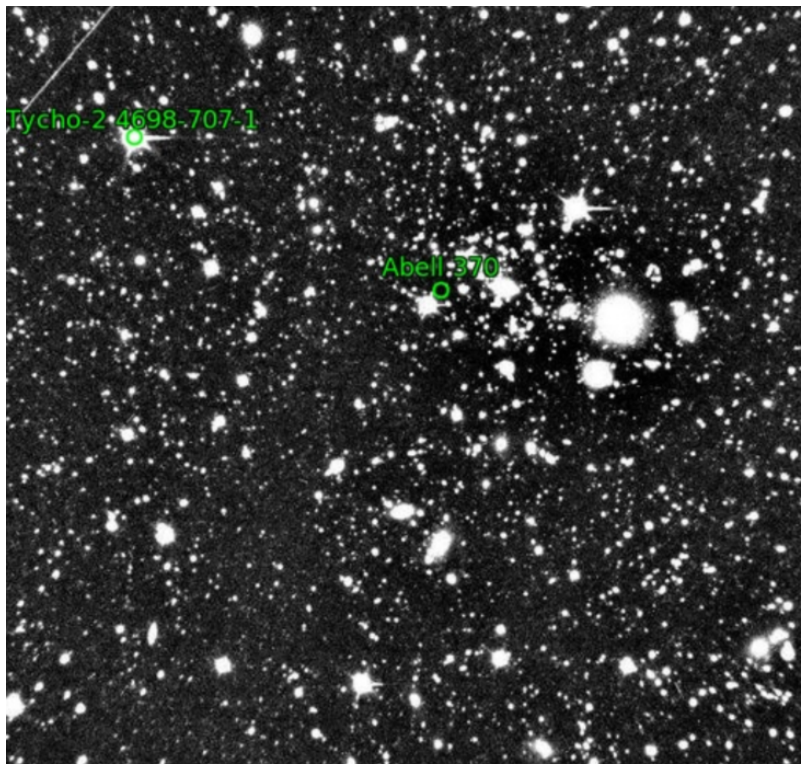
The central claim is that the DOT is a functioning 3.6-m telescope whose delivered image quality, pointing, tracking, and instrument sensitivities are as good as expected for its aperture class. The paper asserts this on the strength of published characterization and science results: the 80% encircled energy from the optics is under 0.4 arcsec, seeing-limited FWHM reaches 0.4 arcsec, pointing is about 1.3 arcsec rms, closed-loop tracking holds to 0.1 arcsec rms for one hour, CCD imaging reaches B≈24 mag, ADFOSC reaches i≈25 mag in about one hour with 0.2-0.3 mag photometric precision, and TIRCAM-2 detects J≈19, H≈18.8, K≈18 mag at 10% photometric precision. The paper also demonstrates scientific reach through example images: a deep Abell 370 image, a high-redshift radio galaxy candidate at i=24.3±0.2, the Crab pulsar's optical pulses with a fast EM-CCD, and a spectrum of a 19 mag galaxy.
Load-bearing premise
The performance numbers that carry the paper—0.4 arcsec seeing, 1.3 arcsec pointing, 0.1 arcsec tracking, and the reported limiting magnitudes—are taken from earlier publications by the same team, not re-measured here, so the at-par claim stands or falls with the accuracy of those previous characterizations.
Editorial extensions
If this is right
- Depth: with i≈25 mag reachable in about one hour, ADFOSC can photometrically identify and study faint transients, high-redshift galaxy candidates, and fields outside deep survey footprints.
- Time domain: the 0.1 arcsec rms closed-loop tracking over an hour makes long, high-signal exposures practical, and the EM-CCD's <10 ms frame rate enables fast photometry such as the demonstrated Crab pulsar pulse detection.
- Infrared capability: TIRCAM-2's J, H, K sensitivities (≈19, 18.8, 18 mag) extend DOT science to embedded and red sources, complementing optical imaging.
- Geographic niche: the Devasthal longitude fills the 3-4 m class gap between eastern Australia and western Europe, giving southern and northern coverage useful for time-critical follow-up.
- Multi-wavelength synergy: paired with radio, X-ray, and UV surveys, the DOT can provide the optical/NIR imaging and spectroscopy needed for spectroscopic redshifts and identifications.
Reading between the lines
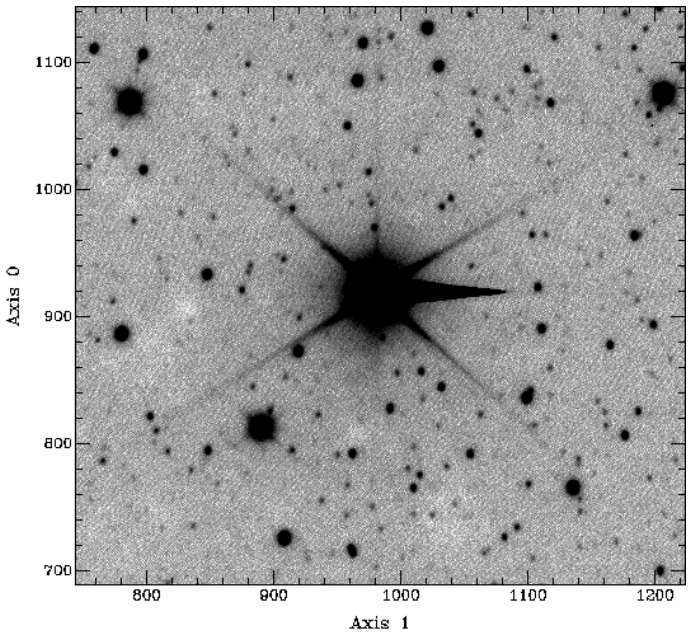
- A direct corollary the paper does not test is that the rotating diffraction spikes described in the Additional Note will create a subtle, time-varying background in crowded-field photometry; a practical extension would be to quantify the spike-induced variability amplitude and validate a fixed de-rotator observing mode as a mitigation.
- The paper claims synergy with radio and space-based facilities, but does not report a quantitative cross-match yield; a testable extension would be a dedicated campaign observing GMRT-selected faint sources in i and z bands and comparing detection rates with the predicted i-K colors.
- Because the limiting magnitudes are single reported values, a re-measurement campaign with the same instruments on multiple photometric nights would establish the actual depth as a function of seeing and airmass, turning the paper's point estimates into operational curves.
Signed reviews
Editorial analysis
A structured set of objections, weighed in public.
Referee Report
Summary. This paper summarizes the performance and capabilities of the three back-end instruments on the 3.6-m Devasthal Optical Telescope (DOT): the optical CCD imager, the near-infrared camera TIRCAM-2, and the optical imager-cum-spectrograph ADFOSC. It reports that published results from earlier instrument characterization papers indicate the telescope performs "at par with expectations" for a 4-m class facility, with best seeing near 0.4 arcsec, pointing accuracy near 1.3 arcsec rms, closed-loop tracking within 0.1 arcsec rms, and detection limits of B=24±0.2, i=25±0.3, and J=19±0.1 mag. The paper also discusses the longitudinal gap filled by the DOT and several synergistic science areas (GMRT, AstroSat, SDSS follow-up, reverberation mapping) and includes an Additional Note warning about rotating diffraction spikes due to the alt-az mount.
Significance. If the quoted performance holds, the DOT is a valuable 3.6-m facility that fills a longitudinal gap between eastern Australia and western Europe, with useful imaging and spectroscopic capabilities for transient follow-up and synergy with radio and space observatories. Strengths of the paper include its modest scope as a summary, the inclusion of sample images with quoted photometric uncertainties (Abell 370 in Fig. 3, the radio galaxy candidate in Fig. 4), the Crab pulsar detection demonstrating high-speed capability, and the explicit Additional Note on the rotating diffraction-spike limitation. However, the central performance claim is entirely inherited from prior self-cited characterization papers and is not independently verified here; moreover, the quoted best-seeing figure is internally inconsistent with the delivered FWHM values listed in Table 1. Reconciliation of these numbers and a clear statement of the provenance and uncertainties of the headline performance figures are needed before the paper's central claim can be fully assessed.
major comments (3)
- [Section 2.1 and Table 1] The sentence "As the best seeing-limited images have a Full-Width at Half-Maximum (FWHM) of 0.4 arcsec" (citing Omar et al. 2017 and Kumar et al. 2018a) is contradicted by Table 1, which lists the minimal reported FWHM as 1.2 arcsec for the CCD imager and 1.1 arcsec in the z-band for ADFOSC, with only TIRCAM-2 in K-band reaching 0.45 arcsec. Since the CCD imager and ADFOSC are the main optical imagers, the delivered optical image quality appears to be about a factor of two worse than the claimed 0.4 arcsec best seeing. The manuscript must reconcile these numbers: if 0.4 arcsec refers to a site-seeing or DIMM measurement (or to the 80% encircled-energy specification quoted earlier in the same section), this should be stated explicitly, and the delivered FWHM values from Table 1 should be used when describing the expected image quality. This is not a cosmetic issue, because the 0.4 arcsec value is used to justify the need for closed-loop tracking during long exposures and frames the sensitivity discussion.
- [Section 3 and Section 5] All headline performance figures (limiting magnitudes in Table 1, minimal FWHM, pointing accuracy, tracking accuracy) are quoted from earlier papers by the same team (Pandey et al. 2018; Baug et al. 2018; Omar et al. 2019a,b; Kumar et al. 2018a) rather than re-measured or benchmarked in this work. The Summary concludes that "the preliminary results published are asserting that the performance of the DOT is as expected from this 4-m class telescope," which is essentially an endorsement of the authors' own prior characterizations. To make this claim defensible in the present paper, the authors should either (i) include a small number of independent on-site measurements (e.g., delivered FWHM compared with a seeing monitor, or re-determination of a limiting magnitude) or (ii) explicitly qualify that all numbers are literature values from the cited papers and provide the associated uncertainties. Without such a step, the central "at par with expectations" claim is not independently supported.
- [Additional Note] The rotating diffraction spikes due to the alt-az mount are correctly identified as a limitation for time-series photometry in crowded fields or near bright stars. However, this limitation is not reflected in the capability summary or in the quoted detection limits and photometric precisions (e.g., i=25±0.3 mag in Fig. 3). The authors should state whether the diffraction-spike effect was accounted for or avoided in the measurements presented, and should add a sentence in the Summary or Section 3 noting that the claimed high-sensitivity capabilities apply to fields free of bright-star contamination. This would make the paper's performance claims more complete and actionable.
minor comments (5)
- [Section 2.1] The statement "The 80% encircled energy values from the optics are measured to be less than 0.4 arcsec" should indicate whether this is a measured value or a design specification, and whether it refers to the intrinsic optics before atmospheric seeing.
- [Section 2.1] The pointing and tracking accuracies are quoted as "nearly 1.3 arcsec rms" and "within 0.1 arcsec rms" with no indication of how they were measured or over what time interval; a reference to the characterization paper and a statement of the measurement conditions would be helpful.
- [Figure 4 caption] The caption reads "z = 4.8± 2" which appears to have a typo; should this be 4.8±0.2?
- [Table 1] For ADFOSC, the entry "g = 19 mag (0.23 nm/pxl)" should specify that this is a spectroscopic detection limit for a 600-s exposure, not an imaging limit, to avoid confusion with the imaging limits listed above.
- [Section 4.2] The Crab pulsar detection in Fig. 5 would benefit from a statement of the exposure time and readout mode, to support the "high-speed imaging" claim.
Circularity Check
No derivational circularity: the paper is an instrumentation summary whose headline performance figures are inherited from earlier, independently measured characterizations, so the central claim is an endorsement rather than a derivation.
full rationale
The paper contains no equations or fitted parameters and makes no derived predictions; it is a survey of the DOT's instruments and capabilities. The headline claims (0.4 arcsec best seeing, 1.3 arcsec rms pointing, 0.1 arcsec rms closed-loop tracking, and the Table 1 limiting magnitudes) are explicitly cited from prior characterization papers (Omar et al. 2017; Kumar et al. 2018a; Pandey et al. 2018; Baug et al. 2018). The abstract itself states that 'The published results from these instruments assert that the performance of the telescope at the Devasthal site is at par with the expectations.' These prior results are independent measurements rather than inputs that the present paper redefines as predictions, so no self-definitional, fitted-input, uniqueness-imported, or ansatz-smuggling circularity applies. Heavy self-citation is normal for a workshop summary and is not load-bearing in the sense of deriving a new result from an unverified premise; the paper adds no new external benchmark, which is a completeness limitation but not circularity. The appended Additional Note on rotating diffraction spikes is an honest limitation statement affecting time-series photometry in crowded fields; it qualifies the capability claim without making it circular. A separate internal-consistency concern (Sec. 2.1 cites 0.4 arcsec best seeing while Table 1 reports minimal delivered FWHM of 1.2 arcsec for the CCD and 1.1 arcsec for ADFOSC z-band) is a factual/correctness issue, not a circularity reduction, and is noted here only to distinguish it from the present finding.
Assumptions & free parameters
assumptions (3)
- domain assumption The performance metrics cited from prior team publications (seeing, pointing, tracking, limiting magnitudes) are accurate.
- domain assumption Devasthal site conditions deliver sub-arcsec seeing.
- domain assumption The illustrative observations are reduced and calibrated correctly.
Cite this review
Pith. "Pith review of Global performance and capabilities of the instruments on the 3.6-m Devasthal Optical Telescope." pith.science (2026). https://pith.science/paper/XN5OTPNH
@misc{pith2026190802531,
  author       = {Pith},
  title        = {Pith review of: Global performance and capabilities of the instruments on the 3.6-m Devasthal Optical Telescope},
  year         = {2026},
  howpublished = {\url{https://pith.science/paper/XN5OTPNH}},
  note         = {Machine review of arXiv:1908.02531}
}
read the original abstract
The recently commissioned 3.6-m Devasthal optical telescope has been used for various tests and science observations using three main instruments, namely, a charge-coupled device camera, a near-infrared camera, and an optical imager-cum-spectrograph. The published results from these instruments assert that the performance of the telescope at the Devasthal site is at par with the expectations. These back-end instruments open up vast opportunities for high-sensitivity observations of the celestial sky with the telescope. This paper provides a summary of the existing back-end instruments and attempts to highlight the importance of the Devasthal optical telescope in synergy with other telescopes operating at different wavelengths.
Figures

Figures from the paper (4 more)


Forward citations
Cited by 1 Pith paper
-
Wild behaviour near the finish line: the Type Ibn SN 2020able and its stratified environment
The Type Ibn supernova SN 2020able exploded inside a stratified, three-component helium-rich envelope, with an inner dense shell from a pre-explosion eruption and an outer shell consistent with a Wolf-Rayet wind.
Reference graph
Works this paper leans on
-
[1]
Agrawal P. C. 2017, JApA, 38, 27 Andersen, J. et al. 1995, Msngr, 79, 12 Baug T., Ojha D. K., Ghosh S. K. et al. 2018, JAI, 7, 1850003-1881 Bheemireddy K., Gopinathan M., Pant J. et al. 2016, SPIE, 9906, 44 Buzzoni, B. et al. 1984, Msngr, 38, 9 Chand H., Rakshit S., Jalan P. et al. 2018, BSRSL, 87, 291 Chung H., Ramaprakash A. N., Omar A. et al. 2014, SPI...
work page 2017
-
[2]
caused by the fixed obstructions in the optical path in the telescope is rotated on the CCD plane. As a result, the spikes can introduce spatio-temporally variable background sky near other stars in the field. If this effect is not properly taken care of via some sort of de-convolution or identifying and flagging of the affected time range, spurious variabil...
work page 2001
Reviewed August 14, 2026 · model on record in the stance chip above.
Discussion (0). Continue with ORCID to comment.