REVIEW 3 major objections 6 minor 4 cited by
Infrared singularities and the collinear limits of multi-leg scattering amplitudes
T0 review · 3 major / 6 minor · reviewed 2026-08-06 · deepseek-v4-flash
Pith's one-line read This paper establishes that, for massless QCD amplitudes, strict collinear factorisation in any multi-particle timelike collinear limit through four loops follows from the two-particle collinear limits, and that a massive external leg…
desk verdict A careful, useful paper that computes new multi-particle collinear splitting soft anomalous dimensions through four loops and derives a new massive-particle constraint; the main caveat is that the sufficiency claim inherits the completeness assumption of the four-loop parametrisation from Ref. [5]. read the letter →
The pith
A machine-rendered reading of the paper's core claim, the machinery that carries it, and where it could break.
The reading
What carries the argument
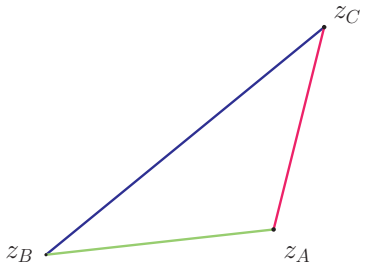
The central object is the splitting amplitude soft anomalous dimension $\Gamma_{\mathrm{Sp},m}$, the colour-space operator defined as the difference $\Gamma_n - \Gamma_{n-m+1}|_{T_P\to\sum_{i=1}^m T_i}$ between the soft anomalous dimensions of the $n$-point and the $(n-m+1)$-point amplitudes. The argument is carried by two structural facts: colour conservation on the hard function and rescaling invariance of the soft anomalous dimension, which together force any spectator dependence to enter only through logarithms of conformal cross-ratios; and stuffle identities, which reorganise sums over colour structures so that colour conservation can be applied. The key kinematic fact is that in a multi-particle collinear limit, cross-ratios carrying three collinear indices become independent of the spectator momentum and reduce to ratios of complex coordinates $z_{ABC}$, making the splitting amplitude soft anomalous dimension manifestly universal.
What would settle it
Compute the one-mass three-loop function $F_{h3}$ and check whether, with all three light partons collinear, it equals $4F(\beta_{ablc},\beta_{aclb})$; a mismatch would falsify Eq. (5.29). For the massless claim, search for a four-loop colour structure compatible with non-Abelian exponentiation and colour conservation that is absent from Eq. (2.9); finding one would break the proof that two-particle constraints are sufficient.
Extended reading notes
Core claim
On the paper's own terms: strict collinear factorisation of massless amplitudes holds in every timelike multi-particle collinear limit through four loops, and the paper proves it by explicit construction. The proof shows that apparent dependence on the non-collinear spectators cancels through an interplay of colour conservation and the scaling behaviour of conformal cross-ratios; a cross-ratio carrying three collinear indices loses its spectator dependence in the limit, which is exactly what permits the cancellation. Explicit results for the splitting amplitude soft anomalous dimensions are given in Eqs. (4.29), (4.32), (4.46) and (4.1). In the one-mass case, assuming strict collinear factorisation continues to hold, the paper derives the new constraint $\lim_{p_a\parallel p_b\parallel p_c} F_{h3}(r_{abI},r_{acI},r_{bcI}) = 4F(\beta_{ablc},\beta_{aclb})$ (equivalently Eqs. (5.29) and (5.31)), relating the massive-particle interaction function to the massless soft anomalous dimension function; the same constraint emerges from the small-mass limit, and it is satisfied by the independent computation of $F_{h3}$ in Ref. [69].
Load-bearing premise
The argument assumes the catalogue of colour structures that can appear in the soft anomalous dimension at four loops, Eq. (2.9), is complete; if an additional structure exists, the sufficiency proof could fail. It also assumes strict collinear factorisation continues to hold when one external coloured particle is massive, which is the premise on which the new $F_{h3}$ constraint rests.
Editorial extensions
If this is right
- In massless amplitudes, any test of strict collinear factorisation in a triple- or quadruple-collinear limit at three or four loops reduces to the already-known two-particle constraints; the explicit splitting amplitude soft anomalous dimensions in Eqs. (4.29), (4.32) and (4.46) are universal and can serve as consistency checks for future multi-leg amplitude calculations.
- The new one-mass constraint Eq. (5.29) provides a boundary condition for $F_{h3}$ at three loops: the result of Ref. [69] must reduce to $4F$ in the triple-collinear limit, and this is also the small-mass limit of the same function.
- Because the triple-collinear limit and the small-mass limit of the massive sector are kinematically indistinguishable, the derived relation can be used to simplify or check future determinations of the one-mass soft anomalous dimension at higher orders.
- No new constraints on the unknown four-loop massless functions $G_R$, $H_1$ or $H_2$ are obtained from multi-particle collinear limits; such information must come from other kinematic limits such as the Regge limit.
Reading between the lines
- A natural testable extension is to use Eq. (5.29) as a bootstrap input: if $F_{h3}$ is ever computed at four loops in the one-mass case, the triple-collinear (equivalently small-mass) limit must reproduce the massless function $F$, giving an independent consistency relation beyond the two-particle constraints.
- The paper's cancellation mechanism suggests that the first place to look for a breakdown of strict collinear factorisation at high orders is the spacelike collinear regime, where the same colour-kinematics interplay should fail and spectator dependence should survive.
- If the five-generator structures $H_1$ and $H_2$ are non-zero, the paper shows they would be forced to vanish in two-particle collinear limits but could still contribute to three-particle splitting amplitudes through Eq. (4.42); a direct computation of these functions would discriminate sharply against the claim that they vanish identically.
Editorial analysis
A structured set of objections, weighed in public.
Referee Report
Summary. This paper studies the soft anomalous dimension governing the infrared singularities of multi-leg scattering amplitudes in timelike multi-particle collinear limits, through four loops in the massless case and at three loops in the one-mass case. In the massless case, starting from the four-loop parametrisation of Eq. (2.9), the authors compute the splitting-amplitude soft anomalous dimensions for two-, three-, four- and higher-particle collinear limits, and argue that the constraints imposed by strict collinear factorisation in all two-particle limits are sufficient to guarantee strict collinear factorisation in any multi-particle limit. The explicit results are collected in Eqs. (4.1), (4.29), (4.32) and (4.46). In the one-mass case, the paper derives a new constraint, Eq. (5.29)/(5.31), relating the massive-particle interaction function F_h3 to the massless function F in the triple-collinear limit, and shows consistency with the small-mass limit and with the recent computation of Ref. [69]. The derivations are presented in detail, with extensive colour-algebra and kinematic appendices.
Significance. If the central claim holds, the paper establishes a remarkable structural property: in the massless case, no new constraints on the soft anomalous dimension arise from multi-particle collinear limits beyond those already obtained from two-particle limits, through four loops. The explicit results for the splitting-amplitude soft anomalous dimensions are useful, concrete predictions that can serve as checks of future multi-loop amplitude calculations. The massive one-leg constraint (5.29) is genuinely new and relevant for resummation in processes with a massive coloured particle. The paper is not phenomenological and does not fit any parameters; its value is in making the mechanism of collinear factorisation explicit and in providing boundary/consistency conditions for bootstrap computations. The strengths are the transparent algebraic derivations, the explicit treatment of colour and kinematics, and the clear statement of the massive-case assumption. The significance is, however, conditional on the completeness of the four-loop parametrisation used and on the explicitly assumed strict factorisation in the massive case.
major comments (3)
- [§2, Eq. (2.9); §4.4] The central massless claim—that two-particle collinear constraints are sufficient for strict factorisation in all multi-particle limits through four loops—is a theorem only within the parametrisation of Eq. (2.9), taken from Ref. [5]. The paper does not prove that this parametrisation is complete. In particular, no argument excludes colour structures with more than five distinct eikonal lines at four loops, such as six lines connected through two three-gluon vertices. If any such structure exists, it can contribute to the splitting amplitude soft anomalous dimension for m≥3 and is not constrained by the two-particle collinear limits, so the conclusion that no new constraints arise would fail in the four-loop sector. This is an external completeness assumption rather than an internal contradiction, but it is load-bearing for the headline claim. The authors should either supply an independent enumeration of all four-loop colour/kinematic structures allowed by nonabelian exponentiation, colour conservation, Bose symmetry and rescaling invariance, or explicitly present the result as conditional on the completeness of Eq. (2.9).
- [§4.3.2] For the five-generator sector in the four-particle and higher collinear limits, the paper does not provide an explicit computation, but instead argues by analogy with the three-particle case. This is not a purely cosmetic omission: the three-particle five-generator calculation required the non-trivial reduction of a seemingly new constraint, Eq. (4.36), to the two-particle constraints, using additional H2 symmetry properties. It is not self-evident that the same reduction works with four collinear particles, where the colour structures and the stuffle relations are combinatorially more involved. Since the central claim explicitly covers 'any multi-particle collinear limit', the authors should either provide the explicit Γ_Sp,4 five-generator result or give a rigorous reduction argument showing that this sector reduces to the already-treated cases.
- [§5, Eq. (5.29)/(5.31)] The new massive constraint is derived under the explicit assumption that strict collinear factorisation holds for amplitudes with one massive coloured particle. This assumption is stated in the introduction and in Section 5, and it is fine to use it as a hypothesis. However, the abstract and conclusions present Eq. (5.29) as a 'derived' constraint without repeatedly flagging its conditional status. Since this is one of the two main new results, the conclusions should clearly state that this constraint is a consequence of the assumed factorisation, not a proof of factorisation in the massive case. If strict factorisation is modified by the presence of the massive leg, the constraint would not follow.
minor comments (6)
- [Throughout] There are several typos and spacing errors, e.g., 'supersymmeytric' in the Introduction, 'constrains' for 'constraints' in several places, and missing spaces in phrases such as 'indexnappearing' and 'm.c.clabel'. A careful proofreading pass is needed.
- [§4.2.2, Eq. (4.31)] The text refers to colour-coded groups in Eq. (4.31), but colour coding is not reproducible in print or for colour-blind readers. Please replace the colour references with explicit labels, such as 'terms of type A', 'terms of type B'.
- [References] Ref. [69] is cited as a forthcoming computation. In the published version, the citation should be updated with the full reference and, where possible, an explicit statement of which expressions from that paper satisfy the new constraint (5.29).
- [§4.3.2] For the quartic four-generator terms in the four-particle limit, the authors state that the expressions are 'lengthy but not particularly illuminating' and do not write them out. Since these expressions are claimed as results, it would be useful to include them in an appendix or as supplementary material, even if they are not central to the argument.
- [§4.2, Eq. (4.10)] The sum notation '(k,l,m)≠1,2' is ambiguous; it should be clarified that k, l and m are distinct indices greater than or equal to 3.
- [§3.2.2, Eq. (3.27)] The notation for the light-cone vectors n_− and n_+ is introduced, but in Eq. (3.27) the symbols 'n' and '¯n' appear without explicit definition; please align the notation with Eq. (3.17).
Circularity Check
No significant circularity: the paper's results are conditional derivations from an explicit parametrisation and previously derived two-particle collinear constraints, not restatements of those inputs.
full rationale
The paper's central massless claim is a conditional statement: if the soft anomalous dimension has the structure of Eq. (2.9) (taken from Ref. [5]) and if the constraints required by strict collinear factorisation in all two-particle collinear limits hold (Eqs. (4.4), (4.5), (4.8), (4.12), (4.13)), then the same constraints are sufficient to guarantee that the multi-particle splitting amplitude soft anomalous dimensions depend only on the collinear particles through four loops. The multi-particle results, e.g. Eqs. (4.29), (4.32), (4.46), are obtained by explicitly subtracting n-point and (n-m+1)-point soft anomalous dimensions according to Eq. (3.11), then using colour conservation and rescaling invariance. The two-particle constraints are inputs, not outputs, of this derivation; the fact that no new constraints arise is a computed result, not an assumption. In the massive case, the new constraint Eq. (5.29)/(5.31) is derived by imposing strict collinear factorisation on Eq. (5.24), and it is a non-trivial relation between F_h3 and the massless function F. The paper explicitly labels the massive derivation as conditional on the assumption that strict collinear factorisation holds with a massive leg. There is no fitted parameter renamed as a prediction, and no result is assumed in the form it is claimed to derive. The heavy reliance on the authors' own earlier papers is real evidence supplied as premises: Ref. [5] gives the parametrisation, Refs. [11,12] give the two-particle constraints, and Ref. [68] gives the one-mass parametrisation and small-mass limit. The main external caveat is the completeness of the four-loop parametrisation Eq. (2.9); this is an open assumption that could invalidate the sufficiency claim, but it is not circularity because the paper does not derive that parametrisation from its own conclusions.
Assumptions & free parameters
assumptions (6)
- domain assumption Infrared factorisation of amplitudes into Z_n and a hard function, Eqs. (2.1)-(2.3)
- domain assumption Completeness of the four-loop parametrisation of Gamma_n, Eq. (2.9), from Ref. [5]
- domain assumption Strict timelike collinear factorisation, Eqs. (3.1) and (3.4), holds to all orders, including amplitudes with one massive coloured particle
- domain assumption Colour conservation, Eq. (2.8), and rescaling invariance of Wilson lines, leading to conformal cross ratios, Eqs. (2.6)-(2.7)
- domain assumption Bose symmetry and nonabelian exponentiation properties of the colour basis and kinematic functions, including the H_1 and H_2 symmetry identities used in Appendix C
- domain assumption The three-loop results f^(3) and F^(3) from Ref. [59] and the two-particle collinear constraints from Refs. [11,12]
Cite this review
Pith. "Pith review of Infrared singularities and the collinear limits of multi-leg scattering amplitudes." pith.science (2026). https://pith.science/paper/XZ3VJMYF
@misc{pith2026250721854,
  author       = {Pith},
  title        = {Pith review of: Infrared singularities and the collinear limits of multi-leg scattering amplitudes},
  year         = {2026},
  howpublished = {\url{https://pith.science/paper/XZ3VJMYF}},
  note         = {Machine review of arXiv:2507.21854}
}
abstract
Scattering amplitudes are expected to admit a factorised structure in special kinematic limits, such as the Regge, soft and collinear limits. However, less is known about the precise mechanisms through which factorisation of $n$-particle scattering amplitudes is realised at high perturbative orders, where more complex structures arise. Starting with the soft anomalous dimension, in this work we investigate the multi-particle collinear limits of massless amplitudes at three- and four-loop orders. Using colour conservation and rescaling symmetry, we show how strict collinear factorisation of multiple massless final-state coloured particles is realised, and provide results for the corresponding splitting amplitude soft anomalous dimensions. In particular, we demonstrate through four loops that the conditions on the structure of the soft anomalous dimension that are required by strict collinear factorisation in all two-particle collinear limits, are sufficient to guarantee such factorisation also in any multiple collinear limit. Then, assuming that strict collinear factorisation of massless partons holds also for amplitudes containing massive coloured particles, we derive new constraints on the soft anomalous dimension from multi-collinear limits.
Figures


Figures from the paper (1 more)

Forward citations
Cited by 4 Pith papers
-
Spacelike-Collinear Scattering by the Method of Regions
The kinematic factorisation-violating part of the two-loop spacelike-collinear splitting amplitude comes entirely from a single hidden region with soft and Glauber loop momenta.
-
Progress on the soft anomalous dimension in QCD
A lightcone-expansion strategy using Wilson-line correlators and the Method of Regions yields the three-loop soft anomalous dimension for QCD amplitudes with one massive colored particle and arbitrary massless ones.
-
A simple introduction to soft resummation
A pedagogical derivation of soft (Sudakov) resummation in QCD from infrared factorization and renormalization-group invariance.
-
A simple introduction to soft resummation
A pedagogical review that derives threshold (Sudakov) resummation from renormalization-group invariance and shows equivalent forms of the resummed result.
Reference graph
Works this paper leans on
-
[5]
G. Falcioni, E. Gardi, N. Maher, C. Milloy and L. Vernazza,Scattering amplitudes in the Regge limit and the soft anomalous dimension through four loops,JHEP03(2022) 053, [2111.10664]
arXiv 2022
-
[69]
Gardi and Z
E. Gardi and Z. Zhu,The three-loop soft anomalous dimension with one massive and any number of massless particles, in preparation
-
[1]
Veneziano,Construction of a crossing - symmetric, Regge behaved amplitude for linearly rising trajectories,Nuovo Cim
G. Veneziano,Construction of a crossing - symmetric, Regge behaved amplitude for linearly rising trajectories,Nuovo Cim. A57(1968) 190–197
1968
-
[2]
P. D. B. Collins,An Introduction to Regge Theory and High-Energy Physics. Cambridge Monographs on Mathematical Physics. Cambridge Univ. Press, Cambridge, UK, 2009
2009
-
[3]
Mandelstam,Non-Regge Terms in the Vector-Spinor Theory,Phys
S. Mandelstam,Non-Regge Terms in the Vector-Spinor Theory,Phys. Rev.137 (1965) B949–B954
1965
-
[4]
V. N. Gribov and A. A. Anselm,Weak interactions at high-energies and complex angular momenta,Nucl. Phys. B61(1973) 253–273
1973
-
[6]
G. Falcioni, E. Gardi, N. Maher, C. Milloy and L. Vernazza,Disentangling the Regge Cut and Regge Pole in Perturbative QCD,Phys. Rev. Lett.128(2022) 132001, [2112.11098]
arXiv 2022
-
[7]
V. Del Duca, S. Druc, J. M. Drummond, C. Duhr, F. Dulat, R. Marzucca et al., All-order amplitudes at any multiplicity in the multi-Regge limit,Phys. Rev. Lett. 124(2020) 161602, [1912.00188]
arXiv 2020
Show all 105 references
-
[8]
L. J. Dixon, J. M. Drummond and J. M. Henn,Bootstrapping the three-loop hexagon,JHEP11(2011) 023, [1108.4461]
2011 arXiv
-
[9]
Caron-Huot, L
S. Caron-Huot, L. J. Dixon, A. McLeod and M. von Hippel,Bootstrapping a Five-Loop Amplitude Using Steinmann Relations,Phys. Rev. Lett.117(2016) 241601, [1609.00669]
2016 arXiv
-
[10]
Caron-Huot, L
S. Caron-Huot, L. J. Dixon, F. Dulat, M. von Hippel, A. J. McLeod and G. Papathanasiou,Six-Gluon amplitudes in planarN= 4 super-Yang-Mills theory at six and seven loops,JHEP08(2019) 016, [1903.10890]
2019 arXiv
-
[11]
Almelid, C
Ø. Almelid, C. Duhr, E. Gardi, A. McLeod and C. D. White,Bootstrapping the QCD soft anomalous dimension,JHEP09(2017) 073, [1706.10162]
2017 arXiv
-
[12]
Becher and M
T. Becher and M. Neubert,Infrared singularities of scattering amplitudes and N3LL resummation forn-jet processes,JHEP01(2020) 025, [1908.11379]
2020 arXiv
-
[13]
Gardi and L
E. Gardi and L. Magnea,Factorization constraints for soft anomalous dimensions in QCD scattering amplitudes,JHEP03(2009) 079, [0901.1091]. 107
2009 arXiv
-
[14]
Becher and M
T. Becher and M. Neubert,On the Structure of Infrared Singularities of Gauge-Theory Amplitudes,JHEP06(2009) 081, [0903.1126]
2009 arXiv
-
[15]
L. J. Dixon, E. Gardi and L. Magnea,On soft singularities at three loops and beyond,JHEP02(2010) 081, [0910.3653]
2010 arXiv
-
[16]
Ahrens, M
V. Ahrens, M. Neubert and L. Vernazza,Structure of Infrared Singularities of Gauge-Theory Amplitudes at Three and Four Loops,JHEP09(2012) 138, [1208.4847]
2012 arXiv
-
[17]
F. A. Berends and W. T. Giele,Multiple Soft Gluon Radiation in Parton Processes,Nucl. Phys.B313(1989) 595–633
1989
-
[18]
Bern and G
Z. Bern and G. Chalmers,Factorization in one loop gauge theory,Nucl. Phys. B447(1995) 465–518, [hep-ph/9503236]
1995 arXiv
-
[19]
D. A. Kosower,All order collinear behavior in gauge theories,Nucl. Phys.B552 (1999) 319–336, [hep-ph/9901201]
1999 arXiv
-
[20]
M. L. Mangano and S. J. Parke,Multiparton amplitudes in gauge theories,Phys. Rept.200(1991) 301–367, [hep-th/0509223]
1991 arXiv
-
[21]
Catani, D
S. Catani, D. de Florian and G. Rodrigo,Space-like (versus time-like) collinear limits in QCD: Is factorization violated?,JHEP07(2012) 026, [1112.4405]
2012 arXiv
-
[22]
Feige and M
I. Feige and M. D. Schwartz,Hard-Soft-Collinear Factorization to All Orders, Phys. Rev. D90(2014) 105020, [1403.6472]
2014 arXiv
-
[23]
Altarelli and G
G. Altarelli and G. Parisi,Asymptotic Freedom in Parton Language,Nucl. Phys. B126(1977) 298–318
1977
-
[24]
F. A. Berends and W. T. Giele,Recursive Calculations for Processes with n Gluons,Nucl. Phys.B306(1988) 759–808
1988
-
[25]
Z. Bern, V. Del Duca and C. R. Schmidt,The Infrared behavior of one loop gluon amplitudes at next-to-next-to-leading order,Phys. Lett.B445(1998) 168–177, [hep-ph/9810409]
1998 arXiv
-
[26]
Z. Bern, V. Del Duca, W. B. Kilgore and C. R. Schmidt,The infrared behavior of one loop QCD amplitudes at next-to-next-to leading order,Phys. Rev.D60(1999) 116001, [hep-ph/9903516]
1999 arXiv
-
[27]
Z. Bern, G. Chalmers, L. J. Dixon and D. A. Kosower,One loop N gluon amplitudes with maximal helicity violation via collinear limits,Phys. Rev. Lett. 72(1994) 2134–2137, [hep-ph/9312333]. 108
1994 arXiv
-
[28]
Z. Bern, L. J. Dixon, D. C. Dunbar and D. A. Kosower,One loop n point gauge theory amplitudes, unitarity and collinear limits,Nucl. Phys.B425(1994) 217–260, [hep-ph/9403226]
1994 arXiv
-
[29]
D. A. Kosower and P. Uwer,One loop splitting amplitudes in gauge theory,Nucl. Phys.B563(1999) 477–505, [hep-ph/9903515]
1999 arXiv
-
[30]
G. F. R. Sborlini, D. de Florian and G. Rodrigo,Double collinear splitting amplitudes at next-to-leading order,JHEP01(2014) 018, [1310.6841]
2014 arXiv
-
[31]
S. D. Badger and E. W. N. Glover,Two loop splitting functions in QCD,JHEP 07(2004) 040, [hep-ph/0405236]
2004 arXiv
-
[32]
Z. Bern, L. J. Dixon and D. A. Kosower,Two-loop g→gg splitting amplitudes in QCD,JHEP08(2004) 012, [hep-ph/0404293]
2004 arXiv
-
[33]
C. Duhr, T. Gehrmann and M. Jaquier,Two-loop splitting amplitudes and the single-real contribution to inclusive Higgs production at N 3LO,JHEP02(2015) 077, [1411.3587]
2015 arXiv
-
[34]
X. Guan, F. Herzog, Y. Ma, B. Mistlberger and A. Suresh,Splitting amplitudes at N 3LO in QCD,JHEP01(2025) 090, [2408.03019]
2025 arXiv
-
[35]
J. R. Forshaw, M. H. Seymour and A. Siodmok,On the Breaking of Collinear Factorization in QCD,JHEP11(2012) 066, [1206.6363]
2012 arXiv
-
[36]
M. D. Schwartz, K. Yan and H. X. Zhu,Collinear factorization violation and effective field theory,Phys. Rev. D96(2017) 056005, [1703.08572]
2017 arXiv
-
[37]
M. D. Schwartz, K. Yan and H. X. Zhu,Factorization Violation and Scale Invariance,Phys. Rev. D97(2018) 096017, [1801.01138]
2018 arXiv
-
[38]
Cieri, P
L. Cieri, P. K. Dhani and G. Rodrigo,Catani’s generalization of collinear factorization breaking,2402.14749
-
[39]
C. Duhr, A. Venkata and C. Zhang,Double spacelike collinear limits from multi-Regge kinematics,2507.05355
-
[40]
J. R. Forshaw, A. Kyrieleis and M. H. Seymour,Super-leading logarithms in non-global observables in QCD: Colour basis independent calculation,JHEP09 (2008) 128, [0808.1269]
2008 arXiv
-
[41]
Becher, M
T. Becher, M. Neubert and D. Y. Shao,Resummation of Super-Leading Logarithms,Phys. Rev. Lett.127(2021) 212002, [2107.01212]
2021 arXiv
-
[42]
Becher, P
T. Becher, P. Hager, S. Jaskiewicz, M. Neubert and D. Schwienbacher, Factorization Restoration through Glauber Gluons,Phys. Rev. Lett.134(2025) 061901, [2408.10308]. 109
2025 arXiv
-
[43]
J. Henn, R. Ma, Y. Xu, K. Yan, Y. Zhang and H. X. Zhu,Two-Loop Spacelike Splitting Amplitude for N=4 Super-Yang-Mills Theory,2406.14604
-
[44]
Catani and M
S. Catani and M. Grazzini,Infrared factorization of tree level QCD amplitudes at the next-to-next-to-leading order and beyond,Nucl. Phys.B570(2000) 287–325, [hep-ph/9908523]
2000 arXiv
-
[45]
J. M. Campbell and E. W. N. Glover,Double unresolved approximations to multiparton scattering amplitudes,Nucl. Phys.B527(1998) 264–288, [hep-ph/9710255]
1998 arXiv
-
[46]
Catani and M
S. Catani and M. Grazzini,Collinear factorization and splitting functions for next-to-next-to-leading order QCD calculations,Phys. Lett.B446(1999) 143–152, [hep-ph/9810389]
1999 arXiv
-
[47]
Del Duca, A
V. Del Duca, A. Frizzo and F. Maltoni,Factorization of tree QCD amplitudes in the high-energy limit and in the collinear limit,Nucl. Phys.B568(2000) 211–262, [hep-ph/9909464]
2000 arXiv
-
[48]
T. G. Birthwright, E. W. N. Glover, V. V. Khoze and P. Marquard,Multi-gluon collinear limits from MHV diagrams,JHEP05(2005) 013, [hep-ph/0503063]
2005 arXiv
-
[49]
T. G. Birthwright, E. W. N. Glover, V. V. Khoze and P. Marquard,Collinear limits in QCD from MHV rules,JHEP07(2005) 068, [hep-ph/0505219]
2005 arXiv
-
[50]
Catani, D
S. Catani, D. de Florian and G. Rodrigo,The Triple collinear limit of one loop QCD amplitudes,Phys. Lett.B586(2004) 323–331, [hep-ph/0312067]
2004 arXiv
-
[51]
Badger, F
S. Badger, F. Buciuni and T. Peraro,One-loop triple collinear splitting amplitudes in QCD,JHEP09(2015) 188, [1507.05070]
2015 arXiv
-
[52]
G. F. R. Sborlini, D. de Florian and G. Rodrigo,Triple collinear splitting functions at NLO for scattering processes with photons,JHEP10(2014) 161, [1408.4821]
2014 arXiv
-
[53]
G. F. R. Sborlini, D. de Florian and G. Rodrigo,Polarized triple-collinear splitting functions at NLO for processes with photons,JHEP03(2015) 021, [1409.6137]
2015 arXiv
-
[54]
Czakon and S
M. Czakon and S. Sapeta,Complete collection of one-loop triple-collinear splitting operators for dimensionally-regulated QCD,JHEP07(2022) 052, [2204.11801]
2022 arXiv
-
[55]
P. K. Dhani, G. Rodrigo and G. F. R. Sborlini,Triple-collinear splittings with massive particles,JHEP12(2023) 188, [2310.05803]
2023 arXiv
-
[56]
Craft, M
E. Craft, M. Gonzalez, K. Lee, B. Mecaj and I. Moult,The 1→3 massive splitting functions from QCD factorization and SCET,JHEP07(2024) 080, [2310.06736]. 110
2024 arXiv
-
[57]
Del Duca, C
V. Del Duca, C. Duhr, R. Haindl, A. Lazopoulos and M. Michel,Tree-level splitting amplitudes for a quark into four collinear partons,JHEP02(2020) 189, [1912.06425]
2020 arXiv
-
[58]
Del Duca, C
V. Del Duca, C. Duhr, R. Haindl, A. Lazopoulos and M. Michel,Tree-level splitting amplitudes for a gluon into four collinear partons,JHEP10(2020) 093, [2007.05345]
2020 arXiv
-
[59]
Almelid, C
Ø. Almelid, C. Duhr and E. Gardi,Three-loop corrections to the soft anomalous dimension in multileg scattering,Phys. Rev. Lett.117(2016) 172002, [1507.00047]
2016 arXiv
-
[60]
Gardi, Ø
E. Gardi, Ø. Almelid and C. Duhr,Long-distance singularities in multi-leg scattering amplitudes,PoSLL2016(2016) 058, [1606.05697]
2016 arXiv
-
[61]
Almelid,Three-loop soft anomalous dimension of massless multi-leg scattering
Ø. Almelid,Three-loop soft anomalous dimension of massless multi-leg scattering. PhD thesis, University of Edinburgh, 2016
2016
-
[62]
J. M. Henn and B. Mistlberger,Four-Gluon Scattering at Three Loops, Infrared Structure, and the Regge Limit,Phys. Rev. Lett.117(2016) 171601, [1608.00850]
2016 arXiv
-
[63]
Caola, A
F. Caola, A. Chakraborty, G. Gambuti, A. von Manteuffel and L. Tancredi, Three-loop helicity amplitudes for four-quark scattering in massless QCD,JHEP 10(2021) 206, [2108.00055]
2021 arXiv
-
[64]
Gardi, J
E. Gardi, J. M. Smillie and C. D. White,The Non-Abelian Exponentiation theorem for multiple Wilson lines,JHEP06(2013) 088, [1304.7040]
2013 arXiv
-
[65]
Becher and M
T. Becher and M. Neubert,Infrared singularities of scattering amplitudes in perturbative QCD,Phys. Rev. Lett.102(2009) 162001, [0901.0722]
2009 arXiv
-
[66]
Gardi and L
E. Gardi and L. Magnea,Infrared singularities in QCD amplitudes,Nuovo Cim. C32N5-6(2009) 137–157, [0908.3273]
2009 arXiv
-
[67]
Maher,Studying the soft anomalous dimension for massless multi-leg scattering at four loops
N. Maher,Studying the soft anomalous dimension for massless multi-leg scattering at four loops. PhD thesis, University of Edinburgh, 2023. 10.7488/era/3232
2023 doi
-
[68]
Z. L. Liu and N. Schalch,Infrared Singularities of Multileg QCD Amplitudes with a Massive Parton at Three Loops,Phys. Rev. Lett.129(2022) 232001, [2207.02864]
2022 arXiv
-
[70]
Catani,The Singular behavior of QCD amplitudes at two loop order,Phys
S. Catani,The Singular behavior of QCD amplitudes at two loop order,Phys. Lett.B427(1998) 161–171, [hep-ph/9802439]. 111
1998 arXiv
-
[71]
G. F. Sterman and M. E. Tejeda-Yeomans,Multiloop amplitudes and resummation,Phys. Lett. B552(2003) 48–56, [hep-ph/0210130]
2003 arXiv
-
[72]
S. M. Aybat, L. J. Dixon and G. F. Sterman,The Two-loop soft anomalous dimension matrix and resummation at next-to-next-to leading pole,Phys. Rev. D74(2006) 074004, [hep-ph/0607309]
2006 arXiv
-
[73]
S. M. Aybat, L. J. Dixon and G. F. Sterman,The Two-loop anomalous dimension matrix for soft gluon exchange,Phys. Rev. Lett.97(2006) 072001, [hep-ph/0606254]
2006 arXiv
-
[74]
Magnea,Non-abelian infrared divergences on the celestial sphere,JHEP05 (2021) 282, [2104.10254]
L. Magnea,Non-abelian infrared divergences on the celestial sphere,JHEP05 (2021) 282, [2104.10254]
2021 arXiv
-
[75]
Beneke, M
M. Beneke, M. Garny, R. Szafron and J. Wang,Anomalous dimension of subleading-power N-jet operators,JHEP03(2018) 001, [1712.04416]
2018 arXiv
-
[76]
Beneke, M
M. Beneke, M. Garny, R. Szafron and J. Wang,Anomalous dimension of subleading-powerN-jet operators. Part II,JHEP11(2018) 112, [1808.04742]
2018 arXiv
-
[77]
Agarwal, L
N. Agarwal, L. Magnea, C. Signorile-Signorile and A. Tripathi,The infrared structure of perturbative gauge theories,Phys. Rept.994(2023) 1–120, [2112.07099]
2023 arXiv
-
[78]
Catani and M
S. Catani and M. H. Seymour,The Dipole formalism for the calculation of QCD jet cross-sections at next-to-leading order,Phys. Lett.B378(1996) 287–301, [hep-ph/9602277]
1996 arXiv
-
[79]
Catani and M
S. Catani and M. H. Seymour,A General algorithm for calculating jet cross-sections in NLO QCD,Nucl. Phys.B485(1997) 291–419, [hep-ph/9605323]
1997 arXiv
-
[80]
G. P. Korchemsky and A. V. Radyushkin,Loop Space Formalism and Renormalization Group for the Infrared Asymptotics of QCD,Phys. Lett.B171 (1986) 459–467
1986
-
[81]
G. P. Korchemsky and A. V. Radyushkin,Infrared asymptotics of perturbative QCD: renormalisation properties of the Wilson loops in higher orders of perturbation theory,Sov. J. Nucl. Phys.44(1986) 877
1986
-
[82]
G. P. Korchemsky and A. V. Radyushkin,Renormalization of the Wilson Loops Beyond the Leading Order,Nucl. Phys.B283(1987) 342–364
1987
-
[83]
S. Moch, J. A. M. Vermaseren and A. Vogt,Three-loop results for quark and gluon form-factors,Phys. Lett.B625(2005) 245–252, [hep-ph/0508055]
2005 arXiv
-
[84]
Falcioni, E
G. Falcioni, E. Gardi and C. Milloy,Relating amplitude and PDF factorisation through Wilson-line geometries,JHEP11(2019) 100, [1909.00697]. 112
2019 arXiv
-
[85]
L. J. Dixon,The Principle of Maximal Transcendentality and the Four-Loop Collinear Anomalous Dimension,JHEP01(2018) 075, [1712.07274]
2018 arXiv
-
[86]
R. H. Boels, T. Huber and G. Yang,The Sudakov form factor at four loops in maximal super Yang-Mills theory,JHEP01(2018) 153, [1711.08449]
2018 arXiv
-
[87]
R. H. Boels, T. Huber and G. Yang,Four-Loop Nonplanar Cusp Anomalous Dimension in N=4 Supersymmetric Yang-Mills Theory,Phys. Rev. Lett.119 (2017) 201601, [1705.03444]
2017 arXiv
-
[88]
S. Moch, B. Ruijl, T. Ueda, J. A. M. Vermaseren and A. Vogt,Four-Loop Non-Singlet Splitting Functions in the Planar Limit and Beyond,JHEP10 (2017) 041, [1707.08315]
2017 arXiv
-
[89]
Grozin, J
A. Grozin, J. Henn and M. Stahlhofen,On the Casimir scaling violation in the cusp anomalous dimension at small angle,JHEP10(2017) 052, [1708.01221]
2017 arXiv
-
[90]
J. M. Henn, G. P. Korchemsky and B. Mistlberger,The full four-loop cusp anomalous dimension inN= 4super Yang-Mills and QCD,JHEP04(2020) 018, [1911.10174]
2020 arXiv
-
[91]
von Manteuffel, E
A. von Manteuffel, E. Panzer and R. M. Schabinger,Cusp and collinear anomalous dimensions in four-loop QCD from form factors,Phys. Rev. Lett.124 (2020) 162001, [2002.04617]
2020 arXiv
-
[92]
Agarwal, A
B. Agarwal, A. von Manteuffel, E. Panzer and R. M. Schabinger,Four-loop collinear anomalous dimensions in QCD and N=4 super Yang-Mills,Phys. Lett. B820(2021) 136503, [2102.09725]
2021 arXiv
-
[93]
Vladimirov,Structure of rapidity divergences in multi-parton scattering soft factors,JHEP04(2018) 045, [1707.07606]
A. Vladimirov,Structure of rapidity divergences in multi-parton scattering soft factors,JHEP04(2018) 045, [1707.07606]
2018 arXiv
-
[94]
F. C. Brown,Polylogarithmes multiples uniformes en une variable,Comptes Rendus. Math´ ematique338(2004) 527–532
2004
-
[95]
L. J. Dixon, C. Duhr and J. Pennington,Single-valued harmonic polylogarithms and the multi-Regge limit,JHEP10(2012) 074, [1207.0186]
2012 arXiv
-
[96]
Brown,Single-valued Motivic Periods and Multiple Zeta Values,SIGMA2 (2014) e25, [1309.5309]
F. Brown,Single-valued Motivic Periods and Multiple Zeta Values,SIGMA2 (2014) e25, [1309.5309]
2014 arXiv
-
[97]
Huber, A
T. Huber, A. von Manteuffel, E. Panzer, R. M. Schabinger and G. Yang,The four-loop cusp anomalous dimension from the N=4 Sudakov form factor,Phys. Lett. B807(2020) 135543, [1912.13459]
2020 arXiv
-
[98]
Del Duca, C
V. Del Duca, C. Duhr, E. Gardi, L. Magnea and C. D. White,The Infrared structure of gauge theory amplitudes in the high-energy limit,JHEP12(2011) 021, [1109.3581]. 113
2011 arXiv
-
[99]
G. P. Korchemsky and A. V. Radyushkin,Infrared factorization, Wilson lines and the heavy quark limit,Phys. Lett. B279(1992) 359–366, [hep-ph/9203222]
1992 arXiv
-
[100]
Kidonakis,Two-loop soft anomalous dimensions and NNLL resummation for heavy quark production,Phys
N. Kidonakis,Two-loop soft anomalous dimensions and NNLL resummation for heavy quark production,Phys. Rev. Lett.102(2009) 232003, [0903.2561]
2009 arXiv
-
[101]
Grozin, J
A. Grozin, J. M. Henn, G. P. Korchemsky and P. Marquard,Three Loop Cusp Anomalous Dimension in QCD,Phys. Rev. Lett.114(2015) 062006, [1409.0023]
2015 arXiv
-
[102]
Grozin, J
A. Grozin, J. M. Henn, G. P. Korchemsky and P. Marquard,The three-loop cusp anomalous dimension in QCD and its supersymmetric extensions,JHEP01 (2016) 140, [1510.07803]
2016 arXiv
-
[103]
Br¨ user, Z
R. Br¨ user, Z. L. Liu and M. Stahlhofen,Three-loop soft function for heavy-to-light quark decays,JHEP03(2020) 071, [1911.04494]
2020 arXiv
-
[104]
Becher and M
T. Becher and M. Neubert,Infrared singularities of QCD amplitudes with massive partons,Phys. Rev.D79(2009) 125004, [0904.1021]
2009 arXiv
-
[105]
Ferroglia, M
A. Ferroglia, M. Neubert, B. D. Pecjak and L. L. Yang,Two-loop divergences of scattering amplitudes with massive partons,Phys. Rev. Lett.103(2009) 201601, [0907.4791]. 114
2009 arXiv
Reviewed August 6, 2026 · model on record in the stance chip above.
Discussion (0). Sign in to comment.