Dualities in Physics
Pith reviewed 2026-05-18 16:01 UTC · model grok-4.3
The pith
Dualities in physics point toward a geometric understanding of scientific theories that remains compatible with emergence.
A machine-rendered reading of the paper's core claim, the machinery that carries it, and where it could break.
Core claim
Dualities are relations between distinct formulations of physical theories that often preserve observable content while changing the underlying variables or structures. The authors argue that such relations support viewing theories geometrically, as locations or paths within a space of possible descriptions rather than as standalone entities. They further claim that this geometric outlook does not rule out emergence, allowing higher-level phenomena to appear even when dual descriptions exist at a more fundamental level.
What carries the argument
The geometric view of scientific theories, in which dualities act as transformations connecting different points or structures in a space of possible formulations.
Load-bearing premise
The selected examples of dualities drawn from quantum mechanics through quantum gravity are representative enough to raise questions about equivalence, geometry, and emergence in a unified way.
What would settle it
A documented case of a duality in an established physical theory that cannot be mapped to any geometric relation between formulations and that simultaneously precludes emergent behavior in the systems it describes.
Figures

read the original abstract
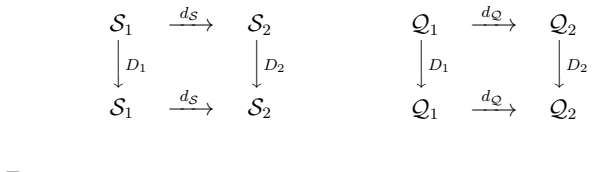
For more than half a century, dualities have been at the heart of modern physics. From quantum mechanics to statistical mechanics, condensed matter physics, quantum field theory and quantum gravity, dualities have proven useful in solving problems that are otherwise quite intractable. Being surprising and unexpected, dualities have been taken to raise philosophical questions about the nature and formulation of scientific theories, scientific realism, emergence, symmetries, explanation, understanding, and theory construction. This book discusses what dualities are, gives a selection of examples, explores the themes and roles that make dualities interesting, and highlights their most salient types. It aims to be an entry point into discussions of dualities in both physics and philosophy. The philosophical discussion emphasises three main topics: whether duals are theoretically equivalent, the view of scientific theories that is suggested by dualities (namely, a geometric view of theories), and the compatibility between duality and emergence.
Editorial analysis
A structured set of objections, weighed in public.
Referee Report
Summary. The manuscript is a book-length entry point into dualities in physics, covering definitions, a selection of examples from quantum mechanics, statistical mechanics, condensed matter, QFT and quantum gravity, and thematic exploration of their roles. It emphasizes three philosophical topics: whether duals are theoretically equivalent, the geometric view of scientific theories suggested by dualities, and the compatibility of duality with emergence.
Significance. If the interpretive claims hold, the work provides a useful synthesis that bridges physics examples with philosophy of science debates on realism, explanation and theory construction. The strength lies in its thematic organization and acknowledgment of selectivity; it draws on standard literature without introducing new derivations or parameter-free results, so its contribution is primarily organizational and exploratory rather than deductive.
major comments (2)
- [Abstract and introduction] Abstract, paragraph on main topics: the assumption that the chosen examples from QM, stat mech, QFT and quantum gravity raise the three philosophical questions in a unified way is not demonstrated; the manuscript would benefit from an explicit section justifying selection criteria or addressing whether counter-examples (e.g., non-geometric dualities) weaken the geometric-view claim.
- [Philosophical discussion] Philosophical discussion (equivalence and geometric view sections): the geometric view is asserted as suggested by dualities but remains largely descriptive; without a precise characterization (e.g., how duality mappings induce a geometry on theory space distinct from existing structural realism), the claim risks being compatible with multiple prior frameworks rather than distinctive.
minor comments (2)
- [Examples chapters] Ensure that each example section explicitly states the duality map and the physical quantities interchanged, to aid readers without prior familiarity.
- [Conclusion] Add a short concluding section that returns to the three main topics with a summary of how the examples support or qualify each claim.
Simulated Author's Rebuttal
We thank the referee for their constructive report and recommendation for minor revision. We address each major comment below, agreeing that targeted clarifications will strengthen the manuscript's presentation of its themes and scope.
read point-by-point responses
-
Referee: [Abstract and introduction] Abstract, paragraph on main topics: the assumption that the chosen examples from QM, stat mech, QFT and quantum gravity raise the three philosophical questions in a unified way is not demonstrated; the manuscript would benefit from an explicit section justifying selection criteria or addressing whether counter-examples (e.g., non-geometric dualities) weaken the geometric-view claim.
Authors: We agree that an explicit justification of the selection criteria would improve clarity. The manuscript already notes its selectivity in the introduction, but we will add a dedicated subsection there that states the criteria: the examples are chosen as standard, well-documented cases across physics subfields that collectively engage the three philosophical topics (theoretical equivalence, geometric view of theories, and compatibility with emergence). On counter-examples, we will briefly discuss non-geometric dualities to delimit the scope of the geometric-view claim, noting that the book focuses on cases where duality mappings suggest geometric structure without asserting that all dualities do so. revision: yes
-
Referee: [Philosophical discussion] Philosophical discussion (equivalence and geometric view sections): the geometric view is asserted as suggested by dualities but remains largely descriptive; without a precise characterization (e.g., how duality mappings induce a geometry on theory space distinct from existing structural realism), the claim risks being compatible with multiple prior frameworks rather than distinctive.
Authors: We accept that greater precision is needed to distinguish the geometric view. While the discussion is exploratory rather than a new formal framework, we will revise the relevant sections to characterize the geometric view more explicitly: duality mappings are described as inducing a metric-like structure on the space of theories, where dual theories are proximate in a manner that highlights shared physical content beyond isomorphism. We will add a short comparison with structural realism to clarify the distinctive emphasis on the geometry of theory space suggested by dualities, while preserving the book's role as an entry point. revision: yes
Circularity Check
No significant circularity
full rationale
The manuscript is a philosophical and historical survey of dualities across physics subfields. Its central interpretive claims—that dualities suggest a geometric view of theories and are compatible with emergence—are advanced through illustrative examples drawn from the existing literature and thematic discussion rather than any deductive derivation, first-principles calculation, or parameter-fitting procedure. No equations, self-definitional loops, fitted inputs presented as predictions, or load-bearing self-citations that reduce the conclusions to the paper's own inputs appear in the text. The discussion is self-contained against external benchmarks in the sense that its claims rest on acknowledged selectivity of examples and standard concepts from prior work without circular reduction.
Axiom & Free-Parameter Ledger
axioms (2)
- domain assumption Dualities exist and are useful across the listed subfields of physics
- domain assumption Dualities raise the three listed philosophical questions in a coherent manner
Lean theorems connected to this paper
-
IndisputableMonolith/Cost/FunctionalEquation.leanwashburn_uniqueness_aczel unclear?
unclearRelation between the paper passage and the cited Recognition theorem.
A duality is an isomorphism between physical theories... Schema for dualities... common core theory... geometric view of theories
-
IndisputableMonolith/Foundation/AlexanderDuality.leanalexander_duality_circle_linking unclear?
unclearRelation between the paper passage and the cited Recognition theorem.
Kramers-Wannier duality... partition function at dual inverse temperature
What do these tags mean?
- matches
- The paper's claim is directly supported by a theorem in the formal canon.
- supports
- The theorem supports part of the paper's argument, but the paper may add assumptions or extra steps.
- extends
- The paper goes beyond the formal theorem; the theorem is a base layer rather than the whole result.
- uses
- The paper appears to rely on the theorem as machinery.
- contradicts
- The paper's claim conflicts with a theorem or certificate in the canon.
- unclear
- Pith found a possible connection, but the passage is too broad, indirect, or ambiguous to say the theorem truly supports the claim.
Forward citations
Cited by 1 Pith paper
-
On self-dualities for scalar $\phi^4$ theory
Scalar φ^4 theory's symmetric and broken phases are related by a sign flip of the quartic coupling via analytically tractable saddle point expansions.
Reference graph
Works this paper leans on
-
[1]
Aharony, O., S. S. Gubser, J. Maldacena, H. Ooguri, and Y. Oz (2000). Large n field theories, string theory and gravity.Physics Reports 323(3-4), 183–
work page 2000
-
[2]
Akers, C., N. Engelhardt, D. Harlow, G. Penington, and S. Vardhan (2024). The black hole interior from non-isometric codes and complexity.Journal of High Energy Physics 2024(6), 1–119. Almheiri, A., X. Dong, and D. Harlow (2015). Bulk locality and quantum error correction in ads/cft.Journal of High Energy Physics 2015(4), 1–34. Almheiri, A., N. Engelhardt...
work page 2024
-
[3]
Castellani, E. (2017). Duality and ‘particle’ democracy.Studies in History and Philosophy of Science Part B: Studies in History and Philosophy of Modern Physics 59, 100–108. Caulton, A. (2015). The role of symmetry in the interpretation of physical theories.Studies in History and Philosophy of Science Part B: Studies in History and Philosophy of Modern Ph...
-
[4]
103 Cinti, E. and M. Sanchioni (2024b). Time, spacetime and f-theory. In Time and Timelessness in Fundamental Physics and Cosmology: Histori- cal, Philosophical, and Mathematical Perspectives, pp. 199–220. Springer. Coffey, K. (2014). Theoretical equivalence as interpretative equivalence.The British Journal for the Philosophy of Science. Crowther, K., N. ...
work page 2014
-
[5]
De Haro, S. (2019). The heuristic function of duality.Synthese 196(12), 5169–5203. De Haro, S. (2020). On empirical equivalence and duality.One Hundred Years of Gauge Theory: Past, Present and Future Perspectives, 91–106. 104 De Haro, S. (2021). Theoretical equivalence and duality.Synthese 198(6), 5139–5177. De Haro, S. (2023). The empirical under-determi...
work page 2019
-
[6]
Les Houches Lectures on Fields, Strings and Duality
De Haro, S., N. Teh, and J. Butterfield (2016). On the relation between dualities and gauge symmetries.Philosophy of Science 83(5), 1059–1069. De Haro, S., N. Teh, and J. N. Butterfield (2017). Comparing dualities and gauge symmetries.Studies in History and Philosophy of Science Part B: Studies in History and Philosophy of Modern Physics 59, 68–80. 105 De...
work page internal anchor Pith review Pith/arXiv arXiv 2016
-
[7]
Earman, J. (2023). As revealing in the breach as in the observance: von neumann’s uniqueness theorem. Faulkner, T. and J. Polchinski (2011). Semi-holographic fermi liquids.Jour- nal of High Energy Physics 2011(6), 1–23. Ferrara, S. (1987).Supersymmetry. Volume
work page 2023
-
[8]
TASI Lectures on the Emergence of the Bulk in AdS/CFT
North-Holland. 106 Figueroa-O’Farrill, J. (1998). Electromagnetic duality for children.Lecture notes. Fletcher, S. C. (2016). Similarity, topology, and physical significance in rel- ativity theory.The British Journal for the Philosophy of Science. Fraser, D. (2020). The development of renormalization group methods for particle physics: Formal analogies be...
work page internal anchor Pith review Pith/arXiv arXiv 1998
-
[9]
Hori, K. and C. Vafa (2000). Mirror symmetry.arXiv preprint hep- th/0002222. Horowitz, G. T. and J. Polchinski (2009). Gauge/gravity duality.Approaches to quantum gravity, 169–186. Huggett, N. (2017). Target space̸= space.Studies in history and philosophy of science part B: Studies in history and philosophy of modern physics 59, 81–88. Huggett, N. and C. ...
-
[10]
Jaksland, R. (2021). Entanglement as the world-making relation: Distance from entanglement.Synthese 198(10), 9661–9693. Jordan, T. F. (1969).Linear operators for quantum mechanics. Wiley. Klein, O. (1926). Quantentheorie und f¨ unfdimensionale relativit¨ atstheorie. Zeitschrift f¨ ur Physik 37(12), 895–906. 108 Kontsevich, M. (1995). Homological algebra o...
work page 2021
-
[11]
Maldacena, J. (1999). The large-n limit of superconformal field theories and supergravity.International journal of theoretical physics 38(4), 1113–1133. Mandelstam, S. (1976). Vortices and quark confinement in non-abelian gauge theories. ii.Physics Reports, 23 (3), 245–249. Manton, N. and P. Sutcliffe (2004).Topological solitons. Cambridge Univer- sity Pr...
work page 1999
-
[12]
Cambridge University Press. Polchinski, J. (2017). Dualities of fields and strings.Studies in History and Philosophy of Science Part B: Studies in History and Philosophy of Modern Physics 59, 6–20. 110 Putnam, H. (1966). What theories are not. InStudies in Logic and the Foundations of Mathematics, Volume 44, pp. 240–251. Elsevier. Quine, W. (1975). On emp...
-
[13]
SISSA Medialab. Weinberg, E. J. (2012).Classical solutions in quantum field theory: Solitons and Instantons in High Energy Physics. Cambridge University Press. Witten, E. (1995). String theory dynamics in various dimensions.Nuclear Physics B 443(1-2), 85–126. Witten, E. (1996). Phase transitions in m-theory and f-theory.Nuclear Physics B 471(1–2), 195–216...
work page 2012
discussion (0)
Sign in with ORCID, Apple, or X to comment. Anyone can read and Pith papers without signing in.