Two roles of Alexander in two Kashaev phases
Pith reviewed 2026-06-28 21:14 UTC · model grok-4.3
The pith
The quantum A-polynomial admits two phases in the Kashaev limit, one producing classical A-polynomials tied to hyperbolic volumes and the other inverse Alexanders from Jones polynomials.
A machine-rendered reading of the paper's core claim, the machinery that carries it, and where it could break.
Core claim
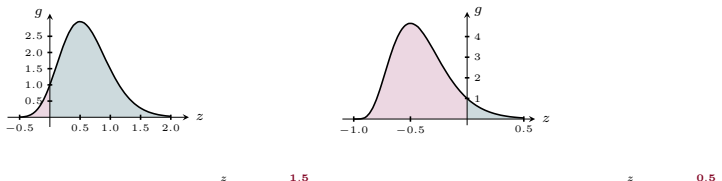
The consistency is provided by the peculiar form of the quantum A-polynomial, and the resolution of the puzzle is the co-existence of two different branches (phases) in the quasiclassical limit -- with non-trivial and with vanishing classical actions. The first leads to classical A-polynomials and hyperbolic volumes, the second -- to inverse Alexanders.
What carries the argument
The quantum A-polynomial, whose peculiar form permits two distinct quasiclassical phases with non-trivial and vanishing classical actions.
If this is right
- Classical A-polynomials share roots with Alexander polynomials.
- Jones polynomials approach the inverse of Alexander polynomials in the perturbative expansion.
- One phase connects to hyperbolic volumes via non-trivial actions.
- The two phases ensure consistency in the resurgence analysis of Wilson averages.
Where Pith is reading between the lines
- This structure may generalize directly to arbitrary Yang-Mills theories.
- Similar dual-phase behaviors could appear in other exactly solvable models with resurgence ambiguities.
- Explicit computations of higher representations might confirm the vanishing action branch.
Load-bearing premise
The quasiclassical/WKB approximation applies in this peculiar manner to the Kashaev limit such that the quantum A-polynomial allows two distinct phases with the stated properties.
What would settle it
A calculation showing that the quantum A-polynomial does not support two separate branches in the quasiclassical limit, or that only one phase appears in the Kashaev limit of Chern-Simons theory.
Figures
read the original abstract
The crucial feature of resurgence theory is the ambiguity of non-perturbative behavior, reflected either in the different choices of integration contours or in the existence of several solutions to Ward identities. This is well illustrated by considering exactly solvable models, of which the prominent example is Chern-Simons theory. Its important chapter, which should have a direct generalization to arbitrary Yang-Mills, is the consideration of Wilson averages in the double-scaling limit of large representation and small coupling. For historical reasons, we call it a Kashaev limit. It possesses a natural interpretation in terms of quasiclassical/WKB approximation, which is, however, somewhat peculiar and thus sheds new light on the old story. The crucial point is the appearance of Alexander polynomials $\Delta$ in two seemingly opposite roles: the classical $A$-polynomials have common roots with $\Delta$, while Jones polynomials tend to $\Delta^{-1}$ in the perturbative expansion. The consistency is provided by the peculiar form of the quantum $A$-polynomial, and the resolution of the puzzle is the co-existence of two different branches (phases) in the quasiclassical limit -- with non-trivial and with vanishing classical actions. The first leads to classical $A$-polynomials and hyperbolic volumes, the second -- to inverse Alexanders.
Editorial analysis
A structured set of objections, weighed in public.
Referee Report
Summary. The manuscript argues that in the Kashaev (double-scaling) limit of Chern-Simons theory, the Alexander polynomial Δ appears in two opposite roles: classical A-polynomials share roots with Δ while Jones polynomials approach Δ^{-1} in perturbation theory. This apparent tension is resolved by the coexistence of two quasiclassical phases permitted by the peculiar form of the quantum A-polynomial—one phase with non-trivial classical action (yielding classical A-polynomials and hyperbolic volumes) and one with vanishing classical action (yielding inverse Alexanders). The argument is framed as an illustration of resurgence ambiguities arising from multiple solutions to Ward identities.
Significance. If the two-phase structure is rigorously derived from the Kashaev-limit path integral, the result would clarify how the quasiclassical/WKB approximation behaves in this limit and supply a concrete example of contour or solution ambiguity in resurgence for an exactly solvable model with potential extension to Yang-Mills theories.
major comments (2)
- [Abstract] Abstract (crucial point paragraph): the claim that consistency follows from the 'peculiar form' of the quantum A-polynomial is asserted without an explicit operator construction, Ward-identity solution, or demonstration that the Kashaev limit of the Chern-Simons path integral produces an operator admitting precisely the two stated branches (non-trivial vs. vanishing classical action).
- [Abstract] Abstract: no explicit derivation or error-control steps are supplied to show that the quasiclassical approximation in the Kashaev limit indeed splits into the two phases with the claimed properties (classical A-polynomials + volumes vs. inverse Alexanders); the resolution therefore remains an assumption rather than a consequence of the path-integral formulation.
Simulated Author's Rebuttal
We thank the referee for the thoughtful report and the opportunity to clarify the scope of our work. The manuscript is intended as a concise illustration of resurgence ambiguities in Chern-Simons theory rather than a complete path-integral derivation. We address the major comments below and will revise the abstract accordingly.
read point-by-point responses
-
Referee: [Abstract] Abstract (crucial point paragraph): the claim that consistency follows from the 'peculiar form' of the quantum A-polynomial is asserted without an explicit operator construction, Ward-identity solution, or demonstration that the Kashaev limit of the Chern-Simons path integral produces an operator admitting precisely the two stated branches (non-trivial vs. vanishing classical action).
Authors: We agree that the manuscript does not supply an explicit operator construction or a fresh derivation of the quantum A-polynomial from the path integral. The argument takes the established form of the quantum A-polynomial (known to admit multiple solutions to the associated Ward identities) as given and shows how this structure naturally produces the two co-existing phases. We will revise the abstract to state explicitly that the resolution relies on these known properties rather than a new construction. revision: yes
-
Referee: [Abstract] Abstract: no explicit derivation or error-control steps are supplied to show that the quasiclassical approximation in the Kashaev limit indeed splits into the two phases with the claimed properties (classical A-polynomials + volumes vs. inverse Alexanders); the resolution therefore remains an assumption rather than a consequence of the path-integral formulation.
Authors: The paper presents the two-phase structure as a conceptual consequence of the peculiar form of the quantum A-polynomial within the Kashaev limit, serving as an exactly solvable illustration of resurgence. No new error-controlled derivation from the path integral is attempted. We will revise the abstract and add a brief clarifying sentence in the introduction to emphasize the illustrative nature of the argument and the reliance on established results. revision: yes
- A full, rigorous derivation of the two-phase structure directly from the Kashaev-limit path integral, including explicit operator construction, Ward-identity solutions, and error-control analysis, lies outside the scope of the present manuscript.
Circularity Check
No circularity: two-phase resolution follows from stated properties of quantum A-polynomial without reduction to inputs by construction.
full rationale
The abstract grounds consistency in the peculiar form of the quantum A-polynomial permitting two quasiclassical branches (non-trivial action yielding classical A-polynomials/volumes; vanishing action yielding inverse Alexanders). No self-definitional loop, fitted parameter renamed as prediction, or load-bearing self-citation is exhibited in the provided text. The derivation chain treats the A-polynomial form as an independent input whose consequences are then explored, keeping the central claim self-contained rather than tautological.
Axiom & Free-Parameter Ledger
Forward citations
Cited by 1 Pith paper
-
More on Kashaev limits of the quantum $A$-polynomials
In the Kashaev limit the non-homogeneous quantum A-polynomial splits into phases tied to zero action and deformed hyperbolic volume, with a byproduct expectation that the classical A-polynomial at L=1 is proportional ...
Reference graph
Works this paper leans on
-
[1]
What is QFT? Resurgent trans-series, Lefschetz thimbles, and new exact saddles,
G. V. Dunne and M.¨Unsal, “What is QFT? Resurgent trans-series, Lefschetz thimbles, and new exact saddles,” PoSLATTICE2015(2016) 010,arXiv:1511.05977 [hep-lat]. 15
Pith/arXiv arXiv 2016
-
[2]
A primer on resurgent transseries and their asymptotics,
I. Aniceto, G. Ba¸ sar, and R. Schiappa, “A primer on resurgent transseries and their asymptotics,”Phys. Rep. 809(2019) 1–135,arXiv:1802.10441 [hep-th]
arXiv 2019
-
[3]
Introductory lectures on resurgence,
G. V. Dunne, “Introductory lectures on resurgence,”arXiv:2511.15528 [hep-th]
-
[4]
On the Variation in the cohomology of the symplectic form of the reduced phase space,
J. J. Duistermaat and G. J. Heckman, “On the Variation in the cohomology of the symplectic form of the reduced phase space,”Invent. Math.69(1982) 259–268
1982
-
[5]
Path integrals and geometry of trajectories,
M. Blau, E. Keski-Vakkuri, and A. J. Niemi, “Path integrals and geometry of trajectories,”Phys. Lett. B246 (1990) 92–98
1990
-
[6]
Topological field theories and integrable models,
E. Keski-Vakkuri, A. J. Niemi, G. W. Semenoff, and O. Tirkkonen, “Topological field theories and integrable models,”Phys. Rev. D44(1991) 3899–3905
1991
-
[7]
Supersymmetry and loop space geometry,
A. Y. Morozov, A. J. Niemi, and K. Palo, “Supersymmetry and loop space geometry,”Phys. Lett. B271(1991) 365–371
1991
-
[8]
Supersymplectic geometry of supersymmetric quantum field theories,
A. Y. Morozov, A. Niemi, and K. Palo, “Supersymplectic geometry of supersymmetric quantum field theories,” Nucl. Phys. B377(1992) 295–338
1992
-
[9]
Geometric approach to supersymmetry,
A. Y. Morozov, A. J. Niemi, and K. Palo, “Geometric approach to supersymmetry,”Int. J. Mod. Phys. B6 no. 11-12, (1992) 2149–2157
1992
-
[10]
String theory: What is it?,
A. Y. Morozov, “String theory: What is it?,”Sov. Phys. Usp.35(1992) 671–714
1992
-
[11]
Integrability and matrix models,
A. Morozov, “Integrability and matrix models,”Phys. Usp.37(1994) 1–55,arXiv:hep-th/9303139
Pith/arXiv arXiv 1994
-
[12]
2-d gravity and matrix models. 1. 2-d gravity,
A. Mironov, “2-d gravity and matrix models. 1. 2-d gravity,”Int. J. Mod. Phys. A9(1994) 4355–4406, arXiv:hep-th/9312212
Pith/arXiv arXiv 1994
-
[13]
Matrix models as integrable systems,
A. Morozov, “Matrix models as integrable systems,” inCRM-CAP Summer School on Particles and Fields ’94, pp. 127–210. 1, 1995.arXiv:hep-th/9502091
Pith/arXiv arXiv 1995
-
[14]
Quantum Deformations ofτ-functions, Bilinear Identities and Representation Theory,
A. Mironov, “Quantum Deformations ofτ-functions, Bilinear Identities and Representation Theory,”Electron. Res. Announ. AMS9(1996) 219–238,arXiv:hep-th/9409190
arXiv 1996
-
[15]
A. Morozov, “Challenges of matrix models,” inFrom Gauge Interactions to Cosmology Carg` ese, France 7–19 June 2004, pp. 129–162. 2, 2005.arXiv:hep-th/0502010
Pith/arXiv arXiv 2004
-
[16]
Integrability and Matrix Models,
A. Morozov, “Integrability and Matrix Models,”arXiv:2212.02632 [hep-th]
-
[17]
Ward identities and combinatorics of rainbow tensor models,
H. Itoyama, A. Mironov, and A. Morozov, “Ward identities and combinatorics of rainbow tensor models,”JHEP 06(2017) 115,arXiv:1704.08648 [hep-th]
Pith/arXiv arXiv 2017
-
[18]
On the complete perturbative solution of one-matrix models,
A. Mironov and A. Morozov, “On the complete perturbative solution of one-matrix models,”Phys. Lett. B771 (2017) 503–507,arXiv:1705.00976 [hep-th]
Pith/arXiv arXiv 2017
-
[19]
A. Mironov and A. Morozov, “Superintegrability summary,”Phys. Lett. B835(2022) 137573, arXiv:2201.12917 [hep-th]. 16
arXiv 2022
-
[20]
Superintegrability as the hidden origin of the Nekrasov calculus,
A. Mironov and A. Morozov, “Superintegrability as the hidden origin of the Nekrasov calculus,”Phys. Rev. D 106no. 12, (2022) 126004,arXiv:2207.08242 [hep-th]
arXiv 2022
-
[21]
Summing up perturbation series around superintegrable point,
A. Mironov, A. Morozov, A. Popolitov, and S. Shakirov, “Summing up perturbation series around superintegrable point,”Phys. Lett. B852(2024) 138593,arXiv:2401.14392 [hep-th]
arXiv 2024
-
[22]
Deformation of superintegrability in the Miwa-deformed Gaussian matrix model,
A. Mironov, A. Morozov, A. Popolitov, and S. Shakirov, “Deformation of superintegrability in the Miwa-deformed Gaussian matrix model,”Phys. Rev. D110no. 4, (2024) 046027,arXiv:2403.09670 [hep-th]
arXiv 2024
-
[23]
Superintegrability ofq, t-matrix models and quantum toroidal algebra recursions,
L. Cassia and V. Mishnyakov, “Superintegrability ofq, t-matrix models and quantum toroidal algebra recursions,”arXiv:2510.17360 [math-ph]
-
[24]
A. V. Turbiner, J. C. L. Vieyra, and P. Winternitz, “Quantum two-dimensional superintegrable systems in flat space: exact-solvability, hidden algebra, polynomial algebra of integrals,”Int. J. Mod. Phys. A41(2026) 2630006,arXiv:2512.24045 [math-ph]
Pith/arXiv arXiv 2026
-
[25]
Ribbon graphs and their invariants derived from quantum groups,
N. Y. Reshetikhin and V. G. Turaev, “Ribbon graphs and their invariants derived from quantum groups,” Commun. Math. Phys.127(1990) 1–26
1990
-
[26]
Invariants of 3-manifolds via link polynomials and quantum groups,
N. Y. Reshetikhin and V. G. Turaev, “Invariants of 3-manifolds via link polynomials and quantum groups,” Inventiones mathematicae103no. 1, (1991) 547–597
1991
-
[27]
A. Mironov, A. Morozov, and A. Morozov, “Character expansion for HOMFLY polynomials. II. Fundamental representation. Up to five strands in braid,”JHEP03(2012) 034,arXiv:1112.2654 [math.QA]
Pith/arXiv arXiv 2012
-
[28]
Colored HOMFLY polynomials of knots presented as double fat diagrams,
A. Mironov, A. Morozov, A. Morozov, P. Ramadevi, and V. K. Singh, “Colored HOMFLY polynomials of knots presented as double fat diagrams,”JHEP07(2015) 109,arXiv:1504.00371 [hep-th]
Pith/arXiv arXiv 2015
-
[29]
Towards effective topological field theory for knots,
A. Mironov and A. Morozov, “Towards effective topological field theory for knots,”Nucl. Phys. B899(2015) 395–413,arXiv:1506.00339 [hep-th]
Pith/arXiv arXiv 2015
-
[30]
Planar decomposition of the HOMFLY polynomial for bipartite knots and links,
A. Anokhina, E. Lanina, and A. Morozov, “Planar decomposition of the HOMFLY polynomial for bipartite knots and links,”Eur. Phys. J. C84no. 9, (2024) 990,arXiv:2407.08724 [hep-th]
arXiv 2024
-
[31]
Colored knot polynomials for arbitrary pretzel knots and links,
D. Galakhov, D. Melnikov, A. Mironov, A. Morozov, and A. Sleptsov, “Colored knot polynomials for arbitrary pretzel knots and links,”Phys. Lett. B743(2015) 71–74,arXiv:1412.2616 [hep-th]
Pith/arXiv arXiv 2015
-
[32]
Resurgence in complex Chern-Simons theory,
S. Gukov, M. Mari˜ no, and P. Putrov, “Resurgence in complex Chern-Simons theory,”arXiv:1605.07615 [hep-th]
-
[33]
Peacock patterns and resurgence in complex Chern-Simons theory,
S. Garoufalidis, J. Gu, and M. Mari˜ no, “Peacock patterns and resurgence in complex Chern-Simons theory,” Res. Math. Sci.10no. 3, (2023) Paper No. 29, 67 pages,arXiv:2012.00062 [math.GT]
arXiv 2023
-
[34]
Resurgence of Chern-Simons theory at the trivial flat connection,
S. Garoufalidis, J. Gu, M. Mari˜ no, and C. Wheeler, “Resurgence of Chern-Simons theory at the trivial flat connection,”Commun. Math. Phys.406no. 1, (2025) Paper No. 20, 60 pages,arXiv:2111.04763 [math.GT]
Pith/arXiv arXiv 2025
-
[35]
Orientation reversal and the Chern-Simons natural boundary,
G. Adams, O. Costin, G. V. Dunne, S. Gukov, and O.¨Oner, “Orientation reversal and the Chern-Simons natural boundary,”JHEP08(2025) 154,arXiv:2505.14441 [hep-th]. 17
Pith/arXiv arXiv 2025
-
[36]
The Chern-Simons natural boundary and black hole entropy,
G. Adams and G. V. Dunne, “The Chern-Simons natural boundary and black hole entropy,”arXiv:2603.04619 [hep-th]
-
[37]
The Hyperbolic Volume of Knots from the Quantum Dilogarithm,
R. M. Kashaev, “The Hyperbolic Volume of Knots from the Quantum Dilogarithm,”Letters in Mathematical Physics39no. 3, (Feb., 1997) 269–275,arXiv:q-alg/9601025 [math.QA]
Pith/arXiv arXiv 1997
-
[38]
The coloured jones function,
P. Melvin and H. Morton, “The coloured jones function,”Commun. Math. Phys.169(1995) 501–520
1995
-
[39]
L. Rozansky, “A Contribution to the trivial connection to Jones polynomial and Witten’s invariant of 3-d manifolds. 1.,”Commun. Math. Phys.175(1996) 275–296,arXiv:hep-th/9401061
Pith/arXiv arXiv 1996
-
[40]
On the melvin-morton-rozansky conjecture,
D. Bar-Natan and S. Garoufalidis, “On the melvin-morton-rozansky conjecture,”Invent. Math.125(1996) 103–133
1996
-
[41]
Higher order terms in the Melvin-Morton expansion of the colored Jones polynomial,
L. Rozansky, “Higher order terms in the Melvin-Morton expansion of the colored Jones polynomial,”Commun. Math. Phys.183no. 2, (Jan., 1997) 291–306,arXiv:q-alg/9601009 [math.QA]
Pith/arXiv arXiv 1997
-
[42]
A lift of the colored Jones polynomial of a knot,
S. Garoufalidis and C. Wheeler, “A lift of the colored Jones polynomial of a knot,”arXiv:2603.01619 [math.GT]
-
[43]
Korzun, E
D. Korzun, E. Lanina, and A. Morozov.To appear
-
[44]
Plane curves associated to character varieties of knot complements,
D. Cooper, M. Culler, H. Gillet, D. D. Long, and P. B. Shalen, “Plane curves associated to character varieties of knot complements,”Inventiones Mathematicae118no. 1, (1994) 47–84
1994
-
[45]
On the characteristic and deformation varieties of a knot,
S. Garoufalidis, “On the characteristic and deformation varieties of a knot,” inProceedings of the Casson Fest, vol. 7 ofGeom. Topol. Monogr., pp. 291–309. Geom. Topol. Publ., Coventry, 2004.arXiv:math/0306230 [math.GT]
Pith/arXiv arXiv 2004
-
[46]
The colored Jones polynomial and the A-polynomial of knots,
T. T. Q. Lˆ e, “The colored Jones polynomial and the A-polynomial of knots,”Adv. Math.207no. 2, (2006) 782–804,arXiv:math/0407521 [math.GT]
Pith/arXiv arXiv 2006
-
[47]
The colored Jones function isq-holonomic,
S. Garoufalidis and T. T. Q. Lˆ e, “The colored Jones function isq-holonomic,”Geom. Topol.9(2005) 1253–1293, arXiv:math/0309214 [math.GT]
Pith/arXiv arXiv 2005
-
[48]
Knots and tropical curves,
S. Garoufalidis, “Knots and tropical curves,” 2010
2010
-
[49]
The non-commutative A-polynomial of(−2,3, n)pretzel knots,
S. Garoufalidis and C. Koutschan, “The non-commutative A-polynomial of(−2,3, n)pretzel knots,”Exp. Math. 27no. 3, (2018) 302–315,arXiv:1311.3500 [math.GT]
Pith/arXiv arXiv 2018
-
[50]
The AJ-conjecture for the Teichm¨ uller TQFT,
J. E. Andersen and A. Malus` a, “The AJ-conjecture for the Teichm¨ uller TQFT,” 2017
2017
-
[51]
Introduction aux polynˆ omes d’un nœud,
G. de Rham, “Introduction aux polynˆ omes d’un nœud,”Enseignement Math. (2)13(1967) 187–194
1967
-
[52]
Matrix representation of knot and link groups,
J. May, “Matrix representation of knot and link groups,” Master’s thesis, Harvey Mudd College, 2006. HMC Senior Theses. 185
2006
-
[53]
On a Theorem of Burde and de Rham,
D. S. Silver and S. G. Williams, “On a Theorem of Burde and de Rham,”J. Knot Theory Ramifications20 no. 5, (2011) 713–720,arXiv:0908.2260 [math.GT]. 18
Pith/arXiv arXiv 2011
-
[54]
Hyperasymptotics for integrals with finite endpoints,
C. J. Howls, “Hyperasymptotics for integrals with finite endpoints,”Proc. R. Soc. Lond. A439no. 1906, (1992) 373–396
1906
-
[55]
The Superpolynomial for knot homologies,
N. M. Dunfield, S. Gukov, and J. Rasmussen, “The Superpolynomial for knot homologies,”Exp. Math.15 (2006) 129–159,arXiv:math/0505662 [math.GT]
Pith/arXiv arXiv 2006
-
[56]
H. Itoyama, A. Mironov, A. Morozov, and A. Morozov, “HOMFLY and superpolynomials for figure eight knot in all symmetric and antisymmetric representations,”JHEP2012(2012) 131,arXiv:1203.5978 [hep-th]
Pith/arXiv arXiv 2012
-
[57]
Colored HOMFLY polynomial via skein theory,
S. Zhu, “Colored HOMFLY polynomial via skein theory,”JHEP10(2013) 1–24,arXiv:1206.5886 [math.GT]
Pith/arXiv arXiv 2013
-
[58]
Special colored Superpolynomials and their representation-dependence,
A. Morozov, “Special colored Superpolynomials and their representation-dependence,”JHEP12(2012) 116, arXiv:1208.3544 [hep-th]
Pith/arXiv arXiv 2012
-
[59]
A. Morozov, “The first-order deviation of superpolynomial in an arbitrary representation from the special polynomial,”JETP Lett.97(2013) 171–172,arXiv:1211.4596 [hep-th]
Pith/arXiv arXiv 2013
-
[60]
Evolution method and “differential hierarchy
A. Mironov, A. Morozov, and A. Morozov, “Evolution method and “differential hierarchy” of colored knot polynomials,”AIP Conf. Proc.1562(2013) 123,arXiv:1306.3197 [hep-th]
Pith/arXiv arXiv 2013
-
[61]
Quadruply-graded colored homology of knots,
E. Gorsky, S. Gukov, and M. Stosic, “Quadruply-graded colored homology of knots,”arXiv e-prints(2013) , arXiv:1304.3481 [math.QA]
Pith/arXiv arXiv 2013
-
[62]
Differential hierarchy and additional grading of knot polynomials,
S. Arthamonov, A. Mironov, and A. Morozov, “Differential hierarchy and additional grading of knot polynomials,”Theor. Math. Phys.179(2014) 509–542,arXiv:1306.5682 [hep-th]
Pith/arXiv arXiv 2014
-
[63]
Link polynomial calculus and the AENV conjecture,
S. Arthamonov, A. Mironov, A. Morozov, and A. Morozov, “Link polynomial calculus and the AENV conjecture,”JHEP04(2014) 156,arXiv:1309.7984 [hep-th]
Pith/arXiv arXiv 2014
-
[64]
Knot polynomials in the first non-symmetric representation,
A. Anokhina, A. Mironov, A. Morozov, and A. Morozov, “Knot polynomials in the first non-symmetric representation,”Nucl. Phys. B882(2014) 171–194,arXiv:1211.6375 [hep-th]
Pith/arXiv arXiv 2014
-
[65]
On colored HOMFLY polynomials for twist knots,
A. Anokhina, A. Mironov, A. Morozov, and A. Morozov, “On colored HOMFLY polynomials for twist knots,” Mod. Phys. Lett. A29(2014) 1450183,arXiv:1408.3076 [hep-th]
Pith/arXiv arXiv 2014
-
[66]
Colored knot polynomials: HOMFLY in representations [2,1],
A. Mironov, A. Morozov, and A. Sleptsov, “Colored knot polynomials: HOMFLY in representations [2,1],” Theor. Math. Phys.177(2013) 1435–1470,arXiv:1303.1015 [hep-th]
Pith/arXiv arXiv 2013
-
[67]
On genus expansion of knot polynomials and hidden structure of Hurwitz tau-functions,
A. Mironov, A. Morozov, and A. Sleptsov, “On genus expansion of knot polynomials and hidden structure of Hurwitz tau-functions,”Eur. Phys. J. C73(2013) 2492,arXiv:1304.7499 [hep-th]
Pith/arXiv arXiv 2013
-
[68]
On genus expansion of superpolynomials,
A. Mironov, A. Morozov, A. Sleptsov, and A. Smirnov, “On genus expansion of superpolynomials,”Nucl. Phys. B889(2014) 757–777,arXiv:1310.7622 [hep-th]
Pith/arXiv arXiv 2014
-
[69]
On the defect and stability of differential expansion,
Y. Kononov and A. Morozov, “On the defect and stability of differential expansion,”JETP Lett.101no. 12, (2015) 831–834,arXiv:1504.07146 [hep-th]
Pith/arXiv arXiv 2015
-
[70]
Gluing equations forPGL(n,C)-representations of3-manifolds,
S. Garoufalidis, M. Goerner, and C. Zickert, “Gluing equations forPGL(n,C)-representations of3-manifolds,” Algebr. Geom. Topol.15no. 1, (2015) 565–622. 19
2015
-
[71]
The geometry and topology of three-manifolds
W. P. Thurston, “The geometry and topology of three-manifolds.” Princeton lecture notes, 1980
1980
-
[72]
Quantization of Chern-Simons Gauge Theory With Complex Gauge Group,
E. Witten, “Quantization of Chern-Simons Gauge Theory With Complex Gauge Group,”Commun. Math. Phys. 137(1991) 29–66
1991
-
[73]
Three-dimensional quantum gravity, Chern-Simons theory, and the A polynomial,
S. Gukov, “Three-dimensional quantum gravity, Chern-Simons theory, and the A polynomial,”Commun. Math. Phys.255(2005) 577–627,arXiv:hep-th/0306165
Pith/arXiv arXiv 2005
-
[74]
Analytic Continuation Of Chern-Simons Theory,
E. Witten, “Analytic Continuation Of Chern-Simons Theory,”AMS/IP Stud. Adv. Math.50(2011) 347–446, arXiv:1001.2933 [hep-th]
Pith/arXiv arXiv 2011
-
[75]
On geometric bases for quantum A-polynomials of knots,
D. Galakhov and A. Morozov, “On geometric bases for quantum A-polynomials of knots,”Phys. Lett. B860 (2025) 139139,arXiv:2408.08181 [hep-th]
arXiv 2025
-
[76]
On geometric bases for A-polynomials II:su3 and Kuperberg bracket,
D. Galakhov and A. Morozov, “On geometric bases for A-polynomials II:su3 and Kuperberg bracket,”Eur. Phys. J. C85no. 8, (2025) 915,arXiv:2505.20260 [hep-th]
arXiv 2025
-
[77]
Shading A-polynomials via huge representations ofUq(suN),
D. Galakhov and A. Morozov, “Shading A-polynomials via huge representations ofUq(suN),” arXiv:2605.22560 [hep-th]
-
[78]
S. Garoufalidis and X.-S. Lin, “The C-polynomial of a knot,”Algebr. Geom. Topol.6(2006) 1623–1653, arXiv:math/0504305 [math.GT]
Pith/arXiv arXiv 2006
-
[79]
Algebra of quantumC-polynomials,
A. Mironov and A. Morozov, “Algebra of quantumC-polynomials,”JHEP02(2021) 142,arXiv:2009.11641 [hep-th]. 20
arXiv 2021
discussion (0)
Sign in with ORCID, Apple, or X to comment. Anyone can read and Pith papers without signing in.