REVIEW 2 major objections 5 minor 4 cited by
Biological age is entropy production integrated along an organism's proper-time worldline, not calendar years.
Reviewed by Pith at T0; open to challenge. T0 means a machine referee read the full paper against a public rubric. the ladder, T0–T4 →
T0 review · grok-4.5
2026-07-11 12:32 UTC pith:PQP4BAYD
load-bearing objection Clean, elementary reparametrization of the author’s PBTE age onto proper time; relativity bookkeeping is sound, novelty and empirical load sit almost entirely in the self-cited priors. the 2 major comments →
Relativistic PBTE:Biological Proper Time Along the Worldline
The pith
A machine-rendered reading of the paper's core claim, the machinery that carries it, and where it could break.
Core claim
Biological age is an entropy-production functional evaluated along the organism's proper-time worldline: A_PBTE = (1/Σ_ref) ∫_τ0^τ1 Σ̇_p(τ) dτ, so that the rate seen by an external observer is dA_PBTE/dt = Σ̇_p/(γ Σ_ref). Spacetime geometry fixes dτ; local nonequilibrium physiology fixes Σ̇_p; PBTE converts that irreversible expenditure into a normalized aging coordinate. Physiology does not generate relativistic time dilation; it is merely parametrized by the proper time that relativity already supplies.
What carries the argument
The relativistic PBTE age functional A_PBTE = (1/Σ_ref) ∫ Σ̇_p(τ) dτ, together with the factorization dA_PBTE/dt = (Σ̇_p/Σ_ref)·(dτ/dt). It separates the geometric factor dτ/dt from the local physiological rate and thereby converts the earlier nonrelativistic PBTE aging law into a worldline-invariant statement.
Load-bearing premise
The paper takes as given that living organisms of a given clade share an approximately fixed lifetime cycle budget and a fixed entropy cost per cycle, so that a single reference entropy budget can normalize biological age across individuals and species.
What would settle it
After local physiological effects are controlled, independent biological clocks (cardiac, respiratory, molecular turnover) of an organism in uniform relativistic motion must all acquire exactly the same global proper-time factor 1/γ relative to a common external clock; any process-specific velocity-dependent dilation would refute the proper-time formulation.
Editorial analysis
A structured set of objections, weighed in public.
Referee Report
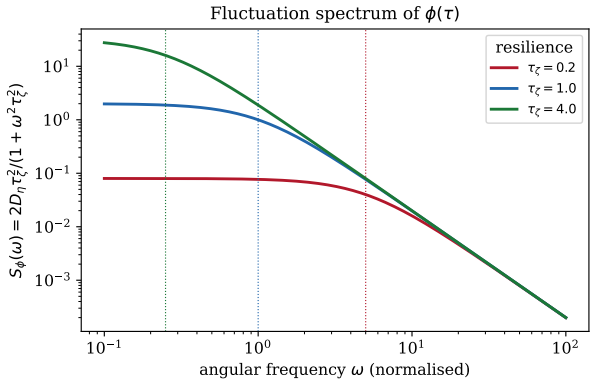
Summary. The manuscript places the author's prior Principle of Biological Time Equivalence (PBTE) on a relativistically consistent footing. Biological age is defined as an entropy-production functional along the organism's proper-time worldline, A_PBTE = (1/Σ_ref) ∫_τ0^τ1 Σ̇_p(τ) dτ, so that the external aging rate is dA_PBTE/dt = Σ̇_p/(γ Σ_ref). Spacetime geometry fixes dτ; local rest-frame physiology fixes Σ̇_p; PBTE converts the latter into a normalized age. Physiological and geometric factors multiply (Eqs. 51, 63). Section 4 introduces a proper-time order parameter ζ, Ornstein–Uhlenbeck relaxation, and reaction–diffusion tissue models applied to inflammation, viral latency, and optimal control, labeled as testable hypotheses. The paper does not modify special or general relativity and correctly insists that time dilation is prior to physiology.
Significance. If the prior PBTE lifetime invariants and entropy-per-cycle closures hold, the paper supplies a clean, covariant completion that separates geometric and physiological contributions to observed aging and yields falsifiable consistency conditions (local clocks share one Lorentz factor; no local velocity-dependent suppression). The factorization in Eqs. (51) and (63), the covariant form (60), and the explicit separation of torpor-type biological slowing from Lorentz dilation are useful bookkeeping results for any comparative or spaceflight discussion of biological time. The relativistic layer itself is elementary and correct; the comparative meaning of A_PBTE remains contingent on the self-cited 2026 PBTE priors.
major comments (2)
- Abstract and §2 (Eqs. 7–32, refs [32–34,36]): the load-bearing quantities N_⋆,C ~ 10^9, σ̄*_i ≃ σ*_0,C, and Σ_ref are imported as 'established' prior results and are not re-validated here. The central functional (Eqs. 2/41) is the prior PBTE age with the integration variable changed from t to τ. If those clade invariants fail, A_PBTE loses comparative meaning. The manuscript should either (i) summarize the empirical status and domain of validity of those priors with explicit falsifiability criteria, or (ii) reframe the contribution strictly as a reparametrization conditional on those priors, so that the relativistic claim does not rest on unexamined self-citations.
- §4 (Eqs. 64–71 and applications to inflammation, viral latency, and optimal control): these constructions introduce free parameters (τ_ζ, D_η, D_ζ, λ) and are labeled hypotheses, yet they occupy a full section after the central result. They do not support Eqs. (41)/(44) and risk diluting the paper's focus. Either move §4 to a short outlook/supplement with clear separation from the relativistic completion, or supply at least one concrete, currently testable prediction that does not require relativistic velocities.
minor comments (5)
- Notation: biological 'proper time' θ is repeatedly distinguished from relativistic τ, but the shared name still invites confusion (e.g. §2 after Eq. 3). Consider 'biological cycle count' or 'intrinsic event count' as the primary term.
- Figure 1 caption and body: the layered diagram is helpful but the rendered symbols (d, p, A) appear truncated in the text; ensure the published figure uses full dτ, Σ̇_p, A_PBTE.
- Table 1 and the v=0.8c numerical example (Eqs. 52–55, 87–88) are clear; a parallel weak-field gravitational row (or pointer to Eq. 57) would make the GR side equally concrete.
- References [32–37] are all 2026 self-citations, several listed as 'manuscript' or arXiv. For a journal version, clarify which are peer-reviewed or publicly archived and what empirical content each supplies.
- §5 hierarchy t→τ→θ→A_PBTE is well stated; a single displayed equation or box summarizing the factorization (51)/(63) would help readers who skip the derivation.
Circularity Check
Central 'result' is prior PBTE age functional with integration variable renamed from t to τ; comparative meaning of Σ_ref and N⋆ rests entirely on self-cited 2026 manuscripts.
specific steps
-
self definitional
[Abstract; §3 Eq. (41)/(2); §1 Eq. (2); §5 Eqs. (74)–(75)]
"The central result is that biological age is an entropy-production functional evaluated along the proper-time worldline, A_PBTE = 1/Σ_ref ∫_τ0^τ1 Σ̇_p(τ) dτ, dA_PBTE/dt = Σ̇_p/(γ Σ_ref) … We do not modify relativity; we identify the temporal parameter on which the previously developed PBTE aging functional must be evaluated. The mathematical operation is elementary…"
The non-relativistic PBTE age of §2 is already A = (1/Σ_ref) ∫ Σ̇_p dt (Eqs. 30–32). Replacing the integration variable by proper time τ and inserting dτ/dt = 1/γ is the chain rule applied to that same functional. Once local rates are defined per unit proper time (standard SR), Eq. (41) is identical to the prior definition by construction; it is not an independent derivation of a new aging law.
-
self citation load bearing
[Abstract; §2 Eqs. (7)–(32); refs [32–34,36]]
"Building on the established Principle of Biological Time Equivalence (PBTE), whose thermodynamic foundation and aging dynamics are taken here as prior results [32–34] … Ni ≈ N⋆,C … σ̄*_i ≈ σ*_0,C … Σ*_ref ≡ σ*_0,ref N⋆,ref … A_PBTE,i(t) = Σ_p,i(t)/M_i / Σ*_ref."
The normalized age A_PBTE has comparative meaning only because Σ_ref (and the underlying N⋆,C ~ 10^9 cardiac cycles and entropy-per-cycle closure) are treated as established clade invariants. Those quantities are supplied exclusively by the author's own 2026 manuscripts and book; they are not re-validated or independently derived in the present paper. Without that self-cited content the integral is merely cumulative entropy production, not a biological age coordinate.
-
renaming known result
[§3 Eqs. (42)–(44); §5 hierarchy (73); SI Table 1]
"dA_PBTE/dt = (1/Σ_ref) (dΣ_p/dτ)(dτ/dt) … = Σ̇_p/(γ Σ_ref) … The traveler experiences normal local physiology; the reduction arises because less proper time accumulates along the moving worldline…"
That any proper-time-parametrized process (including entropy production) appears dilated by 1/γ relative to coordinate time is textbook special relativity, already verified for muons, atomic clocks and GPS. Writing the same factor in front of the author's Σ̇_p/Σ_ref merely renames the known geometric effect as 'relativistic PBTE aging rate'; it adds no new physical content beyond the reparametrization already flagged.
full rationale
The paper's derivation chain is short and transparent. Section 2 restates the non-relativistic PBTE age A_PBTE,i(t) = (Σ_p,i(t)/M_i)/Σ*_ref (Eqs. 30–32), whose comparative content is the author's own lifetime-cycle invariant N_i ≈ N⋆,C and entropy-per-cycle closure σ̄*_i ≈ σ*_0,C, imported as 'prior results' [32–34,36] and not re-derived or re-validated. Section 3 then replaces the external-time integral by an integral of local rest-frame entropy production along proper time, yielding Eq. (41)/(2). The paper itself calls this step 'elementary' and states that it does not modify relativity; it merely identifies the temporal parameter on which the previously developed functional must be evaluated. Once one accepts that local rates are proper-time rates (standard relativity), the new formula is the old formula with t o τ by construction. The geometric factor 1/γ is correct and independent, but it multiplies a quantity whose biological meaning is wholly self-cited. Section 4 applications are labeled hypotheses and do not prop up the central equation. No uniqueness theorem or fitted-parameter-as-prediction appears; the circularity is definitional reparametrization plus load-bearing self-citation of the reference budgets.
Axiom & Free-Parameter Ledger
free parameters (5)
- N_⋆,C (clade/clock lifetime cycle budget) =
~10^9 cardiac cycles (domain-specific)
- Σ_ref / Σ*_ref (reference lifetime entropy budget)
- σ*_0,C (mass-specific entropy cost per cycle)
- τ_ζ (temporal resilience time)
- D_η, D_ζ, λ (noise intensity, tissue diffusivity, control weight)
axioms (5)
- standard math Local physical and physiological processes are parametrized by relativistic proper time τ along the worldline (SR/GR standard).
- domain assumption Within specified biological domains, lifetime intrinsic cycle count N_i concentrates near a clade/clock scale N_⋆,C rather than scaling freely with lifespan or frequency (PBTE elementary form).
- domain assumption Cycle-averaged mass-specific entropy cost is approximately constant within the same domain (σ̄*_i ≃ σ*_0,C), so lifetime entropy budget tracks N_⋆.
- ad hoc to paper Biological age is identified with normalized cumulative irreversible entropy production (or equivalently normalized cycle count when σ is constant).
- ad hoc to paper Deviations from temporal balance admit linear restoring dynamics in proper time (Ornstein–Uhlenbeck) and reaction–diffusion tissue coupling.
invented entities (4)
-
A_PBTE (entropy-normalized biological age)
no independent evidence
-
Biological proper time θ (accumulated intrinsic cycle count)
no independent evidence
-
Temporal order parameter ζ and deviation ϕ
no independent evidence
-
Biological line element dℓ_B = f(τ) dτ
no independent evidence
read the original abstract
Biological aging is conventionally indexed by chronological time, yet every organism is a physical system tracing a worldline through spacetime, so the time available to its metabolism is not coordinate time $t$ but relativistic proper time $\tau$. Building on the established Principle of Biological Time Equivalence (PBTE), whose thermodynamic foundation and aging dynamics are taken here as prior results \citep{TayeBook2026,TayeAging2026,TayeCardiac2026}, we ask how internal physiological time relates to the proper time of physics. The central result is that biological age is an entropy-production functional evaluated along the proper-time worldline, \begin{equation*} A_{\rm PBTE}=\frac{1}{\Sigma_{\rm ref}}\int_{\tau_0}^{\tau_1}\dot\Sigma_p(\tau)\,d\tau, \qquad \frac{dA_{\rm PBTE}}{dt}=\frac{\dot\Sigma_p}{\gamma\,\Sigma_{\rm ref}}, \end{equation*} where $\dot\Sigma_p$ is entropy production per unit proper time in the local rest frame and $\gamma$ the Lorentz factor.
Figures



Forward citations
Cited by 4 Pith papers
-
Force--Torque Reciprocity and the Inference of Concealed Dissipation in a Geared Brownian Machine
In a reciprocal Brownian motor, the hidden entropy production at mechanical stall is exactly reconstructable from the observed coordinate's fluctuation-response violation when the reciprocal mobility factor K is calibrated.
-
Force--Torque Reciprocity and the Inference of Concealed Dissipation in a Geared Brownian Machine
In a reciprocal geared Brownian motor, force–torque reciprocity yields an exact reconstruction of full stall entropy production from the observed coordinate’s Harada–Sasa violation once the mobility factor K is known.
-
Stochastic First-Passage Theory of HIV Viral Rebound Following Latent Reservoir Reactivation
Post-ART HIV rebound is a first-passage of Poisson shot-noise viral load, separating into reactivation waiting plus growth delay and yielding closed-form ATI-compatible distributions.
-
Stochastic First-Passage Theory of HIV Viral Rebound Following Latent Reservoir Reactivation
HIV rebound after ART interruption is a first-passage time of a Poisson shot-noise viral load, separating into a stochastic reactivation wait plus a logarithmic growth delay to detectability.
Reference graph
Works this paper leans on
-
[1]
Ashby, Relativity in the Global Positioning System,Living Rev
N. Ashby, Relativity in the Global Positioning System,Living Rev. Relativ.6, 1 (2003)
2003
-
[2]
Baccam, C
P. Baccam, C. Beauchemin, C. A. Macken, F. G. Hayden, and A. S. Perelson, Kinetics of influenza A virus infection in humans,J. Virol.80, 7590–7599 (2006)
2006
-
[3]
Bailey et al., Measurements of relativistic time dilatation for positive and negative muons in a circular orbit,Nature268, 301–305 (1977)
J. Bailey et al., Measurements of relativistic time dilatation for positive and negative muons in a circular orbit,Nature268, 301–305 (1977)
1977
-
[4]
W. A. Calder,Size, Function, and Life History(Harvard University Press, 1984)
1984
-
[5]
C. W. Chou, D. B. Hume, T. Rosenband, and D. J. Wineland, Optical clocks and relativity, Science329, 1630–1633 (2010)
2010
-
[6]
Cook et al., High heart rate: a cardiovascular risk factor?,Eur
S. Cook et al., High heart rate: a cardiovascular risk factor?,Eur. Heart J.27, 2387–2393 (2006)
2006
-
[7]
S. R. de Groot and P. Mazur,Non-Equilibrium Thermodynamics(Dover, 1980)
1980
-
[8]
S. G. Deeks, Shock and kill,Nature487, 439–440 (2012)
2012
-
[9]
Duffy, Why are RNA virus mutation rates so damn high?,PLoS Biol.16, e3000003 (2018)
S. Duffy, Why are RNA virus mutation rates so damn high?,PLoS Biol.16, e3000003 (2018)
2018
-
[10]
A. S. Eddington,The Nature of the Physical World(Cambridge University Press, 1928)
1928
-
[11]
Einstein, Zur Elektrodynamik bewegter K¨ orper,Ann
A. Einstein, Zur Elektrodynamik bewegter K¨ orper,Ann. Phys.17, 891–921 (1905)
1905
-
[12]
Einstein, Die Grundlage der allgemeinen Relativit¨ atstheorie,Ann
A. Einstein, Die Grundlage der allgemeinen Relativit¨ atstheorie,Ann. Phys.49, 769–822 (1916)
1916
-
[13]
J. C. Hafele and R. E. Keating, Around-the-world atomic clocks: predicted relativistic time gains,Science177, 166–168 (1972)
1972
-
[14]
J. C. Hafele and R. E. Keating, Around-the-world atomic clocks: observed relativistic time gains,Science177, 168–170 (1972)
1972
-
[15]
Horvath, DNA methylation age of human tissues and cell types,Genome Biol.14, R115 (2013)
S. Horvath, DNA methylation age of human tissues and cell types,Genome Biol.14, R115 (2013)
2013
-
[16]
Israel and J
W. Israel and J. M. Stewart, Transient relativistic thermodynamics and kinetic theory,Ann. Phys.118, 341–372 (1979)
1979
-
[17]
H. J. Levine, Rest heart rate and life expectancy,J. Am. Coll. Cardiol.30, 1104–1106 (1997)
1997
-
[18]
M. E. Levine et al., An epigenetic biomarker of aging for lifespan and healthspan,Aging10, 573–591 (2018)
2018
-
[19]
S. L. Lindstedt and W. A. Calder, Body size, physiological time, and longevity of homeothermic animals,Q. Rev. Biol.56, 1–16 (1981)
1981
-
[20]
L´ opez-Ot´ ın, M
C. L´ opez-Ot´ ın, M. A. Blasco, L. Partridge, M. Serrano, and G. Kroemer, The hallmarks of aging,Cell153, 1194–1217 (2013)
2013
-
[21]
L´ opez-Ot´ ın, M
C. L´ opez-Ot´ ın, M. A. Blasco, L. Partridge, M. Serrano, and G. Kroemer, Hallmarks of aging: an expanding universe,Cell186, 243–278 (2023)
2023
-
[22]
A. T. Lu et al., DNA methylation GrimAge strongly predicts lifespan and healthspan,Aging 28 11, 303–327 (2019)
2019
-
[23]
A. T. Lu et al., Universal DNA methylation age across mammalian tissues,Nat. Aging3, 1148–1166 (2023)
2023
-
[24]
C. W. Misner, K. S. Thorne, and J. A. Wheeler,Gravitation(Freeman, 1973)
1973
-
[25]
Newton,Philosophiæ Naturalis Principia Mathematica(Royal Society, 1687)
I. Newton,Philosophiæ Naturalis Principia Mathematica(Royal Society, 1687)
-
[26]
A. S. Perelson, A. U. Neumann, M. Markowitz, J. M. Leonard, and D. D. Ho, HIV-1 dynamics in vivo,Science271, 1582–1586 (1996)
1996
-
[27]
Prigogine,Introduction to Thermodynamics of Irreversible Processes(Interscience, 1961)
I. Prigogine,Introduction to Thermodynamics of Irreversible Processes(Interscience, 1961)
1961
-
[28]
Rindler,Relativity: Special, General, and Cosmological, 2nd ed
W. Rindler,Relativity: Special, General, and Cosmological, 2nd ed. (Oxford University Press, 2006)
2006
-
[29]
Schmidt-Nielsen,Scaling: Why Is Animal Size So Important?(Cambridge University Press, 1984)
K. Schmidt-Nielsen,Scaling: Why Is Animal Size So Important?(Cambridge University Press, 1984)
1984
-
[30]
Schr¨ odinger,What Is Life?(Cambridge University Press, 1944)
E. Schr¨ odinger,What Is Life?(Cambridge University Press, 1944)
1944
-
[31]
Seifert, Stochastic thermodynamics, fluctuation theorems and molecular machines,Rep
U. Seifert, Stochastic thermodynamics, fluctuation theorems and molecular machines,Rep. Prog. Phys.75, 126001 (2012)
2012
-
[32]
M. A. Taye,The Principle of Biological Time Equivalence: A Unified Theory of Life’s Temporal Invariants(book, 2026)
2026
-
[33]
M. A. Taye, A nonequilibrium internal-time model of aging: entropy-normalized biological proper time and repair bifurcations, manuscript (2026)
2026
-
[34]
M. A. Taye, Biological proper time and entropy-cost invariance in cardiac and respiratory lifespan scaling, arXiv:2606.15310 (2026)
Pith/arXiv arXiv 2026
-
[35]
M. A. Taye, The lifetime cardiac-cycle invariant in endothermic vertebrates: a 230-species comparative dataset, statistical validation, and explicit falsifiability criteria,Int. J. Sci. Res. Publ.16(5), 2250 (2026); arXiv:2604.27856
Pith/arXiv arXiv 2026
-
[36]
M. A. Taye, Thermodynamic parametrisation of the vertebrate lifetime cycle invariant: bio- logical proper time, allometric mass-cancellation, and clade-specific predictions,Int. J. Sci. Res. Publ.16(4), 2250 (2026)
2026
-
[37]
M. A. Taye, Neural investment as an entropy-budget strategy: a thermodynamic derivation of primate longevity from the Principle of Biological Time Equivalence, arXiv:2604.27937 (2026)
Pith/arXiv arXiv 2026
-
[38]
M. G. Vander Heiden, L. C. Cantley, and C. B. Thompson, Understanding the Warburg effect: the metabolic requirements of cell proliferation,Science324, 1029–1033 (2009)
2009
-
[39]
R. M. Wald,General Relativity(University of Chicago Press, 1984)
1984
-
[40]
G. B. West, J. H. Brown, and B. J. Enquist, A general model for the origin of allometric scaling laws in biology,Science276, 122–126 (1997). 29
1997
discussion (0)
Sign in with ORCID, Apple, or X to comment. Anyone can read and Pith papers without signing in.