REVIEW 1 major objections 7 minor 1 cited by
Explicit covariant quantum codes protect analog computation at optimal scaling
Reviewed by Pith at T0; open to challenge. T0 means a machine referee read the full paper against a public rubric. the ladder, T0–T4 →
T0 review · glm-5.2
2026-07-09 05:13 UTC pith:R3L43D7F
load-bearing objection First explicit SU(d)-covariant AQECCs with near-optimal 1/N scaling; multi-qudit existence proofs are asymptotic without explicit thresholds the 1 major comments →
Covariant Approximate Quantum Codes for Protected Analog Computation
The pith
A machine-rendered reading of the paper's core claim, the machinery that carries it, and where it could break.
Core claim
The paper proves that the remaining multiplicity-space freedom after imposing SU(d) covariance can be used to enforce permutation symmetries that make local reduced states nearly independent of the logical input, with the logical-dependent part suppressed as 1/n. This yields explicit, non-randomized finite-dimensional covariant approximate codes achieving Theta(1/N) worst-case purified distance for one-, two-, and three-qudit flagged erasures, matching approximate Eastin-Knill lower bounds up to constants. The key technical objects are the reduced states rho^(S)(rho_L) on small sets S of physical sites, whose form is fixed by covariance (via Schur's lemma) up to scalar coefficients, and the
What carries the argument
SU(d)-covariant encoding isometries selected from multiplicity spaces invariant under highly transitive permutation subgroups (cyclic group C_n for single-qudit, AGL(1,n) for two-qudit, PGL(2,n-1) for three-qudit erasure), analyzed through the complementary-channel characterization of approximate error correction
Load-bearing premise
The multi-qudit erasure results depend on the existence of nonzero invariant subspaces in the multiplicity space under specific highly transitive permutation groups, which is proven only for 'sufficiently large n' using asymptotic character bounds without an explicit threshold. If the required n is astronomically large, the construction would be impractical.
What would settle it
If the threshold for 'sufficiently large n' in the AGL(1,n) or PGL(2,n-1) invariant-subspace existence proofs turns out to grow super-exponentially with d, the multi-qudit erasure codes would exist only in principle, not in practice. Additionally, if the 1/sqrt(n) scaling for arbitrary noise could be shown to be tight (not a proof artifact), it would indicate a fundamental gap between erasure and general noise models for covariant codes.
If this is right
- Provides the first explicit non-Abelian covariant approximate quantum error-correcting codes with proven near-optimal scaling, replacing prior randomized or Abelian-only constructions
- Establishes that permutation symmetry of the multiplicity vector is the design principle that controls how much logical information leaks to local environments, giving a concrete recipe for code construction beyond SU(d)
- The block-encoding framework for analog simulation shows that symmetry-respecting dynamics can be protected transversally while universality requires only a controlled set of symmetry-breaking resource Hamiltonians, sketching a possible route to fault-tolerant analog computation
- The reduced-state method extends automatically to arbitrary flagged local noise (not just erasure), since the complementary channel factors through the same local reduced states, providing a general tool for analyzing covariant code performance
Where Pith is reading between the lines
- The restriction to at most 3-transitive groups is not incidental: the classification of finite multiply transitive permutation groups shows there are no suitable proper k-transitive subgroups for k > 3, so extending the explicit construction to four or more simultaneous erasures would require a fundamentally different approach to distributing logical information uniformly
- The gap between 1/n erasure scaling and 1/sqrt(n) arbitrary-noise scaling likely reflects proof technique limitations rather than a genuine physical barrier; a direct fidelity calculation for specific non-erasure noise channels could potentially recover 1/n scaling
- The threshold for 'sufficiently large n' in the existence proofs using Larsen-Shalev character bounds is not pinned down; if this threshold grows rapidly with d, the multi-qudit codes may be impractical for systems with large local dimensions, making the single-qudit cyclic-symmetry codes the more immediately constructible family
Editorial analysis
A structured set of objections, weighed in public.
Referee Report
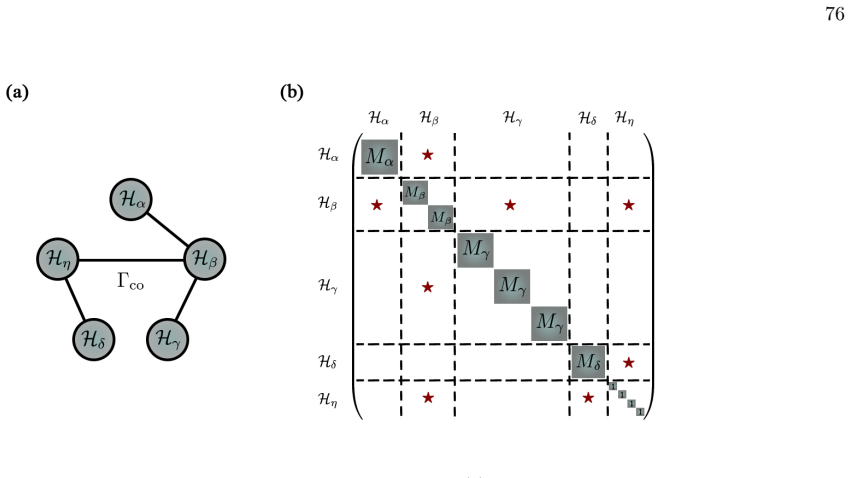
Summary. This manuscript constructs explicit finite-dimensional SU(d)-covariant approximate quantum error-correcting codes (AQECCs) using permutation-symmetric multiplicity vectors. The central results are: (1) for single-qudit flagged erasure, cyclic permutation symmetry yields worst-case purified-distance scaling Θ(1/N), matching known lower bounds up to constants (Theorems 2, 3); (2) an explicit Petz recovery map achieves the same 1/N scaling for single-qudit erasure (Theorem 4); (3) for two- and three-qudit flagged erasures, higher-transitivity groups (AGL(1,n) and PGL(2,n-1)) yield the same Θ(1/N) scaling (Theorems 6–8); (4) the same reduced-state analysis gives O(1/√N) bounds for arbitrary flagged local noise (Theorems 5, 9); and (5) the codes serve as building blocks for block-encoded analog quantum simulation, with symmetry-preserving dynamics acting transversally and symmetry-breaking terms providing universality (Theorems 10, 11). The representation-theoretic framework is clean and the main fidelity calculations are carried out in detail in the appendices.
Significance. The paper makes a solid contribution by providing the first explicit non-Abelian covariant AQECCs with near-optimal scaling. The single-qudit results (Theorems 2–5) are fully explicit and non-asymptotic: the code is determined by choosing a cyclic-permutation-invariant multiplicity vector, and the 1/N scaling follows from Schur's lemma and intertwiner decomposition without fitting parameters. The Petz decoder construction (Theorem 4) and the extension to arbitrary flagged local noise are valuable. The block-encoding framework for analog simulation (Section VI) and the universality condition (Theorem 11) are interesting, though more exploratory. The multi-qudit erasure results (Theorems 6–9) are existence results relying on asymptotic character bounds, which is a legitimate but less constructive contribution.
major comments (1)
- Lemmas C.17 and C.20 (and the resulting Theorems 6–9): The existence of nonzero invariant subspaces M^{AGL(1,n)}_{ω₁} and M^{PGL(2,n-1)}_{ω₁} is proved using the Larsen–Shalev character bound (Lemma C.16), which guarantees |χ(σ)| ≤ χ(1)^{1/2+ε_n} for elements with o(1) fixed points. The argument requires n^{2+3ε_n} < χ(1)^{1/2-ε_n} (2-transitive case) or n^{3+3ε_n} < χ(1)^{1/2-ε_n} (3-transitive case), which holds for 'sufficiently large n' because χ(1) = dim[q+1, q^{d-1}] grows exponentially in q (Lemma C.15). However, the threshold n₀(d) at which this inequality kicks in is never computed. The exponential lower bound C_d · d^d · q^{q-(d²+1)/2} involves a constant C_d that depends badly on d. For small d (e.g., d=2,3), the crossover point could be large. The authors should either (a) compute or bound n₀(d) for small d to demonstrate practical relevance, or (b) explicitly state in the定理
minor comments (7)
- The notation switches between N and n for the number of physical subsystems (e.g., Section VI uses N for the number of qubits in the analog simulation setting, while the code construction uses n). A unified convention would help.
- In Eq. (48) and the surrounding text, the decomposition ρ^{(ijk)} = τ^{(ijk)} + Δ^{(ijk)}(ρ_L) is introduced, but the explicit formulas for τ and Δ in Eqs. (49)–(50) use indices (i,j,k) without clarifying that these are fixed representative sites. A brief remark would help the reader.
- Table I: The Rydberg atom array entry lists 'Geometric automorphisms of the array preserving V_{ij}' as the symmetry group. This is correct but could be more precise (e.g., for a 1D chain with uniform V_{ij}, the group is the dihedral group D_N).
- Section VI.C, Eq. (60): The fidelity expression involves terms p₁(d₁²-1)/(4n₁²) and p₂(d₂²-1)/(4n₂²), but the constants C₁ and C₂ in Theorem 10 are not explicitly related to these coefficients. Clarification would help.
- The paper cites Ref. [48] (Alexander, arXiv:2505.00427) as 'A new approximate Eastin-Knill theorem.' The title and content should be verified to ensure the attribution and comparison are accurate.
- In Lemma C.15, the lower bound on dim[q+1, q^{d-1}] uses Robbins' bounds for factorials. The constant C_d involves d! and products of factorials; for d=2 this gives C_2 = 2/(√(2π) · e^{3/2}), which is small but nonzero. This is relevant to the threshold issue raised above.
- The abstract states results for 'one-, two-, and three-qudit flagged erasures' but does not mention the 'sufficiently large n' qualification for the multi-qudit cases. Adding this would make the claims easier to assess.
Simulated Author's Rebuttal
The referee identifies one major comment regarding the computation (or explicit acknowledgment) of the threshold n₀(d) at which the Larsen–Shalev character bound guarantees nonzero invariant subspaces for the multi-qudit erasure codes (Theorems 6–9). We agree that the threshold is not computed and that this should be addressed in the manuscript. We will add an explicit statement that the multi-qudit results are asymptotic existence results and provide a rough upper bound on n₀(d) where feasible, while noting that a sharp computation is left for future work.
read point-by-point responses
-
Referee: Lemmas C.17 and C.20 (and Theorems 6–9): The threshold n₀(d) at which the character-bound inequality kicks in is never computed. The constant C_d in the exponential lower bound depends badly on d. For small d (e.g., d=2,3), the crossover could be large. The authors should either (a) compute or bound n₀(d) for small d, or (b) explicitly state in the theorems that the results are asymptotic existence results.
Authors: The referee is correct that the threshold n₀(d) is not computed in the current manuscript, and we agree this should be addressed. We will revise the manuscript to explicitly state in Theorems 6–9 and in the relevant lemmas (C.17, C.20) that these are asymptotic existence results: the Θ(1/N) scaling holds for sufficiently large n, and the threshold n₀(d) is not pinned down. We will also add a brief discussion of why computing n₀(d) is difficult. The key obstacle is that the Larsen–Shalev bound (Lemma C.16) is itself an asymptotic result with an unspecified o(1) term, so extracting a concrete threshold requires controlling this remainder, which is not done in the original Larsen–Shalev paper. Additionally, the constant C_d in Lemma C.15 involves factorials and Stirling approximation remainders that grow with d, making the crossover point hard to bound sharply. For option (a), we can provide a rough (and likely very loose) upper bound on n₀(d) by tracing through the inequalities: the condition n^{2+3ε_n} < χ(1)^{1/2−ε_n} (2-transitive case) requires n² < C_d · d^d · q^{q−(d²+1)/2} to leading order, with q = (n−1)/d. Taking logarithms, this is roughly 2 log n < log C_d + d log d + (n/d)(log(n/d) − (d²+1)/2). For any fixed d ≥ 2, the right-hand side grows superlinearly in n, so the inequality is eventually satisfied, but the crossover depends on the (large) constant C_d. For d = 2, C_d involves 2!√(2π·2)·(ed²/(d²−d+2))^{(d²−d+2)/2}, which evaluates to a manageable constant, and we can estimate n₀(2) is on the order of a few hundred. For d = 3, the constant is larger and n₀(3) is likely in the thousands. These are very rough estimates and we will present them as such, with the caveat that they are upper bounds on the threshold, not tight values. We will add this discussion to revision: no
Circularity Check
No circularity found; construction is parameter-free with independent external support
full rationale
The paper constructs SU(d)-covariant approximate quantum codes by choosing multiplicity vectors invariant under specified permutation groups (cyclic, AGL(1,n), PGL(2,n-1)). The 1/n error scaling arises from explicit representation-theoretic calculations: Schur's lemma fixes the intertwiner structure, cyclic or k-transitive symmetry forces uniform coefficients α^(i) = 1/n, and fidelity is computed directly (Propositions B.3, C.8, C.36). No parameters are fitted to data and then presented as predictions. The lower bounds are cited from Faist et al. [42], an independent external result. The Petz decoder's near-optimality uses Ng and Mandayam [57], also external. The multi-qudit existence proofs rely on the Larsen-Shalev character bound [73], an independent mathematical theorem. The only self-citation is to [22] (Hu et al.) for context on symmetry-breaking controls, but the paper provides its own Theorem 11 with a complete proof in Appendix E, so this citation is not load-bearing for the central claims. The 'sufficiently large n' qualifier in Theorems 6-9 is a legitimate asymptotic existence statement with an uncomputed threshold, not a circularity. The derivation chain is self-contained and non-circular.
Axiom & Free-Parameter Ledger
axioms (6)
- standard math Bény-Oreshkov complementary channel theorem (Theorem 1, Ref. [41]): approximate correctability is equivalent to the complementary channel being close to a constant channel.
- standard math Schur-Weyl duality and the representation theory of SU(d) and S_n, including the classification of irreducible representations via partitions and highest weights.
- standard math Larsen-Shalev character bound (Lemma C.16, Ref. [73]): characters of S_n evaluated at elements with few fixed points are bounded by χ(1)^{1/2+o(1)}.
- standard math Ng-Mandayam near-optimality of the transpose/Petz channel (Ref. [57]).
- domain assumption The symmetric Hamiltonians generate the full invariant Lie algebra su(H)_G (assumed in Section VII for the universality framework).
- ad hoc to paper The Full First-Factor Span condition (Appendix E) holds for the symmetry-breaking Hamiltonians.
invented entities (1)
-
Full First-Factor Span condition
no independent evidence
read the original abstract
Quantum error correction compatible with continuous symmetries is a fundamental problem in quantum information and a possible route to robust analog quantum simulation. Because the Eastin-Knill theorem forbids exact codes with continuous transversal symmetries, we construct explicit $SU(d)$-covariant approximate codes that exploit permutation symmetry to spread logical information uniformly across all physical subsystems. For one-, two-, and three-qudit erasures at known locations, we prove worst-case purified-distance scaling $\Theta(1/N)$, matching approximate Eastin-Knill lower bounds up to constants, and we extend the reduced-state analysis to general flagged local noise. For single-qudit erasure, we construct an explicit near-optimal decoder from the Petz recovery map. We then use these codes as building blocks for encoded analog dynamics. Symmetry-preserving Hamiltonians generate block-structured dynamical Lie algebras implementable transversally, while controlled symmetry-breaking terms serve as non-transversal resources for universal dynamics. These results provide explicit non-Abelian covariant codes and a framework for robust analog quantum simulation.
Figures

Forward citations
Cited by 1 Pith paper
-
Restrictions on non-Clifford fault tolerance and ruling out beyond-SQL quantum metrology
Constant signal-aligned noise makes asymptotic beyond-SQL quantum sensing impossible for any protocol, including encoded, biased, adaptive, and nonstabilizer schemes.
Reference graph
Works this paper leans on
-
[1]
Explicit Decoder construction In this section, we will construct an explicit decoder forSU(d)-covariant codes with the erasure error model. For this, we will use the Petz recovery map, which is defined as follows Definition C.9.For a given channelNand reference stateω, the Petz mapP ω,N is defined as: Pω,N (σ) =ω 1/2N ∗ N(ω) −1/2σN(ω) −1/2 ω1/2, whereN ∗ ...
-
[2]
Performance under arbitrary single-qudit errors Lemma C.11.LetEbe the encoding map defined byE(ρ L) :=V ρ LV † andN(σ) = P S∈S pS|S⟩⟨S| F ⊗(N S ⊗id ¯S) (σ) be a noise model, whereN S is an arbitrary noise channel acting on the subsystemS. Then a complementary channel toN ◦ Eis given as follows: \N ◦ E(ρ L) = X S∈S pS|S⟩⟨S| FE ⊗ cNS ρ(S) (ρL) . Proof.Consi...
-
[3]
For notation see Section C and Nomenclature section
Performance under multi-qudit erasure errors The following Lemmas C.13-C.25 are axiliary results that we will need for our analysis of multi-qudit erasure errors and thus can be skipped on first reading. For notation see Section C and Nomenclature section. Lemma C.13.LetM ω1 be a multiplicity space of the fundamentalSU(d)representationV ω1 in(V ω1)⊗n, whe...
-
[4]
Performance under arbitrary three-qudit noise Theorem C.37.LetH L =V ω1 ,H P = (Vω1)⊗n withd=p r wherepis prime andris a positive integer, andnis such thatn−1 =p k, wherek≥ris a positive integer. EquipH L with the fundamental representation ofsu(d), and equipH P with the transversal representation given by ta → nX i=1 t(i) a , a= 1, d2 −1, (C36) wheret (i...
-
[5]
Dynamical Lie Algebra and Symmetries Lemma D.1.LetGbe a finite group, and letHbe a unitaryG-representation. IfH ∼=L α∈IH (Vα ⊗M α), where IH is the set of irreducible representations ofGpresent inH, then u(H)G ∼= M α∈IH u (Mα),su(H) G ∼= M α∈IH su(M α) ! ⊕u(1) ⊕(|IH|−1). 67 Proof.From double centralizer theorem (see, for example, [62]) we know, that every...
-
[6]
Covariant encodings forsu(d 1)⊕ · · · ⊕su(d k)⊕u(1) ⊕(r−1) Importantly, we have to understand how to obtain this block-diagonal form in practice, because to perform our encoding, we need to know the block-diagonal form of each Hamiltonian we are interested in. Below we provide an example of how to do it forN= 3 qubits, where we use the method of Young sym...
-
[7]
Code performance under correlated errors Proposition D.7.LetH L =V d1,ω1 ⊗V d2,ω1 ,H P = (Vd1,ω1)⊗n1 ⊗(V d2,ω1)⊗n2 with parametersn i =p ki i , wherep i is a prime number andk i is a positive integer, s. t.n i ≡1 (modd i)fori∈ {1,2}. EquipH L with the fundamental 70 representation ofsu(d), and equipH P with the transversal representation given by ta → n1X...
-
[8]
Symmetry Breaking Hamiltonians as a resource in Fault-Tolerant Analog Computations Example E.1.We now recall example D.6, where we constructedsu(4)⊕su(2)⊕u(1)-covariant encoding forS 3 symmetric system. As it was pointed out in [16], in this case DLA spanned byiH x, iHy, iHzz actually coincides with invariant algebrasu(4)⊕su(2)⊕u(1). Thus, if we findG br ...
-
[9]
Sufficient condition for universality In this section we establish mathematical formalism for studying universality sufficient conditions, which heavily relies on representation theory of symmetry groupG. We remind that definition of action and motivation for the symmetry groupGcan be found in Section V of the main text of the paper. LetIbe the set of irr...
-
[10]
Use the projector formula (E.7) to get the isotypic blocks: Π βα(H) =P βHP α
-
[11]
Choose basis associated with the Schur-transformH α ∼= Vα ⊗M α,H β ∼= Vβ ⊗M β
-
[12]
We will demonstrate this procedure on the example ofS 3-symmetric system in section E 3
Rewrite Π βα(H)∈Hom (H α,H β) ∼= Hom (Vα, Vβ)⊗Hom (M α, Mβ) ; This gives us an explicit decomposition of Π βα(H) into simple tensors, so we can read off the first factor and check if they span the entireT βα = Hom C(Vα, Vβ). We will demonstrate this procedure on the example ofS 3-symmetric system in section E 3. Now we proceed with the detailed proof. Sch...
-
[13]
Consider the symmetric groupS 3 acting on three qubit system (C 2)⊗3 by permuting them, i
Applications Example 1:S 3 symmetry. Consider the symmetric groupS 3 acting on three qubit system (C 2)⊗3 by permuting them, i. e. U(σ)|ψ 1⟩|ψ2⟩|ψ3⟩=|ψ σ−1(1)⟩|ψσ−1(2)⟩|ψσ−1(3)⟩, σ∈S 3. The Hilbert space decomposes into irreps ofS 3 as: H ∼= V(3) ⊗M (3) ⊕V (2,1) ⊗M (2,1) Corresponding dimensions are dimV (3) = 1,dimV (2,1) = 2, dimM (3) = 4,dimM (2,1) = 2...
discussion (0)
Sign in with ORCID, Apple, or X to comment. Anyone can read and Pith papers without signing in.