The physics of gravitational waves
Pith reviewed 2026-05-24 10:20 UTC · model grok-4.3
The pith
These lecture notes derive the physics of gravitational waves from first principles rather than focusing on applications.
A machine-rendered reading of the paper's core claim, the machinery that carries it, and where it could break.
Core claim
The lecture notes collect derivations of gravitational wave results starting from the basic principles of general relativity, with the emphasis placed on the underlying physics.
What carries the argument
Derivations of gravitational wave properties from the linearized field equations of general relativity.
If this is right
- Students obtain the ability to derive wave generation and propagation results independently of specific sources.
- The material supports courses that separate fundamental physics from astrophysical applications.
- Instructors gain a structured set of first-principles derivations for classroom use.
Where Pith is reading between the lines
- The notes could be extended with problems that apply the same derivation method to modified gravity theories.
- Similar first-principles collections might be developed for other topics in general relativity such as black hole perturbations.
Load-bearing premise
The reader has already taken a first course in general relativity.
What would settle it
A calculation showing that one of the presented derivations does not follow from the standard Einstein equations of general relativity.
Figures


read the original abstract
These lecture notes collect the material that I have been using over the years for various short courses on the physics of gravitational waves, first at the Institut d'Astrophysique de Paris (France), and then at SISSA (Italy) and various summer/winter schools. The level should be appropriate for PhD students in physics or for MSc students that have taken a first course in general relativity. The focus is on deriving results from first principles, rather than on astrophysical applications.
Editorial analysis
A structured set of objections, weighed in public.
Referee Report
Summary. The manuscript consists of lecture notes on the physics of gravitational waves, intended for PhD students or MSc students who have completed a first course in general relativity. It collects material used in short courses and emphasizes derivations of standard results from first principles in general relativity, rather than astrophysical applications or observational details.
Significance. The notes provide a pedagogical compilation of established gravitational-wave derivations in GR. If the derivations are accurate and self-contained, the manuscript could serve as a useful teaching resource, particularly for its focus on first-principles approaches. No novel theoretical claims or results are presented; the value lies in the clarity and organization of standard material for the target audience.
minor comments (1)
- The abstract and introduction could more explicitly list the specific topics covered (e.g., linearized gravity, wave equation derivation, energy flux) to help readers assess coverage before engaging with the full notes.
Simulated Author's Rebuttal
We thank the referee for their positive evaluation of the manuscript and for recommending acceptance. The notes are intended as a pedagogical compilation of standard derivations, and we are pleased that this focus is recognized as potentially useful for the target audience of PhD and advanced MSc students.
Circularity Check
No significant circularity detected
full rationale
This document consists of lecture notes deriving standard gravitational-wave results from first principles in general relativity for an audience that has already taken a first GR course. No novel predictions, fitted parameters, or load-bearing claims are present; the focus is pedagogical presentation of established derivations rather than any result that reduces to its own inputs by construction, self-citation chains, or ansatz smuggling. The derivation chain is therefore self-contained against external GR benchmarks.
Axiom & Free-Parameter Ledger
axioms (1)
- domain assumption General relativity correctly describes gravitational waves via the linearized Einstein equations
Reference graph
Works this paper leans on
-
[1]
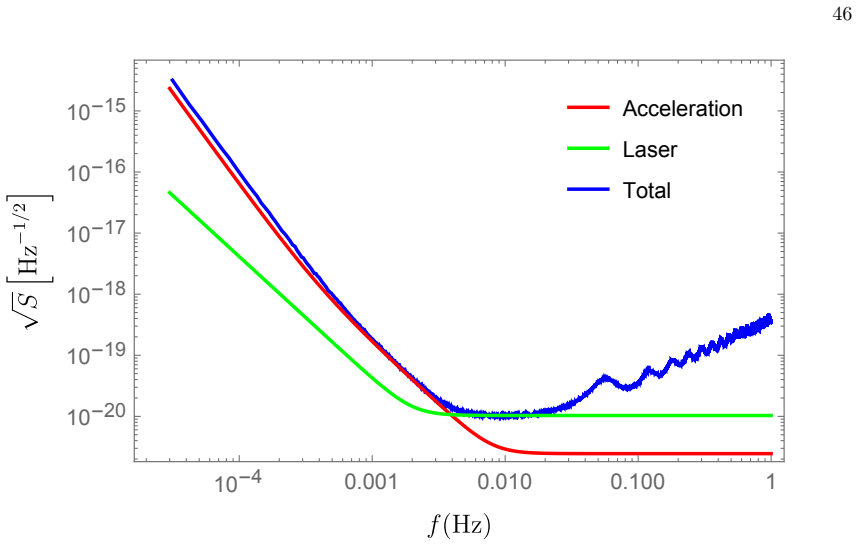
Detection in the presence of noise In order to disentangle the gravitational wave signal from the noise, many techniques have been put forward, among which one of the most popular is match filtering. The latter essentially amounts to cross correlating the detector’s noisy output s(t) = h(t) + n(t) (296) with a bank of templates h(t,θ). Here, the vector θ d...
work page 2020
-
[2]
Observation of Gravitational Waves from a Binary Black Hole Merger
B. P. Abbott et al. [LIGO Scientific and Virgo], “Observation of Gravitational Waves from a Binary Black Hole Merger,” Phys. Rev. Lett. 116, no.6, 061102 (2016) doi:10.1103/PhysRevLett.116.061102 [arXiv:1602.03837 [gr-qc]]
work page internal anchor Pith review Pith/arXiv arXiv doi:10.1103/physrevlett.116.061102 2016
-
[3]
M. J. Pfenning and E. Poisson, Phys. Rev. D 65, 084001 (2002) doi:10.1103/PhysRevD.65.084001 [arXiv:gr- qc/0012057 [gr-qc]]
-
[4]
E. E. Flanagan and S. A. Hughes, New J. Phys. 7, 204 (2005) doi:10.1088/1367-2630/7/1/204 [arXiv:gr- qc/0501041 [gr-qc]]
-
[5]
V. F. Mukhanov, H. A. Feldman and R. H. Brandenberger, Phys. Rept.215, 203-333 (1992) doi:10.1016/0370- 1573(92)90044-Z
-
[6]
J. M. Bardeen, Phys. Rev. D 22, 1882-1905 (1980) doi:10.1103/PhysRevD.22.1882
-
[7]
Post-Newtonian approach to black hole-fluid systems,
E. Barausse and L. Lehner, “Post-Newtonian approach to black hole-fluid systems,” Phys. Rev. D 88, no.2, 024029 (2013) doi:10.1103/PhysRevD.88.024029
-
[8]
Theory and Experiment in Gravitational Physics,
C. M. Will, “Theory and Experiment in Gravitational Physics,” Cambridge University Press, 2018
work page 2018
-
[9]
Gravity: Newtonian, Post-Newtonian, Relativistic
E. Poisson and C. M. Will, “Gravity: Newtonian, Post-Newtonian, Relativistic”, Cambridge U. Press, 2014
work page 2014
-
[10]
Post-Newtonian constraints on Lorentz-violating gravity theories with a MOND phenomenology
M. Bonetti and E. Barausse, “Post-Newtonian constraints on Lorentz-violating gravity theories with a MOND phenomenology,” Phys. Rev. D 91, 084053 (2015) [erratum: Phys. Rev. D 93, 029901 (2016)] doi:10.1103/PhysRevD.91.084053 [arXiv:1502.05554 [gr-qc]]
work page internal anchor Pith review Pith/arXiv arXiv doi:10.1103/physrevd.91.084053 2015
-
[11]
About gravitational-wave generation by a three-body system
M. Bonetti, E. Barausse, G. Faye, F. Haardt and A. Sesana, “About gravitational-wave generation by a three- body system,” Class. Quant. Grav.34, no.21, 215004 (2017) doi:10.1088/1361-6382/aa8da5 [arXiv:1707.04902 [gr-qc]]
work page internal anchor Pith review Pith/arXiv arXiv doi:10.1088/1361-6382/aa8da5 2017
-
[12]
A Relativist’s Toolkit: The Mathematics of Black-Hole Mechanics,
E. Poisson, “A Relativist’s Toolkit: The Mathematics of Black-Hole Mechanics,” Cambridge University Press, 2009, doi:10.1017/CBO9780511606601
-
[13]
F. de Felice and C. J. S. Clarke, Cambridge University Press, 1992, ISBN 978-0-521-42908-5, 978-0-521- 26639-0
work page 1992
-
[14]
Stress-Energy Pseudotensors and Gravitational Radiation Power
E. Bertschinger, “Stress-Energy Pseudotensors and Gravitational Radiation Power”, http://web.mit.edu/ edbert/GR/gr7.pdf
-
[15]
C. W. Misner, K. S. Thorne and J. A. Wheeler, “Gravitation,” W. H. Freeman, 1973, ISBN 978-0-7167-0344-0, 978-0-691-17779-3
work page 1973
-
[16]
Black holes, white dwarfs, and neutron stars: The physics of compact objects,
S. L. Shapiro and S. A. Teukolsky, “Black holes, white dwarfs, and neutron stars: The physics of compact objects,”, 1983, doi:10.1002/9783527617661
-
[17]
R. M. Wald, “General Relativity,” Chicago Univ. Pr., 1984, doi:10.7208/chicago/9780226870373.001.0001
-
[18]
P. K. Townsend, “Black holes: Lecture notes,” [arXiv:gr-qc/9707012 [gr-qc]]
work page internal anchor Pith review Pith/arXiv arXiv
-
[19]
Measurements of general relativistic effects in the binary pulsar PSR 1913+16,
J. H. Taylor, L. A. Fowler and P. M. McCulloch, “Measurements of general relativistic effects in the binary pulsar PSR 1913+16,” Nature 277, 437-440 (1979) doi:10.1038/277437a0
-
[20]
A. Buonanno and T. Damour, Phys. Rev. D 59, 084006 (1999) doi:10.1103/PhysRevD.59.084006 [arXiv:gr- qc/9811091 [gr-qc]]
-
[21]
First M87 Event Horizon Telescope Results. I. The Shadow of the Supermassive Black Hole
K. Akiyama et al. [Event Horizon Telescope], “First M87 Event Horizon Telescope Results. I. The Shadow of the Supermassive Black Hole,” Astrophys. J. Lett. 875, L1 (2019) doi:10.3847/2041-8213/ab0ec7 [arXiv:1906.11238 [astro-ph.GA]]
work page internal anchor Pith review Pith/arXiv arXiv doi:10.3847/2041-8213/ab0ec7 2019
-
[22]
J. M. Bardeen, W. H. Press and S. A. Teukolsky, “Rotating black holes: Locally nonrotating frames, energy extraction, and scalar synchrotron radiation,” Astrophys. J. 178, 347 (1972) doi:10.1086/151796
-
[23]
S. Babak, A. Taracchini and A. Buonanno, Phys. Rev. D 95, no.2, 024010 (2017) doi:10.1103/PhysRevD.95.024010 [arXiv:1607.05661 [gr-qc]]
work page internal anchor Pith review Pith/arXiv arXiv doi:10.1103/physrevd.95.024010 2017
-
[24]
Gravitational Self-Force Correction to the Binding Energy of Compact Binary Systems
A. Le Tiec, E. Barausse and A. Buonanno, Phys. Rev. Lett. 108, 131103 (2012) doi:10.1103/PhysRevLett.108.131103 [arXiv:1111.5609 [gr-qc]]
work page internal anchor Pith review Pith/arXiv arXiv doi:10.1103/physrevlett.108.131103 2012
-
[25]
Disk accretion onto a black hole. 2. Evolution of the hole.,
K. S. Thorne, “Disk accretion onto a black hole. 2. Evolution of the hole.,” Astrophys. J. 191, 507-520 (1974) doi:10.1086/152991
-
[26]
On the mass radiated by coalescing black-hole binaries
E. Barausse, V. Morozova and L. Rezzolla, “On the mass radiated by coalescing black-hole binaries,” Astro- phys. J. 758, 63 (2012) doi:10.1088/0004-637X/758/1/63 [arXiv:1206.3803 [gr-qc]]. 52
work page internal anchor Pith review Pith/arXiv arXiv doi:10.1088/0004-637x/758/1/63 2012
-
[27]
Spinning-black-hole binaries: The orbital hang up
M. Campanelli, C. O. Lousto and Y. Zlochower, “Spinning-black-hole binaries: The orbital hang up,” Phys. Rev. D 74, 041501 (2006) doi:10.1103/PhysRevD.74.041501 [arXiv:gr-qc/0604012 [gr-qc]]
work page internal anchor Pith review Pith/arXiv arXiv doi:10.1103/physrevd.74.041501 2006
-
[28]
Quasinormal modes of black holes and black branes
E. Berti, V. Cardoso and A. O. Starinets, “Quasinormal modes of black holes and black branes,” Class. Quant. Grav. 26, 163001 (2009) doi:10.1088/0264-9381/26/16/163001 [arXiv:0905.2975 [gr-qc]]
work page internal anchor Pith review Pith/arXiv arXiv doi:10.1088/0264-9381/26/16/163001 2009
-
[29]
Stability of a Schwarzschild singularity,
T. Regge and J. A. Wheeler, “Stability of a Schwarzschild singularity,” Phys. Rev. 108, 1063-1069 (1957) doi:10.1103/PhysRev.108.1063
-
[30]
Effective potential for even parity Regge-Wheeler gravitational perturbation equations,
F. J. Zerilli, “Effective potential for even parity Regge-Wheeler gravitational perturbation equations,” Phys. Rev. Lett. 24, 737-738 (1970) doi:10.1103/PhysRevLett.24.737
-
[31]
New approach to the quasinormal modes of a black hole,
V. Ferrari and B. Mashhoon, “New approach to the quasinormal modes of a black hole,” Phys. Rev. D 30, 295-304 (1984) doi:10.1103/PhysRevD.30.295
-
[32]
Black hole normal modes: a semianalytic approach,
B. F. Schutz and C. M. Will, “Black hole normal modes: a semianalytic approach,” Astrophys. J. Lett. 291, L33-L36 (1985) doi:10.1086/184453
-
[33]
Solution of the scalar wave equation in a kerr background by separation of variables,
D. R. Brill, P. L. Chrzanowski, C. Martin Pereira, E. D. Fackerell and J. R. Ipser, “Solution of the scalar wave equation in a kerr background by separation of variables,” Phys. Rev. D 5, 1913-1915 (1972) doi:10.1103/PhysRevD.5.1913
-
[34]
S. A. Teukolsky, “Perturbations of a rotating black hole. 1. Fundamental equations for gravitational electro- magnetic and neutrino field perturbations,” Astrophys. J. 185, 635-647 (1973) doi:10.1086/152444
-
[35]
Black holes and gravitational waves. III - The resonant frequencies of rotating holes,
S. L. Detweiler, “Black holes and gravitational waves. III - The resonant frequencies of rotating holes,” Astrophys. J. 239, 292-295 (1980) doi:10.1086/158109
-
[36]
J. Weber, “Gravitational Radiation,” Phys. Rev. Lett. 18, no.13, 498-501 (1967) doi:10.1103/PhysRevLett.18.498
-
[37]
Gravitational-wave observations as a tool for testing relativistic gravity,
D. M. Eardley, D. L. Lee, A. P. Lightman, R. V. Wagoner and C. M. Will, “Gravitational-wave observations as a tool for testing relativistic gravity,” Phys. Rev. Lett. 30, 884-886 (1973), doi:10.1103/PhysRevLett.30.884
-
[38]
Sensitivity and performance of the Advanced LIGO detectors in the third observing run
A. Buikema et al., “Sensitivity and performance of the Advanced LIGO detectors in the third observing run”, Phys. Rev. D 102, 062003 (2020), doi:10.1103/PhysRevD.102.062003
-
[39]
Gravitational Waves. Vol. 1: Theory and Experiments,
M. Maggiore, “Gravitational Waves. Vol. 1: Theory and Experiments,” Oxford University Press, 2007, ISBN 978-0-19-857074-5, 978-0-19-852074-0
work page 2007
discussion (0)
Sign in with ORCID, Apple, or X to comment. Anyone can read and Pith papers without signing in.