REVIEW 4 major objections 4 minor 196 references
Feature Hallucination for Self-supervised Action Recognition
T0 review · 4 major / 4 minor · reviewed 2026-08-06 · deepseek-v4-flash
Pith's one-line read Hallucinating missing video cues from RGB alone lifts action recognition accuracy across nine benchmarks.
desk verdict Solid DEEP-HAL extension with new ODF/SDF descriptors and covariance uncertainty, but the abstract overclaims the large-scale gains. read the letter →
The pith
A machine-rendered reading of the paper's core claim, the machinery that carries it, and where it could break.
The reading
What carries the argument
The central object is the multi-moment descriptor of Eq. (16), which turns a variable-length set of detector or saliency outputs into a fixed-size vector containing the normalized mean, top leading eigenvectors of the scatter matrix, skewness, kurtosis, and trace-normalized eigenvalues. Around this descriptor the framework builds hallucination streams: each stream maps RGB backbone embeddings through fully connected layers, applies power normalization and count sketching, and is supervised either by MSE or by a multivariate Gaussian uncertainty objective in which a Covariance Estimation Network produces a Cholesky-factorized precision matrix that captures correlations among feature residuals.
What would settle it
Compute ground-truth BoW/FV/OFF/ODF/SDF descriptors for a held-out subset of Kinetics-400 or Something-Something V2, run the frozen hallucination streams on the same videos, and compare squared errors and downstream classification accuracy against the variant that uses exact features. If the hallucinated features do not track the ground truth or do not reproduce the accuracy of exact features, the transfer claim fails.
Extended reading notes
Core claim
The central claim is that auxiliary feature streams, including the new ODF and SDF descriptors, can be predicted from RGB token embeddings by hallucination units, and these predicted features improve action classification even though the true modalities are never observed at test time. The paper reports that this holds across six backbones (I3D, AssembleNet++, VTN, FASTER, VideoMAE V2, InternVideo2) and nine datasets, with the largest gains on fine-grained and human-object-interaction benchmarks, where ODF and SDF contribute roughly three percentage points on average. On the large-scale datasets the hallucinated streams are trained once on 80,000 Mini-Kinetics-200 samples, frozen, and then used to fine-tune the prediction layers on each target dataset, where BoW/FV and optical-flow features give consistent but modest gains while ODF and SDF add little.
Load-bearing premise
The hallucination streams are trained once on ground-truth descriptors computed from 80,000 Mini-Kinetics-200 clips and then frozen, assuming the mapping from RGB embeddings to BoW/FV/OFF/ODF/SDF features transfers across datasets; if that mapping is not dataset-invariant, the large-scale results would not support the stated claim.
Editorial extensions
If this is right
- If the claim is correct, a model can enjoy multimodal accuracy at test time while running on RGB input only, eliminating optical-flow, skeleton, audio, detection and saliency extraction during inference.
- The ODF and SDF descriptors are reusable components: they summarize object-context and saliency cues in a fixed-dimensional form that can be attached to any backbone that exposes intermediate RGB representations.
- The uncertainty loss with a sparse Cholesky precision matrix is a drop-in replacement for MSE in hallucination training and is reported to add about one percentage point across datasets and backbones.
- On large-scale benchmarks the paper implies that handcrafted BoW/FV and optical-flow statistics remain complementary even to strong self-supervised video foundation models, while ODF/SDF are more valuable on fine-grained interaction-heavy datasets.
- Training the hallucination streams once on a relatively small subset and freezing them makes the approach scalable to datasets where full ground-truth descriptor extraction would be prohibitively expensive.
Reading between the lines
- The success of the frozen Mini-Kinetics-200 hallucination streams on other datasets suggests that the mapping from RGB embeddings to these statistical descriptors is more dataset-invariant than the classifier itself, but the paper validates this transfer explicitly only on Charades, so the large-scale results are the real test of that claim.
- ODF-style multi-moment descriptors could be lifted to other structured prediction tasks, such as scene graph construction or human-object interaction detection, wherever a model needs to summarize variable-size detections into a compact vector.
- The sparse Cholesky uncertainty model, by encoding conditional independence among feature residuals, offers a general recipe for any regression-to-representation pipeline, not only action recognition; a natural extension is to test it on cross-modal retrieval or video captioning features.
- A testable extension is to train the hallucination streams directly on each target dataset's own RGB data with a small amount of descriptor supervision, which would show whether the reported large-scale gains are limited by the transfer gap or by the descriptors themselves.
Editorial analysis
A structured set of objections, weighed in public.
Referee Report
Summary. The paper proposes a deep action-recognition framework that, from RGB frames alone, hallucinates a set of auxiliary video descriptors (BoW, Fisher vectors, I3D optical-flow features, the new Object Detection Features and Saliency Detection Features, skeleton features, and audio features) and combines them with a High Abstraction Features stream before classification. The hallucination targets are computed offline from external pretrained models, and an aleatoric uncertainty loss with a learned precision matrix replaces MSE during hallucination training. Experiments cover six smaller benchmarks and three large-scale datasets; the main positive results are on HMDB-51, YUP++, MPII, Charades, EPIC-KITCHENS-55, and Toyota Smarthome, while the large-scale results in Table 10 show small or mixed gains.
Significance. The proposed ODF/SDF descriptors are a reasonable extension of DEEP-HAL, and the uncertainty-aware hallucination loss is a principled component that consistently improves over MSE in the ablations. The paper is strengthened by multi-backbone ablations, explicit computational-cost and storage statistics (Tables 11-13), and a hallucination-quality analysis in Appendix A. However, the load-bearing large-scale claim is not yet supported: Table 10 lacks the necessary controls and shows essentially flat or negative contributions from ODF/SDF. If the authors add the missing controls and temper the claims, the small-scale contribution is publishable; the current abstract overstates the large-scale evidence.
major comments (4)
- [Section 5.6, Table 10] The large-scale experiments do not include a no-hallucination control: the rows labeled VideoMAE V2 and InternVideo2s1 report the raw backbones, while the full-pipeline rows add both the hallucinated descriptors and the newly introduced HAF stream and PredNet, and only HAF/PredNet are fine-tuned per dataset. Because the reported gains of +0.1 to +0.5 percentage points could therefore come entirely from HAF/PredNet, a control row that adds HAF/PredNet without the hallucinated descriptors is necessary to attribute any improvement to BoW/FV/OFF/ODF/SDF. This is load-bearing for the abstract's claim of state-of-the-art performance on Kinetics-400, Kinetics-600, and Something-Something V2.
- [Section 5.6, Table 10] Adding ODF/SDF decreases accuracy in two configurations (VideoMAE V2 on K400 from 87.6 to 87.5; InternVideo2 on K600 from 91.7 to 91.6), and the text itself states that ODF/SDF contribute only marginal improvements. Since ODF and SDF are presented as the paper's two novel descriptors, the large-scale experiments do not support the contribution claim for these descriptors; the manuscript should either demonstrate their benefit on large-scale data or temper the claim.
- [Section 5.6, Section 5.9] The hallucination streams are trained on ground-truth descriptors computed from 80,000 Mini-Kinetics-200 samples and then frozen, after which only HAF and PredNet are adapted to each target dataset; hallucination quality is validated only on Charades (Table 7) and other small-scale datasets. Section 5.9 explicitly notes that full handcrafted-feature extraction is infeasible on large-scale datasets, so there is no check of whether the frozen streams produce faithful descriptors on K400/K600/SSv2. Given the negative ODF/SDF rows in Table 10, this transferability assumption needs direct evidence or the large-scale claims need to be restricted to BoW/FV/OFF.
- [Section 5.6 and Abstract] The phrase 'achieves state-of-the-art performance on multiple benchmarks' is not supported by Table 10, which contains only backbone-versus-full-pipeline comparisons and no comparison with published state-of-the-art results on Kinetics-400, Kinetics-600, or Something-Something V2. With gains of at most 0.4 percentage points, the paper should either add external SOTA comparisons or revise the abstract to describe incremental gains over the backbones.
minor comments (4)
- [Equation (9)] The ratio kappa=V/V(gamma) is inconsistent with Remark 4; using the variance bound in Remark 4 with l2-normalized vectors gives V/V(gamma=0)=(<psi,psi'>^2+1)/2, whose range is [0.5,1], whereas the text claims kappa in [1,2]; the reciprocal appears to be intended.
- [Section 4.6] There are typos: 'discribed' should be 'described' and 'represnts' should be 'represents'; Section 5.9 has 'Notebly' for 'Notably'.
- [Section 3.7] In the FASTER paragraph, 'framwork' should be 'framework' and 'aggregrate' should be 'aggregate'.
- [Section 5.3] The phrase 'boosting reults' should read 'boosting results'; this appears in the discussion of Charades gains.
Circularity Check
No circularity found: the hallucination targets are externally derived descriptors independent of action labels, and the reported gains are not constructed from the paper's own claims.
full rationale
The central claim is that RGB-only hallucination streams can reproduce auxiliary descriptors (BoW/FV/OFF, ODF, SDF, GSF, AF) and that these hallucinated features improve action recognition. The ground-truth descriptors used to train the hallucination streams come from external, label-independent sources: I3D optical flow, ST-GCN skeletons, SoundNet audio, Faster R-CNN detections, and MNL/ACLNet saliency maps, plus handcrafted BoW/FV encodings of IDT descriptors. None of these targets are the action labels of the evaluation datasets, so there is no self-definitional loop in which the prediction is its own input. The ODF and SDF equations (Eqs. 14-17) are deterministic transformations of detector outputs and saliency maps; they do not encode the target labels. The uncertainty objective (Eqs. 18-20) is a standard Gaussian negative log-likelihood over descriptor residuals, not a renamed classification term. The paper does cite the authors' prior DEEP-HAL work for the FC hallucination unit and BoW/FV pipeline, but DEEP-HAL is published, independently grounded prior work used as a baseline and as a component; it is not invoked as the sole support for the new ODF/SDF/GSF/AF/uncertainty results. The Appendix validates hallucination quality directly against ground-truth descriptors. The main experimental weakness is that the large-scale Table 10 lacks a no-hallucination control separating the contribution of the added HAF/PredNet heads from the hallucinated features, and the ODF/SDF rows are flat or slightly negative. That is a correctness or attribution risk, not circularity: no equation in the paper reduces to its own input, and no fitted parameter is renamed as a prediction.
Assumptions & free parameters
free parameters (8)
- kappa (Eq. 19) =
not reported
- beta (Eq. 22) =
searched via golden-section per epoch
- sketch dimension d =
128/256/512/1000 per dataset
- number of sketches MSK =
8 or 12 per dataset
- number of eigenvectors n' =
3
- RBF pivots Z =
7
- rho (Eq. 22) =
0.1
- alpha (Eq. 20) =
1
assumptions (4)
- domain assumption Object detection and saliency cues are informative for action recognition.
- domain assumption Hallucinated features can replace computed features at test time without performance loss.
- domain assumption Ground-truth descriptors from Mini-Kinetics-200 transfer to Kinetics-400/600 and SSv2.
- standard math The count sketch is an unbiased estimator with bounded variance (Remark 4), and Proposition 3 about variance increase holds.
Cite this review
Pith. "Pith review of Feature Hallucination for Self-supervised Action Recognition." pith.science (2026). https://pith.science/paper/2JPFPP67
@misc{pith2026250620342,
  author       = {Pith},
  title        = {Pith review of: Feature Hallucination for Self-supervised Action Recognition},
  year         = {2026},
  howpublished = {\url{https://pith.science/paper/2JPFPP67}},
  note         = {Machine review of arXiv:2506.20342}
}
read the original abstract
Understanding human actions in videos requires more than raw pixel analysis; it relies on high-level semantic reasoning and effective integration of multimodal features. We propose a deep translational action recognition framework that enhances recognition accuracy by jointly predicting action concepts and auxiliary features from RGB video frames. At test time, hallucination streams infer missing cues, enriching feature representations without increasing computational overhead. To focus on action-relevant regions beyond raw pixels, we introduce two novel domain-specific descriptors. Object Detection Features (ODF) aggregate outputs from multiple object detectors to capture contextual cues, while Saliency Detection Features (SDF) highlight spatial and intensity patterns crucial for action recognition. Our framework seamlessly integrates these descriptors with auxiliary modalities such as optical flow, Improved Dense Trajectories, skeleton data, and audio cues. It remains compatible with state-of-the-art architectures, including I3D, AssembleNet, Video Transformer Network, FASTER, and recent models like VideoMAE V2 and InternVideo2. To handle uncertainty in auxiliary features, we incorporate aleatoric uncertainty modeling in the hallucination step and introduce a robust loss function to mitigate feature noise. Our multimodal self-supervised action recognition framework achieves state-of-the-art performance on multiple benchmarks, including Kinetics-400, Kinetics-600, and Something-Something V2, demonstrating its effectiveness in capturing fine-grained action dynamics.
Figures


Figures from the paper (7 more)



Reference graph
Works this paper leans on
-
[1]
In: 2008 Fifth International Conference on Computer Graphics, Imaging and Visualisation, pp
Abdullah, L.N., Noah, S.A.M.: Integrating audio visual data for human action detection. In: 2008 Fifth International Conference on Computer Graphics, Imaging and Visualisation, pp. 242–246 (2008). DOI 10.1109/CGIV .2008.65 5
-
[2]
IEEE Transactions on Artificial Intelli- gence2(2), 128–145 (2021)
Ahmad, T., Jin, L., Zhang, X., Lai, S., Tang, G., Lin, L.: Graph convolutional neural network for human action recognition: A comprehensive survey. IEEE Transactions on Artificial Intelli- gence2(2), 128–145 (2021). DOI 10.1109/TAI.2021.3076974 4
arXiv 2021
-
[3]
Akbari, A., Jafari, R.: A deep learning assisted method for mea- suring uncertainty in activity recognition with wearable sensors. In: 2019 IEEE EMBS International Conference on Biomedical Feature Hallucination for Self-supervised Action Recognition 23 0 0.05 0.1 0.15 0.2square diff. 0 0.1 0.2 0.3 0.4 0.5 0.6count (norm.) tr (epoch 1) tr (epoch 5) tr (epo...
-
[4]
In: Advances in Neural Information Processing Systems (NeurIPS) (2020) 5
Alwassel, H., Mahajan, D., Korbar, B., Torresani, L., Ghanem, B., Tran, D.: Self-supervised learning by cross-modal audio- video clustering. In: Advances in Neural Information Processing Systems (NeurIPS) (2020) 5
2020
-
[5]
In: Proceedings of the IEEE/CVF International Conference on Computer Vision (ICCV), pp
Arnab, A., Dehghani, M., Heigold, G., Sun, C., Lu ˇci´c, M., Schmid, C.: Vivit: A video vision transformer. In: Proceedings of the IEEE/CVF International Conference on Computer Vision (ICCV), pp. 6836–6846 (2021) 2, 4
2021
-
[6]
In: Proceedings of the 30th International Conference on Neural Information Processing Sys- tems, NIPS’16, p
Aytar, Y ., V ondrick, C., Torralba, A.: Soundnet: Learning sound representations from unlabeled video. In: Proceedings of the 30th International Conference on Neural Information Processing Sys- tems, NIPS’16, p. 892–900. Curran Associates Inc., Red Hook, NY , USA (2016) 3, 5, 11
2016
-
[7]
In: ECCV , pp
Baradel, F., Neverova, N., Wolf, C., Mille, J., Mori, G.: Object level visual reasoning in videos. In: ECCV , pp. 1–16. Springer Science+Business Media, Munich, Germany (2018) 13
2018
-
[8]
Borji, A., Cheng, M.M., Jiang, H., Li, J.: Salient object detection: A benchmark. TIP24(12), 5706–5722 (2015). DOI 10.1109/TIP. 2015.2487833 5
arXiv 2015
Show all 196 references
-
[9]
In: ICCV , pp
Braux-Zin, J., Dupont, R., Bartoli, A.: A general dense image matching framework combining direct and feature-based costs. In: ICCV , pp. 185–192. IEEE, Sydney, NSW, Australia (2013) 4
2013
-
[10]
TPAMI33(3), 500– 24 Lei Wang, Piotr Koniusz 00 (a) O O (b) Fig
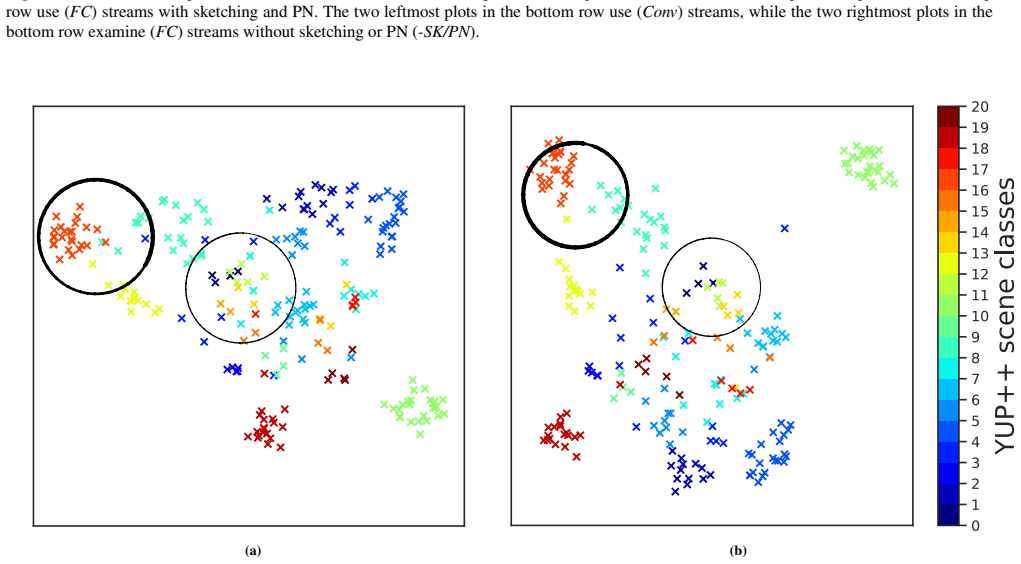
Brox, T., Malik, J.: Large displacement optical flow: Descriptor matching in variational motion estimation. TPAMI33(3), 500– 24 Lei Wang, Piotr Koniusz 00 (a) O O (b) Fig. 10:Visualization of the feature space from PredNet for DEEP-HAL (Fig. 10a) and DEEP-HAL+ODF (Fig. 10b) on...
2011
-
[11]
Bulat, A., Perez-Rua, J.M., Sudhakaran, S., Martinez, B., Tz- imiropoulos, G.: Space-time mixing attention for video trans- former. In: A. Beygelzimer, Y . Dauphin, P. Liang, J.W. Vaughan (eds.) Advances in Neural Information Processing Systems (2021). URLhttps://openreview.ne...
2021
-
[12]
Burda, Y ., Grosse, R.B., Salakhutdinov, R.: Importance weighted autoencoders. In: Y . Bengio, Y . LeCun (eds.) 4th International Conference on Learning Representations, ICLR 2016, San Juan, Puerto Rico, May 2-4, 2016, Conference Track Proceedings (2016). URLhttp://arxiv.org/a...
2016 arXiv
-
[13]
In: The IEEE Con- ference on Computer Vision and Pattern Recognition (CVPR) (2017) 4
Cao, Z., Simon, T., Wei, S.E., Sheikh, Y .: Realtime multi-person 2d pose estimation using part affinity fields. In: The IEEE Con- ference on Computer Vision and Pattern Recognition (CVPR) (2017) 4
2017
-
[14]
arXiv preprint arXiv:1808.01340 (2018) 13
Carreira, J., Noland, E., Banki-Horvath, A., Hillier, C., Zis- serman, A.: A short note about kinetics-600. arXiv preprint arXiv:1808.01340 (2018) 13
2018 arXiv
-
[15]
In: CVPR, pp
Carreira, J., Zisserman, A.: Quo Vadis, Action Recognition? A New Model and the Kinetics Dataset. In: CVPR, pp. 1–10. IEEE, Honolulu, HI, USA (2018) 1, 2, 4, 7, 16
2018
-
[16]
CVIU116(3), 396–410 (2012) 3
Chakraborty, B., Holte, M.B., Moeslund, T.B., Gonz `alez, J.: Se- lective spatio-temporal interest points. CVIU116(3), 396–410 (2012) 3
2012
-
[17]
In: Proceedings of the AAAI conference on artificial intelligence, pp
Chen, C., Fu, Z., Chen, Z., Jin, S., Cheng, Z., Jin, X., Hua, X.S.: Homm: Higher-order moment matching for unsupervised domain adaptation. In: Proceedings of the AAAI conference on artificial intelligence, pp. 3422–3429 (2020) 9
2020
-
[18]
In: The 16th Asian Conference on Machine Learning (Conference Track) (2024) 1, 2
Chen, Q., Wang, L., Koniusz, P., Gedeon, T.: Motion meets at- tention: Video motion prompts. In: The 16th Asian Conference on Machine Learning (Conference Track) (2024) 1, 2
2024
-
[19]
Proceedings of the AAAI Conference on Artificial Intelligence35(2), 1113–1122 (2021)
Chen, Z., Li, S., Yang, B., Li, Q., Liu, H.: Multi-scale spatial temporal graph convolutional network for skeleton-based action recognition. Proceedings of the AAAI Conference on Artificial Intelligence35(2), 1113–1122 (2021). URLhttps://ojs. aaai.org/index.php/AAAI/article/vi...
2021
-
[20]
In: Proceedings of the IEEE/CVF Conference on Com- puter Vision and Pattern Recognition (CVPR) (2020) 4
Cheng, K., Zhang, Y ., He, X., Chen, W., Cheng, J., Lu, H.: Skeleton-based action recognition with shift graph convolutional network. In: Proceedings of the IEEE/CVF Conference on Com- puter Vision and Pattern Recognition (CVPR) (2020) 4
2020
-
[22]
In: CVPR, pp
Cherian, A., Fernando, B., Harandi, M., Gould, S.: Generalized rank pooling for action recognition. In: CVPR, pp. 3222–3231. IEEE, Honolulu, HI, USA (2017) 13, 17
2017
-
[23]
In: W ACV , pp
Cherian, A., Koniusz, P., Gould, S.: Higher-order pooling of CNN features via kernel linearization for action recognition. In: W ACV , pp. 130–138. IEEE, Santa Rosa, CA, USA (2017). DOI 10.1109/W ACV .2017.22 2, 4
2017 doi
-
[24]
In: CVPR, pp
Cherian, A., Sra, S., Gould, S., Hartley, R.: Non-linear temporal subspace representations for activity recognition. In: CVPR, pp. 2197–2206. IEEE, Salt Lake City, UT, USA (2018). DOI 10. 1109/CVPR.2018.00234 2, 4, 13, 17
2018
-
[25]
In: The IEEE International Conference on Computer Vision (ICCV) (2019) 5
Choi, J., Chun, D., Kim, H., Lee, H.J.: Gaussian yolov3: An ac- curate and fast object detector using localization uncertainty for autonomous driving. In: The IEEE International Conference on Computer Vision (ICCV) (2019) 5
2019
-
[26]
In: Proceedings of the IEEE Conference on Com- puter Vision and Pattern Recognition (CVPR) (2017) 4
Chollet, F.: Xception: Deep learning with depthwise separable convolutions. In: Proceedings of the IEEE Conference on Com- puter Vision and Pattern Recognition (CVPR) (2017) 4
2017
-
[27]
In: CVPR, pp
Choutas, V ., Weinzaepfel, P., Revaud, J., Schmid, C.: PoTion: Pose motion representation for action recognition. In: CVPR, pp. 7024–7033. IEEE, Salt Lake City, UT, USA (2018) 2
2018
-
[28]
Cormode, G., Hadjieleftheriou, M.: Finding frequent items in data streams. Proc. VLDB Endow.1(2), 1530–1541 (2008). DOI 10.14778/1454159.1454225. URLhttp://dx.doi.org/ 10.14778/1454159.14542257
2008
-
[29]
In: ECCV Workshop, pp
Csurka, G., Dance, C.R., Fan, L., Willamowski, J., Bray, C.: Vi- sual categorization with bags of keypoints. In: ECCV Workshop, pp. 1–22. Springer Science+Business Media, Prague, Czech Re- public (2004) 1, 3, 6 Feature Hallucination for Self-supervised Action Recognition 25
2004
-
[30]
In: ECCV , pp
Dalal, N., Triggs, B., Schmid, C.: Human Detection Using Ori- ented Histogram of Flow and Appearance. In: ECCV , pp. 428–
-
[31]
In: ECCV , pp
Damen, D., Doughty, H., Farinella, G.M., Fidler, S., Furnari, A., Kazakos, E., Moltisanti, D., Munro, J., Perrett, T., Price, W., Wray, M.: Scaling egocentric vision: The epic-kitchens dataset. In: ECCV , pp. 1–17. Springer Science+Business Media, Munich, Germany (2018) 13, 18
2018
-
[32]
In: Proceedings of the IEEE/CVF Interna- tional Conference on Computer Vision (ICCV) (2019) 13, 18
Das, S., Dai, R., Koperski, M., Minciullo, L., Garattoni, L., Bre- mond, F., Francesca, G.: Toyota smarthome: Real-world activi- ties of daily living. In: Proceedings of the IEEE/CVF Interna- tional Conference on Computer Vision (ICCV) (2019) 13, 18
2019
-
[33]
Das, S., Sharma, S., Dai, R., Bremond, F., Thonnat, M.: Vpn: Learning video-pose embedding for activities of daily living (2020) 17, 18
2020
-
[34]
In: 2009 IEEE Conference on Computer Vision and Pattern Recognition, pp
Deng, J., Dong, W., Socher, R., Li, L.J., Li, K., Fei-Fei, L.: Ima- genet: A large-scale hierarchical image database. In: 2009 IEEE Conference on Computer Vision and Pattern Recognition, pp. 248–255 (2009). DOI 10.1109/CVPR.2009.5206848 4, 7
2009
-
[35]
In: The Thirteenth International Conference on Learning Represen- tations (2025)
Ding, D., Wang, L., Zhu, L., Gedeon, T., Koniusz, P.: Learnable expansion of graph operators for multi-modal feature fusion. In: The Thirteenth International Conference on Learning Represen- tations (2025). URLhttps://openreview.net/forum? id=SMZqIOSdlN2
2025
-
[37]
In: Com- panion Proceedings of the ACM Web Conference 2025, WWW ’25 Companion
Ding, X., Wang, L.: The journey of action recognition. In: Com- panion Proceedings of the ACM Web Conference 2025, WWW ’25 Companion. Association for Computing Machinery, New York, NY , USA (2025). DOI 10.1145/3701716.3717746. URL https://doi.org/10.1145/3701716.37177462
2025
-
[38]
In: ICCCN, pp
Doll ´ar, P., Rabaud, V ., Cottrell, G., Belongie, S.: Behavior recog- nition via sparse spatio-temporal features. In: ICCCN, pp. 65–
-
[39]
In: CVPR, pp
Donahue, J., Hendricks, L.A., Guadarrama, S., Rohrbach, M., Venugopalan, S., Darrell, T., Saenko, K.: Long-term recurrent convolutional networks for visual recognition and description. In: CVPR, pp. 2625–2634. IEEE, Boston, MA, USA (2015) 4
2015
-
[40]
In: 2018 IEEE/CVF Conference on Computer Vision and Pattern Recog- nition, pp
Dorta, G., Vicente, S., Agapito, L., Campbell, N.D.F., Simp- son, I.: Structured uncertainty prediction networks. In: 2018 IEEE/CVF Conference on Computer Vision and Pattern Recog- nition, pp. 5477–5485 (2018). DOI 10.1109/CVPR.2018.00574 5
2018
-
[41]
In: International Conference on Learning Representa- tions (2021)
Dosovitskiy, A., Beyer, L., Kolesnikov, A., Weissenborn, D., Zhai, X., Unterthiner, T., Dehghani, M., Minderer, M., Heigold, G., Gelly, S., Uszkoreit, J., Houlsby, N.: An image is worth 16x16 words: Transformers for image recognition at scale. In: International Conference on L...
2021
-
[42]
In: ICCV , pp
Fang, P., Zhou, J., Kumar Roy, S., Petersson, L., Harandi, M.: Bilinear attention networks for person retrieval. In: ICCV , pp. 8030–8039. IEEE, Seoul, Korea (2019) 4
2019
-
[43]
In: ICCV , pp
Feichtenhofer, C., Fan, H., Malik, J., He, K.: Slowfast networks for video recognition. In: ICCV , pp. 6202–6211. IEEE, Seoul, Korea (2019) 16, 17
2019
-
[44]
In: NIPS, pp
Feichtenhofer, C., Pinz, A., Wildes, R.P.: Spatiotemporal residual networks for video action recognition. In: NIPS, pp. 3468–3476. MIT Press, Barcelona, Spain (2016) 1, 4
2016
-
[45]
In: CVPR, pp
Feichtenhofer, C., Pinz, A., Wildes, R.P.: Temporal residual net- works for dynamic scene recognition. In: CVPR, pp. 4728–4737. IEEE, Honolulu, HI, USA (2017) 13, 17
2017
-
[46]
In: CVPR, pp
Fernando, B., Gavves, E., M., J.O., Ghodrati, A., Tuytelaars, T.: Modeling video evolution for action recognition. In: CVPR, pp. 5378–5387. IEEE, Boston, MA, USA (2015) 4
2015
-
[47]
In: ICML, vol
Fernando, B., Gould, S.: Learning end-to-end video classification with rank-pooling. In: ICML, vol. 48, pp. 1187–1196. ACM, New York City, NY , USA (2016) 2, 4
2016
-
[48]
Freeman, W.T., Roth, M.: Orientation histograms for hand ges- ture recognition. Tech. Rep. TR94-03, MERL - Mitsubishi Elec- tric Research Laboratories, Cambridge, MA 02139 (1994). URL http://www.merl.com/publications/TR94-03/1, 3
1994
-
[49]
In: IEEE/CVF Con- ference on Computer Vision and Pattern Recognition (CVPR) (2020) 5
Gao, R., Oh, T.H., Grauman, K., Torresani, L.: Listen to look: Action recognition by previewing audio. In: IEEE/CVF Con- ference on Computer Vision and Pattern Recognition (CVPR) (2020) 5
2020
-
[50]
TPAMI32(7), 1271–1283 (2010)
van Gemert, J.C., Veenman, C.J., Smeulders, A.W.M., Geuse- broek, J.M.: Visual word ambiguity. TPAMI32(7), 1271–1283 (2010). DOI 10.1109/TPAMI.2009.132. URLhttp://dx. doi.org/10.1109/TPAMI.2009.1323
2010
-
[51]
In: CVPR, pp
Ghadiyaram, D., Tran, D., Mahajan, D.: Large-scale weakly- supervised pre-training for video action recognition. In: CVPR, pp. 12046–12055. IEEE, Long Beach,California,USA (2019) 18
2019
-
[52]
In: Proceedings of the IEEE/CVF conference on computer vision and pattern recognition, pp
Girdhar, R., El-Nouby, A., Singh, M., Alwala, K.V ., Joulin, A., Misra, I.: Omnimae: Single model masked pretraining on im- ages and videos. In: Proceedings of the IEEE/CVF conference on computer vision and pattern recognition, pp. 10406–10417 (2023) 19
2023
-
[53]
In: ICCV , pp
Girshick, R.: Fast r-cnn. In: ICCV , pp. 1440–1448. IEEE, Santi- ago, Chile (2015) 4
2015
-
[54]
TPAMI38(1), 142–158 (2016) 4
Girshick, R., Donahue, J., Darrell, T., Malik, J.: Region-based convolutional networks for accurate object detection and seg- mentation. TPAMI38(1), 142–158 (2016) 4
2016
-
[55]
In: Proceedings of the IEEE international conference on computer vision, pp
Goyal, R., Ebrahimi Kahou, S., Michalski, V ., Materzynska, J., Westphal, S., Kim, H., Haenel, V ., Fruend, I., Yianilos, P., Mueller-Freitag, M., et al.: The” something something” video database for learning and evaluating visual common sense. In: Proceedings of the IEEE inte...
2017
-
[56]
In: CVPR, pp
Gu, C., Sun, C., Ross, D.A., V ondrick, C., Pantofaru, C., Li, Y ., Vijayanarasimhan, S., Toderici, G., Ricco, S., Sukthankar, R., Schmid, C., Malik, J.: Ava: A video dataset of spatio-temporally localized atomic visual actions. In: CVPR, pp. 6047–6056. IEEE, Salt Lake City, U...
2018
-
[57]
In: ECCV
Hadji, I., Wildes, R.P.: A new large scale dynamic texture dataset with application to ConvNet understanding. In: ECCV . Springer Science+Business Media, Munich, Germany (2018) 17
2018
-
[58]
In: ICCV , pp
He, K., Gkioxari, G., Doll ´ar, P., Girshick, R.B.: Mask r-cnn. In: ICCV , pp. 2980–2988. IEEE, Venice, Italy (2017) 4
2017
-
[59]
In: CVPR, pp
He, K., Zhang, X., Ren, S., Sun, J.: Deep residual learning for image recognition. In: CVPR, pp. 1–12. IEEE, Las Vegas, NV , USA (2016) 5
2016
-
[60]
In: 2016 IEEE Conference on Computer Vi- sion and Pattern Recognition (CVPR), pp
He, K., Zhang, X., Ren, S., Sun, J.: Deep residual learning for image recognition. In: 2016 IEEE Conference on Computer Vi- sion and Pattern Recognition (CVPR), pp. 770–778 (2016). DOI 10.1109/CVPR.2016.90 8
2016 doi
-
[61]
In: The IEEE Conference on Computer Vision and Pattern Recogni- tion (CVPR) (2019) 5
He, Y ., Zhu, C., Wang, J., Savvides, M., Zhang, X.: Bounding box regression with uncertainty for accurate object detection. In: The IEEE Conference on Computer Vision and Pattern Recogni- tion (CVPR) (2019) 5
2019
-
[62]
Artificial Intelligence17, 185–203 (1981) 4
Horn, B.K.P., Schunck, B.G.: Determining optical flow. Artificial Intelligence17, 185–203 (1981) 4
1981
-
[63]
In: Proc
Hou, Q., Cheng, M.M., Hu, X., Borji, A., Tu, Z., Torr, P.H.S.: Deeply supervised salient object detection with short connec- tions. In: Proc. IEEE Conf. Comp. Vis. Patt. Recogn., pp. 3203–
-
[64]
In: 2019 IEEE/CVF International Conference on Computer Vi- sion (ICCV), pp
Howard, A., Sandler, M., Chen, B., Wang, W., Chen, L., Tan, M., Chu, G., Vasudevan, V ., Zhu, Y ., Pang, R., Adam, H., Le, Q.: Searching for mobilenetv3. In: 2019 IEEE/CVF International Conference on Computer Vi- sion (ICCV), pp. 1314–1324. IEEE Computer Society, Los Alamitos,...
2019
-
[65]
Proceedings of the AAAI Conference on Artificial In- telligence34(07), 11045–11052 (2020)
Huang, L., Huang, Y ., Ouyang, W., Wang, L.: Part-level graph convolutional network for skeleton-based action recog- nition. Proceedings of the AAAI Conference on Artificial In- telligence34(07), 11045–11052 (2020). DOI 10.1609/aaai. v34i07.6759. URLhttps://ojs.aaai.org/index....
2020 doi
-
[66]
H ¨ullermeier, E., Waegeman, W.: Aleatoric and epistemic un- certainty in machine learning: an introduction to concepts and methods. Mach. Learn.110(3), 457–506 (2021). DOI 10.1007/ s10994-021-05946-3. URLhttps://doi.org/10.1007/ s10994-021-05946-35
2021
-
[67]
In: AISTATS, pp
Huo, Z., Pakbin, A., Chen, X., Hurley, N.C., Yuan, Y ., Qian, X., Wang, Z., Huang, S., Mortazavi, B.: Uncertainty quantifi- cation for deep context-aware mobile activity recognition and unknown context discovery. In: AISTATS, pp. 3894–3904 (2020). URLhttp://proceedings.mlr.pre...
2020
-
[68]
CoRRabs/1602.07360 (2016)
Iandola, F.N., Moskewicz, M.W., Ashraf, K., Han, S., Dally, W.J., Keutzer, K.: Squeezenet: Alexnet-level accuracy with 50x fewer parameters and<1mb model size. CoRRabs/1602.07360 (2016). URLhttp://arxiv.org/abs/1602.073604
2016 arXiv
-
[69]
Indrayan, A.: Medical biostatistics, 2nd ed. edn. Chapman & Hall/CRC,, Boca Raton : (c2008.). URLhttp://www.loc. gov/catdir/toc/ecip0723/2007030353.html5
-
[70]
JMLR5, 819–844 (2004) 7
Jebara, T., Kondor, R., Howard, A.: Probability product kernels. JMLR5, 819–844 (2004) 7
2004
-
[71]
In: CVPR, pp
J ´egou, H., Douze, M., Schmid, C.: On the Burstiness of Visual Elements. In: CVPR, pp. 1169–1176. IEEE, Long Beach,alifornia, USA (2009) 5
2009
-
[72]
URLhttp://dl.acm
IEEE, Honolulu, HI, USA (2005). URLhttp://dl.acm. org/citation.cfm?id=1259587.12598303
2005
-
[73]
In: CVPR, pp
Karpathy, A., Toderici, G., Shetty, S., Leung, T., Sukthankar, R., Fei-Fei, L.: Large-scale video classification with convolutional neural networks. In: CVPR, pp. 1725–1732. IEEE, Columbus, OH, USA (2014). DOI 10.1109/CVPR.2014.223. URLhttps: //doi.org/10.1109/CVPR.2014.2234
2014
-
[74]
arXiv preprint arXiv:1705.06950 (2017) 13
Kay, W., Carreira, J., Simonyan, K., Zhang, B., Hillier, C., Vi- jayanarasimhan, S., Viola, F., Green, T., Back, T., Natsev, P., et al.: The kinetics human action video dataset. arXiv preprint arXiv:1705.06950 (2017) 13
2017 arXiv
-
[75]
TPAMI35, 221–231 (2010) 4
Ji, S., Xu, W., Yang, M., Yu, K.: 3D convolutional neural net- works for human action recognition. TPAMI35, 221–231 (2010) 4
2010
-
[76]
In: Proceedings of the IEEE Conference on Computer Vision and Pattern Recognition (CVPR) (2018) 5
Kendall, A., Gal, Y ., Cipolla, R.: Multi-task learning using un- certainty to weigh losses for scene geometry and semantics. In: Proceedings of the IEEE Conference on Computer Vision and Pattern Recognition (CVPR) (2018) 5
2018
-
[77]
Kingma, D.P., Welling, M.: Auto-encoding variational bayes. In: Y . Bengio, Y . LeCun (eds.) 2nd International Conference on Learning Representations, ICLR 2014, Banff, AB, Canada, April 14-16, 2014, Conference Track Proceedings (2014). URL http://arxiv.org/abs/1312.611411
2014
-
[78]
Guyon, U.V
Kendall, A., Gal, Y .: What uncertainties do we need in bayesian deep learning for computer vision? In: I. Guyon, U.V . Luxburg, S. Bengio, H. Wallach, R. Fergus, S. Vishwanathan, R. Garnett (eds.) Advances in Neural Information Processing Systems, vol. 30. Curran Associates, ...
2017
-
[79]
DOI https://doi.org/10.1016/j.strusafe.2008.06.020
Kiureghian, A.D., Ditlevsen, O.: Aleatory or epistemic? does it matter? Structural Safety31(2), 105–112 (2009). DOI https://doi.org/10.1016/j.strusafe.2008.06.020. URL https://www.sciencedirect.com/science/ article/pii/S0167473008000556. Risk Acceptance and Risk Communication 5
2009 doi
-
[80]
In: BMCV , pp
Kl ¨aser, A., Marszalek, M., Schmid, C.: A Spatio-Temporal De- scriptor Based on 3D-Gradients. In: BMCV , pp. 1–10. BMV A, Leeds, UK (2008) 1, 3
2008
-
[81]
In: International Conference on Learning Representations (ICLR) (2017) 4
Kipf, T.N., Welling, M.: Semi-supervised classification with graph convolutional networks. In: International Conference on Learning Representations (ICLR) (2017) 4
2017
-
[82]
In: ECCV , pp
Koniusz, P., Cherian, A., Porikli, F.: Tensor representations via kernel linearization for action recognition from 3D skeletons. In: ECCV , pp. 1–14. Springer Science+Business Media, Ams- terdam, The Netherlands (2016) 4, 9
2016
-
[83]
In: ICIP, pp
Koniusz, P., Mikolajczyk, K.: Soft Assignment of Visual Words as Linear Coordinate Coding and Optimisation of its Reconstruc- tion Error. In: ICIP, pp. 2461–2464. IEEE, Brussels, Belgium (2011) 3
2011
-
[84]
In: Proceedings of the IEEE/CVF conference on computer vision and pattern recognition, pp
Kondratyuk, D., Yuan, L., Li, Y ., Zhang, L., Tan, M., Brown, M., Gong, B.: Movinets: Mobile video networks for efficient video recognition. In: Proceedings of the IEEE/CVF conference on computer vision and pattern recognition, pp. 16020–16030 (2021) 4, 17
2021
-
[85]
Technical Report1(1), 1–20 (2013) 5
Koniusz, P., Yan, F., Gosselin, P.H., Mikolajczyk, K.: Higher- order Occurrence Pooling on Mid- and Low-level Features: Vi- sual Concept Detection. Technical Report1(1), 1–20 (2013) 5
2013
-
[86]
TPAMI39(2), 313–326 (2017) 4, 5
Koniusz, P., Yan, F., Gosselin, P.H., Mikolajczyk, K.: Higher- order occurrence pooling for bags-of-words: Visual concept de- tection. TPAMI39(2), 313–326 (2017) 4, 5
2017
-
[87]
In: IEEE Transactions on Pattern Analysis and Machine Intelligence
Koniusz, P., Wang, L., Cherian, A.: Tensor representations for action recognition. In: IEEE Transactions on Pattern Analysis and Machine Intelligence. IEEE (2020) 4, 9
2020
-
[88]
In: IEEE Transac- tions on Pattern Analysis and Machine Intelligence
Koniusz, P., Zhang, H.: Power normalizations in fine-grained im- age, few-shot image and graph classification. In: IEEE Transac- tions on Pattern Analysis and Machine Intelligence. IEEE (2020) 9
2020
-
[89]
In: CVPR, pp
Koniusz, P., Zhang, H., Porikli, F.: A deeper look at power nor- malizations. In: CVPR, pp. 5774–5783. IEEE, Salt Lake City, UT, USA (2018) 5, 6
2018
-
[90]
CVIU117, 479–492 (2012)
Koniusz, P., Yan, F., Mikolajczyk, K.: Comparison of Mid- Level Feature Coding Approaches And Pooling Strategies in Vi- sual Concept Detection. CVIU117, 479–492 (2012). DOI 10.1016/j.cviu.2012.10.010 3, 5, 6
2012 doi
-
[91]
2074–2080
Kozlov, A., Andronov, V ., Gritsenko, Y .: Lightweight Network Architecture for Real-Time Action Recognition, p. 2074–2080. Association for Computing Machinery, New York, NY , USA (2020). URLhttps://doi.org/10.1145/3341105. 33739062, 4, 8
2020 doi
-
[92]
In: ICCV , pp
Kuehne, H., Jhuang, H., Garrote, E., Poggio, T., Serre, T.: HMDB: A large video database for human motion recognition. In: ICCV , pp. 2556–2563. IEEE, Barcelona, Spain (2011) 13
2011
-
[93]
Korban, M., Li, X.: Ddgcn: A dynamic directed graph convolu- tional network for action recognition. In: A. Vedaldi, H. Bischof, T. Brox, J.M. Frahm (eds.) Computer Vision – ECCV 2020, pp. 761–776. Springer International Publishing, Cham (2020) 4
2020
-
[94]
IJCV64(2-3), 107– 123 (2005)
Laptev, I.: On space-time interest points. IJCV64(2-3), 107– 123 (2005). DOI 10.1007/s11263-005-1838-7. URLhttp: Feature Hallucination for Self-supervised Action Recognition 27 //dx.doi.org/10.1007/s11263-005-1838-73
2005 doi
-
[95]
Li, C., Su, B., Wang, J., Zhang, Q.: Human action recognition using multi-velocity STIPs and motion energy orientation his- togram. J. Inf. Sci. Eng.30, 295–312 (2014) 3
2014
-
[96]
Kumar, D., Kumar, C., Seah, C., Xia, S., Shao, M.: Finding achilles’ heel: Adversarial attack on multi-modal action recog- nition. In: C.W. Chen, R. Cucchiara, X. Hua, G. Qi, E. Ricci, Z. Zhang, R. Zimmermann (eds.) MM, pp. 3829–3837. ACM, Seattle, United States (2020). DOI 10...
2020
-
[97]
In: The IEEE Conference on Computer Vision and Pattern Recognition (CVPR) (2019) 4
Li, M., Chen, S., Chen, X., Zhang, Y ., Wang, Y ., Tian, Q.: Actional-structural graph convolutional networks for skeleton- based action recognition. In: The IEEE Conference on Computer Vision and Pattern Recognition (CVPR) (2019) 4
2019
-
[98]
Lin, T.Y ., Maire, M., Belongie, S., Hays, J., Perona, P., Ramanan, D., Doll´ar, P., Zitnick, C.L.: Microsoft coco: Common objects in context. In: D. Fleet, T. Pajdla, B. Schiele, T. Tuytelaars (eds.) Computer Vision – ECCV 2014, pp. 740–755. Springer Interna- tional Publishin...
2014
-
[99]
In: MM, pp
Li, J., Wei, P., Zhang, Y ., Zheng, N.: A slow-i-fast-p architecture for compressed video action recognition. In: MM, pp. 2039–
-
[100]
Liu, Z., Gao, G., Qin, A.K., Wu, T., Liu, C.H.: Action recogni- tion with bootstrapping based long-range temporal context at- tention. In: L. Amsaleg, B. Huet, M.A. Larson, G. Gravier, H. Hung, C. Ngo, W.T. Ooi (eds.) MM, pp. 583–591. ACM, Nice, France (2019). DOI 10.1145/3343...
2019
-
[101]
arXiv preprint arXiv:2106.13230 (2021) 2, 4
Liu, Z., Ning, J., Cao, Y ., Wei, Y ., Zhang, Z., Lin, S., Hu, H.: Video swin transformer. arXiv preprint arXiv:2106.13230 (2021) 2, 4
2021 arXiv
-
[102]
CoRRabs/2112.06183(2021)
Lu, C., Koniusz, P.: Few-shot keypoint detection with uncertainty learning for unseen species. CoRRabs/2112.06183(2021). URL https://arxiv.org/abs/2112.061835
2021 arXiv
-
[103]
In: ICCV , pp
Lingqiao, L., Wang, L., Liu, X.: In Defence of Soft-assignment Coding. In: ICCV , pp. 2486–2493. IEEE, Barcelona, Spain (2011) 3
2011
-
[104]
In: NIPS, pp
Mairal, J., Koniusz, P., Harchaoui, Z., Schmid, C.: Convolutional kernel networks. In: NIPS, pp. 1–9. MIT Press, Montreal, Que- bec, Canada (2014) 10
2014
-
[105]
Matthies, H.G.: Quantifying uncertainty: Modern computational representation of probability and applications. In: A. Ibrahimbe- govic, I. Kozar (eds.) Extreme Man-Made and Natural Hazards in Dynamics of Structures, pp. 105–135. Springer Netherlands, Dordrecht (2007) 5
2007
-
[106]
The Journal of Open Source Software3(29), 861 (2018) 22
McInnes, L., Healy, J., Saul, N., Grossberger, L.: Umap: Uniform manifold approximation and projection. The Journal of Open Source Software3(29), 861 (2018) 22
2018
-
[107]
In: Proceedings of the European Conference on Computer Vision (ECCV) (2018) 4
Ma, N., Zhang, X., Zheng, H.T., Sun, J.: Shufflenet v2: Practical guidelines for efficient cnn architecture design. In: Proceedings of the European Conference on Computer Vision (ECCV) (2018) 4
2018
-
[108]
arXiv preprint arXiv:1804.03641 (2018) 5
Owens, A., Efros, A.A.: Audio-visual scene analysis with self-supervised multisensory features. arXiv preprint arXiv:1804.03641 (2018) 5
2018 arXiv
-
[109]
In: The 32nd British Ma- chine Vision Conference (BMVC) (2021) 4
Paoletti, G., Cavazza, J., Beyan, C., Del Bue, A.: Unsupervised Human Action Recognition with Skeletal Graph Laplacian and Self-Supervised Viewpoints Invariance. In: The 32nd British Ma- chine Vision Conference (BMVC) (2021) 4
2021
-
[110]
IJCV67, 141–158 (2006) 4
Papenberg, N., Bruhn, A., Brox, T., Didas, S., Weickert, J.: Highly accurate optic flow computation with theoretically jus- tified warping. IJCV67, 141–158 (2006) 4
2006
-
[111]
In: 2021 IEEE/CVF International Confer- ence on Computer Vision Workshops (ICCVW), pp
Neimark, D., Bar, O., Zohar, M., Asselmann, D.: Video trans- former network. In: 2021 IEEE/CVF International Confer- ence on Computer Vision Workshops (ICCVW), pp. 3156–3165 (2021). DOI 10.1109/ICCVW54120.2021.00355 2, 4
2021
-
[112]
In: CVPR, vol
Perronnin, F., Dance, C.: Fisher kernels on visual vocabularies for image categorization. In: CVPR, vol. 0, pp. 1–8. IEEE, Min- neapolis, Minnesota, USA (2007) 1, 3, 6
2007
-
[113]
In: ECCV , pp
Perronnin, F., S ´anchez, J., Mensink, T.: Improving the Fisher Kernel for Large-Scale Image Classification. In: ECCV , pp. 143–
-
[114]
In: ACM SIGKDD, pp
Pham, N., Pagh, R.: Fast and scalable polynomial ker- nels via explicit feature maps. In: ACM SIGKDD, pp. 239–247. ACM, Chicago, USA (2013). DOI 10.1145/ 2487575.2487591. URLhttp://doi.acm.org/10. 1145/2487575.24875917
2013
-
[115]
Advances in neural information processing systems34, 12493–12506 (2021) 2, 4, 19
Patrick, M., Campbell, D., Asano, Y ., Misra, I., Metze, F., Feicht- enhofer, C., Vedaldi, A., Henriques, J.F.: Keeping your eye on the ball: Trajectory attention in video transformers. Advances in neural information processing systems34, 12493–12506 (2021) 2, 4, 19
2021
-
[116]
In: Pro- ceedings of the IEEE/CVF Conference on Computer Vision and Pattern Recognition, pp
Piergiovanni, A., Kuo, W., Angelova, A.: Rethinking video vits: Sparse video tubes for joint image and video learning. In: Pro- ceedings of the IEEE/CVF Conference on Computer Vision and Pattern Recognition, pp. 2214–2224 (2023) 2, 4
2023
-
[117]
In: Proceedings of the IEEE/CVF Con- ference on Computer Vision and Pattern Recognition (CVPR), pp
Piergiovanni, A., Ryoo, M.S.: Recognizing actions in videos from unseen viewpoints. In: Proceedings of the IEEE/CVF Con- ference on Computer Vision and Pattern Recognition (CVPR), pp. 4124–4132 (2021) 18
2021
-
[118]
IEEE Transactions on Neural Networks and Learning Systems35(4), 4783–4797 (2024)
Qin, Z., Liu, Y ., Ji, P., Kim, D., Wang, L., McKay, R.I., Anwar, S., Gedeon, T.: Fusing higher-order features in graph neural net- works for skeleton-based action recognition. IEEE Transactions on Neural Networks and Learning Systems35(4), 4783–4797 (2024). DOI 10.1109/TNNLS....
2024
-
[119]
In: CVPR, pp
Redmon, J., Divvala, S., Girshick, R., Farhadi, A.: You only look once: Unified, real-time object detection. In: CVPR, pp. 779–
-
[120]
In: ICCV , pp
Piergiovanni, A., Angelova, A., Toshev, A., Ryoo, M.S.: Evolv- ing space-time neural architectures for videos. In: ICCV , pp. 1793–1802. IEEE, Seoul, Korea (2019) 16
2019
-
[121]
In: CVPR, pp
Revaud, J., Weinzaepfel, P., Harchaoui, Z., Schmid, C.: EpicFlow: Edge-Preserving Interpolation of Correspondences for Optical Flow. In: CVPR, pp. 1164–1172. IEEE, Boston, MA, USA (2015) 4
2015
-
[122]
In: CVPR, pp
Rohrbach, M., Amin, S., Andriluka, M., Schiele, B.: A database for fine grained activity detection of cooking activities. In: CVPR, pp. 1194–1201. IEEE, Providence, Rhode Island (2012) 13
2012
-
[123]
IJCV115(3), 211–252 (2015)
Russakovsky, O., Deng, J., Su, H., Krause, J., Satheesh, S., Ma, S., Huang, Z., Karpathy, A., Khosla, A., Bernstein, M., Berg, A.C., Fei-Fei, L.: ImageNet large scale visual recogni- tion challenge. IJCV115(3), 211–252 (2015). DOI 10.1007/ s11263-015-0816-y 5
2015
-
[124]
In: ECCV , pp
Ryoo, M.S., Piergiovanni, A., Kangaspunta, J., Angelova, A.: Assemblenet++: Assembling modality representations via at- tention connections. In: ECCV , pp. 1–19. Springer Sci- ence+Business Media, Glasgow, UK (2020) 2, 4, 8, 17
2020
-
[125]
In: ICLR, pp
Ryoo, M.S., Piergiovanni, A., Tan, M., Angelova, A.: Assem- blenet: Searching for multi-stream neural connectivity in video architectures. In: ICLR, pp. 1–15. ICLR, Addis Ababa, Ethiopia (2020) 2, 4, 8, 16, 17
2020
-
[126]
In: NIPS, pp
Ren, S., He, K., Girshick, R., Sun, J.: Faster R-CNN: Towards real-time object detection with region proposal networks. In: NIPS, pp. 91–99. MIT Press, Montreal, Canada (2015) 3, 4, 5, 13
2015
-
[127]
In: MM, pp
Scovanner, P., Ali, S., Shah, M.: A 3-Dimentional SIFT Descrip- tor and its Application to Action Recognition. In: MM, pp. 357–
-
[128]
Seo, Y .M., Choi, Y .S.: Graph Convolutional Networks for Skeleton-Based Action Recognition with LSTM Using Tool- Information, p. 986–993. Association for Computing Machinery, 28 Lei Wang, Piotr Koniusz New York, NY , USA (2021). URLhttps://doi.org/10. 1145/3412841.34419744
2021
-
[129]
In: 2019 IEEE/CVF Conference on Computer Vision and Pattern Recognition (CVPR), pp
Shi, L., Zhang, Y ., Cheng, J., Lu, H.: Two-stream adaptive graph convolutional networks for skeleton-based action recog- nition. In: 2019 IEEE/CVF Conference on Computer Vision and Pattern Recognition (CVPR), pp. 12018–12027 (2019). DOI 10.1109/CVPR.2019.01230 4
2019
-
[130]
In: CVPR (2019) 4
Shi, L., Zhang, Y ., Cheng, J., Lu, H.: Two-stream adaptive graph convolutional networks for skeleton-based action recognition. In: CVPR (2019) 4
2019
-
[131]
In: CVPR, pp
Shotton, J., Fitzgibbon, A., Cook, M., Sharp, T., Finocchio, M., Moore, R., Kipman, A., Blake, A.: Real-Time Human Pose Recognition in Parts from Single Depth Images. In: CVPR, pp. 1297–1304 (2011) 4
2011
-
[132]
In: The IEEE Conference on Computer Vision and Pattern Recognition (CVPR) (2018) 8
Sandler, M., Howard, A., Zhu, M., Zhmoginov, A., Chen, L.C.: Mobilenetv2: Inverted residuals and linear bottlenecks. In: The IEEE Conference on Computer Vision and Pattern Recognition (CVPR) (2018) 8
2018
-
[133]
In: NIPS, pp
Simonyan, K., Zisserman, A.: Two-stream convolutional net- works for action recognition in videos. In: NIPS, pp. 568–576. MIT Press, Montreal, Quebec, Canada (2014) 1, 4
2014
-
[134]
ICCV2, 1470–1477 (2003) 1, 3, 6
Sivic, J., Zisserman, A.: Video Google: A text retrieval approach to object matching in videos. ICCV2, 1470–1477 (2003) 1, 3, 6
2003
-
[135]
In: 2024 IEEE/CVF Conference on Computer Vision and Pattern Recognition (CVPR), pp
Srivastava, S., Sharma, G.: Omnivec2 - a novel transformer based network for large scale multimodal and multitask learning. In: 2024 IEEE/CVF Conference on Computer Vision and Pattern Recognition (CVPR), pp. 27402– 27414. IEEE Computer Society, Los Alamitos, CA, USA (2024). DO...
2024
-
[136]
In: 2012 IEEE RO-MAN: The 21st IEEE International Sympo- sium on Robot and Human Interactive Communication, pp
Stork, J.A., Spinello, L., Silva, J., Arras, K.O.: Audio-based hu- man activity recognition using non-markovian ensemble voting. In: 2012 IEEE RO-MAN: The 21st IEEE International Sympo- sium on Robot and Human Interactive Communication, pp. 509– 514 (2012). DOI 10.1109/ROMAN.2...
2012
-
[137]
In: Proceedings of the IEEE/CVF International Conference on Computer Vision (ICCV) (2019) 5
Subedar, M., Krishnan, R., Meyer, P.L., Tickoo, O., Huang, J.: Uncertainty-aware audiovisual activity recognition using deep bayesian variational inference. In: Proceedings of the IEEE/CVF International Conference on Computer Vision (ICCV) (2019) 5
2019
-
[138]
In: AAAI, pp
Szegedy, C., Ioffe, S., Vanhoucke, V ., Alemi, A.A.: Inception- v4, inception-resnet and the impact of residual connections on learning. In: AAAI, pp. 4278–4284. AAAI Press, San Francisco,CA,USA (2017). URLhttp://dl.acm.org/ citation.cfm?id=3298023.32981885
2017
-
[139]
In: ECCV , pp
Sigurdsson, G.A., Varol, G., Wang, X., Farhadi, A., Laptev, I., Gupta, A.: Hollywood in homes: Crowdsourcing data collection for activity understanding. In: ECCV , pp. 1–17. Springer Sci- ence+Business Media, Amsterdam, The Netherlands (2016) 13
2016
-
[140]
Tan, M., Le, Q.: EfficientNet: Rethinking model scaling for con- volutional neural networks. In: K. Chaudhuri, R. Salakhut- dinov (eds.) Proceedings of the 36th International Conference on Machine Learning,Proceedings of Machine Learning Re- search, vol. 97, pp. 6105–6114. PML...
2019
-
[141]
In: IJCAI, pp
Tang, Y ., Ma, L., Zhou, L.: Hallucinating optical flow features for video classification. In: IJCAI, pp. 926–932. IJCAI, Macao, China (2019) 2
2019
-
[142]
Linux Journal 2006(146), 10 (2006) 11
Tomar, S.: Converting video formats with ffmpeg. Linux Journal 2006(146), 10 (2006) 11
2006
-
[143]
Advances in neural information processing systems 35, 10078–10093 (2022) 2, 4, 8
Tong, Z., Song, Y ., Wang, J., Wang, L.: Videomae: Masked au- toencoders are data-efficient learners for self-supervised video pre-training. Advances in neural information processing systems 35, 10078–10093 (2022) 2, 4, 8
2022
-
[144]
In: ICCV , pp
Tran, D., Bourdev, L., Fergus, R., Torresani, L., Paluri, M.: Learning Spatiotemporal Features with 3D Convolutional Net- works. In: ICCV , pp. 4489–4497. IEEE, Santiago, Chile (2015) 1, 4
2015
-
[145]
In: Proceedings of the IEEE conference on Computer Vision and Pattern Recognition, pp
Tran, D., Wang, H., Torresani, L., Ray, J., LeCun, Y ., Paluri, M.: A closer look at spatiotemporal convolutions for action recogni- tion. In: Proceedings of the IEEE conference on Computer Vision and Pattern Recognition, pp. 6450–6459 (2018) 8
2018
-
[146]
In: CVPR, pp
Szegedy, C., Vanhoucke, V ., Ioffe, S., Shlens, J., Wojna, Z.: Rethinking the inception architecture for computer vision. In: CVPR, pp. 2818–2826. IEEE, Las Vegas, NV , USA (2016) 5
2016
-
[147]
TPAMI40(6), 1510–1517 (2018) 4
Varol, G., Laptev, I., Schmid, C.: Long-term temporal convolu- tions for action recognition. TPAMI40(6), 1510–1517 (2018) 4
2018
-
[148]
In: CVPR, pp
Wang, H., Kl ¨aser, A., Schmid, C., Cheng-Lin, L.: Action Recog- nition by Dense Trajectories. In: CVPR, pp. 3169–3176. IEEE, Colorado Springs, CO, USA (2011) 1, 3
2011
-
[149]
IJCV 103, 60–79 (2013) 1, 3
Wang, H., Kl ¨aser, A., Schmid, C., Liu, C.L.: Dense Trajectories and Motion Boundary Descriptors for Action Recognition. IJCV 103, 60–79 (2013) 1, 3
2013
-
[150]
In: ICCV , pp
Wang, H., Schmid, C.: Action Recognition with Improved Tra- jectories. In: ICCV , pp. 3551–3558. IEEE, Sydney, Australia (2013) 1, 2, 3, 10
2013
-
[151]
In: ECCV , pp
Wang, J., Cherian, A.: Learning discriminative video representa- tions using adversarial perturbations. In: ECCV , pp. 716–733. Springer Science+Business Media, Munich, Germany (2018). DOI 10.1007/978-3-030-01225-0\ 42. URLhttps://doi. org/10.1007/978-3-030-01225-0_422, 4, 16, 17
2018 doi
-
[152]
Master’s thesis, School of the Computer Sci- ence and Software Engineering, The University of Western Aus- tralia (2017) 1
Wang, L.: Analysis and evaluation of Kinect-based action recog- nition algorithms. Master’s thesis, School of the Computer Sci- ence and Software Engineering, The University of Western Aus- tralia (2017) 1
2017
-
[153]
In: ICMR, pp
Uijlings, J.R., Duta, I.C., Rostamzadeh, N., Sebe, N.: Realtime Video Classification using Dense HOF/HOG. In: ICMR, pp. 145–152. ACM, New York, NY , USA (2014) 3
2014
-
[154]
In: Proceedings of the IEEE/CVF Conference on Computer Vision and Pattern Recognition, pp
Wang, L., Huang, B., Zhao, Z., Tong, Z., He, Y ., Wang, Y ., Wang, Y ., Qiao, Y .: Videomae v2: Scaling video masked autoencoders with dual masking. In: Proceedings of the IEEE/CVF Conference on Computer Vision and Pattern Recognition, pp. 14549–14560 (2023) 2, 4, 8, 19
2023
-
[155]
TIP29(1), 15–28 (2019)
Wang, L., Huynh, D.Q., Koniusz, P.: A comparative review of recent kinect-based action recognition algorithms. TIP29(1), 15–28 (2019). DOI 10.1109/TIP.2019.2925285 1
2019
-
[156]
Springer Science+Business Media, Heraklion, Crete (2010) 1, 3, 6
2010
-
[157]
4324–4333
Wang, L., Koniusz, P.: Self-Supervising Action Recognition by Statistical Moment and Subspace Descriptors, p. 4324–4333. Association for Computing Machinery, New York, NY , USA (2021). URLhttps://doi.org/10.1145/3474085. 34755722, 4
2021 doi
-
[158]
In: Proceedings of the Asian Conference on Computer Vision, pp
Wang, L., Koniusz, P.: Temporal-viewpoint transportation plan for skeletal few-shot action recognition. In: Proceedings of the Asian Conference on Computer Vision, pp. 4176–4193 (2022) 4
2022
-
[159]
In: European Conference on Computer Vision, pp
Wang, L., Koniusz, P.: Uncertainty-dtw for time series and se- quences. In: European Conference on Computer Vision, pp. 176–
-
[160]
Wang, L.: Robust human action modelling. Ph.D. thesis, The Australian National University (Australia) (2023) 1, 2, 4
2023
-
[161]
In: ICASSP 2024-2024 IEEE International Confer- ence on Acoustics, Speech and Signal Processing (ICASSP), pp
Wang, L., Koniusz, P.: Flow dynamics correction for action recognition. In: ICASSP 2024-2024 IEEE International Confer- ence on Acoustics, Speech and Signal Processing (ICASSP), pp. 3795–3799. IEEE (2024) 4
2024
-
[162]
In: ICCV , pp
Wang, L., Koniusz, P., Huynh, D.Q.: Hallucinating IDT descrip- tors and I3D optical flow features for action recognition with cnns. In: ICCV , pp. 8697–8707. IEEE, Seoul, Korea (2019) 2, 3, 4, 10, 16, 17, 22 Feature Hallucination for Self-supervised Action Recognition 29
2019
-
[163]
In: IEEE ICIP, pp
Wang, L., Huynh, D.Q., Mansour, M.R.: Loss switching fusion with similarity search for video classification. In: IEEE ICIP, pp. 974–978 (2019). DOI 10.1109/ICIP.2019.8803051 1
2019
-
[164]
International Journal of Com- puter Vision pp
Wang, L., Liu, J., Zheng, L., Gedeon, T., Koniusz, P.: Meet jeanie: a similarity measure for 3d skeleton sequences via temporal-viewpoint alignment. International Journal of Com- puter Vision pp. 1–32 (2024) 4
2024
-
[165]
In: ICASSP 2024-2024 IEEE International Conference on Acoustics, Speech and Signal Pro- cessing (ICASSP), pp
Wang, L., Sun, K., Koniusz, P.: High-order tensor pooling with attention for action recognition. In: ICASSP 2024-2024 IEEE International Conference on Acoustics, Speech and Signal Pro- cessing (ICASSP), pp. 3885–3889. IEEE (2024) 2, 4
2024
-
[166]
In: ECCV , pp
Wang, L., Wang, L., Lu, H., Zhang, P., Ruan, X.: Saliency detec- tion with recurrent fully convolutional networks. In: ECCV , pp. 825–841. Springer Science+Business Media, Amsterdam, The Netherlands (2016). DOI 10.1007/978-3-319-46493-0 50 5
2016 doi
-
[167]
In: Proceedings of the IEEE/CVF Conference on Computer Vision and Pattern Recog- nition, pp
Wang, L., Koniusz, P.: 3mformer: Multi-order multi-mode trans- former for skeletal action recognition. In: Proceedings of the IEEE/CVF Conference on Computer Vision and Pattern Recog- nition, pp. 5620–5631 (2023) 4
2023
-
[168]
CoRRabs/2109.08472(2021)
Wang, M., Xing, J., Liu, Y .: Actionclip: A new paradigm for video action recognition. CoRRabs/2109.08472(2021). URL https://arxiv.org/abs/2109.0847217
2021 arXiv
-
[169]
In: Proceedings of the 13th ACM International Confer- ence on PErvasive Technologies Related to Assistive Environ- ments, PETRA ’20
Wang, W., Seraj, F., Havinga, P.J.M.: A sound-based crowd ac- tivity recognition with neural network based regression mod- els. In: Proceedings of the 13th ACM International Confer- ence on PErvasive Technologies Related to Assistive Environ- ments, PETRA ’20. Association for ...
2020
-
[170]
arXiv preprint arXiv:2112.12668 (2021) 4
Wang, L., Liu, J., Koniusz, P.: 3d skeleton-based few-shot ac- tion recognition with jeanie is not so na ¨ıve. arXiv preprint arXiv:2112.12668 (2021) 4
2021 arXiv
-
[171]
In: ICML, pp
Weinberger, K., Dasgupta, A., Langford, J., Smola, A., Atten- berg, J.: Feature hashing for large scale multitask learning. In: ICML, pp. 1113–1120. ACM, Montreal, Canada (2009). DOI 10.1145/1553374.1553516. URLhttp://doi.acm.org/ 10.1145/1553374.15535167
2009
-
[172]
In: ICCV , pp
Weinzaepfel, P., Revaud, J., Harchaoui, Z., Schmid, C.: Deep- Flow: Large displacement optical flow with deep matching. In: ICCV , pp. 1–8. IEEE, Sydney, NSW, Australia (2013). URL http://hal.inria.fr/hal-008735924
2013
-
[173]
In: ECCV , pp
Willems, G., Tuytelaars, T., Gool, L.V .: An efficient dense and scale-invariant spatio-temporal interest point detector. In: ECCV , pp. 650–663. Springer Science+Business Media, Marseille, France (2008). DOI 10.1007/978-3-540-88688-4 48. URL https://doi.org/10.1007/978-3-540-...
2008 doi
-
[174]
In: Forty-first International Conference on Machine Learning (2024) 1
Wang, L., Yuan, X., Gedeon, T., Zheng, L.: Taylor videos for action recognition. In: Forty-first International Conference on Machine Learning (2024) 1
2024
-
[175]
In: 2010 International Confer- ence on Digital Image Computing: Techniques and Applications, pp
Wu, Q., Wang, Z., Deng, F., Feng, D.D.: Realistic human action recognition with audio context. In: 2010 International Confer- ence on Digital Image Computing: Techniques and Applications, pp. 288–293 (2010). DOI 10.1109/DICTA.2010.57 5
2010 doi
-
[176]
In: Proceedings of the European Conference on Computer Vision (ECCV) (2018) 7, 19
Xie, S., Sun, C., Huang, J., Tu, Z., Murphy, K.: Rethinking spa- tiotemporal feature learning: Speed-accuracy trade-offs in video classification. In: Proceedings of the European Conference on Computer Vision (ECCV) (2018) 7, 19
2018
-
[177]
ECCV (2024) 2, 4, 5, 8, 19
Wang, Y ., Li, K., Li, X., Yu, J., He, Y ., Chen, G., Pei, B., Zheng, R., Xu, J., Wang, Z., et al.: Internvideo2: Scaling video founda- tion models for multimodal video understanding. ECCV (2024) 2, 4, 5, 8, 19
2024
-
[178]
In: Proceedings of the IEEE/CVF conference on computer vision and pattern recognition, pp
Yan, S., Xiong, X., Arnab, A., Lu, Z., Zhang, M., Sun, C., Schmid, C.: Multiview transformers for video recognition. In: Proceedings of the IEEE/CVF conference on computer vision and pattern recognition, pp. 3333–3343 (2022) 2, 4
2022
-
[179]
In: AAAI (2018) 3, 4
Yan, S., Xiong, Y ., Lin, D.: Spatial Temporal Graph Convolu- tional Networks for Skeleton-Based Action Recognition. In: AAAI (2018) 3, 4
2018
-
[180]
BMVC (2021) 17, 18
Yang, D., Wang, Y ., Dantcheva, A., Garattoni, L., Francesca, G., Bremond, F.: Unik: A unified framework for real-world skeleton- based action recognition. BMVC (2021) 17, 18
2021
-
[181]
In: CVPR, pp
Wu, C.Y ., Feichtenhofer, C., Fan, H., He, K., Krahenbuhl, P., Girshick, R.: Long-term feature banks for detailed video under- standing. In: CVPR, pp. 284–293. IEEE, Long Beach, California, USA (2019) 17, 18
2019
-
[182]
In: ICCV , pp
Yeffet, L., Wolf, L.: Local trinary patterns for human action recognition. In: ICCV , pp. 492–497. IEEE, Seoul, Korea (2009) 3
2009
-
[183]
Zhang, C., Zou, Y ., Chen, G., Gan, L.: PAN: persistent appear- ance network with an efficient motion cue for fast action recog- nition. In: L. Amsaleg, B. Huet, M.A. Larson, G. Gravier, H. Hung, C. Ngo, W.T. Ooi (eds.) MM, pp. 500–509. ACM, Nice, France (2019). DOI 10.1145/33...
2019
-
[184]
In: CVPR, pp
Yan, A., Wang, Y ., Li, Z., Qiao, Y .: PA3D: Pose-action 3D ma- chine for video recognition. In: CVPR, pp. 7922–7931. IEEE, Long Beach, California, USA (2019) 16
2019
-
[185]
In: CVPR, pp
Zhang, J., Zhang, T., Dai, Y ., Harandi, M., Hartley, R.: Deep un- supervised saliency detection: A multiple noisy labeling perspec- tive. In: CVPR, pp. 1–10. IEEE, Salt Lake City,UT,USA (2018) 1, 5
2018
-
[186]
In: 2020 IEEE/CVF Confer- ence on Computer Vision and Pattern Recognition (CVPR), pp
Zhang, X., Xu, C., Tao, D.: Context aware graph convolution for skeleton-based action recognition. In: 2020 IEEE/CVF Confer- ence on Computer Vision and Pattern Recognition (CVPR), pp. 14321–14330 (2020). DOI 10.1109/CVPR42600.2020.01434 4
2020
-
[187]
In: Proceedings of the IEEE/CVF International Con- ference on Computer Vision (ICCV), pp
Zhang, Y ., Li, X., Liu, C., Shuai, B., Zhu, Y ., Brattoli, B., Chen, H., Marsic, I., Tighe, J.: Vidtr: Video transformer without con- volutions. In: Proceedings of the IEEE/CVF International Con- ference on Computer Vision (ICCV), pp. 13577–13587 (2021) 17
2021
-
[188]
arXiv preprint arXiv:2311.15769 (2023) 2, 4
Yao, H., Wu, W., Li, Z.: Side4video: Spatial-temporal side network for memory-efficient image-to-video transfer learning. arXiv preprint arXiv:2311.15769 (2023) 2, 4
2023 arXiv
-
[189]
In: The Thirty-eight Conference on Neural Information Processing Systems Datasets and Benchmarks Track (2024) 1
Zhu, L., Wang, L., Raj, A., Gedeon, T., Chen, C.: Advancing video anomaly detection: A concise review and a new dataset. In: The Thirty-eight Conference on Neural Information Processing Systems Datasets and Benchmarks Track (2024) 1
2024
-
[190]
In: CVPR, pp
Zhu, W., Liang, S., Wei, Y ., Sun, J.: Saliency optimization from robust background detection. In: CVPR, pp. 2814–2821. IEEE, Columbus, OH, USA (2014). DOI 10.1109/CVPR.2014.360 5
2014 doi
-
[191]
In: CVPR, pp
Zhang, H., Zhang, J., Koniusz, P.: Few-shot learning via saliency- guided hallucination of samples. In: CVPR, pp. 2770–2779. IEEE, Long Beach California (2019) 1, 5
2019
-
[195]
CoRR abs/1906.04226(2019)
Zhu, L., Sevilla-Lara, L., Tran, D., Feiszli, M., Yang, Y ., Wang, H.: FASTER recurrent networks for video classification. CoRR abs/1906.04226(2019). URLhttp://arxiv.org/abs/ 1906.042264, 8
2019 arXiv
-
[198]
In: CVPR, pp
Zoph, B., Vasudevan, V ., Shlens, J., Le, Q.V .: Learning transfer- able architectures for scalable image recognition. In: CVPR, pp. 1–14. IEEE, Salt Lake City, UT, USA (2018) 5
2018
-
[356]
ACM, Augsburg, Germany (2007) 1, 3
2007
-
[441]
Springer Science+Business Media, Graz, Austria (2006) 1, 3
2006
-
[788]
IEEE, Boston, MA, USA (2015) 4
2015
-
[2047]
ACM, Seattle, United States (2020) 4
2020
-
[3212]
IEEE, Honolulu, HI, USA (2017) 5 26 Lei Wang, Piotr Koniusz
2017
Reviewed August 6, 2026 · model on record in the stance chip above.
Discussion (0). Sign in to comment.