REVIEW 3 major objections 5 minor 3 cited by
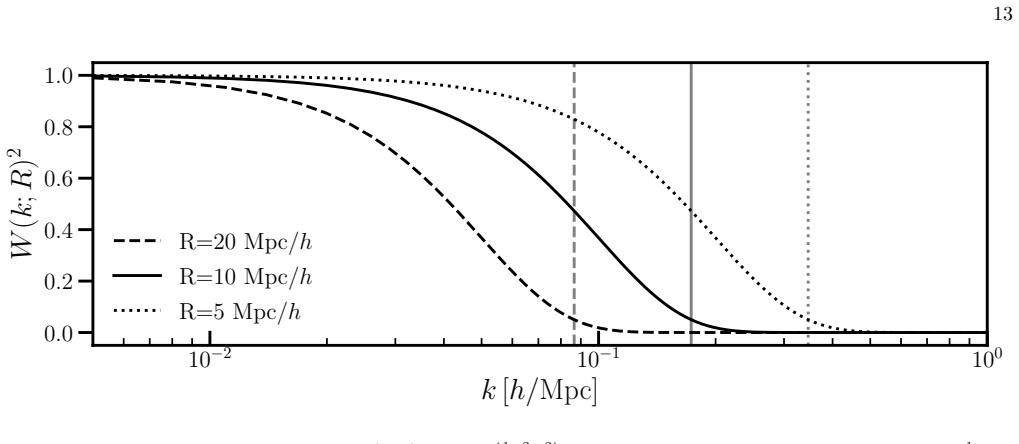
Tree-level effective field theory predicts the compressed Lyman-alpha forest bispectrum on mocks at 1–2 sigma up to k ≈ 0.17 h/Mpc, and a windowed shifted version reaches k ≈ 0.35 h/Mpc.
Reviewed by Pith at T0; open to challenge. T0 means a machine referee read the full paper against a public rubric. the ladder, T0–T4 →
T0 review · deepseek-v4-flash
2026-08-04 07:50 UTC pith:YFP7JTVZ
load-bearing objection A careful, useful extension of skew spectra to the Lyman-alpha forest with a genuinely new shifted statistic, but the headline validation is weaker than the abstract implies. the 3 major comments →
The Compressed 3D Lyman-Alpha Forest Bispectrum
The pith
A machine-rendered reading of the paper's core claim, the machinery that carries it, and where it could break.
Core claim
The paper's central claim is that the Lyman-alpha bispectrum admits a compressed, perturbatively controlled description: 26 anisotropic skew spectra, each the cross-spectrum of the flux fluctuation with one quadratic operator from the second-order SO(2)-symmetric bias expansion. The bias expansion is derived from the forest's actual symmetries — translation invariance, rotation about the line of sight, sightline reflection — with the equivalence principle fixing displacement-type coefficients, yielding eight quadratic operators and 26 skew spectra, twelve more than for galaxies. Comparing tree-level predictions to measurements on synthetic second-order perturbation theory fields and on large
What carries the argument
The skew spectrum: the cross-power spectrum P_{S_n δF}(k) between the transmitted flux fluctuation δF and a quadratic operator S_n built from two copies of δF (e.g., δ^2, tidal operator G2, line-of-sight velocity-gradient combinations). Each S_n corresponds to one bias term in the tree-level bispectrum, so the full set of 26 skew spectra acts as a compressed, near-optimal proxy for the three-point function at power-spectrum cost. The shifted skew spectrum generalizes this by multiplying the kernel by cos[α(k1∥ − k2∥)], a phase that comes from displacing one field by ±α along the line of sight; this moves away from the squeezed limit without locally squaring the field, avoiding renormalizatio
Load-bearing premise
The theory curves use bias parameters fitted to the one-loop power spectrum of the same mocks, and the paper assumes those parameters carry over to the tree-level bispectrum even though the bispectrum depends on new combinations of the parameters that the power-spectrum fit does not constrain.
What would settle it
Fit the 26 skew spectra measured on the same mocks with all bias parameters left free; the transfer assumption predicts best-fit values equal to the power-spectrum-derived ones within 1–2 sigma, so a disagreement beyond that would falsify the central claim.
If this is right
- The 26 skew spectra should carry most of the cosmological information in the Lyman-alpha bispectrum, including the growth rate and bias parameters, at a computational cost close to that of the power spectrum.
- Breaking the mean-flux versus amplitude degeneracy becomes feasible with current and near-future survey data, since the bispectrum responds differently to the mean flux than the power spectrum does.
- The shifted skew spectra extend information to non-squeezed triangle shapes, and the window-forward-modeled S2 is ready for application to real spectra, with the other 25 operators handled by a proposed Monte Carlo emulator.
- Cross-correlation statistics, such as Lyman-alpha with CMB lensing or with quasars, can be built from the same formalism, probing squeezed bispectra and equivalence-principle tests.
- Because the Lyman-alpha forest has negligible shot noise at high redshift, the skew-spectrum kmax may exceed that of galaxy skew spectra.
Where Pith is reading between the lines
- Extension: combining several displacement values α in the shifted skew spectra could allow a tomographic reconstruction of the bispectrum shape function — not just squeezed and near-squeezed triangles — while keeping the same pair-count estimator, at modest additional cost.
- Extension: the same SO(2)-symmetric operator enumeration applies to any tracer with a preferred line of sight, so intensity-mapping or radio surveys could reuse the 26-operator structure without re-deriving it.
- Extension: a natural stress test is to apply the method to hydrodynamical Lyman-alpha simulations rather than painted mocks, since the bias-transfer assumption is most likely to break where small-scale astrophysics feeds back into the quadratic operators.
- Extension: weighting the shifted field by a distribution of α values, or adding transverse shifts, would recover the missing bispectrum triangle shapes and could be optimized to maximize signal-to-noise for primordial non-Gaussianity templates.
Editorial analysis
A structured set of objections, weighed in public.
Referee Report
Summary. The paper extends redshift-space skew spectra to the 3D Lyman-alpha forest. Using an SO(2)-symmetric EFT bias expansion, the authors derive the tree-level Ly-alpha bispectrum and identify 26 skew spectra (Eqs. 46–71), twelve more than the galaxy case. They introduce 'shifted skew spectra' with a line-of-sight displacement to probe non-squeezed triangles, and they analytically forward-model the window function for the special case S_2 (the squared-field cross-spectrum). Validation is performed on (i) 2SPT synthetic fields and (ii) AbacusSummit mocks, with reported 1–2σ agreement for smoothed spectra up to k ≈ 0.17 h/Mpc and recovery of the windowed shifted S_2 within 1σ up to k ≈ 0.35 h/Mpc.
Significance. If the validation holds, the paper provides a computationally efficient route to higher-order Ly-alpha statistics for DESI, breaking the mean-flux–amplitude degeneracy of the power spectrum. The SO(2) derivation, the explicit 26-operator enumeration, and the analytic window treatment for S_2 are valuable and mostly carefully executed. The paper ships reproducible code paths (pycuba, nbodykit, skewspec) and gives explicit Fourier-space kernels in Appendix A. The central caveat is that the Abacus validation is not an independent test of the bispectrum model: the bias parameters come from one-loop power-spectrum fits to the same simulations, and the paper explicitly does not fit the skew spectra.
major comments (3)
- [Sec. V, Table I, Figs. 2–3] The AbacusSummit validation is not independent. The 8 bias parameters in Table I are obtained from one-loop power-spectrum fits to the same simulation suite [91], and the paper states (Sec. V) that the skew spectra are not fitted. Terms such as b_eta^3, b_eta2, b_(KK)_parallel, and b_Pi[2]_parallel enter the tree-level bispectrum in combinations that do not appear in the power spectrum. Therefore the reported '1–2σ agreement' tests the transferability of power-spectrum bias parameters to the bispectrum, not the tree-level bispectrum model itself. As written, the claim of a validated 26-spectrum model is supported only conditional on that transfer. Please add a dedicated skew-spectrum fit (even to a subset of realizations) or, failing that, a quantitative goodness-of-fit (e.g., chi-square with the full covariance) for the fixed-parameter prediction, and temper the validation language acco
- [Sec. V.B, Figs. 4–5, Sec. V.C, Sec. VI, Abstract] The shift parameter alpha is inconsistent across the paper. The abstract and the Sec. V.B text state alpha = 40 h^-1 Mpc, while Figs. 4–5 and Sec. V.C use alpha = 20 h^-1 Mpc. Similarly, Sec. V.C and Fig. 6 use R_parallel = 10 h^-1 Mpc for the windowed S_2 test, but Sec. VI states R_parallel = 5 h^-1 Mpc. Since the claimed k-range (e.g., k ≤ 0.35 h/Mpc in Fig. 6) depends on these numerical choices, the key shifted-skew-spectrum result is not reproducible as written. Please harmonize the values and state exactly what was used.
- [Sec. V.A, Figs. 2–3] The statistical evidence for the headline '1–2σ agreement' is weak. Only N = 12 Abacus realizations are used, the error bars are the RMS between realizations, and no covariance matrix or chi-square statistic is reported. Given that the data vector contains 26 spectra × 2 multipoles, a 1–2σ statement based on visual inspection with 12 realizations is not a quantitative validation. At minimum, report a chi-square per degree of freedom for the fixed-parameter prediction using the full mock covariance, or state that the agreement is preliminary.
minor comments (5)
- [Eq. (40)] Typo: 'with k3 = −k2 − k3' should presumably be k3 = −k1 − k2 (or the equivalent permutation). As written the definition is circular.
- [Sec. II, footnote 4] The notation with a ∥ subscript/superscript for one vs. two factors of ^z is admittedly confusing. Consider a notation that distinguishes these more explicitly, since the number of line-of-sight factors is physically meaningful.
- [Appendix B] The covariance matrix computed from N = 1,000 2SPT realizations has N_k = 832 bins, giving a Hartlap factor h = 0.17. The authors acknowledge this, but the statement that the correlation matrix is 'block-diagonal' should be accompanied by a caveat about the noise in the covariance estimate.
- [Sec. VI] The concluding paragraph attributes the windowed S_2 test to R_parallel = 5 h^-1 Mpc, inconsistent with Sec. V.C and Fig. 6 (R_parallel = 10 h^-1 Mpc). See major comment 2.
- [Sec. V.C, Fig. 6] In the right panel, the curves are shifted along the k-axis by multiples of Δk = 0.005 for visualization, but the labels 'no window', '*W(r;R0)', etc., may be misread as physical predictions. Please state the shift explicitly in the caption.
Circularity Check
Central Abacus validation is an independent cross-statistic prediction; only the explicitly labeled 2SPT pipeline check is self-consistency by construction.
specific steps
-
self definitional
[Sec. V (2SPT mocks, before Sec. V A); Eqs. (20) and (46)-(71); Table I]
"Following [94], we use Eq. (20) to generate δ_F. The bias parameters for this test are set to the measured bias parameters of the Ly-α forest from AbacusSummit simulations... Evaluating the skew spectra on field-level perturbative mocks and comparing to perturbation theory predictions provides a consistency check of the implementation. ... By construction, we expect (and find) good agreement between the 2SPT fields and the theory on large scales which gives us confidence in the pipeline."
The 2SPT comparison is a pipeline check: the simulated field is generated with the same quadratic bias expansion (Eq. 20) and the same Table I bias parameters used to compute the theoretical skew spectra, so the agreement is guaranteed by construction up to numerical and higher-order effects. The paper itself labels this a consistency check and expects agreement 'by construction.' This step does not independently test the EFT model; it validates only the numerical implementation.
full rationale
The paper's central validation is the comparison of 26 skew spectra measured from AbacusSummit mocks with tree-level EFT predictions computed from bias parameters obtained by fitting the one-loop power spectrum of the same mocks [91]. This is not circular: the skew spectra are not fit, and the paper explicitly states 'we do not fit the skew spectra to the AbacusSummit simulation outputs' and 'we compute the theoretical predictions using best-fit parameters obtained from one-loop EFT fits to the Ly-α power spectrum.' The prediction is a different statistic, and the paper notes that combinations such as b_eta^3 enter the bispectrum but not the power spectrum, so the agreement is not forced by construction. The use of the same simulation suite introduces statistical covariance and model-transfer uncertainty, which is a correctness/robustness concern, not a circularity. The only by-construction element is the 2SPT consistency check, where the fields are generated from the very bias expansion and bias parameters used in the theory; the paper honestly labels this as a pipeline check, so it is non-load-bearing for the central physics claim. No uniqueness theorem or ansatz is smuggled in via self-citation, and no fitted parameter is renamed as a prediction. Overall, the central claim has independent content; the self-consistency check accounts for a minor, explicitly acknowledged circularity.
Axiom & Free-Parameter Ledger
free parameters (12)
- b1 =
-0.1337 (Model III)
- b_eta =
-0.2705 (Model III)
- b2 =
-0.0353 (Model III)
- b_G2 =
-0.0383 (Model III)
- b_delta_eta =
0.0811 (Model III)
- b_eta2 =
-0.0633 (Model III)
- b_(KK)_parallel =
-0.0164 (Model III)
- b_Pi[2]_parallel =
-0.2429 (Model III)
- R (isotropic smoothing scale) =
10 h^-1 Mpc (baseline); 5,20 also tested
- R_parallel (LOS smoothing scale) =
10 h^-1 Mpc (baseline); 5 also tested
- alpha (shift parameter) =
20 h^-1 Mpc (figures, Sec V C) / 40 h^-1 Mpc (abstract, Sec V B)
- R0 (pair-count truncation radius) =
150 h^-1 Mpc
axioms (8)
- standard math Standard perturbation theory kernels F2, G2, and the SPT velocity expansion (Eq. 3).
- domain assumption The EFT bias expansion for the Lya forest, Eq. (20), including line-of-sight dependent operators.
- domain assumption The equivalence principle fixes the displacement bias coefficients (Sec III B 2, Appendix E).
- domain assumption Tree-level bispectrum is sufficient; loop corrections, higher-derivative and stochastic terms are neglected.
- domain assumption Plane-parallel approximation with a global line of sight is valid.
- domain assumption Adiabatic, Gaussian initial conditions.
- domain assumption Skew spectra capture most of the information of the full bispectrum.
- domain assumption The window function treatment for S2 is exact; for the other 25 skew spectra a Monte Carlo emulator is needed.
read the original abstract
Cosmological studies of the Lyman-Alpha (Lya) forest typically constrain parameters using two-point statistics. However, higher-order statistics, such as the three-point function (or its Fourier counterpart, the bispectrum) offer additional information and help break the degeneracy between the mean flux and power spectrum amplitude, albeit at a significant computational cost. To address this, we extend an existing highly informative compression of the bispectrum, the skew spectra, to the Lya forest. We derive the tree-level bispectrum of Lya forest fluctuations in the framework of effective field theory (EFT) directly in redshift space and validate our methodology on synthetic Lya forest data. We measure the anisotropic cross-spectra between the transmitted flux fraction and all quadratic operators arising in the bispectrum, yielding a set of 26 skew spectra. Using idealized 3D Gaussian smoothing (R=10 Mpc/h), we find good agreement (1-2 sigma level based on the statistical errors of the mocks) with the theoretical tree-level bispectrum prediction for monopole and quadrupole up to k <= 0.17 h/Mpc. To enable the cosmological analysis of Lya forest data from the currently observing Dark Energy Spectroscopic Instrument (DESI), where we cannot do 3D smoothing, we use a line-of-sight smoothing and introduce a new statistic, the shifted skew spectra. These probe non-squeezed bispectrum triangles and avoid locally applying quadratic operators to the field by displacing one copy of the field in the radial direction. Using a fixed displacement of 40 Mpc/h (and line-of-sight smoothing of 10 Mpc/h) yields a similar agreement with the theory prediction. For the special case of correlating the squared (and displaced) field with the original one, we analytically forward model the window function making this approach readily applicable to DESI data.
Figures


Forward citations
Cited by 3 Pith papers
-
Analytic compression of the effective field theory of the Lyman-alpha forest
Analytic compression of EFT parameters for Lyα forest P1D via Fisher matrix and linearization allows efficient marginalization, saturating constraints with linear bias plus five effective terms and forecasting 10% and...
-
Lyman-Alpha Forest and its Cross-Correlation with High-Redshift Galaxies in Effective Field Theory at the Field Level
An EFT-based field-level forward model for the Lyman-alpha forest matches simulations at the percent level on quasi-linear scales and generates mocks for DESI and DESI-II analyses.
-
Bridging Simulations and EFT: A Hybrid Model of the Lyman-Alpha Forest Field
A hybrid EFT forward model using N-body displacements reproduces the simulated Lyman-alpha forest to 5% at k <= 1 h/Mpc with a white-noise residual.
Reference graph
Works this paper leans on
-
[1]
McQuinn,The Evolution of the Intergalactic Medium, ARA&A54(2016) 313 [1512.00086]
M. McQuinn,The Evolution of the Intergalactic Medium, ARA&A54(2016) 313 [1512.00086]
Pith/arXiv arXiv 2016
-
[2]
K. S. Dawson, J.-P. Kneib, W. J. Percival, S. Alam, F. D. Albareti, S. F. Anderson et al.,The SDSS-IV Extended Baryon Oscillation Spectroscopic Survey: Overview and Early Data, AJ151(2016) 44 [1508.04473]
Pith/arXiv arXiv 2016
-
[3]
H. du Mas des Bourboux, J. Rich, A. Font-Ribera, V. de Sainte Agathe, J. Farr, T. Etourneau et al.,The Completed SDSS-IV Extended Baryon Oscillation Spectroscopic Survey: Baryon Acoustic Oscillations with LyαForests, ApJ901 (2020) 153 [2007.08995]
Pith/arXiv arXiv 2020
-
[4]
DESI Collaboration, A. Aghamousa, J. Aguilar, S. Ahlen, S. Alam, L. E. Allen et al.,The DESI Experiment Part I: Science,Targeting, and Survey Design,arXiv e-prints(2016) arXiv:1611.00036 [1611.00036]
Pith/arXiv arXiv 2016
-
[5]
DESI Collaboration, A. G. Adame, J. Aguilar, S. Ahlen, S. Alam, D. M. Alexander et al.,DESI 2024 IV: Baryon Acoustic Oscillations from the Lyman Alpha Forest,arXiv e-prints(2024) arXiv:2404.03001 [2404.03001]. [6]DESIcollaboration,Data Release 1 of the Dark Energy Spectroscopic Instrument,2503.14745
Pith/arXiv arXiv 2024
-
[7]
S. S. Vogt, S. L. Allen, B. C. Bigelow, L. Bresee, B. Brown, T. Cantrall et al.,HIRES: the high-resolution echelle spectrometer on the Keck 10-m Telescope, inInstrumentation in Astronomy VIII, D. L. Crawford and E. R. Craine, eds., vol. 2198 ofSociety of Photo-Optical Instrumentation Engineers (SPIE) Conference Series, p. 362, June, 1994, DOI
1994
-
[8]
J. M. O’Meara, N. Lehner, J. C. Howk and J. X. Prochaska,The Third Data Release of the KODIAQ Survey, AJ161 (2021) 45 [2010.09061]
Pith/arXiv arXiv 2021
-
[9]
Dekker, S
H. Dekker, S. D’Odorico, A. Kaufer, B. Delabre and H. Kotzlowski,Design, construction, and performance of UVES, the echelle spectrograph for the UT2 Kueyen Telescope at the ESO Paranal Observatory, inOptical and IR Telescope Instrumentation and Detectors, M. Iye and A. F. Moorwood, eds., vol. 4008 ofSociety of Photo-Optical Instrumentation Engineers (SPIE...
2000
-
[10]
M. T. Murphy, G. G. Kacprzak, G. A. D. Savorgnan and R. F. Carswell,The UVES Spectral Quasar Absorption Database (SQUAD) data release 1: the first 10 million seconds, MNRAS482(2019) 3458 [1810.06136]
Pith/arXiv arXiv 2019
-
[11]
M. M. Pieri, S. Bonoli, J. Chaves-Montero, I. Pˆ aris, M. Fumagalli, J. S. Bolton et al.,WEA VE-QSO: A Massive Intergalactic Medium Survey for the William Herschel Telescope, inSF2A-2016: Proceedings of the Annual meeting of the French Society of Astronomy and Astrophysics, C. Reyl´ e, J. Richard, L. Cambr´ esy, M. Deleuil, E. P´ econtal, L. Tresse et al....
Pith/arXiv arXiv 2016
-
[12]
J. Greene, R. Bezanson, M. Ouchi, J. Silverman and the PFS Galaxy Evolution Working Group,The Prime Focus Spectrograph Galaxy Evolution Survey,arXiv e-prints(2022) arXiv:2206.14908 [2206.14908]
Pith/arXiv arXiv 2022
-
[13]
R. S. de Jong, O. Agertz, A. A. Berbel, J. Aird, D. A. Alexander, A. Amarsi et al.,4MOST: Project overview and information for the First Call for Proposals,The Messenger175(2019) 3 [1903.02464]
Pith/arXiv arXiv 2019
-
[14]
A. Slosar, V. Irˇ siˇ c, D. Kirkby, S. Bailey, N. G. Busca, T. Delubac et al.,Measurement of baryon acoustic oscillations in the Lyman-αforest fluctuations in BOSS data release 9, JCAP2013(2013) 026 [1301.3459]
Pith/arXiv arXiv 2013
-
[15]
P. McDonald, U. Seljak, S. Burles, D. J. Schlegel, D. H. Weinberg, R. Cen et al.,The LyαForest Power Spectrum from the Sloan Digital Sky Survey, ApJS163(2006) 80 [astro-ph/0405013]
Pith/arXiv arXiv 2006
-
[16]
N. Palanque-Delabrouille, C. Y` eche, A. Borde, J.-M. Le Goff, G. Rossi, M. Viel et al.,The one-dimensional Lyαforest power spectrum from BOSS, A&A559(2013) A85 [1306.5896]. [17]DESIcollaboration,The Dark Energy Spectroscopic Instrument: one-dimensional power spectrum from first Lyαforest samples with Fast Fourier Transform, MNRAS526(2023) 5118 [2306.06311]
Pith/arXiv arXiv 2013
-
[19]
P. McDonald and D. J. Eisenstein,Dark energy and curvature from a future baryonic acoustic oscillation survey using the Lyman-αforest, Phys. Rev. D76(2007) 063009 [astro-ph/0607122]. 33
Pith/arXiv arXiv 2007
-
[20]
N. G. Busca, T. Delubac, J. Rich, S. Bailey, A. Font-Ribera, D. Kirkby et al.,Baryon acoustic oscillations in the Lyα forest of BOSS quasars, A&A552(2013) A96 [1211.2616]. [21]DESIcollaboration,DESI DR2 Results I: Baryon Acoustic Oscillations from the Lyman Alpha Forest,2503.14739
Pith/arXiv arXiv 2013
-
[22]
A. Cuceu, A. Font-Ribera, B. Joachimi and S. Nadathur,Cosmology beyond BAO from the 3D distribution of the Lyman-αforest, MNRAS506(2021) 5439 [2103.14075]
Pith/arXiv arXiv 2021
-
[23]
A. Cuceu, A. Font-Ribera, S. Nadathur, B. Joachimi and P. Martini,Constraints on the Cosmic Expansion Rate at Redshift 2.3 from the Lyman-αForest, Phys. Rev. Lett.130(2023) 191003 [2209.13942]
Pith/arXiv arXiv 2023
-
[24]
C. Gordon, A. Cuceu, J. Chaves-Montero, A. Font-Ribera, A. Xochitl Gonz´ alez-Morales, J. Aguilar et al.,3D Correlations in the Lyman-αForest from Early DESI Data,arXiv e-prints(2023) arXiv:2308.10950 [2308.10950]
Pith/arXiv arXiv 2023
-
[25]
Cuceu et al.,DESI DR1 Lyαforest: 3D full-shape analysis and cosmological constraints,2509.15308
A. Cuceu et al.,DESI DR1 Lyαforest: 3D full-shape analysis and cosmological constraints,2509.15308
-
[26]
U. Seljak, A. Makarov, P. McDonald, S. F. Anderson, N. A. Bahcall, J. Brinkmann et al.,Cosmological parameter analysis including SDSS Lyαforest and galaxy bias: Constraints on the primordial spectrum of fluctuations, neutrino mass, and dark energy, Phys. Rev. D71(2005) 103515 [astro-ph/0407372]
Pith/arXiv arXiv 2005
-
[27]
M. Viel, M. G. Haehnelt and V. Springel,The effect of neutrinos on the matter distribution as probed by the intergalactic medium, JCAP2010(2010) 015 [1003.2422]
Pith/arXiv arXiv 2010
-
[28]
N. Palanque-Delabrouille, C. Y` eche, N. Sch¨ oneberg, J. Lesgourgues, M. Walther, S. Chabanier et al.,Hints, neutrino bounds, and WDM constraints from SDSS DR14 Lyman-αand Planck full-survey data, JCAP2020(2020) 038 [1911.09073]
Pith/arXiv arXiv 2020
-
[29]
N. Afshordi, P. McDonald and D. N. Spergel,Primordial Black Holes as Dark Matter: The Power Spectrum and Evaporation of Early Structures, ApJ594(2003) L71 [astro-ph/0302035]
Pith/arXiv arXiv 2003
-
[30]
R. Murgia, G. Scelfo, M. Viel and A. Raccanelli,Lyman-αforest constraints on primordial black holes as dark matter, Phys. Rev. Lett.123(2019) 071102 [1903.10509]
Pith/arXiv arXiv 2019
-
[31]
M. Viel, J. Lesgourgues, M. G. Haehnelt, S. Matarrese and A. Riotto,Constraining warm dark matter candidates including sterile neutrinos and light gravitinos with WMAP and the Lyman-αforest, Phys. Rev. D71(2005) 063534 [astro-ph/0501562]
Pith/arXiv arXiv 2005
-
[32]
S. Chabanier, N. Palanque-Delabrouille, C. Y` eche, J.-M. Le Goff, E. Armengaud, J. Bautista et al.,The one-dimensional power spectrum from the SDSS DR14 Lyαforests, JCAP2019(2019) 017 [1812.03554]
Pith/arXiv arXiv 2019
-
[33]
C. Pedersen, A. Font-Ribera, K. K. Rogers, P. McDonald, H. V. Peiris, A. Pontzen et al.,An emulator for the Lyman-α forest in beyond-ΛCDM cosmologies,JCAP05(2021) 033 [2011.15127]
Pith/arXiv arXiv 2021
-
[34]
C. Ravoux, M. L. Abdul Karim, E. Armengaud, M. Walther, N. G. Kara¸ caylı, P. Martini et al.,The Dark Energy Spectroscopic Instrument: one-dimensional power spectrum from first Lyαforest samples with Fast Fourier Transform, MNRAS526(2023) 5118 [2306.06311]
Pith/arXiv arXiv 2023
-
[35]
N. G. Kara¸ caylı, P. Martini, J. Guy, C. Ravoux, M. L. A. Karim, E. Armengaud et al.,Optimal 1D LyαForest Power Spectrum Estimation - III. DESI early data, MNRAS (2024) [2306.06316]
Pith/arXiv arXiv 2024
-
[36]
M. Viel, G. D. Becker, J. S. Bolton and M. G. Haehnelt,Warm dark matter as a solution to the small scale crisis: New constraints from high redshift Lyman-αforest data, Phys. Rev. D88(2013) 043502 [1306.2314]
Pith/arXiv arXiv 2013
-
[37]
J. Baur, N. Palanque-Delabrouille, C. Y` eche, C. Magneville and M. Viel,Lyman-alpha forests cool warm dark matter, JCAP2016(2016) 012 [1512.01981]
Pith/arXiv arXiv 2016
-
[38]
V. Irˇ siˇ c et al.,New Constraints on the free-streaming of warm dark matter from intermediate and small scale Lyman-α forest data,Phys. Rev. D96(2017) 023522 [1702.01764]
Pith/arXiv arXiv 2017
-
[39]
T. Kobayashi, R. Murgia, A. De Simone, V. Irˇ siˇ c and M. Viel,Lyman-αconstraints on ultralight scalar dark matter: Implications for the early and late universe, Phys. Rev. D96(2017) 123514 [1708.00015]
Pith/arXiv arXiv 2017
-
[40]
E. Armengaud, N. Palanque-Delabrouille, C. Y` eche, D. J. E. Marsh and J. Baur,Constraining the mass of light bosonic dark matter using SDSS Lyman-αforest, MNRAS471(2017) 4606 [1703.09126]
Pith/arXiv arXiv 2017
-
[41]
R. Murgia, V. Irˇ siˇ c and M. Viel,Novel constraints on noncold, nonthermal dark matter from Lyman-αforest data, Phys. Rev. D98(2018) 083540 [1806.08371]
Pith/arXiv arXiv 2018
-
[42]
A. Garzilli, A. Magalich, T. Theuns, C. S. Frenk, C. Weniger, O. Ruchayskiy et al.,The Lyman-αforest as a diagnostic of the nature of the dark matter, MNRAS489(2019) 3456 [1809.06585]
Pith/arXiv arXiv 2019
-
[43]
V. Irˇ siˇ c, H. Xiao and M. McQuinn,Early structure formation constraints on the ultralight axion in the postinflation scenario, Phys. Rev. D101(2020) 123518 [1911.11150]
Pith/arXiv arXiv 2020
-
[44]
K. K. Rogers, C. Dvorkin and H. V. Peiris,Limits on the Light Dark Matter-Proton Cross Section from Cosmic Large-Scale Structure, Phys. Rev. Lett.128(2022) 171301 [2111.10386]
Pith/arXiv arXiv 2022
-
[45]
B. Villasenor, B. Robertson, P. Madau and E. Schneider,New constraints on warm dark matter from the Lyman-α forest power spectrum, Phys. Rev. D108(2023) 023502 [2209.14220]
Pith/arXiv arXiv 2023
-
[46]
V. Irˇ siˇ c, M. Viel, M. G. Haehnelt, J. S. Bolton, M. Molaro, E. Puchwein et al.,Unveiling Dark Matter free-streaming at the smallest scales with high redshift Lyman-alpha forest,arXiv e-prints(2023) arXiv:2309.04533 [2309.04533]
Pith/arXiv arXiv 2023
-
[47]
S. Goldstein, J. C. Hill, V. Irˇ siˇ c and B. D. Sherwin,Canonical Hubble-Tension-Resolving Early Dark Energy Cosmologies Are Inconsistent with the Lyman-αForest, Phys. Rev. Lett.131(2023) 201001 [2303.00746]
Pith/arXiv arXiv 2023
-
[48]
M. Zaldarriaga,Searching for Fluctuations in the Intergalactic Medium Temperature Using the LyαForest, ApJ564 (2002) 153 [astro-ph/0102205]
Pith/arXiv arXiv 2002
-
[49]
A. A. Meiksin,The physics of the intergalactic medium,Reviews of Modern Physics81(2009) 1405 [0711.3358]
Pith/arXiv arXiv 2009
-
[50]
M. Viel, J. Lesgourgues, M. G. Haehnelt, S. Matarrese and A. Riotto,Can Sterile Neutrinos Be Ruled Out as Warm Dark Matter Candidates?, Phys. Rev. Lett.97(2006) 071301 [astro-ph/0605706]
Pith/arXiv arXiv 2006
-
[51]
M. Walther, J. O˜ norbe, J. F. Hennawi and Z. Luki´ c,New Constraints on IGM Thermal Evolution from the LyαForest 34 Power Spectrum, ApJ872(2019) 13 [1808.04367]
Pith/arXiv arXiv 2019
-
[52]
J. S. Bolton, M. Viel, T. S. Kim, M. G. Haehnelt and R. F. Carswell,Possible evidence for an inverted temperature-density relation in the intergalactic medium from the flux distribution of the Lyαforest, MNRAS386 (2008) 1131 [0711.2064]
Pith/arXiv arXiv 2008
-
[53]
A. Garzilli, J. S. Bolton, T. S. Kim, S. Leach and M. Viel,The intergalactic medium thermal history at redshift z = 1.7-3.2 from the Lyαforest: a comparison of measurements using wavelets and the flux distribution, MNRAS424 (2012) 1723 [1202.3577]
Pith/arXiv arXiv 2012
-
[54]
P. Gaikwad, R. Srianand, V. Khaire and T. R. Choudhury,Effect of non-equilibrium ionization on derived physical conditions of the high-z intergalactic medium, MNRAS490(2019) 1588 [1812.01016]
Pith/arXiv arXiv 2019
-
[55]
E. Boera, G. D. Becker, J. S. Bolton and F. Nasir,Revealing Reionization with the Thermal History of the Intergalactic Medium: New Constraints from the LyαFlux Power Spectrum, ApJ872(2019) 101 [1809.06980]
Pith/arXiv arXiv 2019
-
[56]
P. Gaikwad, R. Srianand, M. G. Haehnelt and T. R. Choudhury,A consistent and robust measurement of the thermal state of the IGM at 2≤z≤4 from a large sample of Lyαforest spectra: evidence for late and rapid He II reionization, MNRAS506(2021) 4389 [2009.00016]
Pith/arXiv arXiv 2021
-
[57]
B. Wilson, V. Irˇ siˇ c and M. McQuinn,A measurement of the Lyβforest power spectrum and its cross with the Lyα forest in X-Shooter XQ-100, MNRAS509(2022) 2423 [2106.04837]
Pith/arXiv arXiv 2022
-
[58]
B. Villasenor, B. Robertson, P. Madau and E. Schneider,Inferring the Thermal History of the Intergalactic Medium from the Properties of the Hydrogen and Helium LyαForest, ApJ933(2022) 59 [2111.00019]
Pith/arXiv arXiv 2022
-
[59]
A. Font-Ribera, P. McDonald and A. Slosar,How to estimate the 3D power spectrum of the Lyman-αforest, JCAP 2018(2018) 003 [1710.11036]
Pith/arXiv arXiv 2018
-
[60]
R. de Belsunce, O. H. E. Philcox, V. Irsic, P. McDonald, J. Guy and N. Palanque-Delabrouille,The 3D Lyman-αforest power spectrum from eBOSS DR16, MNRAS533(2024) 3756 [2403.08241]
Pith/arXiv arXiv 2024
-
[61]
B. Horowitz, R. de Belsunce and Z. Lukic,Maximum a posteriori Lyαestimator (MAPLE): band power and covariance estimation of the 3D Lyαforest power spectrum, MNRAS536(2024) 845 [2403.17294]
Pith/arXiv arXiv 2024
-
[62]
N. G. Kara¸ caylı and C. M. Hirata,Light in the dark forest – I. An efficient optimal estimator for 3D Lyman-alpha forest power spectrum,2503.15619
-
[63]
L. Hui, A. Stebbins and S. Burles,A geometrical test of the cosmological energy contents using the lyαforest,The Astrophysical Journal511(1998) L5
1998
-
[64]
M. L. Abdul Karim, E. Armengaud, G. Mention, S. Chabanier, C. Ravoux and Z. Luki´ c,Measurement of the small-scale 3D Lyman-αforest power spectrum, JCAP2024(2024) 088 [2310.09116]
Pith/arXiv arXiv 2024
-
[65]
R. Mandelbaum, P. McDonald, U. Seljak and R. Cen,Precision cosmology from the Lymanαforest: power spectrum and bispectrum, MNRAS344(2003) 776 [astro-ph/0302112]
Pith/arXiv arXiv 2003
-
[66]
R. de la Cruz, G. Niz, V. Irˇ siˇ c, C. Ravoux, C. Ram ´ ırez-P´ erez and H. K. Herrera-Alcantar,First Lyα1D Bispectrum Measurement in eBOSS,2410.09150
-
[67]
R. de Belsunce, M. M. Ivanov, J. M. Sullivan, K. Akitsu and S.-F. Chen,Modeling the Cosmological Lyman-αForest at the Field Level,2507.00284
-
[68]
O. H. E. Philcox and M. M. Ivanov,BOSS DR12 full-shape cosmology:ΛCDM constraints from the large-scale galaxy power spectrum and bispectrum monopole, Phys. Rev. D105(2022) 043517 [2112.04515]
Pith/arXiv arXiv 2022
-
[69]
G. D’Amico, Y. Donath, M. Lewandowski, L. Senatore and P. Zhang,The BOSS bispectrum analysis at one loop from the Effective Field Theory of Large-Scale Structure, JCAP2024(2024) 059 [2206.08327]
Pith/arXiv arXiv 2024
-
[70]
A. Chudaykin, M. M. Ivanov and O. H. E. Philcox,Reanalyzing DESI DR1: 1.ΛCDM Constraints from the Power Spectrum and Bispectrum,2507.13433
-
[71]
M. White,A marked correlation function for constraining modified gravity models, JCAP2016(2016) 057 [1609.08632]
Pith/arXiv arXiv 2016
-
[72]
Massara, F
E. Massara, F. Villaescusa-Navarro, S. Ho, N. Dalal and D. N. Spergel,Using the marked power spectrum to detect the signature of neutrinos in large-scale structure, Phys. Rev. Lett.126(2021) 011301
2021
-
[73]
E. Paillas, Y.-C. Cai, N. Padilla and A. G. S´ anchez,Redshift-space distortions with split densities, MNRAS505(2021) 5731 [2101.09854]
Pith/arXiv arXiv 2021
-
[74]
J. Morawetz, E. Paillas and W. J. Percival,Constraining Primordial Non-Gaussianity with Density-Split Clustering, arXiv e-prints(2024) arXiv:2409.13583 [2409.13583]. [75]SimBIG Collaborationcollaboration,Galaxy clustering analysis with simbig and the wavelet scattering transform, Phys. Rev. D109(2024) 083535
Pith/arXiv arXiv 2024
-
[76]
G. Valogiannis and C. Dvorkin,Towards an optimal estimation of cosmological parameters with the wavelet scattering transform, Phys. Rev. D105(2022) 103534 [2108.07821]
Pith/arXiv arXiv 2022
-
[77]
L. Harscouet, D. Alonso, A. Nicola and A. Slosar,Constraints from CMB lensing tomography with projected bispectra, 2507.07968
-
[78]
J. Jasche and G. Lavaux,Physical Bayesian modelling of the non-linear matter distribution: New insights into the nearby universe, A&A625(2019) A64 [1806.11117]
Pith/arXiv arXiv 2019
-
[79]
M. Viel, S. Matarrese, A. Heavens, M. G. Haehnelt, T. S. Kim, V. Springel et al.,The bispectrum of the Lymanαforest at z ˜2-2.4 from a large sample of UVES QSO absorption spectra (LUQAS), MNRAS347(2004) L26 [astro-ph/0308151]
Pith/arXiv arXiv 2004
-
[80]
D. J. Schlegel, S. Ferraro, G. Aldering, C. Baltay, S. BenZvi, R. Besuner et al.,A Spectroscopic Road Map for Cosmic Frontier: DESI, DESI-II, Stage-5,arXiv e-prints(2022) arXiv:2209.03585 [2209.03585]
Pith/arXiv arXiv 2022
-
[81]
S.-F. Chen, Z. Vlah and M. White,The Lyαforest flux correlation function: a perturbation theory perspective, JCAP 2021(2021) 053 [2103.13498]. 35
Pith/arXiv arXiv 2021
-
[82]
M. M. Ivanov,Lyman alpha forest power spectrum in effective field theory, Phys. Rev. D109(2024) 023507 [2309.10133]
Pith/arXiv arXiv 2024
-
[83]
P. McDonald,Toward a measurement of the cosmological geometry at z 2: predicting lyman-alpha forest correlation in three dimensions, and the potential of future data sets,Astrophys. J.585(2003) 34 [astro-ph/0108064]
Pith/arXiv arXiv 2003
-
[84]
A. S. Almgren, J. B. Bell, M. J. Lijewski, Z. Luki´ c and E. Van Andel,Nyx: A Massively Parallel AMR Code for Computational Cosmology, ApJ765(2013) 39 [1301.4498]
Pith/arXiv arXiv 2013
-
[85]
A. Arinyo-i-Prats, J. Miralda-Escud´ e, M. Viel and R. Cen,The non-linear power spectrum of the Lyman alpha forest, JCAP2015(2015) 017 [1506.04519]
Pith/arXiv arXiv 2015
discussion (0)
Sign in with ORCID, Apple, or X to comment. Anyone can read and Pith papers without signing in.