Field Quantisations in Schwarzschild Spacetime: Theory versus Low-Energy Experiments
Pith reviewed 2026-05-16 21:13 UTC · model grok-4.3
The pith
The propagator for a Hawking particle in Schwarzschild spacetime differs from the path-integral propagator that matches low-energy gravity experiments.
A machine-rendered reading of the paper's core claim, the machinery that carries it, and where it could break.
Core claim
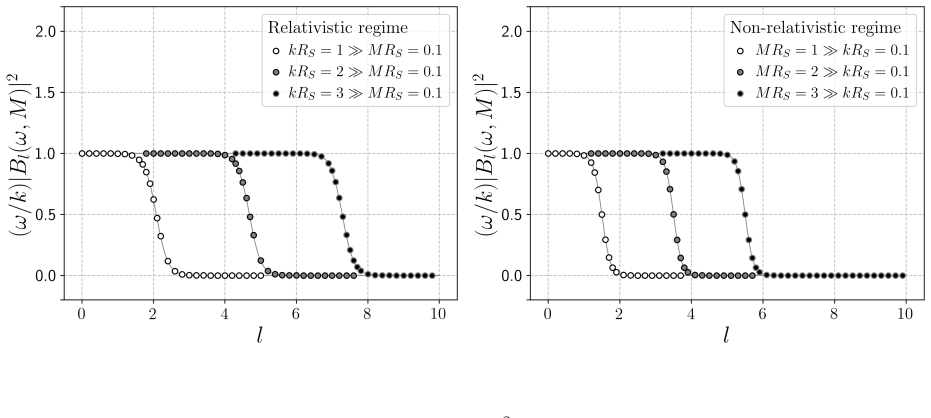
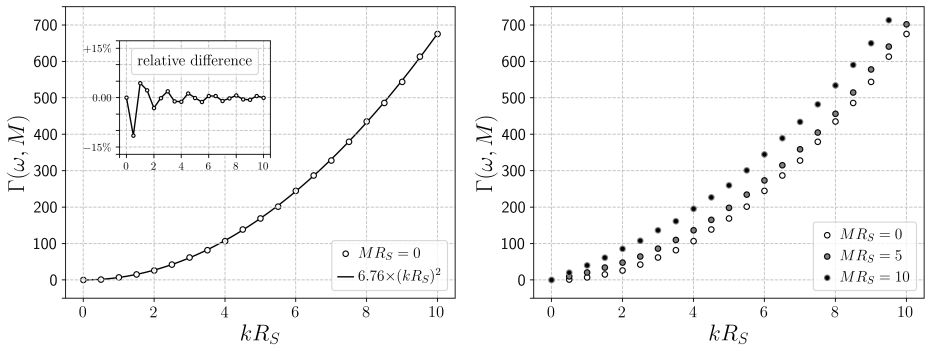
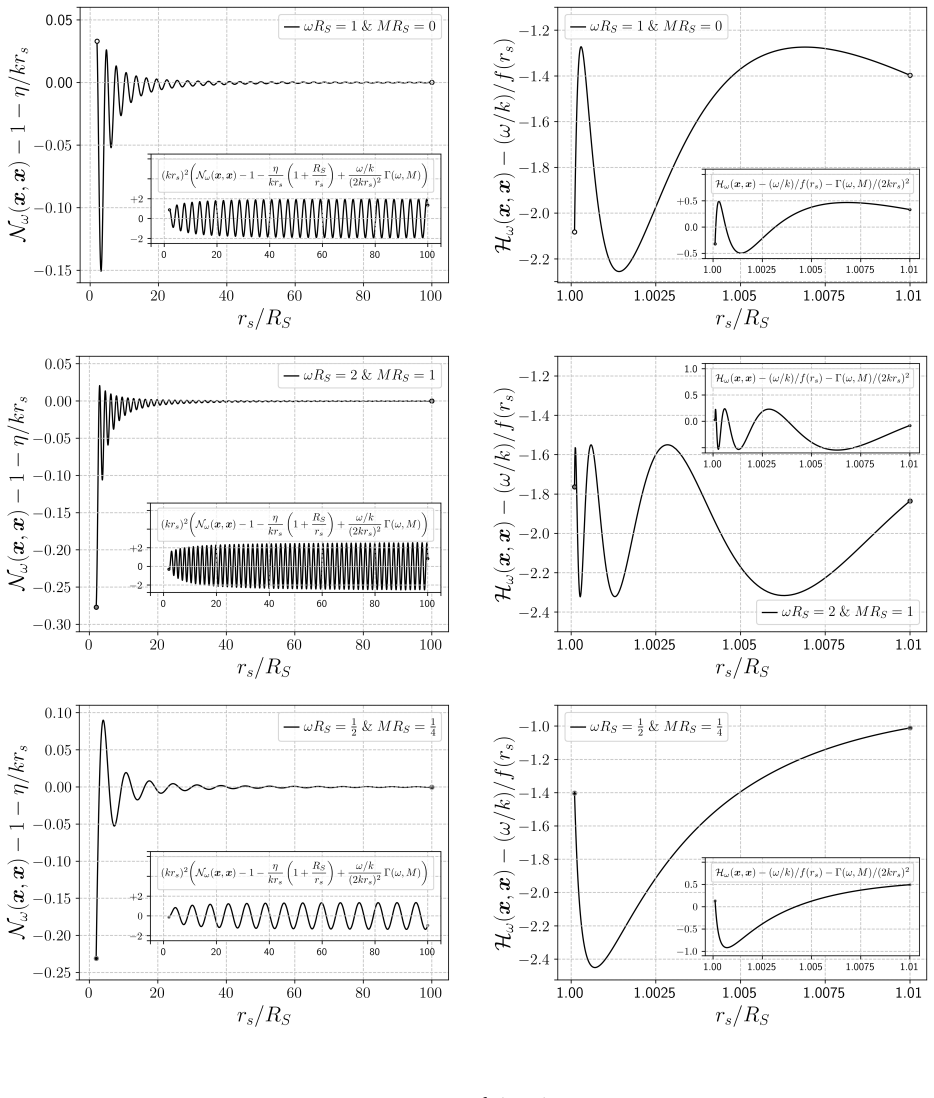
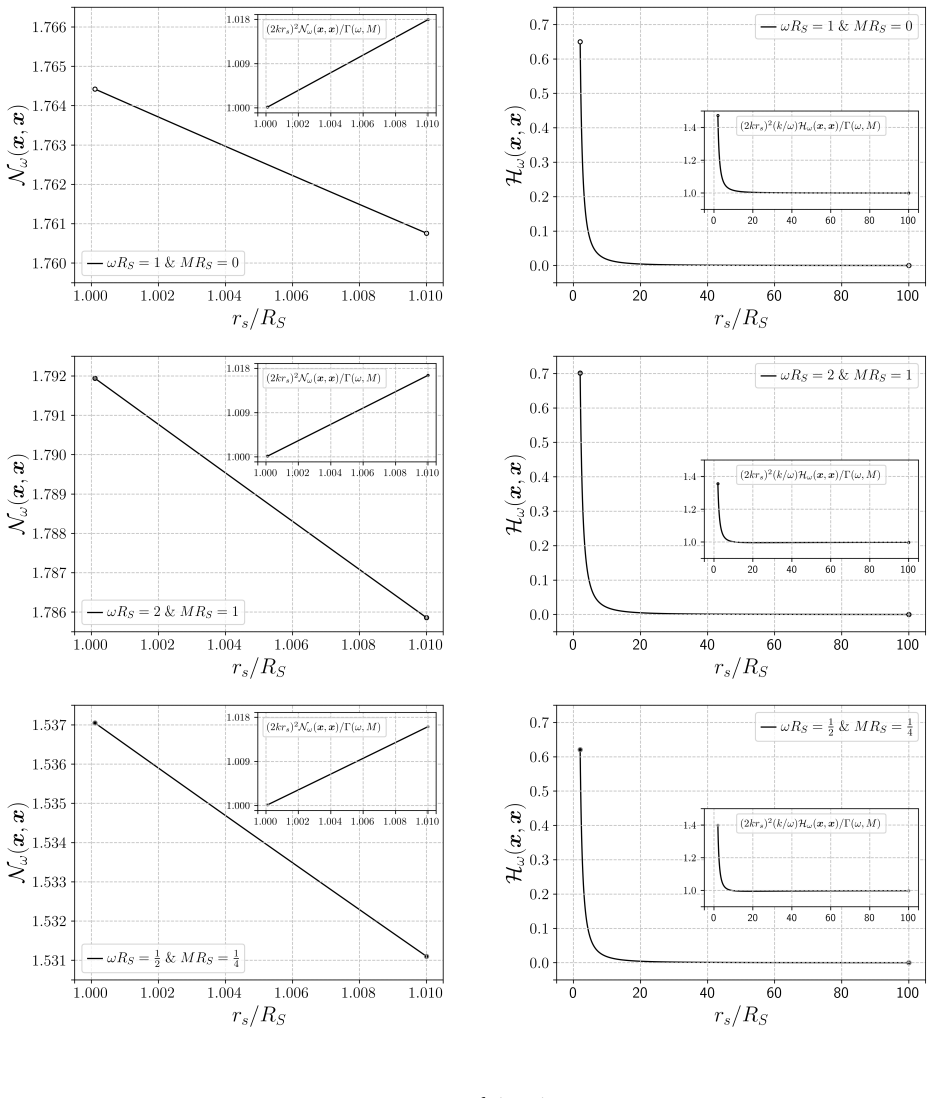
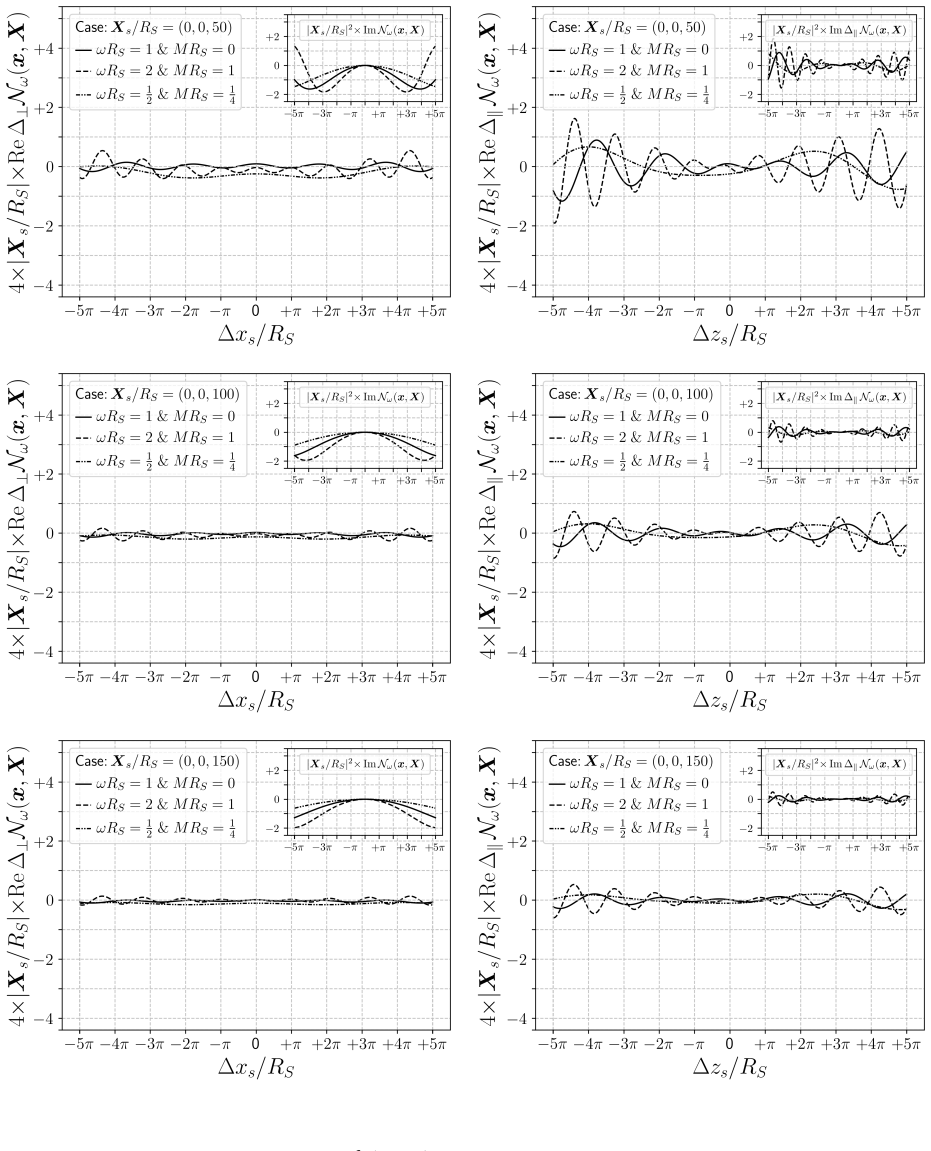
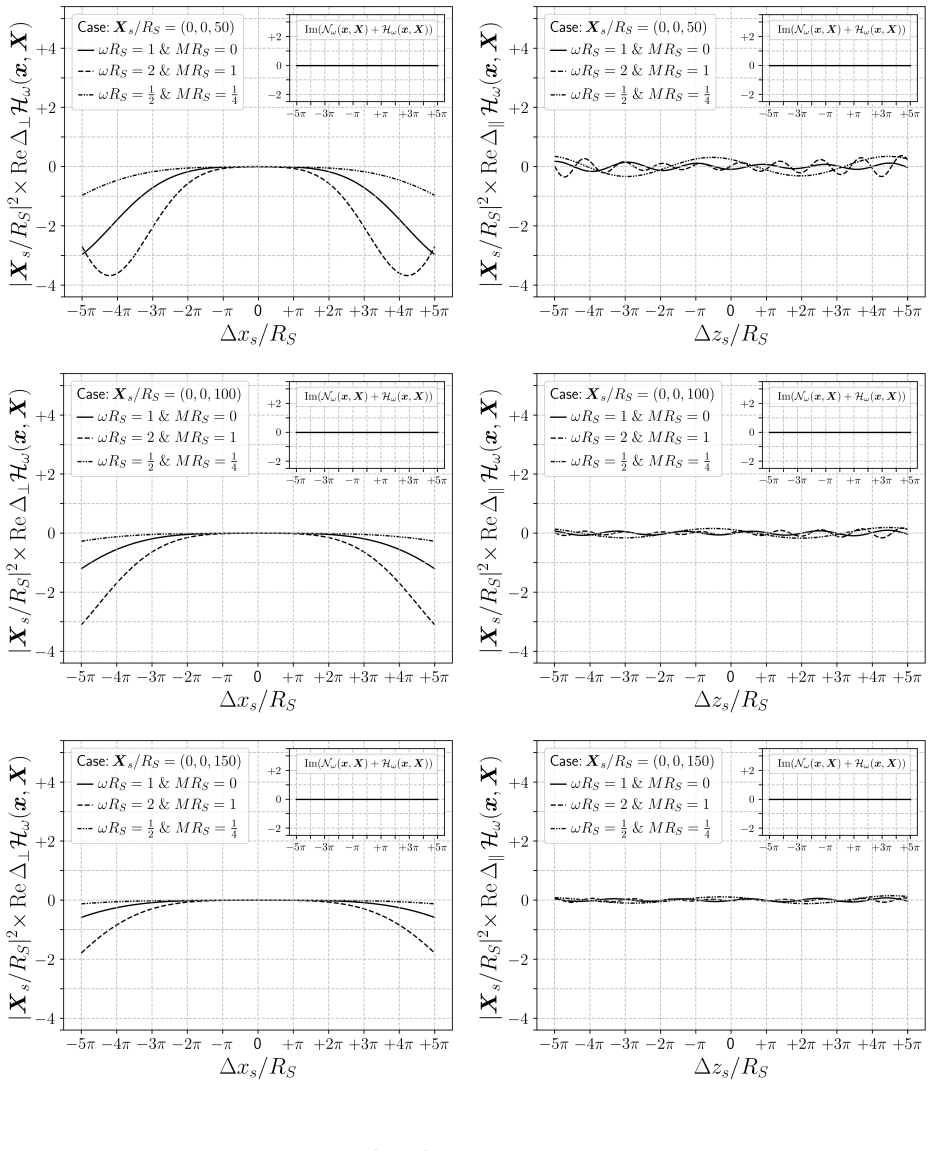
We compute the propagator for a Hawking particle in the far-horizon region of Schwarzschild spacetime and find that it differs from the propagator that follows from the path-integral formalism, the latter being the object that adequately describes both free fall and quantum interference induced by gravity.
What carries the argument
The propagator of the Hawking particle obtained from field quantisation in Schwarzschild spacetime.
If this is right
- The path-integral approach used for terrestrial gravity experiments may not be derivable from quantum field theory in curved spacetime without additional assumptions.
- Consistency between high-energy and low-energy descriptions of gravity requires identifying which propagator governs actual particle motion near a horizon.
- Low-energy quantum mechanics with Newtonian gravity may need revision if the curved-spacetime propagator is taken as fundamental.
- Hawking radiation calculations could be affected by the choice of propagator when extended to regions far from the horizon.
Where Pith is reading between the lines
- The discrepancy could be tested by comparing predictions for atom interferometry in Earth's gravity against curved-spacetime calculations in a weak-field limit of Schwarzschild.
- If the difference is general, it may indicate that standard quantisation procedures in curved spacetime require modification to recover the correct non-relativistic limit.
- This raises the possibility that the ambiguity in defining particles in curved spacetime affects even low-energy regimes previously thought to be unproblematic.
Load-bearing premise
The propagator computed for a Hawking particle in the far-horizon region can be directly compared with the path-integral propagator used for non-relativistic particles in weak gravitational fields.
What would settle it
An experiment that measures the phase shift or probability amplitude for a quantum particle in free fall or interference that matches one propagator but not the other.
Figures
read the original abstract
Non-relativistic quantum particles in the Earth's gravitational field are successfully described by the Schr\"{o}dinger equation with Newton's gravitational potential. Particularly, quantum mechanics is in agreement with such experiments as free fall and quantum interference induced by gravity. However, quantum mechanics is a low-energy approximation to quantum field theory. The latter is successful by the description of high-energy experiments. Gravity is embedded in quantum field theory through the general-covariance principle. This framework is known in the literature as quantum field theory in curved spacetime, where the concept of a quantum particle is, though, ambiguous. In this article, we study in this framework how a Hawking particle moves in the far-horizon region of Schwarzschild spacetime by computing its propagator. We find this propagator differs from that which follows from the path-integral formalism -- the formalism which adequately describes both free fall and quantum interference induced by gravity.
Editorial analysis
A structured set of objections, weighed in public.
Referee Report
Summary. The manuscript computes the propagator for a Hawking particle in the far-horizon region of Schwarzschild spacetime within the framework of quantum field theory in curved spacetime (QFTCS) and reports that this propagator differs from the one obtained via the path-integral formalism, which is stated to successfully describe low-energy experiments such as free fall and gravitational quantum interference for non-relativistic particles in weak gravitational fields.
Significance. If the discrepancy is shown to survive a controlled weak-field limit with matched vacua and normalizations, the result would indicate that the particle concept in QFTCS does not reduce to the effective non-relativistic description used for terrestrial gravity experiments, with implications for the consistency of quantum mechanics and general relativity at low energies. The attempt to perform an explicit propagator comparison is a positive step toward falsifiable contact between the two frameworks.
major comments (2)
- [Abstract] The central claim requires that the QFTCS propagator (obtained from the appropriate two-point function or Bogoliubov-transformed modes for a Hawking particle) coincides with the path-integral propagator in the appropriate limit; however, the abstract provides no derivation steps, explicit mode expansions, or error estimates for this comparison, making it impossible to verify whether the reported difference follows from the field equations or from an unstated choice of vacuum or normalization.
- [Comparison of formalisms] The comparison assumes direct equivalence between the Hawking-particle propagator in the asymptotically flat far region and the non-relativistic path-integral propagator used for weak static potentials; this equivalence is not automatic because Hawking modes carry thermal correlations from the global Kruskal vacuum while the low-energy treatment employs local positive-frequency modes with no horizon, and the manuscript does not demonstrate that these distinctions vanish in the relevant limit.
minor comments (1)
- [Abstract] The abstract contains minor grammatical issues ('by the description of high-energy experiments' should read 'in the description'; 'by computing its propagator' is awkward) that should be corrected for clarity.
Simulated Author's Rebuttal
We thank the referee for the constructive report and for recognizing the potential implications of our work. We address each major comment below and have revised the manuscript to improve clarity and completeness.
read point-by-point responses
-
Referee: [Abstract] The central claim requires that the QFTCS propagator (obtained from the appropriate two-point function or Bogoliubov-transformed modes for a Hawking particle) coincides with the path-integral propagator in the appropriate limit; however, the abstract provides no derivation steps, explicit mode expansions, or error estimates for this comparison, making it impossible to verify whether the reported difference follows from the field equations or from an unstated choice of vacuum or normalization.
Authors: We agree that the abstract was too concise. In the revised version we have expanded it to outline the Bogoliubov transformation from the Kruskal vacuum, the explicit mode expansions employed in the far-horizon region, and the leading-order error estimates used in the weak-field comparison. These additions make the origin of the reported discrepancy traceable to the field equations and the chosen vacuum. revision: yes
-
Referee: [Comparison of formalisms] The comparison assumes direct equivalence between the Hawking-particle propagator in the asymptotically flat far region and the non-relativistic path-integral propagator used for weak static potentials; this equivalence is not automatic because Hawking modes carry thermal correlations from the global Kruskal vacuum while the low-energy treatment employs local positive-frequency modes with no horizon, and the manuscript does not demonstrate that these distinctions vanish in the relevant limit.
Authors: We acknowledge that an explicit demonstration was missing. The revised manuscript now contains a dedicated paragraph showing that, for non-relativistic energies far below the Hawking temperature and in the asymptotically flat far region, the thermal correlations are exponentially suppressed. With this suppression the Bogoliubov coefficients reduce to the Minkowski limit, so the distinction between global and local positive-frequency modes becomes negligible. The remaining discrepancy therefore survives this controlled limit and cannot be attributed to an inconsistent choice of vacuum. revision: yes
Circularity Check
No circularity: direct QFTCS propagator computation compared to path-integral result
full rationale
The paper computes the propagator for a Hawking particle in the far-horizon region of Schwarzschild spacetime within the QFTCS framework and reports a difference from the path-integral propagator. No load-bearing step reduces by construction to a fitted input, self-definition, or self-citation chain; the derivation is presented as an explicit calculation of the two-point function or mode-sum propagator. The comparison rests on stated assumptions about the Hawking state and asymptotic region rather than tautological renaming or imported uniqueness theorems. This is the most common honest finding for a computational paper whose central claim is a reported mismatch between two formalisms.
Axiom & Free-Parameter Ledger
axioms (2)
- domain assumption The concept of a quantum particle remains well-defined in the far-horizon region of Schwarzschild spacetime
- domain assumption The path-integral formalism used for low-energy gravity experiments is the appropriate benchmark for comparison
Lean theorems connected to this paper
-
IndisputableMonolith/Foundation/AlexanderDuality.leanalexander_duality_circle_linking unclear?
unclearRelation between the paper passage and the cited Recognition theorem.
We find this propagator differs from that which follows from the path-integral formalism — the formalism which adequately describes both free fall and quantum interference induced by gravity.
-
IndisputableMonolith/Cost/FunctionalEquation.leanwashburn_uniqueness_aczel unclear?
unclearRelation between the paper passage and the cited Recognition theorem.
⟨h(x)|h(X)⟩=1/16π² 1/X² ∫ dk/k Γ(ω,M) e^{-iωΔt+ikΔz} + O(1/X³)
What do these tags mean?
- matches
- The paper's claim is directly supported by a theorem in the formal canon.
- supports
- The theorem supports part of the paper's argument, but the paper may add assumptions or extra steps.
- extends
- The paper goes beyond the formal theorem; the theorem is a base layer rather than the whole result.
- uses
- The paper appears to rely on the theorem as machinery.
- contradicts
- The paper's claim conflicts with a theorem or certificate in the canon.
- unclear
- Pith found a possible connection, but the passage is too broad, indirect, or ambiguous to say the theorem truly supports the claim.
Reference graph
Works this paper leans on
- [1]
-
[2]
Dirac, Physikalische Zeitschrift der Sowjetunion3(1933) 64
P.A.M. Dirac, Physikalische Zeitschrift der Sowjetunion3(1933) 64
work page 1933
- [3]
- [4]
- [5]
-
[6]
Schr¨ odinger, Annalen der Physik384(1926) 361
E. Schr¨ odinger, Annalen der Physik384(1926) 361
work page 1926
- [7]
-
[8]
Weinberg,Quantum Theory of Fields(Cambridge UP, 1995)
S. Weinberg,Quantum Theory of Fields(Cambridge UP, 1995)
work page 1995
-
[9]
R. Haag,Local Quantum Physics. Fields, Particles, Algebras(Springer-Verlag, 1996)
work page 1996
-
[10]
Schwartz,Quantum Field Theory and the Standard Model(Cambridge UP, 2014)
M.D. Schwartz,Quantum Field Theory and the Standard Model(Cambridge UP, 2014)
work page 2014
- [11]
- [12]
- [13]
-
[14]
N.D. Birrell, P.C.W. Davies,Quantum Fields in Curved Space(Cambridge UP, 1984)
work page 1984
- [15]
- [16]
- [17]
- [18]
- [19]
- [20]
- [21]
-
[22]
Petrov,Einstein Spaces(Pergamon Press Ltd., 1969)
A.Z. Petrov,Einstein Spaces(Pergamon Press Ltd., 1969). 29
work page 1969
-
[23]
Einstein, Annalen der Physik354(1916) 769
A. Einstein, Annalen der Physik354(1916) 769
work page 1916
- [24]
-
[25]
Srednicki,Quantum Field Theory(Cambridge UP, 2007)
M. Srednicki,Quantum Field Theory(Cambridge UP, 2007)
work page 2007
- [26]
- [27]
-
[28]
Emelyanov, Annalen der Physik535(2023) 2200386
V.A. Emelyanov, Annalen der Physik535(2023) 2200386
work page 2023
- [29]
- [30]
-
[31]
Wheeler,Classical/quantum dynamics in a uniform gravitational field(Notes, 2002)
N. Wheeler,Classical/quantum dynamics in a uniform gravitational field(Notes, 2002)
work page 2002
-
[32]
DeWitt,Dynamical Theory of Groups and Fields(Gordon and Breach, 1965)
B.S. DeWitt,Dynamical Theory of Groups and Fields(Gordon and Breach, 1965)
work page 1965
- [33]
- [34]
-
[35]
Einstein, Jahrbuch der Radioaktivit¨ at und Elektronik4(1908) 411
A. Einstein, Jahrbuch der Radioaktivit¨ at und Elektronik4(1908) 411
work page 1908
- [36]
- [37]
-
[38]
J.W.T. Dabbs, J.A. Harvey, D. Paya, H. Horstmann, Phys. Rev.139(1965) B756
work page 1965
- [39]
- [40]
- [41]
- [42]
- [43]
- [44]
- [45]
- [46]
- [47]
- [48]
- [49]
-
[50]
Dobkowskiet al., arXiv:2502.14535; arXiv:2504.21626
O. Dobkowskiet al., arXiv:2502.14535; arXiv:2504.21626
- [51]
- [52]
- [53]
- [54]
- [55]
- [56]
-
[57]
J. Castineiras, I.P. Costa de Silva, G.E.A. Matsas, Phys. Rev. D67(2003) 067502
work page 2003
- [58]
- [59]
- [60]
- [61]
- [62]
-
[63]
I.S. Gradshteyn, I.M. Ryzhik,Tables of Integrals, Series, and Products(Elsevier Inc., 2007)
work page 2007
-
[64]
Prudnikovet al.,Integrals and Series
A.P. Prudnikovet al.,Integrals and Series. Vol. 3: More Special Functions(Fizmatlit, 2003)
work page 2003
-
[65]
Olveret al.,NIST Handbook of Mathematical Functions(Cambridge UP, 2010)
F.W.J. Olveret al.,NIST Handbook of Mathematical Functions(Cambridge UP, 2010)
work page 2010
- [66]
-
[67]
Prudnikovet al.,Integrals and Series
A.P. Prudnikovet al.,Integrals and Series. Vol. 2: Special Functions(Fizmatlit, 2003)
work page 2003
- [68]
discussion (0)
Sign in with ORCID, Apple, or X to comment. Anyone can read and Pith papers without signing in.