Recognition: unknown
A Synchronized Spin Model for Black-Hole Accretion Systems
Pith reviewed 2026-05-09 21:26 UTC · model grok-4.3
The pith
Black-hole accretion systems arise from synchronization of interacting macro-spins in local dynamos.
A machine-rendered reading of the paper's core claim, the machinery that carries it, and where it could break.
Core claim
The central claim is that multiple local dynamos in a rotating accretion flow, modeled as interacting macro-spins in the Synchronized Spin Model, have their synchronization dynamics define a compact set of collective variables that organize timing statistics and large-scale morphology, sustaining multiscale magnetic reconnection responsible for all observed activities.
What carries the argument
The Synchronized Spin Model (SSM), representing local dynamos as interacting macro-spins whose synchronization, partial synchronization, excursion, and reversal organize the system's behavior.
If this is right
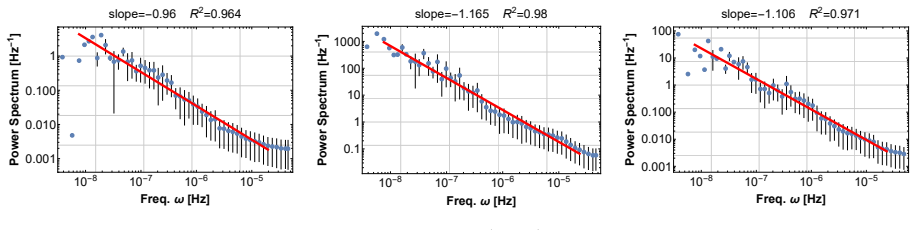
- Synchronization and related dynamics produce amplitude modulation and demodulation that yield 1/f-like variability, rms-flux scaling, and log-normal statistics.
- Multiscale magnetic reconnection driven by this process sustains coronal heating, flares, intermittent outflows, and discrete jet activity.
- The hard/soft cycle of X-ray binaries corresponds to motion through magnetic state space.
- Event-catalog statistics for burst hierarchies remain useful by analogy with solar and stellar flare systems.
Where Pith is reading between the lines
- This approach could be tested by checking whether specific synchronization states correlate with observed jet ejections in X-ray binaries.
- Similar macro-spin representations might extend to modeling variability in other high-energy astrophysical systems.
- One could explore if the model predicts new relations between variability timescales and morphological changes not yet observed.
Load-bearing premise
Local dynamos in rotating accretion flows can be represented as interacting macro-spins whose synchronization dynamics directly sustain multiscale magnetic reconnection producing the observed activities.
What would settle it
A calculation or observation showing that timing statistics and morphological features like jets cannot be simultaneously organized by the synchronization variables of the macro-spins would falsify the model.
Figures


read the original abstract
Black-hole accretion systems exhibit a characteristic coexistence of activities: broad-band X-ray variability, hot coronae, wide-angle winds, and both steady and discrete jets. This coexistence suggests a persistently time-dependent magnetic background in which noisy fluctuations and explosive release are both essential. In this paper, we connect them all to intermittent magnetic reconnection and propose a Synchronized Spin Model (SSM) in which multiple local dynamos in a rotating accretion flow are represented as interacting macro-spins. Their synchronization, partial synchronization, excursion, and reversal define a compact set of collective variables that organize both timing statistics and large-scale morphology. In this picture, multiscale magnetic reconnection sustains coronal heating, flares, intermittent outflows, and discrete jet activity, while the same synchronization dynamics produce amplitude modulation and demodulation, providing a route to $1/f$-like variability, rms--flux/Taylor-like scaling, and approximately log-normal statistics of the demodulated envelope. We further argue that, although the continuous flux distribution in black-hole systems is more naturally discussed in multiplicative or log-normal terms, broader event-catalog statistics remain useful for describing suitably defined burst hierarchies, particularly by analogy with solar and stellar flare systems. The hard/soft cycle of X-ray binaries is then interpreted as motion through magnetic state space.
Editorial analysis
A structured set of objections, weighed in public.
Referee Report
Summary. The paper proposes a Synchronized Spin Model (SSM) in which local dynamos within a rotating black-hole accretion flow are coarse-grained into interacting macro-spins. Synchronization, partial synchronization, excursion, and reversal of these macro-spins are presented as a compact set of collective variables that simultaneously organize broadband X-ray timing statistics (1/f-like variability, rms-flux scaling, log-normal envelopes) and large-scale morphology (coronae, winds, steady and discrete jets) through multiscale intermittent magnetic reconnection. The hard/soft state cycle is interpreted as motion through magnetic state space, with analogies drawn to solar and stellar flare statistics.
Significance. If a controlled reduction from the induction equation to the macro-spin dynamics could be supplied, the framework would offer a single effective description linking microphysical dynamo activity to the observed coexistence of variability, heating, and outflows in accreting black holes. The attempt to unify timing and morphological phenomena via collective synchronization variables is conceptually economical and draws productively on solar-flare analogies, but the manuscript provides no quantitative predictions or falsifiable tests at present.
major comments (3)
- [Abstract] Abstract: the statement that 'synchronization dynamics produce amplitude modulation and demodulation, providing a route to 1/f-like variability, rms-flux/Taylor-like scaling, and approximately log-normal statistics' is asserted without any explicit equations, effective Hamiltonian, or derivation showing how the collective variables emerge from the induction equation or MRI growth rates.
- [Model description] Model description: the macro-spin representation of local dynamos is introduced by postulate rather than by coarse-graining; no coupling constants are derived from shear, buoyancy, or differential rotation, and no demonstration is given that the synchronization, excursion, and reversal dynamics follow from the underlying MHD equations rather than being defined to match the target phenomenology.
- [Timing statistics] Timing statistics section: the claims that the same synchronization dynamics reproduce rms-flux scaling and log-normal envelopes rest on qualitative analogy without any numerical integration of the macro-spin equations, comparison to observed power spectra, or parameter-free predictions that could be tested against data.
minor comments (2)
- The manuscript would benefit from a dedicated section or appendix that explicitly lists the free parameters (interaction strengths and thresholds) and states which observables are intended to be parameter-free predictions versus fits.
- References to the solar-flare literature used for the burst-hierarchy analogy should be expanded to include quantitative comparisons (e.g., waiting-time distributions) that the SSM is claimed to reproduce.
Simulated Author's Rebuttal
We thank the referee for their constructive and detailed review of our manuscript on the Synchronized Spin Model. The comments correctly identify that the work is conceptual and does not include a first-principles derivation or quantitative tests. We respond point by point below, clarifying the intended scope of the paper as an effective framework for unification rather than a complete reduction from MHD. We will make targeted revisions to improve clarity on these limitations.
read point-by-point responses
-
Referee: [Abstract] Abstract: the statement that 'synchronization dynamics produce amplitude modulation and demodulation, providing a route to 1/f-like variability, rms-flux/Taylor-like scaling, and approximately log-normal statistics' is asserted without any explicit equations, effective Hamiltonian, or derivation showing how the collective variables emerge from the induction equation or MRI growth rates.
Authors: We agree that the abstract summarizes the proposed outcomes of synchronization without including the supporting equations. The macro-spin equations and their synchronization properties are developed in the model description and timing sections of the main text, where analogies to coupled-oscillator systems are used to motivate the amplitude modulation and statistical properties. A direct derivation from the induction equation is not provided, as the SSM is formulated at an effective level. We will revise the abstract to state explicitly that these connections are proposed within the SSM framework. revision: partial
-
Referee: [Model description] Model description: the macro-spin representation of local dynamos is introduced by postulate rather than by coarse-graining; no coupling constants are derived from shear, buoyancy, or differential rotation, and no demonstration is given that the synchronization, excursion, and reversal dynamics follow from the underlying MHD equations rather than being defined to match the target phenomenology.
Authors: The referee is correct that the macro-spin representation is introduced by postulate rather than through an explicit coarse-graining procedure from the induction equation. Coupling is motivated by physical processes such as magnetic interactions and differential rotation, but no specific constants are derived from shear, buoyancy, or MRI growth rates in this manuscript. The dynamics are not arbitrarily fitted to observations but are chosen to capture known collective behaviors from synchronization theory and MHD turbulence. We will add a paragraph in the model section acknowledging the effective nature of the approach and the absence of a first-principles reduction. revision: partial
-
Referee: [Timing statistics] Timing statistics section: the claims that the same synchronization dynamics reproduce rms-flux scaling and log-normal envelopes rest on qualitative analogy without any numerical integration of the macro-spin equations, comparison to observed power spectra, or parameter-free predictions that could be tested against data.
Authors: We acknowledge that the timing statistics are explained through qualitative arguments and analogies to synchronized systems and solar-flare statistics, without numerical integration of the macro-spin equations or direct comparisons to observed power spectra. No parameter-free predictions are derived in the current work. This reflects the conceptual focus of the paper. We will add a brief discussion of possible numerical implementations and observable signatures that could be tested in future work. revision: partial
Circularity Check
Synchronization dynamics defined as the collective variables that organize the observed variability
specific steps
-
self definitional
[Abstract]
"Their synchronization, partial synchronization, excursion, and reversal define a compact set of collective variables that organize both timing statistics and large-scale morphology. In this picture, multiscale magnetic reconnection sustains coronal heating, flares, intermittent outflows, and discrete jet activity, while the same synchronization dynamics produce amplitude modulation and demodulation, providing a route to 1/f-like variability, rms--flux/Taylor-like scaling, and approximately log-normal statistics of the demodulated envelope."
The synchronization, excursion and reversal are posited as the mechanism for reconnection and variability, yet they are simultaneously defined as the collective variables whose dynamics 'organize' and 'provide a route to' those same statistics. No independent equations (effective Hamiltonian, coupling from MRI/shear) are exhibited that would allow the collective variables to emerge rather than being introduced by construction to match the target phenomena.
full rationale
The paper proposes the SSM by representing local dynamos as macro-spins whose synchronization etc. are introduced to explain the coexistence of variability, reconnection, coronae, winds and jets. The abstract states that these dynamics 'define a compact set of collective variables that organize both timing statistics and large-scale morphology' and 'provide a route to 1/f-like variability'. This reduces the central claim to a self-definitional mapping: the mechanism is defined in terms of the phenomena it is said to produce, with no explicit reduction from the induction equation or derivation of coupling constants shown in the provided text. The result is partial circularity (score 6) rather than total, as the model may still offer an organizing analogy if external benchmarks were supplied.
Axiom & Free-Parameter Ledger
free parameters (1)
- macro-spin interaction strengths and thresholds
axioms (2)
- domain assumption Local dynamos in accretion flows behave as classical macro-spins that can synchronize
- ad hoc to paper Synchronization dynamics produce intermittent magnetic reconnection
invented entities (1)
-
macro-spins representing local dynamos
no independent evidence
Reference graph
Works this paper leans on
-
[1]
2004, MNRAS, 351, 1379, doi: 10.1111/j.1365-2966.2004.07876.x
R. P. Fender, T. M. Belloni, and E. Gallo. “Towards a unifie d model for black hole X- ray binary jets”. In: Monthly Notices of the Royal Astronomical Society 355.4 (2004), pp. 1105–1118. doi: 10.1111/j.1365-2966.2004.08384.x
-
[2]
States and Transitions in Black-Hole Bin aries
T. M. Belloni. “States and Transitions in Black-Hole Bin aries”. In: The Jet Paradigm . Ed. by T. Belloni. Vol. 794. Lecture Notes in Physics. Berlin Heidelberg: Springer, 2010, pp. 53–84. doi: 10.1007/978-3-540-76937-8_3
-
[3]
The Merger Rates and Mass Assembly Histories of Dark Matter Haloes in the Two
R. P. Fender, E. Gallo, and D. Russell. “No evidence for bl ack hole spin powering of jets in X-ray binaries”. In: Monthly Notices of the Royal Astronomical Society 406.3 (2010), pp. 1425–1434. doi: 10.1111/j.1365-2966.2010.16754.x
-
[4]
S. M. LaMassa, S. Cales, E. C. Moran, A. D. Myers, G. T. Rich ards, M. Eracleous, T. M. Heckman, E. Gallo, and C. M. Urry. “The Discovery of the First “Changing Look” Quasar: New Insights Into the Physics and Phenomenology of Active Ga lactic Nucleus”. In: The Astrophysical Journal 800.2 (2015), p. 144. doi: 10.1088/0004-637X/800/2/144. 33
-
[5]
C. L. MacLeod, N. P. Ross, A. Lawrence, D. M. MacLeod, P. J. Green, D. W. Hogg, S. F. Anderson, G. T. Richards, A. D. Myers, J. J. Ruan, et al. “ A systematic search for changing-look quasars in SDSS”. In: Monthly Notices of the Royal Astronomical Society 457.4 (2016), pp. 389–404. doi: 10.1093/mnras/stv2997
-
[6]
Yu. E. Lyubarskii. “Flicker noise in accretion discs”. I n: Monthly Notices of the Royal Astronomical Society 292.3 (1997), pp. 679–685. doi: 10.1093/mnras/292.3.679
-
[7]
P. Uttley, I. M. McHardy, and S. Vaughan. “Non-linear X-r ay variability in X-ray binaries and active galaxies”. In: Monthly Notices of the Royal Astronomical Society 359.1 (2005), pp. 345–362. doi: 10.1111/j.1365-2966.2005.08886.x
-
[8]
Ram Pressure Stripping of Disc Galaxies: The Role of the Inclination Angle , shorttitle =
P. Ar´ evalo and P. Uttley. “Investigating a fluctuating- accretion model for the spectral- timing properties of accreting black hole systems”. In: Monthly Notices of the Royal Astro- nomical Society 367.2 (2006), pp. 801–814. doi: 10.1111/j.1365-2966.2006.09989.x
-
[9]
R. D. Blandford and R. L. Znajek. “Electromagnetic extra ction of energy from Kerr black holes”. In: Monthly Notices of the Royal Astronomical Society 179.3 (1977), pp. 433–456. doi: 10.1093/mnras/179.3.433
-
[10]
R. D. Blandford and D. G. Payne. “Hydromagnetic flows fro m accretion discs and the production of radio jets”. In: Monthly Notices of the Royal Astronomical Society 199.4 (1982), pp. 883–903. doi: 10.1093/mnras/199.4.883
-
[11]
Markus J. Aschwanden. Self-Organized Criticality in Astrophysics: The Statistics of Non- linear Processes in the Universe. Berlin Heidelberg: Springer, 2011. doi: 10.1007/978-3-642-15001-5
-
[12]
Reconnection in marginall y collisionless accretion disk coronae
J. Goodman and D. Uzdensky. “Reconnection in marginall y collisionless accretion disk coronae”. In: The Astrophysical Journal 688.1 (2008), pp. 555–558. doi: 10.1086/592345
-
[13]
2019, ApJ, 886, 122, doi: 10.3847/1538-4357/ab4c33 —
Luca Comisso and Lorenzo Sironi. “The Interplay of Magn etically Dominated Turbulence and Magnetic Reconnection in Producing Nonthermal Particl es”. In: The Astrophysical Journal 886 (2019), p. 122. doi: 10.3847/1538-4357/ab4c33
-
[14]
L. M. Heil and S. Vaughan. “The linear rms-flux relation i n an Ultraluminous X-ray Source”. In: Monthly Notices of the Royal Astronomical Society 405.1 (2010), pp. L86– L90. doi: 10.1111/j.1745-3933.2010.00864.x
-
[15]
Long- term variability of Cyg X-1. II. The rms–flux relation
T. Gleissner, J. Wilms, K. Pottschmidt, P. Uttley, M. A. Nowak, and R. Staubert. “Long- term variability of Cyg X-1. II. The rms–flux relation”. In: Astronomy & Astrophysics 414 (2004), pp. 1091–1104. doi: 10.1051/0004-6361:20031684
-
[16]
Statistical properties of superflare s on solar-type stars based on 1-min cadence data
H. Maehara et al. “Statistical properties of superflare s on solar-type stars based on 1-min cadence data”. In: Earth, Planets and Space 67.59 (2015). doi: 10.1186/s40623-015-0217-z
-
[17]
The innermost extremes of black hole accr etion
A. C. Fabian. “The innermost extremes of black hole accr etion”. In: Astronomische Nachrichten 336.5 (2015), pp. 460–466. doi: 10.1002/asna.201512178
-
[18]
A. King and K. Pounds. “Powerful Outflows and Feedback fr om Active Galactic Nu- clei”. In: Annual Review of Astronomy and Astrophysics 53 (2015), pp. 115–154. doi: 10.1146/annurev-astro-082214-122316 . 34
-
[19]
F. Tombesi, M. Cappi, J. N. Reeves, G. G. C. Palumbo, V. Br aito, and M. Dadina. “Evidence for ultra-fast outflows in radio-quiet AGNs. I. De tection and statistical inci- dence of Fe K-shell absorption lines”. In: Astronomy & Astrophysics 521 (2010), A57. doi: 10.1051/0004-6361/200913440
-
[20]
Mag- netic origin of black hole winds across the mass scale
K. Fukumura, D. Kazanas, C. Shrader, E. Behar, F. Tombes i, and I. Contopoulos. “Mag- netic origin of black hole winds across the mass scale”. In: Nature Astronomy 1 (2017), p. 0062. doi: 10.1038/s41550-017-0062
-
[21]
A. Nakamichi, H. Mouri, D. Schmitt, A. Ferriz-Mas, J. Wi cht, and M. Morikawa. “Coupled spin models for magnetic variation of planets and stars”. In : Monthly Notices of the Royal Astronomical Society 423.4 (July 2012), pp. 2977–2990. doi: 10.1111/j.1365-2966.2012.20862.x. url: https://doi.org/10.1111/j.1365-2966.2012.20862.x
-
[22]
Domino model for geomagnetic field reversals
N. Mori, D. Schmitt, J. Wicht, A. Ferriz-Mas, H. Mouri, A . Nakamichi, and M. Morikawa. “Domino model for geomagnetic field reversals”. In: Physical Review E 87.1 (Jan. 2013), p. 012108. doi: 10.1103/PhysRevE.87.012108. url: https://doi.org/10.1103/PhysRevE.87.012108
-
[23]
Low- dimensional behavior of Kuramoto model with inertia in comp lex networks
Peng Ji, Thomas K. D. M. Peron, Francisco A. Rodrigues, a nd J”urgen Kurths. “Low- dimensional behavior of Kuramoto model with inertia in comp lex networks”. In: Scientific Reports 4 (2014), p. 4783. doi: 10.1038/srep04783
-
[24]
Stochastic Kuramo to oscillators with inertia and higher-order interactions
Priyanka Rajwani and Sarika Jalan. “Stochastic Kuramo to oscillators with inertia and higher-order interactions”. In: Physical Review E 111.1 (2025), p. L012202. doi: 10.1103/PhysRevE.111.L0
-
[25]
A simple model for pink noise from amplitude modulations
Masahiro Morikawa and Akika Nakamichi. “A simple model for pink noise from amplitude modulations”. In: Scientific Reports 13.1 (2023), p. 8364. doi: 10.1038/s41598-023-34816-2
-
[26]
Adam R. Ingram and Sara E. Motta. “A review of quasi-peri odic oscillations from black hole X-ray binaries: Observation and theory”. In: New Astronomy Reviews 85 (2019), p. 101524. doi: 10.1016/j.newar.2020.101524
-
[27]
doi:10.1111/j.1365-2966.2009.15598.x , archivePrefix =
R. P. Fender, J. Homan, and T. M. Belloni. “Jets from blac k hole X-ray binaries: testing, refining and extending empirical models for the coupling to X -rays”. In: Monthly Notices of the Royal Astronomical Society 396.3 (2009), pp. 1370–1382. doi: 10.1111/j.1365-2966.2009.14841.x
-
[28]
Masaaki Yamada, Russell Kulsrud, and Hantao Ji. “Magne tic Reconnection”. In: Reviews of Modern Physics 82.1 (2010), pp. 603–664. doi: 10.1103/RevModPhys.82.603
-
[29]
A Possible Shutting-down Event of Mass Accretion in an Active Galactic Nucleus at z ∼ 1. 8
Tomoki Morokuma, Malte Schramm, Toshihiro Kawaguchi, Josefa Becerra Gonz´ alez, Jose Antonio Acosta-Pulido, Nieves Castro-Rodr ´ ıguez, Ka na Morokuma-Matsui, Shin- taro Koshida, Junko Furusawa, Hisanori Furusawa, and et al. “A Possible Shutting-down Event of Mass Accretion in an Active Galactic Nucleus at z ∼ 1. 8”. In: Publications of the Astronomical S...
-
[30]
Jet colli mation and acceleration in the flat spectrum radio quasar 1928+738
Kunwoo Yi, Jongho Park, Kazuhiro Hada, et al. “Jet colli mation and acceleration in the flat spectrum radio quasar 1928+738”. In: Astronomy & Astrophysics 688 (2024), A8. doi: 10.1051/0004-6361/202449790
-
[31]
M 87: a cosmic laboratory for decip hering black hole accretion and jet physics
Kazuhiro Hada et al. “M 87: a cosmic laboratory for decip hering black hole accretion and jet physics”. In: The Astronomy and Astrophysics Review 32.5 (2024). doi: 10.1007/s00159-024-00155- 35
-
[32]
Motoki Kino, Fumio Takahara, Kazunori Hada, Kazunori A kiyama, Hiroshi Nagai, and Bong Won Sohn. “Magnetization Degree at the Jet Base of M87 De rived from Event Hori- zon Telescope Data: Testing the Magnetically Driven Jet Paradigm”. In: The Astrophysical Journal 803.1 (2015), p. 30. doi: 10.1088/0004-637X/803/1/30
-
[33]
Universal Constants in Self-or ganized Criticality Systems
Markus J. Aschwanden. “Universal Constants in Self-or ganized Criticality Systems”. In: The Astrophysical Journal 980 (2025), p. 209. doi: 10.3847/1538-4357/adae0c
-
[34]
Super- flares on solar-type stars
Hiroyuki Maehara, Takuya Shibayama, Shota Notsu, Yuta Notsu, Takashi Nagao, Satoshi Kusaba, Satoshi Honda, Takako T. Ishii, Daisaku Nogami, and Kazunari Shibata. “Super- flares on solar-type stars”. In: Nature 485 (2012), pp. 478–481. doi: 10.1038/nature11063
-
[35]
Structured ionized winds shoot ing out from a quasar at relativistic speeds
XRISM Collaboration. “Structured ionized winds shoot ing out from a quasar at relativistic speeds”. In: Nature 641.8065 (2025), pp. 1132–1136. doi: 10.1038/s41586-025-08968-2
-
[36]
Periodic Stru cture in the Megaparsec- scale Jet of PKS 0637 − 752
L. E. H. Godfrey, J. E. J. Lovell, S. Burke-Spolaor, G. V. Bicknell, D. A. Schwartz, M. Birkinshaw, J. M. Gelbord, and E. S. Perlman. “Periodic Stru cture in the Megaparsec- scale Jet of PKS 0637 − 752”. In: The Astrophysical Journal Letters 758.2 (2012), p. L27. doi: 10.1088/2041-8205/758/2/L27
-
[37]
Galactic outflow driven by the active nucleus and the origin of the gamma-ray e mission in NGC 1068
A. Lamastra, F. Fiore, D. Guetta, L. A. Antonelli, and A. Cesarini. “Galactic outflow driven by the active nucleus and the origin of the gamma-ray e mission in NGC 1068”. In: Astronomy & Astrophysics 596 (2016), A68. doi: 10.1051/0004-6361/201628667
-
[38]
Tomographic Imaging of the Sagittarius Spiral Arm’s Magnetic Field Structure
Yasuo Doi, Kento Nakamura, Koji S. Kawabata, and et al. “ Tomographic Imaging of the Sagittarius Spiral Arm’s Magnetic Field Structure”. In: The Astrophysical Journal 961 (2024), p. 13. doi: 10.3847/1538-4357/ad0fe2
-
[39]
Axel Brandenburg and Evangelia Ntormousi. “Galactic D ynamos”. In: Annual Review of Astronomy and Astrophysics 61 (2023), pp. 561–606. doi: 10.1146/annurev-astro-071221-052807
-
[40]
2026, Advances in Space Research, 77, 4041, doi: 10.1016/j.asr.2025.04.058
S. Komossa, D. Grupe, P. Marziani, L. ˇC. Popovi´ c, S. Marceta-Mandic, E. Bon, D. Ili´ c, A. B. Kovaˇ cevi´ c, A. Kraus, Z. Haiman, V. Petrecca, D. De Cic co, M. S. Dimitrijevi´ c, V. A. Sre´ ckovi´ c, J. Kovaˇ cevi´ c Dojˇ cinovi´ c, M. Pannikkote, N. Bon, K. K. Gupta, and F. Iacob. “The extremes of Active Galactic Nuclei variability : outbursts, deep f...
-
[41]
The Shroud around the Twin Radio Jets in NGC 105 2
R. C. Vermeulen, E. Ros, K. I. Kellermann, M. H. Cohen, J. A. Zensus, and H. J. van Langevelde. “The Shroud around the Twin Radio Jets in NGC 105 2”. In: Astronomy & Astrophysics 401 (2003), pp. 113–127. doi: 10.1051/0004-6361:20021752
-
[42]
Collimation of the Relativis- tic Jet in the Quasar 3C 273
Hiroki Okino, Kazunori Akiyama, Keiichi Asada, and et a l. “Collimation of the Relativis- tic Jet in the Quasar 3C 273”. In: The Astrophysical Journal 940.1 (2022), p. 65. doi: 10.3847/1538-4357/ac97e5
-
[43]
Generation of a Magnetic Field by D ynamo Action in a Tur- bulent Flow of Liquid Sodium
R. Monchaux, M. Berhanu, M. Bourgoin, M. Moulin, Ph. Odi er, J.-F. Pinton, R. Volk, S. Fauve, N. Mordant, F. P´ etr´ elis, A. Chiffaudel, F. Daviaud , B. Dubrulle, C. Gasquet, L. Marie, and F. Ravelet. “Generation of a Magnetic Field by D ynamo Action in a Tur- bulent Flow of Liquid Sodium”. In: Physical Review Letters 98 (2007), p. 044502. doi: 10.1103/Ph...
-
[44]
Magnetic fie ld reversal in an experimental turbulent dynamo
M. Berhanu, R. Monchaux, F. Ravelet, et al. “Magnetic fie ld reversal in an experimental turbulent dynamo”. In: Europhysics Letters 77.59001 (2007). doi: 10.1209/0295-5075/77/59001
-
[45]
Role of Soft-Iron Impellers on the Mode Selection in the von K´ arm´ an-Sodium Dynamo Experimen t
Andr´ e Giesecke, Frank Stefani, and G¨ unter Gerbeth. “ Role of Soft-Iron Impellers on the Mode Selection in the von K´ arm´ an-Sodium Dynamo Experimen t”. In: Physical Review Letters 104 (2010), p. 044503. doi: 10.1103/PhysRevLett.104.044503
-
[46]
J. G. Doyle, J. Shetye, A. Antonova, M. Mathioudakis, R. Hewitt, D. Lydiard, C. J. Butler, S. Taubenberger, and D. Jevremovi´ c. “Stellar flare oscillations: evidence for oscil- latory reconnection and standing waves in stellar flares”. I n: Monthly Notices of the Royal Astronomical Society 475.2 (2018), pp. 2842–2853. doi: 10.1093/mnras/sty032
-
[47]
The Global Distribution of U ltralow-Frequency Waves in Jupiter’s Magnetosphere
H. Manners and A. Masters. “The Global Distribution of U ltralow-Frequency Waves in Jupiter’s Magnetosphere”. In: Journal of Geophysical Research: Space Physics 125 (2020), e2020JA028345. doi: 10.1029/2020JA028345
-
[48]
Alfv´ enic Fluctuations Associated With Jupiter’s Auroral Emissions
Daniel J. Gershman, J. E. P. Connerney, G. A. DiBraccio, B. H. Mauk, D. J. Gershman, et al. “Alfv´ enic Fluctuations Associated With Jupiter’s Auroral Emissions”. In: Geophysical Research Letters 46.13 (2019), pp. 7157–7165. doi: 10.1029/2019GL082951
-
[49]
J. H´ erault, F. P´ etr´ elis, and S. Fauve. “1/f noise in t urbulent flows”. In: The European Physical Journal B 89 (2016), p. 156. doi: 10.48550/arXiv.1605.09666. 37
discussion (0)
Sign in with ORCID, Apple, or X to comment. Anyone can read and Pith papers without signing in.