pith. machine review for the scientific record. sign in

arxiv: 2605.04393 · v2 · submitted 2026-05-06 · ⚛️ nucl-th · hep-ph· hep-th

Recognition: unknown

Medium Characterization with Hard Probes: From Cherenkov Light in QED to Jet Drift in QCD

Hasan R. Rahman

Authors on Pith no claims yet

Pith reviewed 2026-05-08 17:30 UTC · model grok-4.3

classification ⚛️ nucl-th hep-phhep-th
keywords Cherenkov radiationrefractive indexliquid argonjet driftquark-gluon plasmaelliptic flowdihadron acoplanaritymedium characterization
0
0 comments X

The pith

A dispersive fit to liquid argon's refractive index shows Cherenkov angular distributions carry excess signal over scintillation, while jet drift produces distinct v2 and acoplanarity patterns that separate it from energy loss in the quark–

A machine-rendered reading of the paper's core claim, the machinery that carries it, and where it could break.

The dissertation builds a unified approach to using hard probes for characterizing media, starting with Cherenkov radiation in QED and moving to jet drift in QCD. It constructs a dispersive fit for the refractive index of liquid argon that includes anomalous dispersion near 106.6 nm and demonstrates that the resulting angular distribution of Cherenkov light is highly sensitive to the index peak, producing measurable excess over isotropic scintillation in selected angular bins. In the QCD section the work models flow-induced deflection of partons with an anisotropic Monte Carlo simulation across PbPb, AuAu and UU collisions and shows that jet drift imprints distinct systematics on elliptic flow and dihadron acoplanarity. A reader would care because these signatures could sharpen particle identification in large liquid-argon detectors and supply an additional tomographic handle on the quark–gluon plasma that is less entangled with ordinary energy loss.

Core claim

This dissertation presents a unified framework for medium characterization with hard probes spanning from Cherenkov light in QED to jet drift in QCD. A dispersive fit to the refractive index n(λ) of liquid argon is developed by incorporating anomalous dispersion at the 106.6 nm resonance for the first time. The angular distribution of Cherenkov radiation is shown to be highly sensitive to the peak of the refractive index and to contribute a significant excess over isotropic scintillation in certain angular bins. For high-energy nuclear collisions jet drift—the flow-induced deflection of partons—is employed as a tomographic probe of the quark–gluon plasma; simulations across PbPb, AuAu and UU

What carries the argument

The dispersive fit to the refractive index of liquid argon that incorporates anomalous dispersion, together with the flow-induced deflection of partons (jet drift) modeled in the anisotropic parton evolution Monte Carlo.

If this is right

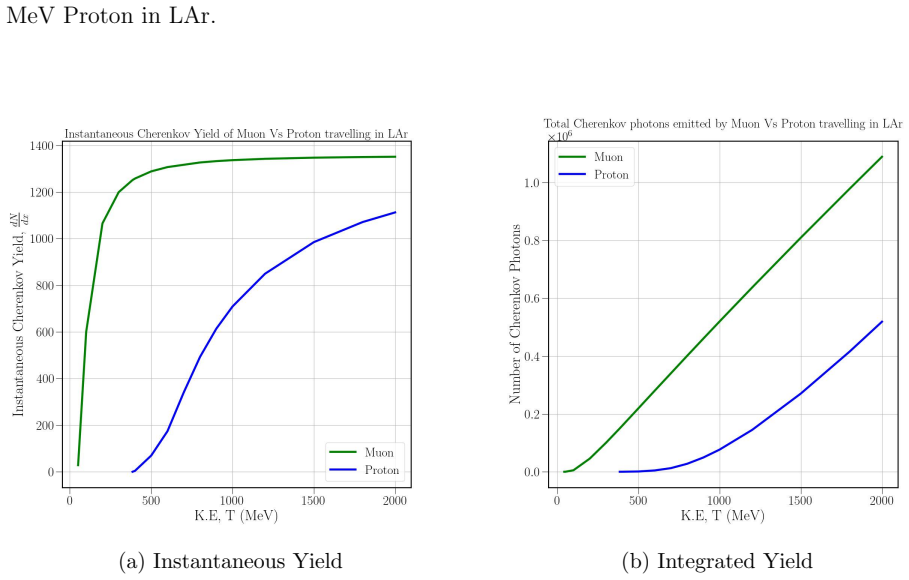
  • The predicted excess in specific angular bins can be used to improve particle-identification precision in liquid-argon detectors.
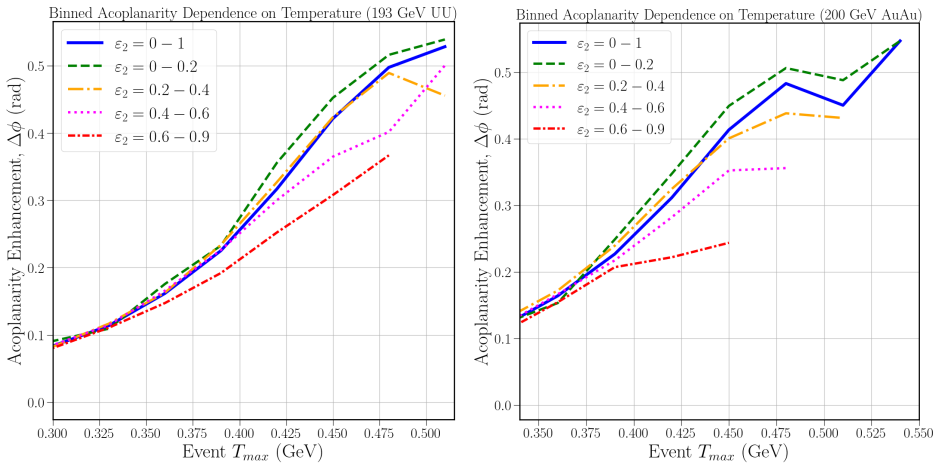
  • Jet drift depends on medium size, temperature and geometry, producing observable differences in elliptic flow and acoplanarity across collision systems.
  • These distinct patterns in v2 and Δφ allow jet drift to be separated from conventional parton energy loss.
  • The angular and kinematic signatures together increase the ability to resolve fundamental properties of the probed media.

Where Pith is reading between the lines

These are editorial extensions of the paper, not claims the author makes directly.

  • Confirmation of the Cherenkov excess would permit tighter subtraction of scintillation backgrounds in neutrino detectors.
  • The jet-drift observables could be tracked as a function of collision centrality to map how medium flow evolves during the plasma lifetime.
  • Treating the two probes within one framework hints at possible future cross-checks between electromagnetic and strong-interaction tomography, although the work presents them as separate studies.

Load-bearing premise

The dispersive fit accurately represents the refractive index peak at relevant wavelengths and the Monte Carlo simulation correctly captures flow-induced deflection without large confounding contributions from other jet-modification mechanisms.

What would settle it

Measurement of the Cherenkov angular distribution in liquid argon that shows no excess over isotropic scintillation in the angular bins predicted by the fit, or heavy-ion data in which v2 and dihadron acoplanarity lack the distinct system-size and geometry dependence expected from jet drift.

Figures

Figures reproduced from arXiv: 2605.04393 by Hasan R. Rahman.

Figure 1
Figure 1. Figure 1: Muon neutrino and muon anti-neutrino flux predictions from current and future view at source ↗
Figure 2
Figure 2. Figure 2: Spherical wavelets of fields of a particle travelling less than (left fig) and greater view at source ↗
Figure 3
Figure 3. Figure 3: Characteristic cone-shaped Cherenkov radiation of a charged particle exceeding the view at source ↗
Figure 4
Figure 4. Figure 4: Method of particle identification which uses the Cherenkov angle view at source ↗
Figure 5
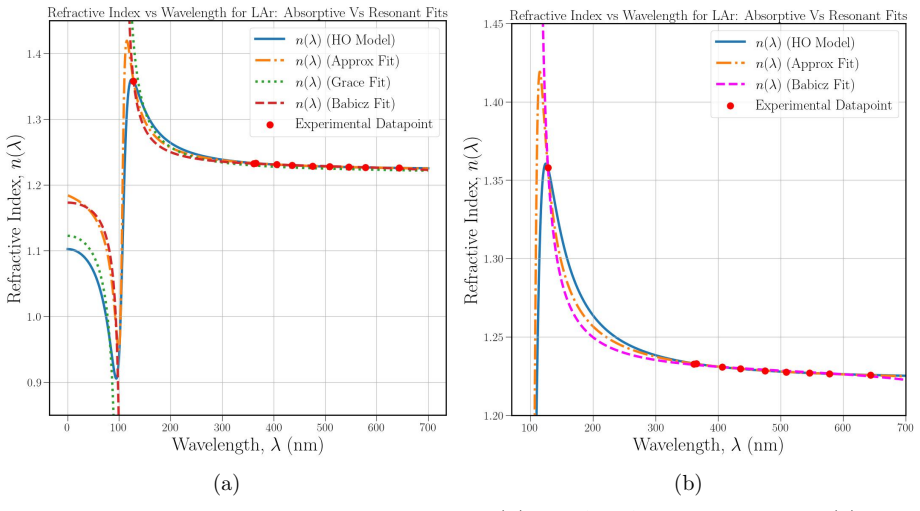
Figure 5. Figure 5: Data and fits to the refractive index n(λ) of LAr. A zoomed out plot (a) shows the behavior of n(λ) as it crosses the resonance, while the region above the resonance (b) is of interest for the Cherenkov radiation. The immediate result shown in Fig. 4b is that the Cherenkov radiation is smeared between the maximum and minimum values of n(λ). This results in the spread seen between the wavelengths emitting a… view at source ↗
Figure 6
Figure 6. Figure 6: Relationship between the key features npeak, nIR of the refractive index (a) to the boundaries of the Cherenkov IAD (b). Here, the IAD dN dΩ dx stands for the number dN of Cherenkov photons emitted instantaneously, per unit path length dx, in a differential solid angle dΩ, and λθ is the solution to the wavelength-dependent Cherenkov condition. One should also note that λθ will also appear from the derivati… view at source ↗
Figure 7
Figure 7. Figure 7: (a) Stopping power − dT dx for a proton in LAr as a function of its kinetic energy T. The range of interest for this work (383 - 1500 MeV) is highlighted in yellow. (b) Range of a proton in LAr with a given initial kinetic energy estimated from different methods (right) view at source ↗
Figure 8
Figure 8. Figure 8: General features of the integrated angular distribution. view at source ↗
Figure 9
Figure 9. Figure 9: Instantaneous (a) and integrated (b) Cherenkov yields for protons in LAr for view at source ↗
Figure 10
Figure 10. Figure 10: Instantaneous AD of protons in LAr using the HO model. Angular distributions view at source ↗
Figure 11
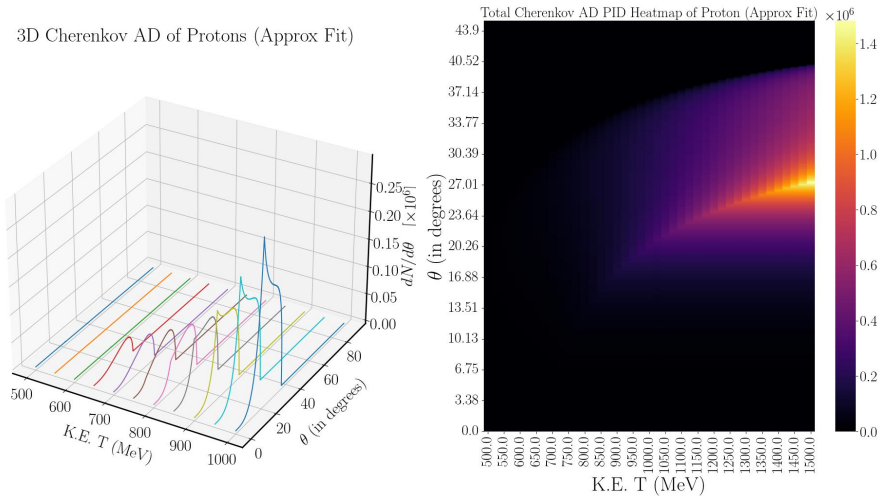
Figure 11. Figure 11: Instantaneous AD of protons in LAr using Approx fit (left) and associated PID view at source ↗
Figure 12
Figure 12. Figure 12: Illustration of the angular quantile ratio (IAQR) for the Instantaneous AD. view at source ↗
Figure 13
Figure 13. Figure 13: Averaged Angular Quantile Ratio (IAQR) of Proton (left Plot) and Muon (Right view at source ↗
Figure 14
Figure 14. Figure 14: Binned IAQR of proton and muon with jackknife error as a function of velocity view at source ↗
Figure 15
Figure 15. Figure 15: Figure of Merit (FoM) of the IAQR for protons (left) and muons (right). The view at source ↗
Figure 16
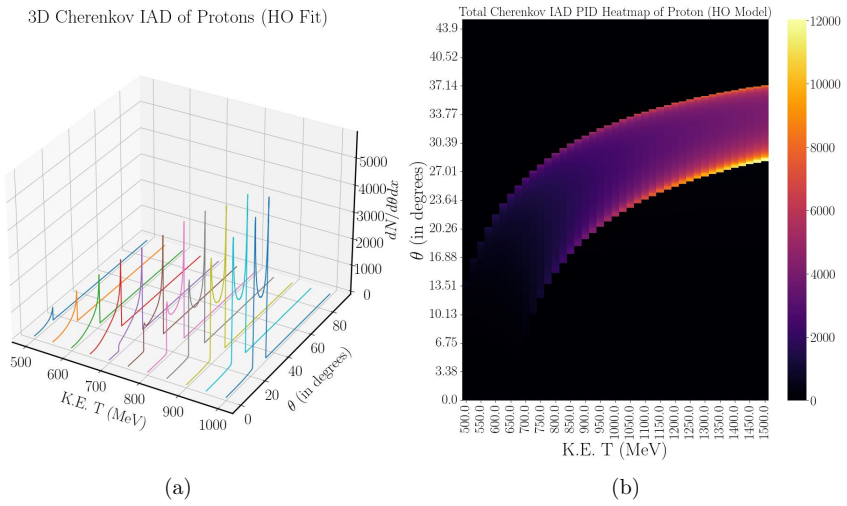
Figure 16. Figure 16: Integrated AD of protons in LAr using HO model fit (left) and associated PID view at source ↗
Figure 17
Figure 17. Figure 17: Integrated AD of protons in LAr using Approx fit (left) and associated PID view at source ↗
Figure 18
Figure 18. Figure 18: Illustration of the angular quantile ratio (AQR) for the integrated AD. view at source ↗
Figure 19
Figure 19. Figure 19: Averaged Angular Quantile Ratio (AQR) of Proton (Left Plot) and Muon (Right view at source ↗
Figure 20
Figure 20. Figure 20: Binned AQR of proton and muon with jackknife error as a function of velocity view at source ↗
Figure 21
Figure 21. Figure 21: Figure of Merit (FoM) of the AQR for protons (left) and muons (right) integrated view at source ↗
Figure 22
Figure 22. Figure 22: Coupling to the elliptic flow of the medium, attracting partons to the event plane view at source ↗
Figure 23
Figure 23. Figure 23: Left: Mean dihadron acoplanarity ∆ϕ (deviation from π) produced by jet drift. Right: Elliptic flow enhancement ∆v exp 2 due to jet drift. Figures reproduced from Ref. [55]; see that paper for all details. sector, while experimental measurements of ⃗vhard n (pT ) typically include all particles in a given pT bin, our simulation counts only those arising explicitly from hard processes. Based on the mean pT … view at source ↗
Figure 24
Figure 24. Figure 24: Histograms of the maximum temperature Tmax (left) and median temperature Tmed (right) of the initial conditions of PbPb and AuAu collisions. This figure represents approximately 2500 events per data set. in peripheral collisions due to minimal deflection, largest in semi-peripheral collisions where there is a balance of moderate deflection and moderate ellipticity, and decreases again in central collision… view at source ↗
Figure 25
Figure 25. Figure 25: Histograms of the ratio of maximum temperature view at source ↗
Figure 26
Figure 26. Figure 26: Histogram [∼ 2500 events] of impact parameter b (left) and mean impact pa￾rameter as a function of centrality (right) for 5.02 TeV PbPb collisions and 200 GeV AuAu collisions. and therefore, a distribution in impact parameter magnitude that grows linearly, dP db⊥ ∝ b⊥ . (41) This linear behavior continues up to the peak around b ≈ 2R ≈ 13 fM where the nuclei begin to miss. The slightly larger radius of Pb… view at source ↗
Figure 27
Figure 27. Figure 27: Eccentricity ε2 distribution of 5.02 TeV PbPb collision at the LHC compared to 200 GeV AuAu collision at RHIC view at source ↗
Figure 28
Figure 28. Figure 28: Histograms [∼ 2500 events] of pT for PbPb and AuAu for minimum bias collisions (left) and with a cut pT ≤ 10 GeV (right). ⟨pT ⟩AuAu = 1.91 GeV in AuAu collisions. With a cut on semi-hard partons pT ≤ 10 GeV (right panel of view at source ↗
Figure 29
Figure 29. Figure 29: Acoplanarity histograms for 5.02 TeV PbPb collision at the LHC plotted as a view at source ↗
Figure 30
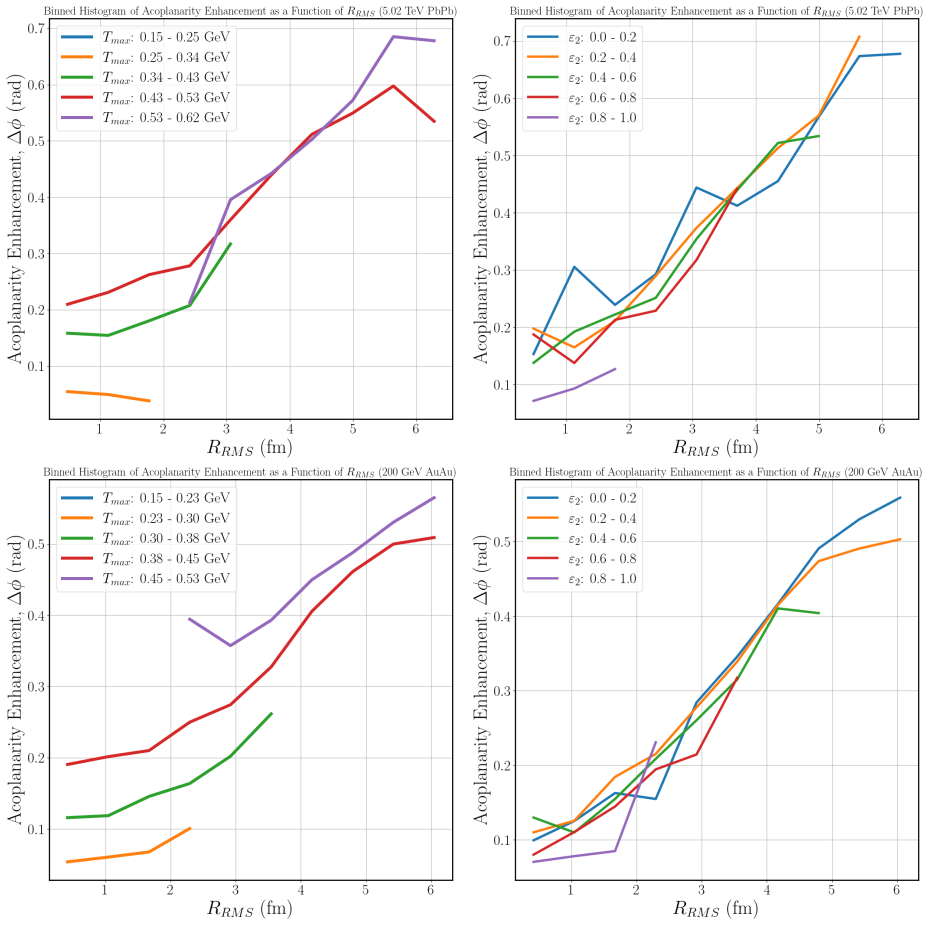
Figure 30. Figure 30: Acoplanarity enhancement as a function of view at source ↗
Figure 31
Figure 31. Figure 31: Excess of acoplanarity enhancement ∆ϕ between 200 GeV AuAu collisions at RHIC and 5.02 TeV PbPb collisions at the LHC. lower temperature (Tmax ∼ 375 MeV) for AuAu compared to the previously discussed PbPb system where Tmax ∼ 450 MeV. We also notice that this ordering is more differential between all ε2-bins in AuAu collisions than PbPb view at source ↗
Figure 32
Figure 32. Figure 32: Left: Impact parameter relationship with event geometry. Note profile geometry view at source ↗
Figure 33
Figure 33. Figure 33: Acoplanarity histograms for 5.02 TeV PbPb collision at the LHC plotted as a view at source ↗
Figure 34
Figure 34. Figure 34: Min Bias binned histograms of ε2 (top left), RRMS (top right), and Tmax (bottom) generated from the full initial pT spectrum. is, the significantly larger pT of jets produced in PbPb collisions at the LHC seen in view at source ↗
Figure 35
Figure 35. Figure 35: Min Bias binned histograms of ε2 (top left), RRMS (top right), and Tmax (bottom) generated from the full initial pT spectrum for full pT (solid) versus pT < 10GeV (dashed). temperatures. But at fixed Tmax, the acoplanarity of AuAu collisions is nearly the same as in PbPb collisions, with an excess for PbPb in the most central collisions where one is sensitive to the slightly larger path length in PbPb. Th… view at source ↗
Figure 36
Figure 36. Figure 36: Hadronic v2s of 5.02 TeV PbPb Collision at RHIC 3.2.3 Jet Observables: Elliptic Flow For another measure of the effects of jet drift in heavy ion collisions, we study the elliptic flow v2 of hadrons in PbPb versus AuAu collisions. We again use binning in Tmax and ellipticity ε2 to study the independent contributions of the underlying variables. While the absolute magnitudes of v2 may be subject to normali… view at source ↗
Figure 37
Figure 37. Figure 37: Partonic v exp 2 of 5.02 TeV PbPb with drift off (top left), on (top right), along with the net change in v exp 2 (bottom) resulting from drift sectors. Event plane decorrelation is seen at the partonic level, at low pT , in several centrality bins 0-20%, 30-50%, and 50-70%. In contrast, as shown in the top right panel of view at source ↗
Figure 38
Figure 38. Figure 38: Hadronic v exp 2 for 5.02 TeV PbPb collisions with drift off (top left), on (top right), along with the net change in v exp 2 (bottom left) and event plane angle ψ2 due to drift (bottom right). ∆v exp 2 due to drift, as shown in the bottom panel of view at source ↗
Figure 39
Figure 39. Figure 39: Binned histograms of v2 for 5.02 TeV PbPb (left) and 200 GeV AuAu (right). This figure represents approximately 5000 total events per data set. and decrease of v exp 2 at low pT in for > 30% centrality, a sign that event plane decorrelation is starting to set in, but not enough to cause v exp 2 to fully become negative, as in the partonic case. With drift turned on (top right panel), that downturn in v ex… view at source ↗
Figure 40
Figure 40. Figure 40: Excess of v exp 2 between 200 GeV AuAu at RHIC and 5.02 TeV PbPb at the LHC for minimum bias (solid blue curve) and in bins of ε2 (colored dashed and dotted lines). Next, we move to the multidifferential binning of v exp 2 for hadrons as a function of Tmax and ε2 view at source ↗
Figure 41
Figure 41. Figure 41: Comparison of the histograms of the transverse momentum view at source ↗
Figure 42
Figure 42. Figure 42: Histograms of the maximum temperature Tmax (left) and median temperature Tmed (right) of the initial conditions of UU and AuAu collisions. This figure represents approximately 2500 events per data set. than AuAu in these bins, as shown in the bottom panels of view at source ↗
Figure 43
Figure 43. Figure 43: Impact parameter b histograms (left) and as a function of centrality (right) for 193 GeV UU collisions and 200 GeV AuAu collisions at RHIC. We see that there is a similar magnitude of acoplanarity enhancement in both UU and AuAu collisions at a given Tmax and ε2, but UU can achieve a simultaneous combination of both higher Tmax and higher ε2 than AuAu because of the deformation. As a function of all three… view at source ↗
Figure 44
Figure 44. Figure 44: Histograms of the eccentricity ε2 of 193 GeV UU collisions and 200 GeV AuAu collisions at RHIC with all impact parameter b (top), b = 0 − 5 (bottom left), and b = 0 − 3 (bottom right). cut, the mean acoplanarity for both systems goes up, in accordance with sub-eikonal scaling of drift. Cutting on pT increases the overall magnitude of the effect but does not change the agreement or margin of separation bet… view at source ↗
Figure 45
Figure 45. Figure 45: Comparison of binned histograms of acoplanarity enhancement of 193 GeV UU view at source ↗
Figure 46
Figure 46. Figure 46: Mean acoplanarity as a function of ε2 (top left), estimated RRMS (top right), and event Tmax (bottom) for 193 GeV UU collisions and 200 GeV AuAu collisions at RHIC. compared to 450 MeV in AuAu, increasing the maximum acoplanarity from ∼ 0.25 to ∼ 0.37. Similarly, the 0.4 ≤ ε2 ≤ 0.6 bin expands its reach from 480 MeV in AuAu to 520 MeV in UU. Interestingly, while the 0.2 ≤ ε2 ≤ 0.4 bin remains unchanged at… view at source ↗
Figure 47
Figure 47. Figure 47: Mean acoplanarity as a function of ε2 (top left), estimated RRMS (top right), and event Tmax for all pT (solid curves) vs pT < 10GeV (dashed curves) for 193 GeV UU collisions and 200 GeV AuAu collisions at RHIC. Tmax in both systems, with a slope of order ∼ 10−3 rad / MeV across most centralities. However, in AuAu, the highest temperatures in each ε2 bin trigger a drastic decrease in this slope; for examp… view at source ↗
Figure 48
Figure 48. Figure 48: Mean acoplanarity enhancement for 193 GeV UU (left) and 200 GeV AuAu (right) view at source ↗
Figure 49
Figure 49. Figure 49: Histogram of acoplanarity enhancement of 193 GeV UU (left) and 200 GeV view at source ↗
Figure 50
Figure 50. Figure 50: Binned histograms of v2 for 193 GeV UU (left) and 200 GeV AuAu (right). This figure represents approximately 2500 events per data set. 3.3.3 Jet Observables: Elliptic Flow As illustrated in view at source ↗
Figure 51
Figure 51. Figure 51: Simplified Model of Electrons in Dielectrics view at source ↗
Figure 52
Figure 52. Figure 52: Refractive Index and Absorption Coefficients in the vicinity of UV resonance view at source ↗
Figure 53
Figure 53. Figure 53: Comparison of Energy loss (Left) and Range (Right) of a 100 MeV Muon Vs 100 view at source ↗
Figure 54
Figure 54. Figure 54: Comparison of Total Cherenkov Yield: Muons vs Protons (Different K.E.s). view at source ↗
Figure 55
Figure 55. Figure 55: Muon’s instantaneous AD for different K.E.s using HO model fit (left) and the view at source ↗
Figure 56
Figure 56. Figure 56: Muon’s instantaneous AD for different K.E.s using the approx. fit (left) and the view at source ↗
Figure 57
Figure 57. Figure 57: Muon’s total integrated AD for different K.E.s using HO fit (left) and the asso view at source ↗
Figure 58
Figure 58. Figure 58: Muon’s total integrated AD for different K.E.s using the approx. fit (left) and view at source ↗
read the original abstract

This dissertation presents a unified framework for medium characterization with hard probes spanning from Cherenkov light in quantum electrodynamics (QED) to jet drift in quantum chromodynamics (QCD). We first develop a dispersive fit to the refractive index $n(\lambda)$ of liquid argon (LAr) by incorporating anomalous dispersion at the 106.6 nm resonance for the first time. We show that the angular distribution of Cherenkov radiation is highly sensitive to the peak of the refractive index and contributes a significant excess over isotropic scintillation in certain angular bins. This work is important for precision Particle Identification (PID) for experiments like DUNE and CCM. Transitioning to high-energy nuclear collisions, we utilize ``jet drift'' -- the flow-induced deflection of partons -- as a tomographic probe of the Quark-Gluon Plasma (QGP). Using the Anisotropic Parton Evolution (APE) Monte Carlo simulation across various collision systems (PbPb, AuAu, and UU), we disentangle how the jet modification depends on medium size, temperature, and geometry. We show that jet drift exhibits distinct systematics in observables like the elliptic flow ($v_2$) and dihadron acoplanarity ($\Delta\phi$), which helps disentangle it from conventional energy loss. Together, these studies demonstrate how the angular and kinematic signatures of hard probes revolutionize our ability to resolve the fundamental properties of matter.

Editorial analysis

A structured set of objections, weighed in public.

Desk editor's note, referee report, simulated authors' rebuttal, and a circularity audit. Tearing a paper down is the easy half of reading it; the pith above is the substance, this is the friction.

Referee Report

2 major / 1 minor

Summary. The manuscript presents a unified framework for medium characterization using hard probes, from QED to QCD. It develops a dispersive fit to the refractive index n(λ) of liquid argon incorporating anomalous dispersion at the 106.6 nm resonance for the first time. It claims that the angular distribution of Cherenkov radiation is highly sensitive to the peak of the refractive index and produces a significant excess over isotropic scintillation in certain angular bins, relevant for PID in DUNE and CCM. For QCD, it employs the Anisotropic Parton Evolution Monte Carlo across PbPb, AuAu, and UU collisions to study jet drift as a tomographic probe of the QGP, claiming that jet drift exhibits distinct systematics in v2 and dihadron acoplanarity Δφ that help disentangle it from conventional energy loss, depending on medium size, temperature, and geometry.

Significance. If the central claims hold, the QED results could enhance precision modeling of Cherenkov light for particle identification in neutrino and dark matter experiments. The QCD component would provide a new flow-sensitive observable for QGP tomography, with the multi-system comparison offering a way to separate geometric and dynamical effects. The conceptual unification of angular signatures in QED and QCD probes is a strength, and the use of APE MC across collision systems is a positive step toward falsifiable predictions.

major comments (2)
  1. [Abstract and QCD jet-drift analysis] Abstract and QCD jet-drift section: The central claim that jet drift produces distinct systematics in v2 and Δφ (distinct from conventional energy loss) is load-bearing for the tomographic interpretation. This requires the APE MC to generate parton trajectories whose angular deflection is driven dominantly by the medium flow velocity field, with other mechanisms (radiative loss, collisional broadening) either absent or orthogonal in the chosen observables. No explicit orthogonality test or residual-contamination analysis is described, which directly affects whether the reported systematics are robust predictions or simulation artifacts.
  2. [QED Cherenkov radiation analysis] QED Cherenkov section: The dispersive fit to n(λ) and the resulting sensitivity of the angular distribution to the refractive-index peak are load-bearing for the claimed excess over isotropic scintillation. The manuscript must supply the explicit functional form of the fit, the fitted parameters (including the anomalous-dispersion term), and quantitative comparison plots or tables showing the excess in specific angular bins; without these, the 'highly sensitive' and 'significant excess' statements cannot be assessed.
minor comments (1)
  1. [Abstract] The abstract relies on qualitative statements ('we show', 'distinct systematics') without quoting any numerical values, fit parameters, or observable differences; adding one or two concrete numbers would improve clarity.

Simulated Author's Rebuttal

2 responses · 0 unresolved

We thank the referee for the careful and constructive review of our manuscript. We address each major comment point by point below and indicate the revisions we will implement to improve clarity and robustness.

read point-by-point responses
  1. Referee: [Abstract and QCD jet-drift analysis] Abstract and QCD jet-drift section: The central claim that jet drift produces distinct systematics in v2 and Δφ (distinct from conventional energy loss) is load-bearing for the tomographic interpretation. This requires the APE MC to generate parton trajectories whose angular deflection is driven dominantly by the medium flow velocity field, with other mechanisms (radiative loss, collisional broadening) either absent or orthogonal in the chosen observables. No explicit orthogonality test or residual-contamination analysis is described, which directly affects whether the reported systematics are robust predictions or simulation artifacts.

    Authors: We agree that an explicit orthogonality test strengthens the tomographic interpretation. The current analysis infers distinct systematics from the multi-system comparison (PbPb, AuAu, UU), where variations in geometry, size, and temperature produce unique patterns in v2 and Δφ that differ from pure energy-loss expectations. To make this more rigorous, we will add in the revised manuscript a dedicated subsection or appendix presenting APE runs with the flow velocity field disabled, quantifying the residual contributions from radiative loss and collisional broadening to the reported observables. revision: yes

  2. Referee: [QED Cherenkov radiation analysis] QED Cherenkov section: The dispersive fit to n(λ) and the resulting sensitivity of the angular distribution to the refractive-index peak are load-bearing for the claimed excess over isotropic scintillation. The manuscript must supply the explicit functional form of the fit, the fitted parameters (including the anomalous-dispersion term), and quantitative comparison plots or tables showing the excess in specific angular bins; without these, the 'highly sensitive' and 'significant excess' statements cannot be assessed.

    Authors: We agree that the explicit functional form, parameters, and quantitative comparisons are required for full assessment and reproducibility. The dispersive fit is a modified Sellmeier form that includes an anomalous-dispersion term centered at the 106.6 nm resonance. In the revised manuscript we will insert the complete functional expression, the numerical values of all fitted parameters, and new figures (or tables) that directly compare the Cherenkov angular distributions with and without the anomalous-dispersion peak, reporting the excess over isotropic scintillation in the relevant angular bins. revision: yes

Circularity Check

0 steps flagged

No significant circularity detected

full rationale

The paper presents a dispersive fit to the LAr refractive index incorporating anomalous dispersion, followed by a demonstration that Cherenkov angular distributions are sensitive to the index peak, and separately employs the APE Monte Carlo to study jet-drift effects on v2 and Δφ across collision systems. No quoted equations or sections reduce a claimed prediction or uniqueness result to a fitted input, self-citation, or definitional tautology by construction. The Monte Carlo is used as an independent simulation tool to explore dependencies on medium parameters; the reported distinct systematics are outputs of that model rather than reparameterizations of its inputs. The derivation chain remains self-contained against external benchmarks.

Axiom & Free-Parameter Ledger

1 free parameters · 1 axioms · 0 invented entities

Abstract only; details on specific parameters or axioms not provided. The framework assumes standard models in QED and QCD for medium interactions.

free parameters (1)
  • parameters in dispersive fit to n(lambda)
    The fit to refractive index of LAr incorporates anomalous dispersion at 106.6 nm resonance, implying fitted parameters for the model.
axioms (1)
  • domain assumption Validity of the Anisotropic Parton Evolution Monte Carlo for modeling parton evolution in QGP
    The simulation is used to disentangle effects across collision systems like PbPb, AuAu, and UU.

pith-pipeline@v0.9.0 · 5552 in / 1366 out tokens · 50377 ms · 2026-05-08T17:30:39.106975+00:00 · methodology

discussion (0)

Sign in with ORCID, Apple, or X to comment. Anyone can read and Pith papers without signing in.