GREX-PLUS Science Book v2
Pith reviewed 2026-06-28 04:28 UTC · model grok-4.3
The pith
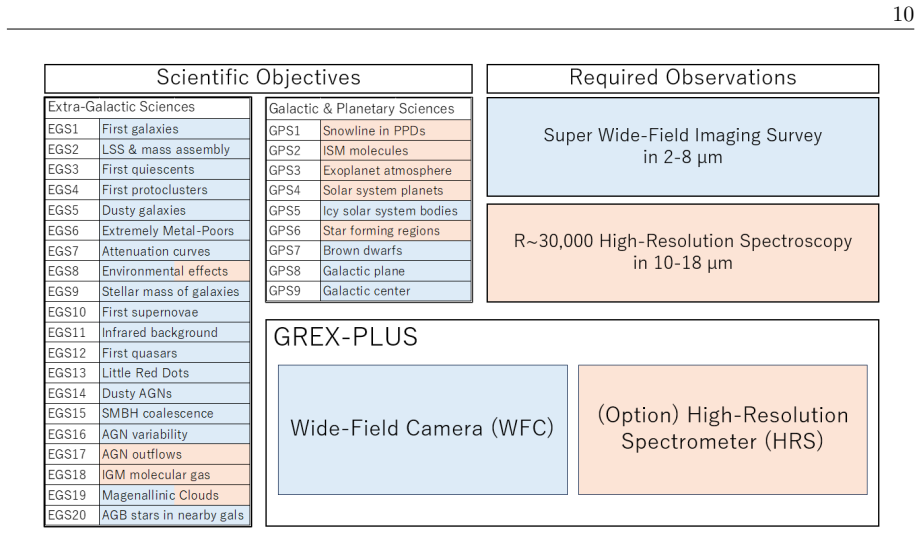
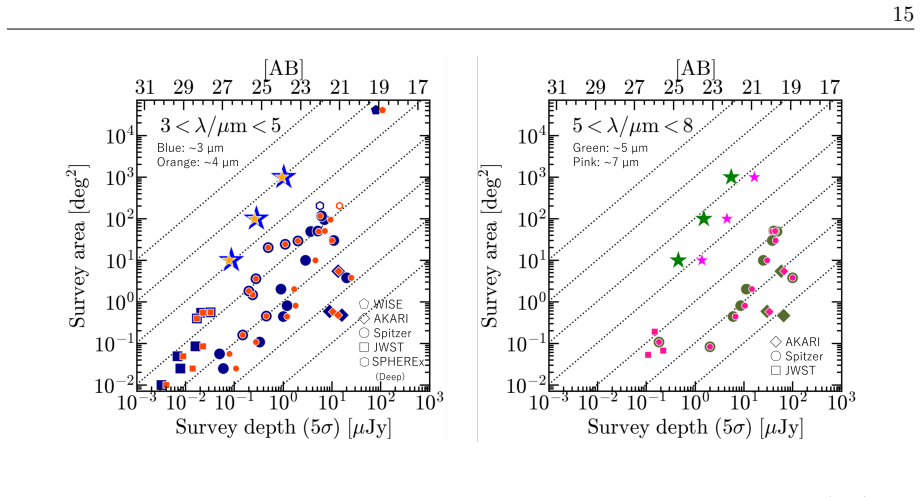
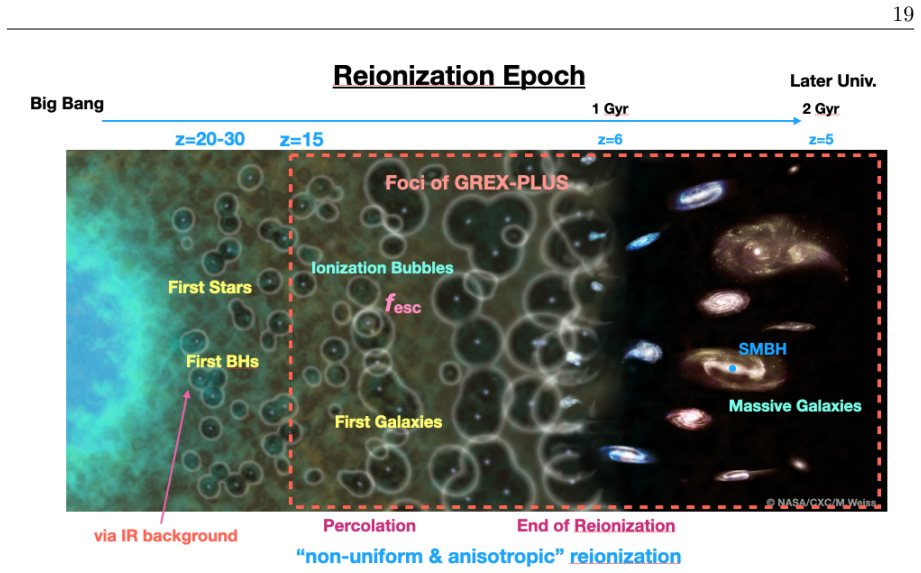
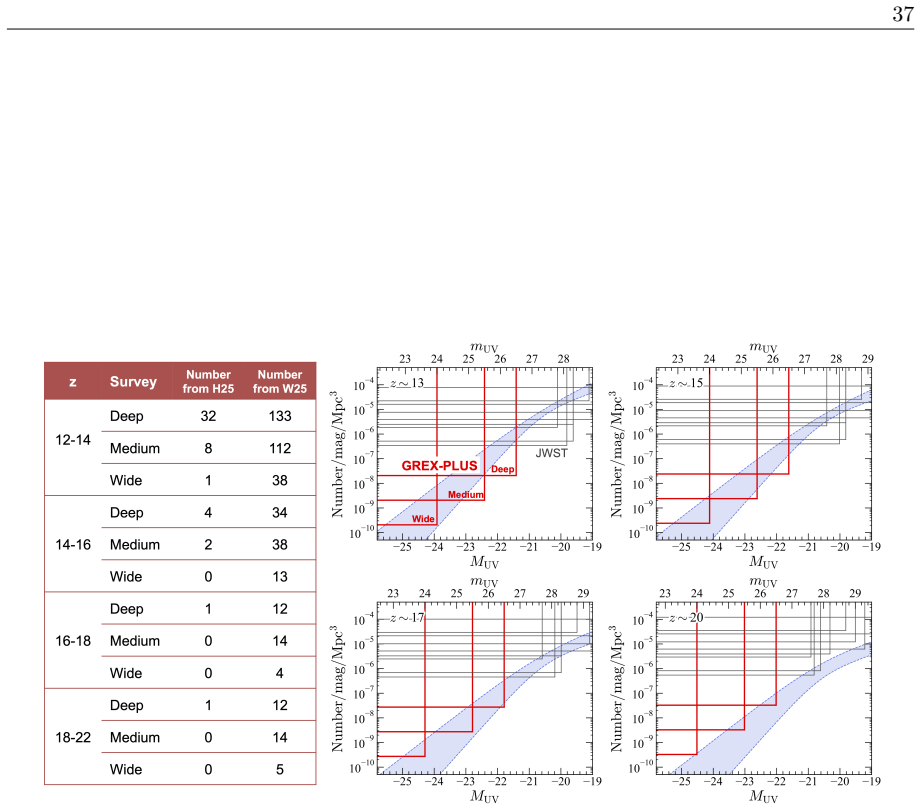
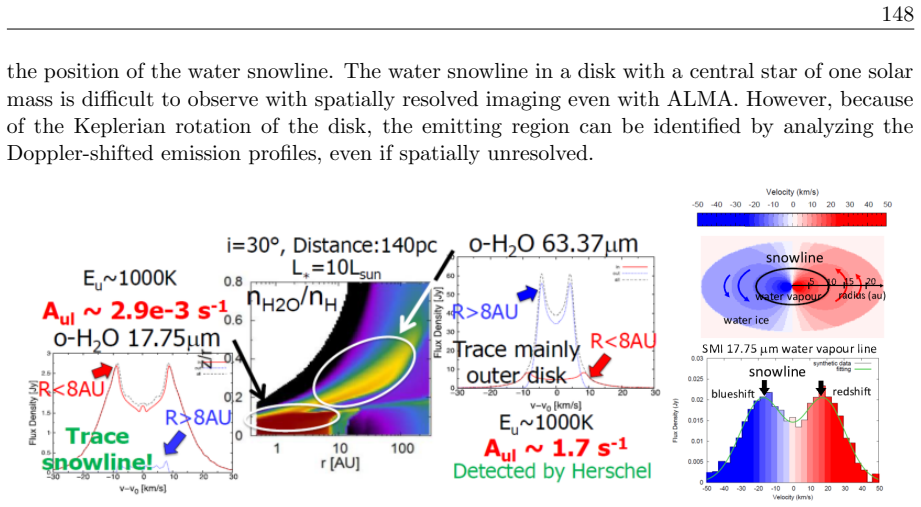
The proposed GREX-PLUS mission with its 1 m cooled telescope would detect galaxies at redshift above 15 and locate water snowlines in protoplanetary disks.
A machine-rendered reading of the paper's core claim, the machinery that carries it, and where it could break.
Core claim
The paper states that the wide-field camera aims to detect the first generation of galaxies at redshift z greater than 15 and the high-resolution spectrometer aims to identify the location of the water snowline in protoplanetary disks, thereby supplying datasets for galaxy mass assembly, supermassive black hole origins, infrared background radiation, molecular spectroscopy in the interstellar medium, transit spectroscopy of exoplanet atmospheres, and planetary atmospheres in the Solar System.
What carries the argument
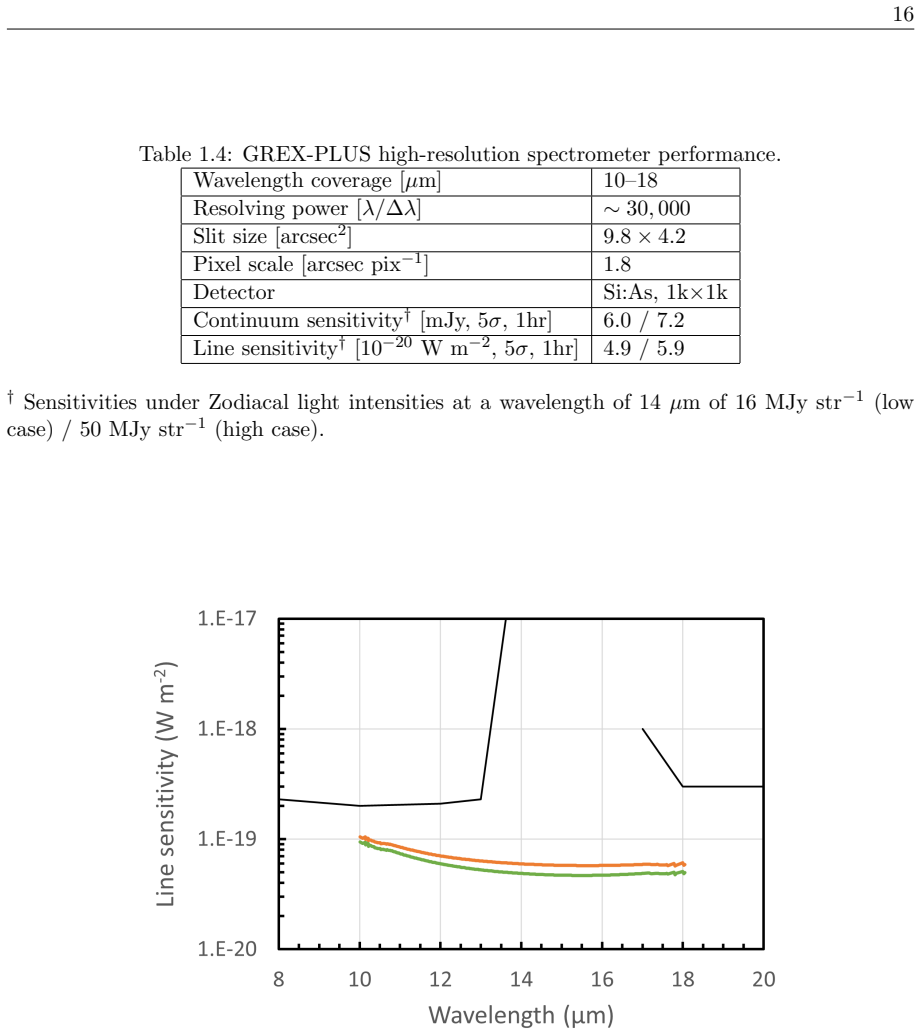
The 1 m aperture telescope cooled to 50 K carrying a wide-field camera in the 2-8 micrometer band and a spectrometer with resolution 30000 in the 10-18 micrometer band.
If this is right
- Successful detection of z greater than 15 galaxies would directly constrain the timing and sources of cosmic reionization.
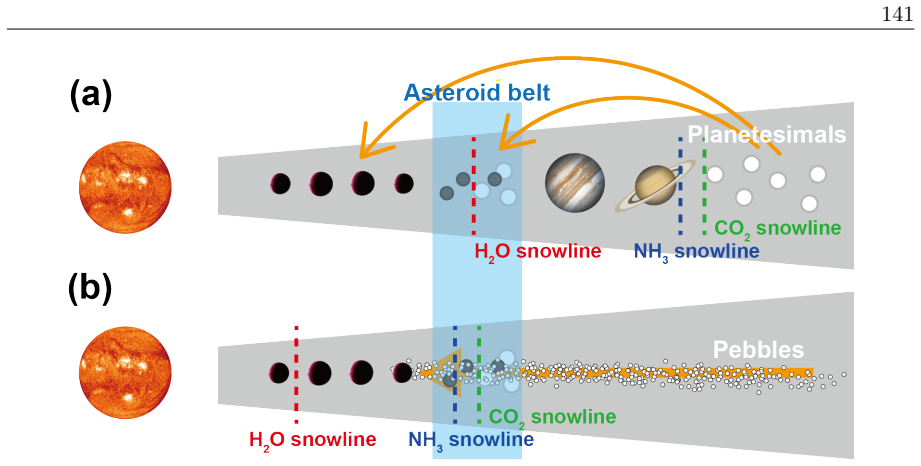
- Locating water snowlines would reveal the radial zones where icy planetesimals can form and migrate.
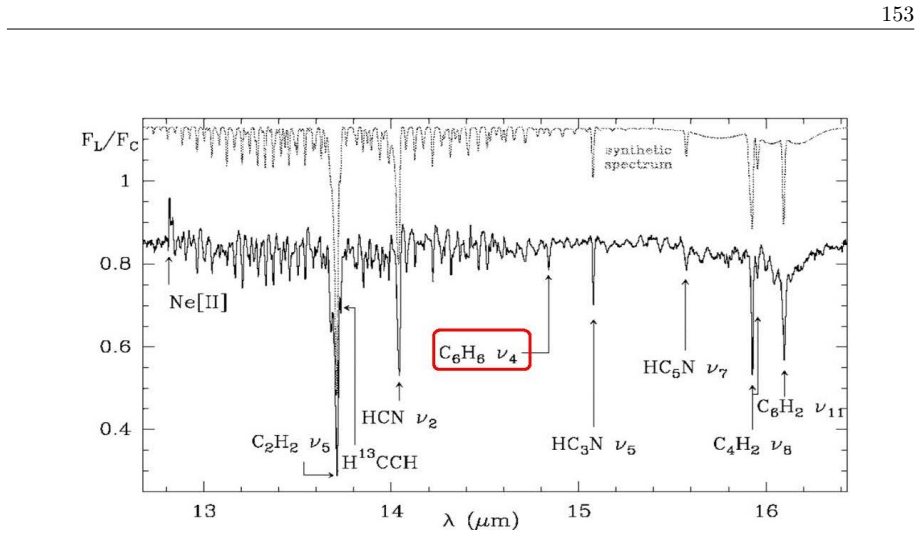
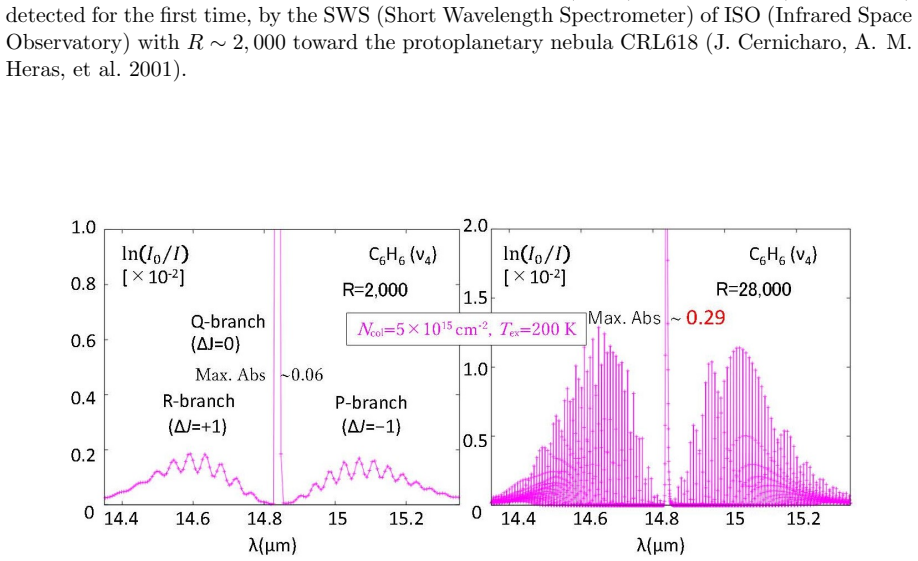
- High-resolution spectra would enable detailed molecular line studies of the interstellar medium.
- Transit observations would yield atmospheric composition data for a range of exoplanets.
- The same instruments would deliver new measurements of Solar System planetary atmospheres and the cosmic infrared background.
Where Pith is reading between the lines
- Wider-field infrared imaging at these wavelengths could fill gaps left by narrower-field facilities operating at similar epochs.
- The snowline measurements could be cross-checked against millimeter observations of dust continuum to test disk temperature models.
- If the mission proceeds, its data archive would support statistical studies of early galaxy luminosity functions beyond current limits.
Load-bearing premise
The stated aperture size, cooling temperature, and instrument wavelength ranges and resolutions will be realized in practice and will prove sufficient to achieve the listed detection goals.
What would settle it
No galaxies detected at redshift above 15 after the planned integration time, or failure to resolve the radial position of the water snowline in a sample of protoplanetary disks at the claimed sensitivity.
Figures




read the original abstract
GREX-PLUS (Galaxy Reionization EXplorer and PLanetary Universe Spectrometer) is a mission candidate for a JAXA strategic L-class mission to be launched in the 2030s. Its primary science goals are two-fold: galaxy formation and evolution, and planetary system formation and evolution. The GREX-PLUS spacecraft will carry a telescope with a 1 m primary mirror aperture cooled down to 50 K. The two science instruments will be onboard: a wide-field camera in the 2--8 $\mu$m wavelength band and a high-resolution spectrometer with a wavelength resolution of 30,000 in the 10--18 $\mu$m band. The GREX-PLUS wide-field camera aims to detect the first generation of galaxies at redshift $z>15$. The GREX-PLUS high-resolution spectrometer aims to identify the location of the water ``snowline'' in protoplanetary disks. Both instruments will provide unique datasets for a broad range of scientific topics, including galaxy mass assembly, the origin of supermassive blackholes, infrared background radiation, molecular spectroscopy in the interstellar medium, transit spectroscopy of exoplanet atmospheres, planetary atmospheres in the Solar System, and so on. This document is the second version of a collection of scientific themes that can be achieved with GREX-PLUS. Each section in Chapters~2 and 3 is based on presentations at several GREX-PLUS Science Workshops.
Editorial analysis
A structured set of objections, weighed in public.
Referee Report
Summary. The manuscript is v2 of the GREX-PLUS Science Book for a proposed JAXA strategic L-class mission. It describes a 1 m primary mirror telescope cooled to 50 K carrying a wide-field camera (2-8 μm) whose goal is to detect first-generation galaxies at z>15 and a high-resolution spectrometer (R=30,000, 10-18 μm) whose goal is to locate the water snowline in protoplanetary disks. The document compiles additional science themes on galaxy mass assembly, supermassive black holes, infrared background, molecular spectroscopy, exoplanet transit spectroscopy, and Solar System atmospheres, with each section in Chapters 2 and 3 drawn from workshop presentations.
Significance. If the mission is realized with the stated aperture, cooling, and instrument parameters, the resulting infrared datasets could address key questions in early galaxy formation and protoplanetary disk chemistry that are difficult to access from the ground or with existing space facilities. The workshop-derived compilation provides a broad, community-sourced view of possible applications across multiple sub-fields.
major comments (2)
- [Abstract] Abstract: The statements that the wide-field camera 'aims to detect' galaxies at z>15 and the spectrometer 'aims to identify' the water snowline are presented as central mission goals without any sensitivity calculations, exposure-time estimates, limiting-magnitude derivations, or comparison to existing facilities that would demonstrate how the 1 m aperture, 50 K cooling, wavelength coverage, and R=30,000 resolution are sufficient to achieve them.
- [Chapters 2 and 3] Chapters 2 and 3: Each science theme is described at a conceptual level only; no quantitative performance modeling, signal-to-noise projections, or trade-off analyses are supplied to link the instrument specifications to the listed observables (e.g., galaxy detection rates or snowline radial precision).
minor comments (1)
- A summary table mapping each instrument specification to the primary science goals would improve readability and allow readers to quickly assess coverage.
Simulated Author's Rebuttal
We thank the referee for the constructive review and for recognizing the potential scientific value of the proposed GREX-PLUS mission. The comments correctly identify that the current manuscript is a high-level compilation of science themes rather than a detailed performance study. We address each major comment below.
read point-by-point responses
-
Referee: [Abstract] Abstract: The statements that the wide-field camera 'aims to detect' galaxies at z>15 and the spectrometer 'aims to identify' the water snowline are presented as central mission goals without any sensitivity calculations, exposure-time estimates, limiting-magnitude derivations, or comparison to existing facilities that would demonstrate how the 1 m aperture, 50 K cooling, wavelength coverage, and R=30,000 resolution are sufficient to achieve them.
Authors: We agree that the abstract states the primary goals without supporting quantitative analysis. The GREX-PLUS Science Book v2 is a workshop-derived compilation of possible science applications and is not a mission proposal document. The stated goals reflect the intended science drivers for the proposed instrument parameters. We will revise the abstract to clarify the document's scope and note that detailed sensitivity calculations belong in a future technical proposal. revision: partial
-
Referee: [Chapters 2 and 3] Chapters 2 and 3: Each science theme is described at a conceptual level only; no quantitative performance modeling, signal-to-noise projections, or trade-off analyses are supplied to link the instrument specifications to the listed observables (e.g., galaxy detection rates or snowline radial precision).
Authors: We acknowledge that Chapters 2 and 3 provide only conceptual descriptions without quantitative modeling. As a community-sourced collection from workshop presentations, the focus is on outlining potential science themes rather than performing detailed simulations. Adding such analyses for each theme is beyond the scope of this document. We will add an explicit statement in the introduction clarifying this limitation. revision: partial
Circularity Check
No derivations, predictions, or fitted quantities; purely prospective mission science case
full rationale
The document is a science-case compilation for a proposed JAXA mission (GREX-PLUS). It states mission aims (detect z>15 galaxies with wide-field camera; locate water snowline with spectrometer) and lists potential science themes, but contains no equations, derivations, performance modeling, sensitivity calculations, or quantitative predictions. No parameters are fitted to data and then repurposed as outputs. No self-citations are used to justify uniqueness theorems or ansatzes. The content is forward-looking planning without any load-bearing steps that could reduce to self-referential inputs by construction. This is the most common honest finding for mission-concept documents.
Axiom & Free-Parameter Ledger
axioms (1)
- domain assumption The proposed 1 m aperture, 50 K cooling, and instrument wavelength/resolution specifications will be technically achievable and adequate for the stated science goals.
Reference graph
Works this paper leans on
-
[1]
GREX-PLUS Science Book. arXiv e-prints , keywords =. doi:10.48550/arXiv.2304.08104 , archivePrefix =. 2304.08104 , primaryClass =
-
[2]
A massive quiescent galaxy at redshift 4.658. , keywords =. doi:10.1038/s41586-023-06158-6 , archivePrefix =. 2301.11413 , primaryClass =
-
[3]
The JWST EXCELS survey: too much, too young, too fast? Ultra-massive quiescent galaxies at 3 < z < 5. , keywords =. doi:10.1093/mnras/stae2092 , archivePrefix =. 2405.02242 , primaryClass =
-
[4]
A massive galaxy that formed its stars at z 11. , keywords =. doi:10.1038/s41586-024-07191-9 , archivePrefix =. 2308.05606 , primaryClass =
-
[5]
Efficient formation of a massive quiescent galaxy at redshift 4.9. Nature Astronomy , keywords =. doi:10.1038/s41550-024-02424-3 , archivePrefix =. 2404.05683 , primaryClass =
-
[6]
Ejective Feedback as a Quenching Mechanism in the First 1.5 Billion Years of the Universe: Detection of Neutral Gas Outflow in a z = 4 Recently Quenched Galaxy. , keywords =. doi:10.3847/1538-4357/ad98ef , archivePrefix =. 2409.00471 , primaryClass =
-
[7]
RUBIES Reveals a Massive Quiescent Galaxy at z = 7.3. , keywords =. doi:10.3847/1538-4357/adab7a , archivePrefix =. 2409.03829 , primaryClass =
-
[8]
Gas outflows in two recently quenched galaxies at z = 4 and 7. , keywords =. doi:10.1051/0004-6361/202553908 , archivePrefix =. 2503.01990 , primaryClass =
-
[9]
An Atlas of Color-selected Quiescent Galaxies at z > 3 in Public JWST Fields
An Atlas of Color-selected Quiescent Galaxies at z > 3 in Public JWST Fields. , keywords =. doi:10.3847/1538-4357/acbefa , archivePrefix =. 2302.10936 , primaryClass =
-
[10]
A surprising abundance of massive quiescent galaxies at 3 < z < 5 in the first data from JWST CEERS. , keywords =. doi:10.1093/mnras/stad369 , archivePrefix =. 2208.00986 , primaryClass =
-
[11]
Star formation shut down by multiphase gas outflow in a galaxy at a redshift of 2.45. , keywords =. doi:10.1038/s41586-024-07412-1 , archivePrefix =. 2308.05795 , primaryClass =
-
[12]
A fast-rotator post-starburst galaxy quenched by supermassive black-hole feedback at z = 3. Nature Astronomy , keywords =. doi:10.1038/s41550-024-02345-1 , archivePrefix =. 2308.06317 , primaryClass =
-
[13]
JWST reveals widespread AGN-driven neutral gas outflows in massive z 2 galaxies. , keywords =. doi:10.1093/mnras/stae327 , archivePrefix =. 2310.17939 , primaryClass =
-
[14]
Exploring over 700 massive quiescent galaxies at z = 2─7: Demographics and stellar mass functions. , keywords =. doi:10.1051/0004-6361/202555829 , archivePrefix =. 2506.04119 , primaryClass =
-
[15]
2025, arXiv e-prints, arXiv:2506.22642, doi: 10.48550/arXiv.2506.22642
DeepDive: A deep dive into the physics of the first massive quiescent galaxies in the Universe. arXiv e-prints , keywords =. doi:10.48550/arXiv.2506.22642 , archivePrefix =. 2506.22642 , primaryClass =
-
[16]
Active Galactic Nucleus Feedback in Quiescent Galaxies at Cosmic Noon Traced by Ionized Gas Emission. , keywords =. doi:10.3847/1538-4357/adaeaf , archivePrefix =. 2406.08547 , primaryClass =
-
[17]
Tracing the quenching journey across cosmic time. , keywords =. doi:10.1051/0004-6361/202349045 , archivePrefix =. 2401.06211 , primaryClass =
-
[18]
Quenching massive galaxies across cosmic time with the semi-analytic model SHARK V2.0. , keywords =. doi:10.1093/mnras/stae1024 , archivePrefix =. 2309.02310 , primaryClass =
-
[19]
Blowing Out the Candle: How to Quench Galaxies at High Redshift An Ensemble of Rapid Starbursts, AGN Feedback, and Environment. , keywords =. doi:10.3847/1538-4357/ad9472 , archivePrefix =. 2310.16085 , primaryClass =
-
[20]
Damped Lyman-Alpha Absorption by Disk Galaxies with Large Redshifts. I. The Lick Survey. , keywords =. doi:10.1086/191114 , adsurl =
-
[21]
The Neutral Atomic Phases of the ISM in the Galaxy
Neutral Atomic Phases of the Interstellar Medium in the Galaxy. , keywords =. doi:10.1086/368016 , archivePrefix =. astro-ph/0207098 , primaryClass =
work page internal anchor Pith review Pith/arXiv arXiv doi:10.1086/368016
-
[22]
The cosmic evolution of dust-corrected metallicity in the neutral gas
The cosmic evolution of dust-corrected metallicity in the neutral gas. , keywords =. doi:10.1051/0004-6361/201731970 , archivePrefix =. 1709.06578 , primaryClass =
work page internal anchor Pith review Pith/arXiv arXiv doi:10.1051/0004-6361/201731970
-
[23]
The Sloan Digital Sky Survey Quasar Catalog: Sixteenth Data Release. , keywords =. doi:10.3847/1538-4365/aba623 , archivePrefix =. 2007.09001 , primaryClass =
-
[24]
A connection between extremely strong damped Lyman- systems and Lyman- emitting galaxies at small impact parameters. , keywords =. doi:10.1051/0004-6361/201322809 , archivePrefix =. 1403.4115 , primaryClass =
work page internal anchor Pith review Pith/arXiv arXiv doi:10.1051/0004-6361/201322809
-
[25]
The SDSS Damped Lya Survey: Data Release 3
The SDSS Damped Ly Survey: Data Release 3. , keywords =. doi:10.1086/497287 , archivePrefix =. astro-ph/0508361 , primaryClass =
work page internal anchor Pith review Pith/arXiv arXiv doi:10.1086/497287
-
[26]
Damped Lyman- absorbers from Sloan digital sky survey DR16Q with Gaussian processes. , keywords =. doi:10.1093/mnras/stab2169 , archivePrefix =. 2103.10964 , primaryClass =
-
[27]
Star formation thresholds and galaxy edges: why and where
Star Formation Thresholds and Galaxy Edges: Why and Where. , keywords =. doi:10.1086/421232 , archivePrefix =. astro-ph/0205125 , primaryClass =
work page internal anchor Pith review Pith/arXiv arXiv doi:10.1086/421232
-
[28]
A survey of interstellar molecular hydrogen. I. , keywords =. doi:10.1086/155471 , adsurl =
-
[29]
X-shooter observations of strong H _ 2 -bearing DLAs at high redshift. , keywords =. doi:10.1093/mnras/stz2707 , archivePrefix =. 1909.11064 , primaryClass =
-
[30]
First detection of CO in a high-redshift damped Lyman- system. , keywords =. doi:10.1051/0004-6361:200809727 , archivePrefix =. 0804.0116 , primaryClass =
-
[31]
Spotting high-z molecular absorbers using neutral carbon. Results from a complete spectroscopic survey with the VLT. , keywords =. doi:10.1051/0004-6361/201732266 , archivePrefix =. 1801.08357 , primaryClass =
work page internal anchor Pith review Pith/arXiv arXiv doi:10.1051/0004-6361/201732266
-
[32]
Gaia-assisted selection of a quasar reddened by dust in an extremely strong damped Lyman- absorber at z = 2.226. , keywords =. doi:10.1051/0004-6361/201935108 , archivePrefix =. 1904.01686 , primaryClass =
work page internal anchor Pith review Pith/arXiv arXiv doi:10.1051/0004-6361/201935108 1904
-
[33]
Microwave background temperature at a redshift of 6.34 from H _ 2 O absorption. , keywords =. doi:10.1038/s41586-021-04294-5 , archivePrefix =. 2202.00693 , primaryClass =
-
[34]
A computer program for fast non-LTE analysis of interstellar line spectra
A computer program for fast non-LTE analysis of interstellar line spectra. With diagnostic plots to interpret observed line intensity ratios. , keywords =. doi:10.1051/0004-6361:20066820 , archivePrefix =. 0704.0155 , primaryClass =
work page internal anchor Pith review Pith/arXiv arXiv doi:10.1051/0004-6361:20066820
-
[35]
An Extremely Bright QSO at z = 2.89. , keywords =. doi:10.3847/1538-4357/ab9c95 , archivePrefix =. 2006.11915 , primaryClass =
-
[36]
Unidentified quasars among stationary objects from Gaia DR2
Unidentified quasars among stationary objects from Gaia DR2. , keywords =. doi:10.1051/0004-6361/201833396 , archivePrefix =. 1805.03394 , primaryClass =
work page internal anchor Pith review Pith/arXiv arXiv doi:10.1051/0004-6361/201833396
-
[37]
Experimental Astronomy , keywords =
Cosmology and fundamental physics with the ELT-ANDES spectrograph. Experimental Astronomy , keywords =. doi:10.1007/s10686-024-09928-w , archivePrefix =. 2311.16274 , primaryClass =
-
[38]
, year = 2024, month = sep, volume =
Excitation of CO molecules in diffuse gas over cosmic history. , year = 2024, month = sep, volume =. doi:10.1093/mnras/stae1863 , adsurl =
-
[39]
The Completed Sloan Digital Sky Survey IV Extended Baryon Oscillation Spectroscopic Survey: The Damped Ly Systems Catalog. , keywords =. doi:10.3847/1538-4365/ac366e , archivePrefix =. 2107.09612 , primaryClass =
-
[40]
doi:10.1038/s41586-025-08779-5 , eprint =
, keywords =. doi:10.1038/s41586-025-08779-5 , eprint =
-
[41]
arXiv , author =:2411.18680 , journal =
doi:10.3847/2041-8213/adaf95 , eid =. arXiv , author =:2411.18680 , journal =
-
[42]
arXiv , author =:2407.20861 , journal =
doi:10.3847/1538-4357/ad6980 , eid =. arXiv , author =:2407.20861 , journal =
-
[43]
arXiv , author =:2306.05648 , journal =
doi:10.1088/1674-4527/ad0864 , eid =. arXiv , author =:2306.05648 , journal =
-
[44]
arXiv , author =:2501.11702 , journal =
doi:10.1051/0004-6361/202553820 , eid =. arXiv , author =:2501.11702 , journal =
-
[45]
doi:10.3847/1538-4365/adc690 , eid =. arXiv , author =:2501.05834 , journal =
-
[46]
arXiv , author =:2409.02989 , journal =
doi:10.3847/1538-4357/ada152 , eid =. arXiv , author =:2409.02989 , journal =
-
[47]
arXiv , author =:2312.06804 , journal =
doi:10.3847/1538-4357/ad38c2 , eid =. arXiv , author =:2312.06804 , journal =
-
[48]
arXiv , author =:2504.12504 , journal =
doi:10.3847/2041-8213/ade8f5 , eid =. arXiv , author =:2504.12504 , journal =
-
[49]
doi:10.1093/mnras/staf1699 , eprint =
, keywords =. doi:10.1093/mnras/staf1699 , eprint =
-
[50]
doi:10.1093/mnras/stae2633 , eprint =
, keywords =. doi:10.1093/mnras/stae2633 , eprint =
-
[51]
arXiv , author =:2402.11220 , journal =
doi:10.1051/0004-6361/202449644 , eid =. arXiv , author =:2402.11220 , journal =
-
[52]
arXiv , author =:2504.04683 , journal =
doi:10.3847/1538-4357/ae232b , eid =. arXiv , author =:2504.04683 , journal =
-
[53]
doi:10.1038/s41586-024-07860-9 , eprint =
, keywords =. doi:10.1038/s41586-024-07860-9 , eprint =
-
[54]
arXiv , author =:2404.02879 , journal =
doi:10.1088/1475-7516/2024/07/078 , eid =. arXiv , author =:2404.02879 , journal =
-
[55]
Probing Reionization-Era Galaxies with
Probing reionization-era galaxies with JWST UV luminosity functions and large-scale clustering. , keywords =. doi:10.1088/1475-7516/2026/01/008 , archivePrefix =. 2503.07590 , primaryClass =
-
[56]
Behroozi, P. et al. , year=. MNRAS , volume=
-
[57]
, keywords =. doi:10.1093/mnras/stab3710 , eprint =
-
[58]
doi:10.1093/mnras/stac1942 , eprint =
, keywords =. doi:10.1093/mnras/stac1942 , eprint =
-
[59]
doi:10.1093/mnras/stac3280 , eprint =
, keywords =. doi:10.1093/mnras/stac3280 , eprint =
-
[60]
arXiv , author =:2405.13108 , journal =
doi:10.3847/1538-4357/ad7b36 , eid =. arXiv , author =:2405.13108 , journal =
-
[61]
doi:10.1093/mnras/staf1692 , eprint =
, keywords =. doi:10.1093/mnras/staf1692 , eprint =
-
[62]
2023, MNRAS, 523, 3201, doi: 10.1093/mnras/stad1557
Efficient formation of massive galaxies at cosmic dawn by feedback-free starbursts. , keywords =. doi:10.1093/mnras/stad1557 , archivePrefix =. 2303.04827 , primaryClass =
-
[63]
Sun, G. et al. , year=. ApJ , volume=
-
[64]
Gelli, V. et al. , year=. MNRAS , volume=
-
[65]
Li, Z. et al. , year=. ApJ , volume=
-
[66]
Yung, L. Y. A. et al. , year=. MNRAS , volume=
-
[67]
Feldmann, R. et al. , year=. MNRAS , inpress=
-
[68]
The z 9 Galaxy UV Luminosity Function from the JWST Advanced Deep Extragalactic Survey: Insights into Early Galaxy Evolution and Reionization. , keywords =. doi:10.3847/1538-4357/adfddc , archivePrefix =. 2501.00984 , primaryClass =
-
[69]
doi:10.1093/mnras/stz1182 , eprint =
, keywords =. doi:10.1093/mnras/stz1182 , eprint =
-
[70]
arXiv , author =:2203.10895 , journal =
doi:10.1051/0004-6361/202243136 , eid =. arXiv , author =:2203.10895 , journal =
-
[71]
arXiv , author =:2103.16571 , journal =
doi:10.3847/1538-4357/ac1bb6 , eid =. arXiv , author =:2103.16571 , journal =
-
[72]
doi:10.1093/mnras/stac028 , eprint =
, keywords =. doi:10.1093/mnras/stac028 , eprint =
-
[73]
doi:10.1093/mnras/sty1655 , eprint =
, keywords =. doi:10.1093/mnras/sty1655 , eprint =
-
[74]
doi:10.1093/mnras/stab2148 , eprint =
, keywords =. doi:10.1093/mnras/stab2148 , eprint =
-
[75]
, keywords =. doi:10.1093/mnras/stac257 , eprint =
-
[76]
doi:10.1093/mnras/stad210 , eprint =
, keywords =. doi:10.1093/mnras/stad210 , eprint =
-
[77]
arXiv , author =:2110.05508 , journal =
doi:10.3847/2041-8213/ac3333 , eid =. arXiv , author =:2110.05508 , journal =
-
[78]
doi:10.3847/1538-4357/abf8ac , eid =. arXiv , author =:2104.07722 , journal =
-
[79]
doi:10.3847/1538-4357/abf8ab , eid =. arXiv , author =:2104.07691 , journal =
-
[80]
doi:10.1093/mnras/stz2773 , eprint =
, keywords =. doi:10.1093/mnras/stz2773 , eprint =
discussion (0)
Sign in with ORCID, Apple, or X to comment. Anyone can read and Pith papers without signing in.