Weak-field waveforms for generic relativistic orbits
Pith reviewed 2026-06-27 12:04 UTC · model grok-4.3
The pith
Einstein's equations recast as integro-differential equations for worldlines by integrating out gravity.
A machine-rendered reading of the paper's core claim, the machinery that carries it, and where it could break.
Core claim
By applying the Schwinger-Keldysh path integral to Einstein's equations the gravitational field is integrated out, yielding classical integro-differential equations of motion for worldlines. These equations are solved for generic orbits and the solutions are inserted into a separately derived waveform formula. The derivation needs no scattering-to-bound map and automatically incorporates retardation and radiation effects without mode separation.
What carries the argument
Schwinger-Keldysh path integral that integrates out the gravitational field to produce integro-differential worldline equations whose solutions are inserted into an independent waveform expression.
If this is right
- Equations of motion can be used directly inside an Effective One-Body framework because retardation and radiation are included automatically.
- No separation of potential and radiation modes is required.
- The waveform computation supplies an alternative route to Effective One-Body results when combined with suitable resummation.
- All computations at leading and next-to-leading order bypass integration-by-parts identities.
Where Pith is reading between the lines
- The modular separation of motion and waveform steps may allow hybrid calculations that combine this method with other perturbative expansions for binary systems.
- Higher-order extensions of the weak-field strategy could be checked against existing post-Newtonian or post-Minkowskian benchmarks for specific orbits.
- The approach suggests a route to waveform templates for generic orbits that does not presuppose a bound-orbit or scattering reduction.
Load-bearing premise
The Schwinger-Keldysh path integral applied to Einstein's equations produces classical integro-differential worldline equations that can be inserted into a waveform formula without extra consistency conditions.
What would settle it
A explicit computation of the waveform at next-to-leading order for a chosen weak-field orbit using the derived equations that disagrees with the standard post-Minkowskian result would falsify the framework.
Figures
read the original abstract
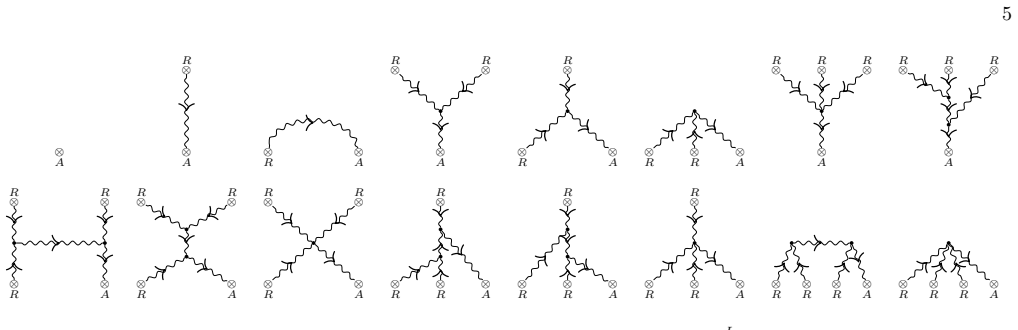
We recast Einstein's equations as ordinary integro-differential equations for the worldlines, integrating out the gravitational field by means of the Schwinger-Keldysh path integral. The same framework allows the gravitational waveform to be computed for unspecified orbits. The two computations are independent: solutions of the equations of motion can then be inserted to reconstruct the waveform for generic orbits. The derivation of the equations of motion does not require a map between scattering and bound-orbit observables. Thus, it could be implemented within an Effective One-Body-inspired framework, with the advantage that retardation and radiation effects are automatically included: no separation between potential and radiation modes is required. Conversely, the waveform computation may provide an alternative to the Effective One-Body approach, if supplemented by suitable resummation schemes. We emphasise that computations in this framework bypass the need for integration-by-parts identities, which are the main technical bottleneck in the computation of observables. In this paper, we outline the general framework and present a computational strategy at leading and next-to-leading order in the weak-field expansion.
Editorial analysis
A structured set of objections, weighed in public.
Referee Report
Summary. The manuscript outlines a framework that uses the Schwinger-Keldysh path integral to integrate out the gravitational field, recasting Einstein's equations as integro-differential equations for worldlines. It also describes an independent computation of gravitational waveforms for unspecified (generic) orbits. Solutions of the equations of motion can be inserted into the waveform formula. The derivation of the EOM is claimed not to require a scattering-to-bound map and the overall approach is said to bypass integration-by-parts identities. The paper presents the general framework and a computational strategy at leading and next-to-leading order in the weak-field expansion, with potential applications to Effective One-Body models.
Significance. If the outlined framework can be carried through with explicit derivations and verified computations, it would offer a conceptually distinct route to relativistic observables that automatically incorporates retardation and radiation reaction without mode separation. The asserted independence between the EOM and waveform calculations, together with the avoidance of IBP identities, would constitute a technical advantage for high-order calculations. The manuscript's emphasis on applicability within EOB-inspired schemes is a potentially useful connection to existing phenomenology.
major comments (2)
- [Abstract] Abstract: the central claim that 'computations in this framework bypass the need for integration-by-parts identities' is presented without any explicit derivation, equation, or worked example at LO or NLO. No concrete reduction step or consistency check is supplied that would allow verification that the path-integral procedure indeed eliminates the IBP bottleneck.
- [Abstract] Abstract, paragraph on the two independent computations: the statement that 'solutions of the equations of motion can then be inserted to reconstruct the waveform' is asserted without demonstration that the waveform formula is free of additional consistency conditions or that the integro-differential EOM solutions remain well-defined when inserted. No explicit waveform expression or insertion procedure is given.
Simulated Author's Rebuttal
We thank the referee for their detailed reading and for highlighting points where the abstract claims would benefit from additional clarification. The manuscript is framed as an outline of the general framework together with a computational strategy at LO and NLO; we address the two major comments below and indicate the revisions we will make.
read point-by-point responses
-
Referee: [Abstract] Abstract: the central claim that 'computations in this framework bypass the need for integration-by-parts identities' is presented without any explicit derivation, equation, or worked example at LO or NLO. No concrete reduction step or consistency check is supplied that would allow verification that the path-integral procedure indeed eliminates the IBP bottleneck.
Authors: The Schwinger-Keldysh construction integrates the gravitational field out of the path integral before any perturbative expansion in the weak-field parameter, directly producing an effective action whose stationary-phase condition yields integro-differential worldline equations. Because the reduction is performed at the level of the functional integral rather than through diagram-by-diagram manipulation of Feynman integrals, the usual IBP identities that arise in the latter approach are not encountered. We acknowledge, however, that the manuscript supplies no explicit LO or NLO calculation that would illustrate the absence of IBP steps. We will revise the abstract to state that this bypass is a structural feature of the framework whose concrete verification is reserved for subsequent explicit computations. revision: yes
-
Referee: [Abstract] Abstract, paragraph on the two independent computations: the statement that 'solutions of the equations of motion can then be inserted to reconstruct the waveform' is asserted without demonstration that the waveform formula is free of additional consistency conditions or that the integro-differential EOM solutions remain well-defined when inserted. No explicit waveform expression or insertion procedure is given.
Authors: Both the worldline effective action and the waveform observable are obtained from the same Schwinger-Keldysh generating functional; the waveform is therefore expressed directly in terms of the worldline trajectories that extremize that action. Insertion is therefore formally consistent by construction. We agree that the manuscript does not display an explicit waveform formula or insertion algorithm. We will add a short clarifying sentence in the abstract (and, if space permits, in the introduction) noting that well-definedness follows from the common origin of the two quantities and that explicit insertion checks will be presented in follow-up work. revision: yes
Circularity Check
No significant circularity identified
full rationale
The abstract and outline describe a framework that recasts Einstein's equations via the Schwinger-Keldysh path integral into integro-differential worldline equations and computes waveforms independently, with explicit statements that the two computations are separate, no scattering-to-bound map is required, and IBP identities are bypassed. No equations, fitted parameters, self-citations, or ansatze are presented that reduce any claimed result to its inputs by construction. The derivation chain is therefore self-contained against the external path-integral formalism and does not exhibit any of the enumerated circularity patterns.
Axiom & Free-Parameter Ledger
axioms (1)
- domain assumption Schwinger-Keldysh path integral yields classical integro-differential equations for worldlines after integrating out the gravitational field
Reference graph
Works this paper leans on
-
[1]
In the classical limit, the SK formalism provides a systematic way to compute observables by iterating the equations of motion, restricting the diagram- matic expansion to vertices that involve only one advanced field
-
[2]
quantising
The EoM for the causal fieldϕ+ are obtained by computing the one-point function of the fieldϕ−. In the two-body problem, the dynamical variables of interest are the perturbation of the metric around Minkowski space, gµν =η µν+κh µν ,(II.4) and the worldline variables of the two bodies, denoted byx µ i (λ), whereλis a parameter on the worldline. The action...
-
[3]
K. S. Thorne, Rev. Mod. Phys.52, 299 (1980)
1980
-
[4]
Blanchet and T
L. Blanchet and T. Damour, Phil. Trans. Roy. Soc. Lond. A320, 379 (1986)
1986
-
[5]
Blanchet and T
L. Blanchet and T. Damour, Phys. Rev. D37, 1410 (1988)
1988
-
[6]
Blanchet and T
L. Blanchet and T. Damour, Ann. Inst. H. Poincare Phys. Theor.50, 377 (1989)
1989
-
[7]
Blanchet and T
L. Blanchet and T. Damour, Phys. Rev. D46, 4304 (1992)
1992
-
[8]
L. Blanchet, Living Rev. Rel.17, 2 (2014), arXiv:1310.1528 [gr-qc]
Pith/arXiv arXiv 2014
-
[9]
D. Bini, T. Damour, and A. Geralico, Phys. Rev. D 108, 124052 (2023), arXiv:2309.14925 [gr-qc]
arXiv 2023
-
[10]
D. Bini, T. Damour, S. De Angelis, A. Geralico, A. Herderschee, R. Roiban, and F. Teng, Phys. Rev. D109, 125008 (2024), arXiv:2402.06604 [hep-th]
arXiv 2024
-
[11]
A. Georgoudis, C. Heissenberg, and R. Russo, Phys. Rev. D109, 106020 (2024), arXiv:2402.06361 [hep-th]
arXiv 2024
-
[12]
D. Bini, T. Damour, and A. Geralico, (2026), arXiv:2604.21522 [gr-qc]
Pith/arXiv arXiv 2026
-
[13]
L. Blanchet, G. Faye, Q. Henry, F. Larrouturou, and D. Trestini, Phys. Rev. Lett.131, 121402 (2023), arXiv:2304.11185 [gr-qc]
arXiv 2023
-
[14]
L. Blanchet, G. Faye, Q. Henry, F. Larrouturou, and D. Trestini, Phys. Rev. D108, 064041 (2023), arXiv:2304.11186 [gr-qc]
arXiv 2023
-
[15]
W.D.GoldbergerandA.Ross,Phys.Rev.D81,124015 (2010), arXiv:0912.4254 [gr-qc]
Pith/arXiv arXiv 2010
- [16]
-
[17]
W. D. Goldberger and I. Z. Rothstein, Phys. Rev. D73, 104029 (2006), arXiv:hep-th/0409156
Pith/arXiv arXiv 2006
-
[18]
R. A. Porto, M. M. Riva, and Z. Yang, JHEP04, 050 (2025), arXiv:2409.05860 [gr-qc]
arXiv 2025
-
[19]
M.M.Ivanov, Y.-Z.Li, J.Parra-Martinez, andZ.Zhou, Phys. Rev. Lett.135, 141401 (2025), arXiv:2504.07862 [hep-th]
Pith/arXiv arXiv 2025
-
[20]
S. Foffa, P. Mastrolia, R. Sturani, and C. Sturm, Phys. Rev. D95, 104009 (2017), arXiv:1612.00482 [gr-qc]
Pith/arXiv arXiv 2017
-
[21]
S. Foffa and R. Sturani, Phys. Rev. D100, 024047 (2019), arXiv:1903.05113 [gr-qc]
arXiv 2019
- [22]
-
[23]
S. Foffa, P. Mastrolia, R. Sturani, C. Sturm, and W. J. Torres Bobadilla, Phys. Rev. Lett.122, 241605 (2019), arXiv:1902.10571 [gr-qc]
Pith/arXiv arXiv 2019
-
[24]
J. Blümlein, A. Maier, P. Marquard, and G. Schäfer, Nucl. Phys. B983, 115900 (2022), [Erratum: Nucl.Phys.B 985, 115991 (2022)], arXiv:2110.13822 [gr- qc]
arXiv 2022
-
[25]
G. Brunello, M. K. Mandal, P. Mastrolia, R. Patil, M. Pegorin, J. Ronca, S. Smith, J. Steinhoff, and W. J. Torres Bobadilla, (2025), arXiv:2512.19498 [hep-th]
arXiv 2025
-
[26]
R. A. Porto and M. M. Riva, (2026), arXiv:2604.09545 [gr-qc]
Pith/arXiv arXiv 2026
-
[27]
G. Brunello, M. K. Mandal, P. Mastrolia, R. Patil, M. Pegorin, S. Smith, and J. Steinhoff, (2026), arXiv:2604.14134 [hep-th]
Pith/arXiv arXiv 2026
-
[28]
C. Cheung, I. Z. Rothstein, and M. P. Solon, Phys. Rev. Lett.121, 251101 (2018), arXiv:1808.02489 [hep-th]
Pith/arXiv arXiv 2018
-
[29]
Z.Bern, C.Cheung, R.Roiban, C.-H.Shen, M.P.Solon, and M. Zeng, Phys. Rev. Lett.122, 201603 (2019), arXiv:1901.04424 [hep-th]
Pith/arXiv arXiv 2019
-
[30]
J. S. Schwinger, J. Math. Phys.2, 407 (1961)
1961
-
[31]
P. M. Bakshi and K. T. Mahanthappa, J. Math. Phys. 4, 1 (1963)
1963
-
[32]
P. M. Bakshi and K. T. Mahanthappa, J. Math. Phys. 4, 12 (1963)
1963
-
[33]
L. V. Keldysh, Zh. Eksp. Teor. Fiz.47, 1515 (1964)
1964
-
[34]
C. R. Galley and M. Tiglio, Phys. Rev. D79, 124027 (2009), arXiv:0903.1122 [gr-qc]
Pith/arXiv arXiv 2009
-
[35]
C. R. Galley, Phys. Rev. Lett.110, 174301 (2013), arXiv:1210.2745 [gr-qc]
Pith/arXiv arXiv 2013
-
[36]
G. U. Jakobsen, G. Mogull, J. Plefka, and B. Sauer, JHEP10, 128 (2022), arXiv:2207.00569 [hep-th]
arXiv 2022
- [37]
- [38]
-
[39]
D. Bini, T. Damour, and A. Geralico, Phys. Rev. D 110, 104051 (2024), arXiv:2408.17193 [gr-qc]
arXiv 2024
- [40]
-
[41]
A. Brandhuber, G. R. Brown, G. Chen, S. De Angelis, J. Gowdy, and G. Travaglini, JHEP06, 048 (2023), arXiv:2303.06111 [hep-th]
arXiv 2023
-
[42]
A. Herderschee, R. Roiban, and F. Teng, JHEP06, 004 (2023), arXiv:2303.06112 [hep-th]
arXiv 2023
-
[43]
A. Georgoudis, C. Heissenberg, and I. Vazquez-Holm, JHEP06, 126 (2023), arXiv:2303.07006 [hep-th]
arXiv 2023
-
[44]
A. Elkhidir, D. O’Connell, M. Sergola, and I. A. Vazquez-Holm, JHEP07, 272 (2024), arXiv:2303.06211 [hep-th]
arXiv 2024
-
[45]
L. Bohnenblust, H. Ita, M. Kraus, and J. Schlenk, JHEP12, 100 (2025), arXiv:2505.15724 [hep-th]
arXiv 2025
-
[46]
G. Brunello, S. De Angelis, and D. A. Kosower, (2025), arXiv:2511.05412 [hep-th]
arXiv 2025
-
[47]
T. Damour, Phys. Rev. D94, 104015 (2016), arXiv:1609.00354 [gr-qc]
Pith/arXiv arXiv 2016
-
[48]
T. Damour, Phys. Rev. D97, 044038 (2018), arXiv:1710.10599 [gr-qc]
Pith/arXiv arXiv 2018
-
[49]
Z. Bern, L. J. Dixon, D. C. Dunbar, and D. A. Kosower, Nucl. Phys. B425, 217 (1994), arXiv:hep-ph/9403226
Pith/arXiv arXiv 1994
-
[50]
Z. Bern, L. J. Dixon, D. C. Dunbar, and D. A. Kosower, Nucl. Phys. B435, 59 (1995), arXiv:hep-ph/9409265
Pith/arXiv arXiv 1995
-
[51]
Z. Bern, L. J. Dixon, and D. A. Kosower, Nucl. Phys. B513, 3 (1998), arXiv:hep-ph/9708239. 10
Pith/arXiv arXiv 1998
- [52]
-
[53]
J. Parra-Martinez, M. S. Ruf, and M. Zeng, JHEP11, 023 (2020), arXiv:2005.04236 [hep-th]
arXiv 2020
- [54]
-
[55]
P. Di Vecchia, C. Heissenberg, R. Russo, and G. Veneziano, JHEP07, 169 (2021), arXiv:2104.03256 [hep-th]
arXiv 2021
-
[56]
N. E. J. Bjerrum-Bohr, P. H. Damgaard, L. Planté, and P. Vanhove, JHEP08, 172 (2021), arXiv:2105.05218 [hep-th]
arXiv 2021
-
[57]
A. Brandhuber, G. Chen, G. Travaglini, and C. Wen, JHEP10, 118 (2021), arXiv:2108.04216 [hep-th]
arXiv 2021
- [58]
- [59]
-
[60]
Z. Bern, J. Parra-Martinez, R. Roiban, M. S. Ruf, C.-H. Shen, M. P. Solon, and M. Zeng, Phys. Rev. Lett.126, 171601 (2021), arXiv:2101.07254 [hep-th]
arXiv 2021
- [61]
-
[62]
G. U. Jakobsen, G. Mogull, J. Plefka, B. Sauer, and Y. Xu, Phys. Rev. Lett.131, 151401 (2023), arXiv:2306.01714 [hep-th]
arXiv 2023
-
[63]
G. U. Jakobsen, G. Mogull, J. Plefka, and B. Sauer, Phys. Rev. Lett.131, 241402 (2023), arXiv:2308.11514 [hep-th]
arXiv 2023
-
[64]
P. H. Damgaard, E. R. Hansen, L. Planté, and P. Van- hove, JHEP09, 183 (2023), arXiv:2307.04746 [hep-th]
arXiv 2023
-
[65]
M. Driesse, G. U. Jakobsen, G. Mogull, J. Plefka, B. Sauer, and J. Usovitsch, Phys. Rev. Lett.132, 241402 (2024), arXiv:2403.07781 [hep-th]
arXiv 2024
-
[66]
M. Driesse, G. U. Jakobsen, A. Klemm, G. Mogull, C. Nega, J. Plefka, B. Sauer, and J. Usovitsch, Nature 641, 603 (2025), arXiv:2411.11846 [hep-th]
Pith/arXiv arXiv 2025
-
[67]
Z. Bern, E. Herrmann, R. Roiban, M. S. Ruf, A. V. Smirnov, V. A. Smirnov, and M. Zeng, Phys. Rev. Lett. 136, 081401 (2026), arXiv:2509.17412 [hep-th]
arXiv 2026
-
[68]
Z. Bern, E. Herrmann, R. Roiban, M. S. Ruf, A. V. Smirnov, S. Smith, and M. Zeng, (2025), arXiv:2512.23654 [hep-th]
arXiv 2025
-
[69]
M. Driesse, G. U. Jakobsen, G. Mogull, C. Nega, J. Plefka, B. Sauer, and J. Usovitsch, (2026), arXiv:2601.16256 [hep-th]
arXiv 2026
-
[70]
L. Barack and A. Pound, Rept. Prog. Phys.82, 016904 (2019), arXiv:1805.10385 [gr-qc]
Pith/arXiv arXiv 2019
-
[71]
A. Pound and B. Wardell, (2021), 10.1007/978-981-15- 4702-7_38-1, arXiv:2101.04592 [gr-qc]
-
[72]
N. Warburton, A. Pound, B. Wardell, J. Miller, and L. Durkan, Phys. Rev. Lett.127, 151102 (2021), arXiv:2107.01298 [gr-qc]
arXiv 2021
-
[73]
B. Wardell, A. Pound, N. Warburton, J. Miller, L. Durkan, and A. Le Tiec, Phys. Rev. Lett.130, 241402 (2023), arXiv:2112.12265 [gr-qc]
arXiv 2023
-
[74]
J. Mathews, B. Wardell, A. Pound, and N. Warburton, Phys. Rev. D113, 064034 (2026), arXiv:2510.16113 [gr- qc]
Pith/arXiv arXiv 2026
- [75]
-
[76]
J. Mathews and A. Pound, Phys. Rev. D112, 104078 (2025), arXiv:2501.01413 [gr-qc]
arXiv 2025
-
[77]
N. Warburton, Phys. Rev. D113, 084059 (2026), arXiv:2512.02274 [gr-qc]
Pith/arXiv arXiv 2026
-
[78]
L. Barack, R. Gonzo, B. Leather, O. Long, and N. Warburton, Phys. Rev. D113, 104042 (2026), arXiv:2602.10089 [gr-qc]
Pith/arXiv arXiv 2026
- [79]
-
[80]
A. Buonanno and T. Damour, Phys. Rev. D59, 084006 (1999), arXiv:gr-qc/9811091
Pith/arXiv arXiv 1999
discussion (0)
Sign in with ORCID, Apple, or X to comment. Anyone can read and Pith papers without signing in.