REVIEW 4 major objections 2 minor
VideoAgent plans coherent video shots and orchestrates over thirty specialized editors to produce near-human professional videos at lower cost.
Reviewed by Pith at T0; open to challenge. T0 means a machine referee read the full paper against a public rubric. the ladder, T0–T4 →
T0 review · grok-4.5
2026-07-12 12:43 UTC pith:UBUALROJ
load-bearing objection Abstract-only systems paper with a plausible all-in-one video agent stack and a new benchmark; near-human quality claim is still uncheckable without coherence metrics and full eval protocol. the 4 major comments →
VideoAgent: All-in-One Framework for Video Understanding and Editing
The pith
A machine-rendered reading of the paper's core claim, the machinery that carries it, and where it could break.
Core claim
VideoAgent shows that combining shot-planning agents for narrative coherence with multi-agent orchestration of over thirty specialized editing tools—selected by intent parsing and assembled by textual-gradient graph optimization—yields an all-in-one framework whose outputs approach human-created video quality while lowering cost and succeeding on diverse editing requests.
What carries the argument
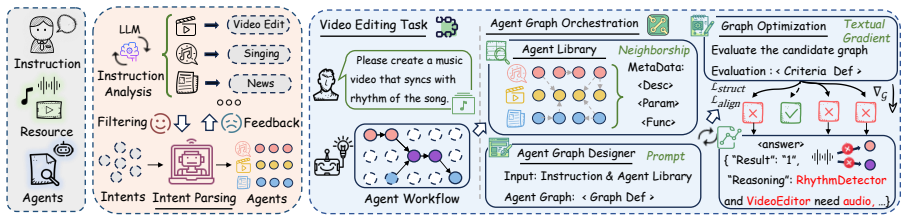
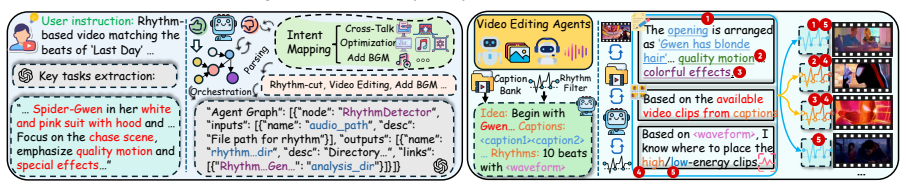
The central mechanism is multi-agent orchestration: an intent-parsing step that filters relevant tools from a pool of more than thirty specialized editing agents, followed by textual-gradient graph optimization that assembles those agents into complex editing pipelines; this is paired with shot-planning agents and cross-modal retrieval that supply coherent narrative structure and aligned visuals.
Load-bearing premise
The claim that automated shot planning plus retrieval plus agent-graph assembly is enough to keep long-video narrative quality close to human work rests on the premise that local edit success automatically yields global story coherence.
What would settle it
A controlled human study that scores narrative coherence, plot consistency, and emotional arc on videos longer or more varied than those in VideoEdit—especially cases where orchestration succeeds but viewers rate the story as fragmented—would show whether the near-human quality claim holds.
If this is right
- Automated systems can handle diverse long-video editing tasks that previously required domain-specific tools or short segments only.
- API costs for complex video editing pipelines can drop by roughly 60 percent through selective agent orchestration.
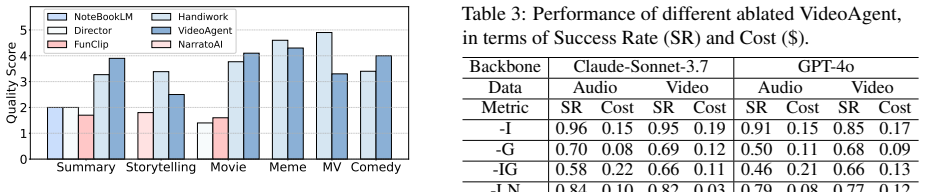
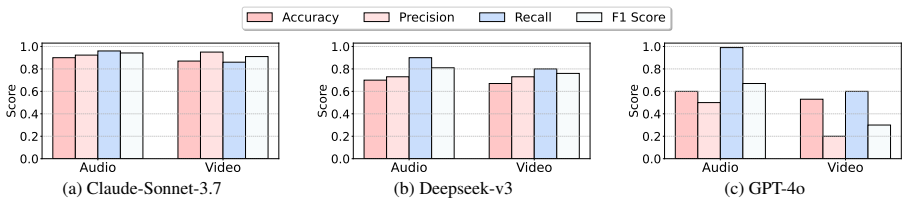
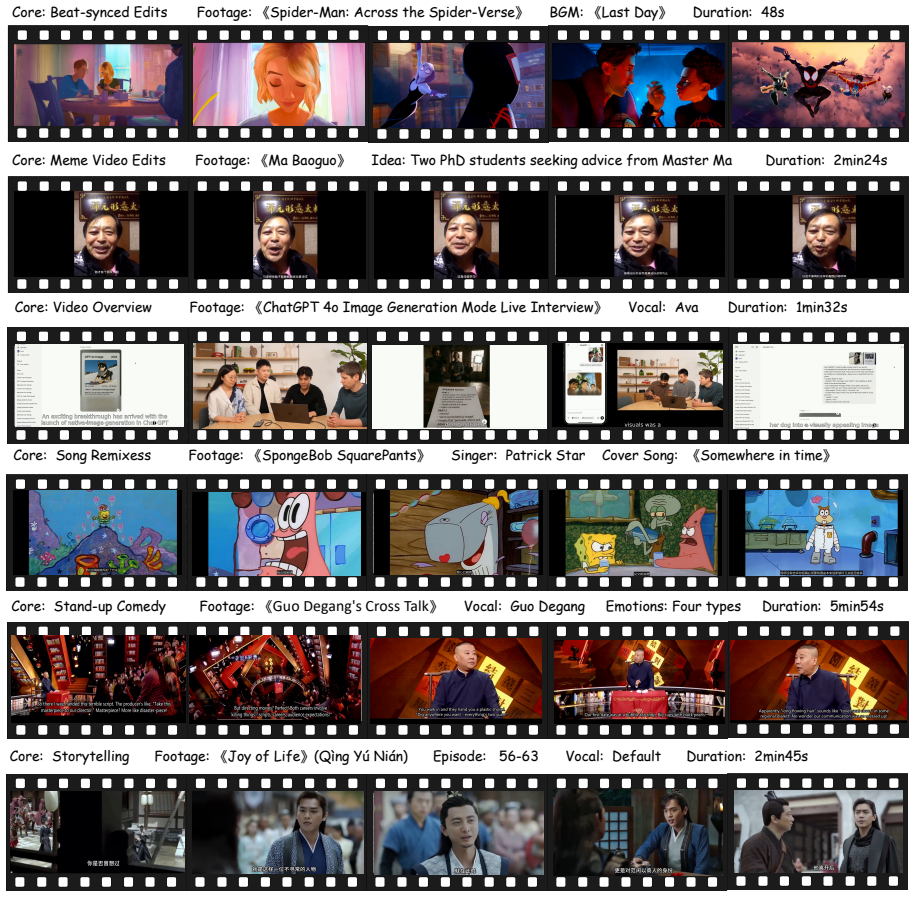
- Professional-quality video content can be produced with human ratings only about 4 percent below human-created material across six categories.
- A new VideoEdit benchmark becomes available for comparing future all-in-one video agents.
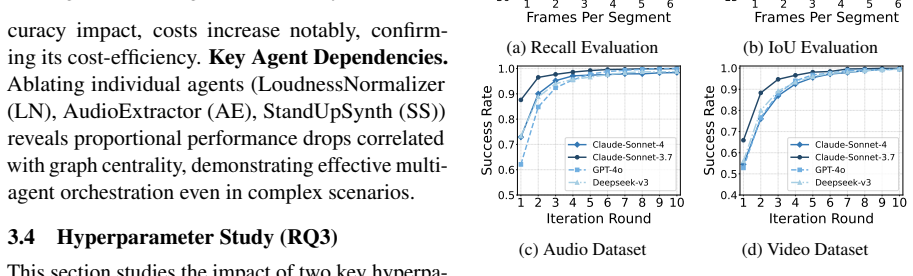
- Orchestration success rates of 87–95 percent become a practical target for multi-agent video systems.
Where Pith is reading between the lines
- If the shot-planning layer truly preserves global narrative, similar agentic stacks could extend to interactive live video editing or real-time storyboarding.
- The textual-gradient graph assembly idea may transfer to other multi-tool creative domains such as long-document design or multi-track audio production.
- Failure modes in long-horizon coherence may still appear on videos longer or more stylistically varied than the tested sets, suggesting a need for explicit coherence metrics beyond orchestration success.
- Releasing the code invites community addition of new specialized agents, potentially turning the framework into a growing library of video operations.
Editorial analysis
A structured set of objections, weighed in public.
Referee Report
Summary. The manuscript proposes VideoAgent, an agentic framework for long-form video understanding and editing. It claims two main contributions: (1) automated shot planning agents plus cross-modal retrieval for coherent narrative shot creation, and (2) multi-agent orchestration of 30+ specialized editing agents, using intent parsing to select tools and textual-gradient graph optimization to assemble pipelines. On a newly proposed VideoEdit benchmark and public datasets, the abstract reports 87–95% orchestration success, ~60% lower API cost, and human ratings only ~4% below human-created videos across six categories, with code released at the stated GitHub URL.
Significance. If the full results hold under proper controls, an all-in-one agentic stack that both plans long-video narratives and orchestrates dozens of specialized editors would be a useful systems contribution for automated media production. Strengths that would matter if verified include the breadth of the tool inventory, the explicit cost reduction claim, the public code release, and a dedicated VideoEdit benchmark. The near-human quality claim would be field-relevant only if narrative coherence over long videos is measured separately from local edit success; that distinction is not yet established from the abstract alone.
major comments (4)
- Only the abstract is available for review. All quantitative claims (87–95% orchestration success, ~60% cost reduction, ratings ~4% below human) are therefore unverifiable: methods, baselines, ablations, error bars, and evaluation protocols are not inspectable. A full manuscript is required before any accept/reject decision can be made on technical grounds.
- The load-bearing near-human quality claim rests on human ratings that are not shown to isolate long-video narrative coherence from local visual/edit quality. The abstract asserts coherent narrative creation via shot planning and multi-agent orchestration but reports no coherence-specific metrics (story consistency, temporal plot alignment over full length, narrative-break rates) and no failure analysis separating orchestration errors from coherence failures. Without those, the central premise that the stack preserves long-form narrative quality remains untested.
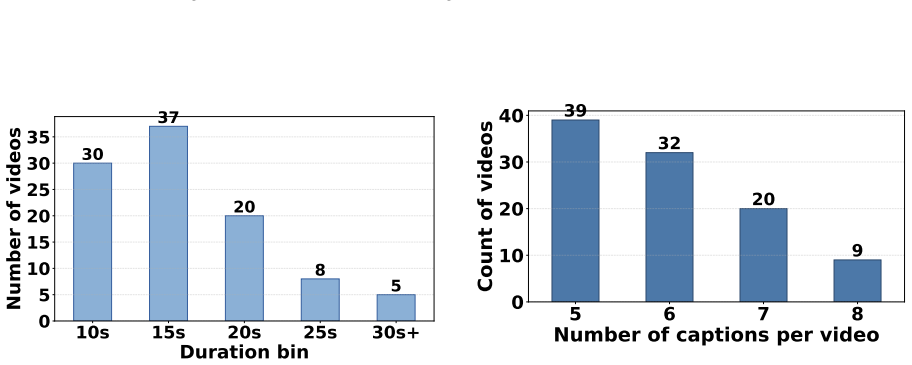
- VideoEdit is a newly proposed benchmark used to support superiority claims. The abstract does not describe construction, task coverage, length distribution, or controls against favoritism toward the system’s own 30+ agent inventory. Circularity risk is material for a systems paper whose success rates and human ratings may be measured on a self-proposed set; full construction details and external baselines are needed.
- Human evaluation protocol is underspecified: rating scale, number of raters, inter-rater agreement, blinding, video lengths, and whether raters scored full-length narrative quality versus short-segment fidelity are all absent. The “only 4% below human-created videos” claim cannot be assessed without this protocol.
minor comments (2)
- Abstract-only review: figure/table numbering, equation clarity, and reference completeness cannot be checked. Full text is required for a complete minor-comment pass.
- Terminology such as “textual-gradient graph optimization” is introduced without definition in the abstract; a short formal description or pointer to the method section would help readers.
Circularity Check
No circularity: empirical systems claims on a new benchmark plus public sets; no definitional reductions or fitted-as-prediction steps.
full rationale
This is an abstract-only systems paper. The claimed results (87–95% orchestration success, ~60% API cost reduction, human ratings ~4% below human-created videos) are presented as experimental outcomes of VideoAgent on the authors’ VideoEdit benchmark and public datasets, not as quantities derived from equations that restate their own inputs. There are no fitted constants renamed as predictions, no uniqueness theorems imported from prior author work, no ansatz smuggled via self-citation, and no self-definitional loops (X defined via Y then used to “derive” Y). Proposing a new benchmark is standard practice and does not, by itself, make success rates circular by construction; the abstract also reports results on public datasets and human evaluation across six categories. With no load-bearing step that reduces by the paper’s own statements to its inputs, the circularity score is 0.
Axiom & Free-Parameter Ledger
free parameters (3)
- Agent/tool inventory and routing thresholds
- Textual-gradient graph optimization hyperparameters
- Human evaluation protocol and rating scale
axioms (3)
- domain assumption Multi-agent orchestration of specialized video tools can produce coherent long-form narrative edits from user intent.
- domain assumption Cross-modal retrieval yields visually aligned content sufficient for planned shots.
- ad hoc to paper Textual-gradient graph optimization is a valid way to assemble complex editing pipelines.
invented entities (2)
-
VideoAgent multi-agent orchestration stack
no independent evidence
-
VideoEdit benchmark
no independent evidence
Cite this review
Pith. "Pith review of VideoAgent: All-in-One Framework for Video Understanding and Editing." pith.science (2026). https://pith.science/paper/UBUALROJ
@misc{pith2026260623327,
  author       = {Pith},
  title        = {Pith review of: VideoAgent: All-in-One Framework for Video Understanding and Editing},
  year         = {2026},
  howpublished = {\url{https://pith.science/paper/UBUALROJ}},
  note         = {Machine review of arXiv:2606.23327}
}
read the original abstract
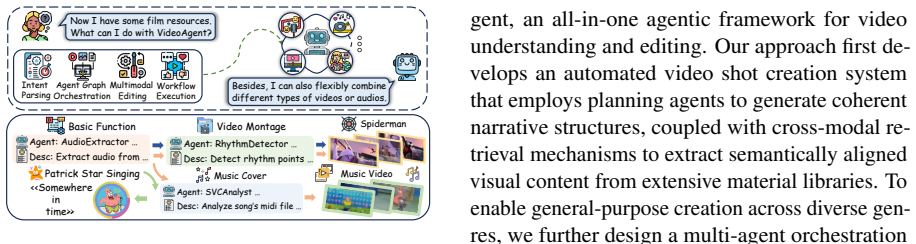
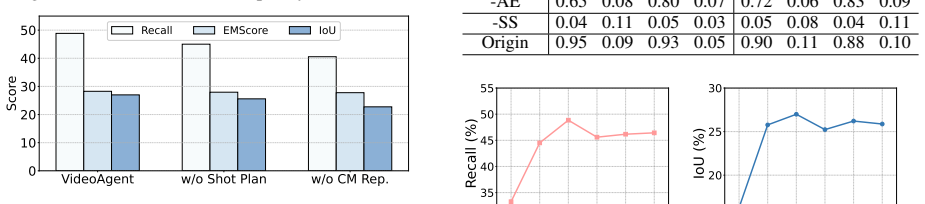
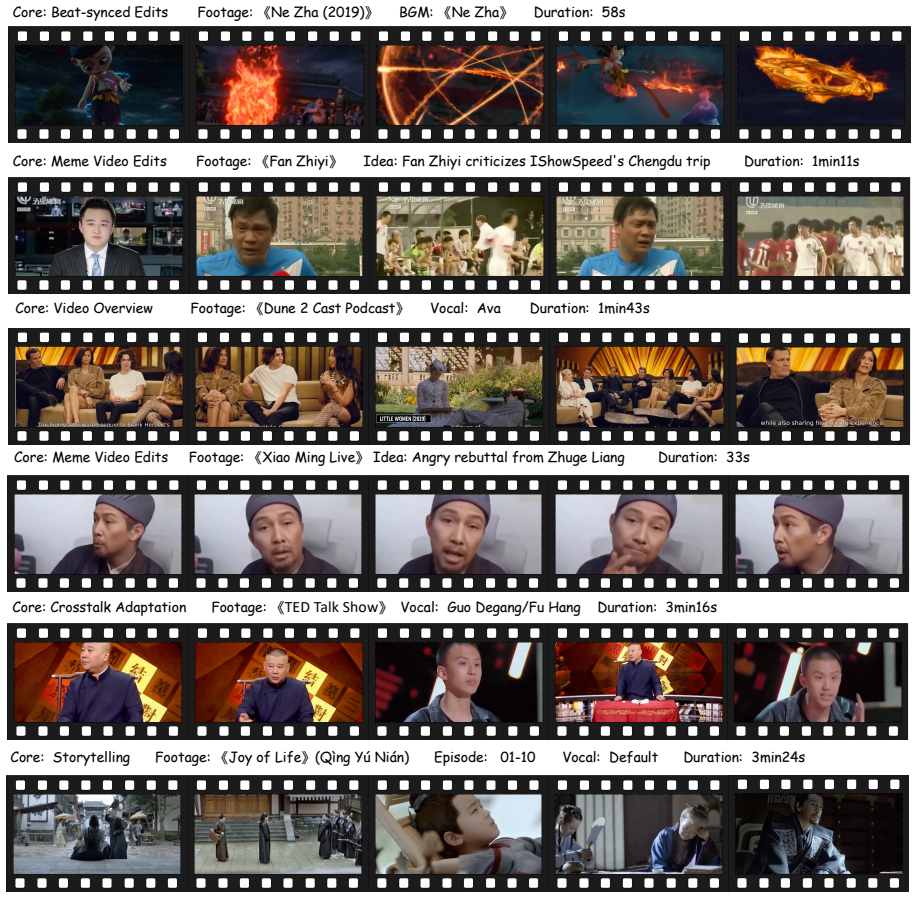
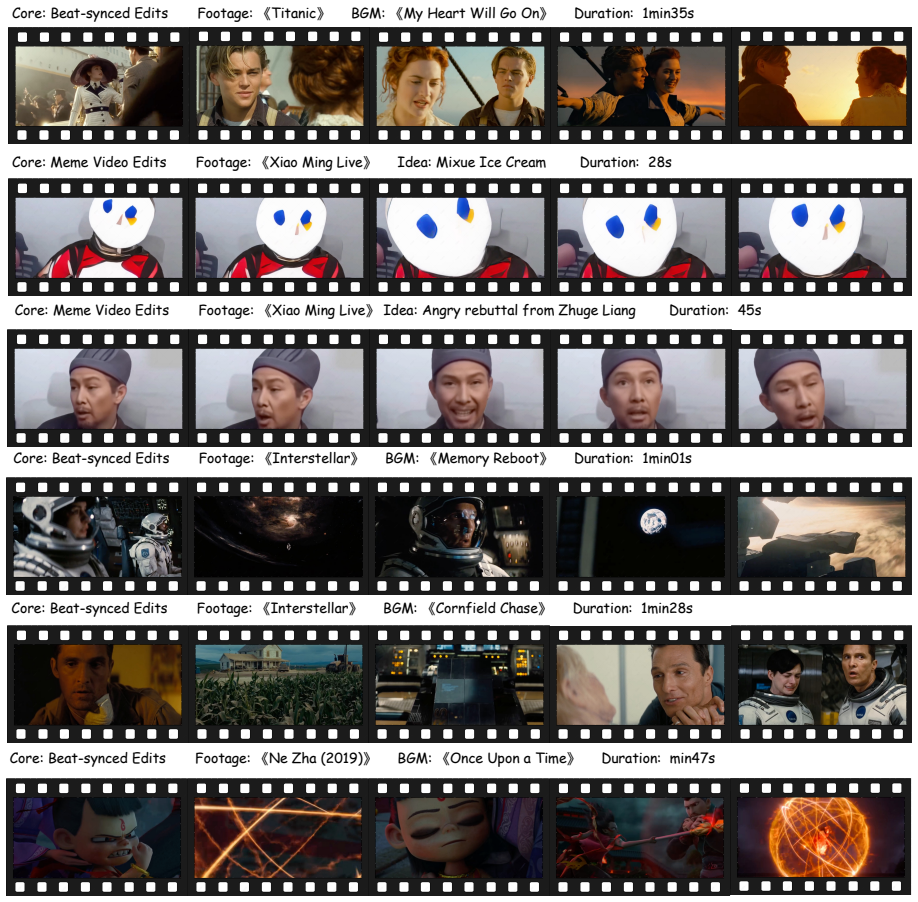
Video editing has become essential in digital media creation, yet existing automated systems are restricted to short segment processing and domain-specific tasks. They face two critical limitations: i) inability to handle diverse video comprehension and editing operations, and ii) lack of long-video understanding for coherent narrative creation. We propose VideoAgent, an all-in-one agentic framework addressing these challenges through two key innovations. First, we develop automated video shot creation with shot planning agents for coherent narratives and cross-modal retrieval for aligned visual content. Second, we design a multi-agent orchestration framework integrating over thirty specialized editing agents. Intent parsing filters relevant tools while textual-gradient graph optimization assembles complex editing pipelines. Extensive experiments on our newly-proposed VideoEdit benchmark and public datasets demonstrate VideoAgent's superiority over existing multimodal LLMs and agentic systems. VideoAgent achieves 87-95% orchestration success rates while reducing API costs by 60%. Human evaluation across six video categories shows VideoAgent produces professional-quality content approaching human-level performance, with ratings only 4% below human-created videos. We release our code at https://github.com/HKUDS/VideoAgent.
Figures

discussion (0)
Sign in with ORCID, Apple, or X to comment. Anyone can read and Pith papers without signing in.