Pith. sign in

REVIEW 3 major objections 4 minor

Separating raw browsing history into factual and preference memory lets web agents personalize—and consistently outperforms existing memory methods.

Reviewed by Pith at T0; open to challenge. T0 means a machine referee read the full paper against a public rubric. the ladder, T0–T4 →

T0 review · deepseek-v4-flash

2026-08-02 12:38 UTC pith:G2G3CPZU

load-bearing objection PersonaTrail is a genuinely new benchmark and the experiments are thorough, but PACMem's consistent gains may be an artifact of the benchmark's enforced clean signals. the 3 major comments →

arxiv 2607.20482 v2 pith:G2G3CPZU submitted 2026-05-30 cs.AI cs.CL

PersonaTrail: Benchmarking Personalized Web Agents through Browsing Trails

classification cs.AI cs.CL
keywords personalized web agentsbrowsing trajectoriespreference inferenceepisodic groundingmemory-augmented agentsweb navigation benchmarkfactual memorypreference memory
verification ladder T0 review T1 audit T2 compute T3 formal T4 reserved

The pith

A machine-rendered reading of the paper's core claim, the machinery that carries it, and where it could break.

The paper sets out to show that web agents can and should personalize by reading a user's raw browsing history—clicks, searches, and page transitions—rather than relying only on fully explicit instructions. To make this measurable, it introduces a benchmark built from live-website trajectories of synthetic users, with two tasks: inferring unstated preferences from recurring browsing patterns, and finding a page from the past referenced only by time or event. It also proposes a memory framework that splits raw history into factual memory (summaries of individual episodes) and preference memory (distilled recurring patterns), retrieved at inference time. Across six backbone models, the framework consistently outperforms existing memory-augmented baselines on both tasks. If the benchmark's synthetic histories are representative, it gives the field a standard way to test whether agents genuinely use personal history.

Core claim

The central claim is that the personalization bottleneck in web agents is memory representation: existing memory systems reduce past trajectories to reusable navigation workflows or reasoning lessons, discarding what a user actually prefers and which episode a query refers to. PersonaTrail exposes this gap by supplying browser-level trajectories from live websites, and PACMem fills it by first segmenting raw logs into goal-oriented episodes (factual memory) and then clustering similar episodes into behavioral schemas (preference memory). At inference time a coarse-to-fine retriever scores both memory types for semantic relevance, temporal alignment, and utility. The paper reports that this d

What carries the argument

The central object is a pair of structured memory types built from raw browsing trajectories. Factual memory stores each past episode as a titled, timestamped summary with URLs and action sequences; preference memory distills clusters of similar factual entries into natural-language rules like 'always uses cookpad.com for chicken breast recipes.' The construction pipeline uses trajectory segmentation, embedding-based grouping and clustering, and LLM synthesis; retrieval uses embedding similarity followed by an LLM relevance judge. This decomposition is what lets the agent distinguish what the user did before from what the user tends to do.

Load-bearing premise

The benchmark rests on the assumption that synthetic user profiles and LLM-generated browsing trajectories—with preferences deliberately held consistent and timestamps simulated—resemble real human browsing closely enough that results predict performance on real users.

What would settle it

Give PACMem and the strongest existing baseline the same two task queries over real, consented browsing histories from a group of human volunteers, and compare task-success rates. If PACMem's advantage shrinks or reverses relative to its synthetic-history results, the benchmark's transferability is refuted.

Watch this falsifier. Get emailed when new claim-graph text bears on it.

Share X Bluesky LinkedIn Reddit HN

If this is right

  • If history is represented as factual plus preference memory, personalized web navigation can be evaluated separately from general navigation skill, since the benchmark's intent and preference metrics decompose the two.
  • Memory-augmented web agents that discard preference values—reducing history to workflows or reasoning lessons—will systematically fail underspecified queries, so future agents need to store what, not just how.
  • The benchmark's managed open-web validation pipeline (cost-free replay plus LLM re-verification) offers a template for keeping live-website benchmarks reproducible as sites change.
  • Because the memory framework improves results across six different backbone models, the gains are not tied to one model's capacity; open and proprietary models benefit alike.

Where Pith is reading between the lines

These are editorial extensions of the paper, not claims the author makes directly.

  • The benchmark's preference-consistency enforcement makes the preference task easier than real life, where tastes drift; a natural extension is to introduce gradual preference shifts and see whether the memory framework adapts.
  • The same dual-memory structure could transfer to non-web agents—mobile app usage, file-system navigation, or IDE interaction logs—where episodic and preference memory are both needed.
  • If real (consented) browsing histories become available, the weakest assumption could be tested directly by running PACMem on real logs and comparing retrieval accuracy against the synthetic numbers.
  • The paper's own failure analysis suggests that once memory is adequate, navigation failures dominate; improving low-level web navigation may yield larger end-to-end gains than further memory engineering.

Editorial analysis

A structured set of objections, weighed in public.

Desk editor's note, referee report, simulated authors' rebuttal, and a circularity audit.

Referee Report

3 major / 4 minor

Summary. The paper introduces PersonaTrail, a benchmark for personalized web agents that uses fine-grained browser-level interaction trajectories from live websites as user history. It defines two tasks: preference inference (resolving under-specified queries from recurring behavioral patterns) and episodic grounding (re-navigating to a specific past page from temporal/event cues). The benchmark comprises 2,524 queries over 317 websites from 200 synthetic user profiles (100 single-hop and 100 multi-hop). The paper also proposes PACMem, a dual-memory framework that segments raw trajectories into factual episodes and distills recurring patterns into preference memories, then retrieves task-relevant entries at inference. Experiments across six backbone LLMs report consistent improvements in TSR and related metrics over No Retrieval, AWM, ReasoningBank, and, for two backbones, MemoryOS.

Significance. PersonaTrail addresses a real gap: prior web-agent benchmarks either assume fully explicit instructions or represent user history abstractly, whereas the benchmark uses raw interaction trajectories and formalizes two personalization axes—preference inference and episodic grounding. The managed open-web validation pipeline and the LLM-judge human-alignment checks (95%/88%/97% agreement) are commendable strengths, and the appendix material is unusually complete, including all prompts. If the reported gains transfer beyond the synthetic setting, PACMem would be a useful contribution. However, the benchmark construction and PACMem appear co-designed: the data pipeline enforces exactly the clean preference signals that PACMem is engineered to extract. The paper's own Limitations paragraph acknowledges that synthetic-user patterns may not represent real human populations, but this concern is central rather than peripheral to the headline claim, and it is not addressed empirically. With robustness experiments and statistical grounding, the work could be a solid benchmark contribution; in its current form, the empirical claims need additional support.

major comments (3)
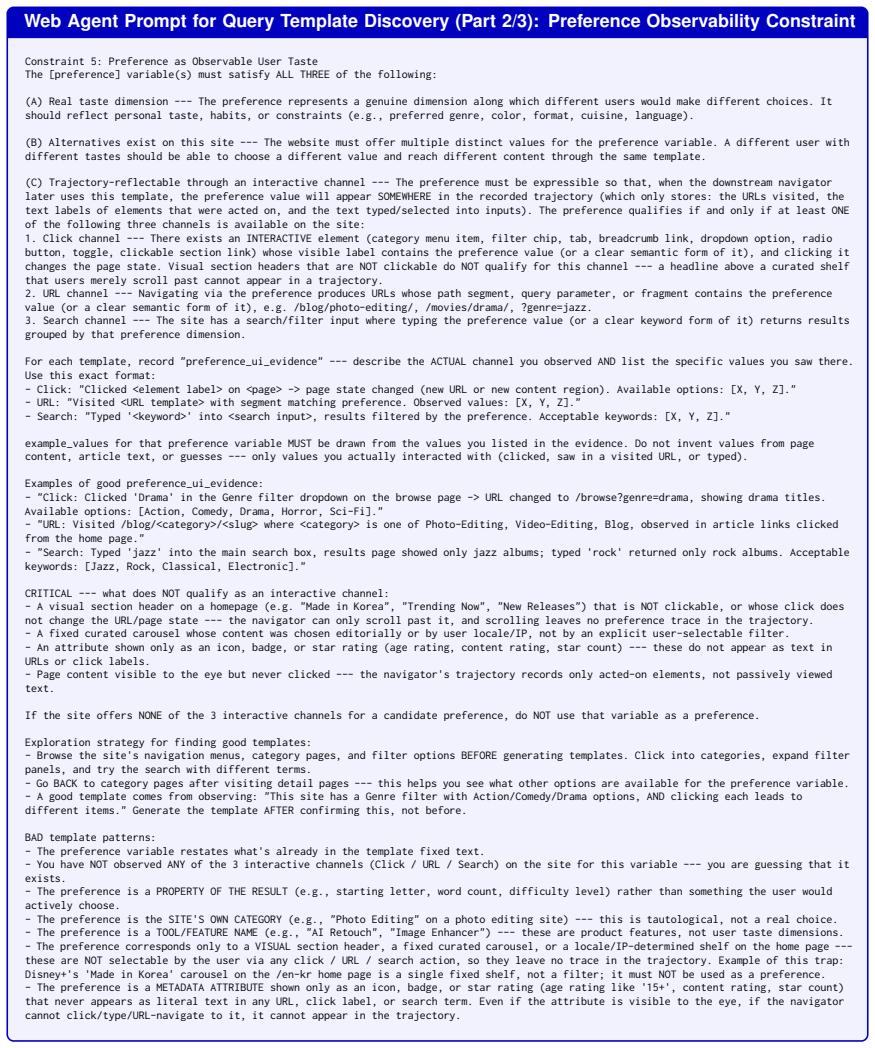
  1. [§3.2, Appendix B, Figs. 35/39/40] The benchmark and PACMem are co-fit in a way that likely inflates the reported margins. Appendix B locks the first vp for a (user, site) pair into a per-user registry and forbids multiple preferences in the same semantic dimension; the verifier (Fig. 35, Condition 3) requires the preference to appear literally in the trajectory via click/URL/search; and preference-inference queries are generated by stripping the same vp from the template (Figs. 31–32). PACMem's preference-memory prompt (Fig. 39) explicitly asks for 'always uses X for Y' entries, and its retrieval prompt (Fig. 40) assigns hard scores of 10 to temporal matches and platform preferences. The episodic-grounding task is likewise sanitized: Appendix C requires temporal cues to uniquely identify one event, while PACMem's retrieval prompt overrides content similarity with a temporal hard score. Thus the benchmark contains exactly
  2. [§5.1, Table 3, Appendix F] No error bars, confidence intervals, or significance tests are reported for the live-web runs. The open web is non-deterministic (site updates, anti-bot pages, transient failures), so a single run per backbone×method is insufficient to support 'consistently outperforms.' Several differences are small in magnitude (e.g., single-hop preference-inference TSR for Llama-4-Scout: PACMem 21.60 vs. ReasoningBank 16.67). Additionally, proprietary models are evaluated on a 25% stratified subset while open models are evaluated on the full set (Appendix F), so the table mixes sample sizes without indicating which cells come from subsamples. I recommend at least three repeats or bootstrap CIs, and a clear statement of per-cell N so that cross-backbone comparisons are interpretable.
  3. [§5.1, Appendix A, Figs. 42–44, Table 6] The adapted baselines may be disadvantaged by construction. AWM and ReasoningBank are prompted, in Figs. 42–44, to abstract away concrete values into placeholders and to avoid embedding specific brands, queries, or items. That design is precisely what prevents them from encoding 'user prefers mystery' or 'the article from May 26,' which are the core requirements of the two tasks. AWM and ReasoningBank are not personalization methods, and the adaptation may not be their strongest form. The later MemoryOS comparison (Table 6) uses only two backbones. To support the method claim, the paper should include a stronger personalized retrieval baseline—for example, direct dense retrieval over raw sessions or session summaries with the same retriever and reranker, without procedural abstraction—or justify why the current baseline configuration is not a strawman. This is load-bearing for the claim
minor comments (4)
  1. [Appendix F] The LLM-judge alignment section reports agreement percentages but not inter-annotator agreement among the three human annotators (e.g., Cohen's kappa). Please report kappa or a similar chance-corrected measure.
  2. [Figure 15] There is a typo in the figure: 'Resoucres' should be 'Resources'.
  3. [§3.1] The notation H={(t_i,u_i,e_i,a_i)} would benefit from an explicit statement of the timestamp format used in the released data, since the appendix and figures show both 'YY.MM.DD HH:MM:SS' and natural-language dates.
  4. [General] An anonymous code/data link is not currently provided in the paper. Given that the benchmark and PACMem prompts are central contributions, please include a repository URL in the camera-ready version.

Circularity Check

0 steps flagged

No significant circularity: benchmark/method alignment affects external validity but no result reduces to its inputs by construction.

full rationale

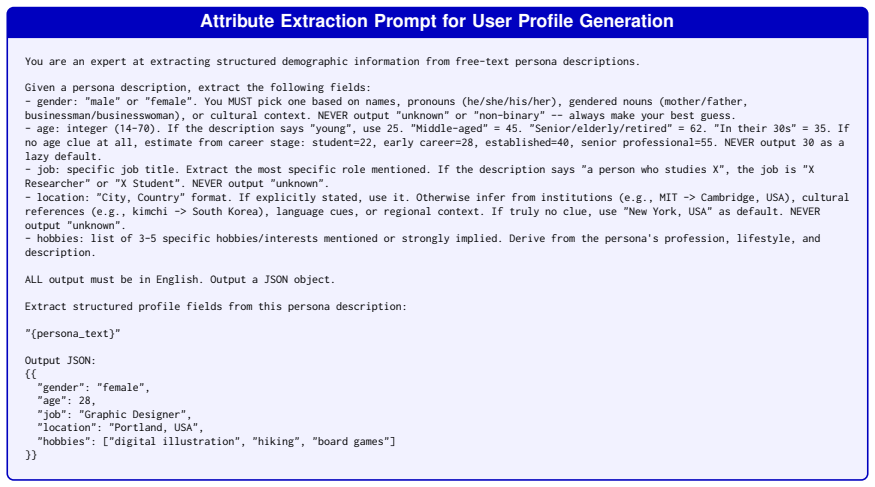
PERSONATRAIL is a synthetic benchmark and PACMEM is a prompted memory method; there is no fitted parameter later reported as a prediction, no equation in which the target is defined in terms of the output, and no load-bearing self-citation. The benchmark deliberately enforces preference consistency and observability (Appendix B, verifier prompt in Fig. 35), and the preference-inference queries are generated by rewriting templates that hide the preference values (Figs. 31-32), so the hidden signal is intentionally present in the histories. PACMEM's preference memory prompt (Fig. 39) extracts recurring patterns, and its retrieval prompt (Fig. 40) rewards temporal and domain matches; this is the intended task design rather than a circular derivation. The comparison against AWM, ReasoningBank, and MemoryOS is an empirical result on live websites with human-aligned LLM judges (Appendix G). Concerns that enforced consistency may limit transfer to messier human histories are external-validity limitations, not circularity, and the paper itself concedes that 'the behavioral patterns of our synthetic users might not fully represent the diversity of real human populations.' No central claim reduces to its own input by construction, so the appropriate circularity score is 0.

Axiom & Free-Parameter Ledger

6 free parameters · 4 axioms · 0 invented entities

The central claims rest on four domain assumptions: synthetic profiles/trajectories are representative, enforced preference consistency is appropriate, and LLM judges align with humans. The method's hyperparameters (thresholds and retrieval caps) are free parameters chosen for the benchmark. No new physical or theoretical entities are introduced.

free parameters (6)
  • theta_f = 0.75
    Cosine similarity threshold for merging adjacent trajectory segments into factual episodes (Appendix A). Chosen by hand and analyzed via Appendix H-style tuning.
  • theta_p = 0.5
    Cosine similarity threshold for clustering factual memories into preference clusters (Appendix A).
  • N = 6
    Initial dense-retrieval candidate count per memory type (Appendix A).
  • Kf = 3
    Maximum number of factual memory entries after LLM reranking (Appendix A).
  • Kp = 4
    Maximum number of preference memory entries after LLM reranking (Appendix A).
  • relevance_min_score = 5
    LLM reranker discard threshold on a 0-10 relevance scale (Appendix A).
axioms (4)
  • domain assumption Synthetic user profiles drawn from PersonaHub and LLM-extracted attributes represent realistic users.
    Invoked in §3.2 User Profile Acquisition; the authors acknowledge in Limitations that synthetic profiles 'might not fully represent the diversity of real human populations.'
  • domain assumption LLM-agent browsing trajectories with simulated timestamps approximate real human browsing histories.
    Trajectory Rollout in §3.2 and Appendix B simulate timestamps and interactions; all benchmark tasks depend on these histories being realistic enough for personalization evaluation.
  • domain assumption Enforcing per-user preference consistency across sessions makes the preference inference task well-posed.
    Appendix B 'Preference Consistency Across Sessions' locks each user to one preference value per site. Real users are often inconsistent, which could make the benchmark easier than reality.
  • domain assumption LLM-as-judge metrics (IS, PS, TSR) align with human judgments.
    Appendix G reports 95/88/97% agreement on 100 sampled instances per metric, a limited but non-trivial validation.

pith-pipeline@v1.3.0-alltime-deepseek · 44346 in / 9462 out tokens · 95309 ms · 2026-08-02T12:38:38.301890+00:00 · methodology

0 comments
Cite this review

Pith. "Pith review of PersonaTrail: Benchmarking Personalized Web Agents through Browsing Trails." pith.science (2026). https://pith.science/paper/G2G3CPZU

@misc{pith2026260720482,
  author       = {Pith},
  title        = {Pith review of: PersonaTrail: Benchmarking Personalized Web Agents through Browsing Trails},
  year         = {2026},
  howpublished = {\url{https://pith.science/paper/G2G3CPZU}},
  note         = {Machine review of arXiv:2607.20482}
}
Share X Bluesky LinkedIn Reddit HN
read the original abstract

Recent advances in large language models have enabled web agents to autonomously execute complex tasks. In practice, users frequently provide underspecified instructions, requiring agents to infer the missing context from their raw browsing histories. Existing benchmarks fail to capture this form of personalization, as they either restrict tasks to fully explicit prompts or abstract web interaction history into simplified forms. To bridge this gap, we introduce PersonaTrail, a benchmark for personalized web agents operating in a managed open web environment. By leveraging realistic browsing trajectories as user history, PersonaTrail evaluates an agent's ability to infer user preferences and recall information from past browsing sessions. We further propose Preference-Aware Contextual Memory (PACMem), a framework that decomposes raw browsing histories into two types of structured memory: factual memories that summarize individual sessions and preference memories that distill recurring behavioral patterns. At inference time, the agent retrieves the most relevant entries from these memories to guide personalized navigation. Extensive experiments show that PACMem consistently outperforms existing memory-based baselines on both tasks.

Figures

Figures reproduced from arXiv: 2607.20482 by ChaeHun Park, Chaewoon Ki, Dohyun Lee, Jaegul Choo, Seungbin Yang.

Figure 1
Figure 1. Figure 1: Two forms of personalized web agent queries: [PITH_FULL_IMAGE:figures/full_fig_p001_1.png] view at source ↗
Figure 2
Figure 2. Figure 2: PERSONATRAIL construction pipeline. (e.g., a link, button), and the corresponding action ai (e.g., click, type). Under this formulation, we evaluate web agents on two complementary tasks: preference inference and episodic grounding. In the preference inference task, the query q is intentionally under-specified, omitting personal preferences such as preferred websites, brands, or genres. The agent must infe… view at source ↗
Figure 3
Figure 3. Figure 3: The overall architecture of PACMEM. It first organizes raw browsing history into factual and preference memory, then retrieves and reranks task-relevant entries at inference time to personalize web navigation. Statistic Single-hop Multi-hop Domains 23 22 ⌞ Subdomains 110 88 Websites 293 179 Users 100 100 Queries 1,530 994 Avg. Sessions 31.05 19.76 Avg. Steps 8.23 19.36 [PITH_FULL_IMAGE:figures/full_fig_p0… view at source ↗
Figure 4
Figure 4. Figure 4: Analysis of TSR (%) across varying numbers of sessions (top) and steps per task (bottom) on Qwen3.6- [PITH_FULL_IMAGE:figures/full_fig_p008_4.png] view at source ↗
Figure 5
Figure 5. Figure 5: Performance variations of the PACMEM across different hyper-parameter configurations. The analysis evaluates the initial candidate size N, and the final selection caps Kf and Kp for factual and prefer￾ence memories, respectively. For each of the three LLM-judged metrics, Intent Score (IS), Preference Score (PS), and the Episodic Grounding Task Success Rate (TSR), we randomly sample 50 instances on which th… view at source ↗
Figure 6
Figure 6. Figure 6: Failure-mode distribution of PACMEM per backbone model on (a) preference inference and (b) episodic grounding tasks, aggregated over single-hop and multi-hop settings. lustrates the corresponding performance variations under different parameter configurations. Empiri￾cal results from the Qwen3.6-27B model demon￾strate a clear trade-off between retrieving sufficient context and mitigating noise. Setting the… view at source ↗
Figure 7
Figure 7. Figure 7: Analysis of TSR (%) across varying numbers of sessions (top) and steps per task (bottom) on Gemma-3- [PITH_FULL_IMAGE:figures/full_fig_p020_7.png] view at source ↗
Figure 8
Figure 8. Figure 8: Analysis of TSR (%) across varying numbers of sessions (top) and steps per task (bottom) on Llama-4- [PITH_FULL_IMAGE:figures/full_fig_p020_8.png] view at source ↗
Figure 9
Figure 9. Figure 9: Action type distribution across all generated trajectories. The [PITH_FULL_IMAGE:figures/full_fig_p020_9.png] view at source ↗
Figure 10
Figure 10. Figure 10: Number of test queries per domain in PERSONATRAIL, separated by single-hop and multi-hop. Multi-hop queries spanning multiple domains are counted once per distinct domain they touch. Science And Education Health Sports Computers Electronics And Technology Arts And Entertainment Business And Consumer Services Hobbies And Leisure Law And Government Community And Society Reference Materials Games News And Me… view at source ↗
Figure 11
Figure 11. Figure 11: Number of unique websites per domain in P [PITH_FULL_IMAGE:figures/full_fig_p021_11.png] view at source ↗
Figure 12
Figure 12. Figure 12: Execution trajectory of PACMEM for a single-hop preference inference task. Given the query "Find a recipe with the main ingredient I usually cook", PACMEM retrieves the historical preference for chicken breast as the main ingredient from preference memory. The agent dismisses the cookpad.com cookie banner (Step 2), types chicken breast into the recipe search box (Step 3), and submits the query (Step 4). S… view at source ↗
Figure 13
Figure 13. Figure 13: Execution trajectory of PACMEM for a multi-hop preference inference task. Given a cross-site query requesting an article on a regularly followed topic alongside a piece from a preferred category, PACMEM retrieves two historical preferences: Topic: Space on the earth.com platform and Category: Science on the National Geographic website. The agent initiates a two-hop trajectory by first opening a space-them… view at source ↗
Figure 14
Figure 14. Figure 14: Execution trajectory of PACMEM for a single-hop episodic grounding task. Given a temporally￾referenced query regarding a sports news article viewed on September 20th about a player contract extension, PACMEM retrieves the corresponding factual memory (timestamped 2026.09.20 12:00). The retrieved memory details a cricket article concerning the Northants Lehmann contract extension. The agent navigates throu… view at source ↗
Figure 15
Figure 15. Figure 15: Execution trajectory of PACMEM for a multi-hop episodic grounding task. Given a temporally-referenced query to replay a past session across two distinct websites, PACMEM accurately retrieves the factual memory timestamped for the exact specified date. The agent navigates the BetterHelp domain to locate the historical stress-coping article and subsequently switches to the second platform to find the exact … view at source ↗
Figure 16
Figure 16. Figure 16: A representative failure case of AWM on a preference inference query. Blue marks the user’s preference. [PITH_FULL_IMAGE:figures/full_fig_p033_16.png] view at source ↗
Figure 17
Figure 17. Figure 17: A representative failure case of ReasoningBank on a preference inference query. Blue marks the user’s [PITH_FULL_IMAGE:figures/full_fig_p033_17.png] view at source ↗
Figure 18
Figure 18. Figure 18: A representative failure case of AWM on an episodic-grounding query. Blue marks the target episode [PITH_FULL_IMAGE:figures/full_fig_p034_18.png] view at source ↗
Figure 19
Figure 19. Figure 19: A representative failure case of ReasoningBank on an episodic-grounding query. Blue marks the [PITH_FULL_IMAGE:figures/full_fig_p034_19.png] view at source ↗
Figure 20
Figure 20. Figure 20: Prompt for the LLM that classifies each curated website into the (domain, subdomain) structure used [PITH_FULL_IMAGE:figures/full_fig_p035_20.png] view at source ↗
Figure 21
Figure 21. Figure 21: Prompt for the LLM that extracts structured attributes from a PersonaHub persona during User Profile [PITH_FULL_IMAGE:figures/full_fig_p036_21.png] view at source ↗
Figure 22
Figure 22. Figure 22: Prompt for the LLM that assigns relevant domains and subdomains to a user profile based on the persona. [PITH_FULL_IMAGE:figures/full_fig_p036_22.png] view at source ↗
Figure 23
Figure 23. Figure 23: Prompt for selecting a website within each assigned subdomain that best fits the user profile. [PITH_FULL_IMAGE:figures/full_fig_p037_23.png] view at source ↗
Figure 24
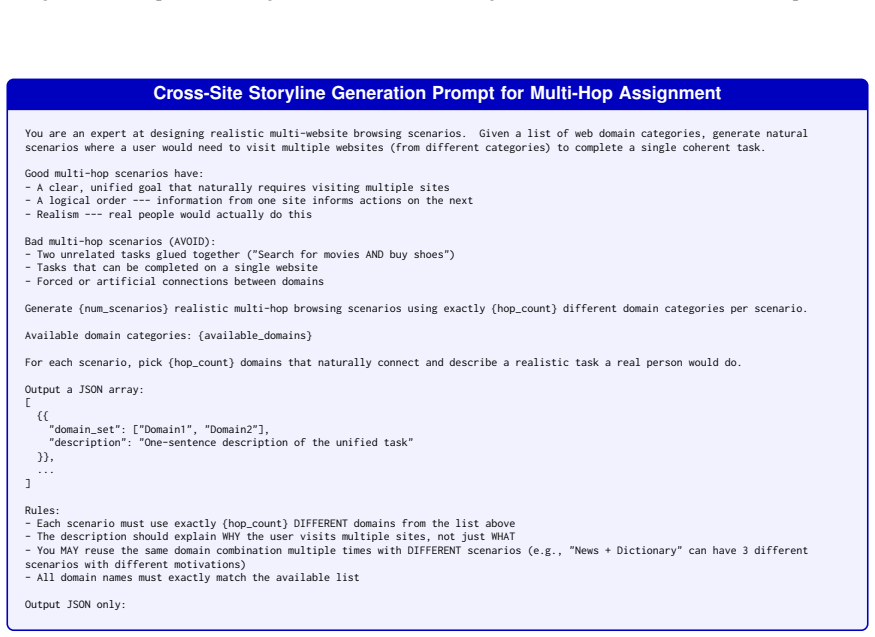
Figure 24. Figure 24: Prompt for the LLM that generates a pool of cross-site storylines, each spanning two or three subdomains [PITH_FULL_IMAGE:figures/full_fig_p037_24.png] view at source ↗
Figure 25
Figure 25. Figure 25: Prompt for matching cross-site storylines to each user profile to form multi-hop assignments. [PITH_FULL_IMAGE:figures/full_fig_p038_25.png] view at source ↗
Figure 26
Figure 26. Figure 26: Web agent prompt for query template discovery: agent role and the first four template constraints. [PITH_FULL_IMAGE:figures/full_fig_p038_26.png] view at source ↗
Figure 27
Figure 27. Figure 27: Web agent prompt for query template discovery: the preference observability constraint with its three [PITH_FULL_IMAGE:figures/full_fig_p039_27.png] view at source ↗
Figure 28
Figure 28. Figure 28: Web agent prompt for query template discovery: template formatting rules, navigation actions, and [PITH_FULL_IMAGE:figures/full_fig_p040_28.png] view at source ↗
Figure 29
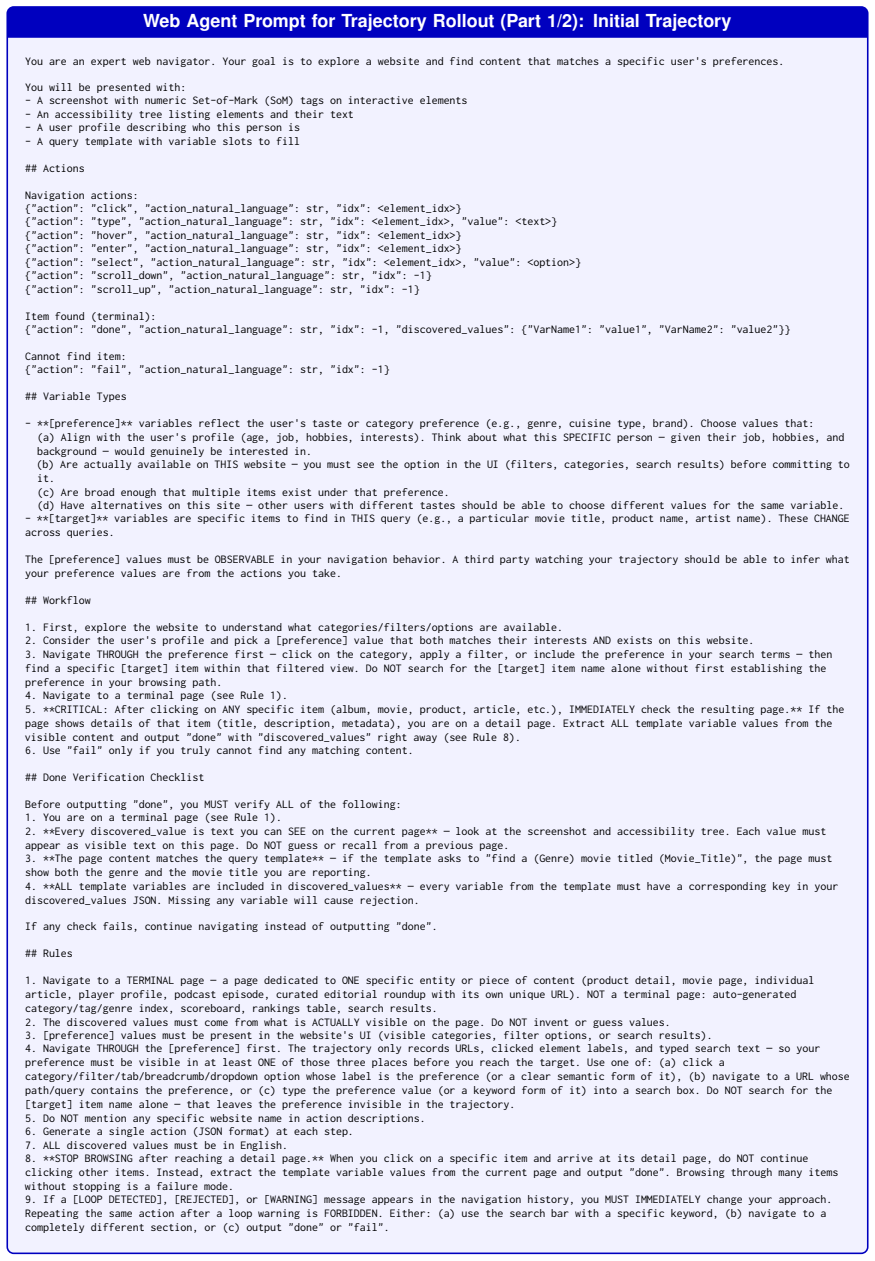
Figure 29. Figure 29: Prompt for executing an instantiated query template with the preference expressed through site-native [PITH_FULL_IMAGE:figures/full_fig_p041_29.png] view at source ↗
Figure 30
Figure 30. Figure 30: Additions for subsequent rollouts that require each new target to differ from prior ones. [PITH_FULL_IMAGE:figures/full_fig_p042_30.png] view at source ↗
Figure 31
Figure 31. Figure 31: Prompt for rewriting a single-hop query into an underspecified request that hides preference and target [PITH_FULL_IMAGE:figures/full_fig_p042_31.png] view at source ↗
Figure 32
Figure 32. Figure 32: Prompt for rewriting a multi-hop query into a single underspecified sentence covering the entire cross-site [PITH_FULL_IMAGE:figures/full_fig_p043_32.png] view at source ↗
Figure 33
Figure 33. Figure 33: Prompt for rewriting a single-hop query with temporal or event-based cues referencing a specific past [PITH_FULL_IMAGE:figures/full_fig_p044_33.png] view at source ↗
Figure 34
Figure 34. Figure 34: Prompt for rewriting a multi-hop query as a single sentence with temporal or event-based cues referencing [PITH_FULL_IMAGE:figures/full_fig_p045_34.png] view at source ↗
Figure 35
Figure 35. Figure 35: Prompt for screening each trajectory on preference consistency, task completion, and preference [PITH_FULL_IMAGE:figures/full_fig_p046_35.png] view at source ↗
Figure 36
Figure 36. Figure 36: Prompt for segmenting a continuous browsing stream into atomic, goal-oriented episodes by detecting [PITH_FULL_IMAGE:figures/full_fig_p047_36.png] view at source ↗
Figure 37
Figure 37. Figure 37: Prompt for deciding whether two adjacent browsing sessions belong to the same high-level goal and [PITH_FULL_IMAGE:figures/full_fig_p047_37.png] view at source ↗
Figure 38
Figure 38. Figure 38: Prompt for distilling grouped episodes into a structured factual memory entry with a descriptive title and [PITH_FULL_IMAGE:figures/full_fig_p047_38.png] view at source ↗
Figure 39
Figure 39. Figure 39: Prompt for extracting recurring behavioral patterns from factual memories. [PITH_FULL_IMAGE:figures/full_fig_p048_39.png] view at source ↗
Figure 40
Figure 40. Figure 40: Prompt for scoring candidate memory entries by semantic relevance, temporal alignment, and practical [PITH_FULL_IMAGE:figures/full_fig_p048_40.png] view at source ↗
Figure 41
Figure 41. Figure 41: Base system prompt for the LLM agent that produces the next browser action over the Browser-Use [PITH_FULL_IMAGE:figures/full_fig_p049_41.png] view at source ↗
Figure 42
Figure 42. Figure 42: Prompt used in AWM to extract reusable workflows from past trajectories. [PITH_FULL_IMAGE:figures/full_fig_p049_42.png] view at source ↗
Figure 43
Figure 43. Figure 43: Prompt used in ReasoningBank to distill generalizable reasoning patterns from successful execution [PITH_FULL_IMAGE:figures/full_fig_p050_43.png] view at source ↗
Figure 44
Figure 44. Figure 44: Prompt used in ReasoningBank to distill generalizable reasoning patterns from failed execution traces. [PITH_FULL_IMAGE:figures/full_fig_p050_44.png] view at source ↗
Figure 45
Figure 45. Figure 45: Evaluator prompt for the Preference Score metric, judging whether the agent successfully applied the [PITH_FULL_IMAGE:figures/full_fig_p051_45.png] view at source ↗
Figure 46
Figure 46. Figure 46: Evaluator prompt for the Intent Score metric, judging task completion from the final landing page [PITH_FULL_IMAGE:figures/full_fig_p051_46.png] view at source ↗
Figure 47
Figure 47. Figure 47: Evaluator prompt template for evaluating successful re-finding of a previously visited page. [PITH_FULL_IMAGE:figures/full_fig_p051_47.png] view at source ↗

discussion (0)

Sign in with ORCID, Apple, or X to comment. Anyone can read and Pith papers without signing in.