REVIEW 2 major objections 5 minor 300 references
Allowing replica mismatches shifts the high-d hard-sphere dynamical glass transition to a higher density that matches a constructive packing bound.
Reviewed by Pith at T0; open to challenge. T0 means a machine referee read the full paper against a public rubric. the ladder, T0–T4 →
T0 review · grok-4.5
2026-07-30 20:53 UTC pith:BTGEDGSW
load-bearing objection Solid high-d replica extension that cleanly shifts the hard-sphere dynamical threshold to match the CJMS packing bound; the static math holds, the grand-canonical dynamical story is still analogy. the 2 major comments →
High-dimensional theory of the glass transition revisited: hopping and local defects
The pith
A machine-rendered reading of the paper's core claim, the machinery that carries it, and where it could break.
Core claim
When the replica molecular ansatz is enlarged to allow fluctuating molecular size (replica mismatches), the high-dimensional hard-sphere dynamical transition moves from the conventional scale O(2^{-d} d) to ϕ_d = 2^{-d} d log d / 2, while the leading ideal-glass density remains ϕ_K = 2^{-d} d log d; the new dynamical density agrees at leading order with the constructive packing lower bound of Campos et al. For harmonic spheres a finite mismatch fraction survives at the thermodynamic glass transition and shifts that point relative to the conventional ansatz.
What carries the argument
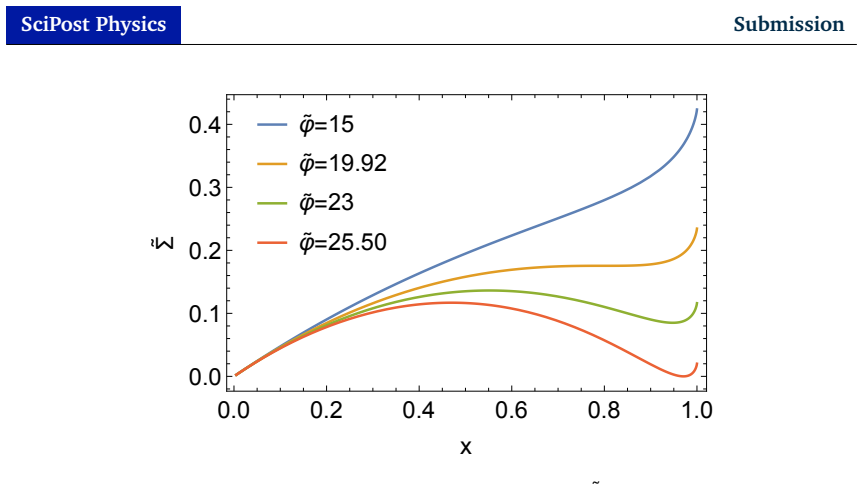
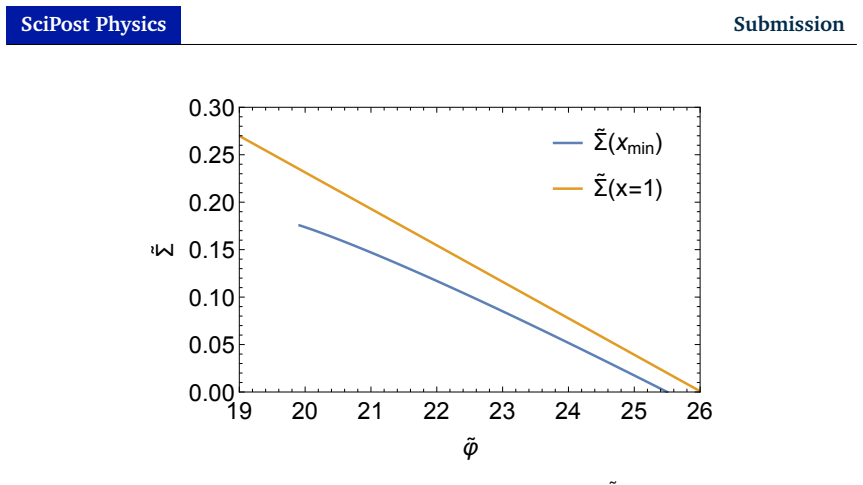
The dissociation replica construction: each molecule is labelled by a binary vector μ that records which replicas participate; a one-parameter binomial ansatz g_k = x^{k-1}(1-x)^{m-k} then reduces the free energy to a function of the overlap x (or mismatch fraction c = 1−x), from which the configurational entropy Σ̃(x) and its dynamical and Kauzmann points are read off.
Load-bearing premise
The claim that the new static threshold is the arrest density of grand-canonical or RSA-like dynamics rests on an analogy between the replicated partition function and a speculated particle-number-nonconserving Monte Carlo rule, not on a solved dynamical equation.
What would settle it
Compute or simulate the long-time density reached by high-dimensional grand-canonical / RSA packing dynamics versus ordinary Langevin or Newtonian dynamics; if the former arrests near ϕ ∼ 2^{-d} d log d / 2 while the latter arrests near the conventional lower scale, the dynamical interpretation is supported; a large mismatch falsifies it.
If this is right
- In high-d hard spheres the dynamical glass line is algorithm-dependent: particle-number-nonconserving rules can pack denser than particle-conserving ones.
- The leading thermodynamic ideal-glass density of hard spheres is robust to molecular-size fluctuations within the class of ansätze considered.
- Conventional vibrational estimates of configurational entropy overestimate the true value once local mismatches are allowed, consistent with residual entropy seen in pinned-glass simulations.
- For soft spheres the ideal glass is not a pure Einstein solid; a finite, Arrhenius-suppressed mismatch fraction remains at the Kauzmann point.
- The same free-energy structure appears for hard-core independent sets on large-degree random graphs, linking sphere packing to algorithmic independent-set thresholds.
Where Pith is reading between the lines
- If the grand-canonical advantage is real, high-d packing algorithms should deliberately allow insertion/deletion moves rather than only local particle moves.
- A dynamical mean-field theory that evolves the mismatch fraction could supply the missing bridge between replica liquid theory and facilitation pictures of sparse excitations.
- Finite-d corrections that restore activated hops might continuously connect the high-d mismatch fraction to two-level systems observed in laboratory glasses.
Editorial analysis
A structured set of objections, weighed in public.
Referee Report
Summary. The paper generalizes the replica liquid theory of structural glasses by allowing replicated molecules to contain only a subset of replicas (molecular dissociation), thereby incorporating particle-level replica mismatches associated with hopping-like motions. Within a second-virial free-energy functional and a binomial (and, in Appendix B, more general) ansatz for the molecular-size distribution, the theory is solved in the high-dimensional limit for hard and harmonic spheres. For hard spheres the dynamical transition is shifted from the conventional scale to eϕ_d = 1/2 (ϕ_d ∼ 2^{-d} d log d / 2), while the leading Kauzmann density remains eϕ_K = 1; the new dynamical density matches, at leading high-d order, the Campos–Jenssen–Michelen–Sahasrabudhe rigorous lower bound from discretized greedy RSA. For harmonic spheres a finite mismatch fraction survives at the ideal-glass point and shifts the thermodynamic transition relative to the conventional full-replica ansatz. Appendices connect the free energy to the hard-core model on large-degree random graphs and argue that broader occupation distributions do not lower the thermodynamic minimum.
Significance. If the static high-d results hold, the work is a genuine advance in mean-field glass theory: it shows that relaxing the full-replica molecular ansatz is not a cosmetic change but moves the dynamical threshold by a full logarithmic factor in packing fraction, brings replica liquid theory into leading-order agreement with a recent rigorous packing bound, and supplies a concrete static order parameter (the mismatch fraction c = 1 − x) for localized excitations inside the glass. The high-d reductions (ideal gas to O(d log d), Mayer term via q_A ≈ e^{−βv}, binomial entropy Σ̃(x) = A(x) − eϕ A(x²), endpoint analysis, and the concavity argument of Appendix B) are standard, internally consistent, and recover known limits (conventional x = 1 and the random-graph hard-core problem). The a-posteriori match to CJMS and the explicit phase diagram for harmonic spheres are falsifiable, parameter-free predictions at leading order. The dynamical/algorithmic reading is interpretive rather than derived, but is appropriately flagged as such and does not underwrite the main static claims.
major comments (2)
- [Sec. 4.2, Abstract] Sec. 4.2 and the abstract present the shifted hard-sphere dynamical density as the arrest scale of grand-canonical / RSA-like (particle-number-nonconserving) dynamics, by equating the static replicated partition function (10) after integrating |μ|=0 molecules to a speculated Monte Carlo with binary μ_i flips. No dynamical equation is solved and threshold equivalence is not proved beyond shared leading high-d scaling and the random-graph precedent (Appendix C and Ref. [50]). The body already uses “we speculate”; the abstract’s stronger phrasing (“suggesting an algorithmic interpretation… grandcanonical dynamics is more efficient”) should be aligned with that caveat, and the claim should be explicitly labeled as an interpretation of the static threshold rather than a derived dynamical result.
- [Sec. 2.5, Eq. (32)] Sec. 2.5 motivates the elevated density scale ϕ ∼ 2^{-d} d log d because the conventional interaction term is only O(d) there and is subleading to the O(d log d) ideal piece in the enlarged variational space. The claim that higher-order virial terms remain negligible at this higher scale rests on citations to the conventional theory [22,23], which were controlled at lower densities. A short explicit argument (or a clear statement of the regime of validity) that the second-virial truncation remains asymptotically exact for the glass free energy at ϕ ∼ 2^{-d} d log d would strengthen the central hard-sphere claim, especially since that is precisely the scale compared to CJMS.
minor comments (5)
- [Sec. 2.1, Fig. 1] Figure 1 caption and Sec. 2.1: the enumeration of molecular types for m=2,3 is clear, but a one-line statement that empty molecules (|μ|=0) are excluded from the sum and later integrated out would help readers coming from the conventional literature.
- [Sec. 2.5] Eq. (23) and following: the rescalings eϕ, Â, β̃ are introduced together; a brief reminder when  drops out of the leading free energy (because  = O(1/log d)) would make the passage from (19) to (31) easier to follow.
- [Figs. 2–3] Fig. 2–3 axis labels use Σ− / φ− notation that is not defined in the captions; defining the tildes (rescaled entropy and packing fraction) in each caption would improve readability.
- [Appendix A] Appendix A is a useful heuristic summary of CJMS; citing the precise leading asymptotic they prove (including any log-log corrections they control) would make the “leading order” agreement statement fully checkable.
- Typos / style: “form=2” spacing (Fig. 1 caption and Sec. 2.1); “Erd ˝os–Rényi” accent rendering in Appendix A; “GC P” spacing in ϕ_GCP (Appendix A).
Circularity Check
No significant circularity: dynamical and Kauzmann densities follow from a derived free-energy functional; CJMS agreement is an a-posteriori external check.
full rationale
The load-bearing static results are obtained by constructing a replicated free-energy functional with molecular dissociation (Eqs. 12–32), restricting to a binomial molecular-size ansatz (Eq. 33), and extracting configurational entropy via Monasson’s method (Eqs. 40–43). For hard spheres, eϕ_d = 1/2 is the density at which the endpoint x = 1 becomes a local minimum of Σ̃(x) = A(x) − eϕ A(x²) (Eqs. 44–45), and eϕ_K = 1 is where that boundary minimum becomes global—standard variational analysis, not a fit to external data. Agreement with the CJMS packing lower bound is reported after the fact as leading-order high-d coincidence, not used as an input. Self-citations to prior replica-liquid work supply the conventional full-molecule baseline being generalized. Appendix B’s concavity argument and Appendix C’s random-graph hard-core limit recover known structures consistently rather than importing the target thresholds by definition. The Sec. 4.2 grand-canonical/RSA dynamical reading is interpretive analogy (shared scaling and partition-function form), not a circular reduction of the static calculation. No self-definitional loop, fitted-as-prediction step, or load-bearing uniqueness import is present.
Axiom & Free-Parameter Ledger
axioms (6)
- domain assumption Second-virial truncation of the replicated free-energy functional is exact for the glass transition of hard/soft spheres in the infinite-d limit.
- domain assumption Gaussian molecular density ansatz with a single cage size A for all molecular types.
- ad hoc to paper Replica-symmetric molecular-size distribution depending only on |µ|, specialized to binomial g_k = x^{k-1}(1-x)^{m-k} (or convex mixtures p(x) in App. B).
- domain assumption High-d scaling ϕ ∼ 2^{-d} d log d with  = O(1/log d) and q_A(r) ≃ e^{-βv(r)} at leading O(d log d).
- domain assumption Monasson analytic continuation m→1 of the replicated free energy yields the configurational entropy of metastable glasses.
- ad hoc to paper The static dissociation free energy describes arrest of grand-canonical / RSA-like particle-number-nonconserving dynamics.
invented entities (2)
-
Dissociable replicated molecules labeled by binary vectors µ ∈ {0,1}^m \ {0}
independent evidence
-
Replica-pair mismatch fraction c = 1 − x
no independent evidence
read the original abstract
The replicated liquid theory provides a microscopic mean-field description of the glass transition by combining the density functional theory of liquids with the replica method originally developed for spin glasses. In the conventional replica liquid theory, a glassy state is described by assuming that particles in different replicas undergo vibrational motion around common centers of mass, thereby forming molecules that contain one particle from every replica. Here we revisit this assumption by allowing each molecule to contain only a subset of replicas. This generalized formulation describes particle-level replica mismatches, which may be associated with non-vibrational motions such as particle hopping. We apply the theory to high-dimensional hard and harmonic spheres, where the mean-field description is expected to become exact. For hard spheres, replica mismatches destabilize the glassy metastable state and shift the dynamical transition to a significantly higher packing fraction, while leaving the leading thermodynamic glass transition unchanged. The resulting transition density agrees, at leading order in high dimensions, with the recent rigorous lower bound for random sphere packings obtained by Campos, Jenssen, Michelen, and Sahasrabudhe by using a discretized version of greedy Random Sequential Absorption, suggesting an algorithmic interpretation of the transition: grandcanonical dynamics is more efficient in high dimensional spaces than canonical one. For harmonic spheres at finite temperature, the glassy state contains a finite replica-mismatch fraction even at the thermodynamic ideal-glass transition, thereby shifting the transition point from that predicted by the conventional replica ansatz.
Figures




Reference graph
Works this paper leans on
-
[1]
The statistical mechanical theory of transport processes. IV. The equations of hydrodynamics , author=. The Journal of Chemical Physics , volume=. 1950 , publisher=
1950
-
[2]
Physical Review E , volume=
Monte Carlo algorithms are very effective in finding the largest independent set in sparse random graphs , author=. Physical Review E , volume=. 2019 , publisher=
2019
-
[3]
Proceedings of the National Academy of Sciences , volume=
Clever algorithms for glasses work by time reparameterization , author=. Proceedings of the National Academy of Sciences , volume=. 2026 , publisher=
2026
-
[4]
The Journal of Chemical Physics , volume=
On the theory of fusion , author=. The Journal of Chemical Physics , volume=. 1940 , publisher=
1940
-
[5]
Proceedings of the National Academy of Sciences , volume=
Shear bands as manifestation of a criticality in yielding amorphous solids , author=. Proceedings of the National Academy of Sciences , volume=. 2017 , publisher=
2017
-
[6]
Journal of Physics: Condensed Matter , volume=
Yield stress, heterogeneities and activated processes in soft glassy materials , author=. Journal of Physics: Condensed Matter , volume=. 2003 , publisher=
2003
-
[7]
Proceedings of the National Academy of Sciences , pages=
Random critical point separates brittle and ductile yielding transitions in amorphous materials , author=. Proceedings of the National Academy of Sciences , pages=. 2018 , publisher=
2018
-
[8]
Proceedings of the National Academy of Sciences , volume=
Scaling description of the yielding transition in soft amorphous solids at zero temperature , author=. Proceedings of the National Academy of Sciences , volume=. 2014 , publisher=
2014
-
[9]
Physical Review Letters , volume =
Microscopic theory of two-step yielding in attractive colloids , author =. Physical Review Letters , volume =. 2018 , month =. doi:10.1103/PhysRevLett.121.185503 , url =
-
[10]
Journal of Statistical Mechanics: Theory and Experiment , volume=
Protocol-dependent shear modulus of amorphous solids , author=. Journal of Statistical Mechanics: Theory and Experiment , volume=. 2016 , publisher=
2016
-
[11]
ACM Transactions on Mathematical Software , issue_date =
Aluffi-Pentini, Filippo and Parisi, Valerio and Zirilli, Francesco , title =. ACM Transactions on Mathematical Software , issue_date =. 1988 , issn =. doi:10.1145/50063.50064 , acmid =
arXiv 1988
-
[12]
Physical Review Letters , volume=
Geometric signatures of jamming in the mechanical vacuum , author=. Physical Review Letters , volume=. 2014 , publisher=
2014
-
[13]
1999 , publisher=
The crystal lattice: phonons, solitons, dislocations , author=. 1999 , publisher=
1999
-
[14]
Nature , volume=
Entropy difference between crystal phases , author=. Nature , volume=. 1997 , publisher=
1997
-
[15]
Molecular Physics , volume=
Entropy of hard spheres in the close-packing limit , author=. Molecular Physics , volume=. 2015 , publisher=
2015
-
[16]
Physical Review E , volume=
Most stable structure for hard spheres , author=. Physical Review E , volume=. 2005 , publisher=
2005
-
[17]
Nature , volume=
Entropy difference between the face-centred cubic and hexagonal close-packed crystal structures , author=. Nature , volume=. 1997 , publisher=
1997
-
[18]
Decoupling phenomena and replica symmetry breaking of binary mixtures , author=. arXiv:1710.08373 , year=
-
[19]
The Journal of Chemical Physics , volume=
Mean field theory of the swap Monte Carlo algorithm , author=. The Journal of Chemical Physics , volume=. 2017 , publisher=
2017
-
[20]
Physical Review A , volume =
Statistical dynamics of classical systems , author =. Physical Review A , volume =. 1973 , month =
1973
-
[21]
Physical Review B , volume=
Dynamics as a substitute for replicas in systems with quenched random impurities , author=. Physical Review B , volume=. 1978 , publisher=
1978
-
[22]
Zeitschrift f
On a Lagrangean for classical field dynamics and renormalization group calculations of dynamical critical properties , author=. Zeitschrift f. 1976 , publisher=
1976
-
[23]
Alex Kamenev , title =
-
[24]
Physical Review E , volume=
Ideal glass-glass transitions and logarithmic decay of correlations in a simple system , author=. Physical Review E , volume=. 1999 , publisher=
1999
-
[25]
Deformation and flow of amorphous solids: a review of mesoscale elastoplastic models , author=. arXiv:1708.09194 , year=
-
[26]
Proceedings of the National Academy of Sciences , volume=
Glass rheology: from mode-coupling theory to a dynamical yield criterion , author=. Proceedings of the National Academy of Sciences , volume=. 2009 , publisher=
2009
-
[27]
Physical Review Letters , volume=
Theory of nonlinear rheology and yielding of dense colloidal suspensions , author=. Physical Review Letters , volume=. 2002 , publisher=
2002
-
[28]
Physical Review E , volume=
Higher-order glass-transition singularities in colloidal systems with attractive interactions , author=. Physical Review E , volume=. 2000 , publisher=
2000
-
[29]
Physical Review E , volume=
Nonergodicity transitions in colloidal suspensions with attractive interactions , author=. Physical Review E , volume=. 1999 , publisher=
1999
-
[30]
Out-of-equilibrium dynamical equations of infinite-dimensional particle systems , author=. arXiv:1808.00236 , year=
-
[31]
The Journal of Chemical Physics , volume=
A microscopic model of the Stokes--Einstein relation in arbitrary dimension , author=. The Journal of Chemical Physics , volume=. 2018 , publisher=
2018
-
[32]
and Katzav, E
Adda-Bedia, M. and Katzav, E. and Vella, D. , JOURNAL =. Solution of the Percus--Yevick equation for hard hyperspheres in even dimensions , VOLUME =
-
[33]
Physical Review E , volume=
Quantitative approximation schemes for glasses , author=. Physical Review E , volume=. 2016 , publisher=
2016
-
[34]
Europhysics Letters , volume=
A thermodynamic description of colloidal glasses , author=. Europhysics Letters , volume=. 2013 , publisher=
2013
-
[35]
SciPost Physics , volume=
Generating dense packings of hard spheres by soft interaction design , author=. SciPost Physics , volume=
-
[36]
Virial series for fluids of hard hyperspheres in odd dimensions , VOLUME =
Rohrmann, Ren\'e D and Robles, Miguel and de Haro, Mariano López and Santos, Andr\'es , JOURNAL =. Virial series for fluids of hard hyperspheres in odd dimensions , VOLUME =
-
[37]
Convergence of virial expansions , VOLUME =
Lebowitz, JL and Penrose, O , JOURNAL =. Convergence of virial expansions , VOLUME =
-
[38]
Computation of high-order virial coefficients in high-dimensional hard-sphere fluids by Mayer sampling , VOLUME =
Zhang, Cheng and Pettitt, B Montgomery , JOURNAL =. Computation of high-order virial coefficients in high-dimensional hard-sphere fluids by Mayer sampling , VOLUME =
-
[39]
and Kofke, David A
Schultz, Andrew J. and Kofke, David A. , DOI =. Fifth to eleventh virial coefficients of hard spheres , URL =. Physical Review E , MONTH =
-
[40]
Ninth and tenth order virial coefficients for hard spheres in D dimensions , VOLUME =
Clisby, Nathan and McCoy, Barry M , JOURNAL =. Ninth and tenth order virial coefficients for hard spheres in D dimensions , VOLUME =
-
[41]
Third and fourth virial coefficients of hard hyperspheres of arbitrary dimensionality , VOLUME =
Luban, Marshall and Baram, Asher , JOURNAL =. Third and fourth virial coefficients of hard hyperspheres of arbitrary dimensionality , VOLUME =
-
[42]
Third and fourth virial coefficients of hard hyperspheres of arbitrary dimensionality , VOLUME =
Joslin, CG , JOURNAL =. Third and fourth virial coefficients of hard hyperspheres of arbitrary dimensionality , VOLUME =
-
[43]
Geometry & Topology , volume=
New upper bounds on sphere packings II , author=. Geometry & Topology , volume=. 2002 , publisher=
2002
-
[44]
Annals of Mathematics , volume=
New upper bounds on sphere packings I , author=. Annals of Mathematics , volume=. 2003 , publisher=
2003
-
[45]
Physical Review E , volume=
Shear modulus of glasses: results from the full replica-symmetry-breaking solution , author=. Physical Review E , volume=. 2014 , publisher=
2014
-
[46]
Course of theoretical physics, vol.5: statistical physics , YEAR =
Landau, Lev Davidovich and Lifshitz, Evgenii Mikhailovich , PUBLISHER =. Course of theoretical physics, vol.5: statistical physics , YEAR =
-
[47]
Discrepancies from asymptotic series and their relation to complex classical trajectories , VOLUME =
Balian, R and Parisi, Giorgio and Voros, A , JOURNAL =. Discrepancies from asymptotic series and their relation to complex classical trajectories , VOLUME =
-
[48]
The devil's invention: asymptotic, superasymptotic and hyperasymptotic series , VOLUME =
Boyd, John P , JOURNAL =. The devil's invention: asymptotic, superasymptotic and hyperasymptotic series , VOLUME =
-
[49]
Monte Carlo tests of renormalization-group predictions for critical phenomena in Ising models , VOLUME =
Binder, Kurt and Luijten, Erik , JOURNAL =. Monte Carlo tests of renormalization-group predictions for critical phenomena in Ising models , VOLUME =
-
[50]
Lundow, P. H. and Markström, K. , ISSUE =. Critical behavior of the Ising model on the four-dimensional cubic lattice , VOLUME =. Physical Review E , MONTH =
-
[51]
Physical Review Letters , volume=
Statistics and properties of low-frequency vibrational modes in structural glasses , author=. Physical Review Letters , volume=. 2016 , publisher=
2016
-
[52]
Proceedings of the National Academy of Sciences , volume=
Continuum limit of the vibrational properties of amorphous solids , author=. Proceedings of the National Academy of Sciences , volume=. 2017 , publisher=
2017
-
[53]
Series and Monte Carlo study of high-dimensional Ising models , VOLUME =
Gofman, Misha and Adler, Joan and Aharony, Amnon and Harris, AB and Stauffer, Dietrich , JOURNAL =. Series and Monte Carlo study of high-dimensional Ising models , VOLUME =
-
[54]
, JOURNAL =
Aktekin, N. , JOURNAL =. Simulation of the eight-dimensional Ising model on the Creutz cellular automaton , VOLUME =
-
[55]
Ising model and self-avoiding walks on hypercubical lattices and ``high-density'' expansions , VOLUME =
Fisher, Michael E and Gaunt, David S , JOURNAL =. Ising model and self-avoiding walks on hypercubical lattices and ``high-density'' expansions , VOLUME =
-
[56]
Strong coupling phase in lattice gauge theories at large dimension , VOLUME =
Drouffe, J-M and Parisi, G and Sourlas, N , JOURNAL =. Strong coupling phase in lattice gauge theories at large dimension , VOLUME =
-
[57]
Bohr’s molecular model, a century later , VOLUME =
Svidzinsky, Anatoly and Scully, Marlan and Herschbach, Dudley , JOURNAL =. Bohr’s molecular model, a century later , VOLUME =
-
[58]
and Rivier, N
Wyler, D. and Rivier, N. and Frisch, H. L. , DOI =. Hard-sphere fluid in infinite dimensions , VOLUME =. Physical Review A , MONTH =
-
[59]
Physical Review Letters , volume=
Shear yielding and shear jamming of dense hard sphere glasses , author=. Physical Review Letters , volume=. 2017 , publisher=
2017
-
[60]
Nature Physics , volume=
Breakdown of elasticity in amorphous solids , author=. Nature Physics , volume=
-
[61]
SciPost Physics , volume=
Liu-Nagel phase diagrams in infinite dimension , author=. SciPost Physics , volume=
-
[62]
Nature Physics , volume=
Non-equilibrium glass transitions in driven and active matter , author=. Nature Physics , volume=. 2013 , publisher=
2013
-
[63]
Annual Review of Condensed Matter Physics , volume=
Glass and jamming transitions: from exact results to finite-dimensional descriptions , author=. Annual Review of Condensed Matter Physics , volume=. 2017 , publisher=
2017
-
[64]
Quarks, atoms, and the 1/N expansion , VOLUME =
Witten, Edward , JOURNAL =. Quarks, atoms, and the 1/N expansion , VOLUME =
-
[65]
Solid State Physics , YEAR =
Ashcroft, Neil W and Mermin, N David , PUBLISHER =. Solid State Physics , YEAR =
-
[66]
Glassy materials and disordered solids: an introduction to their statistical mechanics , YEAR =
Binder, Kurt and Kob, Walter , PUBLISHER =. Glassy materials and disordered solids: an introduction to their statistical mechanics , YEAR =
-
[67]
Solution of the dynamics of liquids in the large-dimensional limit , VOLUME =
Maimbourg, Thibaud and Kurchan, Jorge and Zamponi, Francesco , JOURNAL =. Solution of the dynamics of liquids in the large-dimensional limit , VOLUME =
-
[68]
Journal of Statistical Mechanics: Theory and Experiment , volume=
Statics and dynamics of infinite-dimensional liquids and glasses: a parallel and compact derivation , author=. Journal of Statistical Mechanics: Theory and Experiment , volume=. 2016 , publisher=
2016
-
[69]
Dynamical mean-field theory of strongly correlated fermion systems and the limit of infinite dimensions , VOLUME =
Georges, Antoine and Kotliar, Gabriel and Krauth, Werner and Rozenberg, Marcelo J , JOURNAL =. Dynamical mean-field theory of strongly correlated fermion systems and the limit of infinite dimensions , VOLUME =
-
[70]
1986 , publisher=
Course of theoretical physics, vol.7: theory of elasticity , author=. 1986 , publisher=
1986
-
[71]
Soft Matter , volume=
Effects of coordination and pressure on sound attenuation, boson peak and elasticity in amorphous solids , author=. Soft Matter , volume=. 2014 , publisher=
2014
-
[72]
Proceedings of the National Academy of Sciences , volume=
Force distribution affects vibrational properties in hard-sphere glasses , author=. Proceedings of the National Academy of Sciences , volume=. 2014 , publisher=
2014
-
[73]
The Growing Correlation Length in Glasses , YEAR =
Fullerton, Christopher J and Moore, MA , JOURNAL =. The Growing Correlation Length in Glasses , YEAR =
-
[74]
Hierarchical Random Energy Model of a Spin Glass , URL =
Castellana, Michele and Decelle, Aur\'elien and Franz, Silvio and M\'ezard, Marc and Parisi, Giorgio , DOI =. Hierarchical Random Energy Model of a Spin Glass , URL =. Physical Review Letters , MONTH =
-
[75]
aps-inline-formula
Yeo, Joonhyun and Moore, M. A. , DOI =. Origin of the growing length scale in <span class="aps-inline-formula"><math><mi>M</mi></math></span>-<span class="aps-inline-formula"><math><mi>p</mi></math></span>-spin glass models , URL =. Physical Review E , MONTH =
-
[76]
and Witten, Thomas A
Tkachenko, Alexei V. and Witten, Thomas A. , ISSUE =. Stress propagation through frictionless granular material , VOLUME =. Physical Review E , MONTH =
-
[77]
, ISSUE =
Moukarzel, Cristian F. , ISSUE =. Isostatic Phase Transition and Instability in Stiff Granular Materials , VOLUME =. Physical Review Letters , MONTH =
-
[78]
Geometric origin of mechanical properties of granular materials , VOLUME =
Roux, Jean-Noël , ISSUE =. Geometric origin of mechanical properties of granular materials , VOLUME =. Physical Review E , MONTH =
-
[79]
Journal of Statistical Physics , volume=
Do solids flow? , author=. Journal of Statistical Physics , volume=. 2010 , publisher=
2010
-
[80]
Jammed lattice sphere packings , URL =
Kallus, Yoav and Marcotte, \'Etienne and Torquato, Salvatore , DOI =. Jammed lattice sphere packings , URL =. Physical Review E , MONTH =
discussion (0)
Sign in with ORCID, Apple, or X to comment. Anyone can read and Pith papers without signing in.