Artificial Intelligence · arXiv:2611.05611 v1 · submitted 3 Nov 2026 · 48 references
Hybrid Spark: Adaptive Speculative Decoding That Lets the Content Choose the Drafter
The paper says
“Speculative decoding (SD) speeds up large language model (LLM) serving, but its gain depends on the workload's shape, such as batch size and context length, and on its content.”
more of the abstract
A model-based drafter proposes a short block on any content, while a model-free drafter such as n-gram lookup proposes long copies at almost no cost when the output repeats its input, as in code editing. Adaptive verification spends a batch-wide verification budget on the draft tokens most likely to be accepted, but it supports only one model-based drafter. Model-free drafters provide no per-token confidence, so they cannot take part in budget allocation, and deployments must either fix one drafter or split their GPUs between drafters. We present \sys, a framework that runs a model-based and a model-free drafter on every step and gives each request the better of their chains, within adaptive verification and entirely on the GPU, which keeps asynchronous scheduling intact. The key idea is a price per verified draft token: the goodput that slot would earn elsewhere in the batch. Once the model-free drafter's tokens carry calibrated acceptance estimates, fit once on general text, this price puts both drafters' chains on one scale. Instantiated with \dspark and an n-gram drafter in vLLM, \sys achieves 1.10–1.62\x the output throughput of \dspark on code editing at batch size 4 and 1.04–1.27\x at batch size 128, while staying at 0.97–1.01\x of it on chat at temperature 0. A single deployment can therefore serve both workloads.
from the abstract
Pith says
Machine review · deepseek-v4-flash · 5 Nov 2026 · what was read was not recorded · not checked by a person
It can be wrong. Challenge this review or reply to it.
Holds up. Solid engineering paper: clean solution for hybrid speculative decoding, thorough evaluation, honest about limits. Not a paradigm shift but a deployable improvement worth citing. This line is wrong
10 minor
How often objections from reviews like this one are right: not yet measured
Not checked: figures, code, what the 48 references say.
10 minor objections
The paper says, at Abstract
Pith says: minor objection 1 of 10
The headline claims specify 'at temperature 0', but the paper later presents T=1 results (Section 5.8, Tables 13–15). Consider qualifying the abstract's 'chat at temperature 0' as the primary operating point, or mention that results at T=1 are also analyzed.
The paper says, at §1, final paragraph
Pith says: minor objection 2 of 10
The list of contributions (items 1–4) is useful, but the RL future work sentence before it interrupts the flow. Consider moving the RL paragraph to the conclusion or to a separate future-work section.
show 8 more
The paper says, at §2, 'Asynchronous scheduling' paragraph
Pith says: minor objection 3 of 10
The phrase 'one step older than the ones the GPU uses to allocate it' is slightly ambiguous until the reader has seen §4.4. Consider adding a forward reference to Section 4.4 for clarity.
The paper says, at §3, Observation 2
Pith says: minor objection 4 of 10
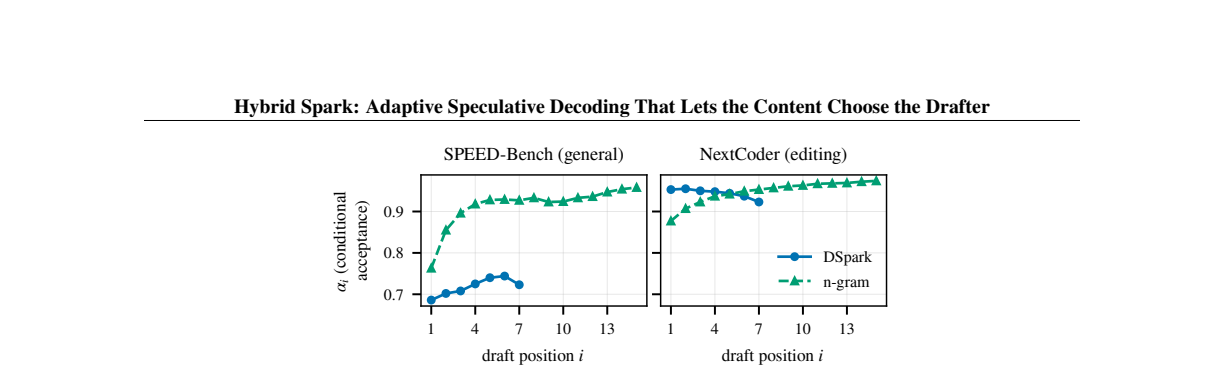
Figure 2 caption says 'n-gram curve counts only steps with a match'. This is important and should also be stated in the text, not just the caption, to avoid misinterpretation.
The paper says, at §4.2, Equation (1)
Pith says: minor objection 5 of 10
The notation 'pos(k)' distinguishes first vs. later tokens, but the appendix (Table 5) uses 'first' and 'rest' subscript names. A brief inline note connecting the notation would help.
The paper says, at §5.1, 'Metric and statistics'
Pith says: minor objection 6 of 10
'vllm bench serve' should be formatted as a command or monospace. Also, 'concurrency equal to the batch size' is clear, but the paper later mentions oversampling small datasets—consider noting early that oversampling does not affect throughput measurement because runs are sequential.
The paper says, at §5.7, Table 16
Pith says: minor objection 7 of 10
The column 'Pred.' is described as 'Equation (5)' but Equation (5) is the half-normal mean, not the shortfall. Clarify that Pred. is the mean shortfall predicted by the half-normal model. Also, the 'Lost' column uses absolute percentage; it would be clearer to add a note that these are percentages of goodput, not throughput.
The paper says, at Appendix H, Table 9
Pith says: minor objection 8 of 10
The table is clear, but it might be helpful to add a note that 'T=0' greedy is trivially lossless for all policies, as stated in the text.
The paper says, at Appendix I, 'North-Mini-Code' paragraph
Pith says: minor objection 9 of 10
The large speedups on North-Mini-Code are flagged as partly due to a weak DSpark drafter. This honesty is appreciated, but the section header 'Where DSpark's drafter is weak' could be softened to avoid sounding defensive.
The paper says, at Various
Pith says: minor objection 10 of 10
Minor typographical issues: in the abstract, 'shape, such as batch size' has a comma without a space (but the full text shows a space; check rendering). In §5.1, 'North-Mini-Code-1.0' is referenced as a 30B-total MoE model; clarify whether the 30B includes the 4-bit compression or not.
What would settle it
Re-fit the logistic acceptance estimator on a balanced mixture of SPEED-Bench and a code-editing dataset (e.g., NextCoder) and compare throughput on all editing and chat benchmarks against the SPEED-Bench-only estimator. If the relative throughput changes by more than 2% on any cell, the estimator's training data has a non-negligible effect and the generalization argument becomes more conditional.
from the skeptic's reading
How the review went
4 readings by deepseek-v4-flash · 5 Nov 2026
- Reader holds up
- Skeptic agrees
- Editor wrote the verdict above
- Referee accept: 10 minor
Not run on this paper: the simulated authors' defence.
Pith did not check this review's objections against the paper.
The review in full
The review in brief, machine-written
This paper does something straightforward and does it well: it combines a model-based drafter (DSpark) and a model-free n-gram drafter under one adaptive verification budget, entirely on the GPU. The key technical move is calibrating n-gram acceptance with a logistic regression on a few cheap features (match length, copy length, runner-up agreement), fit once on general text and shown to transfer. The chain selection rule uses a slot price derived from the step-cost model, which is a natural extension of DSpark's own budget sizing. The evaluation is the strongest part: 5 models, 7 workloads, 3 batch sizes, repeated runs with confidence intervals, careful ablations, and honest reporting of where gains disappear (chat, large batches, heavy edits).
What is new: prior hybrid approaches (SuffixDecoding) used fixed thresholds and host-side dispatch, which don't play well with adaptive verification or GPU-only scheduling. Hybrid Spark's calibrated acceptance estimates and slot-price selection make the combination principled and practical. The paper is not breaking theoretical ground, but it solves a real deployment problem — serving both code editing and general traffic without partitioning GPUs — and backs it with solid measurements.
Soft spots: (1) The losslessness guarantee only holds under greedy drafting. At T>0 with probabilistic drafting, the proposed policy biases the output, and only simpler (less effective) policies are lossless. The paper acknowledges this and evaluates the alternatives, but it limits practical deployment scenarios. (2) The n-gram estimator is simple logistic regression on a few features. It transfers well in the evaluated settings, but I would want to see how it holds up under domain drift beyond code editing. (3) The stale budget sizing analysis is careful and shows the cost is small at large batch sizes, but the paper offers no mitigation for small batches where it costs 2-3% goodput. (4) The evaluation focuses on one instantiation (DSpark + n-gram). The claim of generality is plausible but untested.
Who this is for: anyone working on LLM inference serving, especially speculative decoding for heterogeneous workloads. It deserves a serious referee and I would accept it for a top systems/ML venue. The paper is honest, well-structured, and the empirical work is reproducible.
The strongest objection
The central claim — that Hybrid Spark improves throughput on code editing while matching DSpark on chat at temperature 0 — is robustly supported. The reader rightly identifies estimator generalization as a potential weak point, but the paper provides strong empirical evidence that it transfers: calibration error on EditBench is 0.032, cross-model coefficients change throughput by at most 0.7%, and the ablation shows that even a single shared intercept captures 97% of the full estimator’s throughput, rendering precise calibration secondary to throughput. The stale budget sizing analysis (Section 5.7) acknowledges and measures a small (≤0.64%) goodput loss at BS 128. Losslessness is satisfied at T=0 (greedy drafting). Overhead is ≤1.2%. All evaluations include confidence intervals, repeated runs, and out-of-sample workloads. The paper honestly acknowledges where the drafter is weak (Section I) and separately reports those gains. I find no load-bearing concern that would overturn or substantially weaken the central claim.
The reader's verdict is ACCEPT with high confidence, identifying estimator generalization as the weakest assumption. The paper demonstrates empirically that the estimator transfers: calibration on EditBench is 0.032 ECE, cross-model transfer works, and the ablation shows that even without match features the estimator captures 97% of the throughput gain. The concrete test I propose would further verify this by training on a balanced set, but given the existing evidence, it does not introduce a new concern that would weaken the verdict. The paper also thoroughly addresses other potential issues (losslessness, stale budget, overhead, weak drafters). Therefore, the reader's verdict should remain ACCEPT.
The referee's report
The paper makes a strong practical contribution: it shows that a single deployment can serve both code-editing and general traffic without partitioning GPUs, by letting content choose the drafter. The idea of pricing verification slots by opportunity cost is novel and well-justified. The empirical evaluation is unusually thorough: multiple models, workloads, batch sizes, repeated runs, confidence intervals, ablations, and a careful analysis of stale budget sizing. The estimator transfer and losslessness guarantees are clearly addressed. If these results hold in production, they offer a simple drop-in improvement for any vLLM deployment serving mixed workloads.
Pith's reading of the paper (a machine's summary, not the authors')
Speculative decoding speeds up language model serving, but the best drafter depends on whether the workload is general text or repetitive output such as code edits. Hybrid Spark runs a model-based drafter (DSpark) and a model-free n-gram drafter on every step, giving the n-gram chain calibrated acceptance probabilities fitted once on general text. It compares chains by pricing each verification slot at the goodput it would earn elsewhere in the batch, selecting the chain with higher expected value. This allows a single deployment to serve both code-editing and chat workloads without partitioning GPUs, achieving 1.10–1.62× the throughput of DSpark on code editing at small batch size while staying within 0.97–1.01× on chat.
What carries the argument. The central mechanism is the slot price λ = G(b*) p, the opportunity cost of verifying one more draft token, derived from the goodput-optimal verification budget. Combined with the chain value V = Σ_k max(S_k – λ, 0), it puts model-based and model-free drafts on a common scale. For the model-free n-gram drafter, per-position acceptance probabilities are predicted by a logistic regression on match length n, runner-up agreement a, copy length m, and a full-match bonus, fitted once on the SPEED-Bench general-text benchmark. Every per-step decision (chain selection, survival computation, budget allocation) runs entirely on the GPU without host synchronization.
Core claim. The paper establishes that model-based and model-free drafters can be combined in one adaptive verification system by putting their chains on a common scale. The key is a slot price λ = G(b*) p, the marginal goodput of a verification slot in the batch, and a chain value V = Σ_k max(S_k – λ, 0). With calibrated per-position acceptance estimates for the n-gram drafter (fit once via logistic regression on SPEED-Bench general text), both drafters' chains can be compared by their expected net benefit. Instantiating this with DSpark and an n-gram drafter in vLLM, Hybrid Spark raises output throughput over DSpark by up to 1.62× on code editing at batch size 4 and up to 1.27× at batch size 128, while remaining level on chat. The gain tracks how much of the output is copied from the input, and the estimator transfers across datasets and models without per-workload retuning.
The premise it rests on. The calibrated acceptance estimates for the n-gram drafter, fitted once on general text (SPEED-Bench), generalize to code-editing workloads without per-workload retuning. The paper demonstrates empirical transfer, but if calibration degraded on editing, the chain selection would become suboptimal and the throughput gains would shrink.
If the paper is right (Pith's inferences, not the authors')
A single deployment can serve both code-editing and chat traffic without splitting GPUs into drafter-specific pools.
Gains are largest on near-copy edits (edit distance < 10%) and shrink to near-level on heavy rewrites or general text.
At large batch sizes the slot price rises, reducing but not eliminating the advantage of the model-free drafter.
The acceptance estimator transfers across datasets and models without per-workload retuning, as shown by out-of-sample calibration on EditBench.
The framework can in principle hold other model-free drafters (e.g., retrieval-based or history-based) by providing their features and a fitted estimator.
The slot-price mechanism could be extended to three or more drafters by computing the value of each candidate chain and selecting the best, as long as each drafter provides calibrated acceptance probabilities.
The one-time fitting cost on general text is low, making the approach practical for serving systems that cannot afford per-workload tuning.
For temperature > 0, the proposed policy with greedy drafting is lossless, but if the deployment uses probabilistic drafting, simpler lossless alternatives (n-gram-first or extension) may be needed, with a trade-off in speed that depends on content.
The paper's analysis of stale budget sizing shows that the n-gram drafter suffers more from staleness than DSpark, but the cost falls as 1/√B and is negligible at large batch sizes.
Check this review
Pith stored no record of this review's passes and took no fingerprint of it. Reviews made by code from 13 Nov 2026 on carry both.
How often reviews like this one are right
Reviews like this one: written by deepseek-v4-flash, where what was read was not recorded.
How often objections from reviews like this one are right: not yet measured
Reviews by people
This review was written by a machine. No person has reviewed this paper on Pith yet. A scientist listed on Pith can review it for a fee, and their review is published here whatever it concludes.
The paper
Abstract
Speculative decoding (SD) speeds up large language model (LLM) serving, but its gain depends on the workload's shape, such as batch size and context length, and on its content. A model-based drafter proposes a short block on any content, while a model-free drafter such as n-gram lookup proposes long copies at almost no cost when the output repeats its input, as in code editing. Adaptive verification spends a batch-wide verification budget on the draft tokens most likely to be accepted, but it supports only one model-based drafter. Model-free drafters provide no per-token confidence, so they cannot take part in budget allocation, and deployments must either fix one drafter or split their GPUs between drafters. We present \sys, a framework that runs a model-based and a model-free drafter on every step and gives each request the better of their chains, within adaptive verification and entirely on the GPU, which keeps asynchronous scheduling intact. The key idea is a price per verified draft token: the goodput that slot would earn elsewhere in the batch. Once the model-free drafter's tokens carry calibrated acceptance estimates, fit once on general text, this price puts both drafters' chains on one scale. Instantiated with \dspark and an n-gram drafter in vLLM, \sys achieves 1.10–1.62\x the output throughput of \dspark on code editing at batch size 4 and 1.04–1.27\x at batch size 128, while staying at 0.97–1.01\x of it on chat at temperature 0. A single deployment can therefore serve both workloads.
The paper's own sentences, arranged, kept beside the review and separate from it. Each label is drawn from a closed vocabulary; the number beside it is the probability the classifier gave that label. No sentence in this record was written by a model.
abstract compiled · 2026-11-05
The authors' main claim, as the classifier picked it out 0.51
“A single deployment can therefore serve both workloads.”
How the main claim is stated: asserted 0.86
What the abstract itself states, as probabilities: claims first 0.12 · states limitation 0.48 · human participants 0.02 · controlled comparison 0.91 · randomized assignment 0.02 · states quantitative result 0.99 · compares with prior results 0.97 · mentions code or data availability 0.06
The abstract, sentence by sentence
This table labels the abstract only (arXiv listing abstract v1). The number is the probability the classifier gave the label.
| Sentence | Role | The authors' own work | States the main conclusion | Strength |
|---|---|---|---|---|
| Speculative decoding (SD) speeds up large language model (LLM) serving, but its gain depends on the workload's \emph{shape}, such as batch size and context length, and on its \emph{content}. | background 1.00 | 0.11 | 0.04 | asserted 1.00 |
| A model-based drafter proposes a short block on any content, while a model-free drafter such as n-gram lookup proposes long copies at almost no cost when the output repeats its input, as in code editing. | background 0.97 | 0.11 | 0.04 | asserted 1.00 |
| Adaptive verification spends a batch-wide verification budget on the draft tokens most likely to be accepted, but it supports only one model-based drafter. | background 0.47 | 0.10 | 0.03 | asserted 1.00 |
| Model-free drafters provide no per-token confidence, so they cannot take part in budget allocation, and deployments must either fix one drafter or split their GPUs between drafters. | gap 0.79 | 0.10 | 0.03 | asserted 1.00 |
| We present \sys, a framework that runs a model-based and a model-free drafter on every step and gives each request the better of their chains, within adaptive verification and entirely on the GPU, which keeps asynchronous scheduling intact. | contribution 0.93 | 0.91 | 0.30 | asserted 1.00 |
| The key idea is a price per verified draft token: the goodput that slot would earn elsewhere in the batch. | method 0.90 | 0.70 | 0.07 | asserted 0.98 |
| Once the model-free drafter's tokens carry calibrated acceptance estimates, fit once on general text, this price puts both drafters' chains on one scale. | method 0.98 | 0.74 | 0.07 | asserted 0.98 |
| Instantiated with \dspark and an n-gram drafter in vLLM, \sys achieves 1.10--1.62\x the output throughput of \dspark on code editing at batch size~4 and 1.04--1.27\x at batch size~128, while staying at 0.97--1.01\x of it on chat at temperature~0. | result 1.00 | 0.95 | 0.36 | asserted 1.00 |
| A single deployment can therefore serve both workloads. | interpretation 0.98 | 0.61 | 0.36 | asserted 0.86 |
What kind of paper the classifier reports this is: method or tool 1.00 · evidence from observation or experiment 0.94
What was examined, and what was not
Sources read
- arXiv listing abstract v1
Not examined
- full text
- figures and tables
- references and citing sentences
- relations to other papers
Levels run
- P abstract
Not run
- S sections
- T body sentences
- C citations
- R cross-paper relations
How the labels were made
Compiled by classifier-1.13.0 via TypeSafe API, question bank abstract-p1-20260923, 2026-11-05: 1 request, 7,195 input tokens.
Every quoted sentence on this record is the authors'. Every label is from Pith's closed vocabulary, with the probability shown beside it. This record as JSON
Figures (9)



Figures are the authors', reproduced from the paper.
References (48)
- [1] Fast Inference from Transformers via Speculative Decoding , author =. Proceedings of the 40th International Conference on Machine Learning (ICML) , year = on Pith
- [2] Accelerating Large Language Model Decoding with Speculative Sampling , author =. arXiv preprint arXiv:2302.01318 , year = on PithPith's reviewarXiv
- [3] Miao, Xupeng and Oliaro, Gabriele and Zhang, Zhihao and Cheng, Xinhao and Wang, Zeyu and Zhang, Zhengxin and Wong, Rae Ying Yee and Zhu, Alan and Yang, Lijie and Shi, Xiaoxiang and Shi, Chunan and Chen, Zhuoming and Arfeen, Daiyaan and Abhyankar, Reyna and Jia, Zhihao , booktitle = on Pith
- [4] Cai, Tianle and Li, Yuhong and Geng, Zhengyang and Peng, Hongwu and Lee, Jason D. and Chen, Deming and Dao, Tri , booktitle =. Medusa: Simple on Pith
- [5] Li, Yuhui and Wei, Fangyun and Zhang, Chao and Zhang, Hongyang , booktitle = on Pith
- [6] Li, Yuhui and Wei, Fangyun and Zhang, Chao and Zhang, Hongyang , booktitle =. 2025 , note = on Pith
- [7] Chen, Jian and Liang, Yesheng and Liu, Zhijian , booktitle =. 2026 , note = on Pith
- [8] Domino: Decoupling Causal Modeling from Autoregressive Drafting in Speculative Decoding , author =. arXiv preprint arXiv:2605.29707 , year = on PithPith's reviewarXiv
- [9] Cheng, Xin and Yu, Xingkai and Shao, Chenze and Li, Jiashi and Xiong, Yunfan and Qian, Yi and Zhu, Jiaqi and Ma, Shirong and Zhang, Xiaokang and Ye, Jiasheng and Chen, Qinyu and Deng, Chengqi and Yu, Jiping and Dai, Damai and Zhang, Zhengyan and Wei, Yixuan and Tan, Yixuan and... on Pith
- [10] Better & Faster Large Language Models via Multi-token Prediction , author =. Proceedings of the 41st International Conference on Machine Learning (ICML) , series = on Pith
- [11] Unlocking Efficiency in Large Language Model Inference: A Comprehensive Survey of Speculative Decoding , author =. Findings of the Association for Computational Linguistics: ACL 2024 , year = on Pith
- [12] Fu, Yichao and Bailis, Peter and Stoica, Ion and Zhang, Hao , booktitle =. Break the Sequential Dependency of on Pith
- [13] Double: Breaking the Acceleration Limit via Double Retrieval Speculative Parallelism , author =. Proceedings of the Annual Meeting of the Association for Computational Linguistics (ACL) , year = on Pith
- [14] Prompt Lookup Decoding , author =. 2023 , howpublished = on Pith
- [15] Inference with Reference: Lossless Acceleration of Large Language Models , author =. arXiv preprint arXiv:2304.04487 , year = on PithPith's reviewarXiv
- [16] He, Zhenyu and Zhong, Zexuan and Cai, Tianle and Lee, Jason D. and He, Di , booktitle = on Pith
- [17] Oliaro, Gabriele and Jia, Zhihao and Campos, Daniel and Qiao, Aurick , booktitle = on Pith
- [18] Model Runner. 2026 , month = mar, howpublished = on Pith
- [19] Hu, Yuxuan and Wang, Ke and Zhang, Xiaokang and Zhang, Fanjin and Li, Cuiping and Chen, Hong and Zhang, Jing , journal = on Pith
- [20] Blazedit: Blazing-Fast Code Editing via Multi-Layer Speculation , author =. 2025 , month = feb, note = on Pith
show 28 more
- [21] Draft Less, Retrieve More: Hybrid Tree Construction for Speculative Decoding , author =. arXiv preprint arXiv:2605.20104 , year = on PithPith's reviewarXiv
- [22] Liu, Xiaoxuan and Park, Jongseok and Hu, Langxiang and Kwon, Woosuk and Li, Zhuohan and Zhang, Chen and Du, Kuntai and Mo, Xiangxi and You, Kaichao and Cheung, Alvin and Deng, Zhijie and Stoica, Ion and Zhang, Hao , journal = on Pith
- [23] Liu, Tianyu and Shen, Yuhao and Cen, Rui and Shi, Junhan and Zhang, Jiebin and Qin, Guangshuo and Liu, Hong and Liu, Song and Yu, Guanghua and Zhu, Jianchen , journal = on Pith
- [24] Huang, Kaixuan and Guo, Xudong and Wang, Mengdi , booktitle =. 2025 , note = on Pith
- [25] Dynamic Speculation Lookahead Accelerates Speculative Decoding of Large Language Models , author =. arXiv preprint arXiv:2405.04304 , year = on PithPith's reviewarXiv
- [26] Sadhukhan, Ranajoy and Chen, Jian and Chen, Zhuoming and Tiwari, Vashisth and Lai, Ruihang and Shi, Jinyuan and Yen, Ian En-Hsu and May, Avner and Chen, Tianqi and Chen, Beidi , booktitle =. 2025 , note = on Pith
- [27] Efficiently Scaling Transformer Inference , author =. Proceedings of Machine Learning and Systems (MLSys) , year = on Pith
- [28] Liu, Tianyu and Li, Yun and Lv, Qitan and Liu, Kai and Zhu, Jianchen and Hu, Winston and Sun, Xiao , booktitle =. 2025 , note = on Pith
- [29] Shen, Yuhao and Shen, Junyi and Kong, Quan and Liu, Tianyu and Lu, Yao and Wang, Cong , booktitle =. 2026 , note = on Pith
- [30] Liu, Tianyu and Lv, Qitan and Shen, Yuhao and Sun, Xiao and Sun, Xiaoyan , journal = on Pith
- [31] Wu, Zhaoxuan and Zhou, Zijian and Verma, Arun and Prakash, Alok and Rus, Daniela and Low, Bryan Kian Hsiang , journal = on Pith
- [32] Hu, Xinyi and Shen, Yuhao and Zhang, Baolin and Zhang, Hengxin and Dai, Jun and Ge, Shuang and Chen, Lei and Li, Yue and Wan, Mingcheng , journal = on Pith
- [33] Speculative Decoding: Performance or Illusion? , author =. Proceedings of Machine Learning and Systems (MLSys) , year = on Pith
- [34] Kwon, Woosuk and Li, Zhuohan and Zhuang, Siyuan and Sheng, Ying and Zheng, Lianmin and Yu, Cody Hao and Gonzalez, Joseph E. and Zhang, Hao and Stoica, Ion , booktitle =. Efficient Memory Management for Large Language Model Serving with on Pith
- [35] On Calibration of Modern Neural Networks , author =. Proceedings of the 34th International Conference on Machine Learning (ICML) , year = on Pith
- [36] Qwen3 Technical Report , author =. arXiv preprint arXiv:2505.09388 , year = on PithPith's reviewarXiv
- [37] Gemma 4 Technical Report , author =. arXiv preprint arXiv:2607.02770 , year = on PithPith's reviewarXiv
- [38] Aaron Grattafiori and Abhimanyu Dubey and Abhinav Jauhri and Abhinav Pandey and Abhishek Kadian and Ahmad Al-Dahle and Aiesha Letman and Akhil Mathur and Alan Schelten and Alex Vaughan and Amy Yang and Angela Fan and Anirudh Goyal and Anthony Hartshorn and Aobo Yang and Archi ... on Pith
- [39] 2026 , howpublished = on Pith
- [40] Abramovich, Talor and Ashkenazi, Maor and Putterman, Izzy and Chislett, Benjamin and Mitra, Tiyasa and Rouhani, Bita Darvish and Zilberstein, Ran and Geifman, Yonatan , journal = on Pith
- [41] Aggarwal, Tushar and Singh, Swayam and Awasthi, Abhijeet and Kanade, Aditya and Natarajan, Nagarajan , booktitle = on Pith
- [42] Chi, Wayne and Chen, Valerie and Shar, Ryan and Mittal, Aditya and Liang, Jenny and Chiang, Wei-Lin and Angelopoulos, Anastasios Nikolas and Stoica, Ion and Neubig, Graham and Talwalkar, Ameet and Donahue, Chris , booktitle =. 2026 , note = on Pith
- [43] Cassano, Federico and Li, Luisa and Sethi, Akul and Shinn, Noah and Brennan-Jones, Abby and Ginesin, Jacob and Berman, Edward and Chakhnashvili, George and Lozhkov, Anton and Anderson, Carolyn Jane and Guha, Arjun , journal =. Can It Edit? on Pith
- [44] Li, Kaixin and Hu, Qisheng and Zhao, Xu and Chen, Hui and Xie, Yuxi and Liu, Tiedong and Xie, Qizhe and He, Junxian , journal = on Pith
- [45] Zheng, Lianmin and Chiang, Wei-Lin and Sheng, Ying and Zhuang, Siyuan and Wu, Zhanghao and Zhuang, Yonghao and Lin, Zi and Li, Zhuohan and Li, Dacheng and Xing, Eric P. and Zhang, Hao and Gonzalez, Joseph E. and Stoica, Ion , booktitle =. Judging on Pith
- [46] Liu, Bingshuai and Wang, Ante and Min, Zijun and Yao, Liang and Zhang, Haibo and Liu, Yang and Han, Xu and Li, Peng and Zeng, Anxiang and Su, Jinsong , journal = on Pith
- [47] He, Jingkai and Li, Tianjian and Feng, Erhu and Du, Dong and Liu, Qian and Liu, Tao and Xia, Yubin and Chen, Haibo , journal =. History Rhymes: Accelerating on Pith
- [48] Shao, Zelei and Srivatsa, Vikranth and Srivastava, Sanjana and Wu, Qingyang and Ariyak, Alpay and Wu, Xiaoxia and Patel, Ameen and Wang, Jue and Liang, Percy and Dao, Tri and Zhang, Ce and Zhang, Yiying and Athiwaratkun, Ben and Xu, Chenfeng and Wang, Junxiong , booktitle =. B... on Pith
Cited by 1 Pith paper
Reviewed papers on Pith that cite this one. The full citation record
- CoPyro: Feeding Copy Proposals to Parallel Drafters cs.CL · Nov 2026
Challenges and discussion
Disagree with the review, or know something it missed? Leave a comment, or challenge this review formally: a challenge becomes a permanent entry in this paper's record, and its decision is published here.
Come back by email
A short list of the week's newly reviewed papers. Nothing is sent until you confirm from your inbox, and every email has a link that stops it. No account.
No comments yet.
Sign in to comment