REVIEW 3 major objections 4 minor 160 references
GW231123 is unlikely to be explained by diffraction lensing by an isolated object, once the rarity of both lensed events and unusual unlensed mergers is folded into the odds.
Reviewed by Pith at T0; open to challenge. T0 means a machine referee read the full paper against a public rubric. the ladder, T0–T4 →
T0 review · deepseek-v4-flash
2026-08-01 06:33 UTC pith:C2NKTPFH
load-bearing objection A careful, honest isolated-lens reanalysis of GW231123; the central claim holds within its stated scope, but the optical-depth prior is the load-bearing assumption and embedded lenses could still change the picture. the 3 major comments →
The diffraction-lensing interpretation of GW231123 with astrophysical priors
The pith
A machine-rendered reading of the paper's core claim, the machinery that carries it, and where it could break.
Core claim
The central claim is that once both hypotheses receive astrophysical priors, the lensing interpretation loses. Reweighting the source parameters with the GWTC-5 population distribution and the lens parameters with the lensing optical depth gives posterior odds that do not favor lensing for the priors the authors consider most faithful: log10 odds of -5.12 for a point-mass lens drawn from a cluster-formed intermediate-mass black hole mass function, less than about -6 for collisionless CDM halos, and 0.24 or -0.29 for gravothermally collapsed self-interacting dark matter halos modeled as gSIS or CIS lenses. In addition, the frequentist probability of detecting a lensed event with properties as
What carries the argument
The lensed waveform is written as h_L(f) = F(f) h_unL(f), where F is the frequency-dependent diffraction amplification factor, computed for three spherically symmetric lens models: point mass, generalized singular isothermal sphere, and cored isothermal sphere. The decisive machinery is reweighting the Bayesian evidence from uninformative priors to unnormalized astrophysical priors: the lens prior's normalization is set by the optical depth integral, so the prior odds of lensing are not assumed equal to one. This is supplemented by a frequentist estimate built from a Monte Carlo simulated population of detected lensed events, using the optical depth, detection probability, and identifiabilit
Load-bearing premise
The lens is assumed to exist in isolation, with no external gravitational potential; if real lenses are embedded in galaxies or clusters, both the waveform morphology and the optical depth would change, and the paper's quoted odds would not apply.
What would settle it
Independently measure the abundance of black holes or collapsed halos near 1000 solar masses (for example through microlensing surveys or X-ray observations) and recompute the optical depth; if the resulting posterior odds favor lensing under the cluster-formation mass function, the central conclusion fails. Alternatively, find a subpopulation of gravitational-wave events whose inferred impact parameters follow y, which the paper identifies as the smoking-gun signature of diffraction lensing.
If this is right
- If the paper is right, GW231123 remains best explained as an unlensed high-mass, high-spin binary black hole merger, and the inter-waveform discrepancies seen for the event are not evidence for lensing by an isolated object.
- A point-mass lens interpretation with an intermediate-mass black hole formed in star clusters is strongly disfavored, with log10 posterior odds around -5 relative to the unlensed hypothesis.
- Collisionless cold dark matter halos are far too diffuse and too rare to give the required optical depth, effectively ruling out ordinary CDM halos as the lens.
- Self-interacting dark matter that has undergone gravothermal collapse can give inconclusive posterior odds, so the lensing hypothesis survives only under a specific, fine-tuned dark matter model.
- A clean smoking-gun prediction is that a true diffraction-lensed population would show an inferred impact-parameter distribution scaling as y, which future catalogs could test directly.
Where Pith is reading between the lines
- The conclusion is explicitly conditional on the lens being isolated; an embedded lens inside a galaxy or cluster potential could change both waveform morphology and optical depth, and a prior-odds analysis of embedded lenses is a natural next step.
- The same posterior-odds methodology could be applied to other gravitational-wave events with unusual inferred parameters, since raw Bayes factors without optical-depth priors tend to overstate lensing support.
- The paper notes a degeneracy between diffraction lensing and edge-on precession in the unlensed waveform, suggesting that some of the lensed-model preference may be absorbed by waveform systematics; direct polarization morphology tests could separate these.
- If gravothermally collapsed self-interacting dark matter halos around 1000 solar masses exist at the needed abundance, future detectors should see a subpopulation of lensed events with the predicted y distribution and characteristic time delays.
Editorial analysis
A structured set of objections, weighed in public.
Referee Report
Summary. The paper reanalyzes the gravitational-wave event GW231123 under the hypothesis that it is diffraction-lensed by an isolated, spherically symmetric object, modeled as a point mass (PM), a generalized singular isothermal sphere (gSIS), or a cored isothermal sphere (CIS). With uninformative priors, the lensed models fit the data better than the unlensed model, shift the inferred source masses and spins to lower, more astrophysically common values, and return well-constrained lens parameters. The central contribution is the construction of astrophysical priors: the source prior is taken from the GWTC-5 population, and the lens prior is built from the lensing optical depth for several lens-population scenarios, including observational black-hole abundance limits, a predicted IMBH mass function, collisionless CDM halos, and gravothermally collapsed SIDM halos. The paper then quotes posterior odds and a frequentist detection probability pL_obs>=1. For the priors the authors deem most faithful, the posterior odds are inconclusive for SIDM halo lenses and disfavor PM lenses based on the cluster-formation IMBH mass function; the frequentist pL_obs>=1 is <=~1e-3 in all cases. The authors conclude that GW231123 is unlikely to be diffraction-lensed by an isolated object, while explicitly limiting the conclusion to isolated lenses.
Significance. If accepted, the paper provides a careful template for including astrophysical priors in lensed gravitational-wave model comparison. Its strengths are the unusually explicit treatment of prior normalization through the optical depth, the use of external astrophysical constraints rather than post-hoc fits, the public code and data, and the candid enumeration of limitations, including the isolated-lens assumption, the SIDM-model assumption, and unresolved sampling pathologies. The analysis also makes a clean falsifiable prediction: a lensed population should have impact parameters distributed as P(y) proportional to y. The central negative claim is carefully scoped to isolated lenses, so the paper does not directly settle whether GW231123 is lensed by an embedded or host-associated lens; indeed the authors cite previous embedded-lens analyses that fit the event well. Within its stated scope, the work is a useful and honest contribution, but the unresolved numerical convergence issue and the boundary-sensitivity of the halo-lens posteriors need to be addressed before the quantitative conclusions can be regarded as robust.
major comments (3)
- [Appendix A] The final paragraph of Appendix A states that the maximum-likelihood parameters are not compatible across nested-sampling runs even at N_live ~ 10^4, and that the likelihood surface contains narrow peaks that are difficult to sample. The text asserts that the posterior and evidence integrals have converged, but no quantitative support is given. Since all log10 O values in Table I and the pL_obs>=1 estimates derive from these evidence integrals and reweighted posteriors, an unresolved sampling pathology could shift the quoted numbers beyond the stated error bars. Please provide explicit convergence diagnostics: log-evidence values and posterior quantiles from multiple independent runs with increasing N_live, and if the pathology persists, propagate it as a systematic uncertainty or state its size.
- [Section III.B, Fig. 1, Table II] For the gSIS and CIS models, the posteriors rail against the imposed bounds (k = 1.9 and x_c = 0) and against the caustic-excision boundary. This means the maximum-likelihood region is partly outside or at the edge of the region where the amplification factor is computed. The authors argue on physical grounds that the excision should not affect the results qualitatively, but this is not quantified. Because the evidence integrals and hence the posterior odds in Table I depend on the prior volume and the likelihood near the boundary, the reported odds are sensitive to the arbitrary choice ycr = 2 and to the bounds on k and x_c. Please report a sensitivity study varying ycr and the parameter bounds, or use the analytic caustic results cited as Ref. [72] to cover the excised region.
- [Section VI.B, Eq. (28)] The optical depth in Eq. (28), and therefore the posterior odds and pL_obs>=1, is computed for isolated field lenses. As the paper itself notes, a lens embedded in a galaxy or cluster potential changes both the waveform morphology and the optical depth, and Refs. [61,63] report embedded-lens models that fit GW231123 well. For the SIDM rows the odds are within a factor of about 4 of unity (log10 O_gSIS = 0.24, log10 O_CIS = -0.29), so a modest enhancement of the optical depth, plausible for tidally stripped or embedded halos, would flip the conclusion from inconclusive to favoring lensing. The scoped conclusion about isolated lenses is internally consistent, but the practical reach of the paper's quantitative statements beyond isolated field halos is not established. I recommend either softening the abstract/conclusion to make this limitation more prominent or providing an order-of-magnit
minor comments (4)
- [Table I caption] The caption refers to 'highlighted rows' that use the most faithful priors, but no highlighting is visible in the text version. Please ensure the highlighting is visible in the final PDF or indicate the rows explicitly.
- [Section V.C] The KDE-based rarity estimate p_theta depends on the choice of whitened coordinates and on the KDE bandwidth, but the bandwidth selection is not stated. Please specify the bandwidth or state that the result is robust to reasonable bandwidth choices.
- [Eq. (12)] The expression for the point-mass amplification factor appears garbled in the provided text (the exponent and hypergeometric arguments are not clearly typeset). Please check the equation in the final version.
- [Section IV.C1] When discussing alternatives to the cluster-formation IMBH mass function, the text says that using MBH-sigma* or MBH-Mbulge scaling relations does not significantly change the optical depth, but no quantitative comparison is given. A one-sentence justification or a reference to a figure would help.
Circularity Check
No significant circularity: lens priors and source priors are external or explicitly disclosed; the conclusion is scoped to isolated lenses.
full rationale
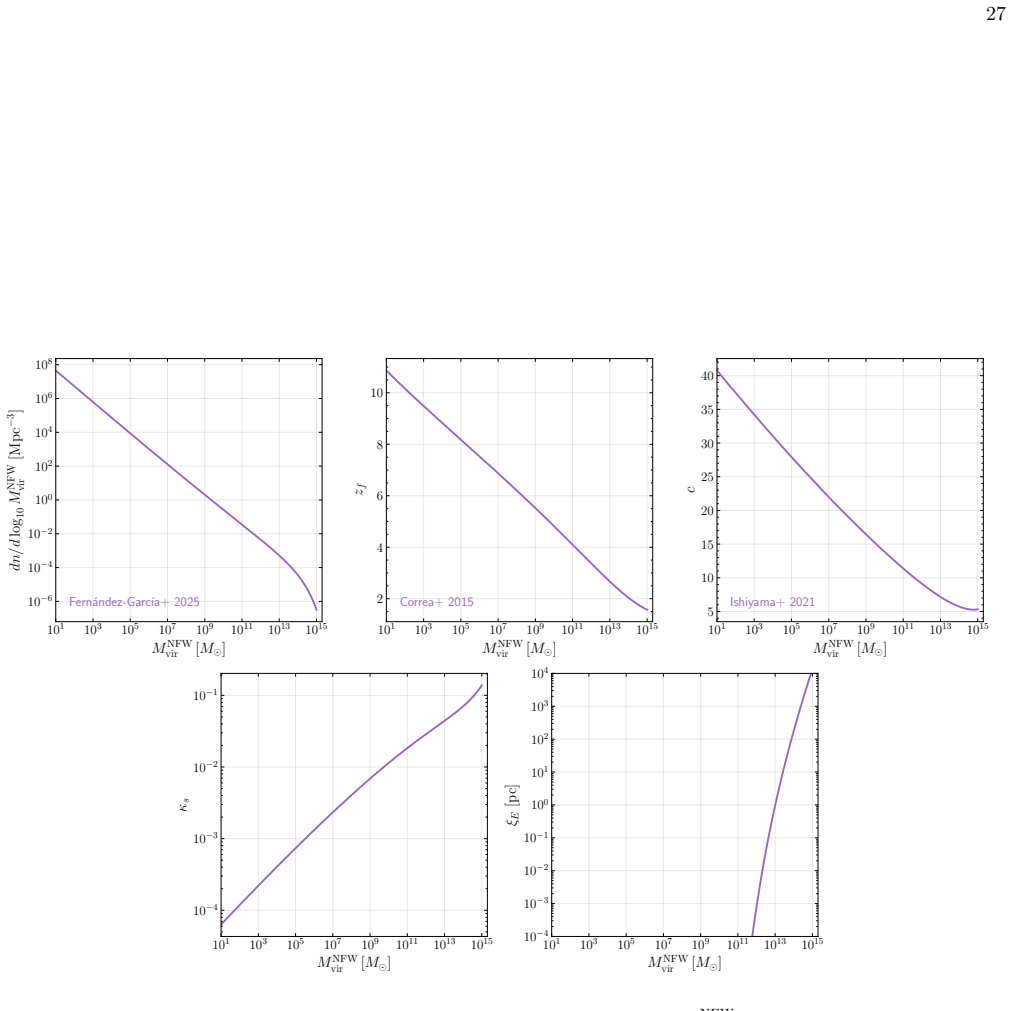
No circular step can be exhibited. The lens priors are computed from external astrophysical inputs: fBH/fPBH bounds from Carr & Kuhnel [82], IMBH mass functions from Kritos et al. [84], the CDM halo mass function from Fernández-García et al. [156], and SIDM gravothermal-collapse timescales from the literature (Refs. [113-116]). Equation (28) integrates these external dn/dMLz into an optical depth; it never uses the GW231123 likelihood to fit the lens abundance. The posterior odds and frequentist pL are therefore re-expressions of stated, externally anchored priors, not fits renamed as predictions. The source prior from GWTC-5 includes GW231123 itself, but this is explicitly disclosed in Sec. IVB as a deliberate, conservative double-counting choice that biases against the lensed hypothesis; it is not a hidden circular reduction. The isolated-lens assumption (Sec. IIA) is a scope restriction, and Sec. VI.B openly flags it as a major limitation; the paper's conclusion is worded as applying to isolated objects, so this does not make the derivation circular. Reliance on the authors' glworia code [27] and earlier lens-model papers [18,34] concerns standard, publicly available machinery rather than a load-bearing unverified self-citation, and the central astronomical constraints come from independent sources. The NFW row is explicitly an order-of-magnitude rescaling of the gSIS result, not a fitted prediction. Overall, the derivation is self-contained given its stated assumptions and does not reduce to its inputs by construction.
Axiom & Free-Parameter Ledger
free parameters (4)
- M_opt (point-mass lens optimal mass) =
627 M_sun (fPBH), 938 M_sun (fBH) for NRSur7dq4 posterior
- y_cr (lensing cutoff) =
2.0
- SIDM prior ranges for sigma0/m and v0 =
sigma0/m in [0.1, 1e6] cm^2/g, v0 in [0.1, 100] km/s, log-uniform
- gSIS/CIS optical-depth profile slope =
k = 1.19
axioms (8)
- domain assumption Diffraction lensing factorizes as h_L(f) = F(f) h_unL(f), with F computed from the Kirchhoff diffraction integral.
- domain assumption Lenses are isolated and spherically symmetric, with no external gravitational potential.
- domain assumption Lens positions follow a spatial Poisson process, so the optical depth gives the unnormalized lens prior.
- domain assumption The GWTC-5 population distribution, including GW231123 itself, is a valid source parameter prior.
- domain assumption NFW density profiles and the fitting functions for halo mass function, concentration, and formation redshift are valid.
- domain assumption SIDM gravothermal collapse follows the universal relations and produces an r^{-2.19} inner profile.
- domain assumption Monochromatic BH mass functions are adequate for translating f_BH constraints into optical-depth bounds.
- domain assumption Selection effects are approximated by P_det(SNR, m_det) from injection-recovery campaigns.
read the original abstract
GW231123, if unlensed, is a rare binary black hole merger with high masses and high spins for both progenitors. We show that the signal is better fitted by a lower-mass, lower-spin merger that is diffraction-lensed by an isolated object of redshifted mass $\sim 1000\,\rm M_\odot$, modeled either as a point mass or as a spherically symmetric compact halo. Because diffraction-lensed events are also rare, hypothesis testing should quote the posterior odds ratio rather than the Bayes factor, which requires quantifying our prior belief in the two hypotheses. We adopt the GWTC-5 population distribution as our source parameter prior, and quantify the prior on the lens hypothesis through the lensing optical depth. For a point-mass lens, observational constraints on the abundance of black holes in the Universe yield an upper bound on the optical depth, and hence on the posterior odds, which do not rule out lensing. However, using a predicted mass function of intermediate-mass black holes formed in star clusters gives a low optical depth that strongly disfavors lensing. For a dark matter halo lens, standard collisionless cold dark matter does not form halos compact enough to give the required optical depth, but self-interacting dark matter with a large cross section at low velocities can trigger gravothermal collapse and form them, in which case the posterior odds are inconclusive. In either case, from a frequentist perspective, we show that detecting a lensed event with properties like GW231123 is unlikely. These conclusions apply to isolated lenses, while a lens embedded in an external gravitational potential could change the picture.
Figures


Reference graph
Works this paper leans on
-
[1]
F. W. Dyson, A. S. Eddington, and C. Davidson, Phil. Trans. Roy. Soc. Lond. A220, 291 (1920)
1920
-
[2]
Collisionless CDM halos Numerical simulations have shown that collisionless cold dark matter (CDM) halos follow the NFW density profile across a broad range of halo masses. However, as we show below, an NFW halo with concentrations fixed at realistic values is in the single-image weak-lensing regime and is not expected to be a good explanation of the data...
-
[3]
Prompt cusp The density profile of DM halos at the very center can be cuspier than the NFW profile due to the formation of 14 101 103 105 107 109 1011 M NFW vir [M⊙] 101 102 103 104 105 106 107 σ0/m [cm2 g□1] collapsed 1 km s □1 10 km s □1 v0 = 100 km s □1 10□2 10□1 100 101 102 tcoll/tavail, v0 = 100 km s □1 101 103 105 107 109 1011 M NFW vir [M⊙] 0.00 0....
-
[4]
embedded PM
Gravothermally collapsed SIDM halos Initially, interest in self-interacting dark matter (SIDM) [94] was motivated by mismatches between col- lisionless CDM simulations and observational data on small scales, including the core-cusp problem and the missing satellite problem. While the missing satellite problem has largely been resolved [95–97], other tensi...
2023
-
[5]
B. P. Abbottet al.(LIGO Scientific, Virgo), Phys. Rev. Lett.116, 061102 (2016), arXiv:1602.03837 [gr-qc]
Pith/arXiv arXiv 2016
-
[6]
H. C. Ohanian, Int. J. Theor. Phys.9, 425 (1974)
1974
-
[7]
Grespan and M
M. Grespan and M. Biesiada, Universe9, 200 (2023)
2023
-
[8]
G. P. Smithet al., Phil. Trans. Roy. Soc. Lond. A383, 20240134 (2025), arXiv:2503.19973 [astro-ph.HE]
Pith/arXiv arXiv 2025
-
[9]
Z. Chen and Y. Lu, Res. Astron. Astrophys.26, 062001 (2026), arXiv:2605.06321 [astro-ph.HE]
Pith/arXiv arXiv 2026
-
[10]
Schneider, J
P. Schneider, J. Ehlers, and E. E. Falco,Gravitational Lenses(Springer-Verlag, Berlin, Heidelberg, 1992)
1992
- [11]
-
[12]
J. M. Ezquiaga, D. E. Holz, W. Hu, M. Lagos, and R. M. Wald, Phys. Rev. D103, 064047 (2021), arXiv:2008.12814 [gr-qc]
Pith/arXiv arXiv 2021
-
[13]
A. Ulmer and J. Goodman, Astrophys. J.442, 67 (1995), arXiv:astro-ph/9406042
Pith/arXiv arXiv 1995
-
[14]
R. Takahashi and T. Nakamura, Astrophys. J.595, 1039 (2003), arXiv:astro-ph/0305055
Pith/arXiv arXiv 2003
-
[15]
C. Leung, D. Jow, P. Saha, L. Dai, M. Oguri, and L. V. E. Koopmans, Space Sci. Rev.221, 29 (2025), arXiv:2304.01202 [astro-ph.HE]
Pith/arXiv arXiv 2025
-
[16]
J. M. Diego, O. A. Hannuksela, P. L. Kelly, T. Broad- hurst, K. Kim, T. G. F. Li, G. F. Smoot, and G. Pagano, Astron. Astrophys.627, A130 (2019), arXiv:1903.04513 [astro-ph.CO]
Pith/arXiv arXiv 2019
-
[17]
J. Feldbrugge, U.-L. Pen, and N. Turok, Annals Phys. 451, 169255 (2023), arXiv:1909.04632 [astro-ph.HE]
Pith/arXiv arXiv 2023
-
[18]
M. H. Y. Cheung, J. Gais, O. A. Hannuksela, and T. G. F. Li, Mon. Not. Roy. Astron. Soc.503, 3326 (2021), arXiv:2012.07800 [astro-ph.HE]. 26 0 π/4 π/2 3π/4 π ιmerger [rad] 0.00 0.25 0.50 0.75 1.00 1.25 1.50 1.75 Probability density PM gSIS CIS unL □1.0 □0.5 0.0 0.5 1.0 h+ □1.00 □0.75 □0.50 □0.25 0.00 0.25 0.50 0.75 1.00 h× Hanford Livingston unL □1.0 □0.5...
Pith/arXiv arXiv 2021
-
[19]
X. Guo and Y. Lu, Phys. Rev. D102, 124076 (2020), arXiv:2012.03474 [gr-qc]
Pith/arXiv arXiv 2020
-
[20]
A. Mishra, A. K. Meena, A. More, S. Bose, and J. S. Bagla, Mon. Not. Roy. Astron. Soc.508, 4869 (2021), arXiv:2102.03946 [astro-ph.CO]
Pith/arXiv arXiv 2021
-
[21]
G. Tambalo, M. Zumalacárregui, L. Dai, and M. H.-Y. Cheung, Phys. Rev. D108, 043527 (2023), arXiv:2210.05658 [gr-qc]
Pith/arXiv arXiv 2023
-
[22]
X. Shan, G. Li, X. Chen, W. Zheng, and W. Zhao, Sci. China Phys. Mech. Astron.66, 239511 (2023), arXiv:2208.13566 [astro-ph.CO]
Pith/arXiv arXiv 2023
-
[23]
X. Shan, X. Chen, B. Hu, and G. Li, Sci. China Phys. Mech. Astron.67, 269511 (2024), arXiv:2306.14796 [astro-ph.CO]
Pith/arXiv arXiv 2024
-
[24]
H. Villarrubia-Rojo, S. Savastano, M. Zumalacárregui, L. Choi, S. Goyal, L. Dai, and G. Tambalo, Phys. Rev. D111, 103539 (2025), arXiv:2409.04606 [gr-qc]
Pith/arXiv arXiv 2025
-
[25]
Z.-F. Wu, O. A. Hannuksela, M. Hendry, and Q. L. Nguyen, Astrophys. J.996, 25 (2026), arXiv:2508.17486 [gr-qc]
arXiv 2026
-
[26]
K.-H. Lai, O. A. Hannuksela, A. Herrera-Martín, J. M. Diego, T. Broadhurst, and T. G. F. Li, Phys. Rev. D 98, 083005 (2018), arXiv:1801.07840 [gr-qc]
Pith/arXiv arXiv 2018
-
[27]
M. Wright and M. Hendry, Astrophys. J.935, 68 (2021), arXiv:2112.07012 [astro-ph.HE]
Pith/arXiv arXiv 2021
-
[28]
E. Seo, O. A. Hannuksela, and T. G. F. Li, Astrophys. J.932, 50 (2022), arXiv:2110.03308 [astro-ph.HE]
Pith/arXiv arXiv 2022
-
[29]
S. M. C. Yeung, M. H. Y. Cheung, E. Seo, J. A. J. Gais, O. A. Hannuksela, and T. G. F. Li, Mon. Not. Roy. Astron. Soc.526, 2230 (2023)
2023
-
[30]
M. H.-Y. Cheung, K. K. Y. Ng, M. Zumalacárregui, and E. Berti, Phys. Rev. D109, 124020 (2024), arXiv:2403.13876 [gr-qc]
Pith/arXiv arXiv 2024
-
[31]
A. Chakraborty and S. Mukherjee, Astrophys. J.984, 107 (2025), arXiv:2410.06995 [gr-qc]
Pith/arXiv arXiv 2025
-
[32]
S. M. C. Yeung, M. H. Y. Cheung, M. Zumalacarregui, and O. A. Hannuksela, (2024), arXiv:2410.19804 [astro- ph.IM]
Pith/arXiv arXiv 2024
-
[33]
Z. Su, X. Shan, Z. Lyu, J. Zhang, Y. Liu, S. Mao, and H. Yang, (2025), arXiv:2510.17125 [gr-qc]
arXiv 2025
-
[34]
M. Caldarola, S. Goyal, N. Gupte, S. R. Green, and M. Zumalacárregui, Phys. Rev. D113, 104073 (2026), arXiv:2511.08486 [astro-ph.CO]
Pith/arXiv arXiv 2026
-
[35]
H. G. Choi, C. Park, and S. Jung, Phys. Rev. D104, 063001 (2021), arXiv:2103.08618 [astro-ph.CO]
Pith/arXiv arXiv 2021
-
[36]
X. Guo and Y. Lu, Phys. Rev. D106, 023018 (2022), arXiv:2207.00325 [astro-ph.CO]
Pith/arXiv arXiv 2022
-
[37]
G. Tambalo, M. Zumalacárregui, L. Dai, and M. H.-Y. Cheung, Phys. Rev. D108, 103529 (2023), arXiv:2212.11960 [astro-ph.CO]
Pith/arXiv arXiv 2023
-
[38]
M. Çalışkan, N. Anil Kumar, L. Ji, J. M. Ezquiaga, R. Cotesta, E. Berti, and M. Kamionkowski, Phys. Rev. D108, 123543 (2023), arXiv:2307.06990 [astro-ph.CO]
Pith/arXiv arXiv 2023
-
[39]
S. Singh, G. Brando de Oliveira, S. Savastano, and M. Zumalacárregui, JCAP07, 025 (2025), arXiv:2502.10758 [astro-ph.CO]
Pith/arXiv arXiv 2025
- [40]
-
[41]
A. Barsode, S. J. Kapadia, and P. Ajith, Astrophys. J. 975, 48 (2024), arXiv:2405.15878 [gr-qc]
Pith/arXiv arXiv 2024
-
[42]
Y. Li, K. Liao, M. Sun, L. Yang, X. Ding, M. Biesi- ada, and T. Liu, Astrophys. J. Suppl.284, 56 (2026), arXiv:2603.09289 [astro-ph.CO]
Pith/arXiv arXiv 2026
-
[43]
K. Haris, A. K. Mehta, S. Kumar, T. Venumadhav, and P. Ajith, (2018), arXiv:1807.07062 [gr-qc]
Pith/arXiv arXiv 2018
-
[44]
A. K. Y. Li, R. K. L. Lo, S. Sachdev, J. C. L. Chan, E. T. Lin, T. G. F. Li, and A. J. Weinstein (LIGO Scientific, Virgo), Phys. Rev. D107, 123014 (2023), arXiv:1904.06020 [gr-qc]
Pith/arXiv arXiv 2023
-
[45]
C. McIsaac, D. Keitel, T. Collett, I. Harry, S. Mozzon, O. Edy, and D. Bacon, Phys. Rev. D102, 084031 (2020), arXiv:1912.05389 [gr-qc]
Pith/arXiv arXiv 2020
-
[46]
O. A. Hannuksela, K. Haris, K. K. Y. Ng, S. Kumar, A. K. Mehta, D. Keitel, T. G. F. Li, and P. Ajith, Astrophys. J. Lett.874, L2 (2019), arXiv:1901.02674 [gr-qc]
Pith/arXiv arXiv 2019
-
[47]
X. Liu, I. Magana Hernandez, and J. Creighton, Astro- phys. J.908, 97 (2021), arXiv:2009.06539 [astro-ph.HE]
Pith/arXiv arXiv 2021
-
[48]
L. Dai, B. Zackay, T. Venumadhav, J. Roulet, and M. Zaldarriaga, (2020), arXiv:2007.12709 [astro-ph.HE]
Pith/arXiv arXiv 2020
-
[49]
R. K. L. Lo and I. Magana Hernandez, Phys. Rev. D 107, 123015 (2023), arXiv:2104.09339 [gr-qc]
Pith/arXiv arXiv 2023
-
[50]
Abbottet al.(LIGO Scientific, VIRGO), Astrophys
R. Abbottet al.(LIGO Scientific, VIRGO), Astrophys. J.923, 14 (2021), arXiv:2105.06384 [gr-qc]
Pith/arXiv arXiv 2021
-
[51]
J.Janquart, O. A.Hannuksela, K.Haris, andC. Van den Broeck, in56th Rencontres de Moriond on Gravitation (2022) arXiv:2203.06444 [gr-qc]
Pith/arXiv arXiv 2022
-
[52]
S. Ali, E. Stoikos, E. Meade, M. Kesden, and L. King, Phys. Rev. D107, 103023 (2023), arXiv:2210.01873 [gr- qc]
Pith/arXiv arXiv 2023
-
[53]
Abbottet al.(LIGO Scientific, KAGRA, VIRGO), Astrophys
R. Abbottet al.(LIGO Scientific, KAGRA, VIRGO), Astrophys. J.970, 191 (2024), arXiv:2304.08393 [gr-qc]
Pith/arXiv arXiv 2024
-
[54]
J. M. Ezquiaga, W. Hu, and R. K. L. Lo, Phys. Rev. D 108, 103520 (2023), arXiv:2308.06616 [astro-ph.CO]
Pith/arXiv arXiv 2023
-
[55]
A. K. Y. Li, J. C. L. Chan, H. Fong, A. H. Y. Chong, A. J. Weinstein, and J. M. Ezquiaga, Mon. Not. Roy. Astron. Soc.542, 998 (2025), arXiv:2311.06416 [gr-qc]
arXiv 2025
-
[56]
K. Kim, J. Lee, O. A. Hannuksela, and T. G. F. Li, Astrophys. J.938, 157 (2022), arXiv:2206.08234 [gr-qc]
Pith/arXiv arXiv 2022
-
[57]
A. Chakraborty and S. Mukherjee, Astrophys. J.990, 68 (2025), arXiv:2503.16281 [gr-qc]
Pith/arXiv arXiv 2025
-
[58]
A. G. Abacet al.(LIGO Scientific, VIRGO, KAGRA), Astrophys. J. Lett.993, L25 (2025), arXiv:2507.08219 [astro-ph.HE]
Pith/arXiv arXiv 2025
-
[59]
M. Mould, R. Tenorio, and D. Gerosa, (2026), arXiv:2604.15885 [gr-qc]
Pith/arXiv arXiv 2026
- [60]
-
[61]
X. Shan, H. Yang, S. Mao, and O. A. Hannuksela, Astrophys. J.1004, 35 (2026), arXiv:2508.21262 [astro- ph.CO]
Pith/arXiv arXiv 2026
-
[62]
A. G. Abacet al.(LIGO Scientific, VIRGO, KAGRA), (2025), arXiv:2512.16347 [gr-qc]
arXiv 2025
-
[63]
J. C. L. Chan, J. M. Ezquiaga, R. K. L. Lo, J. Bow- man, L. Magaña Zertuche, and L. Vujeva, (2025), arXiv:2512.16916 [gr-qc]
Pith/arXiv arXiv 2025
- [64]
-
[65]
Q. Hu, H. Narola, J. Heynen, M. Wright, J. Veitch, J. Janquart, and C. Van Den Broeck, Astrophys. J. 1003, 187 (2026), arXiv:2512.17550 [gr-qc]
Pith/arXiv arXiv 2026
-
[66]
X. Shan, H. Yang, and S. Mao, (2025), arXiv:2512.19118 [astro-ph.GA]
arXiv 2025
-
[67]
A. Chakraborty and S. Mukherjee, Astrophys. J.1003, 20 (2026), arXiv:2512.19077 [gr-qc]
Pith/arXiv arXiv 2026
- [68]
-
[69]
Barsode, (2026), arXiv:2605.10333 [gr-qc]
A. Barsode, (2026), arXiv:2605.10333 [gr-qc]. 29
Pith/arXiv arXiv 2026
-
[70]
T. T. Nakamura, Phys. Rev. Lett.80, 1138 (1998)
1998
-
[71]
G. Ashtonet al., Astrophys. J. Suppl.241, 27 (2019), arXiv:1811.02042 [astro-ph.IM]
Pith/arXiv arXiv 2019
-
[72]
bilby- dev/bilby: v.2.7.1,
C. Talbot, G. Ashton, M. Hübner, M. Pitkin, plasky, M. J. Williams, asb5468, A. Vijaykumar, R. Smith, SMorisaki, J. Veitch, N. Sarin, D. Macleod, D. Williams, JasperMartins, MarcArene, C. P. L. Berry, V. Ray- mond, Ceciliogq, I. Markin, D. Keitel, AlexandreGoet- tel, L. Pompili, M. Wright, oliviawilk, noahewolfe, ja- cobgolomb, S. Wu, R. Udall, and M. Pür...
2025
-
[73]
J. S. Speagle, Mon. Not. Roy. Astron. Soc.493, 3132 (2020), arXiv:1904.02180 [astro-ph.IM]
Pith/arXiv arXiv 2020
-
[74]
joshspeagle/dynesty: v3.0.0,
S. Koposov, J. Speagle, K. Barbary, G. Ashton, E. Ben- nett, J. Buchner, C. Scheffler, C. Talbot, B. Cook, J. Guillochon, P. Cubillos, A. A. Ramos, M. Dartiailh, Ilya, E. Tollerud, D. Lang, B. Johnson, jtmendel, E. Hig- son, T. Vandal, T. Daylan, R. Angus, patelR, P. Cargile, P. Sheehan, M. Pitkin, M. Kirk, L. Xu, J. Leja, and joezuntz, “joshspeagle/dynes...
2025
-
[75]
J. M. Ezquiaga, R. K. L. Lo, and L. Vujeva, Phys. Rev. D112, 043544 (2025), arXiv:2503.22648 [gr-qc]
Pith/arXiv arXiv 2025
-
[76]
V. Varma, S. E. Field, M. A. Scheel, J. Blackman, D. Gerosa, L. C. Stein, L. E. Kidder, and H. P. Pfeiffer, Phys. Rev. Research.1, 033015 (2019), arXiv:1905.09300 [gr-qc]
Pith/arXiv arXiv 2019
-
[77]
G. Prattenet al., Phys. Rev. D103, 104056 (2021), arXiv:2004.06503 [gr-qc]
Pith/arXiv arXiv 2021
-
[78]
M. Colleoni, F. A. R. Vidal, C. García-Quirós, S. Akçay, and S. Bera, Phys. Rev. D111, 104019 (2025), arXiv:2412.16721 [gr-qc]
Pith/arXiv arXiv 2025
-
[79]
S. E. Woosley, Astrophys. J.836, 244 (2017), arXiv:1608.08939 [astro-ph.HE]
Pith/arXiv arXiv 2017
-
[80]
R. Farmer, M. Renzo, S. E. de Mink, P. Marchant, and S. Justham, Astrophys. J.887, 53 (2019), arXiv:1910.12874 [astro-ph.SR]
Pith/arXiv arXiv 2019
discussion (0)
Sign in with ORCID, Apple, or X to comment. Anyone can read and Pith papers without signing in.